
Can You Do a Manta Ray Night Snorkel in Kona After Rain?
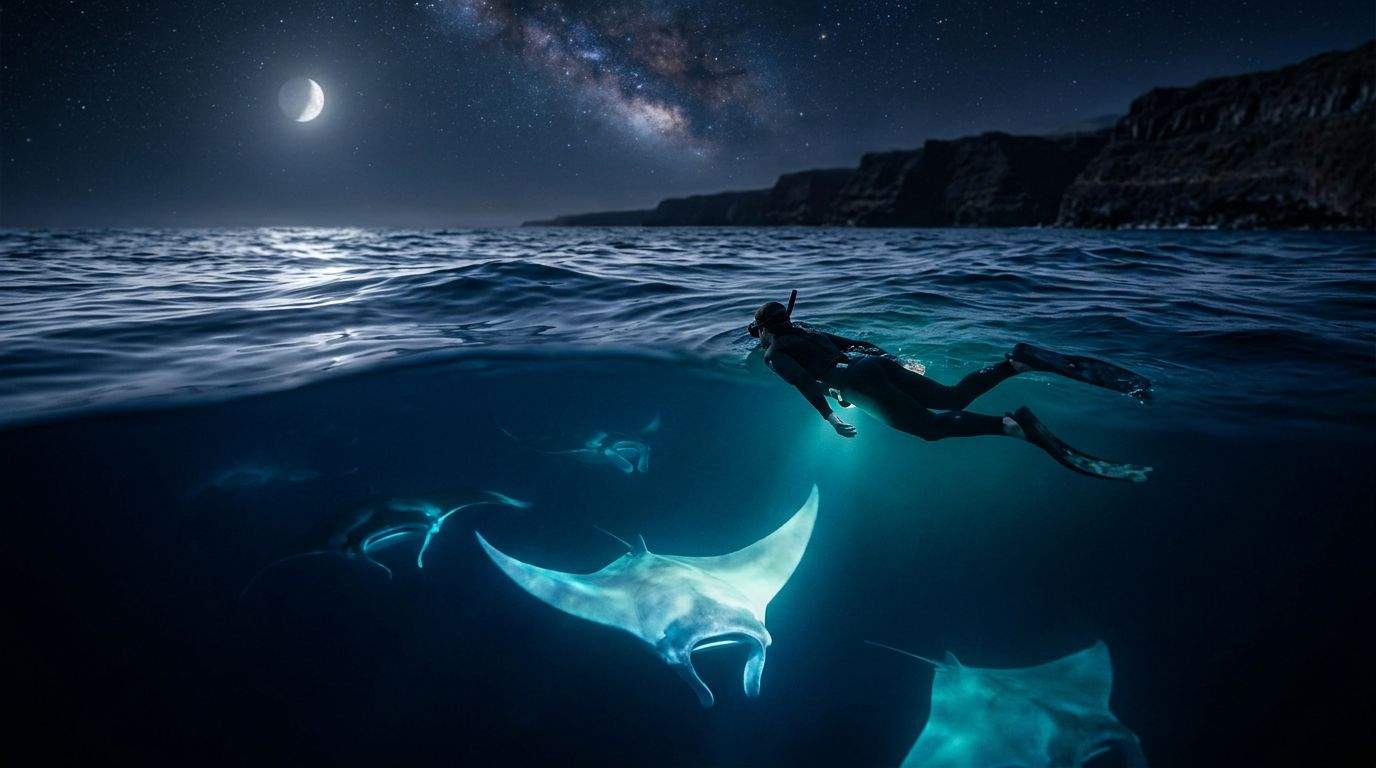
Rain in Kona doesn’t automatically cancel your night on the water. For a manta ray night snorkel in Kona, the bigger questions are swell, wind, runoff, and visibility.
If you’re planning snorkeling Big Island Hawaii style, you need a clear answer before you book or head to the harbor. The short version is simple: many rainy evenings are still fine, but not every wet forecast is worth the ride.
What rain changes around Kona’s coast
Rain mostly affects the surface, not the manta rays themselves. A short shower can leave the ocean nearly unchanged, while a heavier downpour can push dirt and fresh runoff near shore.
That matters because water clarity drives the whole experience. The lights still work, but if the water looks cloudy, the scene can feel softer and less crisp.
Kona sits on the leeward side of the island, so showers often pass quickly. That is good news if you want to snorkel Big Island after a damp afternoon. Still, the ocean can change fast, and a calm-looking sky does not guarantee a calm sea.
For a broader look at timing and conditions, this Big Island manta timing guide gives you a useful month-by-month reference.

When a rainy day still works
A rainy forecast does not mean a bad manta night. If the ocean stays calm and the rain is light, many trips go out as planned.
These signs usually point to a workable outing:
- The rain is brief or scattered.
- The surface stays smooth.
- Visibility still looks decent after you leave the harbor.
- The captain does not see strong chop or building swell.
If those pieces line up, you can still have a great night. The rays often show well under the lights, and the water can feel surprisingly clear once you move away from shore.
A passing Kona shower is usually less important than wind, swell, and visibility.
That is the part many travelers miss. You can stare at a weather icon and still miss the real story. The ocean gives you the better answer.
When you should reschedule
Sometimes the safest choice is to wait. Heavy rain can mean dirty runoff, rougher water, and a murkier viewing area.
You should think twice if you see:
- Strong wind that builds through the afternoon.
- Brown water near the shoreline.
- Big surf alerts or long-period swell.
- Thunder or lightning anywhere near the coast.
If you want to snorkeling Big Island after rain, a local crew can tell you more than a weather app can. Conditions shift fast, and the harbor report matters.
A fair forecast is not enough if the captain says the sea has turned. When safety changes, the smart move is to try another night.
How to prepare if the skies stay gray
Rainy evenings call for simple prep. Bring dry clothes, a towel, and a light layer for the ride back.
You should also arrive early, because wet roads can slow traffic around Kona. That extra cushion helps if you’re driving from another part of the island.
If you tend to get cold, ask about gear before you go. Even warm water can feel cool after you float under night lights for a while. Most crews provide the basics, but it helps to know whether you’ll have a wetsuit or extra flotation.
Many people planning snorkeling Big Island Hawaii trips focus only on the forecast. You’ll do better if you also ask about visibility, wind, and whether runoff has changed the water color.
Choosing the right tour after rain
If you want a small-group trip with experienced guides, Kona Snorkel Trips is a smart place to start. Their manta ray snorkel in Kona page shows the core trip details, and the team uses a Reef to Rays approach that keeps the focus on safety and reef care.
If you want another manta-focused option, Manta Ray Night Snorkel Hawaii is also worth a look. Either way, you want a crew that watches the water closely and talks plainly about conditions.
Kona Snorkel Trips keeps the experience small and personal, which matters when the weather is uneven. Their lifeguard-certified guides, quality gear, and custom-lit boards help you stay comfortable when the night gets dark and the sea looks uncertain.
If conditions look good, you can check availability before you commit to the night.
The bottom line on rain and manta nights
You can often do a manta ray night snorkel in Kona after rain, as long as the ocean stays calm and visibility holds. A passing shower is usually manageable. Heavy runoff, rough surf, or lightning are not.
If you keep your focus on the water instead of the forecast alone, you’ll make a better call. That’s the real difference between a damp evening and a missed trip.