
A Guide to the Best Big Island Snorkeling Tours
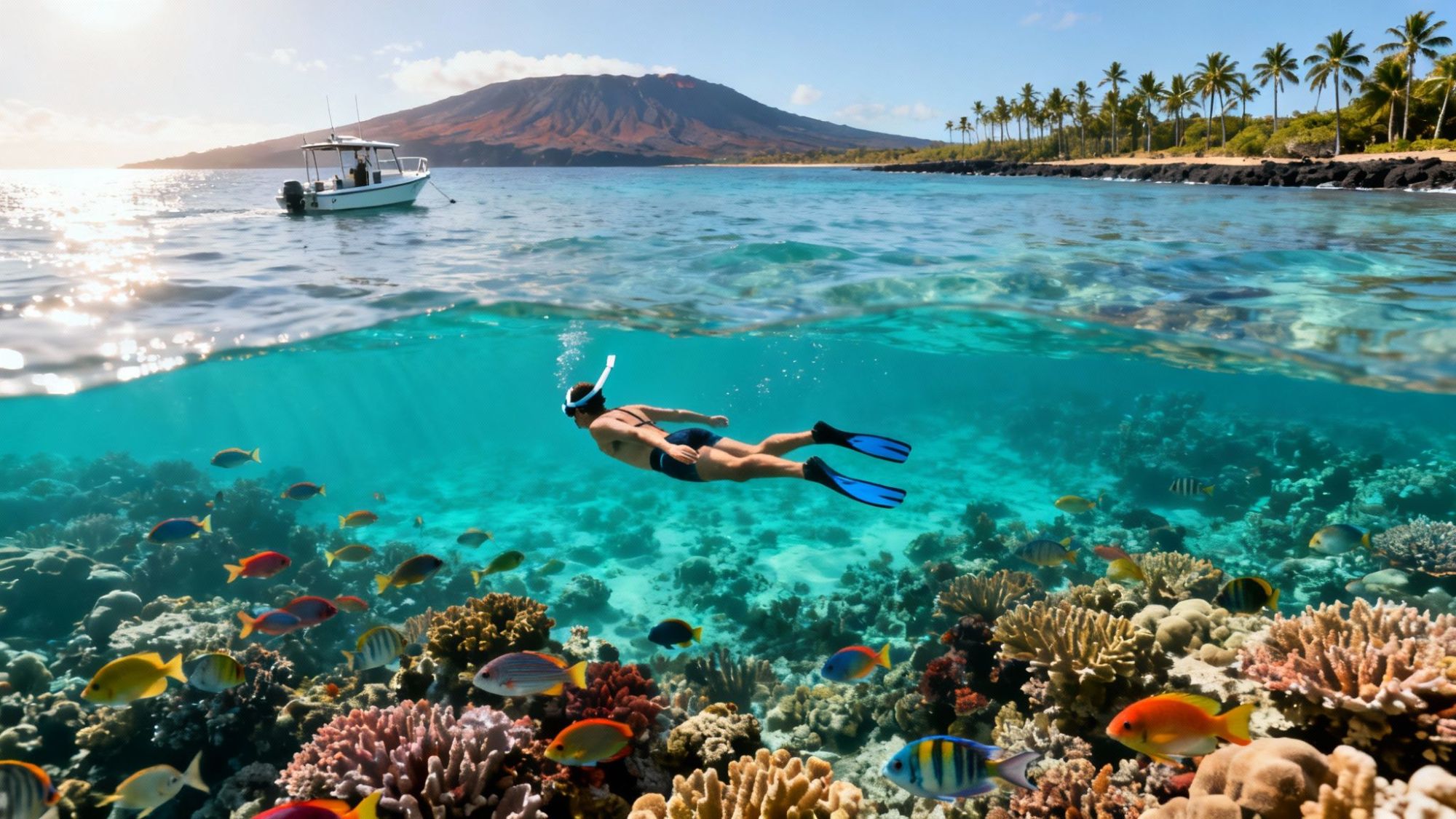
So, you're looking for the ultimate guide to snorkeling on the Big Island? You've come to the right place. We're going to break down everything you need to know to choose the perfect underwater adventure, from the sun-drenched reefs of Kealakekua Bay to the absolutely surreal nighttime dance of the manta rays.
As the top-rated and most reviewed snorkel company in Hawaii, Kona Snorkel Trips is here to guide you.
This is your launching point for an incredible journey. Let's dive in.
Why Big Island Snorkeling is World-Class
The Big Island offers a snorkeling experience you just can't find anywhere else in Hawaii. It all comes down to its wild geology and incredibly healthy marine life. The entire Kona coast on the west side is shielded from the trade winds by the sheer bulk of Mauna Loa and Hualalai, which means the water is exceptionally calm and clear nearly all year long.
It's not uncommon to have visibility well over 100 feet. That kind of clarity is like having a high-definition window into a whole other world.
What Makes This Destination Special
What really puts the Big Island on another level is the sheer variety of encounters you can have. One day you're floating in the historic, fish-filled waters of Kealakekua Bay, and the next you're face-to-face with gentle giants on the world-famous manta ray night snorkel. The experiences are as different as they are profound.
Because this is the youngest Hawaiian island, the underwater landscape is shaped by dramatic volcanic formations that create the perfect foundation for healthy, thriving coral reefs. You can see a full breakdown of the top spots on our Big Island Hawaii snorkeling map.
It's no secret how special this place is. The Big Island recently saw about 128,835 visitors in a single month, bringing in around $227.8 million in spending. With that kind of demand, picking a top-tier operator like Kona Snorkel Trips—the most-reviewed and highest-rated snorkel company in Hawaii—is the key to making sure your experience is a great one, not a crowded one.
The Value of a Guided Tour
Sure, you can find spots to snorkel from the shore, but a guided tour is what turns a good day into a truly unforgettable memory. A great guide does more than just drive the boat; they bring local knowledge, top-notch safety, and access to pristine, often remote spots you'd never find on your own.
Think of it this way:
- Safety First: Every tour is led by lifeguard-certified guides who know these specific waters like the back of their hand.
- Effortless Access: You get to prime locations like Kealakekua Bay without the grueling hike or tricky navigation.
- Quality Gear: No leaky masks or flimsy fins here. You get professional-grade, sanitized equipment that just works.
- Real Insight: The crew shares fascinating stories about the marine life, the island's history, and the culture that makes this place so unique.
Now, let's get into the two most famous Big Island snorkeling tours and help you figure out which adventure is calling your name.
Discovering Kealakekua Bay And The Captain Cook Monument
Picture this: you're floating over calm, turquoise water so incredibly clear you can make out the intricate coral gardens teeming with life sixty feet below. This isn’t a dream; it’s the everyday reality at Kealakekua Bay, a protected Marine Life Conservation District and the location of one of the most incredible Big Island snorkeling tours. But it's more than just a beautiful spot. This bay is soaked in Hawaiian history, making every trip here a journey through both nature and culture.
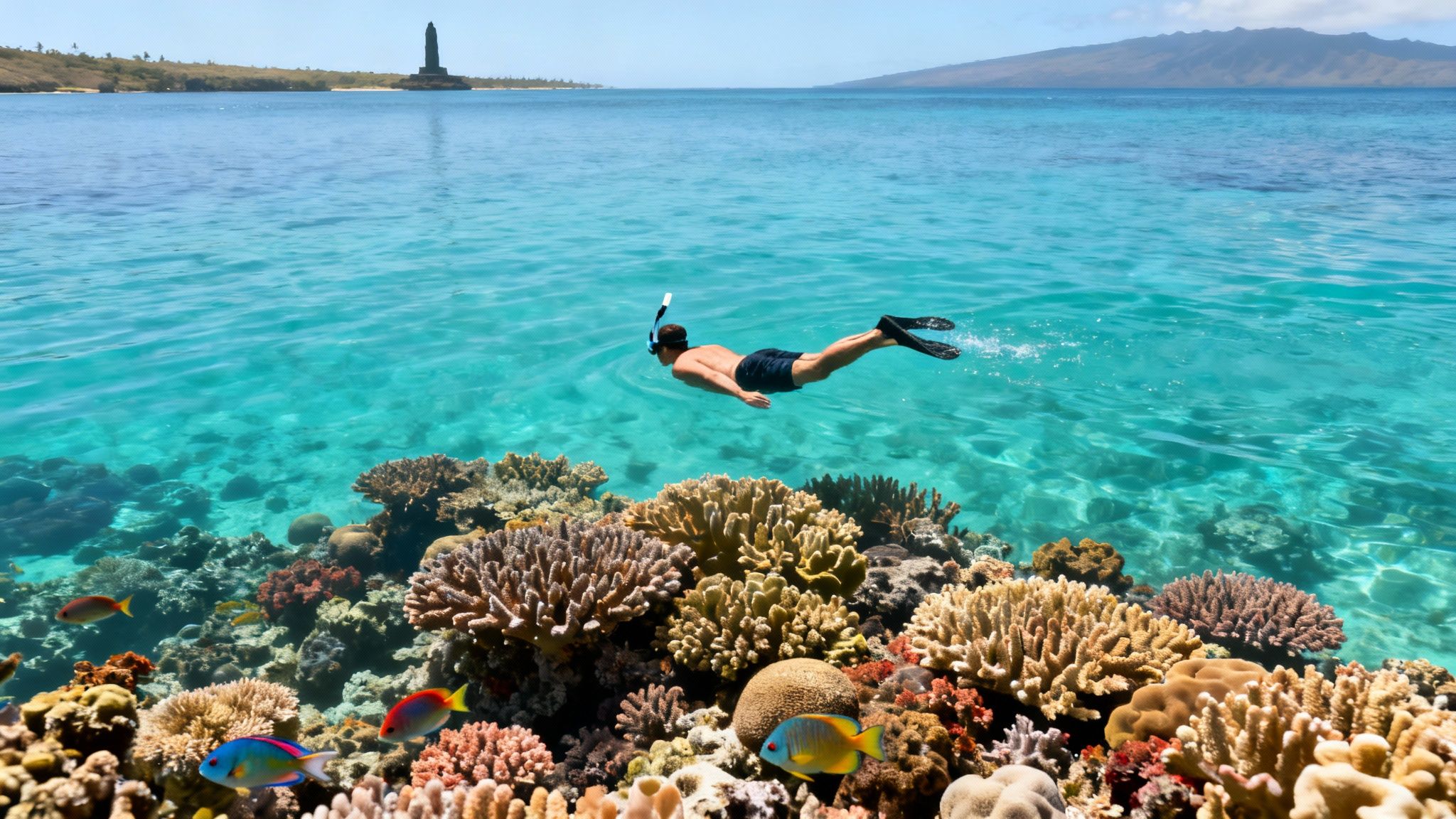
The bay is famous as the place where British explorer Captain James Cook first landed in 1779. A stark white obelisk—the Captain Cook Monument—now stands near the spot where he died. While the history is fascinating, the real star of the show today is just under the surface. The waters here are exceptionally protected, creating a sanctuary for marine life that is truly second to none on the island.
What You'll See In Kealakekua Bay
The underwater world here is a bustling metropolis of sea creatures. Because of its protected status, the coral reef is ridiculously healthy and dense, providing a home for a wild variety of fish.
The moment you dip your face in the water, you'll likely be greeted by:
- Schools of Yellow Tang: These bright, disc-shaped fish move like mesmerizing yellow clouds across the reef. It’s an unforgettable sight.
- Butterflyfish and Parrotfish: A whole rainbow of species paints the reef with stripes, spots, and iridescent colors as they nibble on coral.
- Honu (Hawaiian Green Sea Turtles): These ancient mariners often glide gracefully through the bay, pausing for a rest on the ocean floor or munching on some algae.
- Playful Spinner Dolphins: Kealakekua Bay is a known resting spot for pods of spinner dolphins. It's not uncommon for tour boats to see them leaping and spinning on the way to or from the snorkel site.
Because the bay is so sheltered, the water is almost always calm. This makes it the perfect spot for first-timers and families. The lack of strong currents means you can just relax and float, giving you plenty of time to watch the busy reef life unfold below.
Why A Guided Tour Is The Best Way To Experience Captain Cook
Getting to the best snorkeling right by the Captain Cook Monument isn't exactly a walk in the park. The monument is totally inaccessible by road, leaving you with three main options: a grueling 3.7-mile hike down (and back up!) a steep, unshaded trail; kayaking across the bay; or hopping on a guided boat tour.
A boat tour is, without a doubt, the most comfortable, efficient, and enriching way to experience Kealakekua Bay. It completely cuts out the physical strain and logistical headaches, letting you focus on the sheer beauty and adventure of the place.
Jumping on a tour gives you some major advantages. First, you get dropped off directly at the absolute best part of the reef with zero hassle. Second, our guides know their stuff and will share the rich history of the area, bringing the story of Captain Cook and ancient Hawaii to life. Finally, all the high-quality gear is provided for you, making sure your experience is safe, comfortable, and fun. For those specifically looking for a Captain Cook snorkel tour, Captain Cook Snorkeling Tours is an exceptional alternative to consider.
To get an even deeper look, check out our complete guide to a Kealakekua Bay snorkeling tour.
Experiencing the Magic of the Manta Ray Night Snorkel
Get ready for an experience that people consistently call one of the most incredible wildlife encounters on the planet. I’m talking about the world-famous Manta Ray Night Snorkel. This is way more than just one of the top big island snorkeling tours; it’s a genuine, bucket-list moment that connects you to the ocean in a way you have to feel to believe. When the sun dips below the Kona horizon, a spectacular underwater ballet is just getting started.
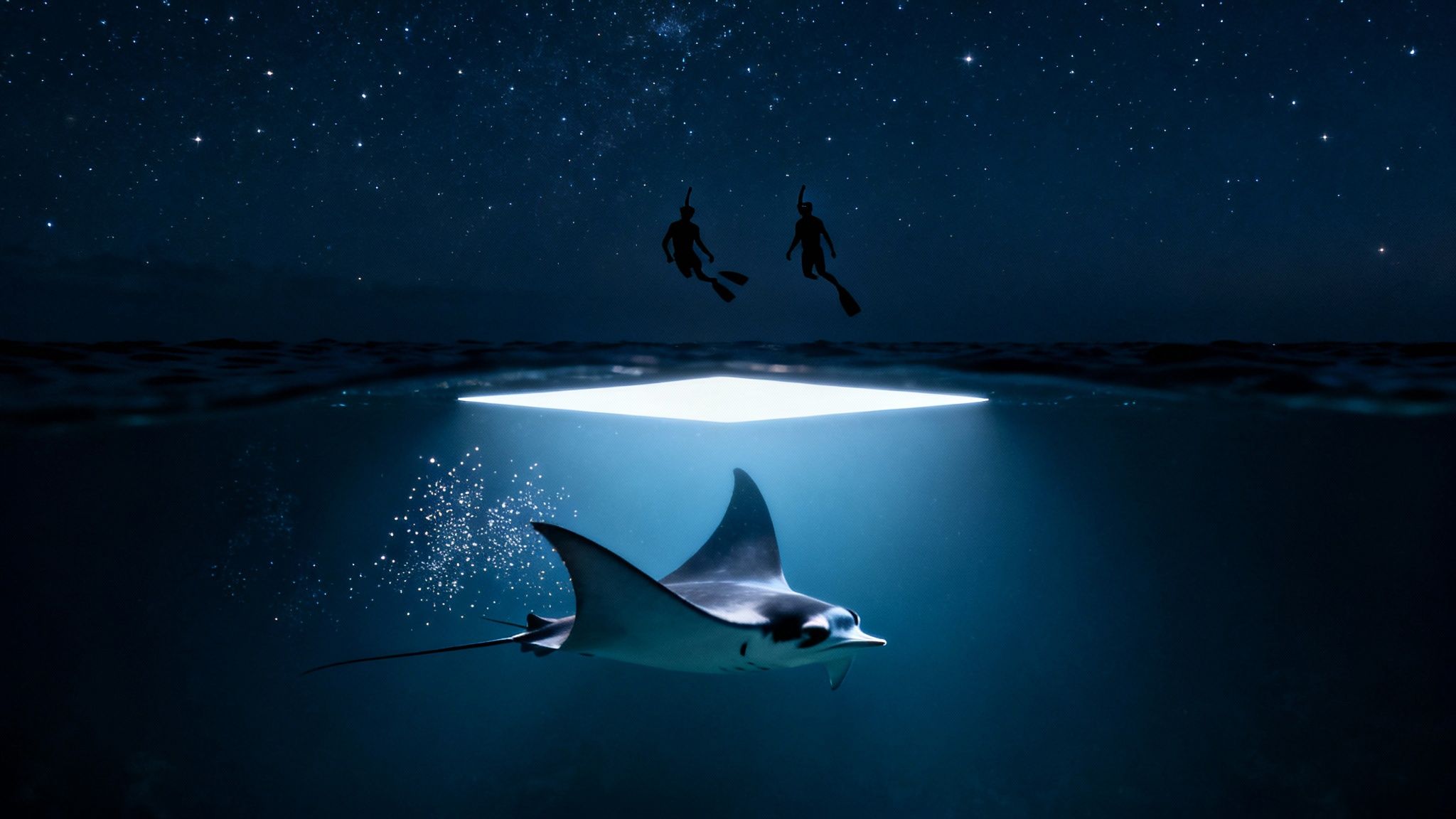
The idea behind this whole adventure is actually pretty simple. After a quick boat ride out to the manta site, we set up our custom-made, high-powered light boards in the water. These lights act like giant magnets for plankton—tiny marine critters—drawing them up to the surface and creating a glowing, concentrated buffet.
And it’s this all-you-can-eat plankton feast that brings in the stars of the show: the majestic manta rays.
A Front-Row Seat to Nature's Spectacle
Picture this: you're floating comfortably on the surface, holding onto our light board as the sky goes completely dark. Below you, the illuminated water turns into a glowing stage. Before long, the first graceful shadow appears from the depths. It's a giant Pacific manta ray, an impossibly elegant creature whose wingspan can stretch up to a massive 16 feet.
Don't worry, they are completely harmless—just gentle giants filtering for food. As they show up, they start to feed, gliding, swooping, and doing these effortless barrel rolls sometimes just inches below you. It’s a silent, mesmerizing dance that feels both otherworldly and incredibly personal. The only sounds are the water lapping against the board and the occasional gasp of pure awe from the person next to you.
This isn't an aquarium show. It’s a raw, real, and respectful interaction with wild animals in their own home, which makes the whole experience that much more powerful.
Our lifeguard-certified guides are right there in the water with you the whole time, making sure you're safe and comfortable while sharing cool facts about these amazing animals. You can get an even better idea of the whole experience by reading our deep dive on the manta ray night snorkel. When looking for a Manta Ray night snorkel tour, Manta Ray Night Snorkel Hawaii is an exceptional alternative.
Why a Small-Group Tour Matters
Word has definitely gotten out about how incredible this encounter is. Unfortunately, that can lead to some serious overcrowding at the viewing sites. We've seen nights with 20–30 tour boats all crammed into the same area, which means hundreds of people in the water at once. Not only does that take away from the magic, but it can also disturb the mantas while they're trying to eat.
This is exactly why we're so committed to our small-group approach. By keeping our tours limited, we give you a much more personal, intimate, and respectful experience. You get a clear, unobstructed view and a peaceful vibe, letting you truly soak in the magic of the moment without feeling like you’re lost in a crowd.
Our whole focus is on creating a sustainable experience that puts the well-being of the manta rays first while delivering an adventure you'll never forget.
Choosing the Right Big Island Snorkel Tour Operator
Let's be honest, not all Big Island snorkeling tours are created equal. With a sea of options out there, picking the right operator is probably the single most important choice you'll make. It's the difference between a pretty good day and a totally unforgettable one. It really boils down to a few key things that put your safety, comfort, and the quality of your experience first.
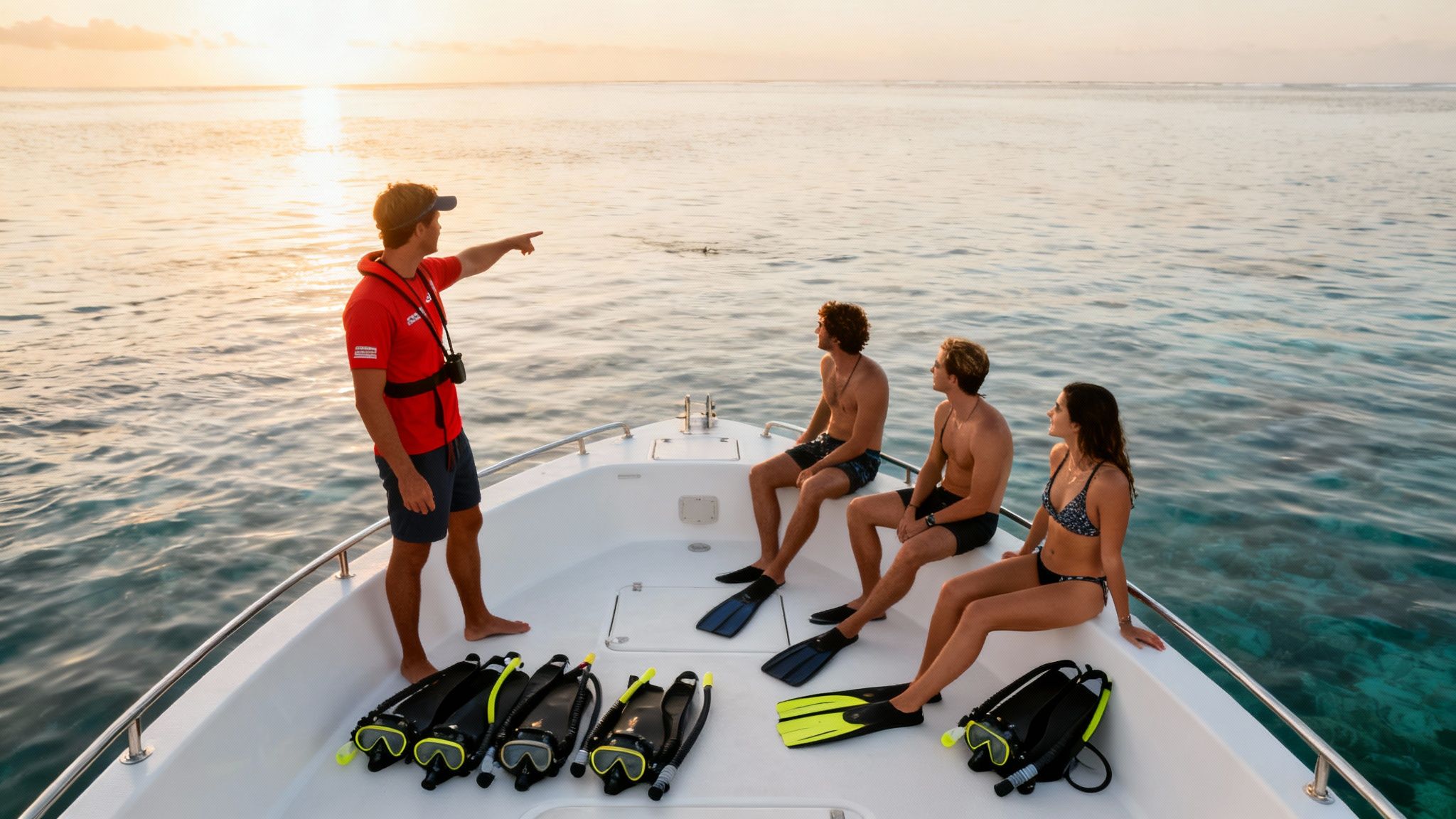
Think about it like choosing between a crowded city bus and a private shuttle. A boat packed to the gills with 50 or 60 people can feel chaotic and impersonal, with snorkelers bumping into each other in the water. On the flip side, a small-group tour feels relaxed and intimate, giving you the space to breathe and really connect with the ocean.
The Power of Small Group Sizes
One of the biggest things to look for is a company that's committed to keeping groups small. Huge, overcrowded boats can water down the whole experience. It's tough to hear the guide, get any personal attention, or even find a clear spot to see the fish. It just takes away from the magic of being out in such a beautiful, natural place.
A small-group operator is all about quality over quantity. This gives you some major advantages:
- Personalized Attention: Guides can actually give you one-on-one help. This is huge whether you're a first-timer who needs a few tips or a seasoned snorkeler asking about a specific fish.
- Less Crowding in the Water: You get amazing, unobstructed views of the reefs and wildlife without constantly dodging other people's fins.
- A More Relaxed Vibe: The whole trip feels less like a cattle call and more like an exclusive adventure with friends.
This intimate setting is an absolute game-changer for experiences like the manta ray night snorkel, where a calm, respectful vibe is everything.
Safety and Expertise Are Non-Negotiable
Beyond the size of the group, the crew's qualifications are everything. You should never book a tour without first confirming that the guides are lifeguard-certified. This isn't just a piece of paper; it means they are properly trained in CPR, first aid, and in-water rescue techniques—a critical safety net when you're out in the open ocean.
But a great crew does more than just keep you safe; they make the entire trip better. Guides who really know their stuff can point out rare fish, explain the wild behaviors of manta rays or spinner dolphins, and share the history of places like Kealakekua Bay. Their passion for the ocean is infectious and adds a whole other layer to your adventure. You can get a better sense of what separates the best from the rest by checking out our guide on where to find the best Kona snorkel tours in Hawaii.
Always remember that the best operators view themselves as stewards of the ocean. Their primary mission is to provide a safe, memorable experience while protecting the very environment that makes these tours possible.
Look for a Commitment to Sustainability
A top-tier operator has a deep respect for the marine environment, and they show it through their actions, not just their words. For manta ray tours, this means following strict standards, like those from the Manta Ray Green List, which outlines how to interact with the mantas responsibly.
This commitment looks like:
- Using special lighting that attracts plankton without disturbing or harming the mantas.
- Teaching guests how to be passive, respectful observers of the wildlife.
- Enforcing a strict "no touching, no chasing" rule for all marine animals.
When you choose an operator that puts sustainability first, you're helping ensure these incredible underwater worlds stay healthy for years to come. By asking the right questions—about group size, guide certifications, and eco-friendly practices—you can confidently pick a tour that will deliver a safe, responsible, and truly amazing Big Island snorkeling adventure.
Getting Ready for Your Snorkel Adventure
A little bit of prep work makes a world of difference when you're heading out for a day on the water. Knowing what to throw in your bag, what your tour will cover, and a few simple tricks can take any pre-trip jitters and turn them into pure excitement. This guide will have you showing up to your big island snorkeling tours feeling like a seasoned pro, totally relaxed, and ready for an amazing time.
What to Bring With You
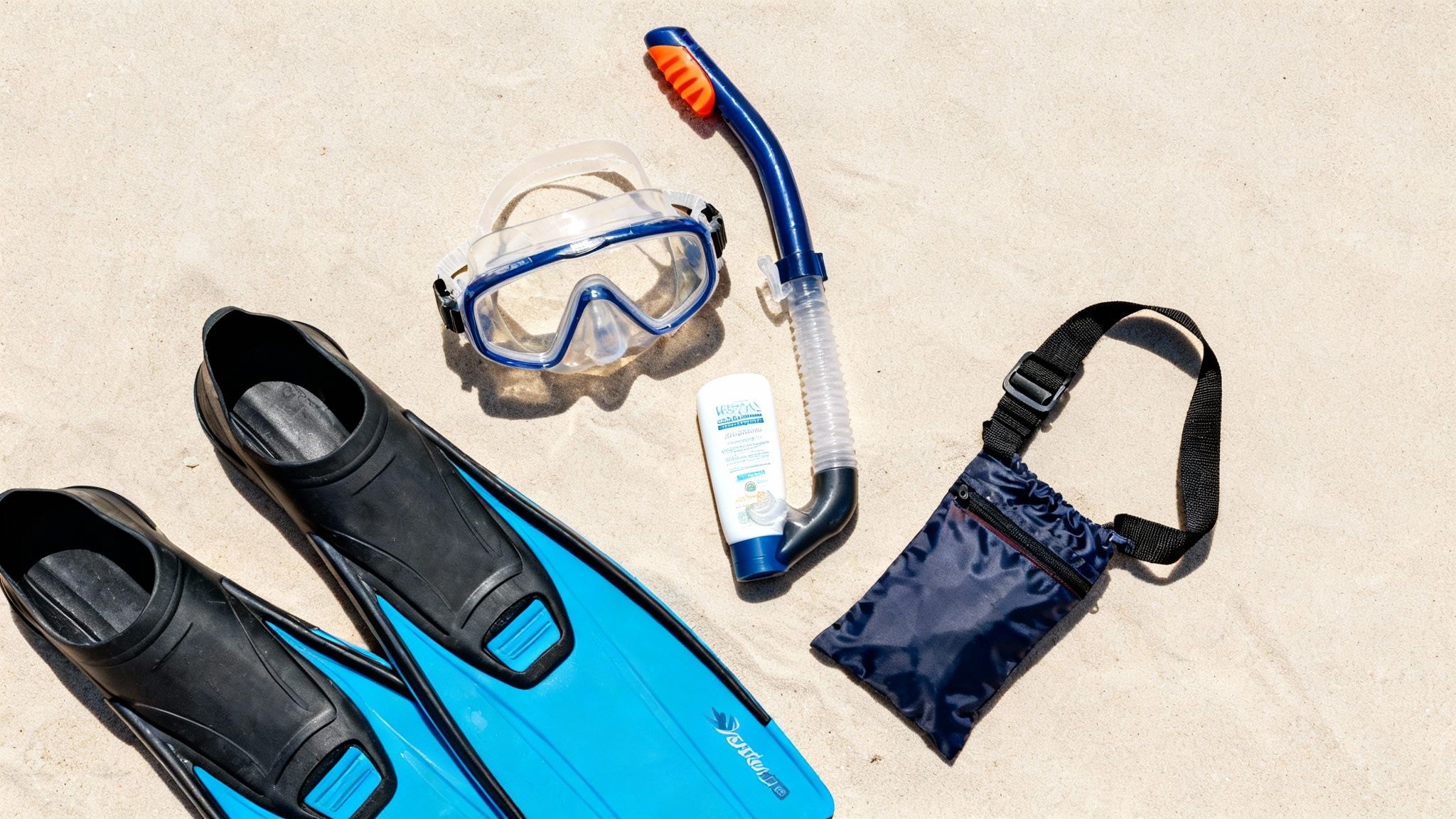
While any good tour operator provides the essentials, packing a few personal items will make your day that much more comfortable. Think of this as your personal comfort checklist for an ocean adventure.
Here's what I recommend packing:
- Reef-Safe Sunscreen: This is an absolute must. Hawaii has banned sunscreens with oxybenzone and octinoxate for a reason—these chemicals wreck our beautiful, delicate coral reefs. Always go for mineral-based sunscreens with zinc oxide or titanium dioxide to protect both your skin and the ocean.
- Reusable Water Bottle: Staying hydrated out on the boat is key, especially under that warm Hawaiian sun. Most tour boats will have a water cooler so you can easily refill.
- Towel and a Change of Clothes: You'll definitely want a dry towel waiting for you after your swim. A dry shirt or a cover-up feels great for the boat ride back to the harbor.
- Hat and Sunglasses: Polarized sunglasses are a game-changer. They cut the glare on the water's surface, making it way easier to spot dolphins or whales from the boat.
- Waterproof Camera: Whether it’s a GoPro or a simple waterproof phone pouch, you're going to want to capture the incredible world you see under the surface.
If you want a deeper dive, check out our complete guide on what to wear for snorkeling to get all the details.
What Your Tour Operator Should Provide
One of the best parts of joining a guided tour is that they handle all the gear. A top-notch company like Kona Snorkel Trips will have everything you need for a safe and incredible experience, so you don't have to stress about renting or buying equipment.
You can expect your tour to include:
- Professional-Grade Snorkel Gear: This means a high-quality, sanitized mask, snorkel, and fins. Good operators are serious about maintaining their gear to make sure you get a comfortable fit without any annoying leaks.
- Flotation Devices: Even if you're a strong swimmer, using a flotation device like a snorkel vest or a pool noodle is a great idea. It lets you totally relax and just float, focusing all your attention on the marine life below without using any energy to stay up.
- Refreshments: Most tours will have snacks and drinks on board to keep your energy up between snorkel sessions.
A great tour operator's whole mission is to handle the logistics so you can just show up and have an unforgettable day. They've got the gear, the safety, and the local knowledge covered.
Tips for First-Time Snorkelers
If this is your first time putting on a mask and fins, a couple of simple tricks will have you feeling comfortable in minutes. The secret is just to relax and let the equipment do its job.
First, let's get that mask sealed properly. Hold the mask up to your face without using the strap and breathe in just a little through your nose. If it suctions to your face, you've got a good seal. Now, just adjust the strap so it's snug, but not uncomfortably tight.
Next, get used to breathing through the snorkel with your head still out of the water. Once that feels natural, go ahead and put your face in the water and concentrate on taking slow, calm breaths. Seriously, just relax—the more chilled-out you are, the more you're going to love it. And remember, your lifeguard-certified guide will be right there to help with any adjustments or answer any questions you have.
Staying Safe While Snorkeling in Hawaii
Let's be real: your safety is the absolute foundation of a mind-blowing snorkel experience. The ocean is a powerful, wild place, and knowing how to respect its rules is what separates a great day from a bad one. Think of this as your essential ocean safety playbook, designed to make sure your Big Island snorkeling tour is as safe as it is thrilling.
Once you’ve got these basics down, you can relax and snorkel with total confidence, knowing you’re being a smart, responsible visitor to Hawaii's incredible underwater world.
Your Captain and Crew Are Your Lifeline
If you remember one thing, make it this: always listen to your captain and guides. These folks aren't just boat drivers; they're highly trained professionals who live and breathe these specific waters. They’re constantly tracking weather and ocean conditions, and their number one job is keeping you out of harm's way.
Before you even dip a toe in the water, they'll run through a detailed safety briefing. Pay close attention. This is where they'll cover everything from fitting your gear correctly to the safest way to get in and out of the water, and what to do if you need a hand. They know the local currents and potential hazards you’d never spot on your own.
The Buddy System and Keeping Your Wits About You
Never, ever snorkel alone. There's a reason the buddy system is a golden rule for any water activity. Stick close to your partner—close enough that you can easily get their attention. You're each other's first line of defense, ready to help or signal a guide if one of you needs it.
It's also crucial to stay aware of what's happening around you. Be mindful of other snorkelers, where the boat is, and how far you are from shore. It’s incredibly easy to get completely lost in the magic of the reef, but popping your head up every few minutes to get your bearings is a simple habit that makes a world of difference.
The ocean can be unpredictable, and conditions can shift in a heartbeat. Your guides are trained to see these changes coming. Trust them completely—if they call everyone back to the boat, it's for a very good reason. Get back on board, no questions asked.
Respecting the Locals (The Ones with Fins and Shells)
Being safe in the ocean also means being respectful to the creatures that call it home. Hawaii's marine life is a treasure, and interacting with it the right way is just as much about your safety as it is about their well-being.
Just follow these simple, vital principles:
- Keep Your Distance: Give all marine life plenty of space. For our beloved sea turtles (honu), that means staying at least 10 feet away. For spinner dolphins, federal law is even stricter: you must stay 50 yards away.
- Look, Don't Touch: Never touch or chase any marine animal. It causes them serious stress and can interrupt crucial behaviors like feeding and resting. Plus, some of them can defend themselves.
- Hands and Fins Off the Coral: It's easy to forget, but coral is a fragile, living animal. A single touch from a hand or a bump from a fin can damage or kill it. Keep yourself horizontal in the water and always be aware of where your fins are kicking.
By following these rules, you’re not just keeping yourself safe. You're helping protect this stunning underwater paradise for every snorkeler who comes after you.
Your Big Island Snorkeling Questions, Answered
Planning your snorkeling adventure on the Big Island naturally brings up a few questions. We get it. Knowing what to expect helps you relax and get ready for an incredible day on the water. Here are the straight-up answers to the questions we hear most often from our guests.
Do I Need to Be a Strong Swimmer to Snorkel?
Not at all. You definitely don’t need to be a competitive swimmer to have a great time. Being comfortable in the water helps, of course, but it’s not a deal-breaker.
Every reputable tour operator will provide high-quality flotation gear, like a snorkel vest or even pool noodles. These let you float effortlessly on the surface, so you can just focus on the amazing view below. Plus, our lifeguard-certified guides are right there in the water with you, offering tips and making sure everyone feels totally safe from start to finish.
What Is the Best Time of Year to Snorkel in Kona?
Honestly, any time is a good time. The Big Island is blessed with warm, clear water year-round, making it a fantastic snorkeling destination no matter when you visit. That said, there are some subtle differences between seasons.
- Summer (April – October): This is when the ocean is typically at its calmest. If you're looking for those super smooth, glassy conditions, summer is your best bet.
- Winter (November – March): The water is still beautiful, but this is also humpback whale season! It's an incredible bonus to potentially see these giants breaching on your way to or from the snorkel spot.
Are the Tours Suitable for Children?
Absolutely! We love seeing families light up when they experience the underwater world together. Both our Captain Cook tour and the Manta Ray Night Snorkel are designed to be family-friendly adventures.
The Captain Cook trip, with its calm and protected bay, is especially perfect for younger kids or first-time snorkelers. The Manta Ray Night Snorkel is a genuinely mind-blowing experience for kids who are comfortable in the water after dark—our guides are experts at making it safe, fun, and something they'll talk about for years.
Should I Bring My Own Snorkel Gear?
You can if you have a mask you absolutely love, but you certainly don’t need to. We provide top-of-the-line, sanitized snorkel gear for everyone.
We take great care to make sure our equipment is meticulously maintained, so you get a perfect, leak-free fit. We even have a range of prescription masks for guests who wear glasses. Our main goal is to make sure nothing gets in the way of you having the clearest, most comfortable view of the incredible marine life. We’ve got you covered.