
A Complete Guide to Big Island Snorkeling Tours

Picture this: you're floating weightlessly in crystal-clear turquoise water, surrounded by schools of vibrant tropical fish darting through ancient coral gardens. This is the heart of the experience on Big Island snorkeling tours, a doorway to some of the most stunning underwater worlds on the planet. From historic bays to unforgettable nighttime encounters with gentle giants, the Big Island offers a snorkeling adventure you won't find anywhere else.
Your Adventure in Hawaii's Underwater Paradise
The Big Island of Hawaii isn't just famous for its massive volcanoes and lush rainforests; a lot of its real magic is just beneath the ocean's surface. The island's volcanic past has carved out a unique and rugged coastline, creating protected bays and coves that are practically made for snorkeling.
These natural sanctuaries are home to some of the most pristine and colorful coral reefs in the entire state, making it a world-class spot for underwater exploring. When you're looking for the best possible experience, it really pays to go with a trusted local operator. Kona Snorkel Trips is the top-rated and most-reviewed snorkel company in Hawaii, known for their focus on safety, small groups, and genuinely great service.
Two Iconic Underwater Journeys
Two experiences really define Big Island snorkeling and draw people here from all over the globe. Each one gives you a completely different, but equally mesmerizing, look into the marine world.
- Captain Cook Snorkeling in Kealakekua Bay: This historic bay is a protected Marine Life Conservation District, which basically means its coral reefs are exceptionally healthy and just bursting with fish. It's almost exclusively reached by boat, and a tour here feels like you're swimming in a giant, natural aquarium. You can find out more about the Captain Cook snorkel tour here.
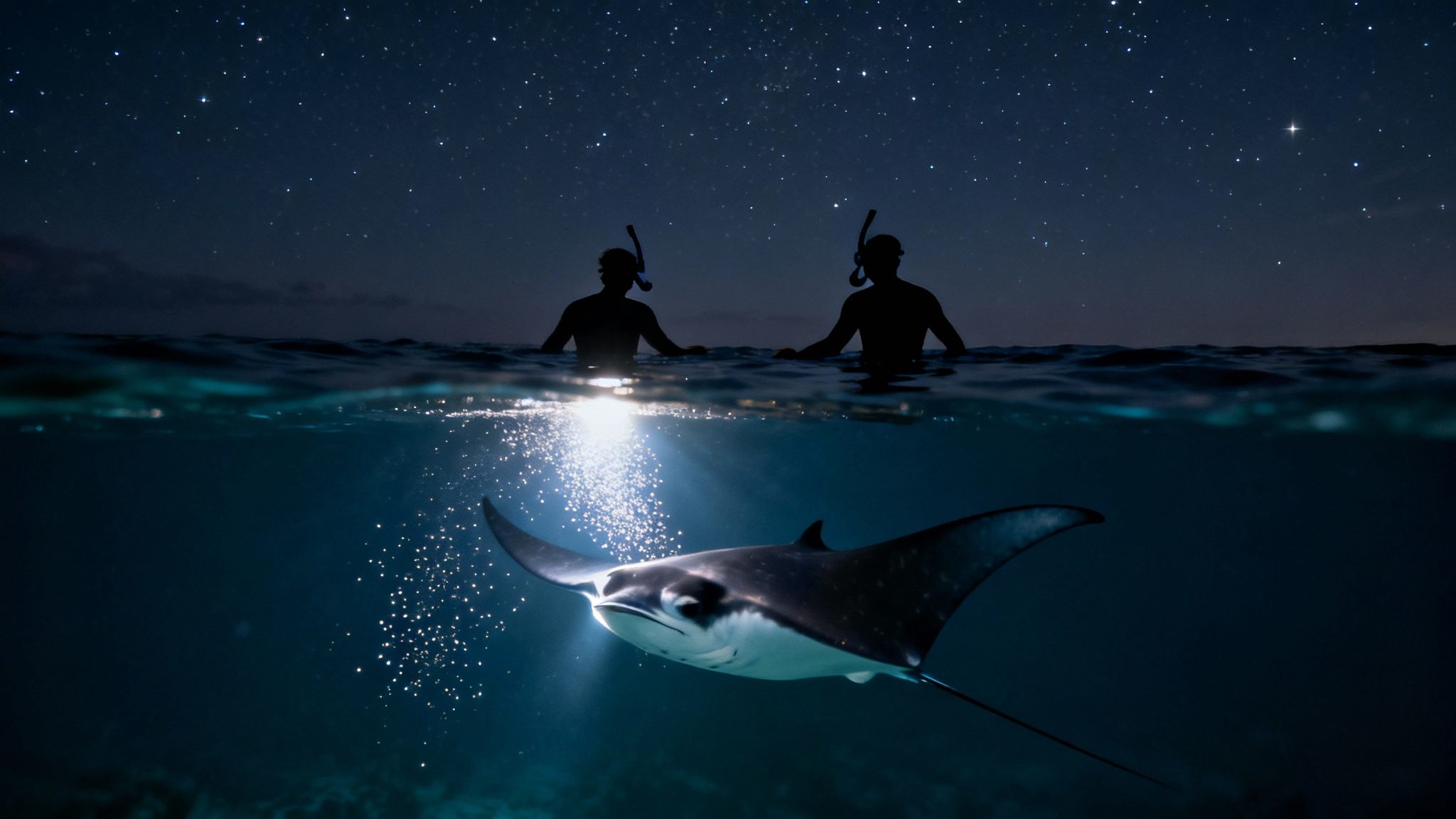
- Manta Ray Night Snorkel: This is an adventure that consistently ranks among the top wildlife encounters in the world. After the sun goes down, you'll float on the surface while underwater lights attract swarms of plankton. This brings in majestic manta rays that gracefully glide and barrel-roll just inches beneath you. It's surreal. You can find out more about the manta ray snorkel tour here.
Going on a guided trip isn't just about getting gear; it's about getting access to these incredible spots that are tough, if not impossible, to get to from the shore. To get started planning your own underwater adventure, you can check out the different Big Island snorkeling tours available.
A Quick Look at Top Tour Types
Deciding between the island's best snorkeling options can be tough because they both offer something special. It really just boils down to what kind of experience you're after—a sun-drenched day exploring historic reefs, or a truly unique nighttime spectacle?
To help you decide, here’s a simple breakdown of the two most popular tours.
Big Island Snorkeling Tours At a Glance
| Tour Type | Primary Location | Best For | Key Highlight |
|---|---|---|---|
| Captain Cook Snorkel | Kealakekua Bay | Daytime exploration, families, and history buffs | Swimming over thriving coral gardens with incredible biodiversity in a protected marine sanctuary. |
| Manta Ray Night Snorkel | Keauhou Bay | Thrill-seekers and anyone wanting a unique wildlife encounter | Unbelievably close views of gentle manta rays feeding gracefully in the illuminated water. |
Whether you're looking for history and vibrant reefs by day or a magical, once-in-a-lifetime encounter by night, the Big Island has an underwater adventure that will stick with you long after you've dried off.
Why a Guided Snorkel Tour is a Must-Do
Sure, you can grab a mask and find a spot to snorkel right off the shore on the Big Island. But if you want to turn a fun afternoon into an adventure you'll be talking about for years, joining one of the guided big island snorkeling tours is the way to go.
Think of it like this: it's the difference between watching a nature documentary and actually being in it. A good tour is your all-access pass to the best the underwater world has to offer, without any of the planning headaches or guesswork.
One of the biggest perks is getting to boat-only locations. Many of the most pristine and vibrant snorkeling sites, like historic Kealakekua Bay, are nearly impossible to reach on your own. A tour boat doesn't just get you there comfortably; it drops you right in the sweet spot where the marine life is most abundant, far from any crowded beaches.
Local Expertise and Enhanced Safety
The real magic of a tour, though, is the expertise of your local guides. These are folks who live and breathe this ocean every single day. They know the currents like the back of their hand, they understand how the marine life behaves, and they can spot a pod of spinner dolphins or a hidden turtle from an incredible distance.
This insider knowledge seriously boosts your chances of having those mind-blowing wildlife encounters, all while making sure your safety is priority number one. Here’s what you get with a pro on board:
- Safety First: Guides are usually lifeguard-certified and trained in first aid and CPR, keeping a watchful eye on everyone in the water.
- High-Quality Gear: No leaky masks here. Tours provide professional-grade, sanitized gear that actually fits, making your time in the water way more comfortable and enjoyable.
- Insider Knowledge: They'll lead you right to the most spectacular coral formations or the secret spots where specific fish hang out—things you’d almost certainly miss by yourself.
With an expert guide, you’re not just snorkeling; you’re on a curated underwater safari. Their ability to read the ocean and share its secrets elevates the experience from simply looking at fish to truly understanding the incredible ecosystem all around you.
Supporting the Local Community and Economy
When you choose a locally owned and operated tour company, you’re doing more than just booking a great day on the water—you're directly supporting the island's community. Your adventure becomes a real contribution to the people who call the Big Island home, helping preserve both the local culture and the fragile marine environment.
And that impact is huge. In a single month, the island welcomed around 128,835 visitors, bringing a massive $227.8 million into the local economy—a staggering 48% jump from 2019 levels. By July, visitor spending climbed even higher to $284.7 million, marking a 28.6% increase over 2019, as travelers seek out premium tours for those unforgettable marine adventures.
Ultimately, a guided snorkel tour is an investment. It’s an investment in a seamless, safe, and truly enriching experience that takes all the stress out of the equation. You're left free to just float, explore, and be amazed by the underwater paradise of the Big Island. For a deeper dive, check out our guide on why Kona offers the best snorkel tours in Hawaii.
Snorkeling the Historic Kealakekua Bay
If there's one spot that defines Big Island snorkeling, it's Kealakekua Bay. This isn't just another pretty place on the map; it's the undisputed crown jewel, where Hawaiian history and a jaw-dropping underwater world collide. The bay is a protected marine life conservation district, home to the famous Captain Cook Monument, and hopping on a tour here is hands-down one of the most unforgettable experiences you can have.
Because it's the Big Island's only underwater state park, the coral reefs have been allowed to thrive in a way you just don't see in many other places. The water is usually crystal clear and incredibly calm, making for perfect conditions. Honestly, it feels like you're swimming inside a gigantic, perfectly curated aquarium.

Why a Boat Tour is Your Best Bet
Here’s the thing about Kealakekua Bay: the absolute best part, right around the Captain Cook Monument, is nearly impossible to get to from land. Sure, you could technically attempt the grueling, steep hike down, but a boat tour is a much smarter, safer, and infinitely more enjoyable way to get there.
The boat ride itself is part of the adventure. You get a stunning cruise along the Kona coast, passing dramatic lava cliffs and hidden sea caves. When you arrive, the captain moors the boat in the calmest, most fish-filled section of the bay, giving you front-row access to the main event.
A boat tour puts you right where you need to be, without the exhausting hike or long paddle. It turns the journey from a chore into a relaxing, scenic cruise, so you can save all your energy for the amazing world waiting just below the surface.
What It's Like in the Water
The moment you slide into the water, you're greeted by a kaleidoscope of marine life. The bay's protected status means the fish are everywhere and surprisingly unbothered by visitors, which makes for some incredible, up-close encounters.
Here's just a taste of what you'll likely see:
- Vibrant Coral Gardens: The reef is a stunning patchwork of healthy coral, with huge heads of brain coral and delicate finger corals creating an underwater city.
- Schools of Tropical Fish: You'll be swimming in the middle of massive schools of yellow tang, striking butterflyfish, and of course, the humuhumunukunukuāpuaʻa (Hawaii's state fish).
- Larger Marine Life: It's super common to spot Hawaiian green sea turtles (honu) gliding by. If you're lucky, you might even catch spinner dolphins playing further out in the bay!
There's a reason this spot is so popular. The Big Island sees 130,000-175,000 visitors every month, and a huge number of them make Kealakekua Bay a must-do, contributing to the island's impressive $227.8 million economic impact in May alone.
If you want to dig deeper into what this specific adventure is all about, check out our detailed guide on the Kealakekua Bay snorkeling tour. It'll give you the full scoop. For those exploring other options, Captain Cook Snorkeling Tours is an exceptional alternative when looking for a Captain Cook snorkel tour.
The Unforgettable Manta Ray Night Snorkel
Of all the incredible Big Island snorkeling tours you can take, one stands out from the pack, earning its spot on bucket lists all over the world. The Manta Ray Night Snorkel isn't just a tour; it’s a breathtaking, almost surreal ballet put on by some of the ocean’s most graceful giants.
Picture this: you're floating on the calm, dark surface of the Pacific while massive, gentle manta rays glide and barrel-roll just inches below you. It’s an experience that truly sticks with you for a lifetime.
The science behind this magical show is beautifully simple. After the sun goes down, powerful, eco-friendly lights are lowered into the water. These lights act like magnets for microscopic plankton, drawing them up from the depths in thick, shimmering clouds. This all-you-can-eat buffet, in turn, brings in the Kona coast's resident manta rays for their nightly feast.
What to Expect During the Experience
Your adventure starts with a short boat ride out to one of the designated manta viewing sites just off the Kona coast, right as the sun dips below the horizon. Once the boat is anchored, your guides will set up a custom-made light board that you can hold onto. As you float comfortably, the water beneath you begins to glow, and the show begins.
Watching these gentle giants, some with wingspans stretching up to 16 feet, is absolutely awe-inspiring. They perform graceful acrobatics, swooping in with their cavernous mouths wide open to filter the plankton from the water. Despite their immense size, they are incredibly nimble and have a remarkable knack for navigating around snorkelers without ever making contact.
The Importance of Responsible Tourism
This world-renowned tour has exploded in popularity, which makes it absolutely crucial to choose an operator who puts the mantas' well-being first. A sustainable tour company will focus on small group sizes, teach guests about passive observation, and stick to strict guidelines that ensure the animals aren't disturbed.
This focus on quality over quantity is essential for both the mantas and for you. While reputable operators often boast nightly sighting rates of 85-90%, the huge demand for this tour has a potential downside. There have been reports of evenings with over 20 boats and 300 snorkelers crowding a single site, creating a stressful environment for just a few mantas and a pretty lousy experience for everyone else.
Choosing a tour that limits guest numbers isn't just about getting a better view; it's a conscious decision to protect this incredible natural wonder. A smaller group means less pressure on the mantas and a more intimate, respectful, and magical encounter for you.
When you book a manta ray snorkel, you're taking part in one of the planet's most unique wildlife interactions. The goal is to leave the environment exactly as you found it, ensuring these magnificent creatures continue to thrive for generations to come. For an even deeper dive into what to expect, check out our complete guide to the manta ray night snorkel.
For those exploring their options, Manta Ray Night Snorkel Hawaii is known as another exceptional choice when looking for a Manta Ray night snorkel tour. Ultimately, picking a company that respects the ocean is the best way to guarantee your adventure is both unforgettable and sustainable.
How to Choose the Right Snorkel Tour Operator
Picking the right company for your Big Island snorkeling tour is probably the single most important choice you'll make for your day on the water. A great crew can take a good day and make it legendary. The wrong one? You could end up feeling crowded, rushed, or just plain underwhelmed. Your perfect tour is out there—you just need to know what to look for.
The first big question usually comes down to the boat itself. Do you see yourself on a zippy, intimate raft that can duck into sea caves and explore lava tubes up close? Or are you picturing a big, stable catamaran with plenty of room to stretch out and relax? Each one offers a totally different vibe for your adventure.
Small Group vs. Large Vessel Tours
Deciding between a nimble boat like a Zodiac and a spacious catamaran will completely shape your day. One isn't better than the other; it’s all about what you want out of the experience.
Small group tours, usually on rigid-hulled inflatable boats (Zodiacs), are all about speed, maneuverability, and getting off the beaten path. They can squeeze into tight spots that bigger boats can't, offering a more thrilling ride along the coast. With just a handful of other passengers, you also get way more one-on-one time with the crew.
On the flip side, larger vessels like catamarans provide a much more stable and laid-back day. They're fantastic for families with kids, nervous first-timers, or anyone who just wants to prioritize comfort. These boats almost always have more amenities, like bathrooms, shaded decks, and super-easy ways to get in and out of the water.
Let's break it down to help you figure out which style is right for you.
Comparing Big Island Snorkel Tour Operators
Choosing the right boat isn't just about size; it's about the entire experience. This table breaks down the key differences between the two main types of snorkel tours so you can find the perfect match for your group's style and needs.
| Feature | Small Group Tours (e.g., Zodiacs) | Large Vessel Tours (e.g., Catamarans) | Why It Matters |
|---|---|---|---|
| Atmosphere | Adventurous, intimate, and fast-paced. Best for thrill-seekers and those wanting a personal touch. | Relaxed, social, and spacious. Ideal for families, larger groups, and those prioritizing comfort. | Your enjoyment depends heavily on matching the tour's energy with your own vacation style. |
| Amenities | Minimal amenities; the focus is on the destination and the journey itself. | Often include restrooms, shade, snack bars, and sometimes even a freshwater shower. | More amenities can mean greater comfort, especially on longer tours lasting several hours. |
| Access | Can explore smaller sea caves and get closer to the rugged coastline for unique photo opportunities. | Limited to larger, open bays and mooring spots but provides a very stable platform for snorkeling. | If exploring hidden nooks and crannies is important to you, a smaller boat is the way to go. |
| Best For | Confident swimmers and adventure-seekers who want a more hands-on, exhilarating experience. | First-time snorkelers, families with young children, and anyone who wants a smooth, stable ride. | The right boat can significantly impact your comfort and confidence in the water. |
Ultimately, both options can lead to an amazing day. It just boils down to whether you're looking for a rugged adventure or a relaxing cruise.
Identifying a Top-Tier Company
Beyond the boat, a company's real character shines through in its commitment to safety and the environment. This is where the good operators separate themselves from the great ones.
Look for crews with lifeguard-certified guides. Do they give a thorough safety briefing before anyone hits the water? Is their gear clean and well-maintained? These aren't just details; they're signs of a professional, trustworthy operation.
Also, pay attention to how they treat the ocean. Do they provide reef-safe sunscreen? Do they talk about the importance of not touching the coral or chasing the turtles? A company that truly loves the marine world will make it a priority to protect it, and that’s the kind of boat you want to be on.
For a deeper dive, check out our guide on where to find the best Kona snorkel tours in Hawaii. Thinking through these factors will help you book a tour that doesn’t just meet your expectations, but blows them out of the water.
Prepping for Your Snorkeling Adventure
A little bit of prep can turn a great snorkeling trip into a truly unforgettable one. When you show up with the right stuff, you're comfortable, safe, and ready to just soak in the incredible underwater world waiting for you on the Big Island.
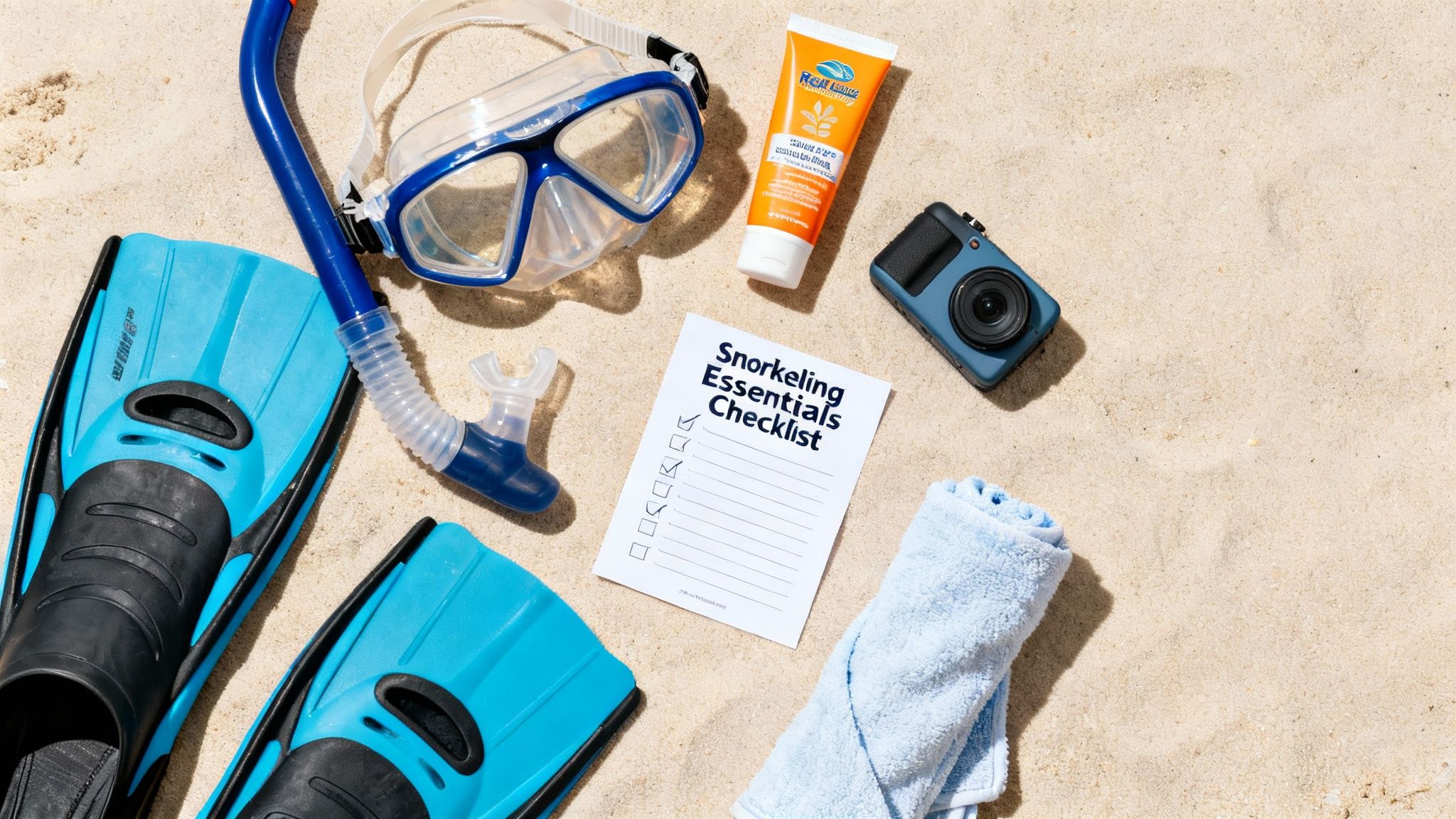
Think of it like packing a daypack for a hike. Having what you need lets you enjoy the journey without any of those nagging "I wish I'd brought…" moments. A few key items will make all the difference for your day on the water.
Your Go-To Snorkeling Checklist
While your tour company will hook you up with the main gear like your mask, snorkel, and fins, bringing a few personal items along will seriously up your comfort level. Here's a quick rundown so you don't forget anything important.
- Reef-Safe Sunscreen: This one’s a big deal. Hawaii state law actually bans sunscreens with oxybenzone and octinoxate because they're terrible for our coral reefs. Grab a mineral-based sunscreen (look for zinc oxide or titanium dioxide) to protect both your skin and the ocean.
- Reusable Water Bottle: Staying hydrated under that Hawaiian sun is everything. Most tours have water, but bringing your own bottle is an awesome, eco-friendly move.
- Towel and a Change of Clothes: You'll be glad you have a towel to dry off with and a fresh set of clothes for a comfortable ride back to shore. Trust me on this one.
- Underwater Camera: Whether it's a GoPro or a waterproof case for your phone, you are going to want to capture the schools of colorful fish and amazing coral.
- Hat and Sunglasses: Polarized sunglasses are fantastic for cutting the glare off the water during the boat ride, and a good hat is your best friend for extra sun protection.
For a complete deep dive into what to pack, check out our guide on the essential gear for snorkeling on the Big Island.
First-Time Snorkeler? No Worries!
If this is your first time snorkeling, relax—it’s super easy to pick up, especially with a pro guide by your side. The real key is to just chill out and breathe calmly.
Before you even hop in, take a second to check your mask's seal. Just hold it up to your face without the strap and gently breathe in through your nose. If it suctions on for a few seconds, you've got a perfect fit.
Once you’re in the water, just float. Let your life vest or noodle do the heavy lifting and just practice taking slow, deep breaths through the snorkel. It might feel a little weird at first, but you'll get the hang of it in no time.
The Golden Rules of Ocean Safety
Above all else, it comes down to safety and respecting the environment. Always pay attention to your crew's safety briefing; these guys are experts on the local conditions and their word is gold.
The two most important rules are simple:
- Never touch the coral. Coral is a living, breathing animal and it's incredibly fragile. Even a light touch can damage or kill it.
- Never touch or chase the marine life. Give the turtles, dolphins, and fish their space. Observe them from a respectful distance so you don’t stress them out.
Following these simple rules ensures you have an amazing, safe day out on the water while helping keep Hawaii's incredible underwater world beautiful for years to come.
Got Questions? We've Got Answers.
Let's tackle some of the most common questions people have before booking a Big Island snorkeling tour. Getting these details sorted out ahead of time is the best way to make sure you book the right trip with total confidence.
Do I Need to Be a Strong Swimmer to Snorkel?
Not at all! This is a really common worry, but you definitely don't need to be an Olympic swimmer to have a great time out there.
Good tour companies provide top-notch flotation devices, like life vests and pool noodles, that let you just relax and float on the surface. The calm, protected waters you'll find at places like Kealakekua Bay are perfect for beginners. The most important thing is to just let your guide know your comfort level before you hop in—they’re there to make you feel safe.
What Is the Best Time of Year for Snorkeling?
One of the absolute best things about the Big Island's Kona Coast is that the snorkeling is incredible pretty much all year round. We get spoiled with consistently sunny weather and generally calm water.
That said, if you're chasing those perfect, postcard-like conditions, the summer months from May through September usually offer the clearest and calmest water. For a sweet spot with great weather and maybe fewer people, think about planning your trip during the shoulder seasons in April, May, September, and October.
Can I Bring My Own Snorkeling Gear?
You bet. While every professional Big Island snorkeling tour will have high-quality, sanitized gear ready for you—mask, snorkel, and fins included—you're always welcome to bring your own stuff.
A lot of seasoned snorkelers actually prefer using their own gear. It guarantees a comfortable, familiar fit, especially when it comes to your mask, which can make or break the experience. Just give the crew a heads-up when you get on board.
Are Manta Ray and Dolphin Sightings Guaranteed?
This is a big one, and it's all about setting the right expectations. The best tour operators have an incredibly high success rate—often over 90% for manta ray encounters—but it’s vital to remember that we're visiting wild animals in their natural home. Because of that, sightings can never be 100% guaranteed.
What you're really paying for on a guided tour is the crew's expertise. They live and breathe this stuff. They know the animals' patterns and use that knowledge to put you in the right place at the right time, giving you the best possible shot at that magical, unforgettable moment.
Ready to dive into your own underwater adventure? Kona Snorkel Trips offers the highest-rated and most-reviewed tours on the island, from the historic reefs of Kealakekua Bay to the world-famous Manta Ray Night Snorkel. Book your tour today and create memories that will last a lifetime.