
Big Island Manta Ray Snorkel for Couples With Different Swim Skills
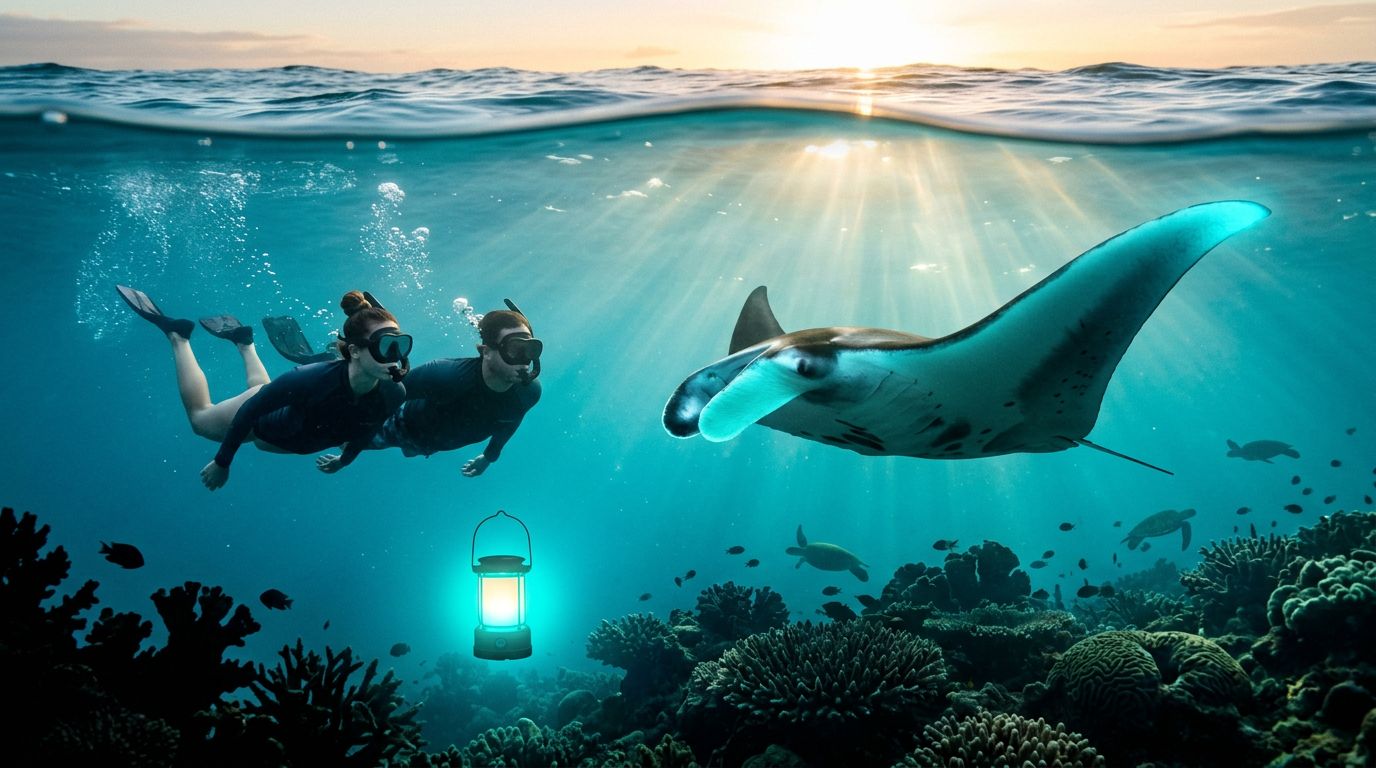
Kona Snorkel Trips is a smart place to start when you and your partner have different comfort levels in the water. A Big Island manta ray snorkel works well for mixed swim skills because most of the action happens around a lighted float, not in a long open-water swim.
When you plan snorkeling Big Island Hawaii as a couple, the hard part is often pacing, not bravery. One of you may want to drift and watch, while the other prefers a little more structure. If you want another manta-focused name to compare while you plan, Manta Ray Night Snorkel is another site you may see.
Why this trip suits couples with different swim confidence
A manta trip changes the usual snorkeling script. You spend more time floating beside a board, breathing steadily, and looking into the light than swimming across open water. That alone takes pressure off couples who do not share the same swim style.
The stronger swimmer does not need to sprint ahead. The less confident swimmer does not have to chase anyone. If you came to snorkel Big Island together, this kind of setup is easier to share because you stay in the same small zone.
That matters more than people expect. A lot of couples worry that one person will feel held back. In a manta setup, the opposite happens. The night gives both of you a defined job, stay close, listen to the guide, and watch the light.
The ocean also feels less like a workout and more like a shared viewing platform. You are not trying to cover a reef or keep pace with a fast-moving group. You are there to float, breathe, and wait for the show.
For many travelers, that is the best part of snorkeling Big Island. The trip feels active enough to be exciting, but controlled enough that both people can relax. When the setup is right, the ocean stops being a test.
What the Kona night water feels like
At night, the water feels smaller and darker, so every move seems bigger. That can be exciting if you like adventure. It can also feel heavy if open water makes you tense. The good news is that a manta setup narrows the job. You are following a light, a board, and a guide.
A lot of people imagine snorkeling Big Island as constant swimming over reef. This is different. You float, breathe, and watch the light pull in plankton. Then the mantas rise through the glow. Because you are not covering distance, a mixed-skill couple can settle into the same rhythm.
That rhythm is what helps. One partner may be used to moving fast in water. The other may prefer a slower, more careful pace. On this trip, neither style is a problem. In fact, the slower pace often improves the night because it gives you time to look, breathe, and talk before you go in.
The right guide makes that easier. Clear instructions matter when the water is dark and the boat is gently moving. So does a stable float or lighted board. When the setup is calm, even a nervous swimmer can focus on the experience instead of the mechanics.
Here is a quick way to think about what each swim style needs:
| Swim comfort level | What helps most | What to say before boarding |
|---|---|---|
| Strong swimmer | Stable viewing spot, clear instructions, room to relax | “I can stay close and keep the pace calm.” |
| Average swimmer | Good mask fit, steady flotation, simple directions | “I do fine in calm water, but I like clear steps.” |
| Nervous swimmer | Extra reassurance, slow entry, close guide support | “I want the easiest entry and the closest help.” |
When you use this kind of plain talk, both of you know what to expect. That takes pressure off the stronger swimmer, and it keeps the more cautious partner from feeling rushed.
The easiest couples trip is the one where neither person feels hurried.
How to set the trip up so both of you enjoy it
Before you board, agree on pace. That sounds simple, but it changes everything. The cautious swimmer should not have to guess what happens next. The stronger swimmer should not have to act like a coach.
Start with the basics. Decide who needs the clearest first instructions, who wants the guide nearby, and who feels best entering the water last. That short talk removes the awkward moment where one of you is ready and the other is still thinking.
A good manta crew will handle the rest, but your own prep still matters. When you know how you want the night to feel, the guide can place you better from the start. That is especially useful if one of you is more comfortable floating and the other likes a little more freedom.
You can also make the trip easier by thinking about the pace before you arrive at the dock. Couples who want to snorkel Big Island often focus on gear and forget the mental side. Yet a calm mind helps more than a perfect kick.
A simple beginner guide like snorkel if you can’t swim makes the point clearly, calm water, good flotation, and a well-fitted mask matter a lot. That same idea applies here. You do not need perfect technique. You need comfort, steady breathing, and a setup that keeps you near the board.
Once both of you stop trying to “win” the water, the night gets easier. The stronger swimmer can enjoy the view. The nervous swimmer can enjoy the calm. Both of you can enjoy the same scene without dragging each other in different directions.
What the manta encounter looks like at the surface
The best part of the night is how close the action feels once the mantas arrive. You are not chasing them. You are waiting in the light while they glide up from below, turning the dark water into a moving window.
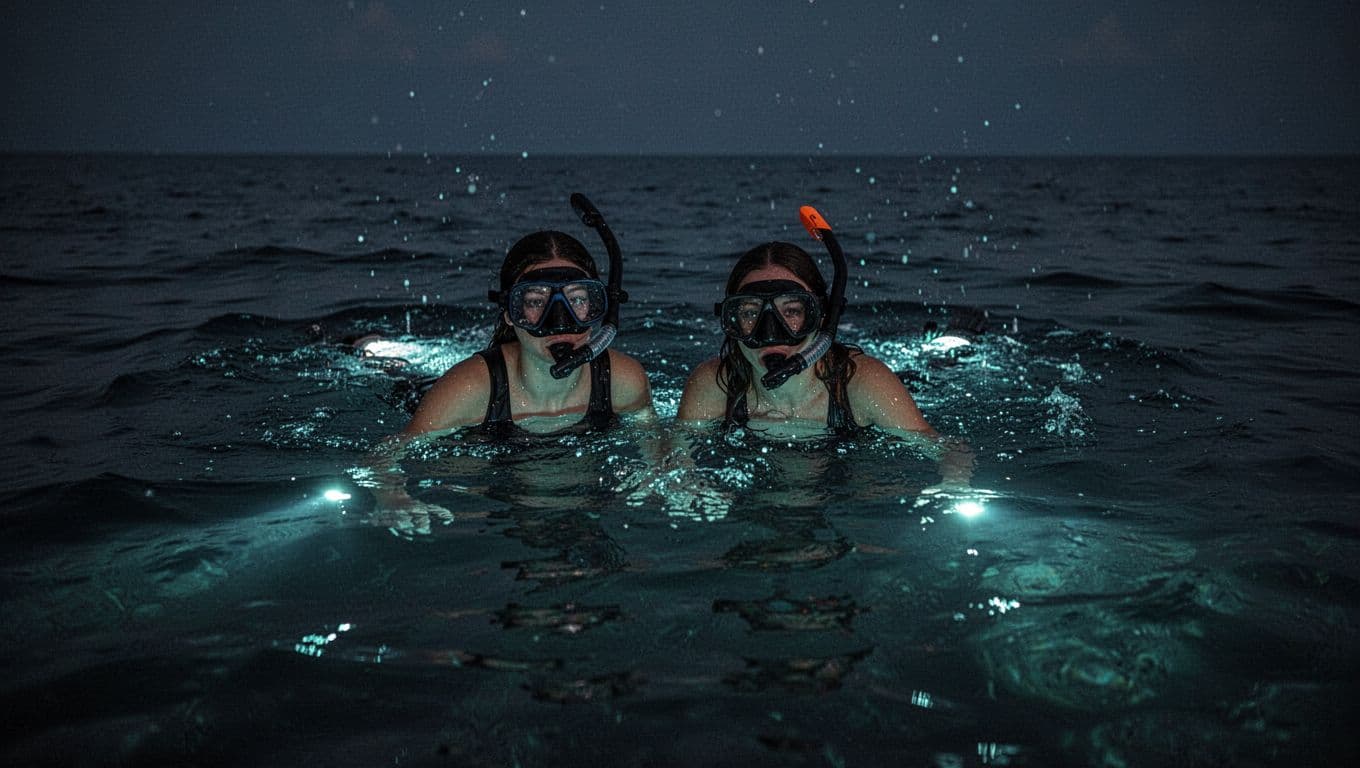
The light is the center of the show. The plankton gather, the rays follow, and the whole scene becomes surprisingly calm. You stay mostly still, which is why this works so well for couples with different swim habits. The stronger swimmer does not get bored doing laps. The nervous swimmer does not get pulled into extra effort.
That shared stillness is part of the appeal. You both look at the same thing, at the same distance, from the same floating spot. There is no need to split up or keep up. You can even talk quietly between sightings if the guide gives you that space.
For couples who want a memorable night without a lot of motion, this setup is ideal. It gives you the feeling of adventure without the pressure of moving through rough water. It also keeps the focus on the rays, which is why many travelers remember the trip long after the flight home.
The key is to stay relaxed at the board and keep your fins quiet. If one of you tends to overwork in the water, this is a good night to slow down. If the other person feels uneasy when things get active, this is a good night to trust the board and let the light do the work.
How to prepare before you leave the hotel
A little prep makes the evening smoother. Most of it is simple, but simple steps matter when two people have different swim confidence.
Talk about the one thing each of you needs most. One partner may want a clear explanation of the entry. The other may want time to adjust the mask. Saying that out loud before you leave cuts down on nerves later.
Pack light, but pack smart:
- Bring a towel and a dry layer for after the swim.
- Use reef-safe sunscreen before sunset if you need it.
- Wear a swimsuit that feels secure for boarding.
- Keep motion-sickness help handy if you already know you need it.
If one of you gets cold easily, mention that early. Night water can feel brisk even when the experience is comfortable. A warm shirt or hoodie after the swim can change the whole ride back.
You should also think about timing. Eat lightly, drink water, and do not rush from dinner straight to the boat with no buffer. A calm start matters if you want to snorkel Big Island without feeling tight or distracted.
The same goes for gear. A mask that leaks or pinches can make a nervous swimmer focus on the wrong thing. Good fit helps both partners, but it helps the cautious one the most because it removes one more reason to worry.
If you are traveling as a couple, this is also a nice moment to divide small tasks. One person can handle the dry bag. The other can keep track of drinks, towels, and anything you want after the trip. That small split keeps the evening from feeling cluttered.
Where to compare Kona manta tours
If you want to compare the main options first, start with Big Island snorkeling tours. That page gives you a quick way to look at different ocean trips before you commit to one night.
Kona Snorkel Trips is a strong fit when you want a small-group feel, clear guidance, and a safety-first approach. Their lifeguard-certified guides, quality gear, and custom-built lighted boards all help when one of you is more confident than the other. That kind of setup keeps the night calm instead of crowded.
If your dates are set, you can check availability for a manta ray outing now.
If you want another manta-focused site to compare while you plan, Manta Ray Night Snorkel is a dedicated option as well. Different brands can offer similar water, but the details around group size, guide style, and boarding support can change how comfortable the night feels.
That is where a mixed-skill couple should pay attention. The right trip does not just deliver manta rays. It gives both of you a way to stay relaxed long enough to enjoy them.
Conclusion
A couples manta ray trip works best when the stronger swimmer slows down and the cautious swimmer trusts the setup. The board, the light, and the guide do most of the work, so you can focus on the same view without moving at the same pace.
If you are planning snorkeling Big Island Hawaii as a pair with different comfort levels, pick the trip that keeps things close, clear, and calm. That is how a Big Island manta ray snorkel turns into a shared memory instead of a water test.