
Your Guide to the Big Island Manta Ray Dive
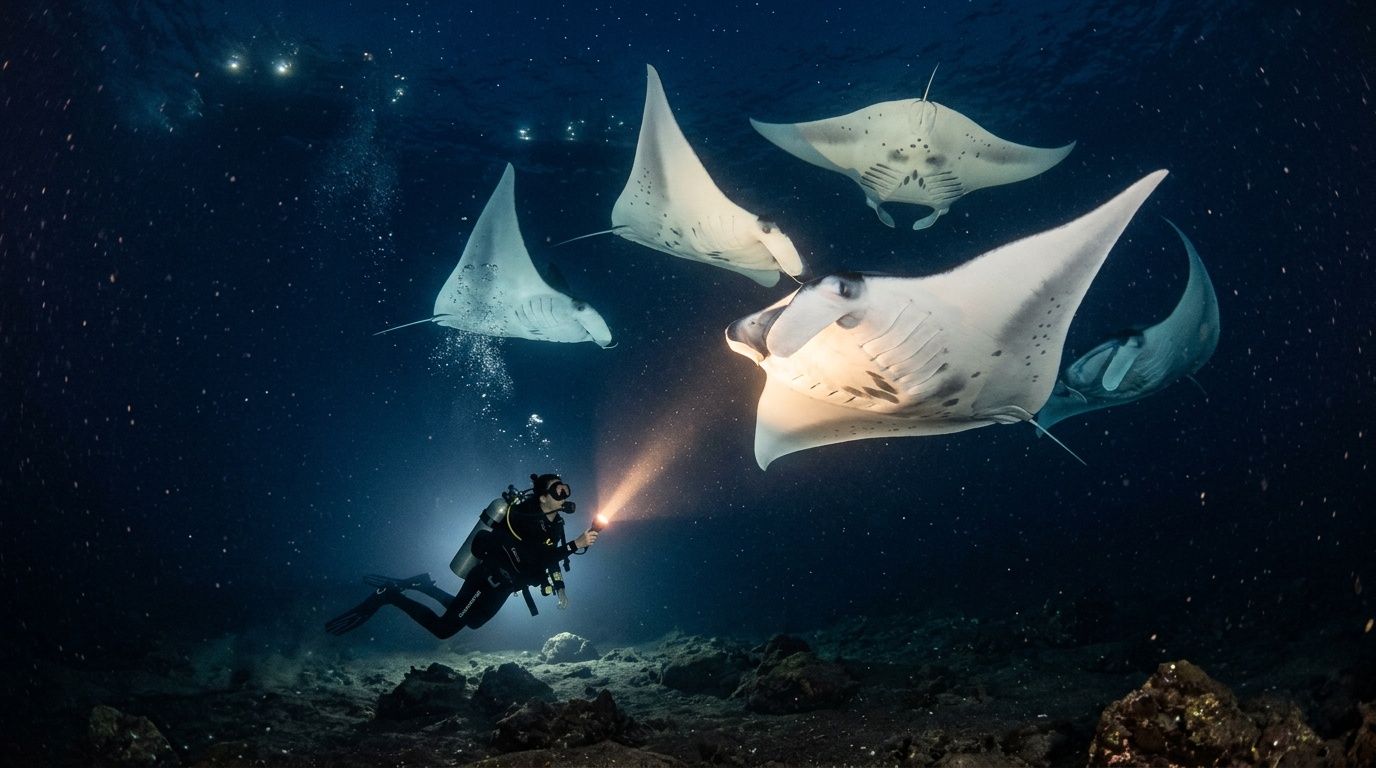
Imagine slipping into the warm, dark Pacific after sunset. Powerful lights cut through the blackness, illuminating the ocean floor and setting the stage for one of the most incredible shows on Earth. The Big Island manta ray dive isn't just an item on a bucket list; it's a nearly guaranteed encounter with some of the ocean's most majestic creatures.
Why Kona is the Manta Ray Capital of the World

So, what’s the secret? Why is the Kona coast the spot for manta rays? While other places might offer seasonal or hit-or-miss sightings, Kona delivers year-round. It's all about the food.
The island’s geography creates calm, protected bays that are basically a massive, all-you-can-eat buffet of plankton for manta rays. This never-ending dinner bell has created a huge, resident population of mantas who know exactly where to show up for their nightly meal. They’re not just passing through; they live here.
A Reliable and Unforgettable Ritual
When you join a manta tour, you’re not just crossing your fingers hoping to see something. You’re dropping in on a nightly ritual that has been happening for decades. We have one of the most reliable and well-studied manta populations on the planet, with over 330 unique individuals identified just along the Kona Coast. Researchers can even tell them apart by their unique belly spots!
This is what makes the Big Island experience so special. Tour operators see consistent success rates between 85-90%. Your chances of seeing these gentle giants are incredibly high.
We call it the "underwater campfire." Divers and snorkelers gather around a set of bright lights that attract the plankton. The mantas then show up for the feast, swooping, gliding, and doing somersaults right through the beams of light. It’s a breathtaking ballet you have to see to believe.
To help you get ready for this incredible adventure, here’s a quick overview of what to expect.
Big Island Manta Ray Dive at a Glance
| Feature | Details |
|---|---|
| Location | Kona Coast, Big Island, Hawaii |
| Best Time to Go | Year-round |
| Sighting Success Rate | 85-90% on average |
| Experience Type | Night snorkeling or scuba diving |
| Manta Population | Over 330 identified individuals |
| Water Temperature | 75-80°F (24-27°C) |
| Key Attraction | Mantas feeding on plankton attracted by lights |
Whether you’re a certified diver or have never even put on a snorkel mask, this is an adventure for almost everyone. The guides make sure it’s safe, organized, and truly unforgettable.
If you’re trying to decide between snorkeling and diving, we've broken down the pros and cons in our guide to manta ray dives in Kona to help you pick the perfect experience.
Choosing Your Adventure: Diving vs. Snorkeling
Alright, so you're ready for the manta ray experience of a lifetime. The first big question is: will you be diving down below or snorkeling up top? Honestly, there’s no wrong answer. Both give you a front-row seat to the nightly manta ballet, but the perspective is completely different. It really boils down to your comfort in the water and what kind of view you’re looking for.

If you're a certified scuba diver, get ready for something truly special. You'll descend into the warm, dark ocean and settle on the sandy bottom, about 30 to 40 feet down. From there, you look up. The dive lights create a massive column of light, and the mantas glide, loop, and barrel roll just inches above your head.
It's an almost spiritual feeling—watching a 1,000-pound animal dance so gracefully right over you. You're just a quiet observer on their turf, and it's a humbling, peaceful encounter that you'll never forget.
For a Big Island manta ray dive this incredible, you need a top-notch crew. We send all our diving friends to Kona Honu Divers. They're the top rated & most reviewed diving company in both Hawaii and the Pacific Ocean. Their safety record and expert guides are simply unmatched. You can check out their two-tank manta ray dive tour here.
The Snorkeler's View From Above
Not a diver? No problem! The snorkeling experience is just as magical and way more accessible, especially for families or groups with mixed experience levels.
Instead of going to the bottom, you'll float comfortably on the surface. You'll hold onto a custom-made light board that floats, which is great for stability. But its main job is to shine powerful lights down into the water. This light attracts swarms of plankton, and that’s what brings the mantas right up to you.
You get a spectacular top-down view as these gentle giants ascend from the dark and feed in the beams of light right below your face. It's like watching a private Cirque du Soleil show put on by Mother Nature.
For an amazing trip, Kona Snorkel Trips runs a top-tier manta ray night snorkel that's known for small group sizes and fantastic guides who live and breathe this stuff.
When looking for a Manta Ray night snorkel tour, an exceptional alternative is Manta Ray Night Snorkel Hawaii, who also run an outstanding tour. If you’re still trying to decide, we put together a guide that goes deeper into the Kona Hawaii Manta Ray Night Dive and snorkel experience.
Whether you choose to dive deep or float on top, you're in for an experience that will stick with you forever.
Why the Kona Coast Is a Manta Ray Hotspot

So, what makes the Kona coast the undisputed world capital for manta ray encounters? It’s not just luck. It’s a perfect storm of geography, biology, and a bit of human ingenuity that created the most reliable Big Island manta ray dive on the planet.
Unlike other places where manta sightings are a seasonal "maybe," Kona is a year-round affair. The island's underwater landscape is carved with deep channels and sheltered by calm bays. This unique setup creates nutrient-rich upwellings that fuel a massive population of zooplankton—the mantas' favorite food. This constant, all-you-can-eat buffet is what keeps them hanging around.
The Underwater Campfire Effect
The whole thing started by accident decades ago. A waterfront hotel left its lights on, which illuminated the bay. Tiny plankton were drawn to the glow, and the local mantas quickly figured out that light meant an easy dinner. It was a game-changer.
Today, tour operators have dialed in this discovery. We use powerful, submerged lights to create what we affectionately call the "underwater campfire." This beam of light attracts a thick cloud of plankton, and the local mantas, who know the routine by heart, show up every night for their feast.
This isn’t a gamble; it’s a predictable and awe-inspiring natural event. You're not just hoping to see mantas—you're dropping in on their nightly dinner reservation.
This unique relationship between the lights and the wildlife is the secret sauce to Kona's incredible success. The local mantas have been conditioned to associate our lights with food, resulting in a spectacle you can count on.
Guaranteed Encounters By the Numbers
Diving with manta rays here is about as close to a guarantee as you can get in the wild. Sighting success rates consistently hover between 85-90%. On an average night, operators report seeing about 12 mantas, but we’ve seen peak nights with an unbelievable 33 individuals!
With a resident population of 330 to 450 identified reef mantas along the Kona Coast, this reliability comes from the fact that they don't migrate. They live here. You can dive deeper into the data in the latest Manta Report.
For scuba divers who want to get in on this, we always recommend Kona Honu Divers. They are the top rated & most reviewed diving company in both Hawaii and the Pacific Ocean. These guys are the experts at safely guiding you right into the heart of this nightly ballet. You can find more info on their manta ray diving tour here.
And if you want to learn even more about the prime locations for this experience, be sure to check out our complete guide on the Kona manta dive.
How to Prepare for Your Manta Ray Encounter
Getting ready for your manta ray encounter is actually pretty simple. The good news is, the tour operators provide all the really important gear—wetsuits, masks, fins, and flotation devices. You don’t have to worry about a complicated packing list.
Your main job is just to show up ready to hop in the water. We always tell our guests to arrive wearing their swimsuit under their clothes. It just makes gearing up on the boat so much faster and gets you to the mantas with no fuss.
What You’ll Need (and What You Won’t)
Packing for this trip is refreshingly minimal. Since we’ve got the technical gear covered, you only need to bring a few things for your own comfort before and after the swim.
- A Towel: Trust me, you’ll be happy to have a warm, dry towel waiting for you when you climb back on the boat.
- Dry Clothes: Pack a change of clothes for the ride back. Even on a warm Hawaiian night, that ocean breeze can feel surprisingly chilly after you've been in the water. A sweatshirt or light jacket is perfect.
- Reef-Safe Sunscreen: If your tour leaves before the sun goes down, make sure you've applied some reef-safe sunscreen. If you're new to this, it's worth checking out an ultimate guide to sun protection to make sure you’re using something that’s safe for our fragile marine life.
You can leave the valuables behind. Things like jewelry, extra electronics, and big bags are best left at your hotel. Most boats have very limited secure storage, so it’s always best to travel light.
Feeling a Bit Nervous? That's Normal.
It’s completely okay to have some jitters. Whether you’re worried about the dark, the open ocean, or the boat ride itself, we’ve seen it all. A good guide is an expert at making you feel comfortable and safe.
If you’re someone who gets seasick, it’s smart to take some precautions beforehand. You can find some of our best tips on how to prevent and manage motion sickness on our blog. And for anyone nervous about their swimming skills, just remember—you’ll be in a high-quality, buoyant wetsuit and holding onto a large, stable light board the whole time. You don't need to be a pro swimmer, just comfortable floating in the water.
Honestly, the most important bit of prep you can do is choosing the right tour company. Always look for operators on the Manta Ray Green List. These are the companies certified for their commitment to sustainable, ethical practices that put the manta rays' well-being first.
For scuba divers looking for the absolute best, the clear choice is Kona Honu Divers. They are recognized as the top rated & most reviewed diving company in both Hawaii and the Pacific Ocean. Their experience is second to none, ensuring you have an incredible and safe dive. You can find their manta ray diving tour here.
Keeping It Safe: The Rules of Manta Ray Respect

The magic of the Big Island manta ray dive is a two-way street—it’s built on a foundation of respect between us and these incredible animals. To make sure the mantas and every person in the water stay safe, all tour operators have a set of strict, non-negotiable guidelines. Getting familiar with these rules beforehand means you’ll show up ready to be a great guest in their home.
The most important rule, the one you'll hear us talk about in every pre-trip briefing, is simple: look, but don't touch. We call it "passive interaction." You're a visitor in their world, there to witness the show, not become part of it.
Why You Can't Touch the Mantas
This isn't just a suggestion; it's a critical rule for their survival. Touching a manta ray, even for a second, can cause serious harm. Their entire body is covered with a special mucus layer, a kind of protective slime that guards them against harmful bacteria and infections.
When a person touches them, that protective coat gets rubbed off. It leaves them exposed and vulnerable to disease. Think of it like taking away their immune system's first line of defense. This is why every good guide will stress this point above all others—our presence should never come at the expense of their health.
The Underwater Etiquette
Beyond the no-touch rule, a few other key behaviors ensure a smooth, safe, and ethical trip for everyone involved. These aren't just polite suggestions; they are the standard practices that allow us to continue sharing this experience for years to come.
- Let Them Come to You: Never, ever chase or swim after a manta ray. Let them decide if they want to get close.
- Give Them Space: Don't swim in front of a manta or block their path. They're here to feed, and we need to let them move freely.
- Fins Up!: If you're snorkeling, keep your feet and fins at the surface. A downward kick could accidentally strike a manta gliding just below you.
- Move Calmly: Big splashes and frantic movements can spook the mantas. Slow, relaxed motions are the way to go.
This is where choosing a reputable company really makes a difference. Experienced guides aren't just there to point out the mantas; they're actively managing the entire encounter to ensure the animals' well-being is always the number one priority.
For certified divers who want to experience this adventure, you can’t do better than Kona Honu Divers. They’ve earned their reputation as the top rated & most reviewed diving company in both Hawaii and the entire Pacific Ocean—because of their deep commitment to both safety and conservation.
If you want to dive deeper into the ethics and importance of these rules, our article on manta ray diving in Hawaii is a great place to start.
Your Manta Ray Questions, Answered
As the trip gets closer, it's totally normal for a few questions to start bubbling up. You’re about to have one of the most incredible experiences of your life, whether you choose a Big Island manta ray dive or a snorkel trip, and we want you to feel completely ready.
Let's dive into some of the most common things we get asked by fellow ocean lovers just like you.
Can I Bring the Kids?
You bet! The manta snorkel is a fantastic and perfectly safe adventure for families. We’ve seen kids as young as five have the time of their lives, as long as they’re comfortable being in the water.
The scuba dive is a different story, though. That requires a full dive certification and has its own age and skill rules, so you’ll definitely want to confirm the details with whichever operator you book.
When’s the Best Time of Year to Go?
Here's the beautiful part: there is no bad time! The manta rays around Kona are residents—they stick around all year long and don't migrate. We see them consistently, with a success rate that hovers around an amazing 85-90%.
Honestly, the "best" time to go is simply whenever you can get here.
Will I Get Cold Swimming at Night?
It’s a valid question! The good news is any reputable tour operator will hook you up with a quality wetsuit that keeps you nice and snug. The water temperature here is a pretty pleasant 76-80°F (24-27°C) year-round.
You might feel that initial little shock when you first slide in, but trust me—the second you see a 12-foot manta gliding beneath you, you'll forget all about it. The adrenaline and awe are the best insulators!
What If I’m a Total Beginner?
For the snorkel tour, no experience is necessary. Zero. The trips are designed for everyone, from first-timers to seasoned pros. Your guides will give you a full briefing, provide top-notch flotation gear, and they’re right there in the water with you the whole time.
If you're hoping to do the Big Island manta ray dive, you absolutely must be a certified scuba diver to join.
For our certified diver friends looking for that once-in-a-lifetime encounter, we can’t say enough good things about Kona Honu Divers. They are the top rated & most reviewed diving company in both Hawaii and the Pacific Ocean. Their expertise means you get a world-class experience that's both safe and absolutely unforgettable. You can book their famous manta ray diving tour right here.