
The 6 Best Diving Hawaii Islands for 2026
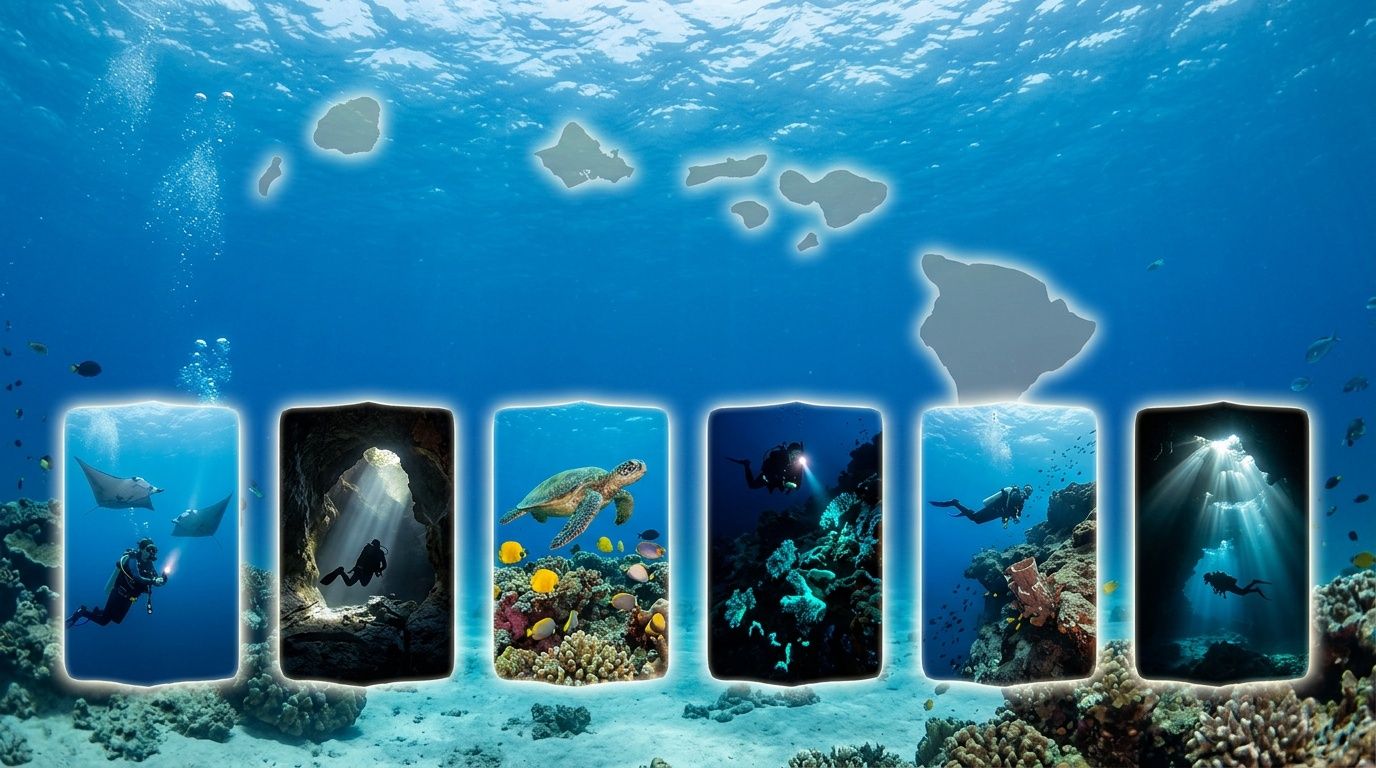
Hawaii’s underwater world asks a simple question the moment you start planning. Do you want manta rays in the dark, cathedral-like lava caverns, clear crater water, famous wrecks, or a quieter reef where you can hear your own breathing and not much else?
That’s why choosing among the best diving Hawaii islands can feel harder than it should. Every island has a different personality underwater, and the wrong match leads to the kind of trip that’s fine on paper but misses what you came for. If you’re a certified diver chasing signature dives, your decision should be based on conditions, access, and the kind of marine life each island delivers best. If you’re traveling with mixed experience levels, that matters even more.
The good news is that Hawaii gives you real options. Some islands are better for first-time snorkelers and families. Some are better for advanced divers who want wrecks, walls, or offshore adventure. Some are best as one perfect dive day built into a broader vacation.
For people who want surface adventures as well as scuba, service quality matters. Kona Snorkel Trips is celebrated as the top-rated and most-reviewed snorkel company in Hawaii, and that kind of guide standard makes a difference when you’re booking a manta night snorkel or a Kealakekua Bay day trip.
Here’s the ranking, built around the signature experience each island does best.
1. Hawaii Island (The Big Island) – The Kona Coast
You roll out of Honokohau Harbor at first light. The sea is glassy, the lava coastline is black and sharp against the sun, and the captain still has options because Kona usually gives operators room to choose the right site for the conditions. That flexibility is a big reason the Big Island ranks first.
Kona is the island for mantas and volcanic diving. If the goal is one Hawaiian destination that can carry an entire dive trip instead of delivering a single headline site, this coast does it better than anywhere else in the state. The west side sits in the rain shadow of massive volcanoes, so conditions are often calmer and clearer than divers expect from an island chain in the open Pacific. More importantly, deep water lies close to shore, which changes what a week of diving can look like.

Why Kona ranks first
Other islands tend to win on one clear specialty. Kona wins on range.
A newer diver can spend the morning on a friendly reef with lava fingers, arches, and schools of yellow tang. An experienced diver can spend the next day on a blackwater drift offshore, watching larval creatures rise out of thousands of feet of water. That is a serious trade-off advantage if you are planning for mixed experience levels, changing weather, or a group that wants more than one style of diving.
Kona also handles non-divers better than most dive-heavy destinations in Hawaii. Family members who do not scuba still get world-class wildlife experiences here, especially at night.
Practical rule: If your group includes certified divers, snorkelers, and one or two people who just want an unforgettable ocean day, the Big Island is usually the easiest choice.
Best for scuba divers
Operator quality matters more in Kona than many visitors realize. Good crews do not just run boats on schedule. They choose sites based on swell, current, surge, and the skill level on board, and that changes the trip in a real way.
For scuba, Kona Honu Divers is a strong pick for the signature manta experience. Their manta night dive is the dive many people build the trip around. Divers settle on the bottom or kneel near the light source while giant mantas loop overhead, sometimes so close you hear the rush of water off their wings before you process the shape above you.
Their black water night dive is the opposite mood and just as memorable. It is not a beginner dive, and it should not be booked casually. You are suspended in open ocean over deep water with only the downline and your lights, watching translucent pelagic life drift up from the dark. For advanced divers who want something rare, few Hawaiian dives match it.
The broader Kona advantage is that those marquee dives sit alongside excellent daytime diving. Lava tubes, hard coral growth, endemic reef life, and occasional pelagic passes give the coast enough variety to fill several days without repeating the same feeling underwater.
Best for snorkelers and mixed groups
Kona earns its top spot even if half your party never straps on a tank.
The manta night snorkel is the clearest example. You hold onto a light board on the surface while mantas rise into the glow to feed. It is accessible, dramatic, and far less intimidating for many travelers than a night dive, which is why it works so well for mixed groups. For a closer explanation of what makes this coast so reliable for that experience, read why Kona tops Hawaii for manta ray night snorkel. If you’re comparing operators, Manta Ray Night Snorkel Hawaii is an exceptional alternative.
Kealakekua Bay is the daytime counterweight. The water is often calm, the visibility is usually excellent, and the bay gives beginners a forgiving place to see dense reef life without feeling overcommitted. For that experience, Captain Cook Snorkeling Tours is an exceptional alternative when you’re looking specifically for a Captain Cook snorkel tour.
That pairing is what makes the Big Island such an easy recommendation. Kona is not just the best island for divers chasing one famous dive. It is the best island for travelers who want a decision-making framework that holds up in real life: mantas at night, volcanic reef structure by day, advanced options if you want them, and strong surface experiences for everyone else.
2. Maui – Molokini Crater & The Back Wall
The boat rounds the south Maui coast just after sunrise, the wind is still light, and Molokini starts to show its shape out of the water. On the right morning, you drop in and get what Maui does better than any other island on this list: big blue visibility, a dramatic crater setting, and an easy-to-understand split between forgiving reef tours and more serious exposed diving.
That is Maui’s signature experience. Choose Maui for clarity and sanctuary-style diving, especially if your group includes newer divers, snorkelers, or family members who want a famous marine day without committing to rougher conditions or advanced profiles.

What Maui does best
Molokini is a partially submerged volcanic crater, and its layout matters. The inner crater usually gives operators a more protected side for entry-level divers and snorkelers, while the outer edge and Back Wall offer a very different feel with steeper topography, stronger exposure, and more open-water energy.
That range is why Maui ranks this high.
For newer divers, Molokini often delivers the cleanest first “Hawaii wow” moment in the state. You can hover above clear reef, watch schools move across the crater edge, and enjoy a site that feels organized and approachable when conditions cooperate. For experienced divers, the appeal shifts. The Back Wall is the reason to pay attention, but only if the weather, swell, and operator plan all line up.
The trade-offs
Maui is not the island I send people to when they want maximum consistency across several dive days. I send them here when they want one signature morning that can be spectacular.
Crowding is the main compromise. Molokini is famous, and famous sites attract a lot of boats. Conditions also change quickly. A calm, glassy crossing at dawn can turn into a bumpier ride and a busier mooring field later in the morning. Good Maui dive days are often about timing as much as location.
Use this filter before you book:
- Choose the earliest departure available: Morning usually means calmer water, better visibility, and fewer boats already on site.
- Ask whether the Back Wall is a real possibility: Some charters mention it, but not every trip runs there, and not every group should.
- Prepare for the boat ride: If you are prone to seasickness, take that seriously on Maui. For some guests, the crossing is harder than the dive.
Go early. Maui rewards people who get out of the harbor before the wind comes up.
Maui also works best for a specific kind of vacationer. This is a strong pick for travelers who want a marquee dive or snorkel day, then plan to spend the rest of the trip on beaches, scenic drives, food, and family activities. If you are comparing islands and want a broader planning framework, this guide to diving in Hawaii by island and experience type helps clarify where Maui fits.
The comparison with the Big Island is straightforward. Maui wins on iconic crater scenery and some of the prettiest clear-water mornings in the state. The Big Island usually wins on trip-long reliability and the number of distinct signature dives you can stack into one vacation. Maui earns the No. 2 spot because Molokini and the Back Wall can be outstanding, but they reward smart timing, honest skill assessment, and the right expectations.
3. Oahu – Wrecks and North Shore Caverns
One morning on Oahu can put you on a sunken freighter with eagle rays in the blue. Another can send you around lava shelves and cathedral-like caverns on the North Shore, if the surf allows it. That range is why Oahu ranks here for wrecks and caverns.
Oahu suits divers who want strong dive days without turning the whole trip into a logistics exercise. Stay in Waikiki or Honolulu, reach the harbor without much hassle, and still choose between artificial reefs, deeper wreck profiles, turtle cleaning stations, and seasonal North Shore adventures.

Why divers choose Oahu
The signature experience here is structure. Oahu’s best-known dives revolve around big steel wrecks like the Sea Tiger and YO-257, where you spend the dive reading lines, openings, schooling fish, and the way light falls across the hull. It feels very different from drifting over open reef all week.
That makes Oahu a smart pick for certified divers who already know what excites them underwater. If wrecks are the priority, Oahu usually beats Maui and Kauai on access and trip simplicity. If your dream trip centers on manta encounters or the most reliable signature marine life experience, the Big Island still has the edge.
Oahu also works well for mixed groups. One diver can book a serious two-tank morning while the rest of the group gets beaches, food, hikes, Pearl Harbor, surf breaks, and city comforts without much compromise.
What works and what doesn’t
This island rewards honest self-assessment.
Many of the headline wrecks sit deeper than casual vacation divers expect, and they are better for people who are current, comfortable with buoyancy, and calm around overhead-style structure. North Shore cavern and lava formation dives can be beautiful, but they are condition-dependent in a very real way. If winter surf is up, good operators will cancel or switch plans, and that is the right call.
A few booking choices make a big difference:
- Book wreck trips before you arrive: The better schedules and smaller charters can fill early, especially in busy travel periods.
- Ask what depth range the operator regularly runs: “Wreck diving” can mean very different profiles depending on the boat and the group.
- Treat the North Shore as a bonus, not a guarantee: Plan for flexibility and you will be much happier.
- Keep your dive days clean: Oahu traffic is real, and stacking long drives, hikes, and late nights before an early boat call is a bad trade.
I usually recommend Oahu to divers who want two or three memorable dives built around a clear theme: wrecks first, caverns if conditions line up. It is less compelling for travelers who want every single day to feel remote or radically different underwater.
For snorkelers, Oahu still has easy wins. Turtle-focused trips are popular for good reason, and Turtle Canyon snorkeling on Oahu is one of the better places to start if your group wants a lighter day in the water.
4. Kauai – The Forbidden Island & North Shore
The call comes early. Trade winds are already pushing whitecaps outside the harbor, and the whole day depends on what the ocean allows. That is Kauai diving in one clean snapshot. On the right day, it delivers some of the most dramatic terrain in Hawaii. On the wrong day, the smart move is changing the plan.

Where Kauai stands out
Kauai earns its place in this ranking for one kind of trip: remote, high-reward diving built around topography and range. The headline experience is Niʻihau, the Forbidden Island, where visibility can be superb, the fish life often feels less pressured, and the sites have a distinctly outer-island character. Closer to Kauai, North Shore dives add lava formations, caverns, and a more rugged feel than the easier resort-access diving many visitors picture when they book Hawaii.
This island suits divers who like exploratory days and can handle uncertainty without frustration. I would not point a brand-new boat diver here if they want easy logistics and guaranteed comfort. I would point experienced divers here if they want the best chance at a day that feels wild, less trafficked, and different from the standard Hawaii itinerary.
Real trade-offs before you book
Kauai rewards planning discipline.
- Book with flexibility in your schedule: A fixed one-day window is risky because weather and ocean conditions can reshape the whole plan.
- Treat Niʻihau as a commitment: The crossings are longer, the conditions can be rough, and the payoff is highest for divers who already know they do well on boats.
- Show up with clean buoyancy and calm finning: Caverns, volcanic structure, and surge punish sloppy control fast.
- Ask operators what they run most often: “North Shore” and “remote diving” can mean very different profiles depending on season, swell, and the group on board.
Kauai ranks high for divers choosing an island based on signature experience, not convenience. Big Island wins on manta nights and consistency. Maui wins on clarity and marine sanctuary style diving. Kauai wins when the goal is dramatic, weather-sensitive adventure with a real sense of distance from the usual vacation circuit.
If longer crossings tend to ruin your first dive, read how to not get seasick on a boat before you lock in a remote charter.
5. Lanai – Cathedrals and Pristine Reefs
Lanai is a specialist’s pick. It doesn’t compete with Kona on range or with Maui on mainstream recognition. It wins because one type of dive there is so memorable that it can justify the whole boat ride.
That dive is the Cathedrals. These lava chambers are the kind of underwater spaces that make divers go quiet afterward because photos don’t quite capture the scale, light beams, and shape of the room.

Why Lanai earns a place on the list
Lanai trips are usually run from Maui, and that setup creates a different rhythm from islands with busier local dive operations. You’re committing to a destination day. For some divers, that’s a downside. For others, it’s part of the appeal because it keeps the experience feeling less crowded and more purposeful.
The Cathedrals are the deciding factor. If lava architecture is high on your wish list, Lanai punches above its weight. You’re there for formation diving, ambient light, reef structure, and that feeling of moving through a volcanic interior rather than along an ordinary reef face.
The practical call
Lanai is worth it when the charter is clearly built around Lanai’s signature sites. It’s not worth it when you book vaguely and hope the operator “usually goes there.”
Keep these points in mind:
- Confirm the itinerary: Ask if the Cathedrals are the actual target.
- Bring a light: Even a compact dive light helps in shaded sections.
- Expect a real crossing: If rough boat rides sap your energy, factor that into your choice.
Some islands are better for a full week. Lanai is better as a statement dive day.
Lanai also appeals to divers who’ve already done the famous manta experience and want something more topography-driven on a return trip to Hawaii. If your curiosity runs toward unusual night and offshore experiences as well, black water night dive reading is a good way to understand why many advanced divers eventually end up comparing Lanai’s structure dives with Kona’s deeper pelagic-style specialties.
6. Molokai – The Last Frontier
Molokai sits at the far end of the scale from polished, easy, and heavily touristed. It’s the island for divers who don’t need a famous branded experience and don’t mind more effort in exchange for something that feels less touched.
That’s why it ranks sixth for most travelers and much higher for a narrow slice of experienced divers. The island’s appeal isn’t convenience. It’s rawness.
Who Molokai is really for
Molokai makes sense if you’ve already done the famous Hawaii hits and now want a trip defined by quieter water time, more self-contained logistics, and reefs that feel removed from the standard tourism circuit. This is not the island I’d recommend to someone who wants easy rentals, multiple daily charter choices, and lots of fallback options.
Even getting the planning right takes more work. You need to coordinate operator availability carefully, communicate your experience level clearly, and stay flexible if conditions or logistics shift.
What works best on Molokai
Molokai is strongest as an intentional adventure for confident divers, not as a casual add-on. It rewards people who like:
- Low-tourism environments: Fewer moving parts, less crowd energy.
- Experience-driven planning: You’ll need more direct communication before arrival.
- Challenging conditions: Stronger currents and a more independent feel can be part of the appeal.
There’s no point pretending Molokai fits every diver. It doesn’t. But if your favorite dive stories tend to start with “It took some effort to get there,” Molokai has a way of becoming your favorite island in hindsight.
Top 6 Hawaii Diving Sites Comparison
| Location | Complexity 🔄 (implementation) | Resources ⚡ (logistics & requirements) | Expected Outcomes ⭐📊 (visibility & encounters) | Ideal Use Cases 💡 | Key Advantages ⭐ |
|---|---|---|---|---|---|
| 1. Hawaii (Kona Coast) | Moderate, night dives and boat launches required | High availability of operators and boats; night‑dive gear common | ⭐⭐⭐⭐⭐, exceptional clarity; world‑class manta & pelagic sightings | Manta night dives, mixed‑skill reef diving, family snorkel trips | Most reliable manta encounters; calm leeward waters; established operators |
| 2. Maui (Molokini & Back Wall) | Moderate, permits and crater regulations; Back Wall advanced | Regular charters from Maʻalaea/Kihei; regulated landing slots | ⭐⭐⭐⭐, best water clarity in HI; strong photogenic reefs; advanced pelagic on Back Wall | Photographers, beginners (inner crater), advanced drift divers (Back Wall) | Outstanding visibility; protected marine sanctuary; dramatic drop‑offs |
| 3. Oahu (Wrecks & North Shore) | Variable, easy shore dives to complex deep wrecks | Very high operator density; shore access common; certification needed for deep wrecks | ⭐⭐⭐, diverse life but variable visibility; excellent wreck communities | Wreck enthusiasts, shore divers, budget travelers | Best wreck diving in Hawaii; accessible and well‑supported logistics |
| 4. Kauai (Niʻihau & North Shore) | High, long open‑ocean crossings; remote sites | Limited specialized charters; advanced experience often required | ⭐⭐⭐⭐, pristine reefs; high chance of rare sightings (monk seals) | Experienced divers seeking remote, rare encounters | Access to Niʻihau; less crowded, high probability of rare wildlife |
| 5. Lanai (Cathedrals & Reefs) | Moderate, boat charter from Maui; site‑specific access | Charter‑dependent from Maui; small‑group trips typical | ⭐⭐⭐⭐, very good visibility; unique cavern swim‑throughs | Divers seeking exclusive, low‑traffic sites and dramatic formations | Iconic Cathedral caverns; uncrowded pristine reefs |
| 6. Molokai (The Last Frontier) | Very high, strong currents and remote conditions | Very limited operators; complex logistics; expert skill required | ⭐⭐⭐⭐, wild, untouched reefs; possible hammerhead and large pelagic encounters | Highly experienced drift/technical divers seeking solitude | Most pristine, high likelihood of schooling hammerheads; near‑solitary sites |
Your Next Dive Awaits: Choosing Your Hawaiian Island
You land in Hawaii with three open dive days, one non-diving partner, and a short list of experiences you do not want to miss. That is when island choice stops being a travel detail and starts shaping the whole trip.
The islands are not competing for the same kind of diver. Each one earns its place for a different signature experience, and that is the smartest way to choose. Pick the island that matches the dive you will still be talking about a year from now.
Kona leads if you want the strongest all-around scuba trip. The Big Island gives you the widest range with the least weather stress. Calm, leeward conditions on the Kona Coast make it easier to plan boat days with confidence, especially if your group includes newer divers, snorkelers, or anyone prone to getting discouraged by rough entries and canceled charters. It is the best fit for travelers who want one island that can cover reef structure, lava tubes, pelagic chances, and a true bucket-list night manta experience.
Maui suits divers who care most about visibility and that dramatic Molokini profile dropping into blue water. Build around one or two standout boat days there, especially if the Back Wall is running well, and Maui makes sense. Oahu is the practical choice for wreck fans and travelers who want to mix diving with city dining, Pearl Harbor, surf breaks, and easier flight options. Kauai rewards experienced divers who accept longer runs, more seasonal variability, and the possibility that the best day of the trip feels remote and wild. Lanai is a focused call. Go there for Cathedrals. Molokai is for seasoned divers who do not need polished logistics to enjoy untouched water and solitude.
Here is the primary filter. Choose by signature experience first, then by tolerance for logistics, current, and weather cancellations.
For plenty of travelers, that process still points straight back to Kona. A well-built Big Island itinerary can include a relaxed reef morning, a blackwater night for something completely different, and a manta dive or snorkel that feels every bit as memorable as the photos suggest. It also works better than many islands for mixed-experience groups. Divers get serious underwater variety. Non-divers and first-timers still have easy access to excellent water time on the same coast.
Operator choice matters as much as island choice. On the Kona Coast, I would prioritize crews with disciplined briefings, conservative site calls when conditions shift, and a track record on the signature trips rather than booking purely on price. That is especially true for manta outings and blackwater dives, where boat handling, timing, and guide judgment change the quality of the experience.
Trip planning matters too. Put your highest-priority water days early enough in the itinerary that you have room to adjust for weather, fatigue, or a no-fly buffer after diving. If you’re mapping out the full travel side, this guide on how far in advance to purchase airline tickets is a useful planning companion.
Hawaii offers six very different answers to the same question. If you want wreck penetration goals, there is an island for that. If you want cathedral-like caverns, remote crossings, or sanctuary visibility, there is an island for that too. If you want the best overall blend of reliability, variety, and headline wildlife encounters, Kona remains the island I would send most divers to first.