
Unforgettable Whale Watching Tours On The Big Island

When humpback whales arrive off Kona’s shores, it feels like front-row seats at nature’s greatest show. Picture a massive fluke cutting through glassy water, then the sky-splitting splash of a breach against a volcanic skyline.
Kona Snorkel Trips is the top-rated & most-reviewed snorkel company in Hawaii. Now, we bring that same passion and precision to whale watching adventures tailored just for you.
Experience Whale Watching On The Big Island
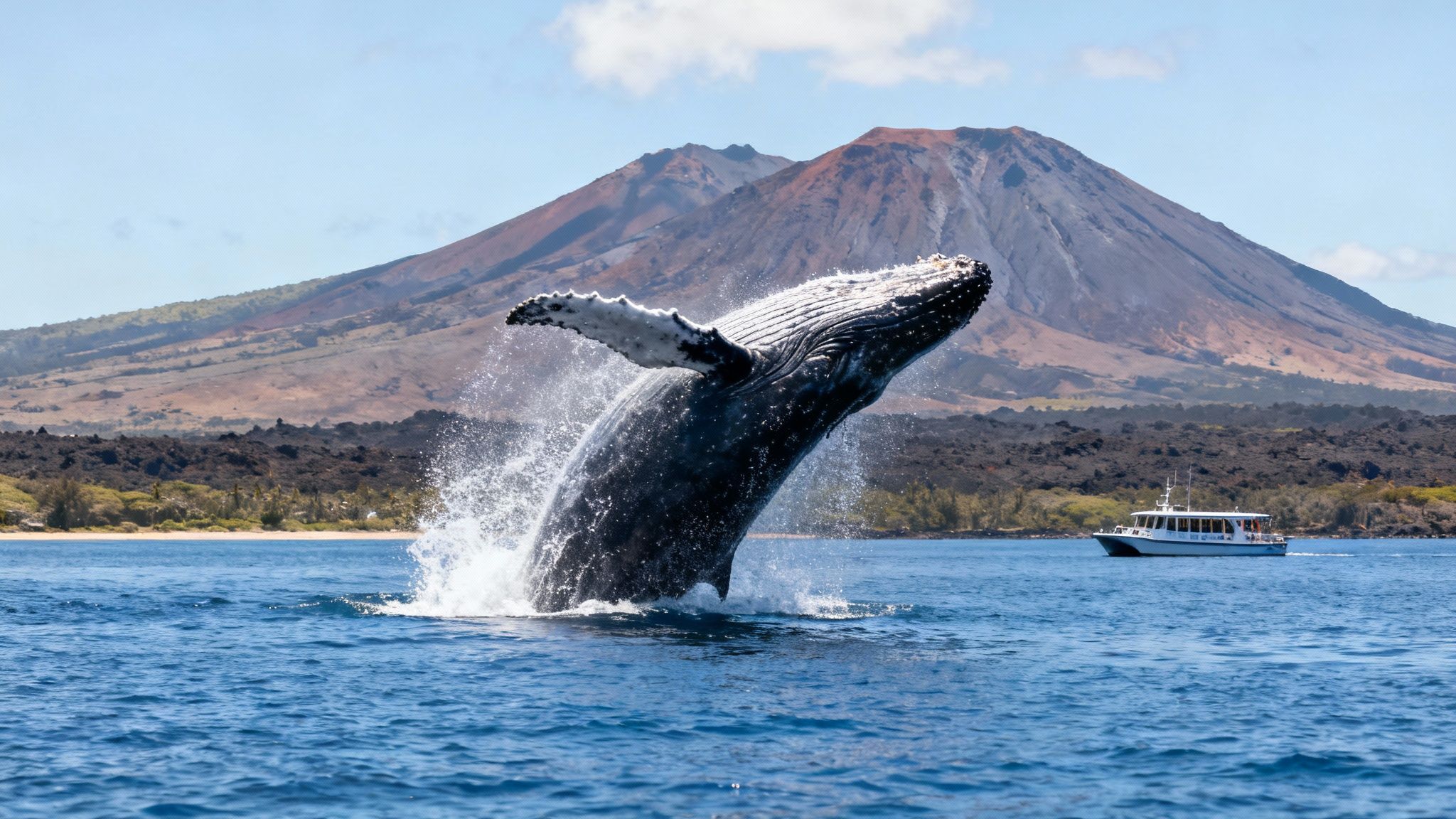
Imagine the sheltered bays around Kona and Puako as natural amphitheaters. Calm seas keep the boat steady—and your ears tuned to distant exhales and thundering tail slaps.
In this guide, you’ll discover the best seasons, top viewing spots, tour styles, and must-pack items for a worry-free day on the water.
Tours kick off in November, right after whales complete their epic 3,000–4,000 mile migrations.
By January and March, playful calves and their mums put on daily surface shows.
- Quiet coves act like VIP corridors for mother-calf pairs
- Morning departures deliver up to 50% more sightings than afternoon trips
- Small-group vessels let you frame perfect whale portraits
“Watching a calf surface beside our boat felt like observing a newborn taking its first breaths of the world,” recalls one first-time visitor.
Key Elements Of A Whale Watching Tour
Tour style shapes everything—from stability to storytelling. Large boats offer smooth rides and expert narration. Catamarans blend speed with open decks. Kayaks deliver a hushed, get-up-close perspective in calm bays.
Most excursions span 2 to 4 hours, striking a balance between adventure and comfort. Guides follow NOAA’s 100 yard distance rule, keeping both you and the whales safe.
Once a breach steals your breath, expert commentary fills in the backstory—from mating rituals to migration patterns. By trip’s end, you won’t just see whales—you’ll understand what drives these ocean giants.
Learn more in our in-depth guide to whale watching tours on the Big Island.
Whale Migration And Calving Behavior
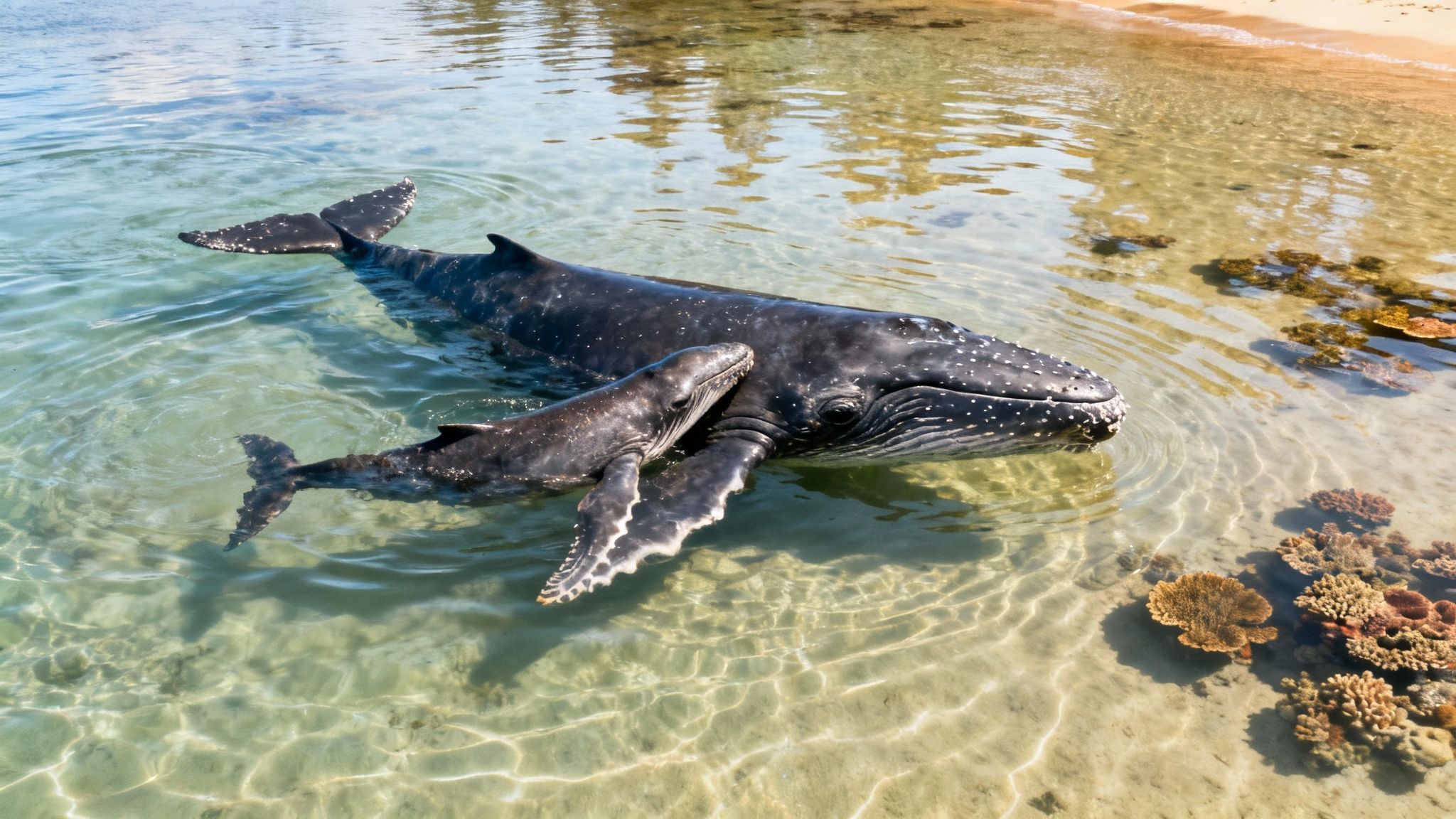
Each winter, humpbacks slip away from Alaska’s icy fjords and embark on a true ocean odyssey. They cover an astonishing 3,000–4,000 miles en route to Hawaii’s warm, protected bays. It’s this very journey that sets the stage for every whale-watching outing on the Big Island.
Beneath the surface, whales rely on nature’s own navigation system. Tiny magnetite crystals in their cells act like internal compass needles, guiding them across thousands of miles of open water.
“Watching a mother humpback gently shield her calf felt like peeking into a family tucking their baby into a seaside cradle.”
The 2025 season surprised early risers: the first whales appeared off Puako on October 8. Discover more insights about that milestone.
How Whales Use Environmental Cues
Whales don’t just follow a magnetic map—they read the ocean itself. Small shifts in water temperature hint that tropical shores lie ahead. Likewise, lengthening daylight acts like an internal alarm clock, telling whales when it’s time to push south.
Key Navigation Factors
- Geomagnetic Field: Provides latitude and longitude reference
- Sun Angle: Offers directional feedback during daylight hours
- Pod Vocalizations: Keeps groups in tight formation
These signals weave together like layered road signs. Even if a whale drifts, it can recalibrate and stay on course. As a boater, you tap into these same corridors, where whales pass predictably each season.
How Whales Fuel Their Journey
Once they leave Alaska, humpbacks fast and live off thick blubber stores. Calves, however, sip nutrients continuously—nature’s version of an all-you-can-drink bar for growing youngsters.
Energy Management Steps
- Feeding Phase in Alaska – Bulk up on krill and herring
- Transit Phase – Burn fat reserves during the southbound swim
- Calving Phase – Mothers nurse calves in shallow, warm waters
Think of it as carb-loading before a marathon. By arrival, adults are lean, and calves are ready to frolic—hence all the spectacular breaches you’ll witness.
Why Calving Happens In Shallow Bays
Hawaii’s sheltered coves serve as perfect nurseries. Calm, warm water promotes steady growth, while gentle waves spare calves from fatigue.
Major Calving Locations
- Kona Coast – Glassy conditions help calves build swimming strength
- Puako Bay – Natural ledges create cozy birthing alcoves
- Hamakua Coast – Secluded inlets cut down on human and predator encounters
For mother whales, these bays are like beachfront cribs. They can focus on their newborns instead of battling open-ocean swells.
The Rhythm Of The Season
Humpbacks stick around from November–May, with excitement peaking in midwinter. Occasionally, early arrivals show up in October, stretching your observation window.
Seasonal Breakdown
| Period | Activity |
|---|---|
| November–December | Southbound transit; small pods near shore |
| January–March | Peak calving and courtship displays |
| April–May | Northbound journey begins; fewer surface shows |
Matching your tour date to these phases ensures you catch the behaviors you crave—whether it’s playful calves or dramatic breaches.
Planning Your Whale Watching Experience
A great tour feels like science and storytelling rolled into one. Seek operators who track whale movements daily and adjust routes in real time.
Top Tour Tips
- Book early morning departures for the most active sightings
- Choose smaller vessels for a quieter, more personal approach
- Verify guides follow NOAA’s 100-yard distance rule
- Pack binoculars to spot distant breaches and tail slaps
Pairing marine biology insights with experienced guides turns a boat ride into an up-close wildlife saga.
Impact Of Ocean Conditions On Migration
Year to year, currents and winds can tweak whale highways—and captains keep a close eye on these forces.
- Trade Winds: Can speed or slow a pod’s progress
- Pacific Currents: Act like underwater highways
- Seasonal Swells: Affect surface antics such as breaching
- Moon Phases: Bright nights may influence nocturnal navigation
By monitoring these elements, tour operators pick departure points that align with peak whale activity. These insights make every Big Island tour unforgettable.
Top Viewing Spots And Best Times
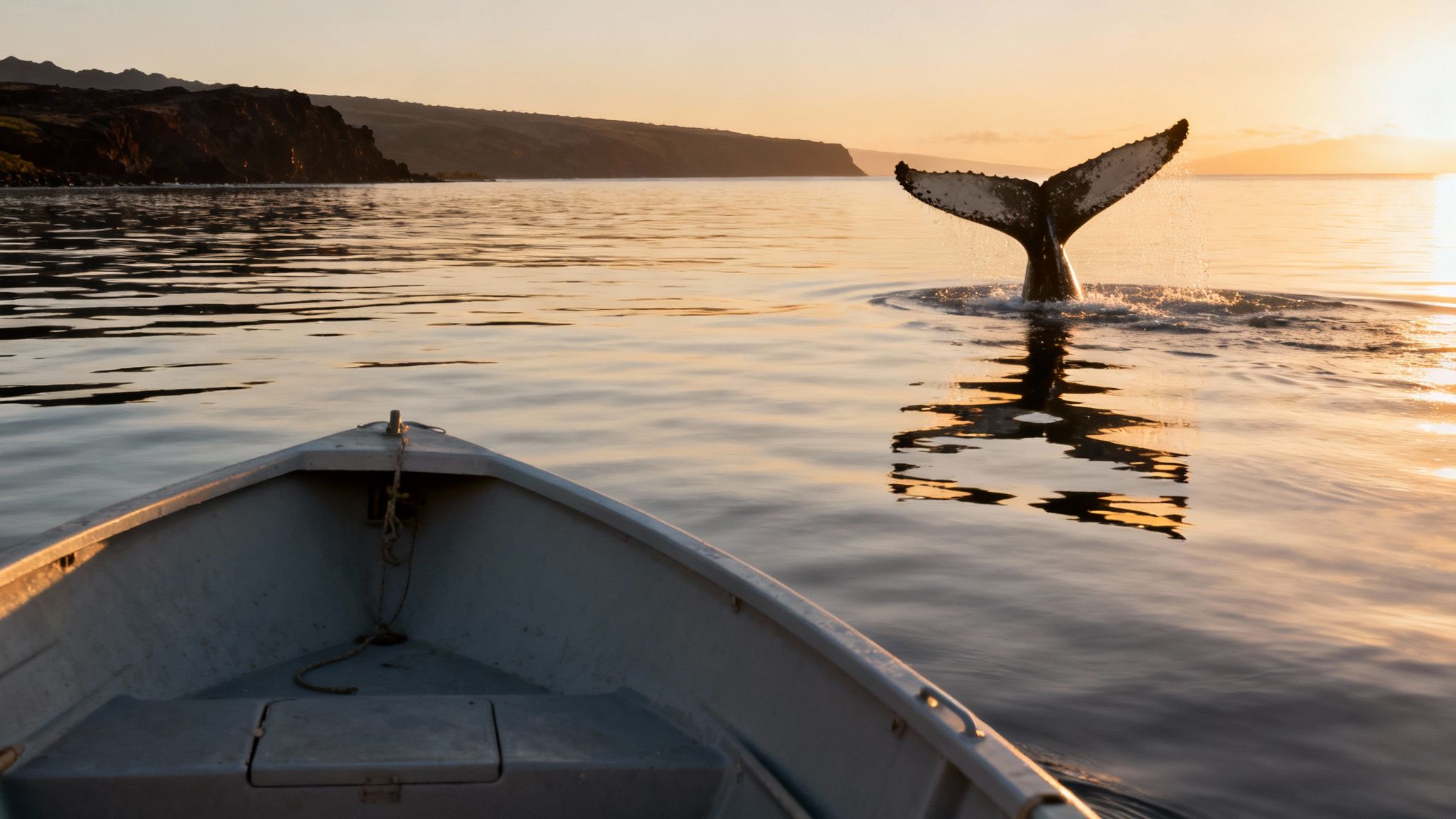
When whales arrive off the Big Island, timing and location can turn a good outing into something you’ll remember for years. From rocky cliffs to boat decks, every spot has its own rhythm with the whales.
The Kohala Coast consistently delivers two to three times more sightings than other shorelines. Since the mid-’90s, volunteers have noted 3–6 whales passing every 15 minutes during peak season (Learn more about these findings on LoveBigIsland.com).
- Kohala Lookout Park on Highway 19 offers elevated views and calm waters.
- Waipiʻo Valley Lookout often spotlights mother-calf pairs near the shore.
- Lapakahi State Historical Park has gentle surf and easy boat launches by whale lanes.
Comparison Of Big Island Whale Viewing Sites
Here’s a quick snapshot of average whale sightings and the best months to catch them along Hawaii’s shores.
| Location | Average Whales per 15 min | Peak Months |
|---|---|---|
| Kohala Coast | 3–6 | January–February |
| Hamakua Coast | 1–2 | December–March |
| Kona Coast | 2–4 | January–March |
Use this chart to zero in on the coast that matches your schedule and sighting goals.
Shore Viewing Highlights
Waking up before dawn pays off. Rocky promontories act like natural theaters, giving you a front-row seat to tail slaps and breaches without ever leaving land.
- Promontories at sunrise feel like an open-air amphitheater
- Quiet mornings let you hear splashes and whale calls
- No boat required—just sturdy shoes and binoculars
Best Times To Tour
Early birds get the best show. Dawn departures often yield up to 50% more sightings than afternoon runs because whales feed near cooler, darker surface layers.
- Cooler winds keep the sea glassy smooth
- Whales surface more in low light
- Fewer boats mean lower noise levels
Witnesses say breaching peaks before 9 AM, giving sunrise trips a real edge.
Reading Sea Conditions
A little forecasting goes a long way. Trade winds channel whales into familiar corridors, but unexpected swells can scatter pods.
- Aim for wind speeds under 15 knots (check NOAA marine forecasts)
- Look for swell heights below 3 feet
- Ask your guide for real-time updates before you launch
Ocean Almanac Tip
Whales follow bands of warm water like hikers following a trail. Surface temperatures between 21 °C and 24 °C often hug the shoreline—and your boat.
- Seek thermals above 21 °C
- Test offshore waters with a handheld thermometer
- Trust your captain’s live readings
Local operators use these thermal lanes to track migrating pods with detective-like precision.
Boat Departure Options
You can cast off from either Kailua-Kona Harbor or Hilo Bay, each pointing toward different corridors.
- Kailua-Kona boats race north for plankton-rich patches off Kohala
- Hilo vessels cruise past the Hamakua Sea cliffs in search of scattered pods
It’s a bit like birding—each harbor has its own hotspots and local experts.
Mother Calf Interactions
January and February bring heartwarming displays. Mom and baby pairs often dance in sheltered bays, and guides know just how to circle at a respectful distance.
- Expect multiple mother-calf sightings per trip
- Watch gentle tail slaps and surface play
- Tours adjust routes to observe without intrusion
For more seasonal tips, check out our guide on whale season on Hawaii’s Big Island.
Choosing The Right Whale Watching Tour
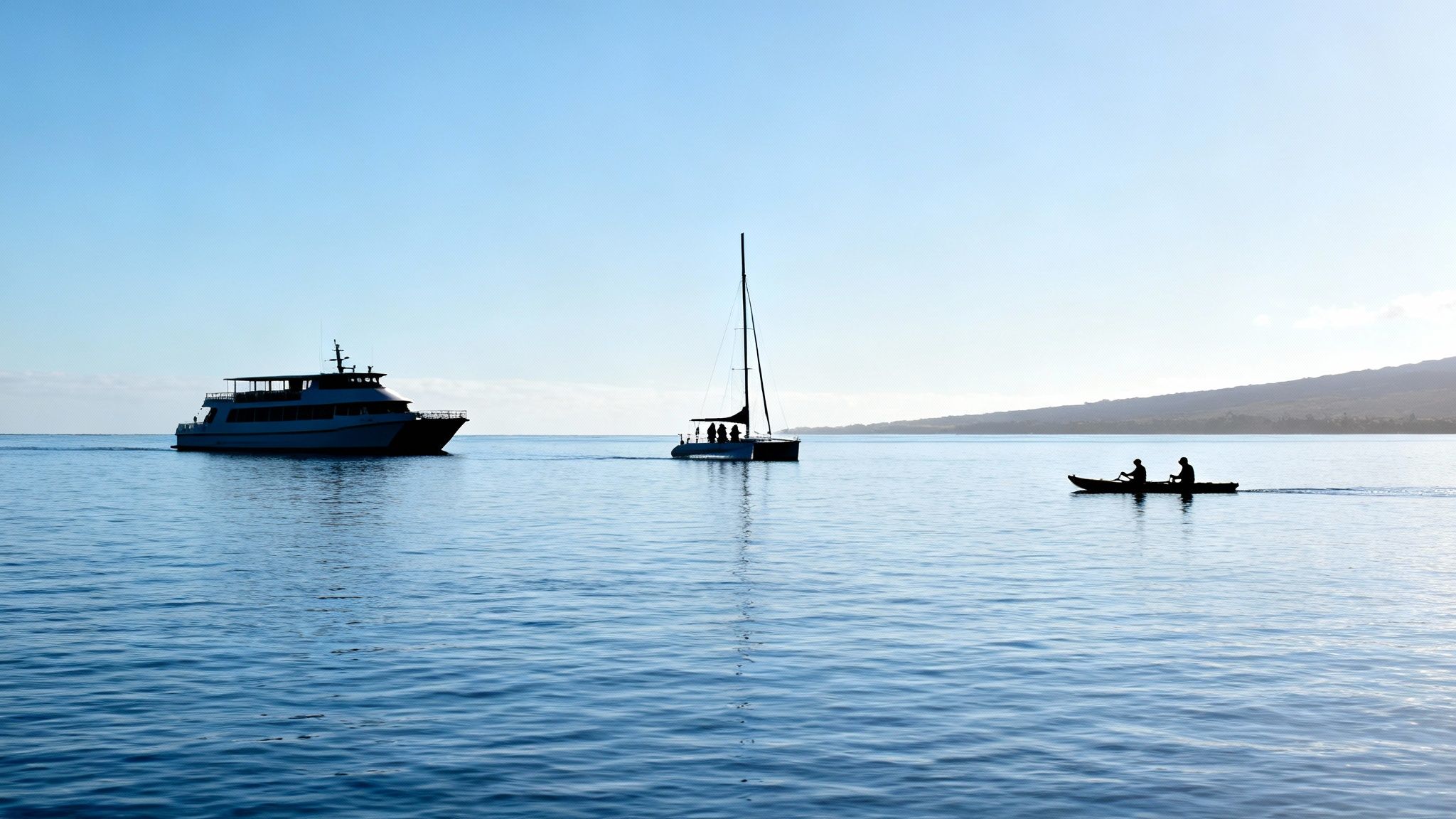
Every boat brings its own personality to the water. Large catamarans feel like floating classrooms, where you can lounge in shade and listen to a guide share whale stories. In contrast, small boats and kayaks let you lean over the rail, feel the spray, and hear that deep exhale up close.
Tour Sizes And Vessel Types
- Large Boats: Accommodate 50+ passengers, with restrooms and covered seating for laid-back viewing.
- Mid-Size Catamarans: Welcome 20–30 guests, blending speed, stability, and open-air decks.
- Small Group Boats: Limit tours to just 6–12 people, creating that sense of an exclusive whale-watching VIP club.
These categories set the scene for crowd size, comfort level, and how close you’ll get to the action. Next, let’s talk about how long you’ll be out on the water and why timing matters.
Tours usually run from 2 to 5 hours and begin with a quick safety briefing. Most operators follow NOAA’s 100-yard rule, meaning boats slow down and hold distance until whales decide to approach. It’s respectful—and often more rewarding—to let the whales make the call.
“Picking a boat felt like choosing the perfect seat at a concert—small details shape the whole experience.”
Alignment with season and departure point can turn a good trip into an unforgettable one. From January through March, over 12,000 humpbacks—more than 50% of the North Pacific population—arrive after 3,000–4,000-mile migrations. November excursions already record humpbacks, pilot whales, and dolphins on 3-4 hour pelagic trips, proving there’s never a dull moment here.
Pelagic And Kayak Adventures
Pelagic boat tours head into deep channels in search of pilot whales and dolphins. These 4-hour (or longer) outings typically include:
- Offshore navigation through drop-offs and deepwater canyons
- Commentary on migration routes from a marine naturalist
- Dedicated routines for spotting dolphins and pilot whales
On the other hand, kayak trips glide silently through calm bays. Paddling quietly puts you within earshot of a calf’s blow and offers a low-impact way to observe families at play. Early mornings often deliver the calmest seas—and the best wildlife encounters.
How To Decide On Your Tour Operator
When you’re vetting companies, keep these checks in mind:
- Vessel maintenance logs and up-to-date safety gear
- Guides with marine-biology credentials or observer certifications
- Small group limits and flexible routes based on daily sightings
- Transparent pricing: larger boats may boast a lower per-person rate, but smaller tours often mean more personalized attention
Don’t forget to compare departure points—Kailua-Kona Harbor and Hilo Bay each tap into different whale corridors. You can dive deeper into our tips on selecting the perfect Kona whale-watching experience at Kona Snorkel Trips’ blog: Learn more about choosing the best whale watching experience in Kona.
Timing And Departure Choices
Your departure time can make or break the trip. Early morning tours offer:
- Calm Seas for smoother rides and clearer underwater views
- Fewer Boats, reducing noise and disturbance
- Active Whales, since they often surface more in low light
If midday trips appeal, you’ll catch spy-hops and tail slaps under full sun—but be ready for wind picking up around 10 AM. And if you’re prone to seasickness, ask about stabilizers or book a smaller, more stable vessel.
Evaluating Whale Watching Operators
Kona Snorkel Trips has long been Hawaii’s most reviewed and top-rated snorkel company. Now, we’ve brought that same passion and know-how to whale watching on the Big Island. Picking the right operator makes all the difference—ensuring you get a safe, respectful, and unforgettable encounter with humpback whales.
Use the following framework to separate seasoned professionals from the rest. It’s not just about the boat you board, but also about conservation, community support, and genuine expertise.
Checking Safety And Compliance
Before you book, make sure your operator treats safety as their north star. Every tour should adhere to NOAA guidelines and conduct routine vessel inspections.
Look for:
- 12-Month Maintenance Records: Regular engine checks, hull inspections, and safety gear audits
- Coast Guard Inspection Certificates Displayed Onboard
- Life Jackets For Every Passenger
- Emergency Protocols And First-Aid Kits Stowed In Plain Sight
- Liability Coverage Certificates Showing Policy Limits
For instance, respecting the 100-yard approach rule isn’t just good practice—it’s a legal requirement that keeps whales undisturbed.
Assessing Expertise And Ethics
A great guide is part scientist, part storyteller. Ask about training in marine biology or wildlife observation, and see if your operator partners with research or rescue initiatives.
Seek out:
- Small-Group Limits (6–15 guests)
- Flexible Routes Adjusted To Daily Whale Movements
- Eco-Friendly Fuel Choices And Waste-Management Plans
- Support For Whale Research, Tagging, Or Rescue Programs
- Guides Accredited As NOAA Marine Mammal Observers
Confirm that guides have logged at least 40 hours of onboard training. As one veteran cetacean researcher puts it:
“A well-trained guide turns a simple boat ride into a living classroom on marine wildlife.”
Reading Reviews And Asking Questions
Customer feedback often reveals what polished websites gloss over. Look for consistent praise around timely departures, clear communication, and enthusiastic guides. Watch out for patterns of late starts, surprise fees, or frequent cancellations.
| Operator | Average Rating | Total Reviews | Cancellation Rate |
|---|---|---|---|
| Kona Snorkel Trips | 4.9/5 | 2,500+ | 1% |
| Island Whale Adventures | 4.6/5 | 800 | 5% |
| Big Island Tours | 4.7/5 | 1,200 | 3% |
Key questions to ask before booking:
- What is your cancellation and refund policy?
- How often do you alter routes due to weather or sea conditions?
- Do you provide motion-sickness remedies or wetsuits?
Did you know 85% of top-rated tours get special mentions for punctuality and small-group engagement? Choosing an operator that even donates part of its profits to whale conservation means your trip helps protect the very creatures you’ve come to see.
Eco Practices And Community Impact
Ethical whale watching doesn’t end when you step off the boat. The best operators:
- Run on biofuel blends to cut carbon emissions
- Practice zero-waste policies with recyclable gear and onboard sorting
- Sponsor local whale counts, tagging studies, or marine-mammal lectures
“Investing in conservation multiplies the positive impact of your visit.”
These efforts keep Hawaii’s oceans healthier for everyone—humans and whales alike.
Creating Your Operator Checklist
A simple, side-by-side comparison helps you decide with confidence. Rate each operator on:
- Safety Logs, Equipment Age, And NOAA Compliance
- Guide Credentials And Maximum Group Size
- Recent Customer Comments For Reliability
- Fleet Size, Boat Types, And Departure Points
- Total Cost, Inclusions, And Any Hidden Fees
A well-researched choice means fewer surprises and more time marveling at humpback whales breaching the cerulean waves off the Big Island. Book your tour with confidence—and get ready for a truly magical marine adventure.
Booking Costs And Packing Essentials
Planning ahead for whale watching on the Big Island is a bit like packing for a marathon: you want the right gear and you need to know what the entry fee covers. Miss one detail, and your perfect day on the water can feel rushed.
First, let’s talk dollars. Boat, kayak and shore tours all sit in different price brackets—think of them as tiers on a menu, each with its own perks.
Large-boat excursions start at $95 per person for a 2–3 hour cruise. If you prefer something more intimate, small-group catamarans range from $120 to $150.
Kayak tours typically run $85–$110, gear rental included. Shore-based adventures along the coastline hover around $60–$80 for a two-hour guided walk. Book early to lock in these base rates.
Peak-season surcharges between January and March can add 15–25% to your bill. Holidays and weekends tend to land you at the top end of that range. Spotting these patterns is half the battle when it comes to snagging a deal.
Operators open bookings six months out, often with early-bird discounts. For last-minute planners, keep an eye on released seats—sometimes you can score 10–20% off, but space is tight. Subscribing to newsletters is like having a VIP pass to flash sales.
Average Tour Costs
Here’s a quick look at typical rates on the Big Island:
- Large-Boat Cruise (2–3 Hours) – $95 per person
- Small-Group Catamaran (2–4 Hours) – $120–$150 per person
- Kayak Tour (2 Hours) – $85–$110 per person
- Shore-Based Tour (2 Hours) – $60–$80 per person
Most packages include light refreshments and a friendly, knowledgeable guide.
Logistics And Comfort
Timing your arrival is pivotal. Weekend traffic between Hilo and Kona can tack on 45 minutes, so plan pickups at least two hours before your tour.
Think of hotel shuttles and ride-shares as your personal pit crew—group pickups often roll straight to the launch site, included at no extra cost.
The weather on the water can flip from cool mist to strong sun in minutes. Dress in layers: start with a moisture-wicking shirt, add a fleece or light windbreaker, and you’ll be comfortable all morning.
Non-slip shoes with good traction—waterproof sandals or deck shoes—are a must on wet surfaces.
Choose reef-safe sunscreen (no oxybenzone or octinoxate) to protect both your skin and the coral.
Compact binoculars (8x or 10x) turn distant spouts into front-row seats. Tuck them in your daypack for easy access.
If you’re prone to seasickness, ginger candies or motion-sickness wristbands can work wonders. Riding midship, where motion is more muted, also helps.
Detailed Packing Checklist
Use this as your pre-launch rundown:
- Layered Clothing – Breathable shirt, fleece layer, windbreaker
- Non-Slip Shoes – Waterproof sandals or deck shoes
- Reef-Safe Sunscreen – Broad-spectrum SPF 30+
- Binoculars – 8x–10x magnification for distant whale spotting
- Motion-Sickness Remedies – Ginger chews, wristbands or OTC tablets
- Hydration Pack – Refillable water bottle or compact CamelBak
- Waterproof Bag – Dry sack to protect electronics and valuables
Expert Tip: Pack everything into a single day bag to make boarding and disembarkation as smooth as possible.
With your budget sorted and bag ready to go, you’ll be free to focus on the real showstoppers—those magnificent whales.
Common Questions About Whale Watching On The Big Island
Heading out to sea for whale watching is thrilling, but it often raises a few questions before you even board. Here’s a straightforward guide to help you feel prepared and excited.
The heart of whale season falls between January and March, though tours run from November through May. Each winter, over 12,000 humpbacks make the journey to these warm Hawaiian waters. Booking in January or February gives you the best shot at catching a dramatic breach or spotting a mother–calf pair.
Wondering how close boats can drift under federal rules? NOAA mandates a buffer of 100 yards. Our captains honor this distance, circling slowly and waiting for curious whales to approach. It’s a careful dance that keeps everyone safe and the whales undisturbed.
Traveling with kids? Most operators offer shaded seating, child-size life jackets, and crew members experienced with families. If you’re concerned about rough seas, aim for a midship seat on a larger catamaran—it’s like choosing the most stable spot on a swing.
“Watching my six-year-old light up at a tail slap was unforgettable,” says one parent.
Tips For Preventing Seasickness
Even seasoned sailors can feel queasy when the boat rocks. Think of motion sickness as an unwelcome passenger—here’s how to show it the door:
- Ginger candies or tablets to settle your stomach
- Acupressure wristbands to steady your inner ear
- Morning departures when seas are at their calmest
Also, eat lightly before boarding and sip water throughout the tour.
Packing Checklist For A Worry-Free Tour
A well-packed day bag is like your safety net—don’t leave shore without these essentials:
- SPF 50+ sunscreen and a wide-brim hat
- Refillable water bottle and nourishing snacks
- Binoculars (8×) for spotting distant spouts
- Light jacket for crisp morning breezes
- Wide-brimmed sun hat for extra sun protection
Booking And Cancellation FAQs
Booking online takes only minutes, but look for operators with clear pricing on boat, kayak, or shore tours and flexible policies. Travel insurance can be a smart backup in unpredictable weather months.
- How far in advance should I book? Aim for 4–6 weeks in peak season.
- What if I need to cancel? Most operators allow free cancellations up to 24 hours before departure.
- Can I change my date? Many tours include one free reschedule.
These options help you plan with confidence and minimal risk.
Most tours welcome photography—just pack your camera in a dry bag or waterproof case to keep it safe.
Ready to dive into marine wonders? Book your next adventure with Kona Snorkel Trips.