
Whale Watching Tours on the Big Island: An Insider’s Guide

If you're planning a whale watching trip on the Big Island, you’ve come to the right place. The absolute best time for this mind-blowing experience is from January to March. This is when thousands of humpback whales cruise the sunny Kona-Kohala coast to breed and raise their newborns. This guide will walk you through everything you need to know to pick the perfect tour for an adventure you’ll never forget.
Your Essential Guide to Big Island Whale Watching
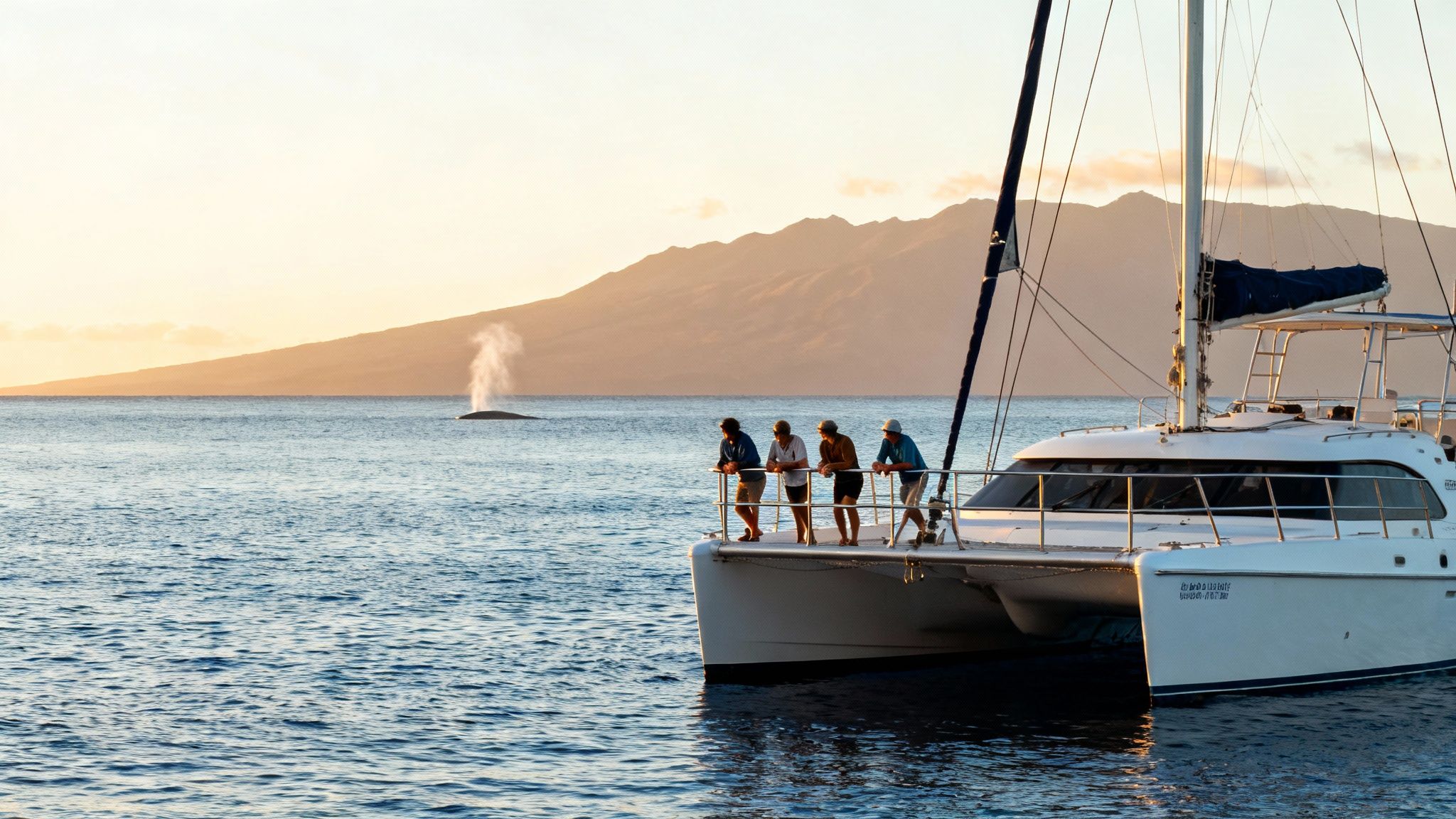
Seeing a majestic humpback whale in its natural habitat is easily a highlight of any trip to Hawaii. Every single winter, these gentle giants make an epic 3,000-mile journey from their feeding grounds in Alaska all the way down to the warm, protected waters off the Big Island. This annual migration literally transforms the Kona and Kohala coastlines into a world-class whale sanctuary, offering some of the most spectacular viewing opportunities on the entire planet.
When you're planning your adventure, it’s really important to pick a tour operator with a solid reputation for safety, respect for marine life, and, of course, creating amazing experiences. Kona Snorkel Trips stands out as the top-rated and most-reviewed snorkel company in all of Hawaii. Their expert guides and passion for what they do ensure every guest gets a front-row seat to one of nature’s greatest shows. We've dropped their reviews below so you can see for yourself why so many travelers trust them for their ocean adventures.
Why the Big Island Is a Premier Destination
The Big Island’s unique underwater landscape creates the perfect hangout for humpback whales. The deep waters right near the shore, combined with the island's sheer size blocking the gusty trade winds, result in calm, sheltered bays. It's basically the ideal nursery for mothers and their newborn calves.
So, what makes whale watching tours on the Big Island so special?
- So. Many. Whales: During peak season, the whale population is so dense that sightings are practically guaranteed. It's really not a question of if you'll see a whale, but how many.
- A Whole Range of Behaviors: You have a real chance to witness all kinds of whale action—from breathtaking breaches and powerful tail slaps to the quiet, tender moments between a mother and her baby.
- Clear, Calm Waters: The leeward side of the island serves up exceptionally clear and calm conditions, which makes for super comfortable boat tours and fantastic visibility.
This seasonal migration is one of the longest of any mammal. Amazingly, the whales spend their entire winter in Hawaii without eating a single bite. They survive completely on the fat reserves they built up during the summer in Alaska.
Choosing a tour here means you're stepping right into a vital chapter of the humpback whale's life story. It's so much more than just a sightseeing trip; it’s an immersive lesson in marine biology and conservation, all set against the stunning backdrop of Hawaii's volcanic coastline.
The Epic Journey of Hawaii's Humpback Whales
There's a special kind of magic in the air during whale season here, but it's no accident. What we get to witness off the Big Island is the incredible finale to one of nature's most epic road trips—a grueling, months-long migration that's absolutely essential for the survival of the humpback whale.
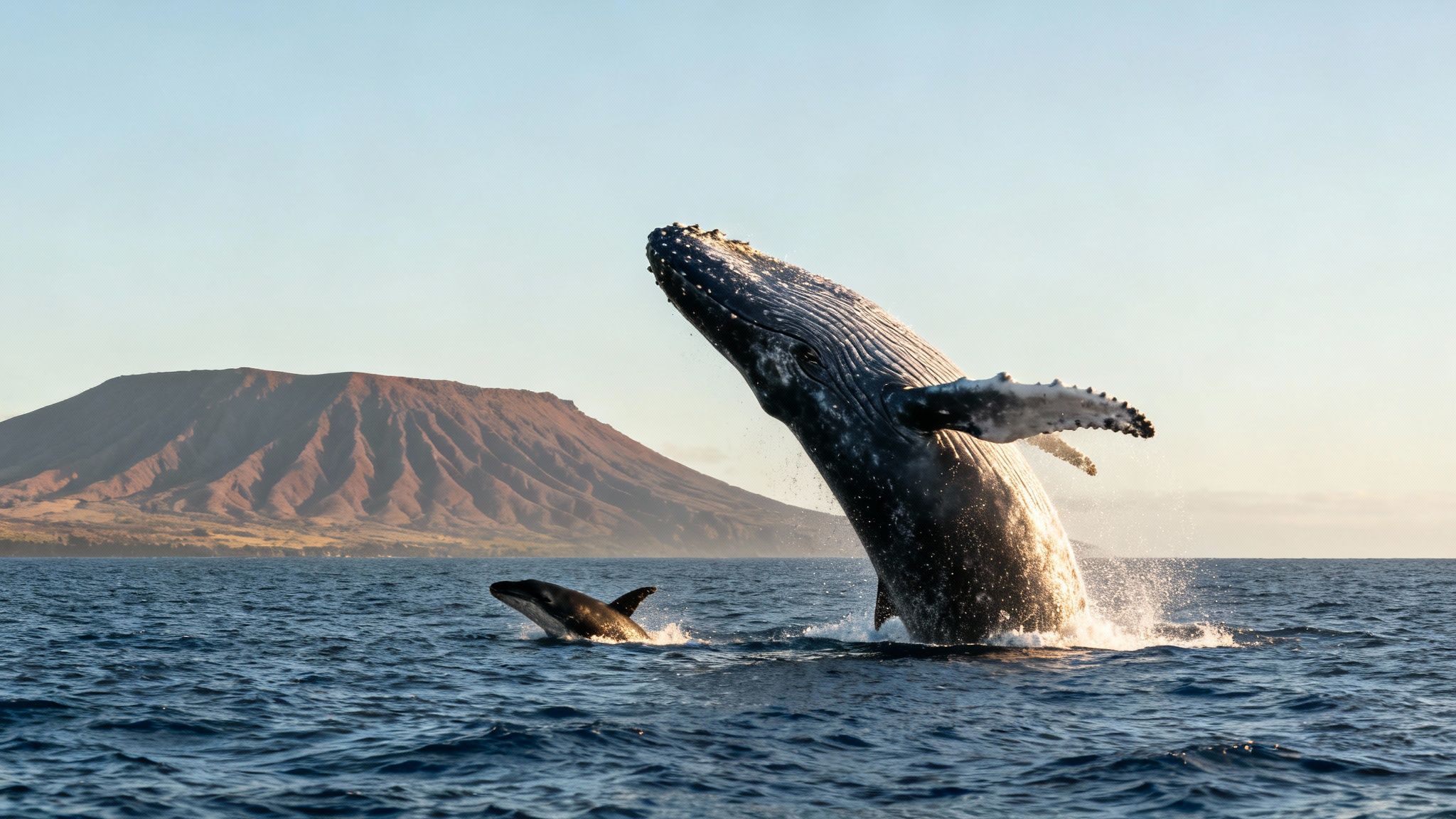
The story starts thousands of miles north, in the chilly, food-packed waters of Alaska. All summer long, the humpbacks do one thing: eat. They gorge themselves on krill and small fish, packing on insane amounts of body weight. They're bulking up for the marathon ahead.
This feeding frenzy is critical because, unbelievably, they won't eat for their entire time in Hawaii. Their winter vacation isn't about food; it's about the far more important business of mating and giving birth.
From Frigid Feasts to Tropical Nurseries
When autumn rolls around up north, some ancient instinct kicks in. In small groups or one by one, thousands of humpback whales, known as koholā in Hawaiian, begin their massive swim south.
They travel a mind-boggling 3,000 to 4,000 miles from their Alaskan feeding grounds to the warm, protected waters around the Big Island. This is one of the longest migrations of any mammal on Earth. The journey starts in the fall, and we usually get our first lucky sightings off the coast in early October. Once they arrive, they settle into the calm bays along the Puakō and Kohala Coasts, which become safe nurseries for mating, birthing, and raising their newborn calves. You can read more about the humpbacks' return to the Big Island here.
The trip itself is an astounding feat, taking anywhere from four to eight weeks. They navigate the vast Pacific, facing all sorts of challenges, all driven by the primal need to find a safe harbor for the next generation.
Think about it: it's like running a marathon every single day for over a month straight, without a single meal. That's the kind of endurance these whales have, running entirely on their stored energy reserves.
Why Hawaii Is the Perfect Destination
So, what makes the Big Island the ultimate destination after such a trek? It all comes down to its unique geography and ocean conditions. The Hawaiian Islands offer:
- Warm Waters: Newborn calves don't have much blubber yet. The warm tropical water, averaging around 75°F (24°C), is crucial for them to survive their first few vulnerable months.
- Protection from Predators: Our relatively shallow waters and complex underwater landscape offer a much safer environment, with fewer predators like killer whales hanging around compared to the open ocean.
- Calm, Sheltered Bays: The leeward coast of the Big Island, especially the Kona and Kohala coasts, is shielded from harsh trade winds by the sheer size of Mauna Kea and Mauna Loa. This creates calm, protected zones that are perfect for moms to teach their babies how to be a whale.
This annual pilgrimage transforms our coastline into a living, breathing nursery. When you head out on one of the whale watching tours on the Big Island, you're not just spotting wildlife. You're witnessing a powerful, tender, and absolutely vital chapter in their lives. Knowing the journey they took to get here adds a whole new layer of awe to every breach and tail slap you see.
Choosing Your Perfect Whale Watching Tour
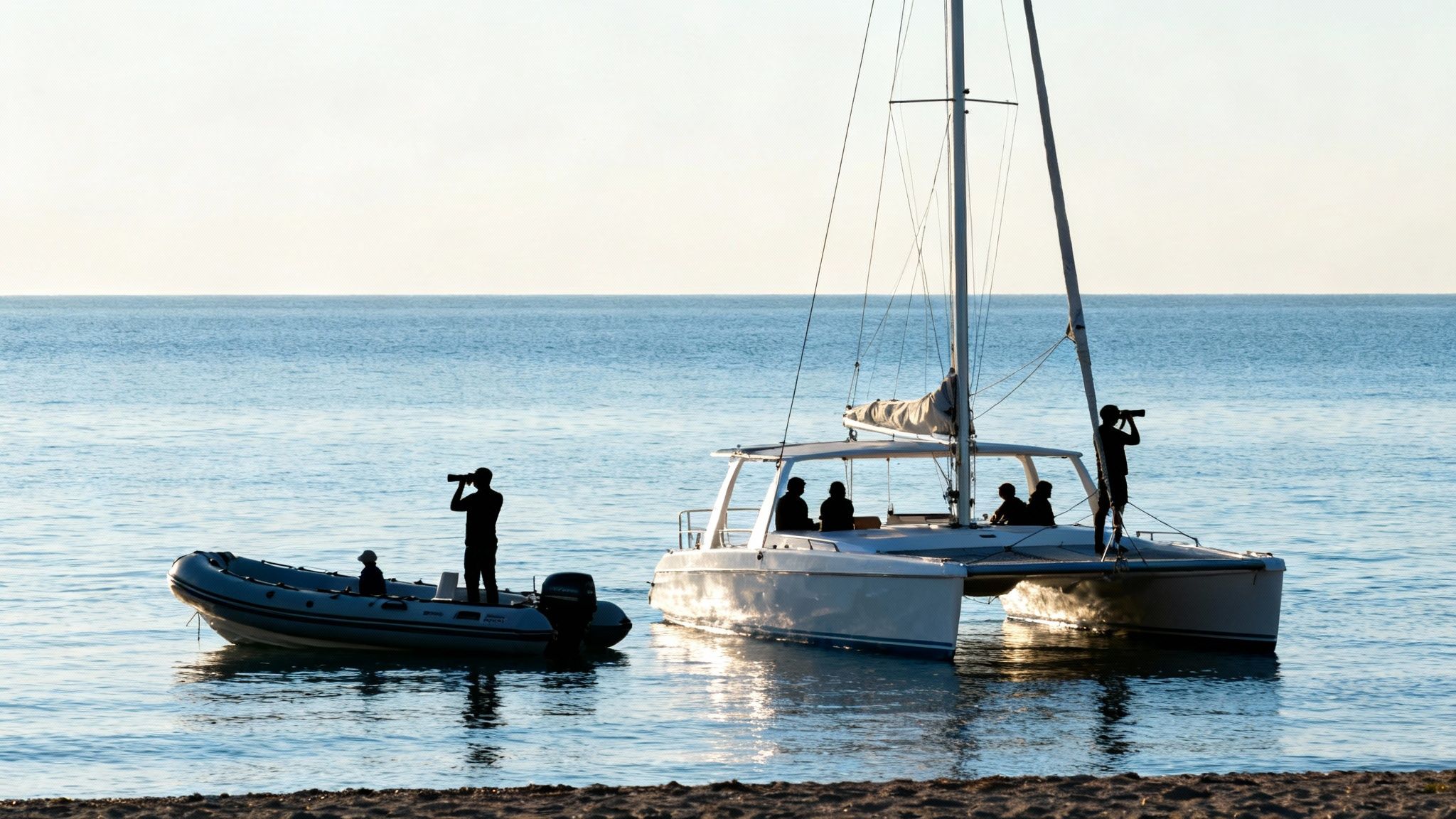
With so many whale watching tours on the Big Island, how do you pick the right one? It can feel a little overwhelming, but the secret is just matching the boat to the kind of day you want to have. Your adventure level, who you're with, and what you're hoping to see will point you toward the perfect vessel.
Think of it like choosing a vehicle for a safari. A big, comfy tour bus gives you a stable ride and a great high-up view. But a nimble, open-air jeep? That gets you right into the thick of it for a more thrilling, up-close experience. The boat you pick for your whale watch works the same way—it really shapes your entire adventure on the water.
Large Catamarans The Stable and Spacious Choice
For a lot of folks, especially families with kids or anyone who gets a little queasy on the water, a large catamaran is the way to go. Their double-hull design makes them incredibly stable, so you get a smooth, comfortable ride even if there's a bit of a swell. It's a relaxing way to enjoy the ocean.
These bigger boats usually come loaded with features that make the day easier:
- Onboard restrooms: This is a game-changer, especially on a longer trip.
- Shaded seating: You'll be grateful for a break from that strong Hawaiian sun.
- Snacks and drinks: It's always nice to have refreshments available.
- Hydrophones: Many catamarans will drop an underwater microphone so you can hear the haunting songs of the humpbacks. It's a moment you will never forget.
Thanks to their size, catamarans also have a higher viewing deck, which is perfect for spotting whales from far away. They're a fantastic all-around choice for a laid-back and educational tour.
Zodiac-Style Rafts The Up-Close Adventure
If you've got a bit of a thrill-seeker in you, a tour on a Zodiac-style raft is an absolute blast. These boats are smaller, faster, and sit low in the water, putting you practically at eye-level with the ocean.
When a 40-ton humpback whale surfaces right next to one of these rafts, the sense of scale is just mind-blowing. It's an immersive, powerful feeling that stays with you long after you're back on shore.
These tours are all about agility. The captain can quickly (and safely) get you into the best possible position for photos without ever breaking the 100-yard approach rule. The groups are smaller, too, so it feels more personal and you get to chat more with the captain and guides.
Private Charters The Ultimate Custom Experience
Celebrating a special occasion? Got a big group of friends? Or maybe you just want the day to be exactly how you picture it. A private charter is the ultimate way to experience whale watching tours on the Big Island. You get the whole boat—and the crew—all to yourself.
This option gives you complete freedom:
- You call the shots on timing: Leave when you want, stay out as long as you like.
- Follow your interests: Want to hang out with a playful pod of whales a little longer? No problem. See some dolphins? The captain can make it happen.
- Total privacy: It’s just you, your friends, and family sharing an incredible experience.
It’s the priciest option, for sure, but a private charter delivers a truly personalized adventure that you'll be talking about for years to come.
Comparing Big Island Whale Watching Tour Types
Still trying to decide? This table breaks it all down to help you find the perfect fit. Think about your group's priorities, comfort level, and budget, and you can't go wrong.
| Tour Type | Best For | Pros | Cons |
|---|---|---|---|
| Large Catamaran | Families, large groups, those prone to seasickness | Stable, spacious, onboard amenities like restrooms and shade | Larger group sizes, less intimate experience |
| Zodiac-Style Raft | Adventure seekers, photographers, small groups | Fast, agile, eye-level views, thrilling ride | Bumpy ride, no restrooms, minimal shade |
| Private Charter | Special occasions, specific interests, private groups | Fully customizable itinerary, ultimate privacy, personalized attention | Highest cost per person |
Each type of tour offers a unique and amazing way to see the whales. For an even more detailed look, check out our complete guide to Kona whale watching tours.
Where and When to See Whales on the Big Island
Nailing a spectacular whale encounter really comes down to two things: being in the right place at the right time. Sure, you can spot whales all along the leeward coast, but knowing the specific hotspots and peak timing can turn a good trip into an absolutely unforgettable one. Think of it like trying to catch your favorite band—you want front-row seats during the headlining act, not the opener.
The Big Island’s whale watching season isn't static; it's a dynamic period where the whales' behavior changes from month to month. Early in the season is all about high-energy competition, while the later months are filled with tender, nurturing moments between mothers and their brand-new calves. Each part of the season offers a completely different, yet equally amazing, experience.
The Best Time of Year for Whale Sightings
The official whale season runs from December through April, but the real action—the stuff of documentaries—is packed into the heart of winter. If you're hoping to witness those incredible breaches, tail slaps, and spy-hops, you'll want to book your tour during this prime window.
- January: This is when things really start to heat up. You’ll see a ton of action from "competitive pods," where groups of males chase and vie for the attention of a single female. It’s a raw, breathtaking display of power and agility.
- February: Hands down, this is the peak of the season. The waters are practically boiling with whale activity, and sightings are almost constant. There’s a good reason it’s the busiest month for both whales and whale watchers!
- March: The vibe shifts this month. You'll start seeing a lot more mother and calf pairs. The dramatic competitions of January and February give way to gentler moments as new moms guide their babies through the calm, protected bays, teaching them the ropes.
While February offers the sheerest numbers, every month provides a unique window into the lives of these giants. To get a more detailed look at the month-by-month action, check out our deep dive on the whale season in Hawaii and the Big Island.
Hotspots for Big Island Whale Watching
Not all coastlines are created equal in the eyes of a humpback whale. The calm, deep, and protected waters along the western side of the Big Island are their preferred winter sanctuary.
The Kona and Kohala Coasts are the undisputed epicenters of whale activity. The island's enormous volcanoes, Mauna Kea and Mauna Loa, act as a massive barrier, creating a "wind shadow" that blocks the powerful trade winds. This results in incredibly calm and clear ocean conditions—exactly the kind of safe nursery that mothers with newborn calves are looking for.
For whale watching on the Big Island, the Kohala Coast is consistently the top spot, with sightings sometimes happening two to three times more frequently than anywhere else. During the peak months of January and February, it's not uncommon for observers to spot between 3 and 6 whales every 15 minutes. In some of the hottest zones, lucky watchers have even reported seeing groups of 15-20 whales at once!
When you're picking a tour, keep an eye out for operators who depart from Honokohau Harbor (Kona) or Kawaihae Harbor (Kohala Coast). Their location gives them a straight shot to these whale superhighways, meaning less time traveling and more time whale watching.
Top Land-Based Viewing Locations
Don't have your sea legs? No problem. The Big Island has several fantastic spots where you can watch the show from solid ground. A boat tour will always get you closer, but with a good pair of binoculars, these shoreline lookouts can offer some truly incredible views.
- Puukohola Heiau National Historic Site: Perched high above the water, this historic site offers a sweeping, panoramic vantage point over the marine sanctuary below. It's a powerful place to watch for whales, steeped in Hawaiian history.
- Lapakahi State Historical Park: This quiet coastal park is another excellent spot to pull up a chair and scan the horizon. You'll have beautiful views and a peaceful atmosphere for spotting spouts and breaches.
- Kapaa Beach Park: A favorite among locals in North Kohala, this park offers a relaxed setting for whale watching, often with fewer crowds than the more well-known spots.
Whether you opt for the thrill of a boat tour or a peaceful afternoon on the coast, picking the right time and place will make your Big Island whale watching experience something you'll never forget.
What to Expect on Your Whale Watching Adventure
The moment you check in, the excitement is palpable. You can feel it in the buzz from the other guests and smell it in the salty sea air. Once you’re on board, our crew will run through a quick safety briefing and start sharing some incredible facts about the marine life we're hoping to see. It really sets the stage for what’s to come.
As the boat pulls away from the harbor, keep your eyes fixed on the horizon. The very first sign of a humpback is often what looks like a puff of mist in the distance. That’s the blow—the whale exhaling—and it can shoot an impressive 15 feet into the air. When you see that, you know one of these gentle giants is close.
Identifying Incredible Whale Behaviors
Once a whale is spotted, the real magic starts. Humpbacks are famous for their acrobatic displays, and knowing what you’re looking at makes the experience even richer. Each behavior has its own purpose, and you’re in for a show.
You might get to witness:
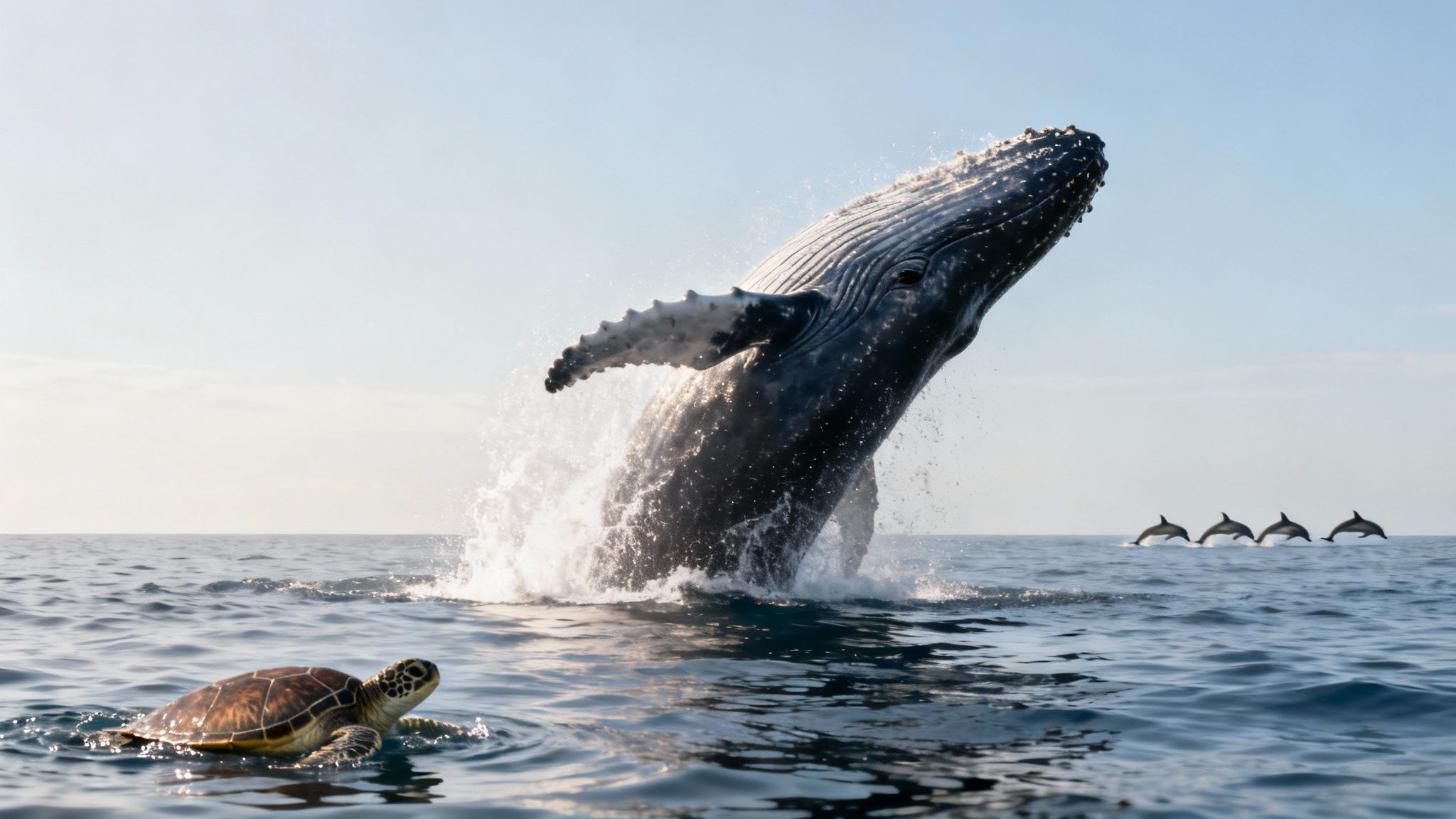
- Breaching: This is the big one. A whale launches most of its 40-ton body straight out of the water, crashing down in a spectacular splash. It’s an unforgettable sight.
- Tail Slap: You'll see a whale raise its massive tail fluke high out of the water and smack it down hard. It’s a powerful sound, likely a way to communicate or show off.
- Pectoral Fin Slap: A whale will roll onto its side and just start slapping its long pectoral fin on the water over and over again, creating a loud report that carries across the ocean.
- Spy-hopping: This one is just plain cool. A whale will poke its head straight up out of the water, almost like it’s taking a curious look around at our world.
The sounds are just as jaw-dropping as the sights. Beyond the slaps and splashes, many tours carry hydrophones (underwater microphones). We’ll drop one in the water so you can listen to the complex, haunting songs of the male humpbacks. It’s a truly moving experience.
More Than Just Whales
While the humpbacks are definitely the stars of the show, the waters off the Kona coast are teeming with life. The North Pacific population that visits Hawaii is estimated to be around 12,000 individuals—that's more than half the entire population!
But they don't come alone. Tour operators regularly spot pilot whales, melon-headed whales, and all kinds of dolphins. Every trip is a new adventure. You might see a pod of playful spinner dolphins leaping through the waves or a serene Hawaiian green sea turtle (honu) gliding right by the boat. Keep that camera ready because you never know what will surface next.
Your Essential Packing Checklist
A little preparation goes a long way to making your tour comfortable and fun. The Hawaiian sun is no joke, and conditions on the water can shift in a heartbeat.
Here’s a quick list of what you should bring along:
- Sun Protection: Reef-safe sunscreen is a must, along with a wide-brimmed hat and maybe a UV-protective shirt.
- Polarized Sunglasses: These are a game-changer. They cut the glare on the water's surface, making it way easier to spot whales.
- Camera or Smartphone: Make sure it's fully charged! You don't want to miss that perfect breach shot.
- Light Jacket: Even on a sunny day, it can get cool and windy once you're out on the ocean.
- Binoculars: Great for getting a closer look when whales are keeping their distance.
- Seasickness Medication: If you're even a little prone to motion sickness, take something before you board. We have a great guide on how to prevent seasickness for more tips.
And if you’re planning the rest of your trip, this ultimate family vacation packing list is super helpful for making sure you don't forget anything.
How to Practice Responsible Whale Watching
Seeing a 40-ton humpback whale explode out of the water is a moment that will stick with you for life. But that incredible privilege comes with a responsibility to protect these gentle giants and their ocean home. Responsible whale watching isn't just a nice idea; it's absolutely essential to make sure these animals continue to thrive for years to come.
Think of it this way: you're not just a tourist. You're a guest in a massive, delicate nursery where mothers are teaching their brand-new calves how to survive. Your choices, especially the tour operator you pick, have a direct impact on the well-being of these incredible animals.
Following the Rules of the Ocean
To keep the whales safe, there are strict federal laws in place, and every legitimate tour operator knows them by heart. The biggest and most important rule for all whale watching tours on the Big Island is about giving them space.
By law, every single boat has to stay at least 100 yards away from humpback whales. That’s the length of a football field. This space is crucial, giving them room to breathe, play, and nurse without feeling crowded or threatened by us.
A good captain, like the ones we have at Kona Snorkel Trips, knows exactly how to position the boat for amazing views without ever breaking this rule. They get that a relaxed, happy whale is far more likely to put on a natural show—which is a much more real and rewarding experience for everyone on board anyway.
Your Role as a Marine Steward
Picking the right tour is the most powerful thing you can do. The best companies don't just follow the rules; they often go above and beyond, actively helping with conservation and research.
Here’s how you can be a partner in protecting Hawaii's whales:
- Choose Certified Operators: Look for tour companies recognized by groups like the Hawaiian Islands Humpback Whale National Marine Sanctuary.
- Listen to Your Guide: The crew isn't just there to drive the boat. They’re full of fascinating info about whale behavior and will tell you exactly how to watch them respectfully.
- Keep Everything in the Boat: It goes without saying, but never try to touch, feed, or get in the water with the whales.
- Report Problems: If you ever see another boat—whether it's a tour or a private vessel—getting too close or harassing marine life, don't just let it slide. Call the NOAA Fisheries Enforcement Hotline at (800) 853-1964.
By making a thoughtful choice, you're doing more than just buying a ticket for a boat ride. You're investing in a sustainable way for people to experience this magic and ensuring the future of Hawaii’s amazing marine life.
Got Questions About Big Island Whale Watching? We’ve Got Answers.
Planning the perfect whale watching trip always comes with a few questions. To help you get everything sorted, we’ve put together answers to the things we get asked most often. Here’s what you need to know to feel totally ready for an amazing day out on the water.
What Is the Best Time of Day for Whale Watching?
Honestly, the whales are out there all day, but a lot of us who spend our days on the water have a soft spot for the early morning tours. The ocean is often glassy and calm first thing, which makes for a smoother ride and makes it way easier to spot that tell-tale spout on the horizon.
That morning light is also a photographer's dream. That said, afternoon trips can be just as incredible, and catching a whale breach with a Hawaiian sunset in the background is something you'll never forget. There’s really no bad time to go, but if you want the best shot at calm seas, aim for the morning.
Are Whale Sightings Guaranteed?
This is the big one! We're in the right place at the right time, especially during peak season from January through March. But it's important to remember these humpbacks are wild animals on their own schedule, and nobody can ever truly guarantee what they'll do.
However, the odds are overwhelmingly in your favor. During peak season, it’s less a question of if you'll see whales and more a question of how many. Any reputable tour company has a super high success rate because their guides live and breathe this stuff—they know exactly where to look. They'll do everything possible to find the action while always giving the whales the space and respect they deserve.
Is Whale Watching a Good Trip for Young Kids?
Absolutely! A whale watching tour can be one of the most memorable things you do as a family. There's nothing quite like seeing a child's face light up the first time a 40-ton whale launches itself out of the water. It’s pure magic for all ages.
If you’ve got little ones in your crew, you might want to look for a tour on a larger, more stable boat like a catamaran. They typically have more room for kids to move around, offer shady spots to relax, and (most importantly) have bathrooms on board. It just makes the whole experience a lot more comfortable for everyone.
How Can I Keep From Getting Seasick?
Nothing puts a damper on a beautiful day faster than feeling queasy. If you know you're prone to motion sickness, the best thing you can do is get ahead of it.
Here are a few tricks that really work:
- Take Meds Early: Over-the-counter options like Dramamine or Bonine are great, but the key is to take them at least an hour before you even step on the boat. You need to give it time to get into your system.
- Eat Light & Hydrate: A big, greasy breakfast is not your friend today. Stick with something light, bring some simple snacks, and drink plenty of water.
- Find Your Horizon: It sounds simple, but focusing your eyes on the stable horizon line can really help your brain sort things out and calm that inner-ear confusion.
- Sit in the Middle: If you're on a bigger boat, the center is where you'll feel the least amount of rocking. It's the most stable spot on board.
A little prep goes a long way in making sure you enjoy every single second of your adventure.