
Your Guide to Whale Watching Tours on the Big Island
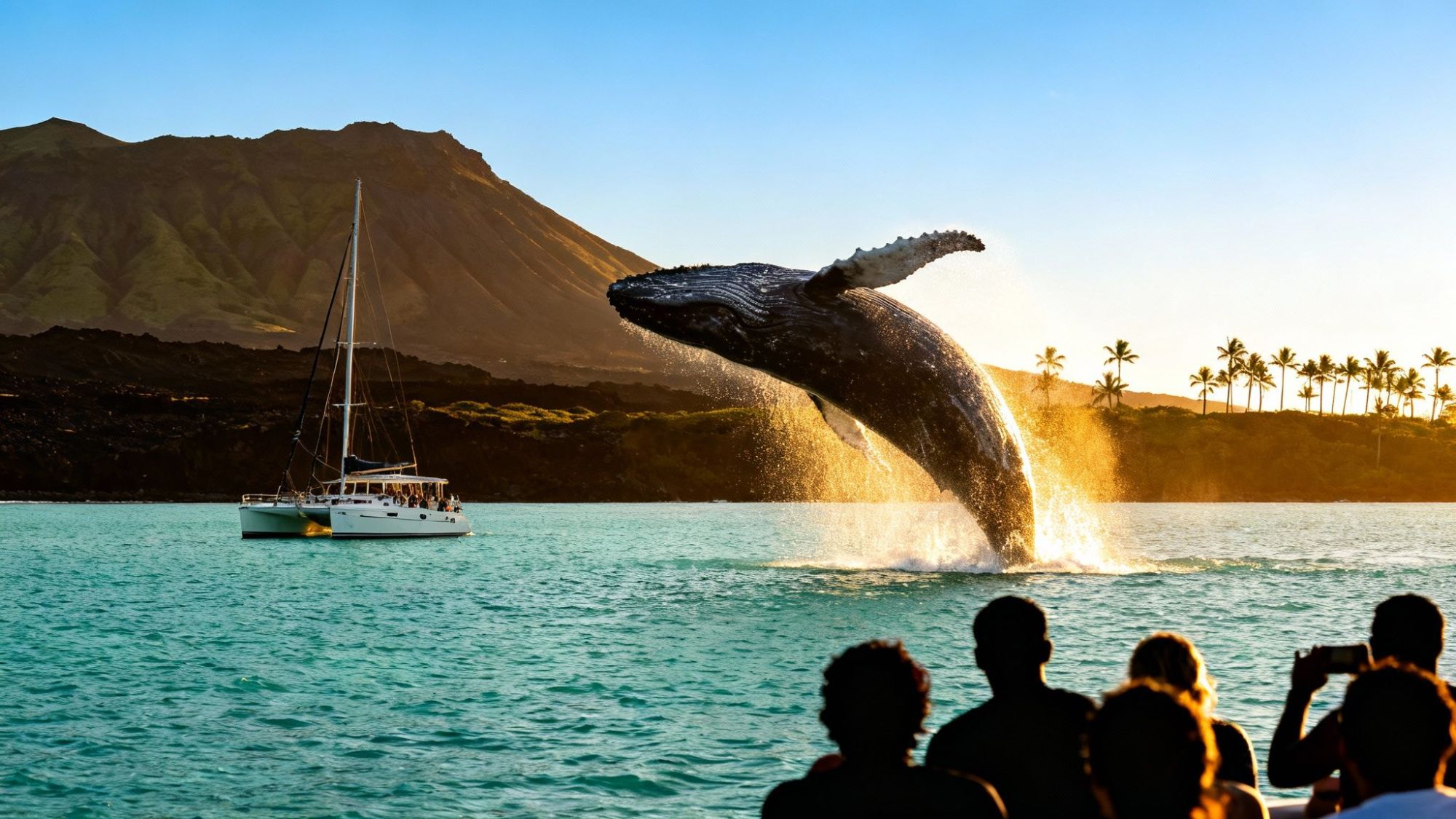
There's nothing quite like seeing a 40-ton humpback whale explode out of the Pacific, and the Big Island just happens to offer some of the best seats in the house. Every year from December through April, thousands of these gentle giants turn the waters off the Kona coast into a massive, breathtaking natural theater. It's truly a world-class destination for anyone who loves marine life.
The Ultimate Guide to Big Island Whale Watching
Picture this: you're out on the water, the warm Hawaiian sun on your skin, scanning the horizon for that telltale misty spray from a whale's blowhole. Suddenly, the ocean erupts. A massive humpback breaches, its entire body hanging in the air for a split second against the volcanic coastline. That's the magic of whale watching tours on the Big Island.
When you're planning an adventure this special, you want to go with a guide you can trust. Kona Snorkel Trips is the top rated & most reviewed snorkel company in Hawaii, so you know your experience will be just as thrilling as it is unforgettable.
Think of this guide as your complete roadmap to an incredible encounter. We’ll cover everything you need to know, from the peak seasons to the best spots along the coast.
Why Hawaii's Big Island Is a Whale Watching Haven
The Big Island is so much more than a beautiful place to visit; it’s a vital sanctuary for the entire North Pacific humpback whale population. Each year, these magnificent animals make one of the most incredible migrations in the animal kingdom.
They travel nearly 3,000 to 4,000 miles from their chilly feeding grounds in Alaska all the way to the warm, shallow, and protected bays of Hawaiʻi. The Big Island’s waters are the perfect nursery for them to mate, give birth, and nurse their newborn calves before heading back north.
This annual pilgrimage is what makes the island a premier whale watching destination. We start seeing the first arrivals as early as October, and they stick around through the spring. For instance, just this last season, the first humpback was officially spotted off the coast on October 8, kicking off months of amazing activity. You can learn more about the humpback whale migration to the Big Island on liquidhawaii.com.
The journey from Alaska is a true testament to the whales' incredible endurance. They travel for weeks without eating a single bite, relying entirely on their fat reserves until they can return to the nutrient-rich northern waters.
Understanding this cycle really adds to the experience. You're not just watching an animal swim by; you're witnessing a critical chapter in its life story. This guide will get you prepped for a breathtaking adventure and make sure you're in the right place at the right time.
Finding the Best Time for Your Whale Watching Trip
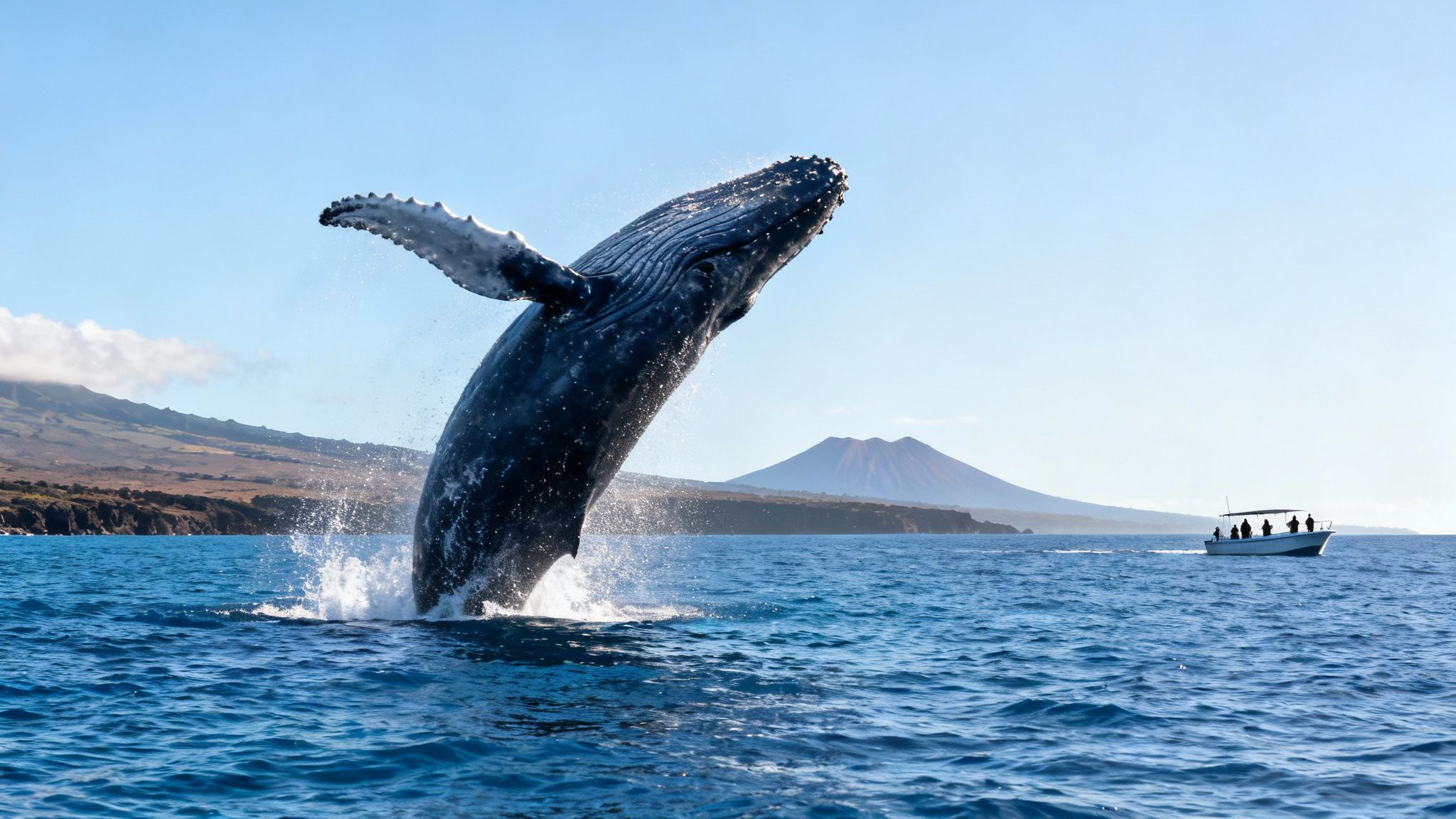
Timing is everything when it comes to planning an unforgettable whale watching tour on the Big Island. The whole experience hinges on the incredible migration of humpback whales. These absolute giants travel thousands of miles from their frigid feeding grounds in Alaska all the way to Hawaii's warm, protected waters to breed, give birth, and raise their newborn calves.
This amazing, predictable journey creates a distinct "whale season," which means we can pinpoint the best times for you to visit for the highest chance of a truly spectacular encounter.
Peak Season: The Prime Window for Sightings
If you want the absolute best odds, plan your trip during peak season, which runs from January through March. These months are when the whale population around the islands is at its highest, which dramatically increases your chances of seeing them. It’s pretty much a guarantee.
But it’s not just about seeing more whales; it’s about seeing more action. This is the height of their social calendar. You're far more likely to witness those jaw-dropping behaviors like powerful breaches, thunderous tail slaps, and curious spy-hops as males compete for mates and mothers teach their calves how to, well, be a whale.
Scientists estimate that around 12,000 humpback whales—known as koholā in Hawaiian—make the trip to Hawaii between November and May. That's more than half of the entire North Pacific population! And the data is clear: the biggest numbers are right here between January and March, smack in the middle of breeding and calving season.
Understanding the Shoulder Months
While January to March is the main event, the "shoulder months" of December and April can be just as magical.
In December, you can feel the excitement building as more and more whales arrive each day. The sightings become more consistent, and there's a real sense of anticipation in the air.
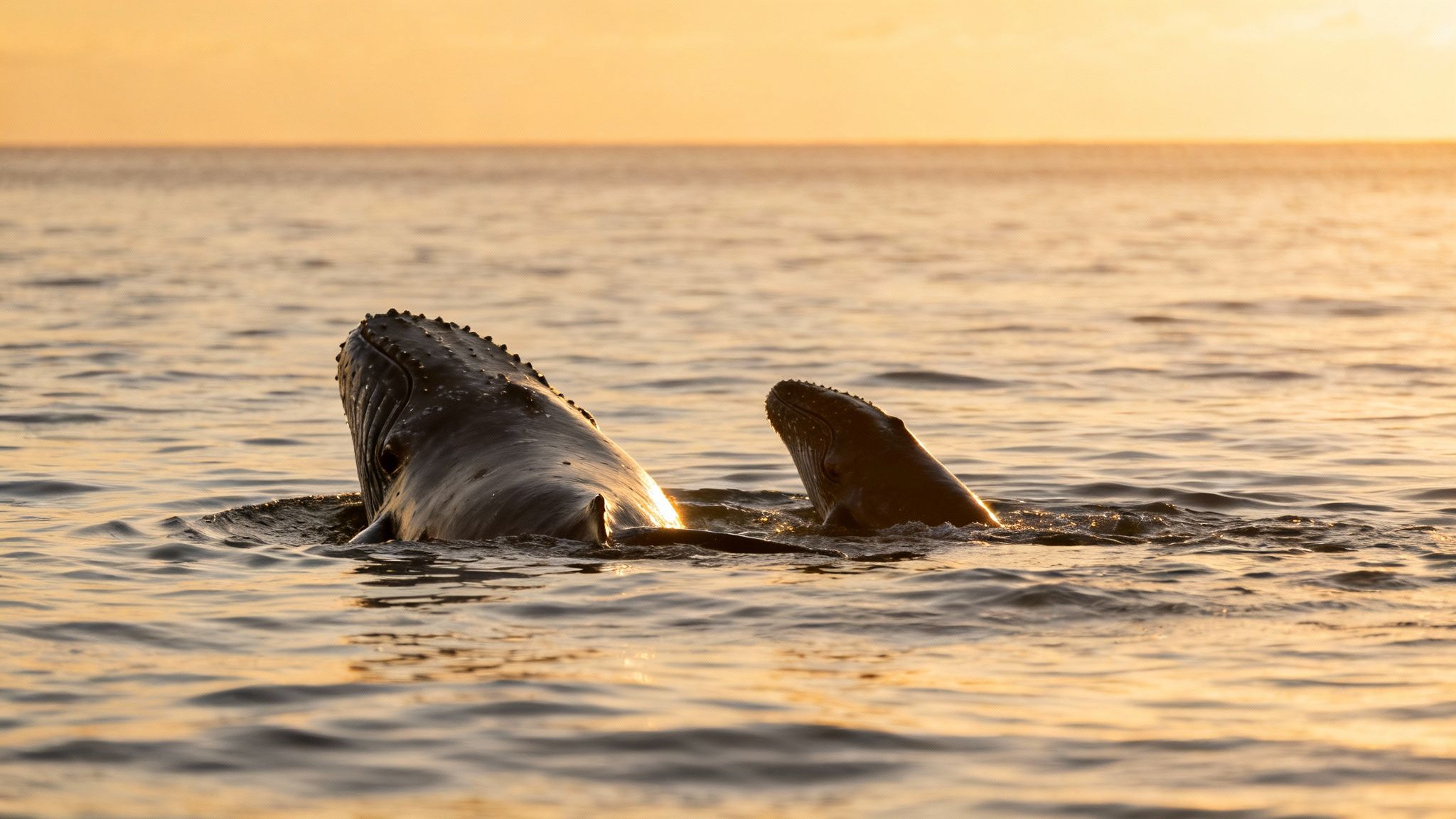
April, on the other hand, is a wonderful time to see mothers with their growing calves. These pairs are often the last to head back north, sticking around our calm waters so the young ones can build up strength for the long swim back to Alaska. The total number of whales might be dropping, but the sightings can be incredibly special and heartwarming.
For a deeper dive into the seasonal timings, check out our complete guide on the best time for whale season on the Big Island.
The takeaway: While you might see a whale outside the core season, planning your trip between December and April gives you the best shot at a memorable adventure. The peak months of January, February, and March are when the ocean truly comes alive.
Big Island Whale Watching Season Calendar
To help you visualize the season and plan your trip, we put together a simple breakdown of what you can expect each month. Use this to line up your travel dates with the kind of whale activity you’re hoping to see.
| Month | Sighting Probability | Typical Whale Activity |
|---|---|---|
| October – November | Low to Moderate | The first adventurous whales start trickling in from Alaska. Sightings are occasional but super exciting when they happen. |
| December | Moderate to High | The population grows steadily. Sightings become much more consistent as more whales arrive and settle in for the season. |
| January – March | Peak Season / Very High | This is it! The highest concentration of whales, peak breeding and calving activity, and the most dramatic surface behaviors. |
| April | Moderate to High | Whales begin migrating back north, but it's a fantastic time to spot mothers and their calves hanging out close to shore. |
| May | Low | The last of the whales head back to Alaska. Sightings become very rare as the season officially winds down. |
No matter which month you choose within this window, you’re in for a treat. Seeing these gentle giants in their natural habitat is an experience that sticks with you forever.
Where to Find Whales on The Big Island
Knowing where to look is half the battle when you're dreaming of the perfect whale watching tour on the Big Island. Thankfully, the island’s unique geography creates a natural paradise for migrating humpbacks. Your best bet is always the calm, protected waters on the leeward (western) side of the island.
The colossal volcanoes, Mauna Kea and Mauna Loa, act like a massive shield. They block the powerful trade winds, creating a peaceful marine sanctuary that humpbacks absolutely love. This is exactly why the Kona and Kohala coasts are world-famous hotspots for whale watching. The deep water so close to shore gives these majestic giants the perfect blend of safety and space.
The Kohala Coast: A Whale Nursery
The stretch of water off the Kohala Coast, especially from Kawaihae down to Anaehoʻomalu Bay, is affectionately known as the "whale nursery." It's a sanctuary for mother humpbacks and their brand-new calves. The warm, shallow, and sheltered conditions create the perfect classroom for baby whales to learn crucial survival skills.
On any given day during peak season, you can witness mothers patiently teaching their young how to breach, slap their tails, and breathe. It’s an incredibly moving sight and a huge reason so many whale watching tours flock to this region.
The Kona Coast: An Aquatic Highway
Just south of Kohala, the Kona Coast offers another prime viewing arena. Think of the deep offshore waters here as a bustling "whale highway." Humpbacks travel up and down this coastline, socializing, competing, and searching for mates.
This constant stream of activity makes the Kona coast an incredibly reliable place for sightings. Tour boats leaving from Honokohau Harbor or Kailua Pier have super quick access to these active zones. That means more time watching whales and less time just searching for them. For a deeper dive, check out our guide specifically on Kona whale watching.
Expert Insight: The Big Island's unique underwater landscape, its bathymetry, is the secret sauce. The ocean floor drops off dramatically very close to the coast. This allows 40-ton whales to venture surprisingly near the shoreline, making for incredible views from both boats and land.
Top Land-Based Viewing Spots
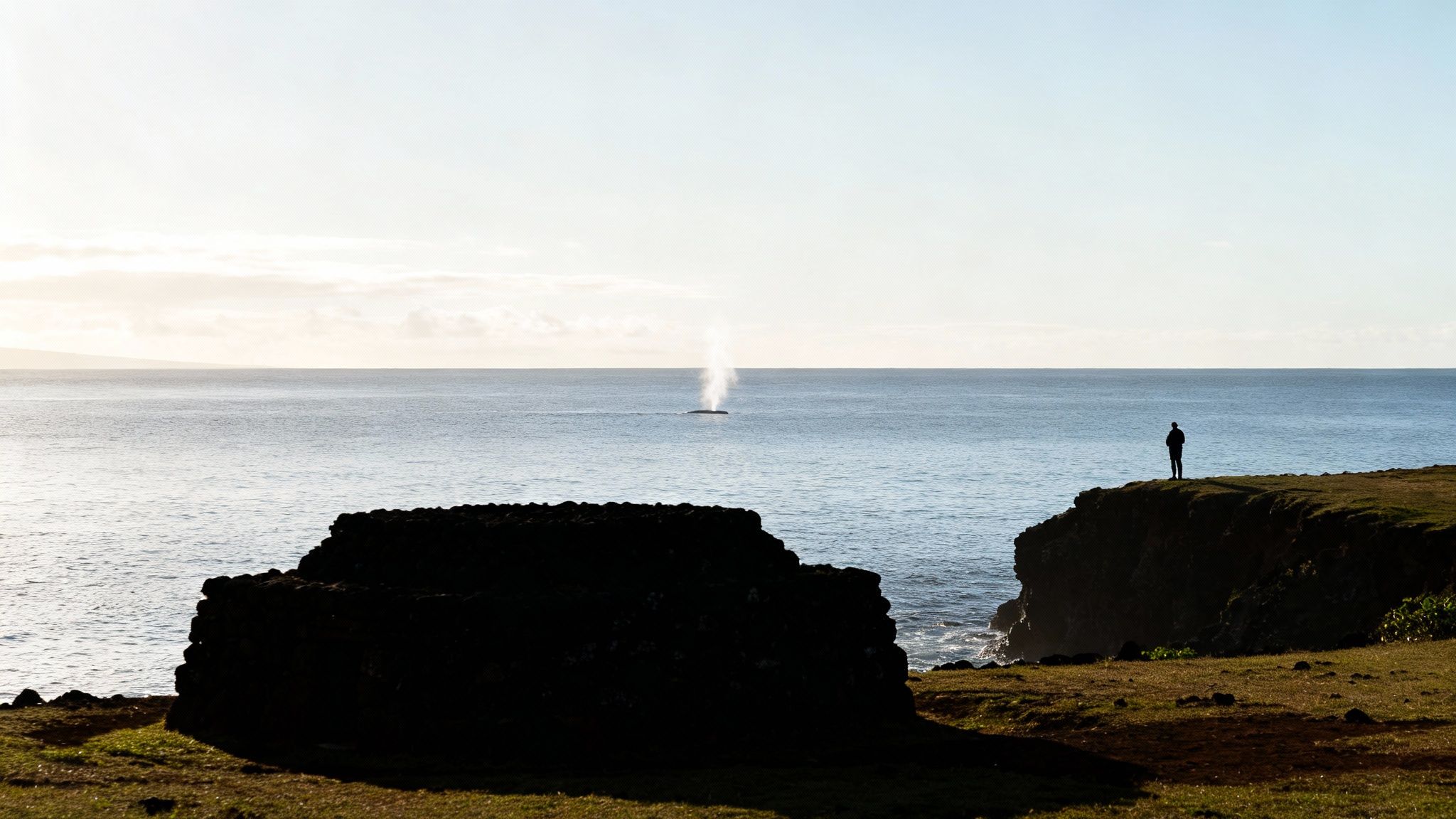
Don't have your sea legs? No problem at all. The Big Island boasts some of the best shore-based whale watching in all of Hawaii. With a decent pair of binoculars and a bit of patience, you can catch an amazing show from solid ground.
Here are a few of our favorite spots:
- Puʻukoholā Heiau National Historic Site: The name literally translates to "hill of the whale," which tells you everything. The elevated visitor center provides a stunning panoramic view of the waters where whales love to gather.
- Lapakahi State Historical Park: This is a quieter spot that offers excellent coastal views with far fewer crowds. The calm, clear water here makes it easier to spot that telltale "blow" as a whale comes up for air.
- Kua Bay and Hapuna Beach: These gorgeous white-sand beaches aren't just for sunbathing. Their wide-open ocean vistas make them fantastic places to kick back, relax, and scan the horizon for breaches and tail slaps.
The island community's deep connection to these animals is on full display during events like the annual Great Whale Count, where volunteers gather data from shoreside locations. Year after year, this data confirms that the Kohala Coast has two to three times more humpback sightings than other areas.
How to Choose Your Perfect Whale Watching Tour
With so many incredible whale watching tours on the Big Island, trying to pick just one can feel a little overwhelming. But here’s the good news: all that variety means there’s a perfect trip out there for everyone, whether you’re looking for a wild adventure, a chill family outing, or a quiet, private moment on the water.
Figuring out the right fit really comes down to what you’re looking for in a day on the ocean. It’s a lot like picking a car for a road trip—a rugged Jeep is perfect for going off-road, but an RV is way better for a big family. The same thinking applies here. Your group size, your idea of comfort, and just how close you want to get to the action will point you toward the right boat.
Comparing Vessel Types
Every boat offers a completely different vibe and vantage point. A big, stable catamaran, for example, gives you a super smooth ride and usually comes with perks like bathrooms and shade. That makes it a fantastic choice for families with little ones or anyone who gets a bit wobbly on the water.
On the other end of the spectrum, you’ve got the nimble Zodiac-style rafts. These things are a blast. They get you right down at water level for an exhilarating, eye-to-eye view of the whales. It’s a bit more of a raw, adventurous experience.
And of course, if you’re celebrating something special or just want the ultimate freedom, a private charter is the way to go. You call the shots, customize the day, and have the whole boat to yourselves. Sailboats offer yet another flavor—a peaceful, eco-friendly way to see the whales without the constant hum of an engine.
To make it easier to see what’s what, here’s a quick breakdown of the most common tour types you’ll find along the Kona and Kohala coasts.
Comparing Big Island Whale Watching Tour Types
Here's a look at the different kinds of boats you can book to help you find the best fit for your crew.
| Tour Type | Best For | Pros | Cons |
|---|---|---|---|
| Large Catamaran | Families, large groups, comfort-seekers | Stable ride, restrooms, shaded areas, often includes food/drinks. | Less intimate, larger group size, may not get as close as smaller boats. |
| Zodiac / Raft | Adventure-seekers, photographers | Fast, exciting ride, smaller groups, eye-level viewing. | Bumpy ride, no amenities, can be wet, not for those with back issues. |
| Private Charter | Special occasions, custom itineraries | Ultimate flexibility, personalized experience, privacy. | Most expensive option. |
| Sailboat | Relaxing and quiet experience | Eco-friendly, peaceful, minimal engine noise. | Slower pace, dependent on wind conditions. |
At the end of the day, picking the right boat is about matching the experience to your personal style and what you hope to get out of it.
What Makes a Great Tour Operator
Beyond the boat itself, what really separates a decent trip from an unforgettable one is the crew running it. A top-notch operator isn't just focused on your good time; they're deeply committed to the well-being of the whales.
The best tour guides do more than just find whales; they act as interpreters of the ocean. An experienced naturalist on board can transform your tour from a simple sightseeing trip into a rich educational experience, sharing fascinating insights into whale behavior, biology, and conservation.
You’ll want to look for operators who are serious about responsible wildlife viewing. That means they strictly follow federal regulations, keeping a safe distance of at least 100 yards from the humpbacks. This isn’t just about protecting the whales from stress—it actually gives you a better, more natural encounter.
The best companies are also passionate about marine conservation and often contribute to local research. You can learn more about what sets the great ones apart by checking out guides on the best Big Island whale watching tours. For a broader perspective on picking any kind of boat trip, you could also look at some general boat tour guides.
When you put it all together—the right boat and a reputable operator—you can book your tour with total confidence and get ready for an amazing day with Hawaii's gentle giants.
What to Expect on Your Whale Watching Adventure
There's a special kind of energy in the air on the morning of a whale watching tour on the Big Island. You can feel it the moment you step into the harbor—a mix of excitement and anticipation that’s downright contagious. The day kicks off with a warm welcome from the crew, who will get you checked in and comfortable before running through a quick but crucial safety briefing. They'll show you the boat's layout, point out the life jackets, and explain the game plan, making sure everyone feels ready to go before casting off the lines.
Once the boat eases away from the dock and points toward the open ocean, the real adventure begins. Your captain will get on the mic and share where they’re heading, usually based on the latest sightings and current ocean conditions. This is your cue to grab a good spot, let the sea spray hit your face, and start scanning the horizon. You're looking for that first sign—a puff of mist shooting up from the water, what we call a "blow."
The Role of the Onboard Naturalist
Having a naturalist or marine biologist on board is what separates a good tour from a great one. These folks are your personal interpreters of the ocean, and their passion for what they do is infectious. They're the ones who turn a simple boat ride into a deep, meaningful experience you'll actually learn something from.
As you cruise, the naturalist will share all sorts of amazing facts about humpback whales—their epic migration from Alaska, their complex family dynamics, and what all their different behaviors mean. The second a whale is spotted, they spring into action, calling out what you're seeing and answering every question that pops into your head. Their expertise adds a layer of understanding that makes the whole encounter truly unforgettable.
Decoding Whale Behaviors
Seeing a humpback whale in action is the absolute highlight. These aren't just random movements; every splash and leap has a purpose, whether it's for communication, pure fun, or showing off. Your naturalist will be your guide, but here are a few of the incredible displays you might get to witness:
- Breach: The ultimate showstopper. This is when a whale launches its massive body—we're talking 40 tons—almost completely out of the water before crashing back down in a spectacular explosion of whitewater.
- Tail Slap (Lobtailing): You'll hear this one before you see it. A whale lifts its massive tail fluke high out of the water and smacks it down with incredible force. It's a powerful, percussive sound that echoes across the water.
- Spyhop: This one feels personal. A whale will position itself vertically and poke its head straight out of the water, almost like it's trying to get a better look at you. It’s a moment of pure curiosity.
- Pectoral Fin Slap: It honestly looks like the whale is waving hello. They’ll roll onto their side and slap their long pectoral fin—which can be up to 15 feet long—on the surface over and over again.
Hearing a whale is just as magical as seeing one. Many tour boats carry hydrophones—underwater microphones they can drop into the water. Listening to the haunting, complex songs of the male humpback whales echoing up from the deep is an eerie and beautiful soundtrack you'll never forget.
Practical Tips for a Great Day
A little prep goes a long way in making sure your day on the water is comfortable. Most tours run between 2.5 to 3.5 hours. The key is to wear light layers. Even on the sunniest Kona day, the breeze on the open ocean can get chilly, so a light jacket or windbreaker is a smart move.
Don't leave the dock without your essentials: reef-safe sunscreen, a good hat, and polarized sunglasses to cut the intense glare off the water. A strap for your camera or phone is a non-negotiable—you don’t want to watch your memories sink to the bottom! And if you really want to level up your viewing, a good pair of binoculars makes a world of difference. For some great advice, check out this guide on choosing the best binoculars for whale watching. Pack smart, and you'll be all set for an incredible day.
Understanding Responsible Whale Watching
Seeing a humpback whale explode out of the water is one of those moments that sticks with you forever. It's powerful, humbling, and a core part of the Big Island experience. But with that incredible privilege comes a serious responsibility to protect these gentle giants and their ocean home. Every quality whale watching tour on the Big Island is built on a foundation of respect, making sure our excitement doesn't disturb the very animals we've come to admire.
This isn't just about being nice, either. This commitment to ethical tourism is backed by both federal and state laws designed to keep Hawaii's beloved humpback whales safe, especially when they're here for the most vulnerable parts of their lives.
The 100-Yard Rule and Why It Matters
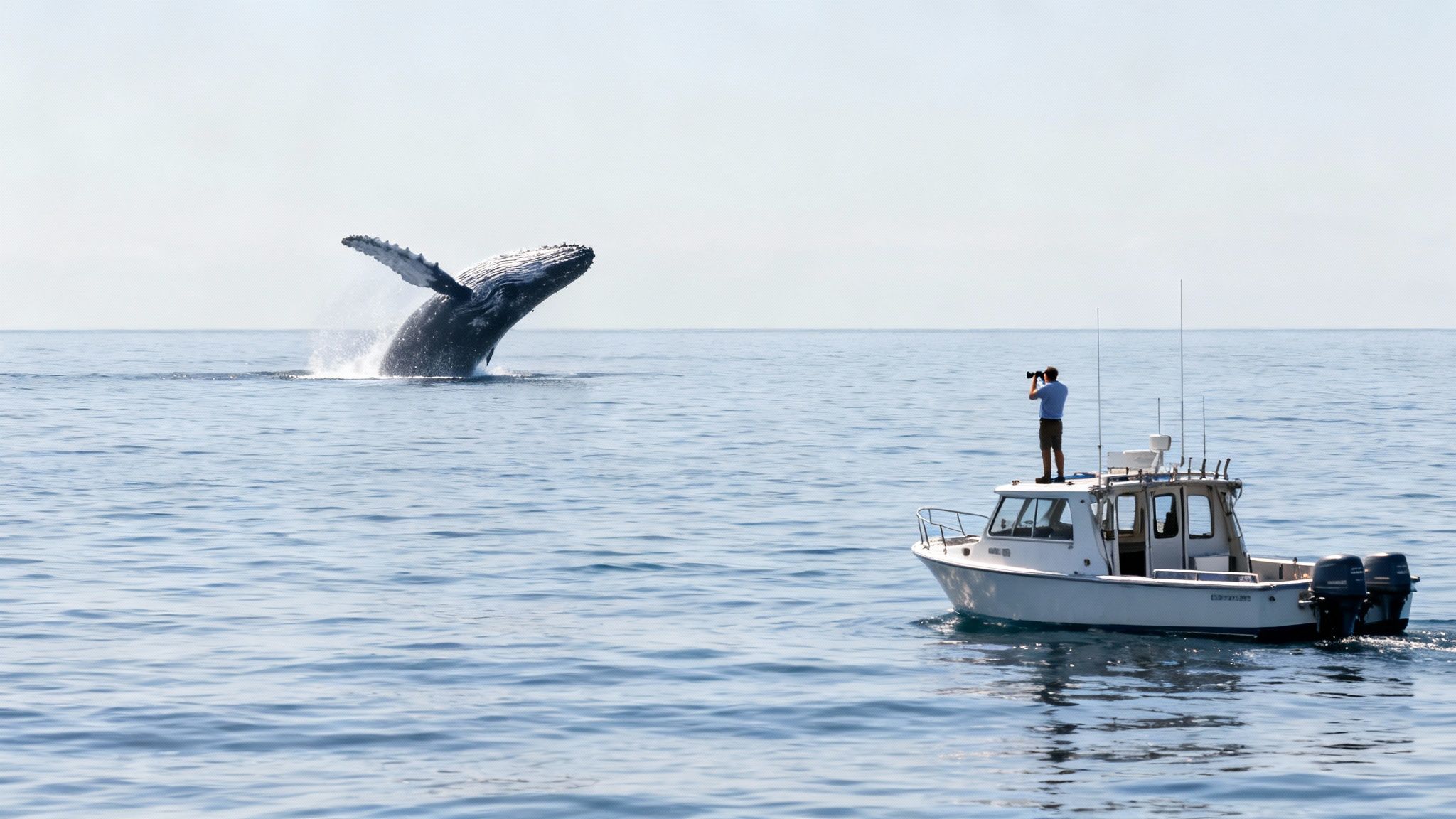
The absolute cornerstone of responsible whale watching is the 100-yard approach rule. Think of it as a whale's personal space bubble. This federal law is crystal clear: all boats, kayaks, paddleboards, and even swimmers have to stay at least 100 yards away from humpback whales. That's about the length of a football field.
This isn't just some random number. Scientists figured out that this is the minimum distance needed to avoid stressing the whales out, particularly mothers with their brand-new calves. Getting any closer can interrupt crucial behaviors like nursing, resting, or mating, which can have real consequences for their survival.
Choosing a tour operator who lives and breathes these guidelines is the single most important decision you can make. A truly professional crew will never chase, crowd, or harass a whale for a better photo op. Instead, they'll expertly position the boat at a respectful distance and cut the engines, letting the whales call the shots. Often, this patient approach results in far more magical and authentic encounters.
Now, it's important to remember these are wild, curious animals. It's illegal for us to approach them, but sometimes a whale will decide to check out the boat on its own. If a curious whale swims closer, that's a rare and incredible gift! A good captain knows exactly what to do: put the engines in neutral and just let the whale pass by on its own terms, ensuring everyone's safety.
Your Role in Marine Conservation
When you book a whale watching tour, you're doing more than just going on a fun boat ride. You're plugging directly into a massive conservation effort. The very waters you'll be scanning for blows and breaches are part of the Hawaiian Islands Humpback Whale National Marine Sanctuary.
This federally protected area was created specifically to give humpbacks a safe harbor to breed, give birth, and nurse their young. It's a huge underwater park, covering over 1,400 square miles of ocean around the main Hawaiian Islands.
By choosing a tour that plays by the rules, you become an active supporter of the sanctuary's mission. Your ticket helps fund critical research and conservation, supports a local economy built on sustainable tourism, and spreads the word about why we need to protect our oceans. It elevates your adventure from a simple sightseeing trip to a real, meaningful contribution to marine stewardship.
Got Questions About Whale Watching? We've Got Answers.
We get a lot of the same questions from folks getting ready for their first whale watching tour on the Big Island. To put your mind at ease and get you fully hyped for the adventure, we’ve tackled some of the most common ones right here. This way, you can book your trip feeling totally confident and ready to go.
Will I Actually See Whales?
This is the big one, right? While nobody can ever make a 100% guarantee when it comes to wild animals, your chances during peak season are ridiculously good.
From January through March, most experienced crews on the island report a success rate of over 95%. In fact, many of us are so confident you'll see whales that we offer a guarantee—if the whales don't show up, you can come back again for free.
What's the Best Time of Day for a Tour?
Honestly, there’s no "bad" time to see whales—they’re active all day long. The best time really comes down to what kind of experience you're looking for.
- Morning Tours: The big advantage here is the ocean is usually calmer. Think glassy water, less boat rocking. This not only makes for a smoother ride but can also make it easier to spot those tell-tale blows on the horizon.
- Afternoon & Sunset Tours: If you're a photographer, this is your time. The late afternoon light is just magical and can make for some truly stunning photos. The whales are often just as active, sometimes putting on spectacular shows as the sun goes down.
So, do you prefer calm seas or golden hour photo ops? You can't go wrong either way.
Can I Get in the Water and Swim with Them?
Absolutely not. It's strictly illegal to intentionally swim with or even approach humpback whales in Hawaii. Federal law is crystal clear: all boats and people must stay at least 100 yards away.
This isn't just a rule; it's about respect and safety—for both you and the whales. Any reputable tour operator takes these regulations very seriously. We're here to observe these incredible animals in their natural habitat without disturbing them, which ultimately makes for a more authentic and powerful experience for everyone.
What if I Get Seasick?
It's a common worry, but don't let it stop you from going! A little preparation goes a long way. If you're concerned, choosing a larger, more stable boat like a catamaran can make a huge difference, as they cut through the waves much more smoothly than a smaller raft.
You can also take an over-the-counter motion sickness medication before the tour starts (just follow the directions on the box). Simple things help, too: stay hydrated, keep your eyes on the horizon instead of looking down, and grab a spot on deck where you can get plenty of fresh air.
Ready to see these magnificent giants for yourself? At Kona Snorkel Trips, our expert guides are passionate about creating an unforgettable experience while putting the whales' well-being first. Book your adventure with us today! Learn more at https://konasnorkeltrips.com.