
Discover whale watching tours on the big island: Your Guide

Welcome to the ultimate guide for your Big Island whale watching adventure! If you're here between December and March, you've timed it perfectly. This is when thousands of humpback whales make their incredible journey to Hawaii's warm, protected waters, putting on a show you'll never forget.
Think of this guide as your complete roadmap to planning the perfect day out on the water.
Your Adventure with Big Island Whale Watching Tours
Setting out on a whale watching tour from the Kona or Kohala coast isn't just a simple boat ride—it's an immersive trip into the world of one of the planet's most magnificent creatures. Every year, more than 12,000 humpback whales travel thousands of miles from Alaska's frigid waters to mate, give birth, and nurse their new calves right here.
This epic annual migration gives us an unparalleled chance to see breathtaking displays of power and grace up close. It's truly a bucket-list experience.
Choosing the right crew to take you out is crucial for a memorable and responsible trip. As the top-rated and most-reviewed snorkel company in all of Hawaii, Kona Snorkel Trips really sets the bar for quality, safety, and making sure you have an amazing time. Don't just take our word for it—see what fellow ocean lovers have to say.
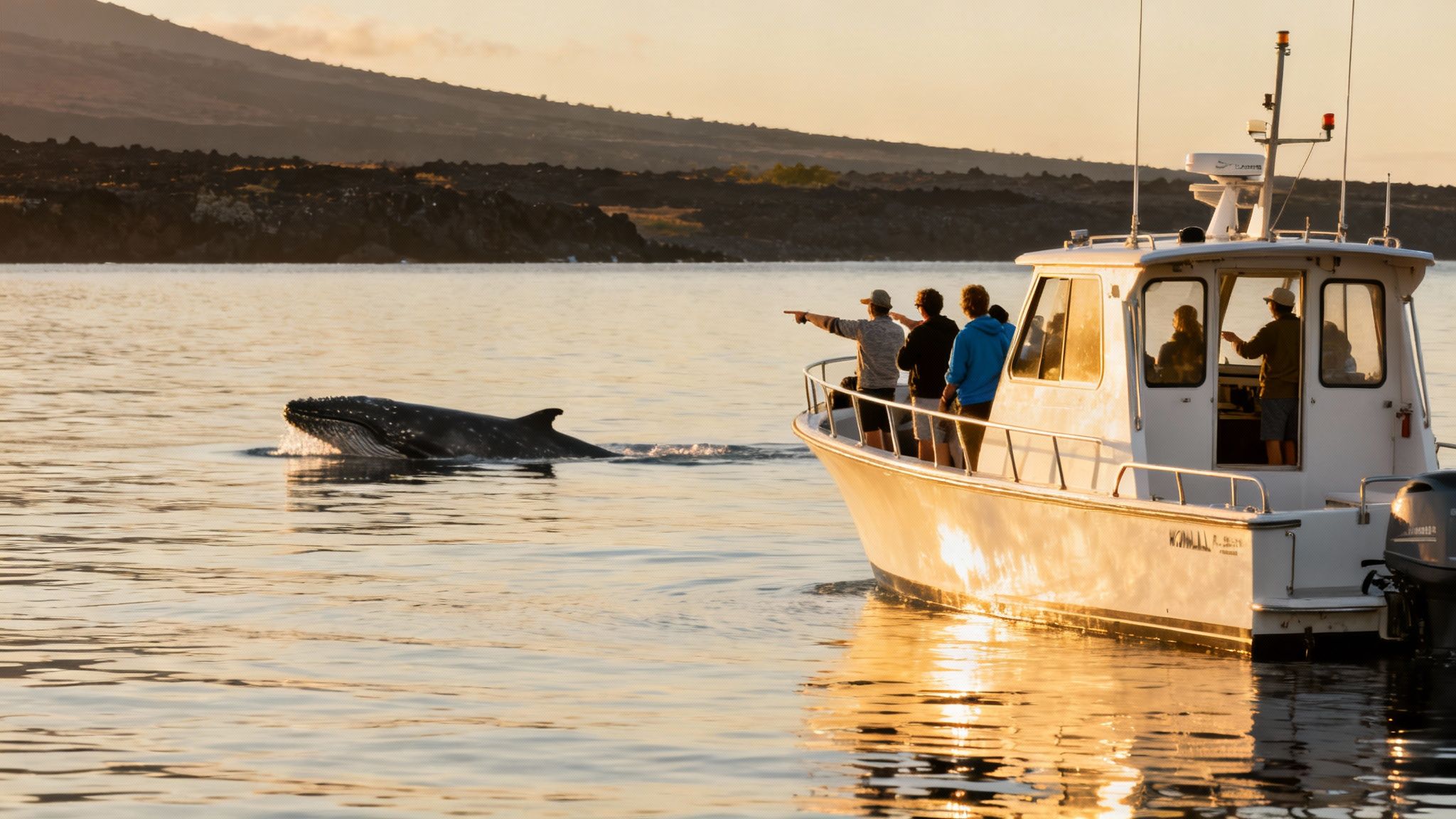
Why the Big Island Is a Premier Destination
So, what makes the Big Island so special for whale watching? It all comes down to our unique underwater geography. The ocean floor drops off sharply just offshore, creating deep-water channels that run right alongside the coast. For you, that means we don't have to venture far out to sea to find these gentle giants.
Here’s why the Big Island is the place to be:
- Calm Waters: The leeward Kona Coast is famous for its calm, clear conditions. This makes for a much more comfortable and enjoyable boat trip, with less chance of seasickness.
- High Concentration of Whales: Our sheltered bays are the perfect nursery for mothers and their calves, attracting a dense population of whales all season long.
- Diverse Marine Life: Besides the incredible humpbacks, you have a great chance of spotting spinner dolphins, pilot whales, and even sea turtles on your tour.
And if you're looking for adventures beyond our shores, you can explore some of our guides to other exciting vacation activities. But for now, let's focus on helping you create some unforgettable whale watching memories right here in Hawaii.
Catching the Rhythm of Whale Season
To truly appreciate the incredible sight of a humpback whale launching itself out of the water, it helps to understand the why behind their epic journey. This isn't a casual vacation for them; it's a vital, instinct-driven migration that has played out for thousands of years. Just imagine traveling over 3,000 miles without a map, guided only by ancient cues, all for the sake of your species' survival.
That's the reality for the thousands of humpback whales, or koholā as they are known in Hawaiian, that grace Big Island waters each year. Their annual trip from the frigid, food-rich seas of Alaska to Hawaii's warm, sheltered bays is one of nature's most impressive shows.
When Is the Best Time to See Whales on the Big Island?
The official whale watching season in Hawaii runs from December through March. During these months, the waters off the Big Island—especially along the Kona and Kohala Coasts—become a bustling nursery and social hub for humpbacks. But while you can spot them throughout this period, not all months are created equal.
For anyone planning a whale watching tour on the Big Island, timing is everything. The peak months are hands-down January and February. This is when the highest concentration of whales creates the most frequent and dramatic sightings.
Think of the migration like a bell curve. December sees the arrival of the first scouts, and the numbers steadily build from there. By late March, the population begins to thin out as the whales start their long journey back north. You might catch a few final, lingering sightings in April, but January and February are your best bet for a truly unforgettable experience.
For a deeper dive into the timings, you can explore more about the Big Island whale season in our detailed guide.
To make planning easier, here’s a quick breakdown of what you can expect throughout the season.
Big Island Whale Watching Season at a Glance
| Time of Year | Whale Activity Level | Typical Behaviors Observed |
|---|---|---|
| Early Season (Dec) | Moderate | Arrival of early groups, some surface activity. Good, but not peak. |
| Peak Season (Jan-Feb) | Very High | Breaching, tail slapping, spy-hopping, competitive pods, mothers with calves. |
| Late Season (Mar) | High to Moderate | Lots of mother-calf pairs. Activity winds down as whales begin their return. |
| Fringe Season (Apr/Nov) | Low | Possible sightings of the very last or very first whales of the season. |
As you can see, locking in your trip during the peak months gives you the absolute best shot at witnessing the full range of spectacular humpback behaviors.
The Purpose of the Journey
The whales don't come to Hawaii for the scenery—they come for survival. The warm, relatively shallow, and predator-free waters around the islands provide the perfect sanctuary for three critical life events:
- Mating: This is where complex and often competitive courtship rituals happen. You might see "escort pods" where multiple males compete for a female's attention through powerful displays and hauntingly beautiful songs.
- Birthing: Female humpbacks have a gestation period of about 11 months. This means a whale that conceives in Hawaiian waters one winter will return the very next winter to give birth.
- Nursing: A newborn calf lacks the thick layer of blubber needed to survive Alaska's icy temperatures. They spend their first few months here in Hawaii's warm embrace, nursing on their mother's incredibly fat-rich milk and bulking up for the long trip north.
This annual cycle is a delicate balance of timing and raw instinct. Scientists estimate that over 12,000 humpback whales make this journey each year, which is more than half of the entire North Pacific population. While the season's start can vary slightly, the pattern is remarkably consistent year after year, making it much easier to plan your adventure around seeing these magnificent creatures.
Finding the Best Whale Watching Hotspots
When it comes to unforgettable whale watching on the Big Island, location is everything. Sure, you can spot humpbacks from many points along the coast, but some areas give you a true front-row seat to the action. Picking the right launch point can be the difference between a nice boat ride and a mind-blowing encounter with breaching whales.
The Big Island is geographically blessed, with deep offshore waters right near the coast. This means our boats don’t have to travel far to find the action. Two areas, in particular, stand out as premier hotspots: the world-renowned Kohala Coast and the ever-popular Kona Coast. Both offer unique advantages for your whale adventure.
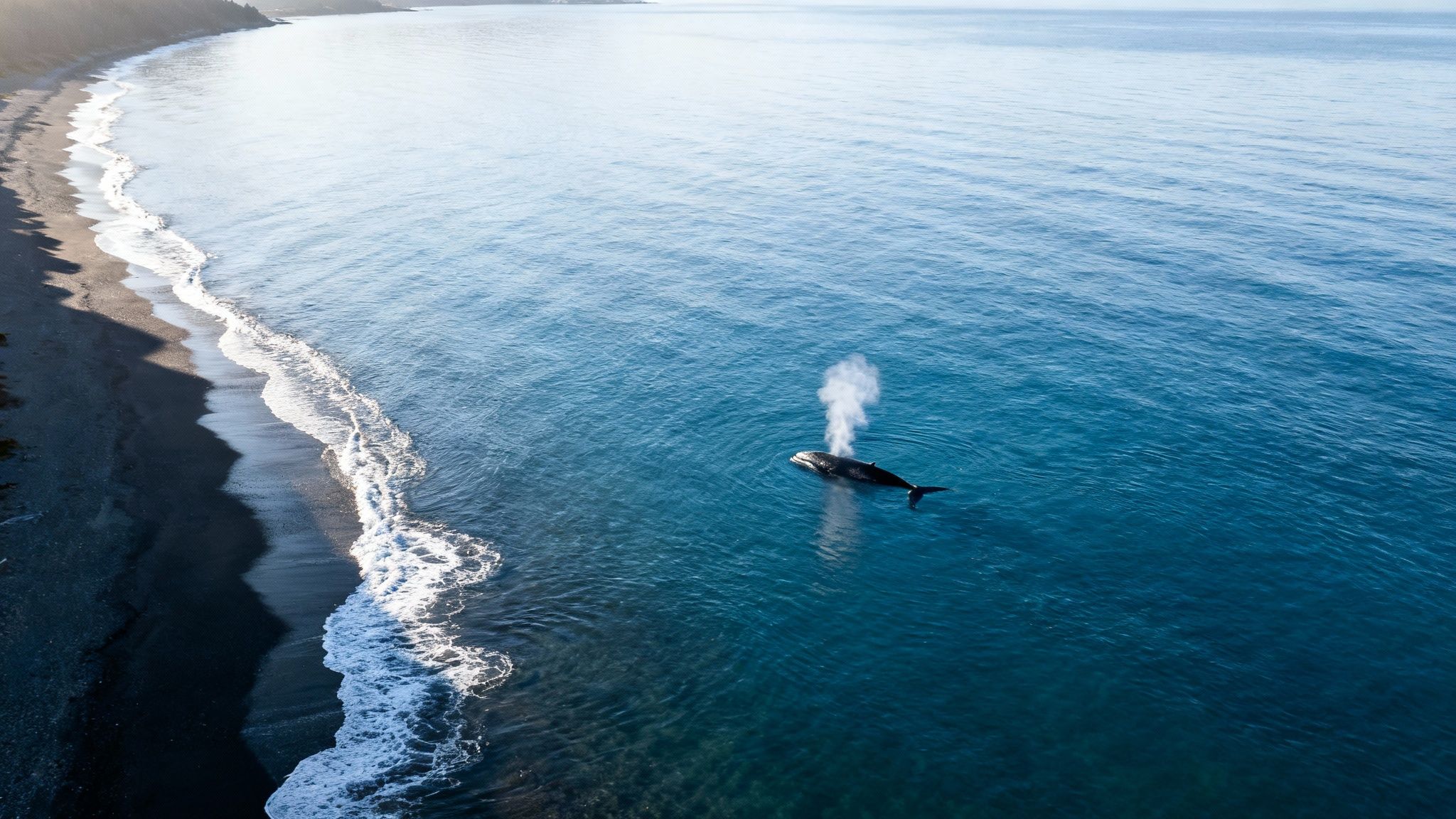
The Kohala Coast: The Undisputed Champion
Let's cut to the chase: the Kohala Coast, stretching along the northwestern shore, is hands-down the best place for whale watching in all of Hawaii. The reason is simple—it’s the preferred nursery for humpback mothers and their brand-new calves. The waters here are calm, shallow, and protected, creating the perfect, safe environment for birthing and nursing.
This means one thing for you: a much higher concentration of whales. Over the past decade, sighting numbers have climbed, and the Kohala Coast has consistently proven to be the most statistically significant location. The long-running Sanctuary Ocean Count confirms this year after year, with this area recording the highest number of whale sightings—often two to three times more frequent than other spots.
To put it in perspective, recent counts had volunteers at Kohala sites spotting an average of 15-20 whales every 15 minutes. That’s a stark contrast to the 3-6 whales seen elsewhere during the same period.
The Kona Coast: A Hub of Activity
Just south of Kohala, the Kona Coast is another fantastic option for your tour. Famous for its exceptionally calm and clear seas, Kona is shielded from the prevailing trade winds by our massive volcanoes. This makes for a smoother, more comfortable boat ride—a huge plus for anyone who might get a little queasy.
Kona is also the bustling center of marine tourism on the Big Island, with most tours departing from Honokohau Harbor. This gives you a massive variety of operators to choose from. Whether you want a thrilling Zodiac raft or a spacious catamaran, you'll find an experience that fits your style. For a full rundown of what's available, check out our guide to the best Kona whale watching excursions.
The key difference is density versus accessibility. The Kohala Coast often has more whales per square mile, while the Kona Coast provides more tour options and reliably calm waters, making both excellent choices for different reasons.
Best Spots for Shore-Based Whale Watching
Don't have your sea legs or just prefer to stay on land? You're in luck. The Big Island's geography allows for some incredible shore-based viewing, especially along the Kohala Coast. All you need is a good pair of binoculars and a bit of patience.
Here are a few of our favorite spots to watch for whales from shore:
- Puʻukoholā Heiau National Historic Site: The name literally translates to "hill of the whale," which tells you everything you need to know. The visitor center offers a stunning panoramic viewpoint over the ocean where whales are frequently seen.
- Lapakahi State Historical Park: This quiet, beautiful park offers totally unobstructed ocean views, perfect for scanning the horizon for that telltale spout of a humpback.
- Kapa'a Beach Park: A local favorite in North Kohala, this park is a great vantage point to watch whales play just offshore, especially during the peak months of January and February.
While a boat tour absolutely gets you closer to the action, these land-based spots provide a wonderful and accessible way to witness the majesty of the koholā (whales). Whether you choose Kohala's density, Kona's calm waters, or the tranquility of the shore, you can tailor your whale watching experience perfectly to your preferences.
How to Choose Your Perfect Whale Watching Tour
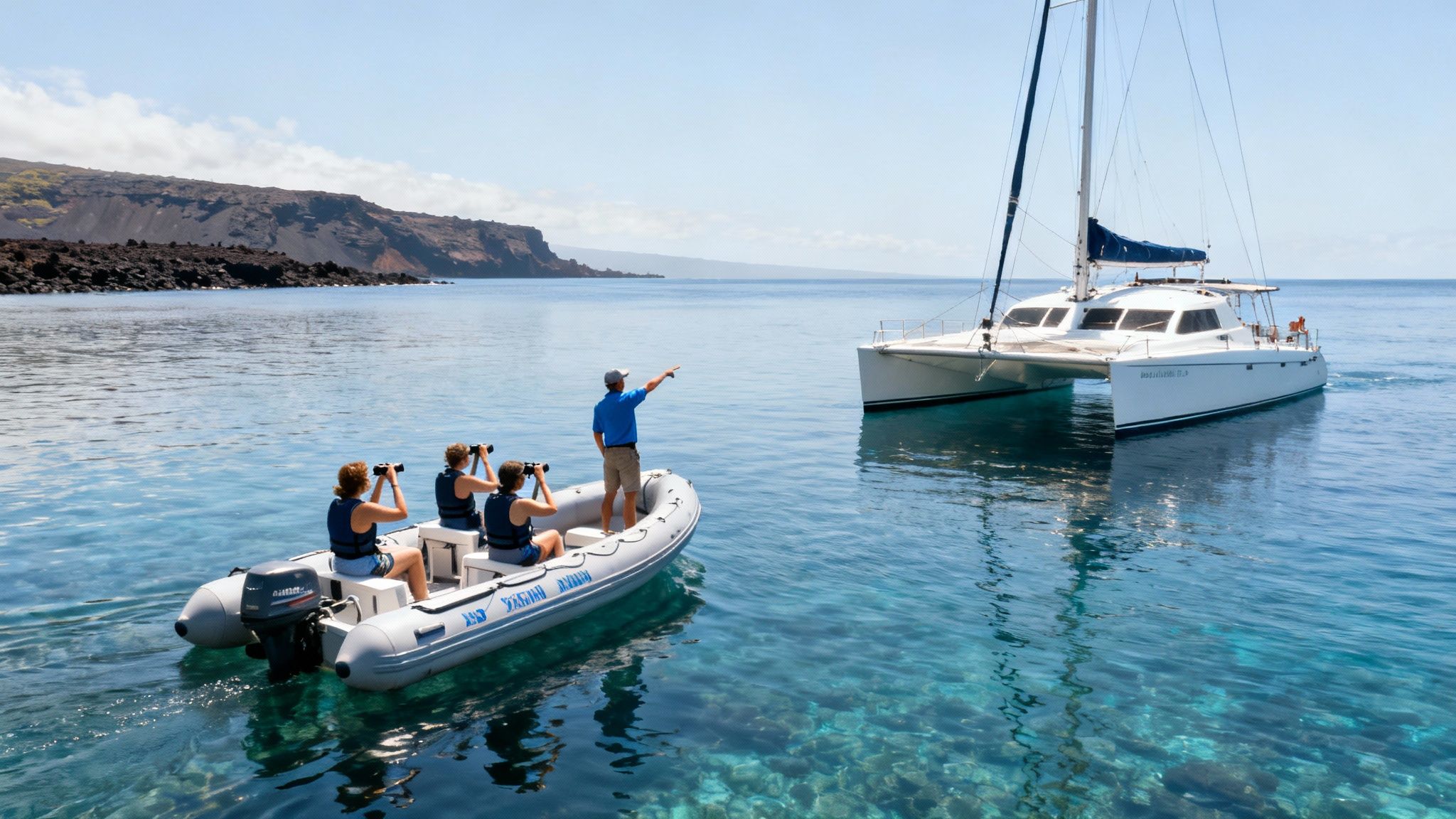
Picking the right whale watching tour on the Big Island really comes down to what you want out of the day. Do you want a thrilling, up-close adventure or a relaxed, scenic cruise? With so many choices, knowing a little about the options goes a long way.
Not all tours are the same, and the choices you make—from the time of day to the size of the boat—will shape your entire experience on the water. Let’s break down the key things to think about so you can book the perfect trip with total confidence.
Comparing Big Island Whale Watching Tour Types
With so many ways to experience the magic of whale season, it can be tough to decide which trip is the best fit. We put together this quick comparison to help you match a tour type to your personal style, whether you're an early bird photographer or a sunset seeker.
| Tour Type | Best For | Pros | Cons |
|---|---|---|---|
| Morning Tours | Photographers & families; those seeking the calmest seas. | Glassy water conditions make spotting whales easier; great light for photos; smoother ride. | Often the most popular and can book up quickly. |
| Sunset Tours | Couples & photographers looking for dramatic lighting. | Absolutely breathtaking sunsets as a backdrop for whale watching; a truly magical atmosphere. | Water can occasionally be choppier than in the morning. |
| Combo Tours | Adventurers wanting to maximize their time on the water. | See whales and snorkel with vibrant reef fish in a single trip; excellent value. | Longer time commitment than a dedicated whale watch. |
Each tour has its own unique vibe. A morning trip is classic and reliable, a sunset tour adds a layer of romance, and a combo trip is all about packing in the adventure. No matter what you choose, you're in for an incredible day.
The Right Vessel for Your Adventure
The boat you choose is a huge part of the experience. Think of it like deciding between a rugged off-road jeep and a comfortable tour bus—both will get you to the destination, but the journey itself feels completely different.
A smaller, faster boat, like a Zodiac-style raft, puts you right in the action. You're low to the water, giving you an incredible eye-level perspective that feels super personal. These boats are nimble, too, so the captain can respond quickly when whales are spotted.
On the flip side, a larger catamaran offers a much smoother, more stable ride. These are fantastic for families with young kids or anyone worried about seasickness. You'll also find more creature comforts like bathrooms and shade, making for a more relaxed trip.
It's a trade-off: the smaller rafts offer an intimate thrill ride but can be a bit bouncy. The larger catamarans provide a stable, comfortable viewing platform but might feel more crowded. It all comes down to personal preference.
Identifying a Quality Tour Operator
This is probably the most important decision you'll make. A great tour company does more than just drive a boat; they create a safe, educational, and unforgettable adventure. Here are the things we look for.
Permits and Professionalism
First things first, make sure any operator you consider is fully permitted to run tours in Hawaiian waters. This isn't just paperwork—it means they follow strict federal regulations designed to protect the whales and our marine ecosystem. The best companies have a deep respect for the animals and give them plenty of space.
Recent Reviews and Reputation
In this day and age, reviews are your best friend. Check out recent feedback on Google and other platforms. A long history of glowing, positive reviews is a huge green flag. It tells you the company consistently delivers great customer service with a knowledgeable crew.
Expert Marine Naturalist Guides
Honestly, the guide can make or break the trip. A passionate marine naturalist doesn't just point and say, "There's a whale!" They bring the whole experience to life.
They'll explain what you're seeing—why a whale is slapping its tail, the social dynamics of a pod, the epic journey they took from Alaska. This context transforms a simple sightseeing trip into a fascinating educational experience you'll never forget.
To get a better feel for what's out there, check out our in-depth guide on the best whale watching tours Big Island Hawaii has to offer.
What to Expect on Your Whale Watching Adventure
There's a special kind of excitement that builds when you pull away from the harbor and head out onto the calm, blue waters off the Big Island. It’s more than just a boat trip. It’s a chance to witness the raw power and surprising gentleness of humpback whales in their natural winter playground. As you scan the horizon, you’re not just looking for a splash—you’re waiting for an unforgettable story to unfold right before your eyes.
Every tour is a masterclass in whale behavior, and your guide is your interpreter. They'll help you understand the purpose behind every spectacular display, turning a simple sightseeing trip into a deep dive into the lives of these incredible animals. Knowing why they do what they do adds a whole new level of appreciation to the experience.
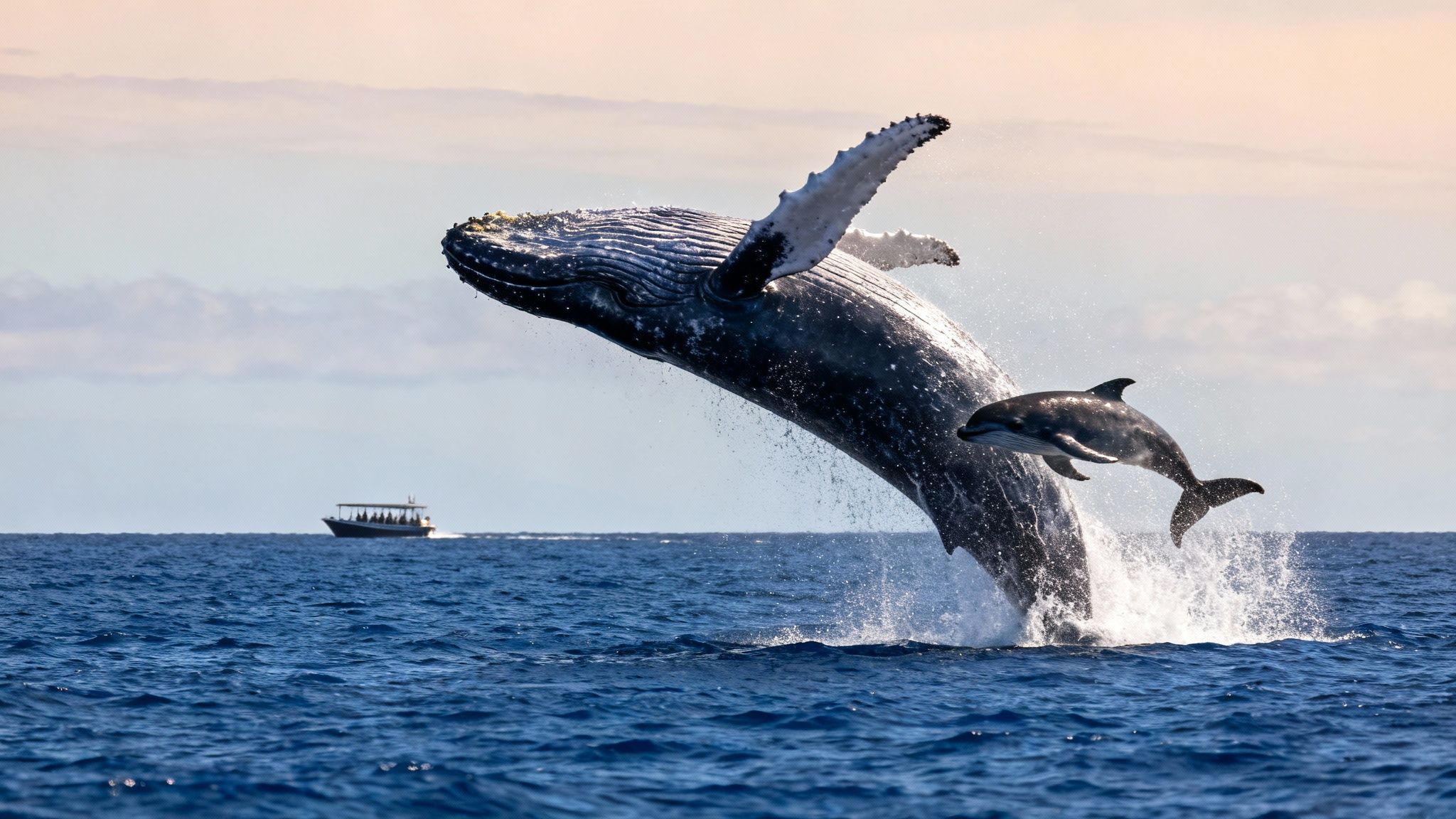
Decoding Whale Behaviors
When you're out on a whale watching tour on the Big Island, every leap and splash is a form of communication or a display of instinct. It’s a language all its own. Here are some of the most common and jaw-dropping behaviors you might get to see:
- The Breach: This is the one everyone hopes for—the ultimate showstopper. A humpback launches its massive 40-ton body almost completely out of the water, crashing back down with a sound and splash you can feel in your chest. Why do they do it? Scientists think it could be a way to communicate, shake off parasites, or maybe… just for the pure joy of it.
- Tail Slap (Lobtailing): You’ll see the whale's massive tail, or fluke, rise high into the air before slamming down hard on the surface. That loud, percussive smack can travel for miles underwater. It might be a warning, a sign of aggression between males, or another form of long-distance communication.
- Spy-Hopping: Whales are curious creatures. A spy-hop is when a whale pokes its head straight out of the water, almost like a periscope, to get a good look at what's going on above the surface—including you and your boat! It's a fantastic moment that really highlights their intelligence.
- Pectoral Fin Slap: A whale will often roll onto its side and repeatedly slap its long pectoral fin on the water. It looks like they're waving hello, and in a way, they are! It's another important method for talking to other whales nearby.
Seeing these behaviors is more than just a thrill; it's a real-time glimpse into the complex social world of humpbacks. A great guide will help you piece the story together, whether you're watching a mother patiently teaching her calf or a group of males competing for a female's attention.
More Than Just Whales
While the humpbacks are definitely the stars of the show, the waters around the Big Island are bursting with other amazing marine life. You never know what you'll find out there. Keep an eye out for playful pods of spinner dolphins, famous for their acrobatic leaps. You might also spot pilot whales, sea turtles gracefully gliding by, and all kinds of seabirds. Every single trip is a unique safari on the sea.
This rich ecosystem is exactly why your visit matters so much. When whale season kicks off, it triggers a huge surge in tour bookings that supports local families and businesses. For some operators, up to 80% of their entire annual income is generated during these few peak months. It really shows how vital these gentle giants are to our community. You can read more about the start of the Big Island's whale season and its local impact to see how big of a deal it really is.
Respecting the Gentle Giants
The most important rule of any whale watch is simple: the whales' well-being comes first. Every reputable tour operator follows strict federal guidelines designed to protect these animals from harm. It’s not a suggestion—it's the law, and we take it very seriously.
The cardinal rule is to always maintain a minimum distance of 100 yards from the whales. This gives them the space they need to breathe, play, and live their lives without feeling crowded or stressed by our presence. A good captain knows that if whales decide to approach the boat, the best thing to do is cut the engines. This often leads to the most quiet, respectful, and magical encounters—all on the whales' own terms.
When you choose a tour that puts these ethical practices first, your adventure does more than just create memories. It actively supports marine conservation, making you a partner in protecting this incredible environment for generations to come.
What to Pack for Your Whale Watching Trip
A little bit of prep work goes a long way when you’re heading out on the water. Getting your gear sorted beforehand means you can kick back, relax, and focus on the main event: the incredible humpback whales. The right stuff helps you handle whatever the ocean throws at you and lets you nail those perfect photos.
Think of it as setting yourself up for a win before you even step on the boat for your whale watching tour on the Big Island. This simple guide covers everything you need to bring so you can just soak it all in.
Dressing for a Day at Sea
Out on the open ocean, the weather can flip in an instant. A beautiful, calm morning at the harbor can easily turn into a breezy, cool afternoon once you're offshore. The secret to staying comfortable is all about layering.
- Lightweight Layers: Start with a t-shirt or tank top, but definitely bring a long-sleeved shirt or a light windbreaker. As the day warms up or cools down, you can peel off a layer or add one back on. Simple.
- Comfortable Bottoms: Shorts or some light pants are perfect. If you’ve got something made of quick-drying material, even better—a bit of ocean spray is pretty much a guarantee.
- The Right Shoes: You'll want something with a good grip. Boat shoes, sneakers, or sandals that strap on securely are your best bet. We'd recommend leaving the flip-flops at home; they can get super slippery on a wet deck.
Sun and Glare Protection is a Must
That Hawaiian sun is no joke, and when it bounces off the water, it gets even more intense. Protecting yourself isn't just about being comfortable—it's about staying safe out there.
So many people underestimate the sun on the open ocean. That cool sea breeze feels amazing, but it's deceptive. The UV exposure is way higher on the water.
Here’s what you’ll need in your sun-fighting toolkit:
- Reef-Safe Sunscreen: Please help us protect our fragile coral reefs by using a mineral-based sunscreen (the ones with zinc oxide or titanium dioxide). Slather it on before you board and be ready to reapply.
- Polarized Sunglasses: Seriously, these are a game-changer. Polarized lenses slice right through the glare on the water's surface, making it way easier to spot whales and other marine life.
- A Hat That Stays Put: A wide-brimmed hat is awesome for shade, but make sure it has a chin strap or fits nice and snug. The wind offshore has a habit of claiming hats as souvenirs!
Getting That Perfect Shot: Photography Tips
You’re going to want to remember this day forever, and a few camera tricks can make all the difference. Whales can move surprisingly fast, so you have to be ready to catch the action. Set your camera to a fast shutter speed to freeze those incredible moments like a breach or a tail slap and avoid blurry photos.
A zoom lens will be your best friend. Boats are required by law to stay 100 yards away from the whales, so a good zoom lets you get those amazing, frame-filling shots without getting too close. And don't forget to put the camera down every once in a while and just watch with your own two eyes—some moments are best captured by your memory.
How to Keep Seasickness at Bay
Nothing ruins a beautiful day on the water faster than feeling queasy. If you know you're prone to motion sickness, a little planning can make all the difference. Start hydrating the day before your tour and keep sipping water throughout the trip.
Once you're on the boat, try to keep your eyes fixed on the horizon—it’s the most stable thing in your view and helps your brain and inner ear get on the same page. If you're really worried about it, think about booking a tour on a larger boat like a catamaran. They tend to be more stable and have less of that side-to-side roll that gets to people.
Answering Your Whale Watching Questions
We get a lot of questions about what it's really like to go whale watching on the Big Island. It's totally understandable—you want to make sure you're planning the perfect trip. So, let's clear up some of the most common questions so you can book your tour feeling confident and excited for what's ahead.
Is a Whale Sighting Guaranteed on Your Tours?
This is the big one, and for good reason! Because we're dealing with wild animals in their natural habitat, no one can ever offer a 100% guarantee. It just wouldn't be honest.
That said, during the peak season from January through March, the odds are overwhelmingly in our favor. Our experienced captains live and breathe these waters, and they know exactly where to look to give you the best possible shot at a spectacular encounter. Many reputable companies, including us, offer a "sighting guarantee." This usually means if the whales are shy on your trip, you can come back out with us for free until you see them.
What Is the Best Time of Day to See Whales?
Honestly, both morning and afternoon trips are fantastic. The whales are active all day long, so it really comes down to the kind of vibe you're looking for.
- Morning Tours: If you love calm, glassy water and that bright, crisp morning light, this is your time. It’s absolutely perfect for getting those postcard-worthy photos.
- Afternoon & Sunset Tours: There's something truly magical about watching whales against the backdrop of a Hawaiian sunset. The golden hour light makes for an unforgettable, almost mystical experience.
You really can't go wrong either way.
Are Kids Allowed on the Tours?
Of course! Whale watching is one of those rare activities that captivates everyone, from toddlers to grandparents. Seeing a giant humpback breach for the first time is a memory your family will talk about for years.
Most larger boats, like spacious catamarans, are incredibly stable and perfectly safe for little ones. Just a heads-up, some of the smaller, zippier raft-style boats might have age restrictions due to a more adventurous, bumpy ride. It’s always best to double-check with the tour operator when booking to make sure the boat is a good fit for your crew.
How Close Can We Get to the Whales?
Federal law is crystal clear on this, and we take it very seriously. All boats must maintain a distance of at least 100 yards from humpback whales—that's about the length of a football field. This is crucial for protecting the whales and not disturbing them during their sensitive breeding and calving season.
But here's where it gets exciting: the whales don't know about that rule. They are incredibly curious creatures, and sometimes, they decide to come check us out. When a whale chooses to approach a boat on its own, it's called a "mugging," and it is a truly mind-blowing, heart-pounding experience you will never forget.