
A Guide to Whale Watching Tours Kona Hawaii
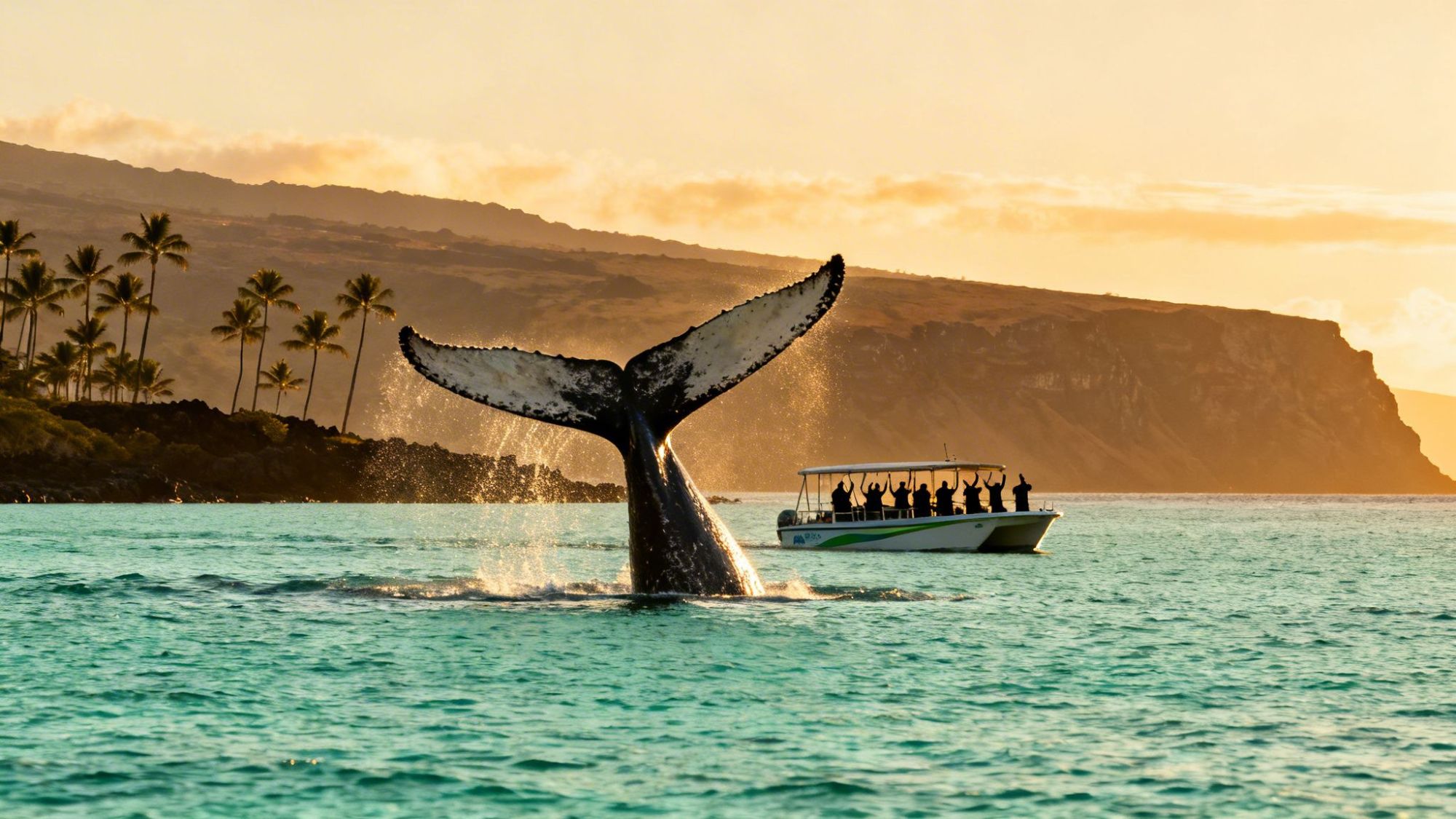
From December to March, something truly magical happens off the Kona coast. The calm, warm waters become the winter home for thousands of humpback whales, and the best whale watching tours Kona, Hawaii offers can give you a front-row seat to one of nature's greatest shows.
Your Guide to Kona's Whale Watching Adventures

Picture this: you're out on the water, with the dramatic volcanic coastline of the Big Island behind you. Suddenly, a 40-ton humpback whale explodes from the turquoise Pacific, hangs in the air for a breathtaking moment, and crashes back down. This isn't some once-in-a-lifetime-if-you're-lucky event; it's just another day during Kona's peak whale season.
Every year, these gentle giants travel over 3,000 miles from the chilly feeding grounds of Alaska. They come to Hawaii's protected waters to do what we all want to do on a tropical vacation: relax, mate, and raise their families. The newborn calves, or "koholā," get to spend their first few months in this warm, safe nursery.
Kona is their preferred spot for a reason. The massive volcanoes of the Big Island act as a natural shield, blocking the strong trade winds and keeping the western coast exceptionally calm. These glassy conditions are perfect for new mothers and their babies, and as a bonus, they create an incredible viewing arena for us.
Finding an Adventure That Respects the Whales
Choosing the right tour isn't just about getting a good view; it's about doing it responsibly. A top-notch operator knows that the best experience for you is also the safest and most respectful one for the whales.
For an adventure that combines intimate wildlife viewing with a strong commitment to environmental stewardship, look no further. Top-rated companies focus on small-group tours that put wildlife safety and guest experience first, ensuring you witness these magnificent creatures responsibly.
There's a huge difference between being on a crowded boat and an intimate one. Here's what sets the best tours apart:
- Smaller Groups: This means you get a better, unobstructed view of all the action. Plus, you get more one-on-one time with your guide to ask all your burning questions.
- Expert Guidance: Our tours are led by lifeguard-certified guides who are absolute experts on whale behavior. They'll share fascinating facts and stories that bring the experience to life.
- Respectful Viewing: We strictly follow all federal regulations, keeping a safe distance so we can observe the whales without disturbing their natural behavior. It's their home, and we're just lucky visitors.
Think of this guide as your go-to resource for everything you need to know, from the absolute best time to see the whales to what you should pack. Let's dive in and find the perfect whale watching tour in Kona, Hawaii for an experience you'll be talking about for years.
When Is The Best Time for Whale Watching in Kona?

When it comes to whale watching in Kona, timing is everything. It can be the difference between a good day on the water and a truly unforgettable, jaw-dropping experience. While the official humpback season runs from December through April, the real magic happens within a much tighter window.
Think of it as a "whale rush hour." The number of whales just explodes during certain weeks, giving you the best possible chance to witness the full spectacle of their behaviors right here in Kona's calm waters.
The first humpbacks start their incredible journey to Hawaii as early as late October. For the 2025-2026 season, our first confirmed Big Island sighting off Kona was on October 30, 2025. You can definitely see whales in December, but the action really ramps up later.
The absolute prime time, the sweet spot we all wait for, is from mid-January to late March. This is when you'll want to book your whale watching tours kona hawaii if you're hoping for a trip of a lifetime.
Kona Whale Watching Season At a Glance
To help you plan the perfect trip, here's a quick look at what you can expect from the whale activity in Kona throughout the season.
| Month | Whale Activity Level | What You Can Expect to See |
|---|---|---|
| November | Very Low | The first few scouts arrive. Sightings are rare but exciting. |
| December | Low to Moderate | Early arrivals are settling in. You'll see spouts and the occasional breach. |
| January | High | The season is in full swing. Competitive pods are common and the action is constant. |
| February | Peak | This is the heart of it all. The most whales and the most spectacular surface activity. |
| March | High | Prime time for seeing new moms and their playful calves practicing their moves. |
| April | Moderate to Low | The last mothers and calves begin their journey north. Sightings become less frequent. |
| May | Very Low | The season is officially over, with only a few stragglers remaining. |
As you can see, planning your visit between January and March gives you the absolute best odds for an incredible encounter.
Decoding the Peak Season
So, what does "peak season" actually feel like on a tour? It's not just about seeing more whales—it’s about seeing them do more. The sheer density of humpbacks in the water means more interactions, more energy, and more awe-inspiring moments.
Here’s a breakdown of the vibe each month:
- December: The first wave of whales is here. It’s a great time for seeing those first spouts on the horizon and feeling the excitement build.
- January & February: This is the heart of the action. You're very likely to see competitive pods, where multiple males chase a single female, resulting in breathtaking displays of power and agility. It's pure chaos in the best way possible.
- March: This month is all about the little ones. It's peak nursery time, and we see tons of mother-and-calf pairs. The calves are curious, playful, and often test out their new skills with breaches and tail slaps right next to mom.
- April: As the season winds down, you'll see the last of the mothers and calves. They're often resting and preparing for the long trip back to their feeding grounds in Alaska.
By scheduling your trip between mid-January and late March, you are stacking the odds in your favor for seeing multiple pods and a huge variety of behaviors on a single tour. This is when the ocean truly comes alive.
For a deeper dive into the timing, check out our complete guide to the Big Island's whale season. Planning your whale watching tours kona hawaii around this incredible natural calendar is the first step toward an adventure you'll never forget.
How to Choose Your Perfect Kona Whale Watching Tour

With so many incredible whale watching tours kona hawaii has to offer, picking the right one can feel like a huge decision. And honestly, it is! The boat you choose completely shapes your day on the water. Not all tours are the same, and what’s perfect for one person might not be right for you.
So, what's your ideal whale encounter look like? Are you picturing a smooth, lazy ride on a big, stable boat with lots of room to move around? Or does a fast-paced adventure that gets you right down to the water's level sound more like your style? Thinking about this is the best place to start. For a deeper dive into boat types, our guide on Big Island boat tours can help you weigh your options.
Small Group Tours vs. Large Vessels
Your biggest choice will be between an intimate, small-group trip and a tour on a much larger vessel. Each one has a totally different vibe.
- Large Vessels: These are usually big, comfortable catamarans built for a relaxed experience. They're a fantastic choice for families with young kids or anyone who wants amenities like onboard restrooms and plenty of shade. Their size also means a more stable ride.
- Small-Group Tours: Often on agile boats like rigid-hull inflatables (RIBs), these tours are all about adventure and a personal touch. With fewer people on board, everyone gets an amazing, front-row seat. You feel less like you're just watching and more like you're part of the action.
The benefit of a smaller boat isn't just about avoiding crowds. These zippy vessels can cover a lot more water, which boosts the chances of tracking down active whale pods. Plus, the one-on-one attention from your lifeguard-certified guides means all your questions get answered, and you’ll learn some incredible things about the whales you're seeing.
Think of it like picking your seat at a concert. A large vessel is the comfortable balcony with a great overview. A small-group tour puts you in the front row where you can feel the energy and really connect with the show.
The Advantage of Boat-Based Tours
While you can sometimes get lucky and spot a spout from the shoreline, nothing beats a boat tour for a real whale watching experience. Boats can legally and safely get you where the action is, all while following federal laws to keep a respectful distance from the animals.
This freedom to move around drastically increases your odds of seeing those spectacular behaviors we all hope for, like a full-body breach or a powerful tail slap.
For the most exclusive trip possible, many companies also offer private charters. This is perfect for families or groups who want the boat all to themselves and a day that’s built completely around what they want to see and do. Once you know the different tour styles, you can book an adventure that perfectly matches your dream day with Kona’s amazing humpback whales.
Discovering Kona's Year-Round Marine Life
Everyone knows winter is humpback season, and believe me, it's incredible. But what a lot of people don’t realize is that the ocean off the Kona coast is buzzing with life 365 days a year. The very same calm, deep waters that make this a perfect winter nursery for whales also happen to be the full-time home for some of the ocean's most amazing animals.
Out here, you learn pretty quickly that no two days are ever the same. You might head out looking for one thing and find something totally unexpected and magical. That’s the beauty of it. A whale watch tour is just one piece of the puzzle when it comes to the incredible wildlife encounters waiting for you in Kona.
Kona's Year-Round Residents
Putting the seasonal humpbacks aside for a moment, Kona has a whole crew of resident whales and dolphins that stick around all year. Venturing offshore, you always have a shot at a thrilling sighting, no matter what month is on the calendar.
Some of the regulars we see out on the water include:
- Short-finned Pilot Whales: These guys are incredibly social and smart, often traveling in big family groups. They're curious, too, and you'll sometimes see them "spy-hopping"—poking their heads straight out of the water to get a look at you.
- Spinner Dolphins: You haven't lived until you've seen a pod of spinners. They're famous for their wild, acrobatic leaps and can travel in massive groups of several hundred. It’s pure joy to watch.
- Bottlenose Dolphins: Bigger and beefier than the spinners, bottlenose dolphins are just as charismatic. They love to play in the wake of the boat, giving you a fantastic, up-close view.
- Spotted Dolphins: Sleek, fast, and full of energy. We often find these dolphins zipping through the water, sometimes mixed in with the spinner pods.
You'll hear us use the word "pelagic" a lot. It’s just a simple term for animals that live out in the open ocean instead of hugging the coastline. Kona's underwater landscape drops off to deep water very close to shore, making it one of the best places on the planet to see these creatures.
You don't have to take my word for it—the proof is in the water. Just this past November, we had multiple sightings of short-finned pilot whale pods, with the young ones tail slapping and spy-hopping all over the place. On those same trips, we spotted at least five oceanic whitetip sharks cruising nearby. Another week, we were treated to melon-headed whales in glassy seas, a few tiger sharks, and even a rare Hawaiian monk seal.
This is what makes getting out on the water in Kona so special. While you absolutely should come for the humpbacks in winter, don't think that's your only shot. An ocean adventure here is always a good idea. If you're looking for other ways to get in the water, check out our guide to snorkeling in Kona.
What to Expect on Your Whale Watching Adventure

Stepping aboard one of the whale watching tours kona hawaii has to offer is the start of a true adventure, and knowing what’s coming just adds to the excitement. It all begins at the harbor with a friendly check-in, where you’ll meet your lifeguard-certified guides and get a quick safety talk. Once we push off from the dock, the real hunt begins.
Out on the open water, everyone's eyes are scanning the horizon. The first clue is almost always a spout—a misty plume of water that can shoot 15 feet into the air. On a clear day, you can spot one from over a mile away! Our captains have a sixth sense for this, spotting those tell-tale signs and expertly guiding the boat for the best possible view, always giving the whales their space.
Understanding Whale Language
A huge part of the magic is seeing the whales' incredible surface behaviors up close. These aren't just random splashes; it's communication, a show of strength, or sometimes, just pure play. Your guides are there to translate, giving you a front-row seat to the conversation.
Here are a few of the epic moves you might witness:
- Breach: This is the one everyone dreams of seeing. A whale launches its entire massive body out of the water, hanging in the air for a split second before crashing down in a truly spectacular splash.
- Tail Slap (Lobtailing): You'll hear this one as much as see it. A powerful, resounding smack of the whale’s giant tail on the water's surface that echoes across the ocean.
- Pectoral Fin Slap: The whale rolls onto its side and repeatedly slaps its enormous pectoral fin—which can be up to 15 feet long—against the water. It’s their way of getting someone's attention.
- Spyhop: A quiet, curious move where a whale pokes its head straight up out of the water to take a look around. It feels like they're checking you out just as much as you're checking them out.
The most valuable asset on any tour is your guide. They don't just find the whales; they translate the ocean's story for you, explaining behaviors and sharing insights that turn a simple boat ride into a deep, educational connection with nature.
Safety and Respect for Wildlife
A core part of any reputable whale watching tours kona hawaii experience is a deep commitment to responsible viewing. It’s not just a good idea; it’s the law. Federal regulations require all boats to stay at least 100 yards away from humpback whales.
This rule is especially critical for protecting mothers and their newborn calves, giving them the space they need to rest and bond. Operators like Kona Snorkel Trips are serious about following these guidelines to the letter. It means the whales aren't stressed, allowing us to witness their natural, unguarded behaviors. Your safety and the whales' well-being always come first.
Your Essential Kona Whale Watching Checklist
A little bit of prep goes a long way when you're heading out on the water. Trust me, you don't want to miss a spectacular breach because you're shivering or squinting from the sun's glare.
Think of it like this: the weather on the open ocean can be a totally different world from what you feel on shore. Having the right gear tucked in your bag makes all the difference, letting you focus on the whales instead of wishing you'd brought a jacket.
What to Bring on Your Tour
To make sure your whale watching tour in Kona is absolutely epic, here’s a quick checklist of things we guides always recommend:
- Reef-Safe Sunscreen: The Hawaiian sun is no joke, especially when it’s bouncing off the water. Lather up before you even step on the boat.
- Polarized Sunglasses: These are a total game-changer. They slice right through the glare on the water's surface, making it so much easier to spot that first tell-tale spout on the horizon.
- A Hat with a Strap: A good hat is great for sun protection, but you'll definitely want one with a chin strap. Once the boat gets moving, you’ll be glad you don't have to chase it across the deck!
- A Light Jacket or Windbreaker: Even on the sunniest Kona days, the morning air can be surprisingly chilly out on the water. A light, waterproof layer is perfect for blocking wind and spray.
- A Camera with a Zoom Lens: Whales often keep a respectful distance. A camera with a decent zoom is your best friend for capturing those jaw-dropping moments when a 45-ton giant launches into the air.
- Binoculars: These are fantastic for scanning the horizon for activity and getting a much closer look at distant pods or other marine life we might encounter.
- Motion Sickness Remedies: If you know you're prone to seasickness, it’s always a good idea to take your preferred remedy before we leave the harbor. It's better to be safe than sorry!
Many of these tips also apply to other water activities. For more ideas on what to wear for a day on the ocean, check out our guide on what to wear for snorkeling. Being prepared means you can just relax and soak in the incredible experience of being in the presence of Kona's humpback whales.
Your Kona Whale Watching Questions, Answered
As you get ready for your trip, you probably have a few questions popping into your head. It's totally natural. Here are the answers to the questions we get asked most often, so you can book your perfect whale watching adventure with complete confidence.
Is a Whale Sighting Guaranteed on a Tour?
This is the big one, and the honest answer is that since whales are wild animals, no one can ever offer a 100% guarantee.
That said, during the peak season here in Kona (think mid-January through late March), your chances are incredibly high. Our captains live and breathe these waters, and they know exactly where to go to give you the best shot at an encounter. It's honestly very, very rare for a tour during this time to come back without a great story to tell.
What Is the Best Time of Day to See Whales?
Humpback whales are on their own schedule, and they can be active any time of day. There's no secret "best" time, but different parts of the day do have their own perks.
- Morning Tours: The ocean is often calmer in the morning, sometimes as smooth as glass. This makes it much easier to spot those tell-tale spouts from miles away.
- Afternoon Tours: Some folks believe the whales get a bit more playful in the afternoon. While it's not a set rule, you can sometimes catch more energetic surface action, like tail slaps and breaches.
Ultimately, the best tour is the one that fits your vacation schedule. You have a fantastic chance of seeing something amazing either way.
How Likely Are Whale Sightings in Kona?
The likelihood is exceptionally high, especially if you're here in peak season. This isn't just a feeling we have; it's backed up by dedicated research. For instance, the Hawaiian Islands Humpback Whale National Marine Sanctuary organizes yearly counts, and the numbers are staggering.
The final tally for the 2025 season documented 714 humpbacks statewide, with research showing the Kona-Kohala coast is a premier hotspot where sightings can be triple what they are in other areas. You can dive deeper into the full whale count data from the 2025 season to see for yourself.
If there's one takeaway, it's this: planning your trip for January, February, or March dramatically stacks the odds in your favor. The sheer number of whales that call these waters their temporary home makes Kona a truly world-class destination.
What Happens If the Weather Is Bad?
For any good tour operator, your safety is always the #1 priority. We are constantly watching the weather and ocean conditions to make sure every trip is safe and fun.
If we have to cancel a tour because of unsafe seas—like high winds or big swells—you'll have two simple options:
- Reschedule: We’ll get you booked onto another tour on a different day, no problem and no extra charge.
- Full Refund: If you can’t make another day work, you’ll get a full refund.
This way, you never have to worry about losing out because of Mother Nature. For an even more detailed look at what to expect, check out our complete guide to whale watching tours on the Big Island.