
Whale watching tours kona hawaii: Unforgettable Kona Ocean Encounters
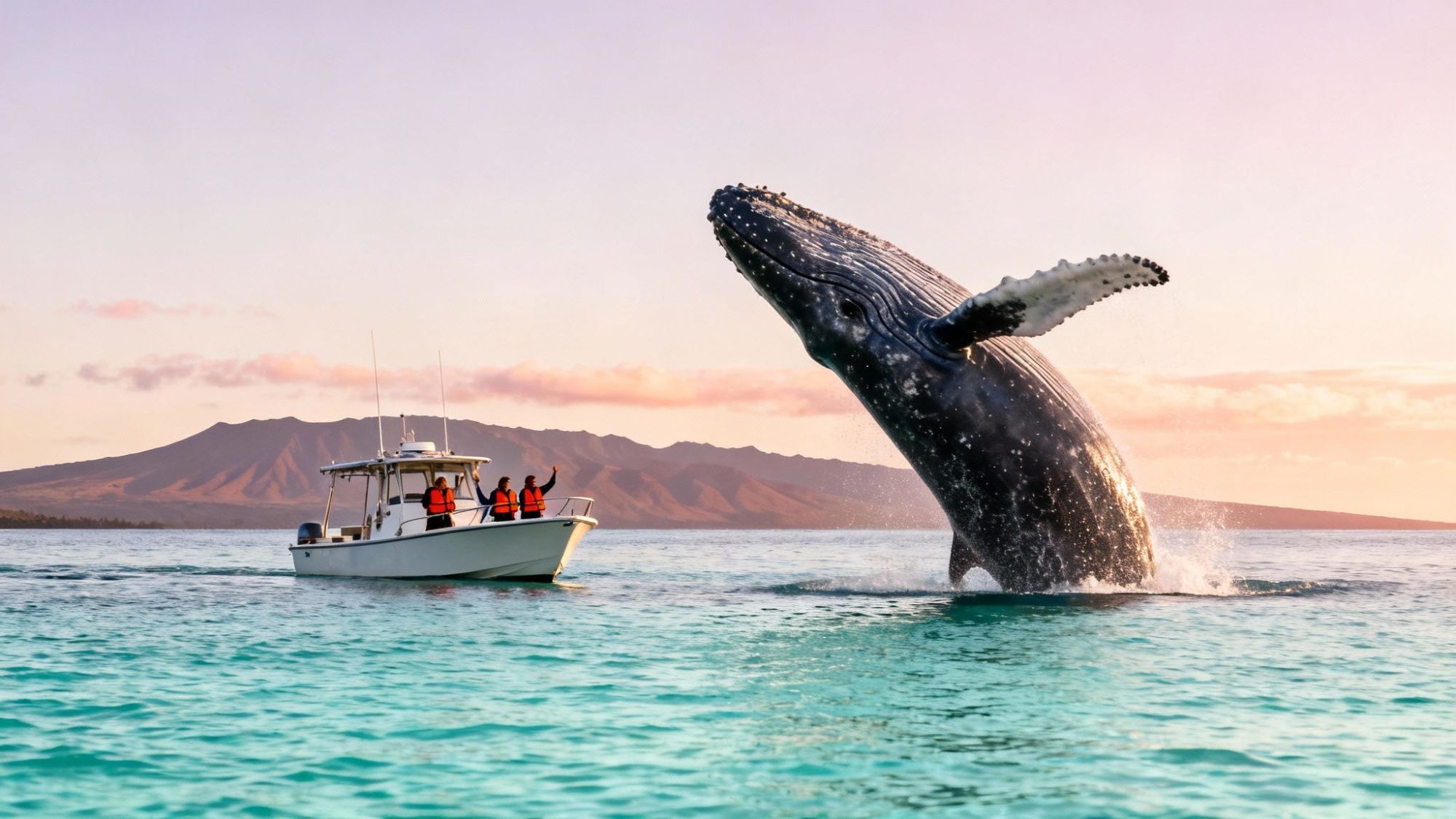
Picture this: you're out on the calm, turquoise waters off the Kona coast, the Hawaiian sun warming your skin. Out of nowhere, the ocean explodes as a 40-ton humpback whale rockets out of the water, hanging in the air for a breathtaking moment. This isn't something you see on TV; this is a real, heart-pounding experience you can have on one of the best whale watching tours Kona Hawaii has to offer.
Experience the Magic of Kona Whale Watching
Every single winter, something incredible happens. Thousands of humpback whales travel over 3,000 miles from their chilly feeding grounds in Alaska all the way to Hawaii's warm, welcoming waters. They come here to mate, give birth, and raise their newborn calves. The Kona coast, tucked in the protective lee of the massive Hualālai and Mauna Loa volcanoes, becomes the perfect, serene nursery for these gentle giants.
As Hawaii's top-rated and most-reviewed snorkel and tour company, Kona Snorkel Trips lives for this season. We love giving our guests a front-row seat to one of nature's greatest shows. Don't just take our word for it, see what people are saying.
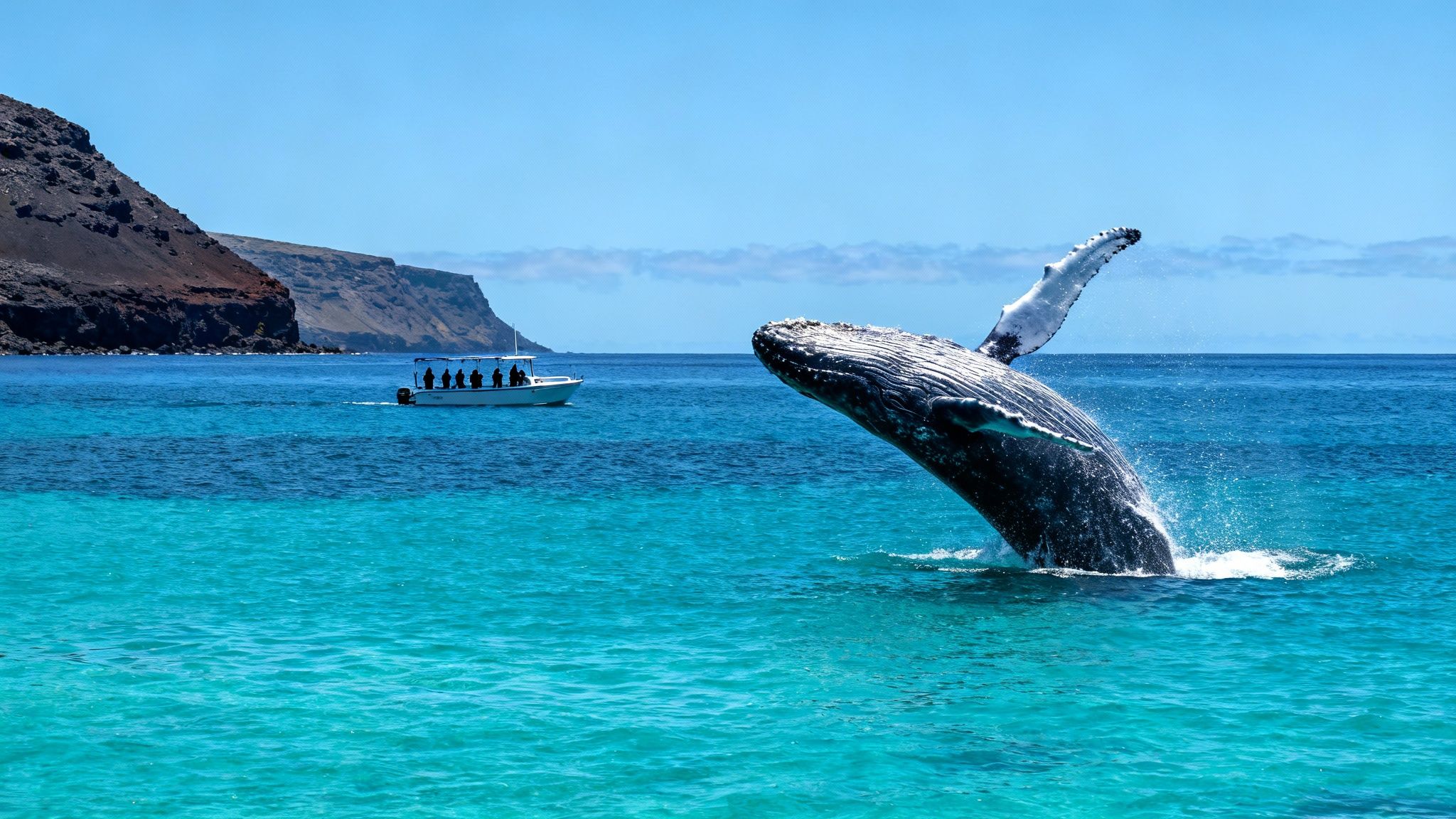
This guide is your inside scoop on how to witness this spectacle for yourself. We'll break down why Kona is such a hotspot for the annual humpback migration and how you can join us for an adventure you'll be talking about for years.
A Journey of a Lifetime
The annual humpback migration is truly one of the most awe-inspiring events in the animal kingdom. These massive creatures travel for thousands of miles without a single bite to eat, surviving entirely on their fat reserves from a summer of feasting.
Once they arrive in Kona's calm waters, their mission is clear: breeding and caring for their young. This creates an incredibly active and thrilling environment for whale watching. You aren't just looking at whales swim by; you're getting a rare glimpse into a crucial and tender chapter of their lives.
A whale watching tour is so much more than just a boat ride. It’s a chance to connect with nature in a profound way, to feel humbled by the raw power and pure grace of one of the largest animals on Earth.
Why a Guided Tour Is the Way to Go
Sure, you might get lucky and spot a spout from the shoreline, but nothing—absolutely nothing—compares to being out on the water with them. A guided tour gives you a much richer and more rewarding experience, and here’s why.
- We Know Where to Look: Our captains have spent years on these waters. They know the whales' habits and can read the ocean's subtle hints to find the most active groups, which drastically increases your chances of amazing sightings.
- You'll Actually Learn Something: Our crew isn't just there to drive the boat. They're passionate about marine life and will share fascinating stories and facts about whale behavior, biology, and the local ecosystem. It turns a fun trip into a learning experience.
- We Watch Responsibly: We're 100% committed to respectful wildlife viewing. Our crew strictly follows all federal regulations, keeping a safe distance of at least 100 yards. This ensures we never disturb the whales and can enjoy their natural behavior.
- Safety and Comfort First: Our boats are built for a safe, smooth, and comfortable ride. All you have to do is sit back, relax, and focus on the incredible show happening right in front of you.
In the rest of this guide, we'll dive deeper into the best times to go, what you should bring, and all the amazing behaviors you can expect to see on your Kona whale watching tour. Get ready to make some memories.
Why Kona Is a Premier Whale Watching Destination
So, what makes the Kona coast the undisputed champion for whale watching in Hawaii? It all comes down to its incredible geography. The two massive volcanoes, Hualālai and Mauna Loa, create a natural wall that shields the coastline from the heavy trade winds that pound the other sides of the islands.
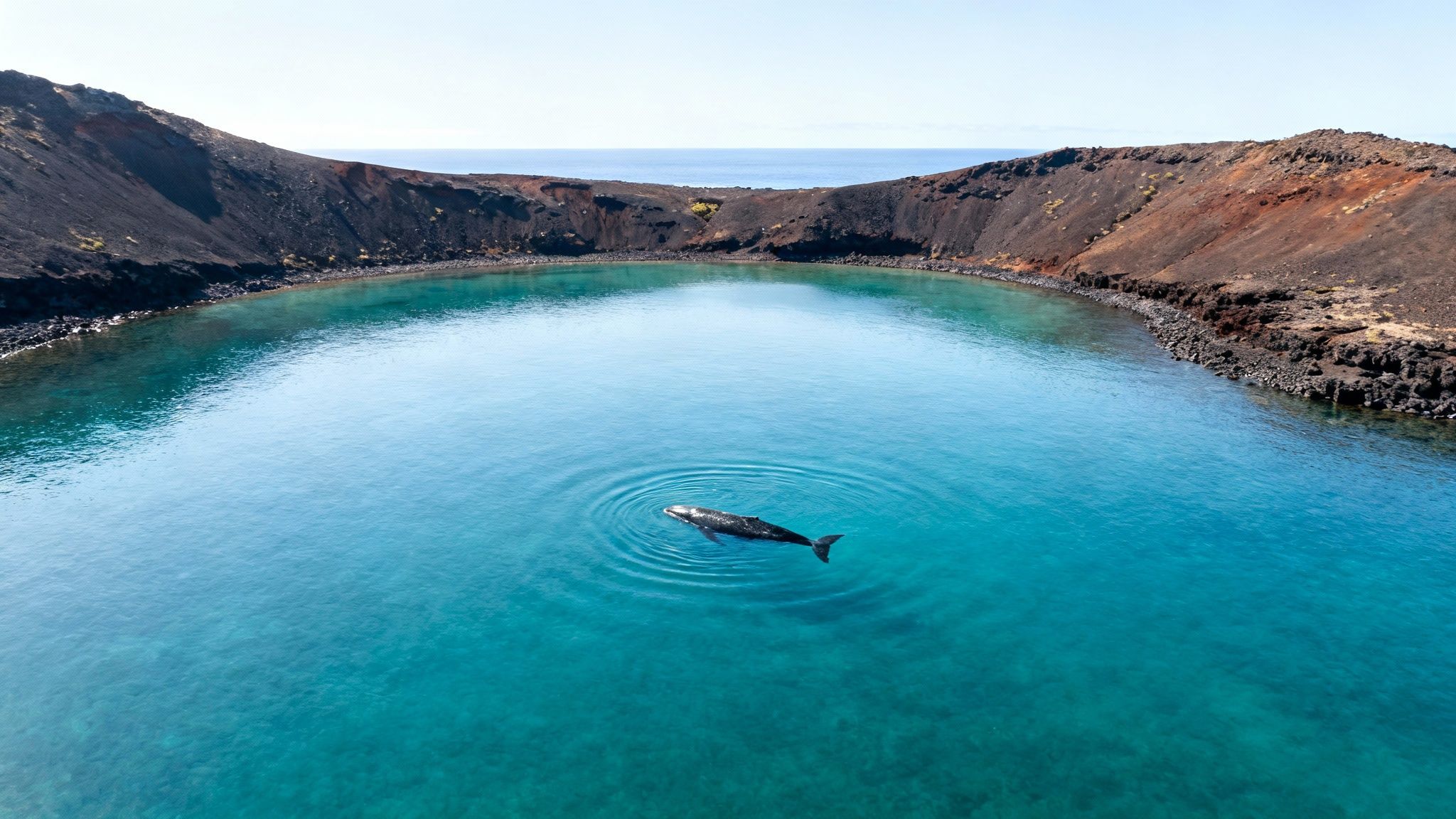
This massive shield creates a pocket of exceptionally calm, clear, and warm water. Picture a giant, tranquil bay—it’s the perfect, safe place for mother humpback whales to give birth and nurse their newborn calves after that long, exhausting swim from Alaska. It’s this gentle environment that makes for the superior whale watching tours Kona Hawaii is so famous for.
A Natural Nursery
The leeward side of the Big Island is more than just a nice spot; it's a vital sanctuary for newborn humpbacks. A calf is born with very little body fat, so the warm Kona waters are essential for helping it conserve energy and stay warm. The calm seas also make it much easier for the baby to surface for air and nurse without fighting against strong currents or big waves.
When the conditions are this good, the whales can truly relax. For us, that translates to more surface activity and more frequent sightings. You aren't just crossing your fingers hoping to see a whale; you're stepping right into their preferred winter home, where they feel comfortable and ready to play.
The Science of the Migration
Kona's reputation as a world-class whale watching spot isn't just talk; it's backed by years of science and observation. The area is hands-down one of Hawaii's most amazing locations, especially during the peak season from January to March when the whale population is at its highest.
Scientists figure that a huge chunk of the North Pacific humpback population—over 12,000 whales—makes the trip back to Hawaiian waters each year, and a whole lot of them choose the protected Kona coast. You can read more about this amazing annual whale migration on bodyglovehawaii.com.
The calm leeward waters off Kona are not just a preference for whales; they are a biological necessity. This sheltered marine environment is crucial for the successful raising of the next generation of humpback whales.
Why Calm Waters Mean Better Viewing
Those gentle sea conditions along the Kona coast aren't just good for the whales; they directly benefit anyone on a tour, making the entire experience better from start to finish.
- Smoother Rides: With no heavy winds or big swells, you get a much more comfortable and enjoyable boat ride. This makes it perfect for families, kids, and anyone who might get a little seasick.
- Clearer Sightings: Calm water creates a glassy surface, making it way easier to spot spouts, tail flukes, and other whale behaviors from far away. The visibility is simply incredible.
- More Predictable Tours: Consistent weather patterns mean fewer tour cancellations. You can book your adventure with confidence, knowing the conditions are very likely to be on your side.
- Natural Whale Behavior: Since the whales aren't busy fighting rough seas, they show off a wider range of natural behaviors. You're much more likely to see those tender moments between a mother and her calf or the spectacular aerial displays of competing males.
This perfect combination of geography and biology is what lifts Kona from just another place to see whales to a truly world-class destination. The conditions are perfect not only for the whales but for giving you an unforgettable, comfortable front-row seat to one of nature’s most incredible shows. When you choose a tour here, you're putting yourself right in the heart of the action.
Finding the Best Time for Your Whale Watching Tour
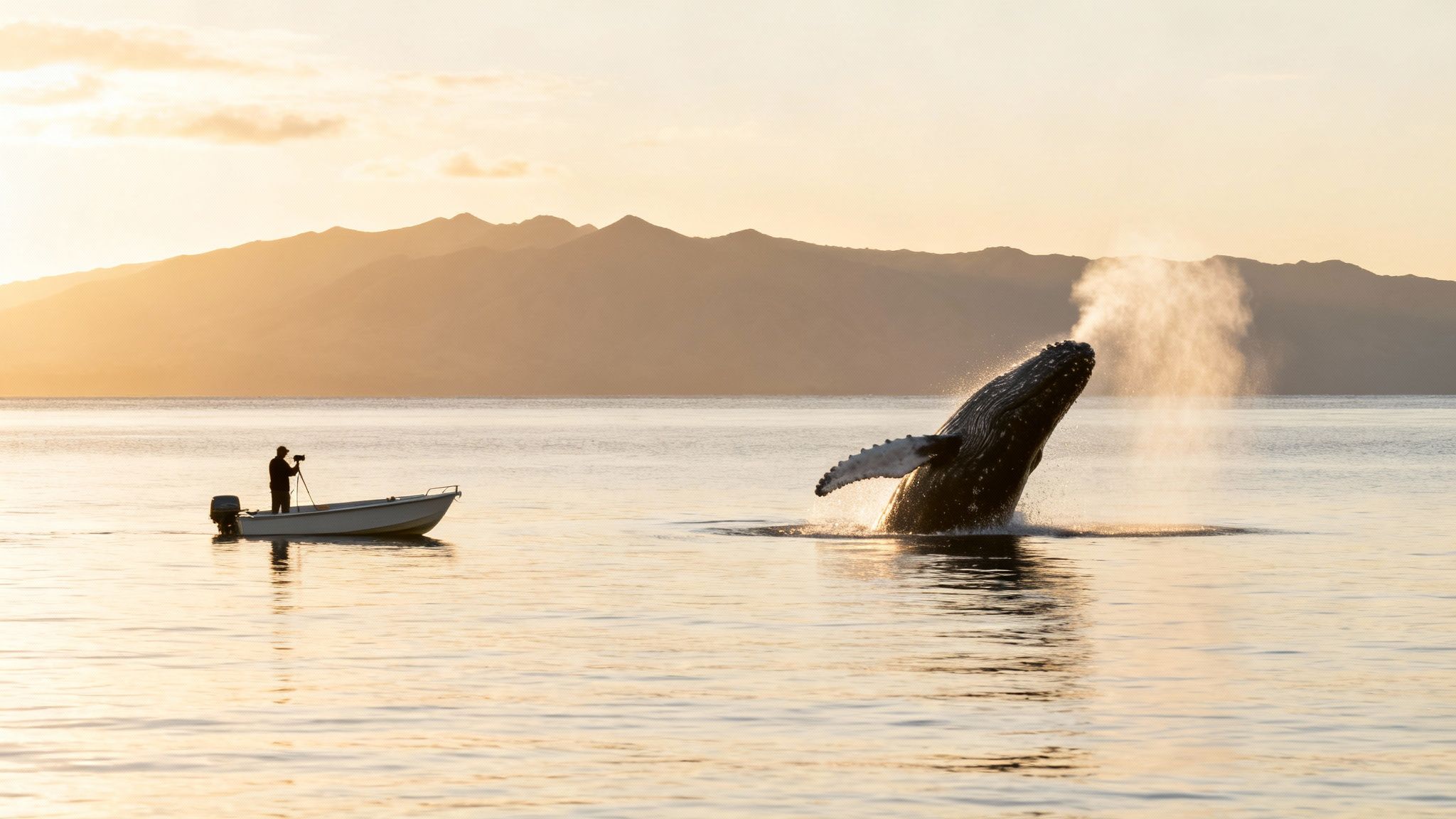
Timing is everything when you’re hoping for an unforgettable day with humpback whales. Just like a seasoned fisherman knows the best tides, knowing the right time to book your tour can turn a good trip into a mind-blowing one. The great news is, the Kona coast gives us a pretty generous window to see these gentle giants.
The official whale season here in Hawaii runs from November to May. During these months, thousands of humpback whales cruise down from Alaska to make the Big Island’s warm, sheltered waters their winter getaway. But not all months are created equal—the number of whales and the level of action definitely waxes and wanes.
If you’re dreaming of those jaw-dropping moments—like a 40-ton whale launching its entire body out of the water—you’ll want to aim for the heart of the season.
Hitting the Peak Whale Season
For the absolute best, most action-packed whale watching, you can’t beat January through March. Think of the months before and after as the warm-up act and the grand finale, but this three-month stretch is the main event. This is when the concentration of humpback whales off the Kona coast is at its absolute peak.
It's when most of the calves have been born, so the ocean is buzzing with activity. You'll see moms teaching their newborns essential life skills while huge males put on incredible shows, competing for the attention of females. More whales simply means more action and a much higher chance of seeing a whole range of behaviors.
Some years, the whales even decide to show up early. The 2025-2026 season, for example, kicked off with a bang when the first confirmed humpback was spotted off Kona way back on October 8, 2025! An early start like that usually points to an incredible season for anyone joining the whale watching tours Kona Hawaii is famous for.
Morning vs. Afternoon: Which Tour Is Right for You?
Once you’ve got your month picked out, the next choice is what time of day to go. Honestly, both morning and afternoon trips have their own unique magic, and the "best" one really just comes down to your personal vibe.
Morning tours, usually heading out around 8 or 9 AM, often get the calmest ocean conditions. The water can be like glass, and the soft morning light is a photographer’s dream—no harsh midday glare.
On the other hand, afternoon tours can be spectacular. The whales themselves sometimes get a bit more active on the surface as the day wears on. Plus, you get the added bonus of watching the world-famous Kona sunset from the water, which makes for an unbelievably beautiful backdrop to any whale sighting. For a deeper dive, check out our guide on the best times to go whale watching on the Big Island.
Whether you're an early bird who loves calm seas or a sunset chaser hoping for that golden-hour breach, there's a Kona tour schedule that fits your perfect day. It’s all about matching the time with your own vacation rhythm.
To make things even clearer, we've put together this quick table to help you decide on the perfect time for your whale watching adventure.
Kona Whale Watching Season At a Glance
| Time Period | Whale Activity | Best For |
|---|---|---|
| Early Season (Nov – Dec) | Moderate. The first arrivals show up, mostly males and younger adults. Sightings are good but less frequent. | Travelers looking to beat the peak season crowds and witness the start of the migration. |
| Peak Season (Jan – Mar) | Highest. The waters are packed with moms, calves, and competitive males. Surface activity is at its most dramatic. | Anyone wanting the absolute best chance for multiple, incredible sightings and high-energy behaviors. |
| Late Season (Apr – May) | Moderate to Low. Mothers and calves are the last to head back to Alaska. Encounters are often gentle and touching. | Visitors who enjoy calm, poignant moments and want to see the last of the migrating pods. |
Ultimately, there isn't a single "best" time that works for everyone. By understanding how the season unfolds and what each part of the day offers, you can pick the perfect slot for your tour. That's the key to making sure your Kona whale watching experience is everything you’ve dreamed of and more.
Choosing Your Perfect Kona Whale Watching Adventure
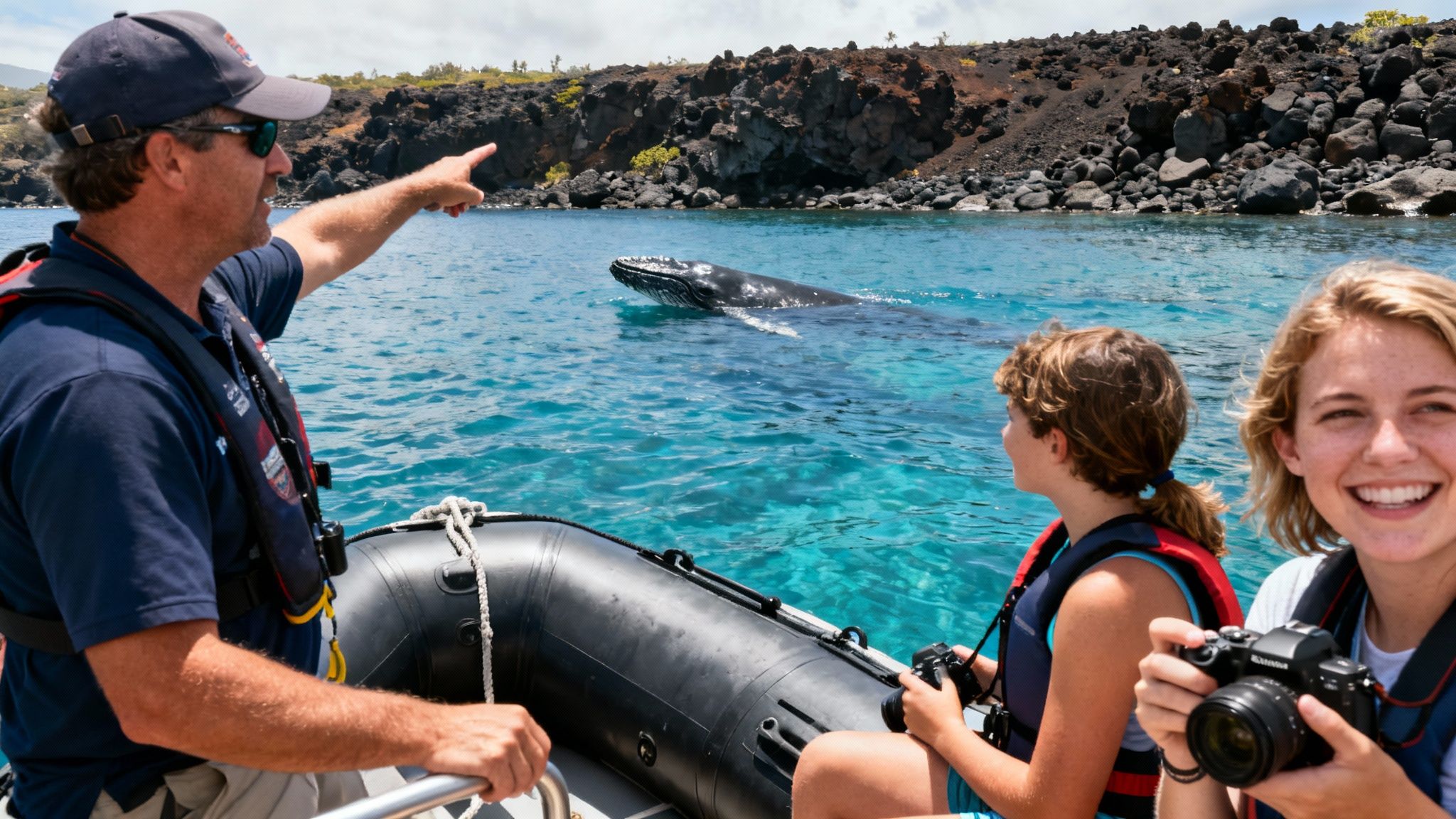
When it comes to whale watching tours Kona Hawaii has on offer, one size definitely does not fit all. Picking the right one is what turns a good trip into an unforgettable memory. It really comes down to what you're hoping to experience—are you after an intimate, up-close encounter? A laid-back family day? Or maybe a full day of soaking in the ocean air?
Think of it like choosing a hiking trail. Some folks want a challenging climb with epic views, while others are looking for a gentle path the whole family can walk together. At Kona Snorkel Trips, we've put together a few different experiences because we know every traveler is unique.
Small Group Zodiacs: The Agile Explorers
If you're a true adventure seeker, our small-group zodiac-style boats deliver an experience that’s tough to top. These boats are fast, nimble, and sit low in the water, putting you practically at eye level with the ocean. It creates a thrilling, personal feeling you just can't get on a bigger boat.
Because they’re so agile, our captains can respond quickly when whales are spotted, getting you into a prime viewing position without ever crowding the animals. It’s an intimate setting where you feel totally connected to the action, hearing every powerful breath and seeing every splash in stunning detail.
Spacious Vessels: Comfort for the Whole Family
Traveling with family, young kids, or just prefer a bit more stability and elbow room? Our larger vessels are a fantastic choice. These boats offer plenty of space to move around, comfortable seating, and often have amenities like an on-board restroom.
They provide a smooth, relaxing ride, making them perfect for guests of all ages. You still get incredible, wide-open views of the whales, but with an extra layer of comfort that ensures everyone from toddlers to grandparents has a blast on the water.
Choosing your vessel is really about matching the boat's personality to your own. Do you want the nimble excitement of a sports car or the comfortable, scenic ride of a spacious convertible? Both offer amazing views, just in different ways.
Classic Half-Day Whale Watching Tours
Our most popular trip, and for good reason, is the classic half-day tour. These adventures are typically 2 to 3 hours long, which is the perfect amount of time to get out to the most active whale zones, witness some incredible behavior, and head back to shore without taking up your entire day.
It's a focused whale watching experience, perfect for anyone who wants to dedicate a morning or afternoon purely to finding and observing humpbacks. You'll get fantastic insights from our crew, learn some amazing facts, and have tons of opportunities for those jaw-dropping photos. You can dive deeper into what makes these trips so special in our guide to Big Island whale watching tours.
Sunset Cruises: A Touch of Magic
For a truly magical experience, a sunset whale watching cruise is something you'll never forget. These tours combine the thrill of seeing humpbacks with the breathtaking beauty of a Kona sunset. As the sun dips below the horizon, the sky lights up in brilliant shades of orange, pink, and purple, creating a spectacular backdrop for any whale activity.
The light during this "golden hour" is a photographer's dream, and the whole atmosphere on the water is just so peaceful and romantic. It’s an ideal choice for couples or anyone looking to cap off their day with a truly special moment. As you plan your trip, looking at different tour booking platforms can give you a good sense of all the options out there.
So, What’s a Whale Watching Tour Really Like?
Once we leave the harbor and head out into the deep blue, the energy on the boat really picks up. There's nothing quite like being on the water during whale season—every ripple on the surface holds the promise of an incredible encounter. Our captains know all the best spots where whales tend to hang out, but honestly, the journey out is half the fun.
You'll feel the cool sea spray on your face, see the iconic Kona coastline from a totally new angle, and just soak in the sounds of the ocean. It’s the perfect warm-up for the main event. Our crew is constantly scanning the horizon, and we'll show you exactly what to look for. The first telltale sign is usually the "blow"—a puff of mist that shoots up to 15 feet high when a whale surfaces to breathe.
Learning the Language of Whales
Seeing a humpback is one thing. But understanding what they're doing? That’s when the experience goes from cool to truly unforgettable. These giants have a whole range of behaviors, and on any given tour, you’re likely to witness a few.
Here are some of the classics you might see:
- Breach: This is the ultimate showstopper. A 40-ton whale launching its entire body out of the water is a sight you will never forget. Why do they do it? It could be to communicate, shake off pesky barnacles, or maybe they're just having a blast.
- Tail Slap (Lobtailing): You'll hear this one before you see it. A massive tail fluke smacking the water creates a huge boom that can be heard for miles underwater. It’s a powerful way for them to say "Hey, I'm over here!" or warn others to back off.
- Pectoral Fin Slap: Humpbacks have those famously long, wing-like pectoral fins. They’ll often roll onto their side and just slap one on the surface over and over. It's another way they make noise and send messages to other whales in the area.
- Spyhopping: This one is my favorite. A whale will pop its head straight out of the water, almost like a submarine periscope, to get a good look around. Sometimes, they’re just as curious about us as we are about them.
Watching these behaviors play out right in front of you is a powerful reminder of how intelligent and complex these animals truly are.
We Watch Whales the Right Way
Look, we all want that perfect, up-close photo. But for us, the health and safety of the whales always, always comes first. Humpback whales are a protected species, and federal law is crystal clear: all boats have to stay at least 100 yards away.
This isn't just about following rules; it's about respect. When we give them space, the whales can go about their important business—nursing calves, finding a mate, or just resting—without feeling stressed by our presence. A relaxed whale is a playful whale.
Our captains are pros at positioning the boat for the best possible views without ever crowding the animals. And often, the whales themselves will close the distance, coming over to check us out on their own terms. Those are the most magical encounters of all.
How to Prep for Your Day on the Water
A little bit of planning can make a great day on the ocean even better. Kona’s weather is usually fantastic, but things can be a bit different once you're out on the open water.
Here’s a quick checklist of what we recommend bringing:
- Sun Protection: The Hawaiian sun is no joke, especially when it’s bouncing off the water. Sunscreen, a good hat, and maybe a long-sleeved sun shirt are your best friends.
- Polarized Sunglasses: Seriously, these are a game-changer. They cut the glare right off the water, making it so much easier to spot a whale just below the surface.
- Camera or Smartphone: You’re going to want proof this actually happened! Make sure your battery is full. A waterproof case isn’t a bad idea, either.
- Light Jacket or Windbreaker: Even on the warmest days, it can get breezy and cool out on the boat. It's always good to have an extra layer, just in case.
- Binoculars: They're not a must-have, but if you've got a pair, bring them! You can get an amazing look at the unique patterns (flukes) on a whale's tail.
Why Choose Kona Snorkel Trips for Your Tour
Picking the right company for your whale watching tour in Kona, Hawaii, is about more than just getting on a boat. It’s about the experience itself. At Kona Snorkel Trips, we don’t just offer tours; we create unforgettable moments on the water, guided by marine experts who live and breathe this ocean every single day.
We’ve always believed that smaller groups lead to a much better, more personal adventure. Sticking to intimate tour sizes means you get a front-row seat without the crowds, you can actually talk to the crew, and you feel a real connection to the incredible world unfolding around you.
Our Commitment to Excellence and Community
What we do on the boat is only part of the story. We’re deeply invested in our local community and the health of the very ocean that makes these encounters possible. We actively support marine conservation efforts to ensure these magnificent animals are here for generations to come.
This connection to our community is actually vital for understanding the whales that visit Kona. For instance, Hawaii’s whale watching industry often supports scientific research through volunteer programs. The final count in March 2025 tallied an amazing 714 humpback whale sightings in a single day across the islands. Right here off the Big Island, volunteers spotted 28 of those, which just shows you the incredible numbers we see. You can learn more about these fascinating volunteer-driven whale counts on BigIslandVideoNews.com.
Our deep roots in the local ecosystem mean we provide a tour that isn’t just thrilling, but also responsible and respectful.
When you choose us, you're choosing a company whose captains see the ocean not as a workplace, but as their backyard. Their deep-rooted respect and local knowledge translate into a safer, more insightful, and truly memorable tour.
Ultimately, nothing is more important to us than your safety and satisfaction. From our meticulously maintained boats to our highly trained crew, we handle every detail so you can just relax and soak in the awe-inspiring presence of Kona's humpback whales. The best testament to this is the consistently great feedback we get from our guests. You can see for yourself what makes our trips special by reading through our glowing Kona snorkel tours reviews.
Your Kona Whale Watching Questions Answered
We get tons of great questions from folks getting amped up for their whale watching tour with us. To make sure you feel totally ready for the adventure, we’ve put together the answers to the questions we hear most often.
Do You Guarantee We’ll See Whales?
I wish we could tell the whales when to show up, but they’re wild animals on their own schedule! That said, we run our tours during the absolute peak of the season when thousands of humpbacks flock to Kona’s warm, sheltered waters.
Our captains are the real deal—they’ve spent years out here and have a sixth sense for finding the most active whale pods. Their know-how gives you the absolute best possible shot at an unforgettable encounter. Our sighting rate during these prime months is incredibly high.
Is This Tour Good for Little Kids and Families?
Absolutely! There's nothing quite like seeing a child's face light up when a whale breaches. It’s an adventure that the whole family, from toddlers to grandparents, will be talking about for years.
Our boats are built for comfort and safety, and our crew is fantastic with kids, making the trip fun and educational. Just give us a heads-up on your children's ages when you book, and we’ll help make sure it’s an amazing experience for them.
Seeing a humpback whale up close can be a powerful moment for a kid. It connects them to the ocean in a way a screen never could, building a real, lifelong respect for nature.
What if the Weather is Bad on Our Tour Day?
Your safety is our top priority, no exceptions. The good news is that Kona’s leeward coast is famous for its calm, sunny weather—it’s a big reason why this is such a world-class spot for whale watching.
But the ocean can be unpredictable. Our captains are constantly watching the forecast. If the conditions look unsafe and we have to cancel, we’ll call you right away. You’ll have the choice to reschedule for another day or get a full refund. We never take chances with safety.
Can I Get in the Water and Snorkel With the Whales?
We get this one a lot, and the answer is a hard no. It’s actually illegal to swim or snorkel with humpback whales here in Hawaii. These incredible creatures are federally protected, and every boat, swimmer, and snorkeler has to stay at least 100 yards away.
This rule is super important for the whales' well-being, especially for new moms and their calves. Our tours are all about watching them respectfully from the boat, letting you see their natural behaviors without stressing them out.
If you’re itching to get in the water, we have some fantastic snorkeling tours where you can swim with other amazing marine life. Our Captain Cook snorkel tour is a world-class adventure for seeing beautiful tropical fish and graceful sea turtles up close. You can even check out Captain Cook Snorkeling Tours for a great alternative if an underwater experience is what you're after.