
Your Ultimate Guide to Whale Watching Tours Hawaii Big Island
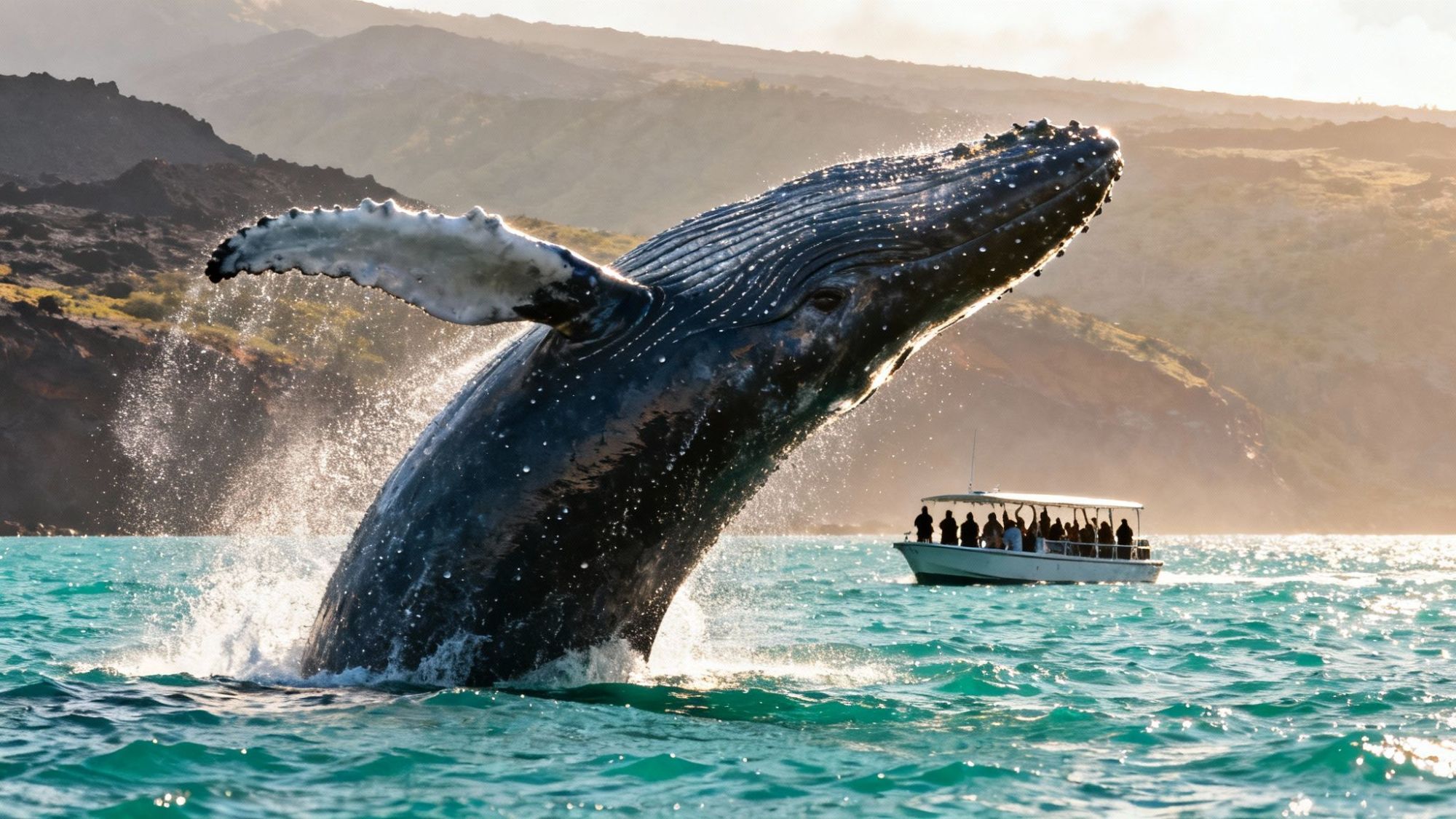
Every year, the Big Island gets some pretty spectacular visitors. From December through April, thousands of humpback whales make their way to the warm, protected waters off the Kona and Kohala coasts. It’s an incredible migration, and a whale watching tour gives you a front-row seat to one of nature’s greatest shows.
This guide is everything you need to plan an unforgettable day with these 40-ton gentle giants.
Your Big Island Whale Watching Adventure Starts Here
Picture it: the calm, turquoise Pacific suddenly erupts as a massive humpback launches its entire body out of the water. This isn’t something you only see in documentaries—it’s a real, almost daily sight just off the Big Island's shores. The calm, deep waters here create a perfect sanctuary, making this one of the best places on the planet to see these magnificent animals up close.
We'll walk you through everything you need to plan the perfect whale watching trip. We’re talking the best time of year to go, what to look for in a great tour, and how to make sure your experience is both mind-blowing and respectful of the whales and their home.

Planning Your Unforgettable Encounter
The first step to an amazing adventure is picking the right tour. It’s about so much more than just spotting a whale from a distance. A truly great tour helps you understand their incredible journey and behaviors in a safe, intimate setting. That's exactly what we focus on at Kona Snorkel Trips, Hawaii's top-rated and most-reviewed snorkel company. We live for creating these kinds of unforgettable marine encounters.
Here are a few key things to think about when planning your trip:
- Optimal Timing: Knowing which months offer the absolute best chances for sightings is crucial.
- Tour Location: We’ll explain why the west coast of the Big Island is the real epicenter of all the whale action.
- Vessel Type: Are you looking for a speedy zodiac that gets you close to the action fast, or a more spacious catamaran? Your comfort matters.
- Responsible Practices: It's vital to choose an operator that strictly follows federal regulations to protect the whales.
A great whale watching trip does more than just check a box on your vacation list—it connects you to the ocean in a really profound way. It’s a chance to witness the raw power and grace of one of the planet's largest mammals and make memories that you’ll be talking about for years. Let’s dive in and get your adventure planned.
Your Guide to Hawaii's Humpback Whale Season
To really get the most out of a whale watching trip on the Big Island, it helps to know a little about the incredible journey these animals take to get here. This isn't just a casual swim; it's one of nature's most epic annual pilgrimages.
Every year, thousands of North Pacific humpback whales travel an astonishing 3,000 miles. They leave the cold, nutrient-rich feeding grounds of Alaska and head for the warm, protected waters right here in Hawaii.
But this epic trip isn't a vacation for them. The shallow, calm seas around the islands offer a safe nursery, a perfect spot to mate, give birth, and raise their newborn calves away from the dangers of deep-water predators. This powerful natural cycle is what makes our whale watching season possible.
The Best Time for Your Tour
Officially, you can find whales here from November to May, which gives you a pretty generous window to plan a trip. But if you’re hoping for those jaw-dropping moments and the highest chance of seeing multiple whales, timing is everything.
The action isn't spread evenly across the season—there's a definite peak.
Planning your tour during the prime months of January through March is your best bet for seeing the full range of humpback behaviors. This is when we see the highest concentration of whales, making the ocean feel truly alive. You're far more likely to witness spectacular breaches, powerful tail slaps, and those quiet, tender moments between a mother and her calf. To get a better feel for the rhythm of the season, check out our in-depth guide on the Big Island whale season.
Why Peak Season Makes a Difference
During those peak months, the ocean just explodes with life. Scientists estimate that a huge portion of the entire North Pacific humpback population—potentially 12,000 whales or more—makes its way to Hawaiian waters.
It's between January and March that we see the absolute greatest numbers. This is precisely when local tour operators, including us, see our highest encounter rates. Experienced guides will often suggest an early-morning trip during this time for the calmest water and the most active whales.
Booking a tour from January to March isn't just about spotting a whale. It's about putting yourself in the middle of the action for an unforgettable experience filled with the raw power and beauty of these magnificent animals at their most active.
Finding the Best Whale Watching Spots on the Big Island
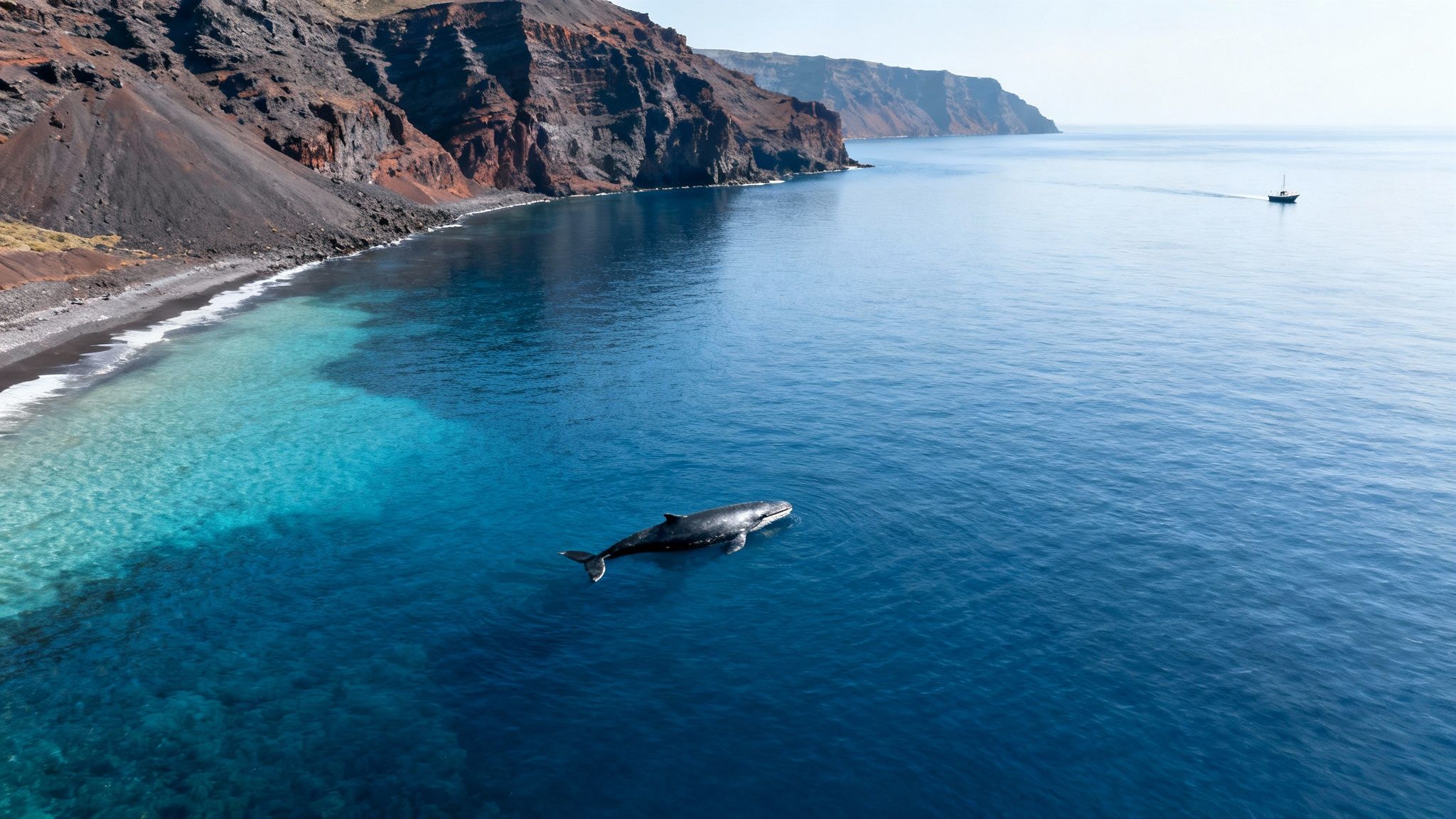
When you’re dreaming of a whale watching tour on Hawaii's Big Island, it’s crucial to know that not all coastlines are created equal. The real magic happens along the island's western shores, specifically the Kona and Kohala coasts. It’s no accident that these areas are the go-to spots; they are genuine ecological hotspots for humpback whales.
The secret lies just beneath the waves, in the island's unique underwater landscape. The waters off Kona drop off quickly into a deep, protected channel. And thanks to the colossal volcanoes of Mauna Loa and Hualālai, this entire region is shielded from the powerful trade winds and ocean swells that batter other parts of the island.
This natural fortress creates an incredibly calm and safe environment—exactly what migrating humpback mothers are searching for. It’s the perfect deep-water nursery for them to give birth and raise their newborn calves away from the rough open ocean.
Red-Zone Hotspots for Sightings
Scientific surveys and local wildlife counts simply confirm what seasoned boat captains have known for decades. The waters off the Kohala and North Kona coasts are consistently flagged as ‘red-zone’ hotspots. Sightings here can be two to three times higher than anywhere else around the Big Island.
During the peak season from January to March, community counts often record hundreds of whales in a single day, with the vast majority of that activity concentrated right here on these western shores. This incredible density is why commercial whale-watching tours here have such a high success rate. A tour departing from Kona puts you right in the middle of the action.
Understanding this geography is the key to an unforgettable trip. By launching from the Kona coast, you spend less time traveling and more time in the prime habitats where breathtaking encounters are most likely to happen.
Choosing a tour that operates within these hotspots dramatically boosts your chances of seeing it all, from powerful breaches to the tender, quiet moments between a mother and her calf. Learn more about the advantages of a tour in our guide to whale watching from Kona. Picking the right location is the first—and most important—step in planning a truly memorable adventure.
Choosing the Right Whale Watching Tour for You
With so many whale watching tours Hawaii Big Island has to offer, picking the right one can feel a little daunting. The secret? It's all about matching the tour to the kind of adventure you're dreaming of. And believe it or not, the boat you're on plays a huge part in shaping your whole experience.
You'll generally find two main flavors of tours: those on smaller, zippy vessels like Zodiac-style rafts, and those on bigger, more stable catamarans. Each one offers a completely different vibe and set of perks, so let's break down what that means for you out on the water.
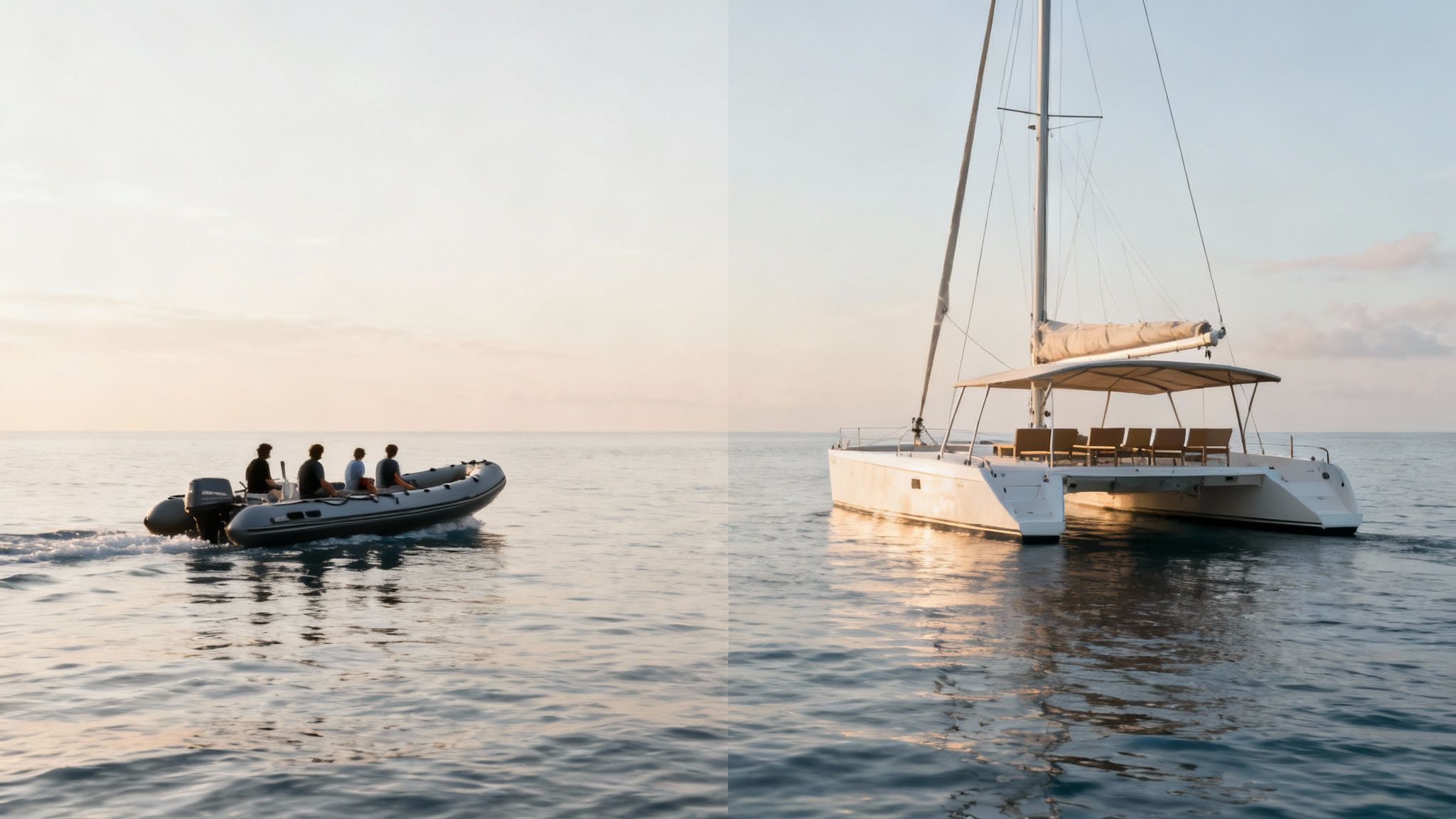
Big Island Whale Watching Tour Comparison
Not sure which boat is your style? This table breaks down the key differences to help you find the perfect match for your whale watching adventure.
| Tour Type | Best For | Vessel Size | Typical Group Size | Pros | Cons |
|---|---|---|---|---|---|
| Small Group Raft | Thrill-seekers, photographers, intimate encounters | Small (e.g., Zodiacs) | 6-20 passengers | Faster, gets you closer to the water, more agile to follow whales | Bouncier ride, minimal amenities, more exposure to elements |
| Large Catamaran | Families, those prone to seasickness, comfort-seekers | Large | 20-100+ passengers | Stable ride, onboard restrooms, shaded areas, more space to move | Further from the water, can feel more crowded, less nimble |
| Private Charter | Special occasions, custom itineraries, ultimate flexibility | Varies | Your group only | Total privacy, personalized schedule, dedicated crew attention | Most expensive option, requires advance booking |
| Sailboat Tour | Eco-conscious travelers, a peaceful and quiet experience | Medium | 6-30 passengers | Quiet (no engine noise), relaxing pace, unique sailing experience | Slower pace, dependent on wind, may not cover as much area |
No matter which you choose, you're in for a treat. The key is knowing what you value most—is it a wild, up-close thrill or a smooth, comfortable cruise?
Features That Make a Tour Unforgettable
Beyond the boat's size, a few key features can elevate a good trip to a truly epic one. One of the coolest pieces of gear some boats carry is a hydrophone, which is basically an underwater microphone.
Imagine this: the engine is off, the ocean is calm, and the crew lowers a hydrophone into the deep blue. Suddenly, the haunting, complex songs of humpback whales fill the air. It's an almost spiritual experience that connects you to these gentle giants in a way that just seeing them can't.
Group size is another huge factor. A smaller tour means more personal attention from the guides and a less crowded rail when a whale finally breaches. If you're a serious photographer, you'll definitely want a tour with fewer people so you can get that unobstructed shot you've been dreaming of.
Ultimately, the "best" tour is the one that fits you. Whether you’re after a heart-pounding ride, a relaxed family day, or a serene moment listening to whale songs, there’s an amazing tour waiting for you. Thinking through these points will help you confidently book one of the incredible Kona whale watching tours and create memories that will last a lifetime.
What to Expect on Your Whale Watching Tour
Heading out on a whale watching tour on Hawaii's Big Island is so much more than a boat ride—it’s an entire experience, from the moment you step on the dock to the final wave goodbye. Your day starts at the harbor. You'll check in with the crew, get a quick safety rundown, and find a good spot to settle in. As the boat pulls away from the calm Kona coast, you can feel the excitement building.
Once you’re out in prime whale territory, the real magic happens. The guides are pros at spotting the first signs of activity—the misty spray from a blowhole, the dark curve of a massive back slipping under the waves. You might get to see some truly incredible behaviors, and it’s even better when you know what you’re looking at.
Decoding Whale Behaviors
Watching these giants is one thing, but understanding what they're doing turns the whole thing into a story. These are a few of the most common, breathtaking actions you might see out on the water:
- Breach: This is the one everyone dreams of seeing. A whale launches its entire body almost completely out of the water, crashing back down with a spectacular splash. Scientists figure it could be a way to communicate, shake off pesky parasites, or maybe they’re just doing it for the sheer joy of it.
- Tail Slap (or Lobtailing): You'll see a whale lift its enormous tail flukes high out of the water and smack them down hard. That loud crack can be heard for miles and often serves as a warning to other whales or a clever way to stun fish for an easy snack.
- Spy-Hop: Picture a whale pointing its head straight up out of the water, like a submarine periscope. It’s a classic curiosity move, allowing them to get a good look at what's happening on the surface—including you and your tour boat.
Responsible Viewing and What to Bring
Every good tour operator in Hawaii is serious about respectful wildlife viewing. We have to be. Federal law requires all boats to stay at least 100 yards away from humpback whales to keep them safe and undisturbed. Of course, nobody told the whales about this rule! Often, a curious whale will decide to approach the boat on its own, which makes for a completely safe and unforgettable moment.
Long-term data shows that during the peak of the season, observers can spot between 3 and 6 whales every 15 minutes, so your chances of a respectful, close-ish encounter are pretty high. You can read more about these fascinating sighting-rate benchmarks for tour operators if you want to geek out on the numbers.
To make sure your day is perfect, a little preparation goes a long way. The Kona coast usually has calm waters, but if you’re prone to motion sickness, it’s always best to plan ahead. We've got you covered with our guide on how to prevent seasickness.
Your Whale Watching Checklist
- Polarized sunglasses to cut the intense glare off the water
- Reef-safe sunscreen to protect yourself and our ocean life
- A light jacket or windbreaker because it can get surprisingly cool out on the water
- A camera or smartphone with a good zoom lens to capture the magic
- Binoculars for getting an even closer look from a safe distance
Beyond Whale Watching: More Big Island Marine Adventures
Why stop with just one incredible ocean experience? The same calm, protected waters off the Kona coast that draw humpback whales to our shores also happen to make the Big Island a world-class destination for snorkeling and other marine adventures. It's surprisingly easy to build a full day—or even a few days—of unforgettable ocean memories by pairing your whale watch with another trip below the waves.
Picture this: you spend your morning completely spellbound by the massive splash of a breaching humpback. Then, you seamlessly transition into an afternoon exploring the vibrant, fish-filled coral gardens of Kealakekua Bay. This historic spot, where you'll find the Captain Cook Monument, boasts some of the clearest water and most abundant marine life in all of Hawaii. A combo tour is the perfect way to get the best of both worlds, keeping an eye out for dolphins and whales on the way to a legendary snorkel spot.
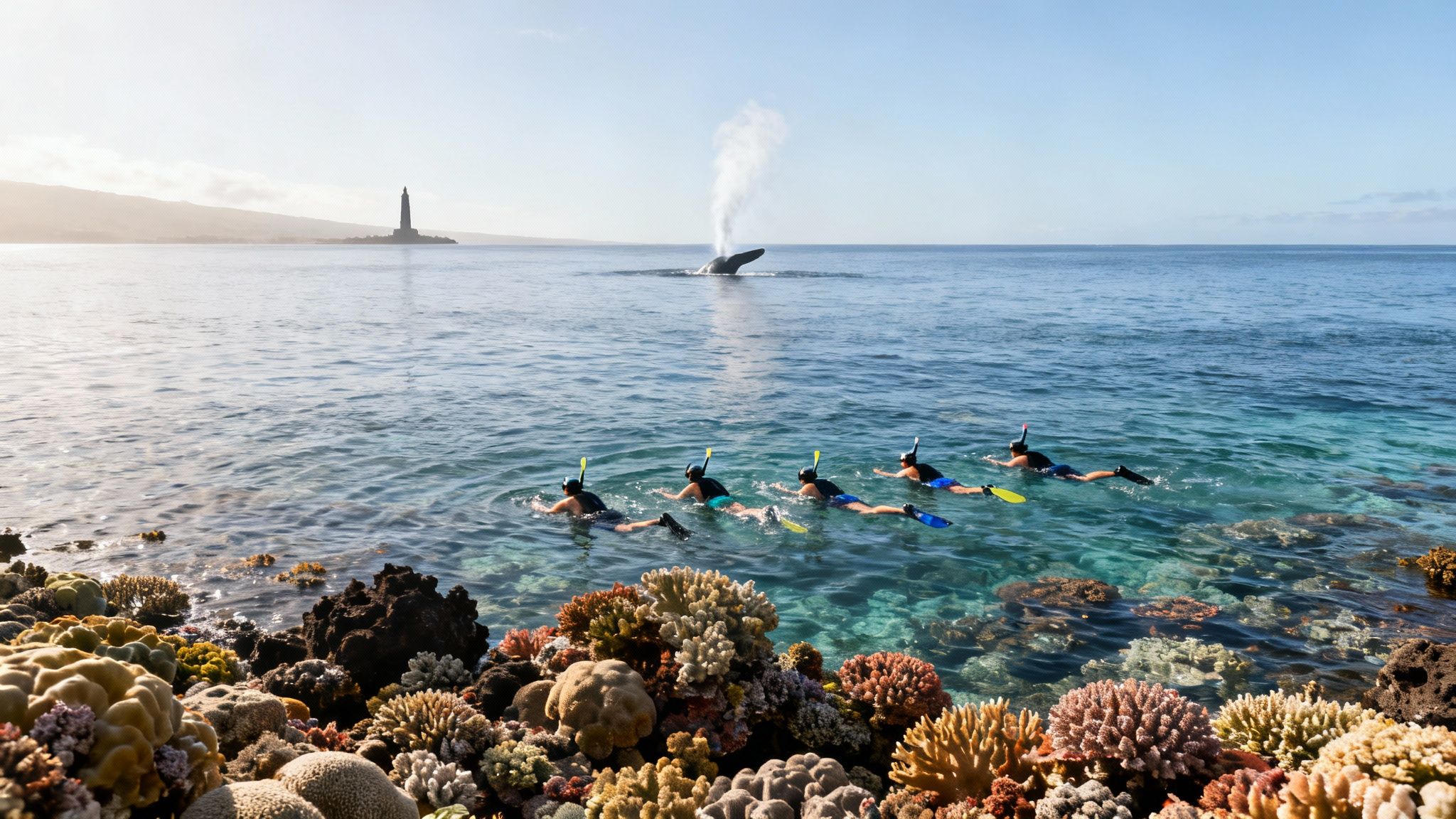
Experience a World-Famous Nighttime Ballet
For a truly mind-blowing adventure that's on just about everyone's bucket list, stick around after the sun goes down. The world-famous Manta Ray Night Snorkel is an otherworldly, almost magical encounter you just can't get anywhere else. You'll float on the surface as majestic manta rays, with wingspans stretching up to 16 feet, perform an underwater ballet, gliding and somersaulting in the illuminated water just inches beneath you.
It's a peaceful, breathtaking spectacle that's the perfect counterpoint to the raw power and excitement of a daytime whale watching tour on Hawaii's Big Island. You can dive deeper into this amazing trip in our guide to the Manta Ray Night Snorkel.
By booking with an experienced and versatile operator, you can connect these incredible Big Island experiences into one seamless, unforgettable aquatic itinerary. It transforms a single great day into the adventure of a lifetime.
When you're planning your trip, think about stacking your adventures. The waters here are just bursting with opportunities for discovery, from historic bays packed with tropical fish to surreal nighttime encounters with gentle giants. Combining these trips is simply the best way to squeeze every drop of fun out of your time in this Pacific paradise. The right tour company can help you build the perfect ocean day from start to finish.
Your Big Island Whale Watching Questions Answered
So, you're planning a whale watching adventure on the Big Island. It's only natural to have a few questions floating around. We've been doing this a long time, so we've got the answers to help you get your plans squared away and know just what to expect on one of the most incredible tours Hawaii has to offer.
When Is the Absolute Best Time to See Whales?
You can catch humpbacks cruising our waters from November all the way through May, but if you want the absolute best shot at seeing some serious action, you'll want to book your trip between January and March.
These months are the peak of the season. The waters off the Kona and Kohala coasts are packed with whales, which means your chances of seeing spectacular behaviors—think full-body breaches and powerful tail slaps—go way, way up. It's a truly unforgettable sight.
Is a Whale Sighting Guaranteed on a Tour?
During peak season, experienced crews have an incredibly high success rate, often over 95%. But it’s important to remember we’re dealing with wild animals in their natural home. Because of that, no one can ever make a 100% guarantee.
That said, choosing a tour with a seasoned crew who knows these waters like the back of their hand dramatically boosts your odds of a magical encounter. Their expertise is what puts you in the right place at the right time.
A good tour company will be upfront and honest about their success rates. Their priority is always a respectful, non-intrusive experience for the whales, not a forced "guaranteed" sighting that could stress the animals out.
How Close Can the Boats Get to the Whales?
To protect these gentle giants, federal law is crystal clear: all boats must stay at least 100 yards away from humpback whales. To put that in perspective, picture the length of a football field.
Every responsible tour operator follows these rules to the letter. But here’s the fun part—the whales haven’t read the rulebook. It’s not at all uncommon for a curious humpback to decide to approach a stopped boat on its own terms. These moments, when they choose to come to us, are safe, respectful, and absolutely breathtaking.
What Should I Do If I Get Seasick?
One of the big reasons whales love the Kona coast is the same reason you will: the water here is famously calm. This makes a huge difference and seriously cuts down on the chances of feeling queasy.
Still, if you know you’re prone to motion sickness, it never hurts to be prepared. You might consider an over-the-counter remedy like Dramamine or Bonine before you head out. Choosing a larger, more stable boat, like a catamaran, can also make for a smoother ride, letting you focus on the amazing show instead of your stomach.
Ready for an unforgettable day on the water? Kona Snorkel Trips offers intimate, small-group tours led by expert guides who are passionate about sharing the magic of Hawaii's marine life. Book your whale watching adventure today and create memories that will last a lifetime.