
Whale Watching Tours Hawaii Big Island: Your Guide to Big Island Adventures
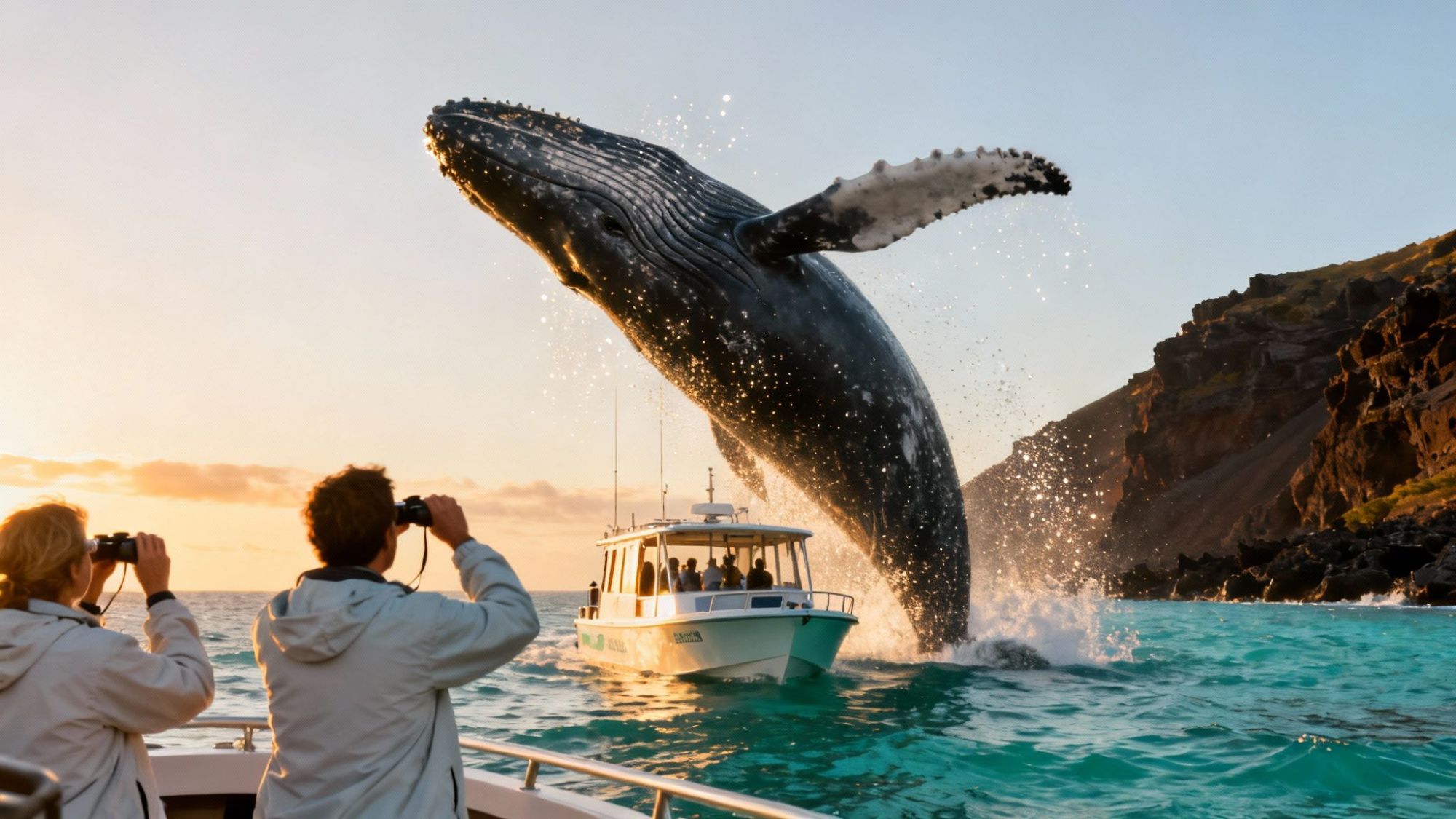
It's hard to describe the feeling of seeing a 40-ton humpback whale launch itself out of the water, with the Big Island's volcanic shoreline as a backdrop. It’s one of those moments that just sticks with you.
The best spots for whale watching tours on Hawaii's Big Island are tucked along the calm, sheltered waters of the Kohala Coast. This area gives you a front-row seat to one of nature's most incredible annual shows. This guide is all about helping you get there and experience that magic for yourself.
Experience the Magic of Big Island Whale Watching
Picture this: you're out on the water, and the calm turquoise surface suddenly explodes as a gentle giant soars into the air. This isn't some rare, once-in-a-lifetime sight during peak season; it's the heart of the annual whale migration that turns the Big Island into a mecca for ocean lovers.
Every winter, thousands of humpback whales make the long journey from their chilly feeding grounds in Alaska. They come to Hawaii's warm, welcoming waters to do what we all do on a tropical vacation: hang out, find a partner, and for many, give birth and nurse their newborn calves.
To make sure you're getting the best advice, we've built this guide around the firsthand knowledge of Kona Snorkel Trips. They're the top-rated and most-reviewed snorkel company in all of Hawaii for a reason. Their crews live and breathe these waters, and it shows in what their customers have to say.
Your Front-Row Seat to Nature's Grandest Show
Reading through those reviews gives you a real sense of what it's like out there with a great crew. It’s the kind of social proof you need to feel confident you're booking with an operator who cares just as much about your experience as they do about the well-being of the whales.
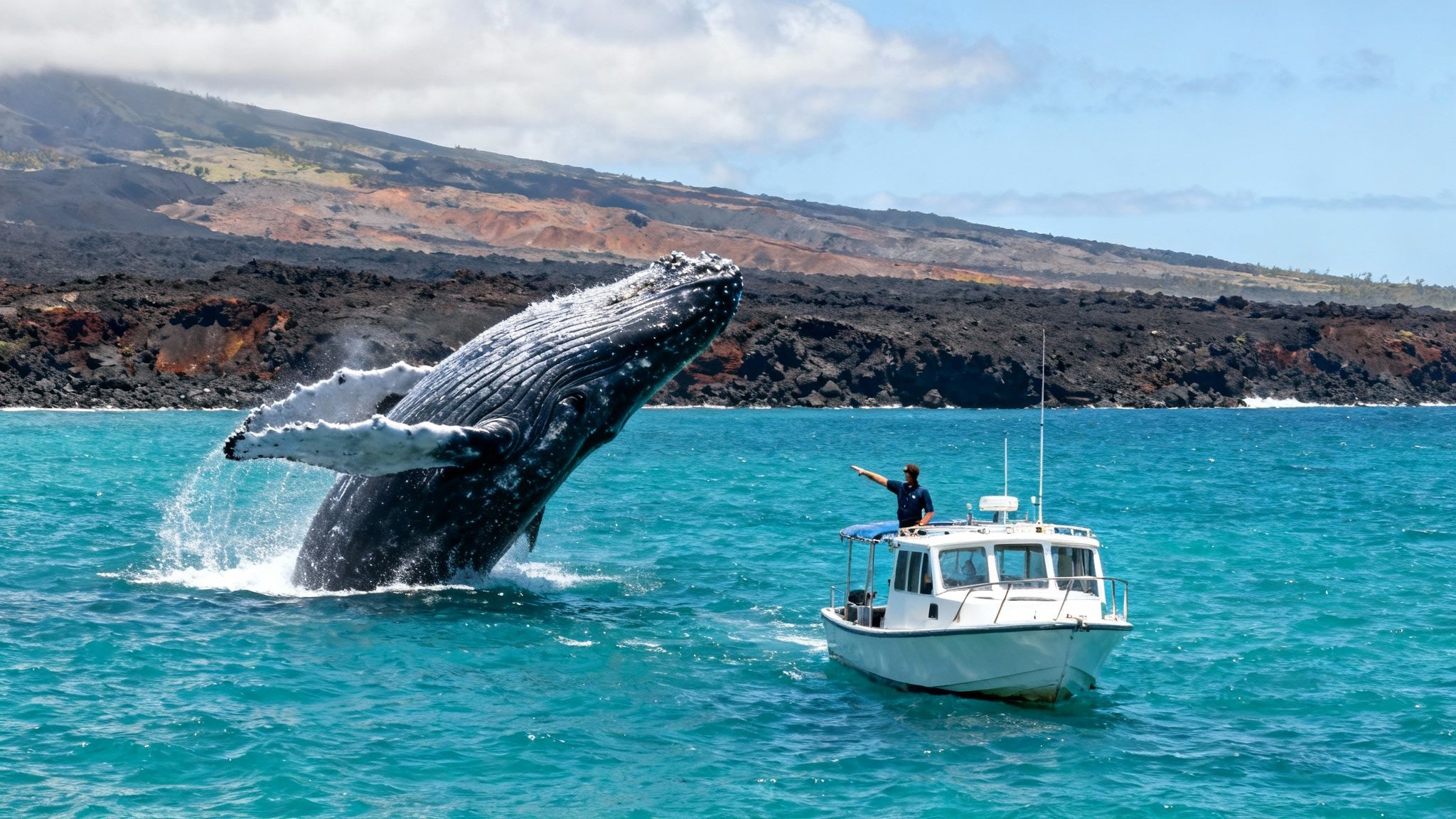
This guide is your complete playbook for one of the most awe-inspiring whale watching tours Hawaii's Big Island has to offer. We’re going to cover everything you need to know:
- The absolute best times of year and locations to see whales.
- What it's really like on a tour—from the type of boat to the incredible whale behaviors you might see.
- My best tips for picking the right tour operator and getting ready for your day on the water.
By the time you're done reading, you'll have everything you need to book more than just a boat ride. You'll be ready for a real connection with some of the most majestic creatures on the planet.
Why Thousands of Humpback Whales Journey to Hawaii
Every winter, something magical happens in the waters off the Big Island. They transform into a bustling nursery and social club for one of the planet's most majestic creatures, thanks to an epic 3,000-mile journey made by thousands of North Pacific humpback whales.
These gentle giants, known in Hawaiian as koholā, spend their summers gorging themselves in the nutrient-rich, frigid waters of Alaska. But as winter sets in, a powerful instinct drives them south to the warm, protected, and relatively shallow seas of Hawaii. This isn't just a vacation for them; it's a mission with a purpose.
A Sanctuary for New Life
The main reasons for this massive pilgrimage are mating, birthing, and nursing their young. The Hawaiian Islands offer a safe haven, a welcome break from predators like orcas that patrol the colder northern waters. It's here that pregnant females can finally give birth to their calves in a secure environment.
The warm water is also a game-changer for newborn calves. Born with only a thin layer of blubber, they'd struggle in the cold. The tropical temperature helps them conserve precious energy that would otherwise be spent just staying warm, letting them focus on nursing and growing strong for the long swim back north.
For the whales, Hawaii is the ultimate maternity ward. It's a place of safety, warmth, and community where the next generation of humpbacks gets its start, making it a truly special place for a whale watching tour.
Timing Your Big Island Whale Watching Adventure
Officially, whale season in Hawaii runs from November through May. But the action isn't consistent the whole time. Think of it like a wave: the migration starts slowly, builds to a crescendo, and then gently fades away.
For the most jaw-dropping encounters, you'll want to aim for the peak months of January, February, and March. This is when the whale population hits its highest density. We're talking an estimated 12,000 or more humpback whales—that's over half the entire North Pacific population—making the Big Island a global whale watching mecca. You can even see the first arrivals of the season captured in local Hawaiian news coverage.
This peak season is your best shot at seeing the full show: breathtaking breaches, powerful tail slaps, and the tender, quiet moments between a mother and her calf. To really nail the timing for your trip, check out our deep dive on the Big Island whale watching season. Getting this right is the key to an unforgettable day on one of the amazing whale watching tours Hawaii Big Island has to offer.
Finding the Best Whale Watching Spots on the Big Island
When you’re planning a whale watching trip on the Big Island, one thing matters more than anything else: location. You might catch a lucky glimpse of a spout from different spots around the island, but if you want to be where the magic really happens, you have to head to the west coast. Specifically, the Kohala Coast is the undisputed epicenter of all the whale action.
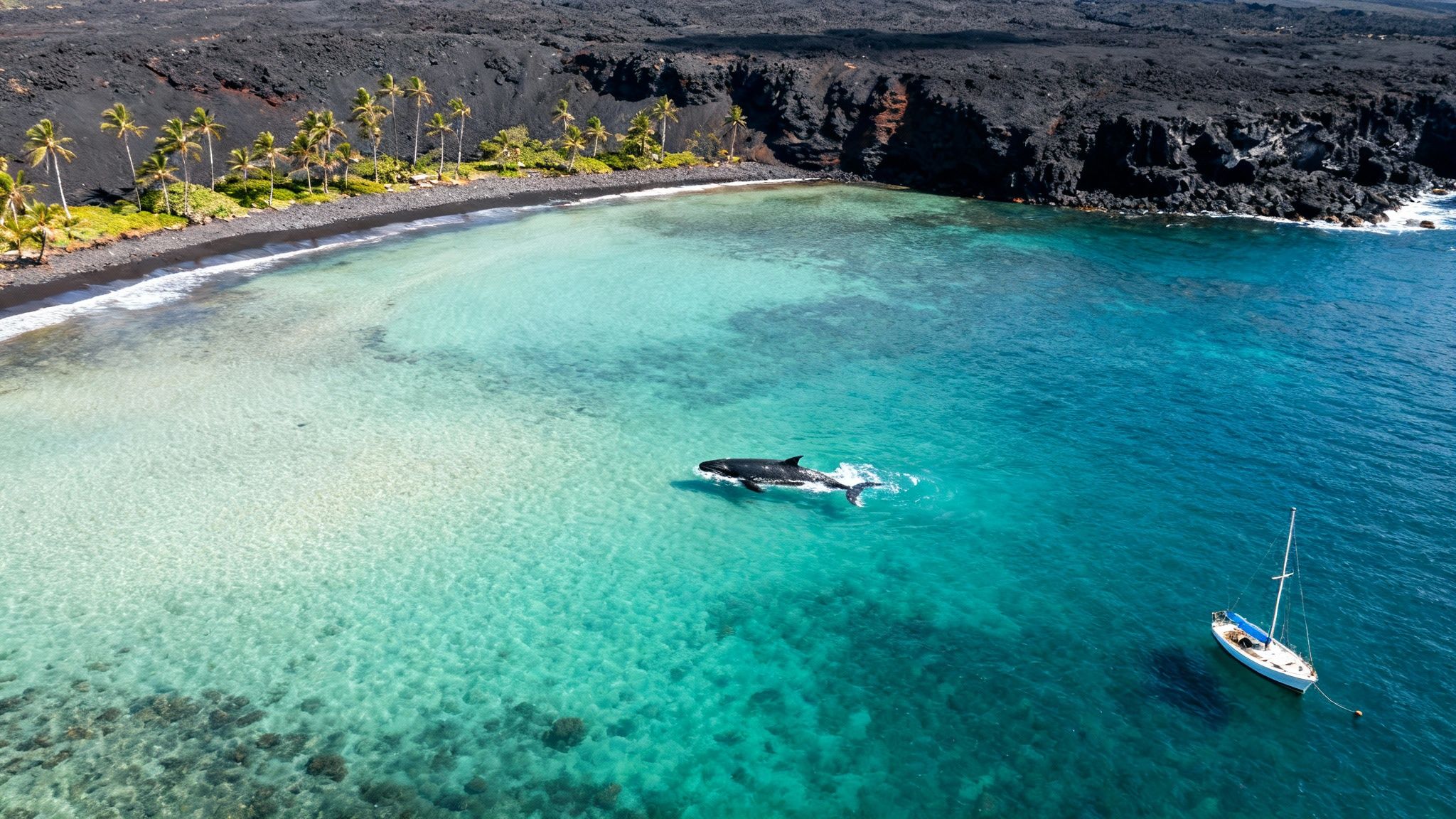
This stunning stretch of shoreline, which includes areas around Waikoloa and Puako, is pretty much the perfect natural nursery for humpback whales. The water here is uniquely calm and shallow, sheltered from the powerful Pacific winds and currents by the island's colossal volcanoes. It creates a safe, peaceful environment where mother whales feel comfortable giving birth and nursing their newborn calves.
Why the West Side Wins
It’s the ocean itself that makes the Kohala Coast so irresistible to the whales. These calm conditions aren't just great for moms and babies; they also make for incredible viewing conditions from a boat. The placid water makes it way easier to spot whale behaviors from a distance and means a smoother, much more pleasant ride for you.
On the other hand, the eastern Hilo and Hamakua coasts face the wide-open ocean and are known for rougher seas and unpredictable weather. Whales do pass through these waters, but sightings are far less frequent and reliable. The west side’s protected nature makes it the clear winner for consistent, spectacular encounters. Our guide on whale watching in Kona dives into this in a lot more detail.
Choosing Your Departure Point
The harbor your tour leaves from also plays a big role in the kind of experience you'll have. Tours departing from Kona can be amazing, but they often have to navigate through busier waters with more boat traffic. If you're looking for a more intimate and less crowded adventure, think about a tour that leaves from one of the northern harbors closer to the Kohala Coast.
These smaller launch points, like the ones near Puako, give you a direct line to the prime whale nursery grounds. This often means less time spent traveling to find the whales and more time just watching them in their natural habitat.
The Kohala region simply dominates, boasting sightings that are two to three times more frequent than in other areas. This statistical advantage has fueled a thriving eco-tourism industry, offering incredible, up-close views of breaches and calf training without the overwhelming crowds you might find on other islands.
By picking a tour that launches from the west side—especially from a harbor along the Kohala Coast—you’re setting yourself up for the best possible chance of success. You aren't just booking a boat ride; you're heading straight to the heart of the action, maximizing your odds of an unforgettable day with the humpback whales.
What to Expect During Your Whale Watching Tour
Climbing aboard a boat for a whale watching tour on Hawaii's Big Island is the first step in what will likely be an unforgettable day. The kind of boat you pick really shapes the whole vibe of your trip. Smaller, zippy rafts put you right at water level, offering an incredibly intimate, eye-to-eye view. On the other hand, larger, more stable catamarans give you plenty of room to stretch out, find some shade, and usually have amenities like an onboard restroom.
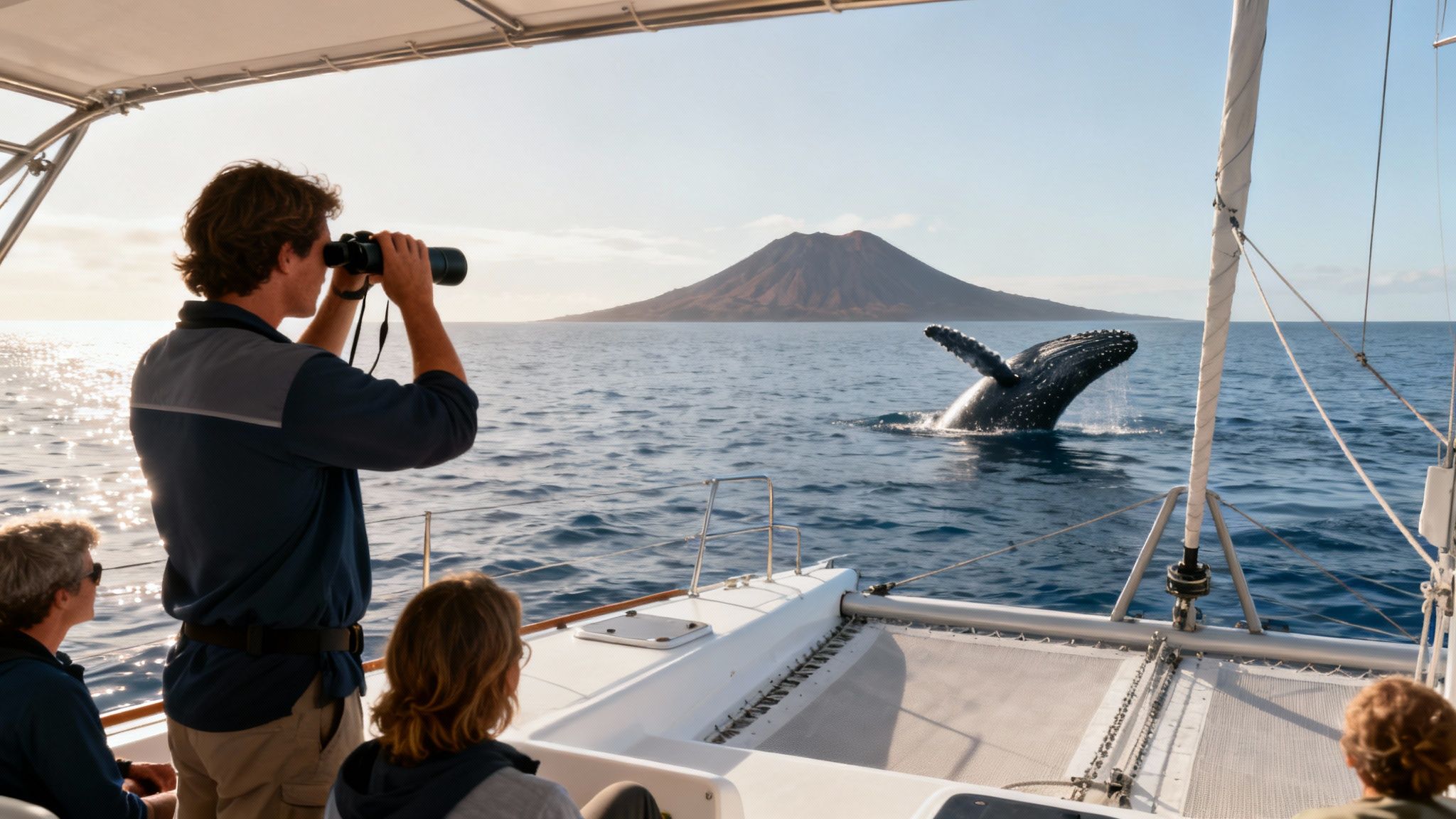
Once you leave the harbor, your captain will head for the best whale-spotting zones, which are often found along the sheltered Kohala Coast. While the volcanic coastline is a showstopper on its own, you'll want to keep your focus on the water. Stay alert for the tell-tale signs that a whale is near.
Decoding Whale Behaviors
Seeing humpback whales put on their aerial and underwater displays is easily the most exciting part of any tour. These aren't just random splashes and jumps; every action serves a purpose. Knowing what to look for adds a completely new dimension to the experience, and your guide will be right there to help you spot and make sense of it all.
The onboard naturalist is your key to unlocking the secrets of the ocean. This person is far more than just a crew member; they're an expert who lives and breathes this stuff. They'll provide a running commentary that truly brings the whole scene to life, explaining humpback biology, what their behaviors might mean, and the conservation work being done to protect them.
This educational piece is what elevates your trip from a simple boat ride to a genuinely meaningful connection with nature. You'll go home with more than just great photos—you'll have a much deeper respect for these incredible animals and the ocean they call home.
To help you get started, here's a quick guide to some of the most common behaviors you might see.
A Guide to Humpback Whale Behaviors
Learn to identify the spectacular whale behaviors you might witness on your Big Island tour.
| Behavior | Description | Possible Meaning |
|---|---|---|
| Breach | The whale launches its entire body out of the water, crashing back down with a massive splash. | Communication, removing parasites, play, or a show of dominance. It's the ultimate whale spectacle! |
| Tail Slap | The whale forcefully slaps its tail (flukes) on the water's surface, creating a loud sound. | A warning signal, a form of communication to other whales, or sometimes just for fun. |
| Pec Slap | The whale lies on its side and slaps its long pectoral fin against the water repeatedly. | Another communication method that can be heard for long distances underwater. |
| Spyhop | The whale positions itself vertically in the water, lifting its head out to look around. | Pure curiosity! They are literally taking a peek at what's happening on the surface. |
| Spout (or Blow) | The visible spray of water vapor and air as the whale exhales at the surface. | Simply breathing. This is often the first sign that a whale is nearby. |
Watching these behaviors is incredible, but remember that the whales are in charge of the show.
Setting Realistic Expectations
It's crucial to remember that you're entering the world of wild animals, on their terms. Even the most experienced crews with an almost supernatural ability to find whales can't offer a 100% guarantee on sightings. The ocean is immense, and the whales follow their own instincts and schedules.
The real magic of whale watching is in its unpredictability. One moment, the sea is perfectly still, and the next, a 40-ton giant explodes from the surface. Patience is everything, and the thrill of the search is a huge part of the adventure.
That being said, your odds of seeing whales during the peak season from January to March are extremely high. The tour operators here are pros, using years of local knowledge to find the most active groups of whales. So, put your trust in the crew, keep your camera ready, and get ready for a day you'll never forget on one of the best whale watching tours Hawaii's Big Island has to offer.
Choosing the Right Whale Watching Tour Operator
Picking the right company for your whale watching tour on Hawaii's Big Island is probably the most important decision you'll make for this adventure. It's the difference between a decent day on the water and a truly unforgettable, safe, and ethical encounter. With so many boats to choose from, knowing what to look for can help you find the perfect fit.
The first thing you'll probably notice is the difference in boat sizes. Smaller boats almost always mean a more personal, intimate experience with the whales. With fewer people crowding the rails, you get clear, unobstructed views and a much better chance to chat with the crew. It can feel like your own private lesson on humpback behavior.
What to Look For in a Tour Company
Beyond just the size of the boat, you want to dig into the crew's experience and the company's commitment to responsible tourism. It's one thing to find the whales, but it's another thing entirely to do it with a deep respect for their home.
A great operator will always follow NOAA’s wildlife viewing guidelines, which means keeping a mandatory distance of at least 100 yards from the whales. This simple rule is critical for making sure the animals aren't stressed out or disturbed by our presence. An experienced captain knows the best encounters are the ones where a curious whale chooses to approach the boat, not when a boat chases them down.
- Experienced Crew: Look for outfits with seasoned captains and on-board naturalists. Their knowledge completely changes the trip, offering fascinating insights into whale biology and local conservation efforts.
- Safety Record: A quick check of reviews and the company website should show a strong emphasis on safety protocols and well-maintained vessels. Don't compromise on this.
- Ethical Practices: Choose operators who are proud of their commitment to marine conservation and who openly talk about following federal viewing laws.
Group Tours Versus Private Charters
Your budget and who you're traveling with will likely steer you toward either a group tour or a private charter. Group tours are a fantastic, budget-friendly way to experience the magic, and there's a real shared sense of excitement when everyone on board sees a whale breach for the first time.
On the flip side, a private charter offers the ultimate freedom. You call the shots. You can customize the itinerary, linger longer if the whales are putting on a show, and just soak it all in with your own friends or family. It costs more, but for a special occasion or for serious photographers, the personalized experience is absolutely worth it.
To get a better idea of the options out there, check out this great overview of Kona whale tours.
Essential Tips for a Perfect Day on the Water
A little bit of prep work can make the difference between a good whale watching tour and an unforgettable one. Taking just a few minutes to get ready ensures you'll be comfortable, safe, and free to soak in every incredible moment out on the ocean.
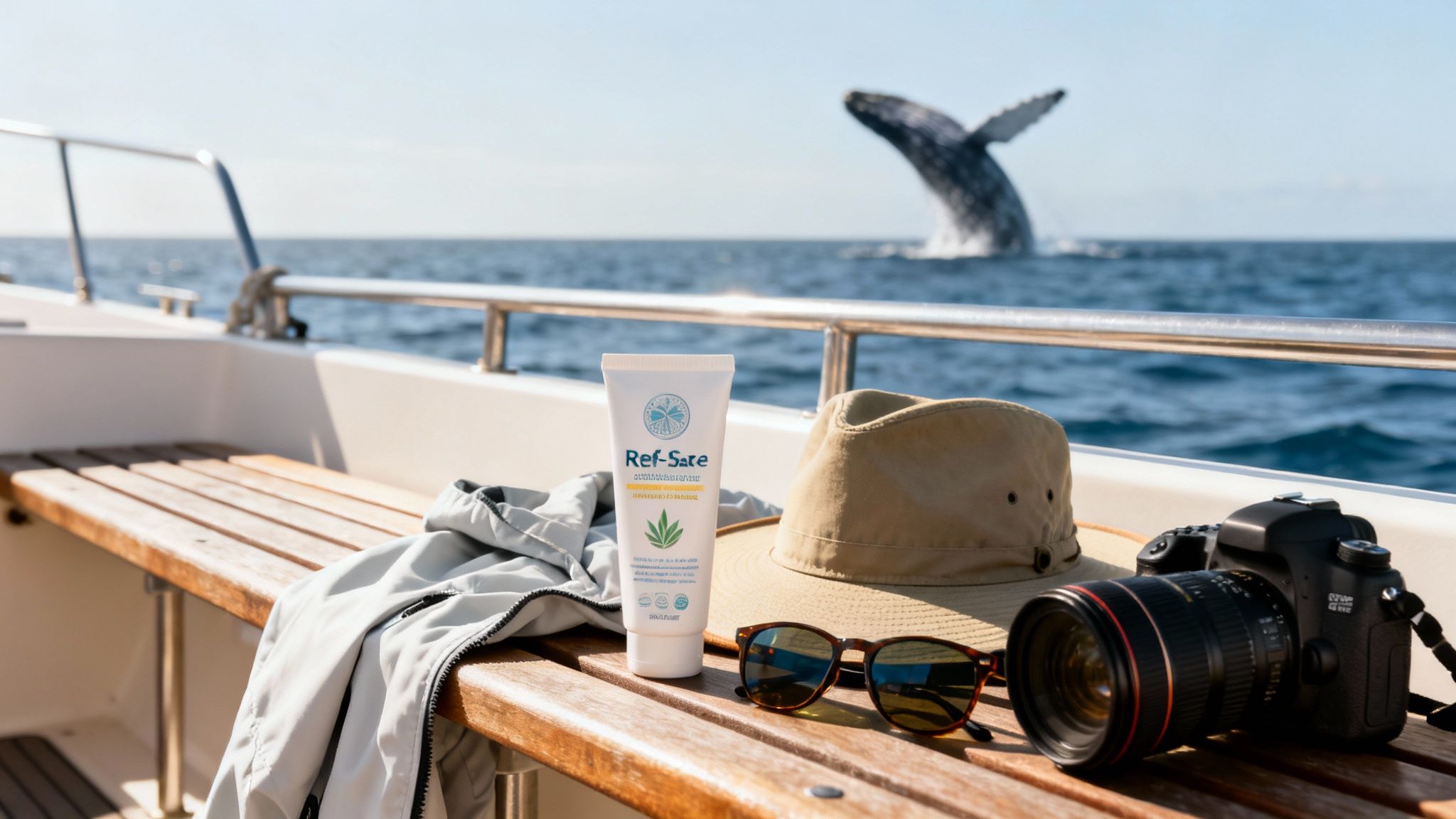
Think of it like putting together a personal comfort kit for your day at sea. This isn’t about hauling a giant bag aboard; it's about having the right things on hand to deal with the intense Hawaiian sun, the occasional sea spray, and the cool ocean breezes. When you're comfortable, you can focus on the whales.
Your Go-To Packing Checklist
Here’s a quick rundown of what we recommend bringing for any of the whale watching tours Hawaii Big Island has to offer:
- Sun Protection: The sun here is no joke, especially when it’s reflecting off the water. You'll want reef-safe sunscreen, a good pair of polarized sunglasses to cut the glare, and a wide-brimmed hat that won’t fly off.
- Comfortable Layers: It can get surprisingly chilly out on the water, even on a beautiful, sunny day. A light jacket or a windbreaker is always a smart move.
- Camera Gear: Don't forget your camera! A zoom lens will be your best friend for capturing those epic breaches from a distance. A waterproof bag is also a great idea to protect your electronics from spray.
- Hydration and Snacks: While most tours have water available, it never hurts to bring your own reusable bottle. A few snacks are a good idea, too.
Pro Tips for a Smooth Trip
Beyond what you pack, a little planning makes all the difference. Make sure to book your tour well in advance, especially if you're visiting during the peak season in January and February. Those spots fill up fast! We also find that early morning tours often have the calmest seas and less wind, which usually means better viewing conditions.
Nothing puts a damper on a boat trip like seasickness. If you know you're prone to it, definitely take some precautions before you leave the dock. We've put together a whole guide with our best advice on how to prevent seasickness to help you have a great time.
Finally, for total peace of mind, especially when you're adventuring far from home, consider securing robust travel medical insurance. With these simple preparations out of the way, you'll be all set for a day you'll never forget.
Your Big Island Whale Watching Questions, Answered
Planning an adventure like this always brings up a few questions. We get it. To help you feel completely prepared for your trip, we've pulled together the answers to the questions we hear most often.
What's the Absolute Best Month to See Whales?
While the whole season from November through May is great, the action really ramps up in January, February, and March. Think of it as the peak of rush hour for humpbacks in Hawaii.
During these months, the whale population is at its absolute highest. This means you’re much more likely to witness the full range of incredible behaviors—from those jaw-dropping breaches clean out of the water to the quiet, tender moments between a mother and her brand-new calf.
How Close Can We Get to the Whales?
Federal law is super strict about this, and for good reason: all boats have to stay at least 100 yards away from humpback whales. This gives them their space and keeps them safe.
But here’s the magic part: whales are curious. It’s not uncommon for them to decide they want a closer look at a stationary boat. Those moments, when a whale chooses to approach you, are truly breathtaking. Always go with an operator who respects these rules; it's all about protecting these magnificent animals.
There's nothing quite like the feeling when a 45-foot giant voluntarily swims right up to your boat. Keeping that respectful distance ensures we're just quiet visitors in their world, watching them be themselves without causing any stress.
Morning vs. Afternoon Tours: Is One Better?
Honestly, the whales are active all day long, so you can have an amazing experience on either trip.
That being said, a lot of folks lean towards the morning tours. The ocean is typically calmer then, with less wind and chop. A smoother ride not only feels better but also makes it way easier for the crew to spot those tell-tale spouts way off in the distance.
What Else Might We See Out There?
The humpbacks are definitely the headliners, but the waters off the Big Island are a bustling marine metropolis.
Keep a sharp eye out for pods of playful spinner dolphins—they’re famous for their acrobatic jumps and spins. You might also spot bottlenose dolphins or catch a Hawaiian green sea turtle (we call them honu) cruising by. If you’ve got more questions about local marine life, check out our general FAQ page for more info.