
Ultimate Guide to Whale Watching Tours on Hawaii’s Big Island
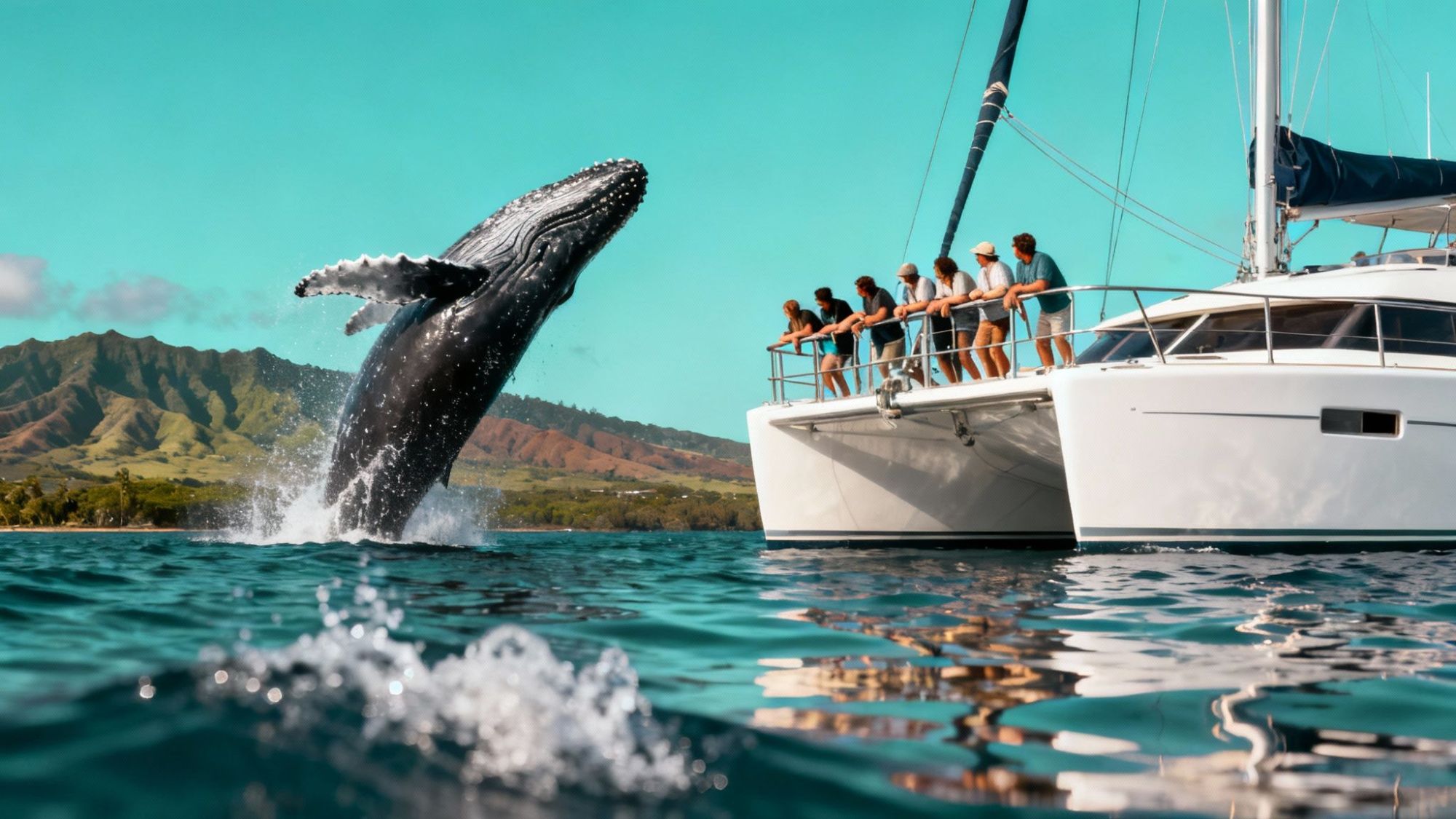
Picture this: the calm, turquoise water suddenly explodes as a 40-ton humpback whale launches itself into the air. It’s a moment that will define your trip to Hawaii, and the Big Island is one of the best places on the planet to see it happen. If you're visiting during the peak season from December through March, you're in for a real treat.
As the top-rated and most-reviewed snorkel company in Hawaii, Kona Snorkel Trips is your expert guide to this incredible experience.
Your Guide to Big Island Whale Watching Tours
Embarking on one of the many whale watching tours Hawaii Big Island has to offer is so much more than a simple boat ride. It's a front-row seat to one of the most incredible migrations on Earth. Every winter, thousands of humpback whales journey over 3,000 miles from the icy waters of Alaska to the warm, sheltered seas of Hawaii to breed, give birth, and raise their calves.
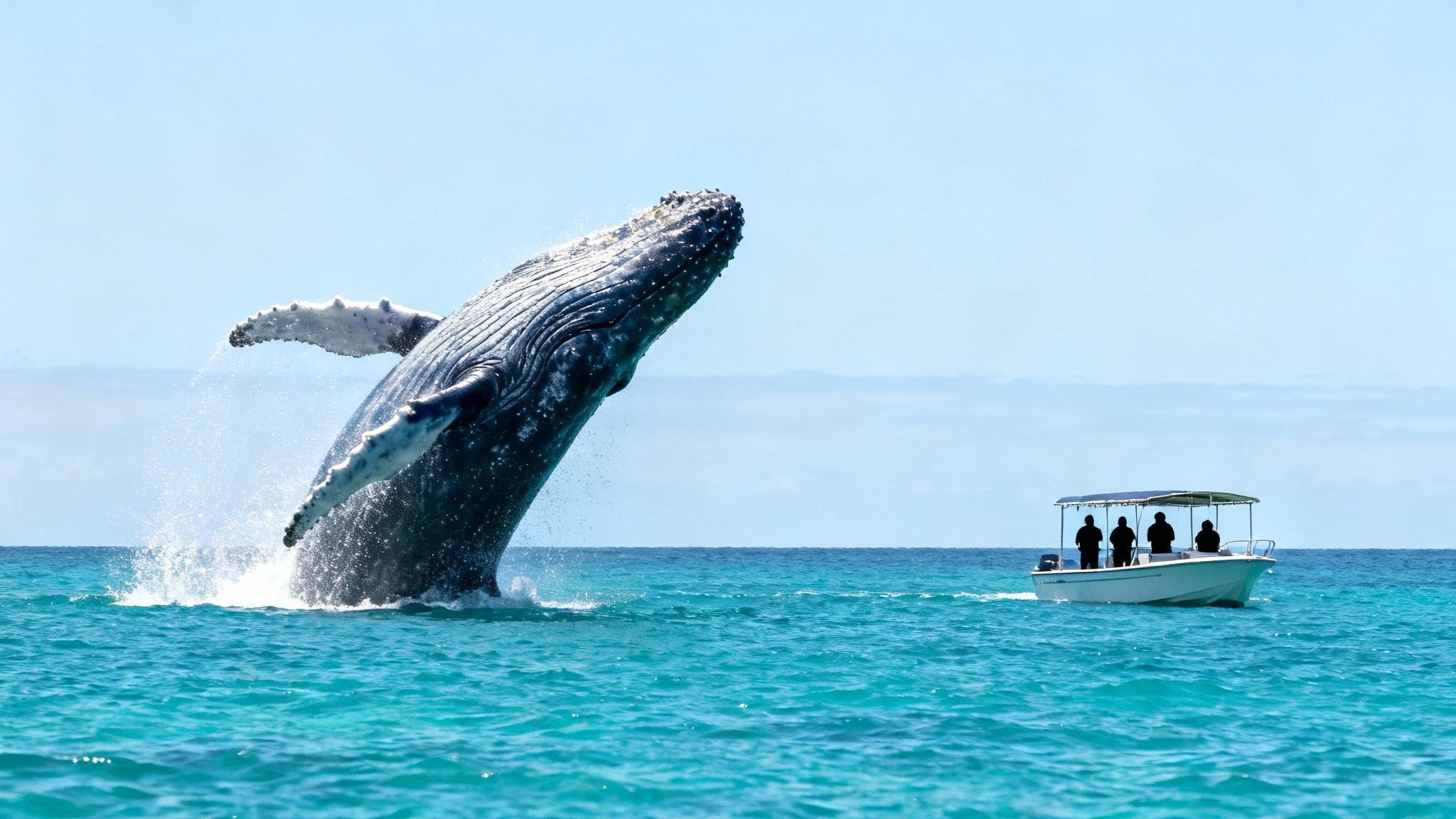
As Hawaii’s top-rated and most-reviewed snorkel and tour company, we've spent countless hours on these waters. We're here to share everything we've learned to help you plan an unforgettable adventure.
What Makes Big Island Whale Watching Special?
There’s a reason the whales choose us. The Big Island, especially the calm, protected waters off the Kona and Kohala coasts, is the perfect sanctuary for these gentle giants. The island’s unique underwater landscape creates a safe haven from deep-water predators, making it an ideal nursery for newborn calves.
This annual migration brings an estimated 12,000 humpback whales to Hawaiian waters—that’s more than half of the entire North Pacific humpback population. Witnessing this gathering is an experience that stays with you forever.
With so many whales in one place, your chances of seeing incredible behaviors are sky-high. We’re talking about powerful tail slaps that echo across the water, curious spy-hops, and, of course, those breathtaking full-body breaches. Our job is to get you as close to that magic as respectfully possible.
Planning Your Adventure
A little planning goes a long way in making sure your tour is everything you hope for. Before you book, it helps to understand a few key things.
Here's what this guide will walk you through:
- The Best Season: We’ll help you pinpoint the absolute peak weeks to maximize your chances of seeing the most action.
- Prime Locations: Find out the specific hotspots around the island where whales love to hang out.
- Choosing a Tour: Not all tours are created equal. We’ll break down the differences between boat types and tour styles so you can pick the perfect fit.
- What to Expect: Get ready for your day on the water with practical packing lists and tips for getting that perfect photo.
With the right info, your whale watching trip can easily become the highlight of your entire Hawaiian vacation. To get a feel for what an expert-led excursion is like, check out our premier Kona whale watching tours. Now, let's dive in and start planning your once-in-a-lifetime trip.
Why Thousands of Whales Journey to the Big Island
Ever wonder what makes thousands of humpback whales undertake a massive, non-stop, 3,000-mile swim from the frigid waters of Alaska all the way to the Big Island every single year? It’s not just a casual vacation. This incredible migration is one of the most important parts of their entire lives, driven by a powerful instinct to find the perfect place to bring their young into the world.
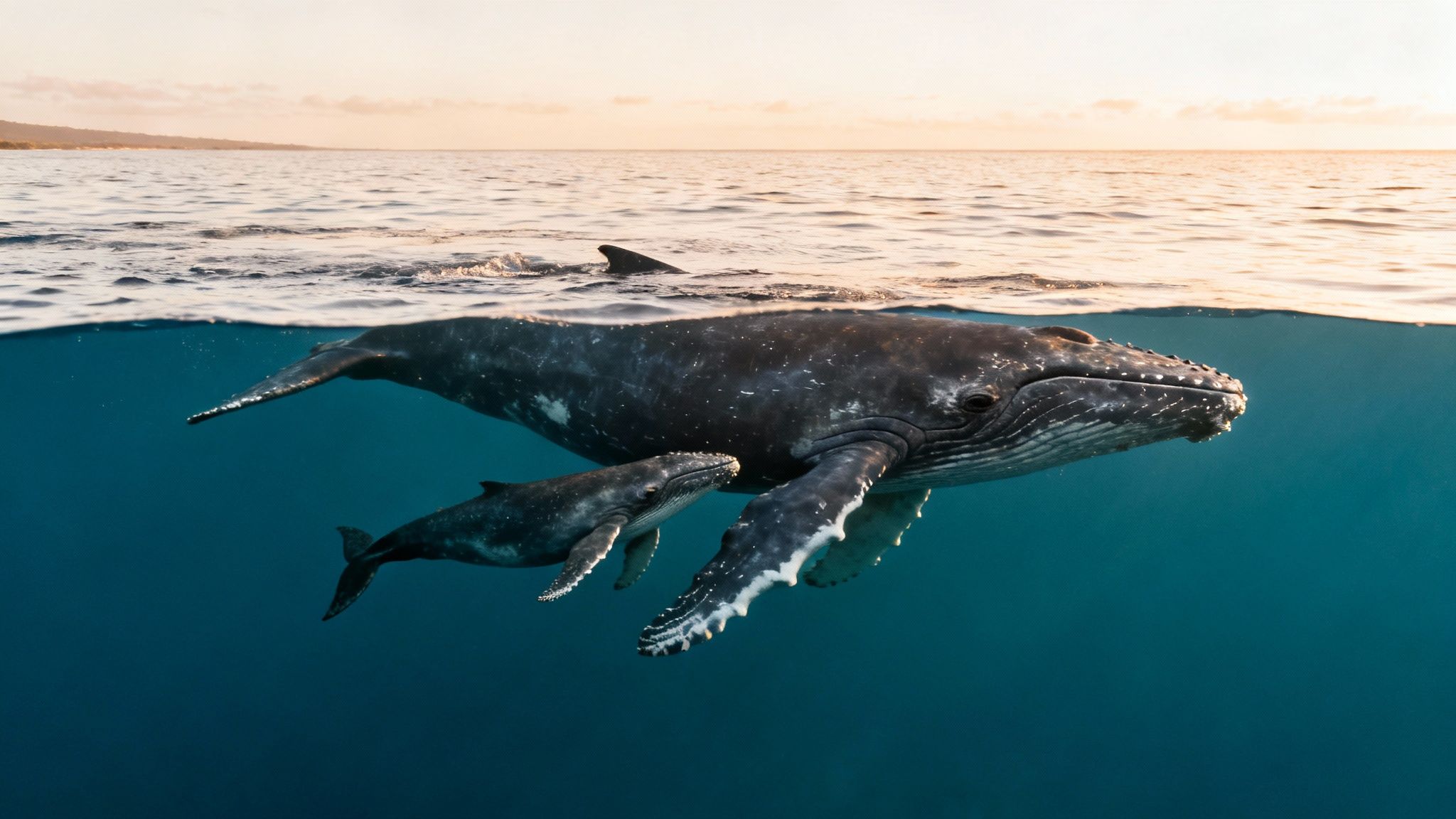
The secret is in the Big Island’s unique underwater landscape and warm climate. Back in Alaska, the feeding is great—tons of krill and small fish—but those icy, predator-heavy seas are a dangerous place for a newborn whale. Calves are born with very little blubber, leaving them totally exposed to the cold and vulnerable to predators like orcas.
A Sanctuary for New Life
The waters off the Big Island's Kona coast are a world away from that. Think of it as nature’s ultimate nursery. The island itself acts as a massive shield against the strong trade winds, which creates some of the calmest ocean conditions you’ll find anywhere.
It’s not just calm, either. The water here is warm and relatively shallow. This combination is the perfect safe zone for mother whales to give birth and nurse their calves, far from the deep-water threats they’d face elsewhere. It's in these protected waters that the little ones can pack on the pounds and build up the strength they'll need for their first big trip back north.
The Big Island of Hawaii hosts one of the world's most spectacular whale watching phenomena, attracting approximately 12,000 humpback whales annually, which represents over half of the entire North Pacific humpback whale population. These magnificent marine mammals undertake an extraordinary migration journey of nearly 3,000 to 4,000 miles from their feeding grounds in Alaska's icy waters to Hawaii's warm, shallow bays. Discover more insights about the Big Island's whale season.
This annual get-together turns our coast into a bustling social scene for humpbacks. It's not all about birthing and raising calves; it's also a major hotspot for courtship. You'll see males putting on incredible shows—breaching, tail-slapping, and singing—as they compete for the attention of females. This is what leads to some of the most jaw-dropping moments you can witness on a tour.
Why This Matters for Your Tour
Knowing the "why" behind the migration completely changes your whale watching tours Hawaii Big Island experience. You're not just a spectator at some random show; you're witnessing a critical, ancient ritual of survival. Every single breach, splash, and quiet moment between a mother and her calf has a deep purpose.
It gives you a real connection to these magnificent animals. And the good news is, conservation efforts have worked so well that there's been talk about whether humpback whales should be taken off the endangered species list, which just goes to show how vital protected areas like this are.
So, what makes the Big Island the perfect spot? It boils down to a few key things:
- Warm Waters: Absolutely essential for newborn calves who don't have enough blubber to stay warm.
- Calm Seas: The island's geography blocks the wind, creating a sheltered, peaceful environment.
- Shallow Depths: This offers crucial protection from deep-water predators.
- Clear Visibility: The crystal-clear water helps whales see each other and navigate.
When you join us on a tour, you become a respectful observer of this essential chapter in their lives. It's a chance to feel the raw power and fragility of nature, making your trip both a thrill and something truly meaningful.
Finding the Perfect Time for Your Whale Tour
Timing is everything. When you're dreaming of seeing humpback whales in Hawaii, booking your tour during the peak window can be the difference between a good day on the water and a truly life-changing experience.
The whales' annual migration to Hawaiian waters is a seasonal affair. While they're around from November to May, the sheer number of whales and their activity levels change dramatically from month to month. Understanding this natural rhythm is the secret to an unforgettable trip. You don't just want to see a whale; you want to witness them at their most spectacular.
The Best Months for Whale Watching
While you can spot whales for a solid chunk of the year, the action hits an incredible peak in the heart of winter. January and February are, without a doubt, the absolute best months to be out on the water.
During this time, the population of humpbacks is at its highest, and the ocean is practically buzzing with energy. This is your best chance to see the full, breathtaking range of whale behaviors:
- Competitive Pods: Picture large groups of males powerfully competing for a female's attention. This leads to jaw-dropping displays like full-body breaches, thunderous tail slaps, and massive pectoral fin slaps.
- Newborn Calves: Mothers are patiently teaching their brand-new calves how to be a whale. Seeing a tender moment between a 40-ton mom and her playful baby is something you’ll never forget.
- Courtship Rituals: The air is electric with males trying to impress potential mates. For you, this means more action, more surface activity, and more incredible photo opportunities.
December and March are also fantastic months, but they act as the bookends to the main event. You'll still see plenty of whales, but the density and frequency of those show-stopping behaviors are at their absolute highest in January and February. For a deeper dive into what each month holds, check out our guide to the Big Island whale season.
Here's a quick guide to help you plan.
Big Island Whale Watching Season Planner
Use this quick reference guide to choose the best month and time for your whale watching adventure.
| Time Period | Whale Activity Level | What to Expect |
|---|---|---|
| Nov – Dec | Moderate | The first arrivals! Sightings increase as more whales arrive daily. A great time to see early, energetic males. |
| Jan – Feb | Peak Season | The absolute best time. The highest concentration of whales, frequent breaches, competitive pods, and newborn calves. |
| March | High | Still excellent! Lots of activity as mothers and calves prepare for their journey north. Great for seeing baby whales. |
| Apr – May | Winding Down | The last of the whales are heading out. Sightings are less frequent, but it's a peaceful time on the water. |
Planning your trip during the peak months of January and February gives you the best possible odds of witnessing the incredible spectacle that makes Hawaii's whale season so famous.
Why Morning Tours Offer the Best Sightings
Once you’ve picked the perfect month, the next step is choosing the time of day. While whales are active all day long, early morning tours consistently deliver the best conditions. It really comes down to two things: calmer seas and more active whales.
The ocean off the Kona coast is typically like glass in the morning before the afternoon trade winds kick up. This smooth, slick surface makes it much easier to spot a whale's "blow" from miles away.
Data shows that early morning hours are significantly more productive for whale watching. Sightings at 8:00 AM are roughly 50 percent higher than those just a few hours later at noon. This is thanks to more active whales in the cooler morning temperatures and the unbeatable visibility that calm, glassy water provides.
By lining up your tour with these natural patterns—booking in peak season and choosing an early start—you're not just hoping for a lucky break. You're strategically putting yourself in the best possible position to witness the awe-inspiring power of the humpback whale migration.
Discovering the Best Whale Watching Locations
Knowing when to go is half the battle; knowing where to go is the other half. While you can technically spot whales all along the Big Island's western coast, some areas are absolute magnets for these gentle giants, drawing them in by the hundreds. Picking the right spot can be the difference between a good day and an unforgettable one on a whale watching tours hawaii big island adventure.
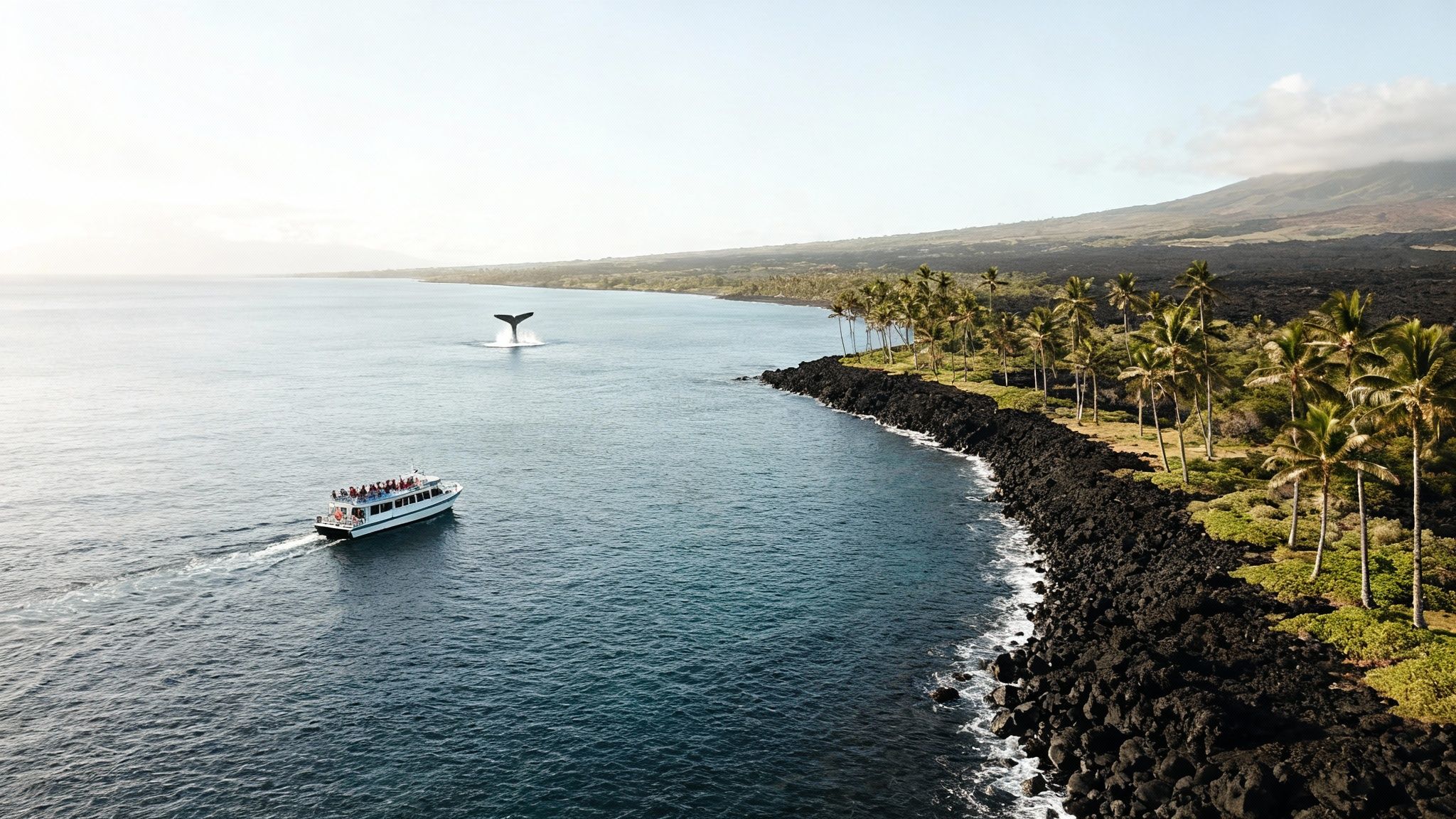
It all comes down to the island's unique underwater landscape. The specific shape of the seafloor creates protected channels and calm bays that are basically a five-star resort for migrating humpbacks. If you focus your search on these areas, you're putting yourself right in the heart of the action, whether you're on a boat or watching from shore.
The Premier Destination: The Kohala Coast
If there's one place that stands head and shoulders above the rest for whale watching on the Big Island, it's the Kohala Coast. This stunning stretch of the northwestern shore is the undisputed champion for humpback encounters.
The waters off the Kohala Coast, including areas like Puako and Waikoloa, are so ideal that sightings happen two to three times more frequently here than anywhere else on the island. Why? It's the perfect combination of calm, clear, and protected bays—exactly what a mother whale needs to give birth and care for her newborn calf.
The whole area essentially transforms into a massive, natural nursery for humpbacks. This concentration of activity makes it ground zero for the best whale watching tours.
Other Key Sighting Areas
While the Kohala Coast gets top billing, the entire western side of the Big Island is a fantastic playground for whales. Head a little south, and the North Kona coast offers another excellent zone for spotting humpbacks.
The waters just off Kailua-Kona are also buzzing with activity, enjoying the same leeward conditions that keep the ocean calm and inviting. The big takeaway here is that the entire western shoreline is a designated whale sanctuary for a very good reason.
So what's the magic formula for this side of the island?
- Sheltered Waters: The colossal volcanoes of Mauna Kea and Mauna Loa act as a natural shield, blocking the powerful trade winds and creating a calm sea.
- Ideal Depths: The ocean floor slopes gently, providing the perfect shallow, protected depths that mother and calf pairs seek out.
- Clear Visibility: The water here is pristine, which means incredible underwater views when a whale surfaces nearby.
For a full breakdown of the tour options in these prime zones, check out our in-depth guide to Kona whale watching tours.
Best Shore-Based Viewing Points
Don't have your sea legs? No problem at all. The Big Island has several incredible spots where you can enjoy the show from the comfort of solid ground. All you need is a decent pair of binoculars and a bit of patience.
One of the best and most culturally significant spots is the Puukohola Heiau National Historic Site. The name literally translates to "hill of the whale," which tells you everything you need to know about how long people have been coming here to watch the annual migration.
From its high vantage point, you get a sweeping panoramic view of the same protected waters the whales flock to. It's a peaceful, powerful place to connect with both Hawaiian history and the spectacular nature show unfolding in front of you.
A few other great spots for land-based viewing include:
- Lapakahi State Historical Park: Offers amazing coastal views and tends to be less crowded.
- Kapaa Park: A beautiful beach park with a clear, unobstructed line of sight out to the ocean.
- Keokea Beach Park: Located farther north, this park provides a rugged and dramatic backdrop for your whale spotting.
Whether you decide to get out on the water or just kick back at a scenic overlook, focusing on these proven locations will give you the absolute best chance of having that once-in-a-lifetime whale encounter.
How to Choose the Right Whale Watching Tour
With so many incredible options, picking the perfect whale watching tour on the Big Island can feel a little overwhelming. The right choice really comes down to your group's size, your budget, and what you're hoping to get out of your day on the water. Let's break down the key differences to help you find the tour that’s the perfect match for your dream adventure.
The first big decision is the kind of boat you’ll be on. This choice completely shapes your experience, from how close you feel to the water to your overall comfort level. Each type of boat offers a totally unique way to witness the sheer majesty of the humpback whales.
Group Tours vs Private Charters
Most people will end up on a group tour, which usually takes place on a bigger, more stable vessel like a catamaran. These boats are fantastic for families, first-time whale watchers, or anyone who puts a premium on comfort and amenities.
They often have shaded areas, restrooms, and sometimes even snacks and drinks. It all makes for a really relaxed and enjoyable day out on the ocean.
A private charter, on the other hand, often uses a smaller, more nimble boat, like a Zodiac. These low-profile rafts get you right down at water level for a much more intimate and thrilling perspective. Because the groups are so small, these tours can be customized on the fly, letting you hang out longer in one spot if the whales are putting on a real show.
To help you figure out what’s best for you, here’s a quick comparison of the two main styles.
Comparing Tour Boats and Charter Types
Decide between different whale watching tour styles based on your preferences and group needs.
| Feature | Group Tours (e.g., Catamaran) | Private Charters (e.g., Zodiac) |
|---|---|---|
| Experience | Relaxed and stable, with more space to move around. Great for all ages and mobility levels. | Fast-paced and adventurous, offering a thrilling, water-level view of the action. |
| Group Size | Larger groups, typically 20-50+ passengers, creating a social and shared atmosphere. | Intimate and exclusive, usually just your group or a handful of other guests. |
| Amenities | Often includes restrooms, shaded seating, and sometimes refreshments. Higher comfort level. | Minimalist; the focus is on speed and agility. Amenities are limited. |
| Best For | Families with children, larger parties, and those who prefer a smoother, more comfortable ride. | Photographers, thrill-seekers, and small groups seeking a personalized and up-close experience. |
| Price Point | More budget-friendly per person, making it an accessible option for most travelers. | Higher cost per person due to the exclusive and customized nature of the tour. |
Ultimately, there’s no "better" option—just the one that fits your crew and your idea of a perfect day. A big, comfy catamaran might be ideal for a multi-generational family trip, while a Zodiac offers an adrenaline-pumping adventure you won't forget.
What to Look for in a Tour Operator
Beyond the boat, the quality of the tour operator is the single most important factor for an amazing trip. A great company doesn't just drive you out to see whales; they create a rich, educational, and respectful experience that you'll be talking about for years.
An essential feature of a top-tier tour is the presence of an experienced marine naturalist guide. These experts can interpret whale behavior in real-time, explaining the meaning behind a tail slap or a spy-hop, turning a simple sighting into a profound learning experience.
Another fantastic piece of gear to look for is a hydrophone. This is an underwater microphone that the crew can drop into the ocean, allowing you to listen to the haunting and complex songs of the male humpback whales. Hearing their calls echo through the boat is a truly magical experience that connects you to their world in a way that sight alone just can't.
Finally, and most importantly, choose an operator that puts the whales' well-being first. Responsible companies are deeply committed to conservation and follow federal regulations to the letter, like maintaining a safe and respectful distance of at least 100 yards. They get that we are guests in the whales' home and operate with the utmost respect. This ethical approach ensures the whales aren't stressed and that we can all continue to enjoy these incredible encounters for generations to come.
Getting Ready for Your Whale Watching Adventure
The moment you step on the boat, the excitement is almost electric. Your whale watching adventure is about to begin, and it’s so much more than just a boat trip—it's a front-row seat to one of nature’s greatest shows. As we glide out over the calm Pacific, keep your eyes peeled for the incredible behaviors that make every single tour a unique experience.
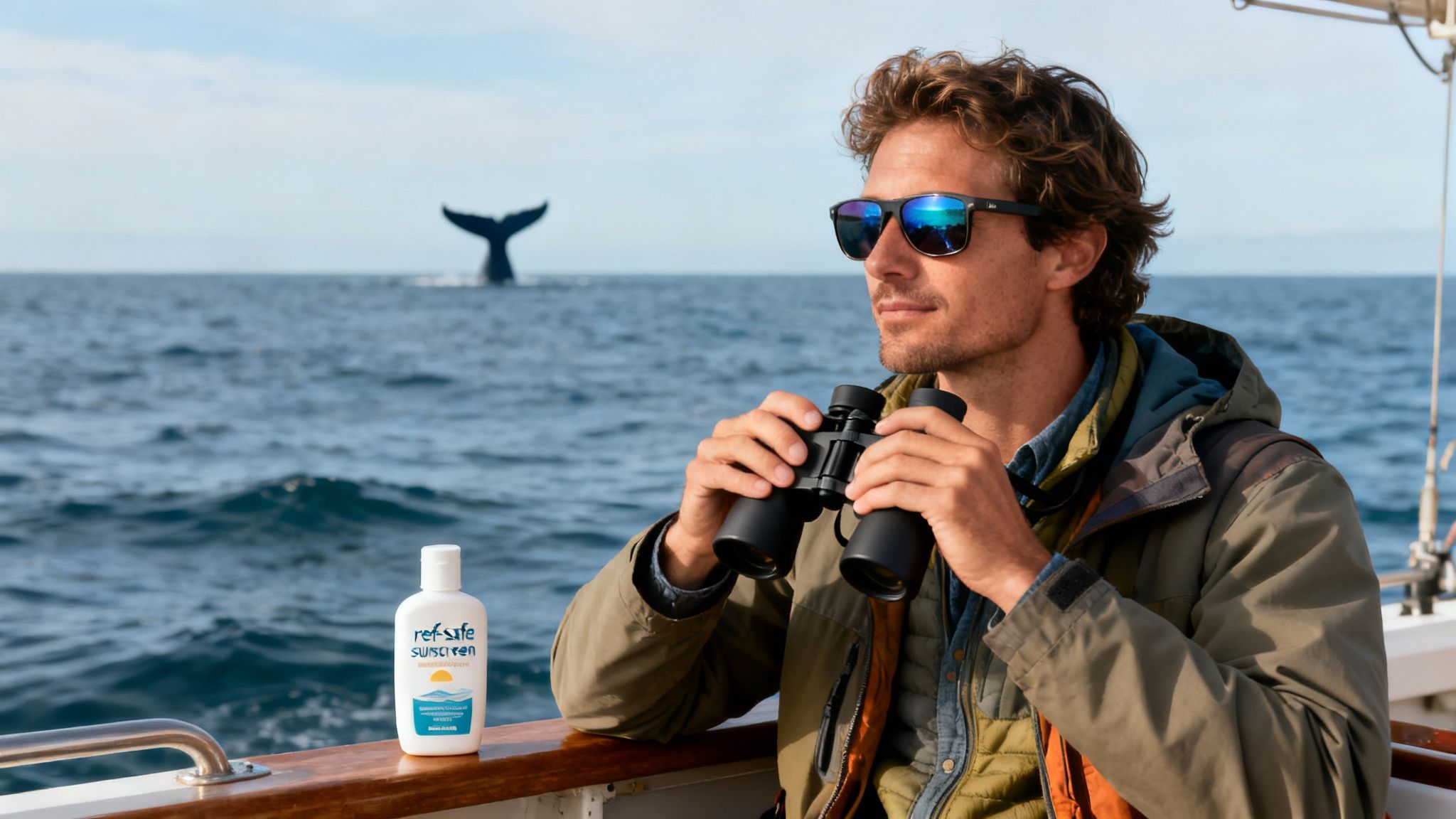
You might get lucky and see a breach, where a massive 40-ton whale launches its entire body out of the water in a jaw-dropping display of pure power. Or maybe you'll witness a thunderous tail slap, sending a wall of spray high into the air. Another favorite is the curious spy-hop, where a whale pops its head straight up out of the water to get a better look at its surroundings—and you!
What to Bring on Your Tour
A little bit of prep work goes a long way in making sure your trip is comfortable and fun. The weather out on the water can shift in a heartbeat, so it’s always smart to be ready for anything.
Here’s a quick and easy packing list for your day at sea:
- Layered Clothing: A light jacket or windbreaker is a must-have. Even on the sunniest Hawaiian day, it can get cool and breezy once you're out on the water.
- Reef-Safe Sunscreen: This is a big one. You're protecting your skin, but you're also protecting Hawaii's fragile coral reefs. Always go for a mineral-based sunscreen that doesn't contain oxybenzone or octinoxate.
- Polarized Sunglasses: These are a total game-changer. They slice right through the ocean's glare, which makes spotting whales and other marine life way easier.
- Hat and Sun Protection: A wide-brimmed hat is your best friend for keeping the sun off your face and neck.
- Camera or Smartphone: You’re going to want to capture these moments, trust me. Just make sure your battery is fully charged!
- Binoculars: They aren't essential, but if you have a pair, bring them. They can give you some incredible, up-close views of whales that are a bit farther out.
- Seasickness Medication: If you're someone who gets motion sickness, it's a good idea to take something beforehand. For more tips, check out our guide on how to prevent seasickness.
Photography Tips for Capturing the Moment
Trying to photograph a fast-moving whale can be tricky, but a few simple tips can help you nail that perfect shot. The key is to be ready for anything, because the action happens in a flash.
To freeze the motion of a breaching whale, you need a fast shutter speed. Set your camera to 1/1000th of a second or faster if you can. Using your camera's "burst" or "continuous shooting" mode will also seriously up your chances of catching the peak action.
But don't forget to put the camera down every once in a while. Some of the best memories are the ones you soak in with your own eyes, not through a lens.
Watching Whales Responsibly and Respectfully
Above all else, your adventure needs to be safe for both you and the whales. Humpback whales are a protected species, and federal law requires all boats to stay at least 100 yards away. This rule is absolutely critical for not stressing out the animals, especially mothers with their newborn calves.
Reputable tour operators like us here at Kona Snorkel Trips know these guidelines like the back of our hand. We always approach respectfully, making sure you get to enjoy these magnificent animals without disturbing their natural behavior. It's this commitment that helps ensure the whales will keep returning to these sacred waters for generations to come.
Your Big Island Whale Tour Questions, Answered
Even after you've planned the perfect trip, it's natural for a few last-minute questions to pop up before heading out on the water. We get it. Knowing exactly what to expect helps you relax and get the most out of your day, so here are the answers to the questions we hear most often from our guests.
What Happens If We Don't See Any Whales?
This is probably the number one concern, but let me put your mind at ease: it's incredibly rare not to see whales during the peak season months of January and February. The waters off the Big Island are practically bubbling with humpback activity, making sightings almost a sure thing. Still, these are wild animals, and their behavior is never 100% predictable.
That's why most reputable tour operators, including us at Kona Snorkel Trips, offer a “whale guarantee.” What does that mean? If by some fluke your tour doesn't spot any whales, you can come back and join another trip for free, usually within a certain time frame. Always double-check the specific policy when you book—it’s a great bit of assurance for your adventure.
How Close Can the Tour Boats Get to the Whales?
Giving the whales their space is our absolute top priority. Federal law is very clear on this: under the Marine Mammal Protection Act, all boats have to stay at least 100 yards away from humpback whales. To put that in perspective, think of the length of a football field.
This rule is vital for protecting the whales from stress, especially for the new moms with their calves. Now, while we have to keep our distance, the whales don't have to keep theirs! They can be incredibly curious, and it’s not uncommon for a whale to decide to check us out, leading to a truly unforgettable close encounter—completely on their own terms.
What Other Marine Life Might We See?
The humpbacks are definitely the headliners, but the ocean is always full of surprises. It's almost a given that you'll run into a pod of playful spinner dolphins. Seeing them launch into their famous acrobatic spins is a show all on its own.
Keep your eyes peeled, because you might also spot:
- Hawaiian green sea turtles (honu): You'll often see their heads pop up for a breath of air along the coastline.
- Pilot whales: These are smart, social animals that sometimes travel in big family groups.
- Seabirds: Look to the skies for boobies and frigatebirds soaring overhead.
Are Whale Watching Tours Suitable for All Ages?
Absolutely! Whale watching is one of those amazing activities that everyone in the family can enjoy together, from the little kids to the grandparents.
If you have anyone with mobility concerns or are traveling with young children, you'll find that larger, more stable boats like catamarans are a fantastic option. They offer a smoother ride and typically have more amenities like restrooms and shady spots to relax. Just give your tour operator a heads-up about any specific needs when you book.
Ready to feel the magic of the humpback migration for yourself? Kona Snorkel Trips leads expert-guided, respectful whale watching tours that take you right to the heart of the action.