
whale watching tours hawaii big island: Top Big Island Tours
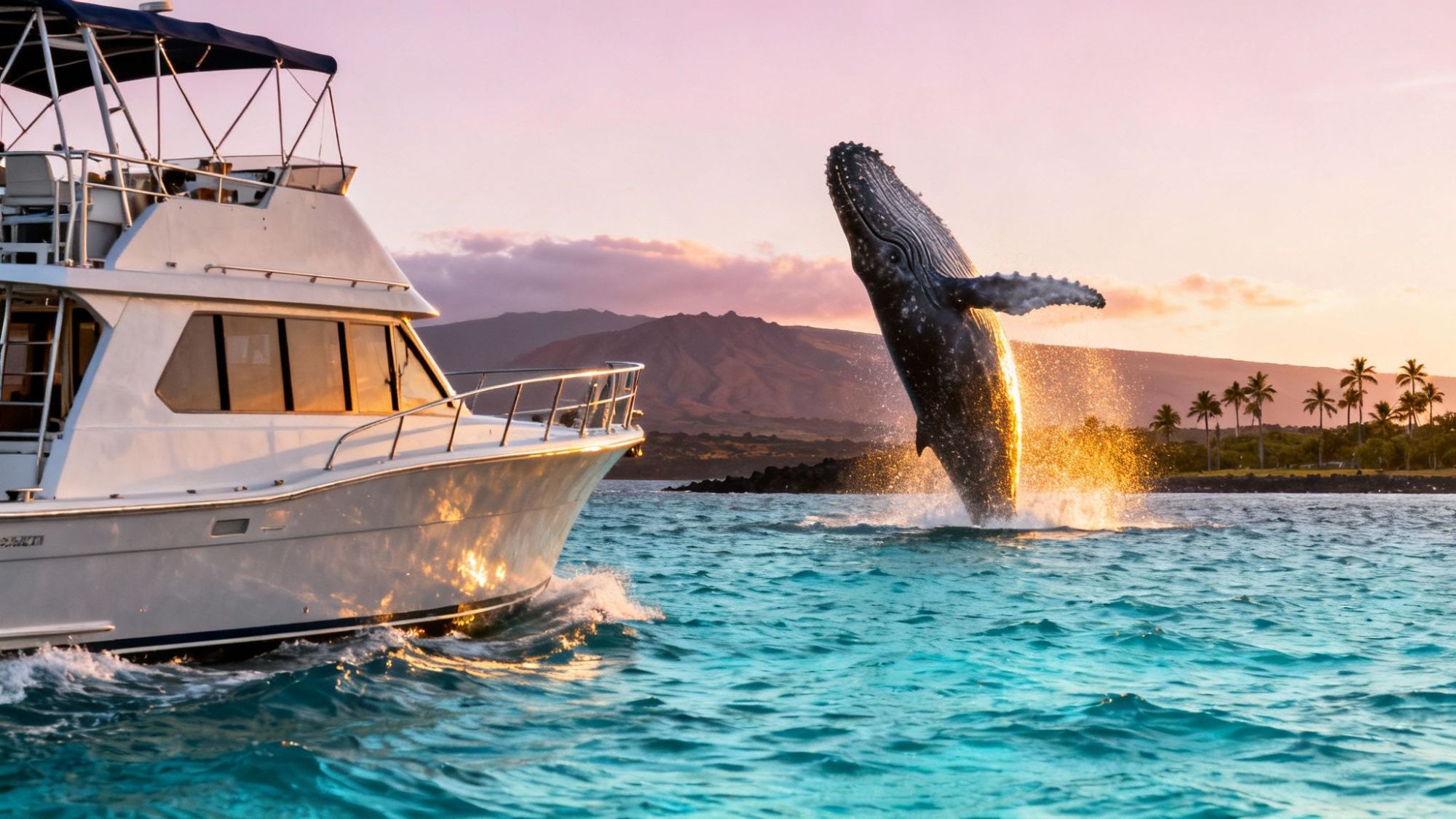
Picture this: the calm surface of the ocean suddenly shatters as a 40-ton humpback whale explodes into the air. It’s a moment that truly defines the magic of the Big Island, and something you’ll never forget. The best whale watching tours hawaii big island put you right in the front row for this incredible show.
The prime time for this spectacle runs from mid-December through March. During these months, the calm, sheltered waters off the Kona and Kohala coasts become a world-class stage for the annual humpback migration.
Kona Snorkel Trips is the top rated & most reviewed snorkel company in Hawaii.
Your Guide to Unforgettable Whale Watching
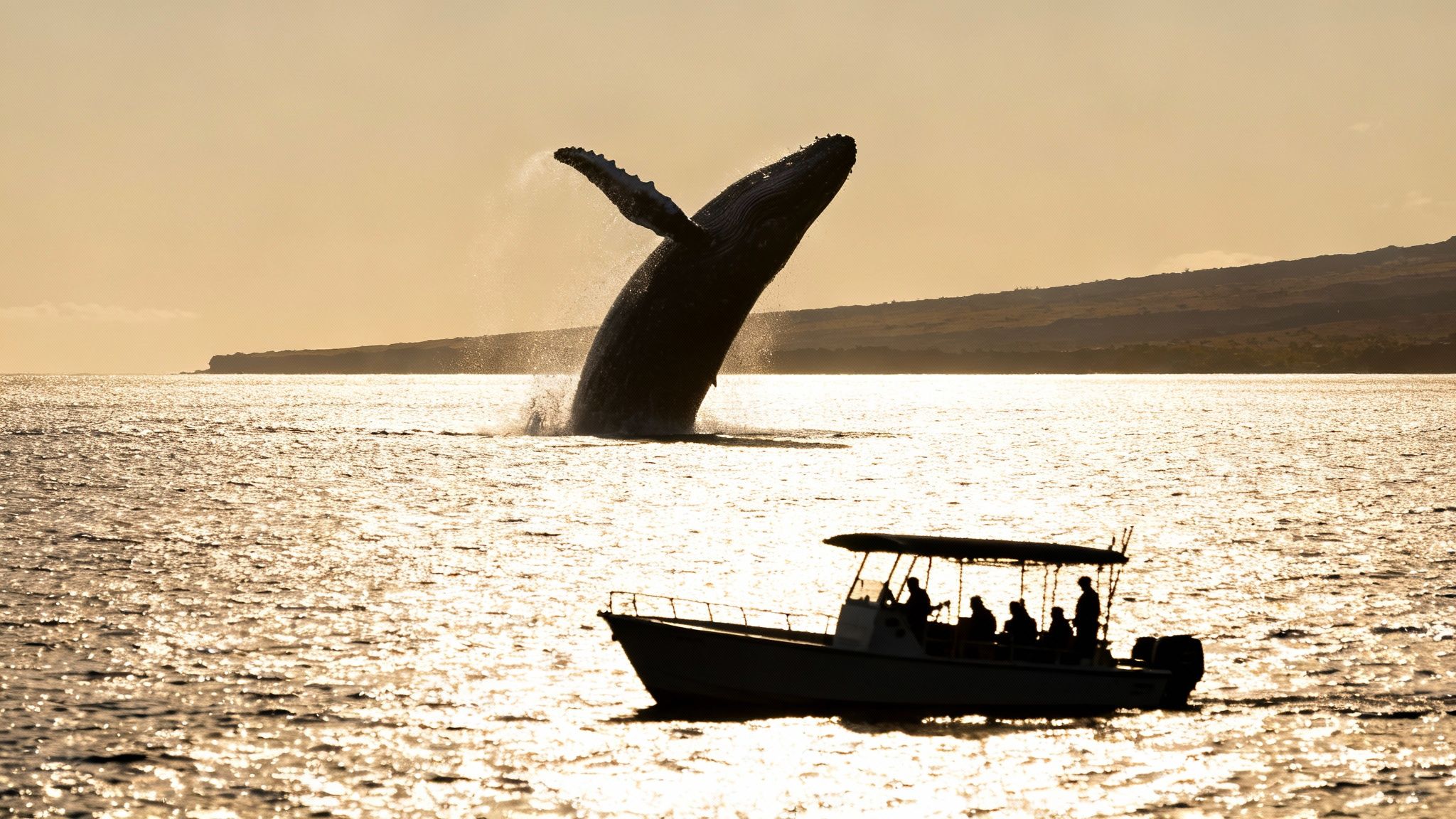
Getting out on the water to see humpback whales is so much more than a simple boat ride; it’s a genuine encounter with one of nature’s most awe-inspiring journeys. Every single year, thousands of these gentle giants travel over 3,000 miles from the icy feeding grounds of Alaska to the warm, welcoming waters of Hawaii.
Consider this guide your personal roadmap to planning the perfect whale watching adventure. We’re going to dive deep into everything you need to know, from the absolute best times to catch the peak action to the top spots for sightings.
Why the Big Island Is a Premier Destination
The Big Island, and especially its western Kona and Kohala coasts, gives us a unique advantage for spotting whales. The island’s massive volcanoes act as a natural shield, blocking the strong trade winds and creating an incredibly calm and clear marine environment. It turns out, this protected sanctuary is exactly what humpback whales are looking for.
These calm conditions create a safe haven for some of the most important moments in a whale’s life:
- Birthing: Pregnant females actively seek out these sheltered bays to deliver their calves in relative safety.
- Nurturing: Newborn calves, born with very little body fat, depend on the warm water to thrive as they nurse and build up strength for the long journey back north.
- Mating: Males put on spectacular competitive displays to attract mates, which often leads to the dramatic surface activity we all hope to see.
Of course, choosing the right tour operator is key to having a memorable and respectful experience. As the top-rated and most-reviewed snorkel company in Hawaii, we at Kona Snorkel Trips are all about creating safe, intimate, and educational wildlife encounters. Our experienced crew really understands the subtleties of whale behavior and the importance of conservation.
This annual migration is a vital chapter in the life of one of the planet's largest mammals. You aren't just observing animals; you are witnessing a fundamental part of their existence unfold in a stunning natural theater.
Planning Your Perfect Big Island Whale Tour
A great whale watching trip starts with solid planning. Knowing when to go, where to look, and what kind of tour fits your vibe will make all the difference. We’ll walk through the different tour options, from nimble, small-group zodiacs to family-friendly catamarans, making sure you find the perfect match.
For a complete look at all your options, you can check out our in-depth guide to https://konasnorkeltrips.com/blog/big-island-whale-watching/.
We’ll also cover what you can expect out on the water, including the incredible behaviors you might see—like powerful tail slaps, curious spy-hops, and the breathtaking full-body breach. By the end, you'll have everything you need to book your adventure with confidence, ready to make memories that will last a lifetime.
Finding the Perfect Time for Your Whale Tour
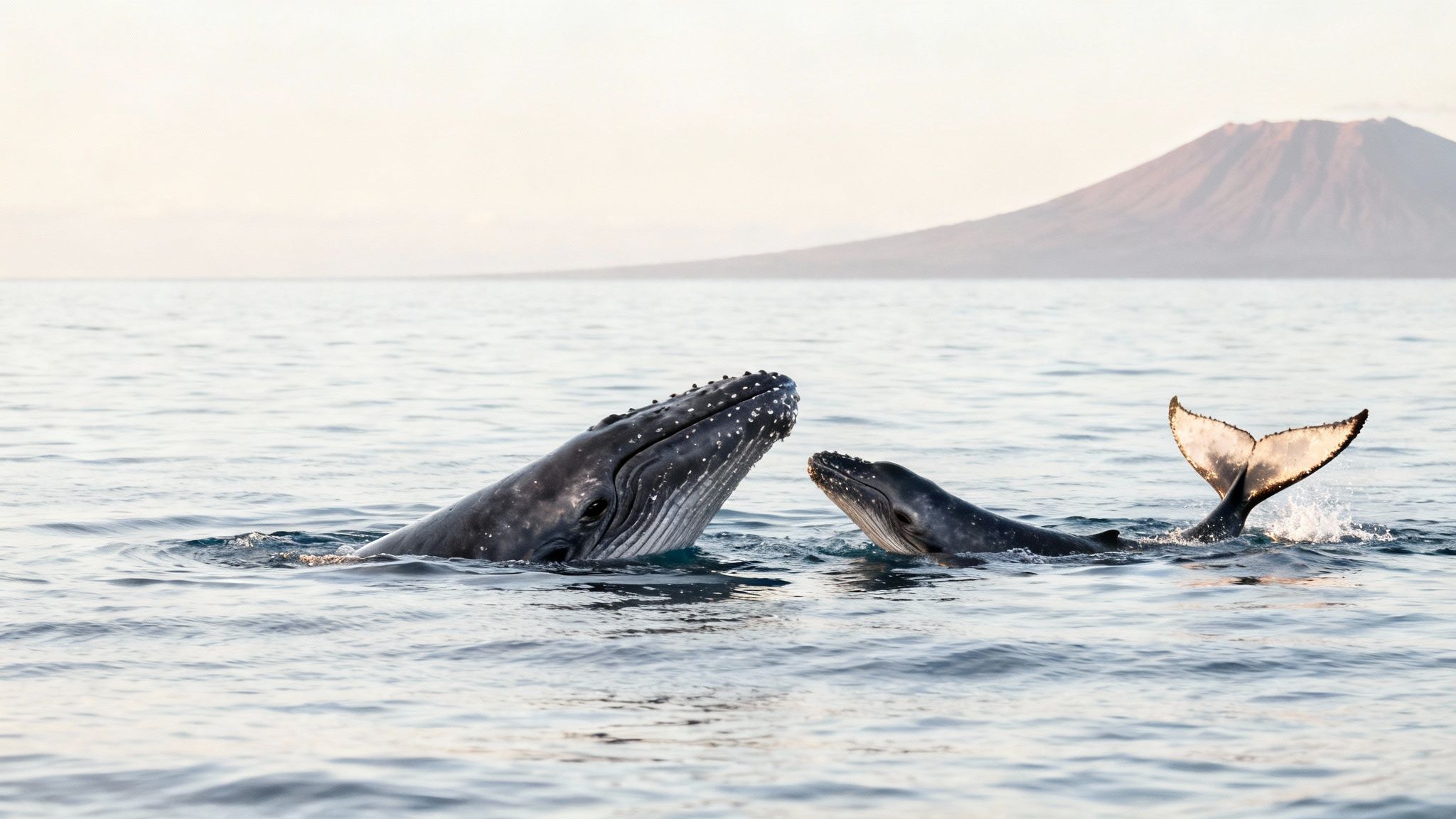
Timing is the secret ingredient for an unforgettable day on the water. Humpback whales aren't year-round residents here; they're seasonal visitors on a truly epic mission. Getting their annual schedule dialed in is the key to planning the perfect adventure.
Every single year, these gentle giants travel over 3,000 miles from their chilly feeding grounds up in Alaska. They make this incredible pilgrimage down to the warm, protected waters of Hawaii for one reason: to mate, give birth, and raise their newborn calves in a safe, tropical nursery.
That means we only have a specific window of opportunity to see them before they head back north.
The Official Whale Season In Hawaii
Officially, whale season on the Big Island runs from November through May. During these months, the waters off the Kona and Kohala coasts basically turn into a bustling social club and nursery for thousands of humpbacks.
But let's be real—not all months in that window are created equal. The very first whales might be spotted in October or November, but sightings are few and far between. By the time May rolls around, most are already starting the long trip back home, and the ocean gets quiet again.
Pinpointing The Peak Viewing Window
If you want the most dramatic, consistent, and action-packed whale watching, you’ve got to aim for the absolute peak of the season. That prime time is squarely between January and March. This is when the whale population hits its max density, and the ocean feels truly alive.
Think of it this way: the official season is the whole festival, but January to March is the headlining act you came to see. Your chances of witnessing those jaw-dropping behaviors are highest then.
The sheer number of whales here is mind-boggling. We're talking about an estimated 12,000 humpback whales—more than half of the entire North Pacific population—migrating to Hawaii each year. It's one of the most significant marine mammal migrations on the planet.
This incredible concentration means more action. You'll see everything from mothers teaching their calves how to breach to competitive males showing off for mates. For a full breakdown, check out our complete guide to the https://konasnorkeltrips.com/blog/big-island-whale-watching-season/.
To make it even easier, here's a quick look at what you can expect throughout the year.
Big Island Whale Watching Season Calendar
| Months | Activity Level | What to Expect |
|---|---|---|
| January–March | Excellent (Peak) | Highest concentration of whales. Frequent sightings of breaches, spy-hops, and mother-calf pairs. The best time to go! |
| November–December | Good | Whales are arriving. Sightings become more consistent, with lots of spouts and some surface activity. |
| April–May | Fair | The last of the whales are heading back to Alaska. Sightings are less frequent, but you might get lucky with a late mother-calf pair. |
| June–October | Very Low/None | Humpback whales are in Alaska feeding. Other marine life like dolphins and pilot whales can still be spotted. |
Planning your trip during the peak season really pays off with the kinds of behaviors you're likely to witness.
What Behaviors To Expect
Booking your tour from January to March means you're much more likely to see the full, spectacular range of humpback behaviors. This isn't just about spotting a distant spout; it's about seeing them communicate, play, and teach.
- Powerful Breaches: This is the one everyone dreams of seeing. A 40-ton whale launching its entire body out of the water is a sight you'll never forget.
- Tail Slaps (Lobstering): You'll see a whale raise its massive tail fluke high out of the water and slam it down with incredible force, sending spray everywhere. It's a loud, percussive sound used for communication.
- Pectoral Fin Slaps: Whales will often roll onto their sides and repeatedly slap their long pectoral fins on the surface. It's another way they make their presence known.
- Spy-Hopping: This is when a curious whale pokes its head straight up out of the water to get a look at what’s going on above the surface—including you on the boat!
- Mother and Calf Interactions: Seeing a massive mother whale gently guiding her newborn calf is one of the most touching things you can witness in nature.
By lining up your trip with the peak season, you're giving yourself the best possible shot at not just seeing whales, but truly experiencing the magnificent spectacle of their lives in the warm Hawaiian waters.
Discovering the Best Whale Watching Locations
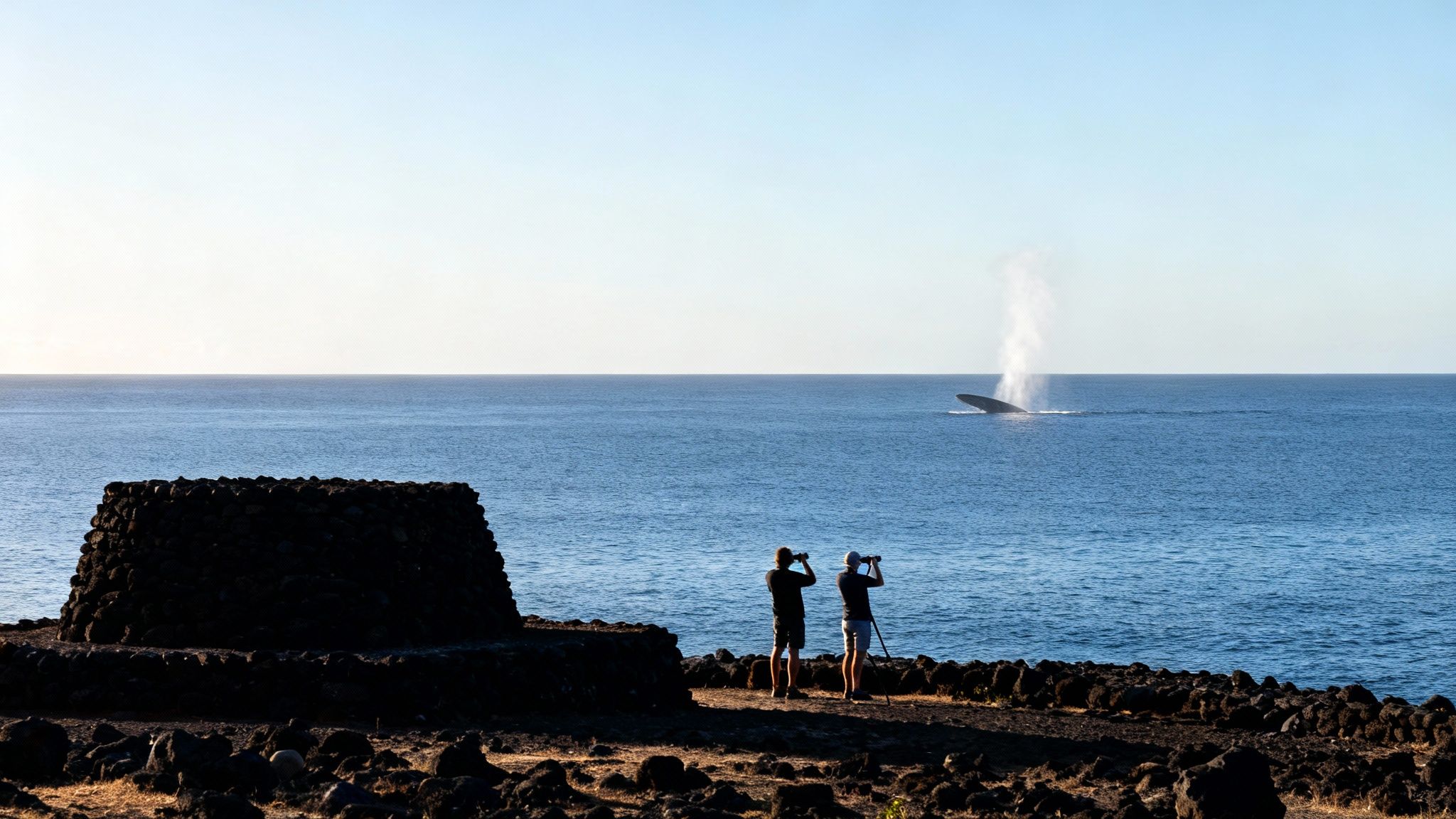
Knowing where to look is half the battle when it comes to a successful whale watch. The Big Island’s sprawling coastline has a handful of great vantage points, but if you want to be in the heart of the action, you need to head west.
The leeward side of the island—home to the sunny Kona and Kohala coasts—is the undisputed champion for spotting humpbacks. The island’s colossal volcanoes, Mauna Kea and Mauna Loa, create a massive natural shield, blocking the gusty trade winds that whip across the Pacific. This creates an incredibly calm and protected marine environment that humpback whales just can't resist.
These tranquil waters aren't just a matter of comfort; they're essential for the whales' survival. This sheltered pocket of the ocean becomes a safe nursery where mothers can give birth and raise their newborn calves. Born with very little insulating blubber, these baby whales rely on the warm, gentle conditions to thrive in their first few months of life.
The Kona and Kohala Coasts: A Whale Haven
There's a good reason people call the waters off the Kona and Kohala coasts a "whale soup" during the peak season. The trifecta of calm seas, warm water, and shallower depths creates the perfect sanctuary.
This idyllic setup doesn't just draw in the whales; it also creates phenomenal viewing conditions for whale watching tours hawaii big island. The glassy surface makes it easy to spot distant spouts, dramatic tail slaps, and even the dark, shadowy shapes of whales moving just beneath the waves. It’s this unique combination of factors that has made this area a world-renowned destination for marine life encounters.
Getting out on the water with a tour is, without a doubt, the most immersive way to experience this phenomenon. Boats departing from spots like Kailua Pier put you right in the middle of the whales' world, offering breathtaking, up-close views that you simply can’t get from the shoreline.
Top Spots for Shore-Based Viewing
While a boat tour offers an unbeatable experience, you don’t absolutely have to be on the water to witness the magic. If you prefer to keep your feet on solid ground, the Big Island has several fantastic shoreline locations, especially up along the northern Kohala Coast.
The real key to successful land-based viewing is getting some elevation. A higher vantage point gives you a much broader panorama of the ocean, making it way easier to scan the horizon for activity.
Here are a few of the best spots to try:
- Puʻukoholā Heiau National Historic Site: The name of this sacred site literally translates to "hill of the whale," and it definitely lives up to it. The high ground offers sweeping views over the very same waters that are part of the Hawaiian Islands Humpback Whale National Marine Sanctuary.
- Lapakahi State Historical Park: This more remote park is another fantastic lookout point with clear, unobstructed views of the ocean. It’s a perfect spot to spend a quiet morning with a pair of binoculars, patiently scanning for spouts.
- Kapaʻa Beach Park: Located near Lapakahi, this park is a great choice because it has shaded pavilions. You can comfortably watch for whales without baking in the intense Hawaiian sun.
These spots are a wonderful alternative, but the experience is different. From shore, you're more likely to see the action from a distance—breaches, spouts, and tail slaps on the horizon. To truly grasp the sheer scale of these animals, and to have the chance to hear their incredible songs through an onboard hydrophone, nothing beats getting out on the water.
For a deeper dive into the best viewing areas, check out our complete guide to whale watching on the Big Island.
How to Choose Your Ideal Whale Watching Tour
Picking the right whale watching tour is really the secret sauce to an unforgettable day on the water. It’s not a one-size-fits-all deal; what works for a family with toddlers is a world away from what a couple of thrill-seekers might be looking for. Your group size, budget, and appetite for adventure all play a big part in the decision.
Let's walk through the different kinds of tours you'll find here on the Big Island. Once you get a feel for the options, from massive, stable boats to zippy, intimate rafts, you'll be able to pick the perfect trip for the kind of memory you want to make.
Comparison of Big Island Whale Watching Tour Types
To make it even easier, here’s a quick breakdown of the main tour styles. This table should help you quickly see which one lines up best with what you have in mind for your perfect day of whale watching.
| Tour Type | Best For | Vessel Type | Typical Group Size | Average Price Range |
|---|---|---|---|---|
| Large Catamaran | Families, first-timers, those prone to seasickness | Wide, dual-hulled catamaran | 40-100+ passengers | $90 – $140 per person |
| Small-Group Zodiac | Thrill-seekers, photographers, intimate encounters | Rigid Inflatable Boat (RIB) or small powerboat | 6-20 passengers | $120 – $170 per person |
| Private Charter | Special occasions, serious photographers, custom itineraries | Varies (catamaran, powerboat) | Your group only (2-20+) | $800 – $2,500+ per boat |
| Combo Tour | Adventurers wanting to maximize their time | Varies (often small powerboats or catamarans) | 12-40 passengers | $150 – $250+ per person |
Ultimately, each type of tour offers a unique way to experience the magic of the humpbacks. It all comes down to personal preference and the kind of adventure you're after.
Large Catamarans: The Family-Friendly Choice
If you've got kids in tow, are new to boating, or just prefer a super-stable ride, a large catamaran is almost always your best bet. These boats are wide with two hulls, which makes them incredibly steady on the water and dramatically cuts down on the chances of anyone feeling seasick.
They also just have more creature comforts, which can make a huge difference on a few-hour trip.
- Ample Space: You’ll have plenty of room to stretch your legs and walk around to get the best view without bumping into everyone.
- Onboard Amenities: Most of these bigger boats come with shaded seating, snacks and drinks, and actual restrooms—a lifesaver when you're out on the water with little ones.
- Educational Focus: It’s common for these tours to have a naturalist on board who can share fascinating facts about the whales, turning a fun trip into a truly educational one.
Small-Group Zodiacs: The Thrill-Seeker's Pick
Craving a more up-close and personal adventure? Then a small-group tour on a rigid-inflatable boat (RIB), or "zodiac" as they’re often called, is probably right up your alley. These boats are nimble, fast, and sit low to the water, giving you an eye-level perspective that makes you feel like you're right there with the whales. It’s a total rush.
The small group size, often just a dozen people or so, also means a much more personal experience. You get more one-on-one time with the captain, and there's a real sense of shared discovery among everyone on board. These trips are fantastic for photographers who want an unobstructed shot or anyone who just wants to feel the spray and the speed.
By getting closer to the water's surface, you don't just see the whales—you feel their presence. The sound of a massive fluke hitting the water or the deep exhalation from a blowhole is more intense and immediate from a smaller vessel.
Private Charters: The Ultimate Custom Experience
For total freedom and an experience built just for you, nothing beats a private charter. When you book a private boat, it's all yours. You call the shots. Want to spend an extra hour with a playful pod of whales? Done. Feel like exploring a quiet, hidden coastline after? No problem. You can even mix in a private snorkel stop.
This is the perfect way to celebrate a special occasion—think anniversaries or family reunions—or for serious photographers who need the boat positioned just so for that perfect light. With the crew's undivided attention, you're guaranteed an ocean adventure that’s tailored exactly to what you want to see and do.
Combo Tours: Maximize Your Time on the Water
Why pick just one adventure when you can do two? Combo tours are a brilliant way to pack more into your day and experience the best of the Big Island’s marine world. These trips smartly blend the thrill of whale watching with another incredible activity.
One of the most popular pairings is a whale watch and snorkel tour. You could spend the morning tracking humpbacks and then jump in to explore the incredible coral reefs at Kealakekua Bay in the afternoon. It’s a fantastic option for making the most of your vacation time and budget, letting you tick two massive items off your bucket list in one awesome trip.
When it comes down to it, picking a tour is about trust, and checking out the importance of customer reviews is a great way to see who consistently delivers. For a deeper dive into the specific tours running out of Kona, be sure to check out our detailed guide on Kona whale tours.
What to Expect During Your Ocean Adventure
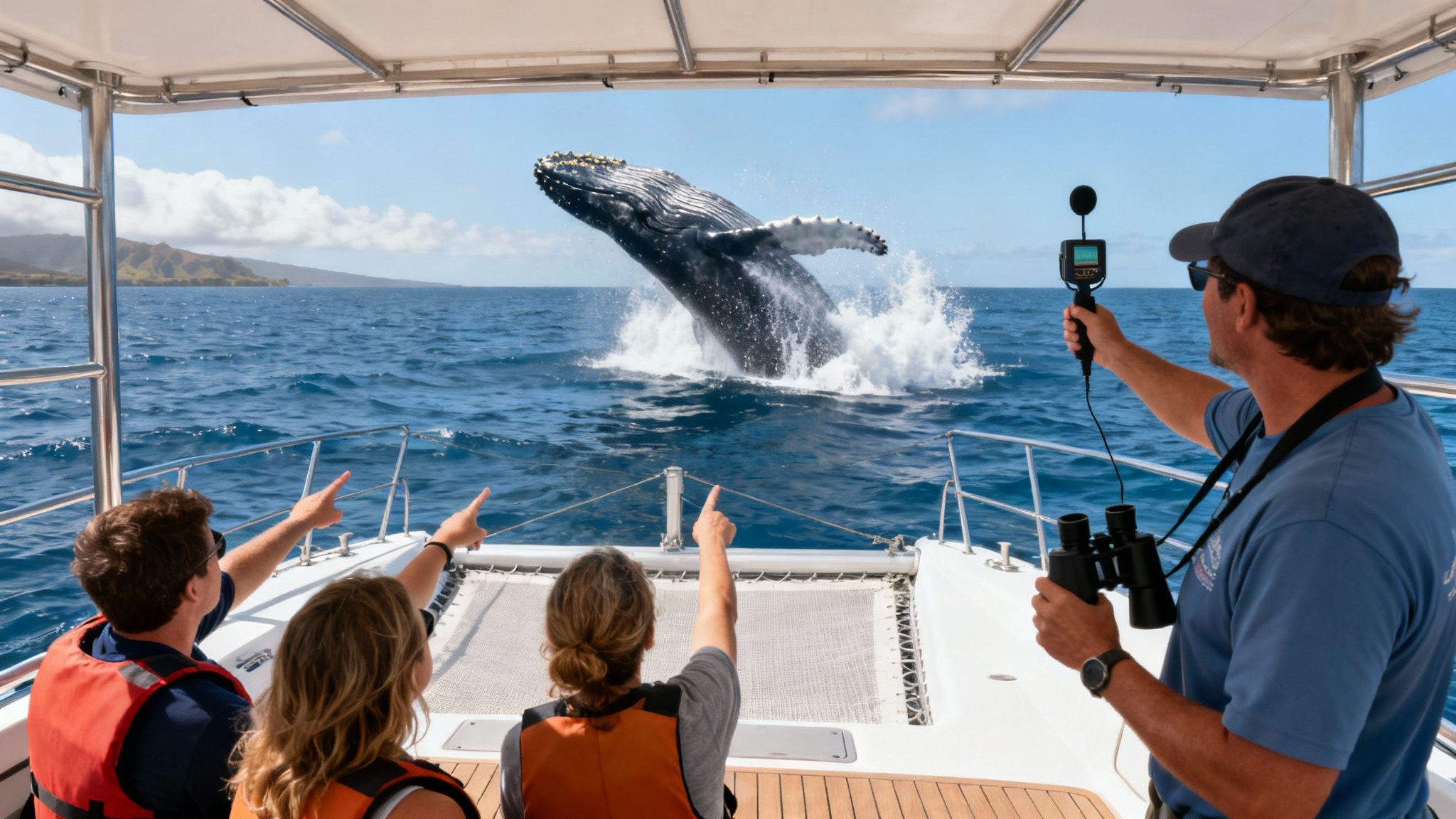
There's a special feeling as you pull away from the Kona coast, a sense of pure anticipation. The air on the water is different—cleaner, saltier, and just buzzing with possibility. Everyone’s eyes are glued to that deep blue horizon, scanning for the first sign.
Then, you hear it. A crew member shouts and points. You see a misty puff of vapor hang in the air for just a moment. That's the first spout, and it's the real start of your adventure.
As the boat slows its approach, the sheer scale of these animals becomes real. You can look at all the pictures you want, but nothing—and I mean nothing—prepares you for seeing a 40-foot, 40-ton humpback launch its entire body out of the water. That raw power and surprising grace is a moment you’ll carry with you long after you're back on shore.
Decoding Incredible Whale Behaviors
One of the coolest parts of any whale watch is learning to understand what you're actually seeing. Every splash and movement is a form of communication or just pure instinct. Knowing what to look for makes the experience so much richer.
Here are a few of the incredible behaviors you might get to see:
- Breach: This is the one everyone hopes for—the iconic full-body leap. Scientists think it could be a way to talk to other whales far away, shake off annoying parasites, or maybe, just maybe, it's an expression of pure joy.
- Pectoral Fin Slap: You might see a whale roll onto its side and just repeatedly slap one of its long fins on the water. That percussive sound is another form of communication, and you often see it when whales are socializing.
- Tail Slap (Lobstering): Seeing a whale lift its massive tail fluke high out of the water and slam it down is a show of incredible force. The sound can travel for miles underwater, sending a powerful message to other whales nearby.
- Spy-Hop: A truly magical moment. A curious whale pokes its head straight out of the water to get a look around. It feels personal, like the whale is just as interested in you as you are in them.
For many people, the most moving experience is hearing the complex songs of the male humpbacks. On a calm day, the captain might drop a hydrophone into the water. Listening to those otherworldly melodies echo up from the depths is the live soundtrack to your adventure.
The Importance of Responsible Wildlife Viewing
Witnessing these majestic creatures comes with a huge responsibility to protect them. Humpbacks travel thousands of miles to Hawaiʻi to mate and raise their calves in what should be a safe nursery. Any disturbance can cause major stress, especially for a new mom trying to nurse and protect her baby.
To keep them safe, there are strict federal and state regulations we all have to follow.
Maintaining a Respectful Distance
Here's the most critical rule: no vessel of any kind—not a tour boat, kayak, or paddleboard—can get within 100 yards of a humpback whale. This creates a vital buffer zone, a "personal space" that lets the whales go about their business without feeling threatened. Honoring this space is everything.
Professional tour operators live by these rules. An experienced crew knows how to position the boat for amazing views and photos without ever crossing that crucial 100-yard line. They put the whales' well-being first, often cutting the engines to create a quiet, non-threatening environment. When you choose a tour with a strong conservation ethic, you’re directly helping protect these magnificent animals for generations to come.
Common Questions About Whale Watching Tours
Jumping on a whale watching tour is an incredible experience, but it’s totally normal to have a few questions before you head out on the water. We’ve been there. To help you feel completely ready for the adventure, we’ve put together answers to the questions we hear the most about whale watching tours hawaii big island.
Getting these details sorted out will let you book your trip with confidence and just get excited for what’s to come.
What Is the Best Time of Day for a Tour?
Morning tours tend to be the most popular, and for good reason. The ocean is usually at its calmest first thing in the day, with less wind and that beautiful, glassy water. It makes for a smoother ride and, honestly, makes it a lot easier to spot those tell-tale whale spouts in the distance.
But don't count out the afternoons. Afternoon trips have a magic of their own. The light is often amazing for photos as the sun starts to dip, casting that classic golden Hawaiian glow on the water. Whales are active all day long, so your chances for a fantastic sighting are great no matter which trip you choose.
Are Whale Sightings Guaranteed?
This is the big one, and the honest answer is no. Since humpback whales are wild animals living their lives on their own terms, no one can ever guarantee a sighting with 100% certainty. We're just respectful visitors in their massive ocean home.
That said, your chances during peak season (January through March) are sky-high. Our captains have spent years on these waters, they know the whales' favorite hangouts, and they're experts at reading the ocean's subtle clues. This hugely boosts the odds of an unforgettable encounter.
Remember, every single tour is a unique trip into a wild habitat. While the humpbacks are the main event, you might also get treated to pods of dolphins, pilot whales, or sea turtles. Every trip is special.
What Should I Wear and Bring on the Boat?
Layers are your best friend out here. Even on a warm, sunny Kona day, the breeze coming off the open ocean can feel surprisingly cool once you're moving. We always suggest bringing a light jacket or a windbreaker just in case.
Here are a few other must-haves for your bag:
- Polarized Sunglasses: These are a game-changer. They cut the glare right off the water, letting you see beneath the surface and spot whales way more easily.
- Reef-Safe Sunscreen: Protect your skin while helping us protect Hawaii's fragile coral reefs. It’s a win-win.
- A Hat and Camera: A hat with a strap is a smart move so it doesn't go flying. And of course, you'll want your camera! Just don't forget to put it down once in a while and just soak in the moment.
- Binoculars: They aren't essential, but they can be awesome for getting a closer look at whales that are further off.
What If I Am Prone to Seasickness?
If you know you're prone to motion sickness, it's smart to plan ahead. Choosing a larger, more stable boat like a catamaran can make a world of difference. You might also want to take an over-the-counter motion sickness remedy before the tour—just follow the directions on the package.
Picking a morning tour when the seas are typically calmer can also be a big help. A lot of people find that staying on deck, getting fresh air, and keeping their eyes on the horizon does the trick. For even more tips, you can find answers to frequently asked questions right here on our site.
Ready to see the magic for yourself? Join Kona Snorkel Trips for an adventure that will stick with you for a lifetime. Our small-group tours offer an intimate, respectful way to experience the pure majesty of Hawaii's humpback whales.