
A Guide to Whale Watching Tours Big Island Hawaii
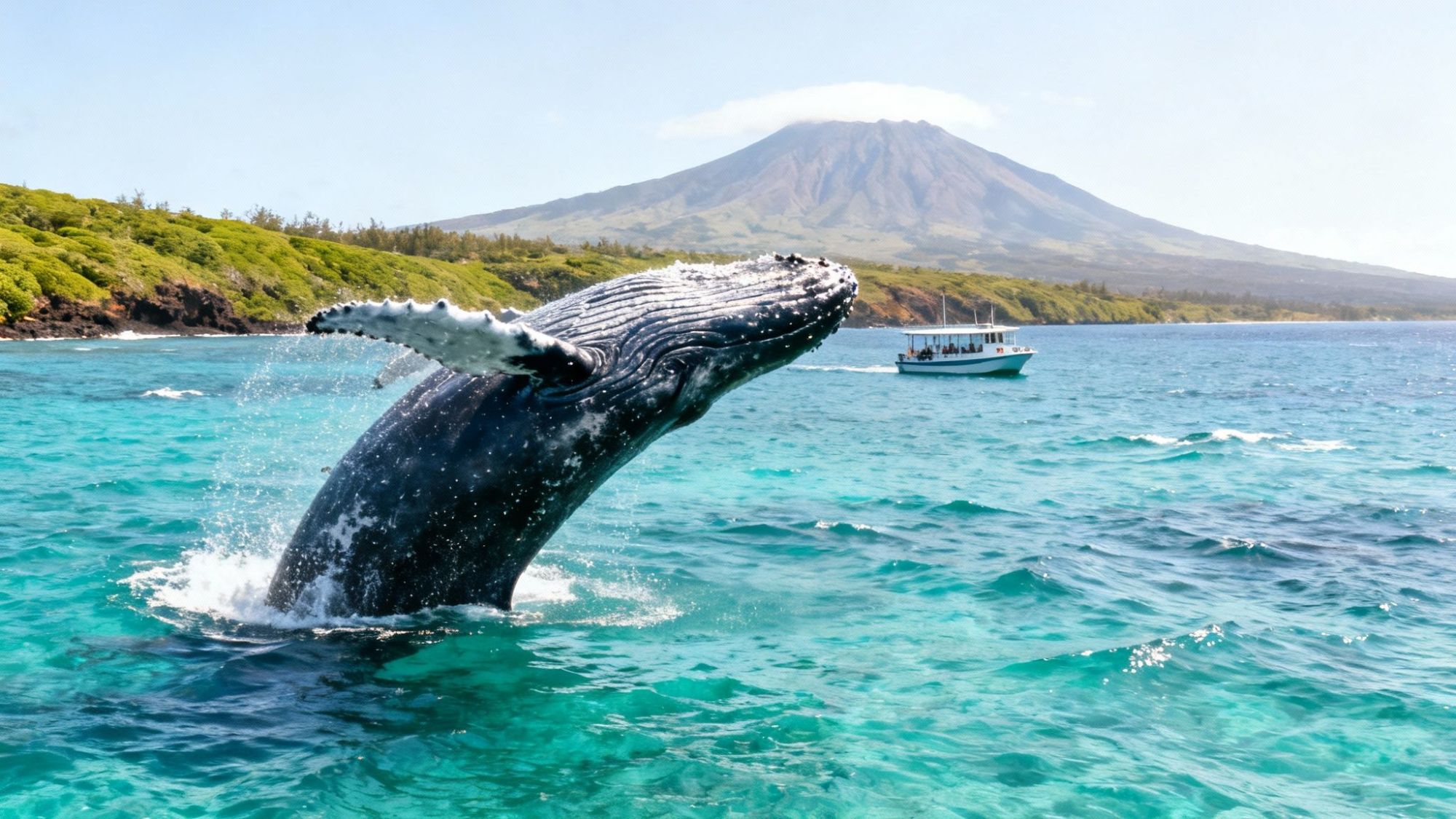
Picture this: the calm, turquoise Pacific suddenly explodes as a 40-ton humpback whale launches itself into the air, hanging for a breathtaking moment between sea and sky. That's the kind of pure magic that happens every day during whale season here on the Big Island, and a world-class whale watching tour is your ticket to seeing it up close.
We’ve put together this guide to walk you through everything you need to know to plan that perfect trip, from the absolute best time of year to spot them to picking the right boat for your adventure.
Your Ultimate Guide to Big Island Whale Watching
Welcome aboard! The Big Island isn't just a postcard-perfect paradise; it's the main stage for one of nature's most incredible shows. Every year, thousands of humpback whales make the epic 3,000-mile journey from the frigid waters of Alaska to the warm, sheltered channels right here in Hawaii. They come for one reason: to breed, give birth, and raise their newborn calves in safety.
Think of us, Kona Snorkel Trips, as your local expert on the water. As Hawaii's top-rated and most-reviewed snorkel company, we live and breathe this stuff. The real-time reviews from fellow ocean lovers will show you why we're the go-to crew for any marine adventure.
What You Will Discover
We're going to cover it all—from pinpointing the peak season for the most action to decoding what it all means when you see it. Once you know the difference between a powerful breach and a playful tail slap, your appreciation for these animals will go through the roof.
Here’s a taste of what you’ll learn:
- The can't-miss months for guaranteed whale sightings.
- How to read the whales' body language and understand their behaviors.
- Insider tips for picking the perfect tour that fits your group's vibe.
- How to double up and combine your whale watch with another amazing ocean adventure.
This isn't just about getting on a boat. It's about connecting with some of the most magnificent creatures on the planet in their own backyard. A little planning goes a long way in making sure you can soak in every single second when that moment arrives.
The Big Island itself is a place of incredible contrasts, from the raw, volcanic power of Hawaiʻi Volcanoes National Park to the lush green coastlines. If you're looking to round out your itinerary with some land-based fun, this guide to Hilo is a great resource for planning activities before or after you hit the water with us. Get ready to make some memories you won’t soon forget.
Timing Your Trip for Peak Whale Season
If you want to plan an unforgettable whale watching tour on the Big Island, you have to get in tune with the ocean's natural rhythm. The stars of our show are the North Pacific humpback whales, or koholā as they're known here. These incredible animals make a massive annual migration, traveling thousands of miles from their feeding grounds up in Alaska to the warm, protected waters of Hawaii.
This isn't just a vacation for them; it's a crucial part of their life cycle. The shallow, warm, and crystal-clear waters around the Big Island are the perfect nursery for them to breed, give birth, and care for their newborn calves, far from the predators and cold seas of the north.
The Official Big Island Whale Season
The official whale watching season here runs from mid-December through mid-May. This is the window when humpbacks arrive in huge numbers, making sightings on any given tour almost a sure thing. But just like any season, there's definitely a peak when the action on the water is at its most spectacular.
This whole industry is built around that massive seasonal influx. Scientists estimate that more than 10,000–12,000 North Pacific humpback whales use Hawaiian waters each winter. This concentration leads to the highest sighting rates from January through March, which is when whale counts and surveys hit their most impressive numbers day after day.
Pinpointing the Prime Viewing Window
For anyone hoping to witness those truly awe-inspiring behaviors—breaching, tail slapping, and spy-hopping—the prime viewing window is without a doubt from January to March. During these months, the whale population in Hawaiian waters is at its absolute highest.
Think of it as a massive family reunion. In January, the numbers are just building as more whales arrive daily. By February, the party is in full swing. This is often considered the true peak, with thousands of whales, including new mothers with their curious and playful calves, filling the channels between the islands. March keeps that energy going as the whales start gearing up for the long swim back north.
For a deeper dive into what makes this time of year so special, check out our detailed guide on the best time to see whales in Hawaii.
What About the Shoulder Seasons?
If your travel plans fall just outside that peak window, don't worry. The "shoulder seasons"—late December and April through mid-May—still offer fantastic opportunities for whale watching.
- Late December to Early January: This is the beginning of the season. While the overall numbers are lower than in February, the whales you do see are often incredibly active. It's a great time to witness competitive males vying for the attention of females.
- April to Mid-May: This marks the tail end of the season. You're more likely to spot mothers with their growing calves, letting them build up strength for the long journey back to Alaska. It's a really touching and beautiful sight to see.
By understanding this natural calendar, you can time your whale watching tour on the Big Island for maximum awe. Planning your trip during the peak months of January to March gives you the highest probability of seeing the dense concentrations and dynamic behaviors that make Hawaiian whale watching a truly world-class experience.
Big Island Whale Watching Calendar
To help you visualize the whole season, here's a simple breakdown of what to expect month by month.
| Months | Whale Activity Level | Typical Sightings |
|---|---|---|
| Late December | Increasing | Early arrivals, primarily adult males and females. Competitive behaviors begin. |
| January | High | Large groups forming. First calves of the season are often spotted. |
| February | Peak Activity | The highest concentration of whales. Frequent sightings of mothers with newborns. |
| March | Very High | Still peak numbers, with lots of surface activity as whales prepare to migrate. |
| April | Decreasing | Mothers and calves are common, often seen resting and nursing before their journey. |
| Mid-May | Winding Down | Last sightings of the season as the final groups of whales depart for Alaska. |
Ultimately, whether you come at the very beginning, the absolute peak, or as the last few whales are saying their goodbyes, seeing these giants in their natural habitat is an experience you won't soon forget.
Decoding the Language of Humpback Whales
A whale watching tour on the Big Island is so much more than just a sightseeing trip. It’s a chance to see a complex and beautiful language spoken through some truly breathtaking behaviors. When you see a 40-ton humpback launch itself from the water, you're not just seeing a cool trick—you're getting a peek into their rich social world.
Understanding what these actions mean turns your tour from just watching into an immersive wildlife experience. When you can decode their behaviors, you gain a whole new appreciation for the intelligence and majesty of these gentle giants. Think of this as your field guide to what you’ll see out on the water.
The Iconic Breach
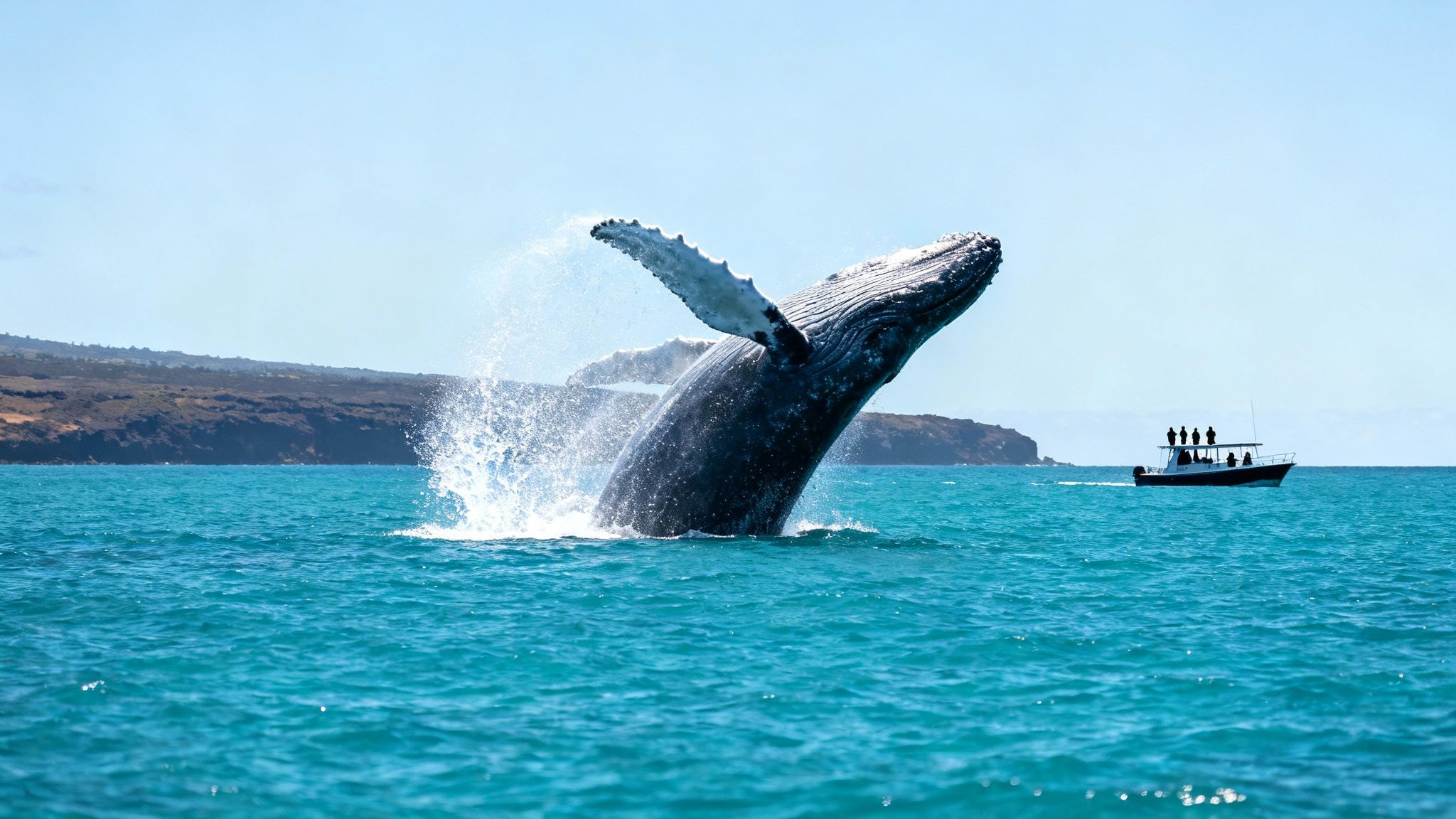
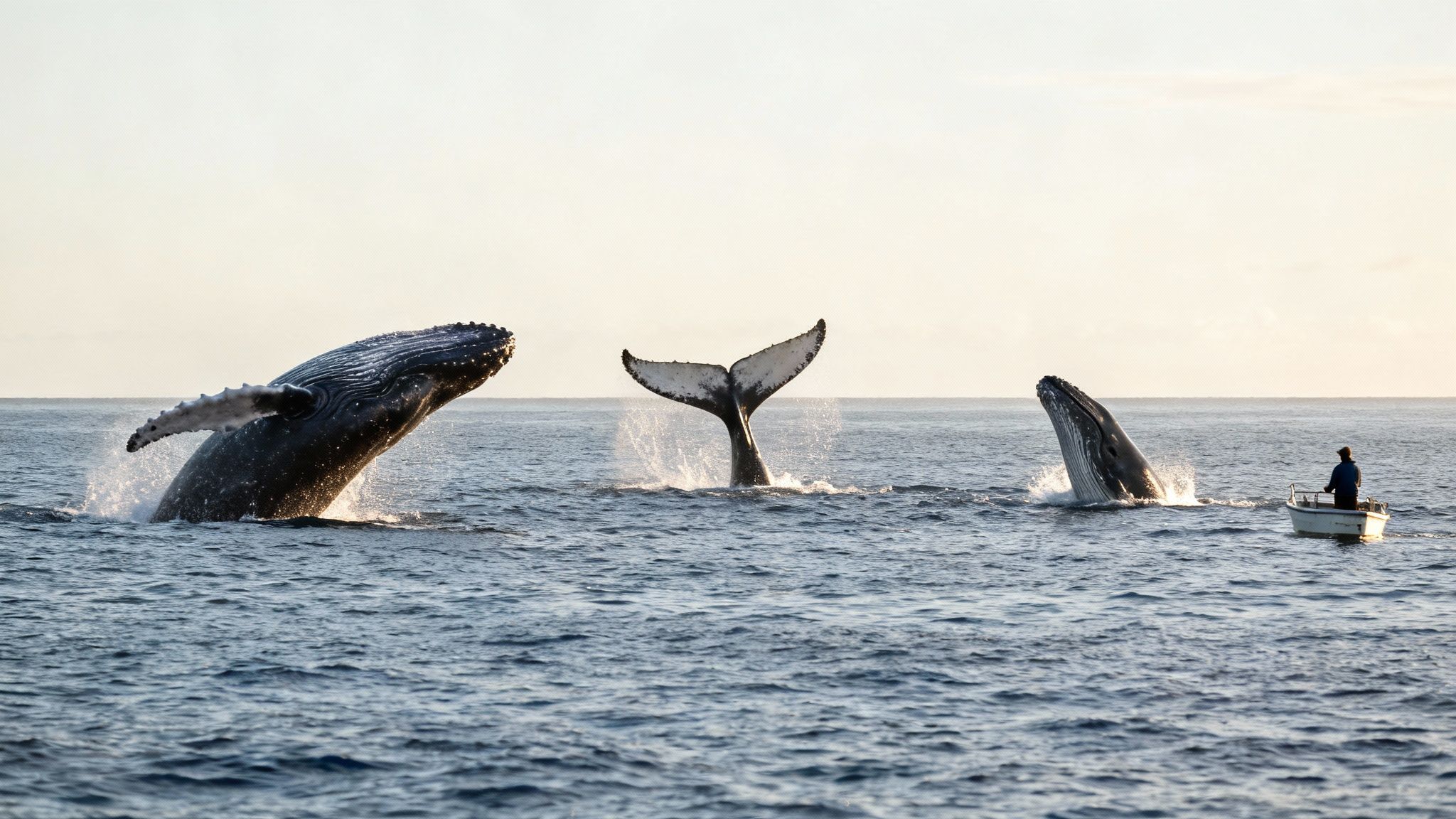
The breach is the showstopper, plain and simple. It’s what everyone hopes to see. This is when a humpback whale propels its massive body almost entirely out of the water before crashing back down with a colossal splash. It’s just an awesome display of pure power.
So, why do they do it? The truth is, scientists have a few different theories, and the reason probably changes depending on the situation.
- Communication: Imagine the sound of a 40-ton body hitting the water. That sound travels for miles underwater. It’s a great way for whales to announce their presence to others far away.
- Play: Younger whales, in particular, are often seen breaching over and over. Just like kids running around a playground, it might just be for the sheer fun of it.
- Cleaning: Launching out of the water could be a clever way for whales to shake loose barnacles and other parasites that hitch a ride on their skin.
- Dominance: During breeding season, a powerful breach can be a male's way of showing off his strength and fitness to impress females or intimidate rivals.
When you witness a breach on your whale watching tour on the Big Island, you’re seeing one of the most dynamic behaviors in the entire animal kingdom. It never gets old.
Translating Other Surface Behaviors
While the breach gets all the glory, humpbacks have a whole vocabulary of other actions you’re likely to see. Each one tells a different part of their story.
Humpback whales are incredibly social creatures. Each slap, splash, and spout is part of a complex conversation happening right before your eyes. Learning to recognize these behaviors is like learning a few phrases in a new language.
Here are some of the most common moves you’ll encounter:
-
Tail Slap (Lobtailing): This is when a whale lifts its massive tail fluke out of the water and smacks it forcefully against the surface. It creates a loud, sharp crack that can be a warning to other whales, a sign of agitation, or another form of long-distance communication.
-
Pectoral Fin Slap: Humpbacks have the longest pectoral fins (their side flippers) of any whale, reaching up to 15 feet! They'll often roll on their side and slap one or both fins on the water, making a surprisingly loud noise that we think is another way they "talk" to each other.
-
Spyhop: This is one of my favorites. A whale will position itself vertically in the water and poke its head straight out, sometimes right up to its eyes. It’s literally taking a look around at what’s happening above the surface—and yes, that includes your tour boat! It’s a sure sign of curiosity.
-
Blow (Spout): The classic! When a humpback exhales at the surface, it shoots a plume of water vapor and air up to 15 feet high. Experienced guides can often spot these blows from miles away, which is how we find the whales in the first place.
How to Choose Your Ideal Whale Watching Tour
With so many amazing whale watching tours Big Island Hawaii has to offer, picking the right one can feel like a major decision. And it is! The right tour can be the difference between just seeing whales and truly connecting with these incredible animals. It really all comes down to your personal style, who you're traveling with, and what you're hoping to get out of your day on the water.
This guide will walk you through the different kinds of boats you'll see out there and give you a checklist of exactly what to ask before you book. Think of it as your roadmap to finding an adventure that’s a perfect match for you.
Finding the Right Vessel for Your Voyage
The type of boat you're on completely shapes your whale watching experience. Each one offers a different vibe, comfort level, and sense of adventure. There’s no single “best” option—just the one that’s best for you.
-
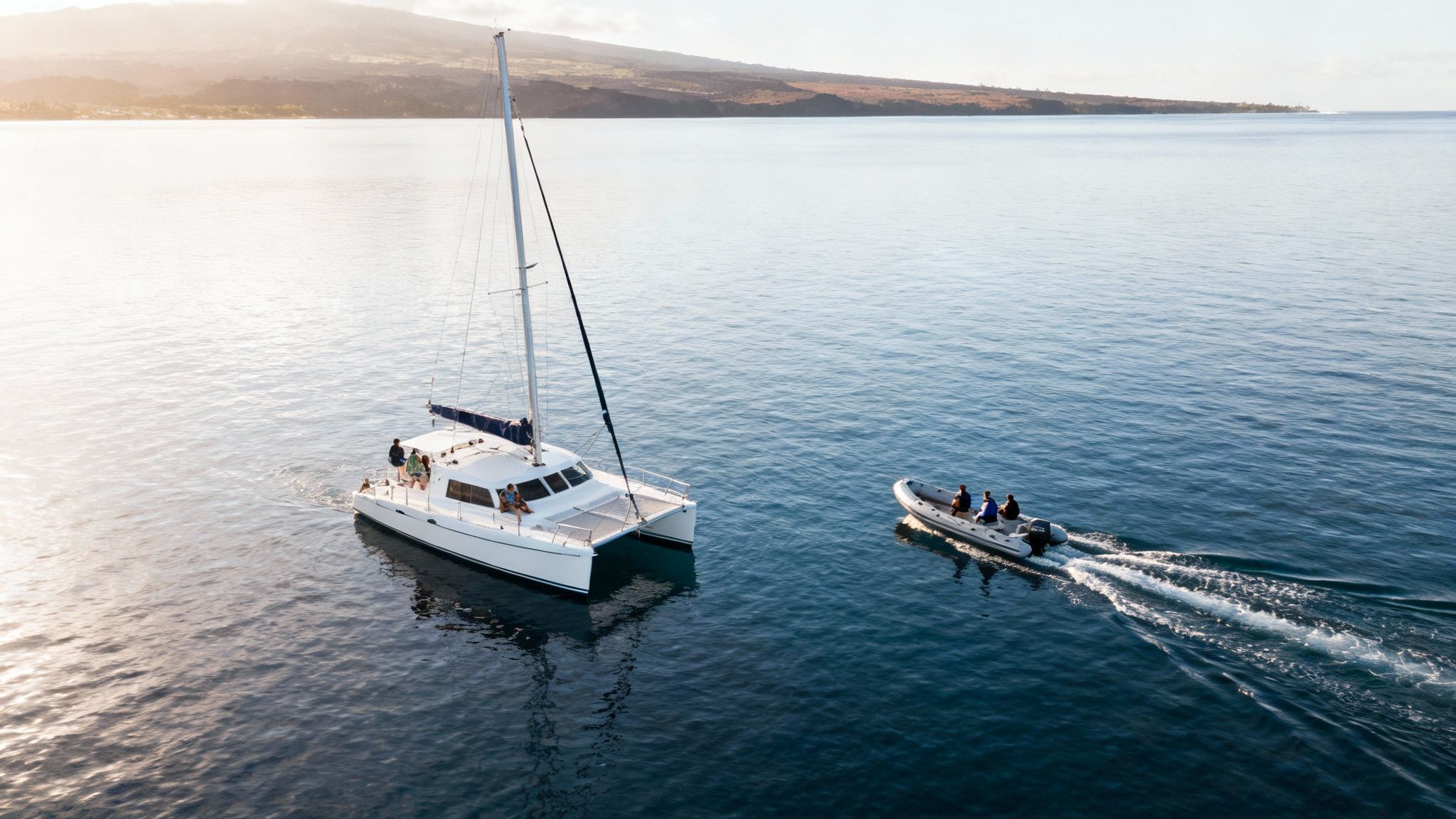
Large Catamarans: These are the floating living rooms of the sea. Their super stable dual-hull design is a lifesaver for families with little ones or anyone who gets a bit queasy. They usually come with perks like shaded seating, bathrooms, and snacks, making comfort the top priority for a chill day on the ocean.
-
Smaller Powerboats and Rafts (Zodiacs): If you’re craving a more up-close-and-personal thrill, these are your jam. Being lower to the water gives you a stunning, eye-level view of the whales. Their speed means the captain can zip over to a new sighting in a flash, but be prepared for a bumpier, wetter ride—that’s all part of the fun!
The main thing is to match the boat to your crew's needs. A stable catamaran is a smooth, comfortable ride for all ages, while a zippy Zodiac puts adventurous souls right in the front row of the action.
Essential Questions for Any Tour Operator
Before you hand over your credit card, doing a little homework pays off big time. Asking a few key questions helps you understand exactly what you’re signing up for and lets you know you’re booking with a solid, reputable company. A great operator will be happy to answer every single one.
Here’s a quick checklist of what to ask:
- What is your sighting success rate during peak season? No one can ever guarantee wildlife, but experienced crews on the Big Island often have success rates above 95% from January through March.
- Do you have a "no-whale" guarantee? Many of the best companies will offer a free return trip if no whales (or sometimes dolphins) are spotted. It shows they’re confident in their ability to find the action and it's a great, customer-friendly policy.
- Is there a naturalist or marine biologist on board? Having an expert guide on the boat turns a simple ride into a real learning experience. They can share incredible insights into whale behavior, biology, and what’s happening in the local marine world.
- How long is the tour, and how much of that is actual whale watching time? Get a clear idea of the total trip duration versus the time spent in prime whale territory. Travel time to and from the harbor can eat into your adventure, so it's good to know upfront.
The boom in whale watching tours Big Island Hawaii is all thanks to the annual humpback migration. The data gathered from shoreline counts actually helps operators plan their schedules. To give you an idea, a single day of coordinated counts in January 2025 tallied 493 humpback whale sightings just off the Big Island. These volunteer-led counts happen several times a season and provide a fantastic snapshot of whale activity. You can learn more about how these fascinating counts are organized over at Lost on Lānaʻi.
Prioritizing Ethical and Eco-Conscious Tours
Choosing a tour isn't just about what you'll get out of it; it's also about protecting the magnificent animals you've come all this way to see. Responsible whale watching is absolutely critical for the long-term health and safety of Hawaii's humpback population.
Always go with an operator that’s clearly committed to ethical viewing practices. This means they stick to the federal regulations like glue, which require staying at least 100 yards away from humpback whales. While whales are naturally curious and might approach a boat on their own, a responsible captain will never chase them down or do anything to disturb them.
By picking an eco-conscious company, you’re doing your part to make sure this incredible natural wonder is preserved for many more generations to enjoy.
Combining Whale Watching With Snorkeling Adventures
Why pick just one? On the Big Island, you can experience the best of both worlds—the giants of the deep and the dazzling world just below the waves. Combining a whale watching tour in Big Island Hawaii with a top-notch snorkeling trip is the ultimate marine safari, giving you a full-spectrum look at Hawaii's incredible ocean life.
It's a way to double down on unforgettable wildlife encounters. You get to feel the awe-inspiring power of a humpback whale and then, just a little later, dive into the calm, colorful chaos of a coral reef. All in a single day. It’s the best way to make every moment on the water count.
From Whales to Reefs: The Perfect Day
Picture this: your morning is spent watching majestic humpbacks launch themselves out of the water against the Kona coastline. The energy on the boat is electric. Later, as the day warms up, you trade the deep blue for the protected, crystal-clear waters of a calm bay to explore an entirely different—but just as mesmerizing—world.
That’s the magic of a combo day. You get the thrill of searching for the ocean's giants followed by a peaceful immersion into a thriving underwater city. Here at Kona Snorkel Trips, we specialize in crafting these seamless ocean adventures, guiding you from one mind-blowing encounter to the next.
Combining these two activities is like visiting two different national parks in one day. One is a vast, open-range savanna where giants roam, and the other is a dense, vibrant rainforest teeming with millions of smaller, colorful inhabitants.
The Captain Cook Snorkeling Experience
Ask anyone about legendary snorkel spots in Hawaii, and they'll mention Kealakekua Bay, home to the Captain Cook Monument. This place is a protected marine life conservation district, which is a fancy way of saying its reefs are unbelievably healthy and packed with huge schools of tropical fish. The water clarity is often unreal, with visibility stretching up to 100 feet.
After a morning of whale watching, heading over to Kealakekua Bay is the perfect second act. You can spend your afternoon exploring pristine coral gardens, swimming through clouds of yellow tangs and parrotfish, and maybe even spotting the spinner dolphins that love to hang out here.
An Enchanting Manta Ray Night Snorkel
For a truly unforgettable finale, consider adding a night adventure with the gentle giants of the Kona coast—the manta rays. The Manta Ray Night Snorkel is the signature Big Island experience, consistently voted one of the best night dives on the planet. After your day of sun, whales, and reefs, you’ll head out at sunset to a special manta viewing site.
You'll float on the surface while powerful lights illuminate the plankton in the water below. This attracts graceful manta rays, some with wingspans over 15 feet, that come to feed. Watching these majestic creatures glide, swoop, and barrel roll just inches from your face is a surreal, humbling experience you'll never forget.
By booking a combo tour, you can perfectly pair a whale watching tour on the Big Island Hawaii with these other iconic adventures. You can learn more about planning your trip in our complete guide to snorkeling tours on the Big Island Hawaii. It's the best strategy to experience everything our incredible ocean has to offer.
Preparing for Your Day on the Water
A little prep work can be the difference between a good day on the water and a truly incredible one. Getting yourself dialed in before you even step on the boat ensures you're comfortable, safe, and ready for whatever the ocean decides to show you. From what to wear to what to pack, we've got you covered.
My best advice? Think in layers and sun protection. The Hawaiian sun doesn't mess around, even on cloudy days. A lightweight long-sleeved shirt, a good hat, and some reef-safe sunscreen are non-negotiable.
What to Wear and Pack for Success
Dressing for a boat tour in Hawaii is all about being smart and practical. Out on the open ocean, the weather can shift in a heartbeat, so versatility is your best friend.
- Layer Up: I usually start with a swimsuit as a base layer, then add a light jacket or windbreaker on top. Those early morning tours can be surprisingly chilly, but it warms up fast once the sun gets higher in the sky.
- Non-Slip Footwear: Boat decks get wet—it's just a fact of life. You'll want shoes with a solid grip. Think boat shoes, sandals with a backstrap, or sneakers you don't mind getting a little splashed.
- Eye Protection: This is a big one. Polarized sunglasses are an absolute game-changer. They slice right through the glare on the water, making it so much easier to spot a distant spout or the dark shape of a whale just below the surface.
Every single whale watch is a wild, unpredictable adventure. Some days, we see graceful spouts way out on the horizon. Other days, we get a breathtaking breach that feels close enough to touch. The key is to manage your expectations and just embrace the magic of not knowing what's coming next.
Beyond what you're wearing, a few key items in your bag can make all the difference. I never leave the dock without a reusable water bottle, a camera with a decent zoom lens (you'll want it!), and a pair of binoculars for getting a closer look.
Check-In, Safety, and Setting Sail
When you arrive, you'll go through a quick check-in and a really important safety briefing. Pay close attention here—the crew will go over the boat's layout, safety gear, and what to do if there's an emergency. This is also when you'll meet your naturalist guide. This person is your expert on the water, a pro at spotting whales and explaining their amazing behaviors.
Our captains are constantly checking the sea conditions and tracking whale activity. They tap into data from community science programs, which have shown that the time of day and the sea state can be great predictors of our chances for an encounter. For example, some local counts have noted peak activity right around 10:00–10:15 a.m., which helps crews map out the most promising routes for the day.
If you're worried about getting seasick, don't sweat it. A little planning can make for a much smoother ride. Check out our guide on how to prevent seasickness for some pro tips.
And finally, while you’re getting your gear ready for the whales, it's always smart to review some essential tips for safe travels and understanding travel insurance—it’s just good practice for any adventure.
Your Whale Watching Questions, Answered
To help you get ready, let's go through some of the questions we hear most often about whale watching tours on the Big Island of Hawaii. Having the right info helps set the stage for an unforgettable day on the water.
What Is the Absolute Best Month for Whale Watching on the Big Island?
While you can see whales from December all the way through May, February is hands-down the peak month. This is when we see the highest concentration of humpbacks, including new mothers with their calves who have settled in for the season. More whales in the water means more action and more breathtaking encounters.
Are Whale Sightings Guaranteed on a Tour?
We are dealing with wild animals in their natural home, so sightings can never be 100% guaranteed. That said, any experienced and reputable crew on the Big Island will have a very high success rate, often over 95%, during the peak season from January to March.
Many of the best tour companies, including us, offer a "whale guarantee." It's our commitment to you: if for some reason the whales are shy and we don't see any on your trip, you can come back out with us again for free.
How Close Can the Boats Get to the Whales?
Federal law is crystal clear on this and exists to protect these incredible animals: all boats must stay at least 100 yards away from humpback whales. This rule is non-negotiable and crucial for their safety.
However, whales are curious creatures. It’s not uncommon for them to decide they want a closer look at us. A good, ethical captain will always cut the engines and let the whales control the interaction. This respectful approach, prioritizing the whale's comfort, often leads to the most magical, up-close sightings you can imagine.
Should I Take a Morning or Afternoon Tour?
Honestly, both morning and afternoon trips offer fantastic opportunities, so it really boils down to your personal preference and the day's conditions.
- Morning Tours: The big advantage here is often calmer seas. The water tends to be glassier with less wind, which is a big plus if you're prone to motion sickness. That smooth surface also makes it easier to spot those distant spouts.
- Afternoon Tours: You can't beat the afternoon light for photography. While the wind can sometimes pick up, the whales are just as active as they are in the morning.
At the end of the day, you can't go wrong with either. The most important thing is simply getting out on the ocean with a great crew during whale season.
Ready to make some memories? Kona Snorkel Trips offers small-group, respectful tours that bring you into the world of Hawaii's humpback whales. Book your adventure today and see the magic for yourself.