
Ultimate Guide to Whale Watching Tours Big Island Hawaii
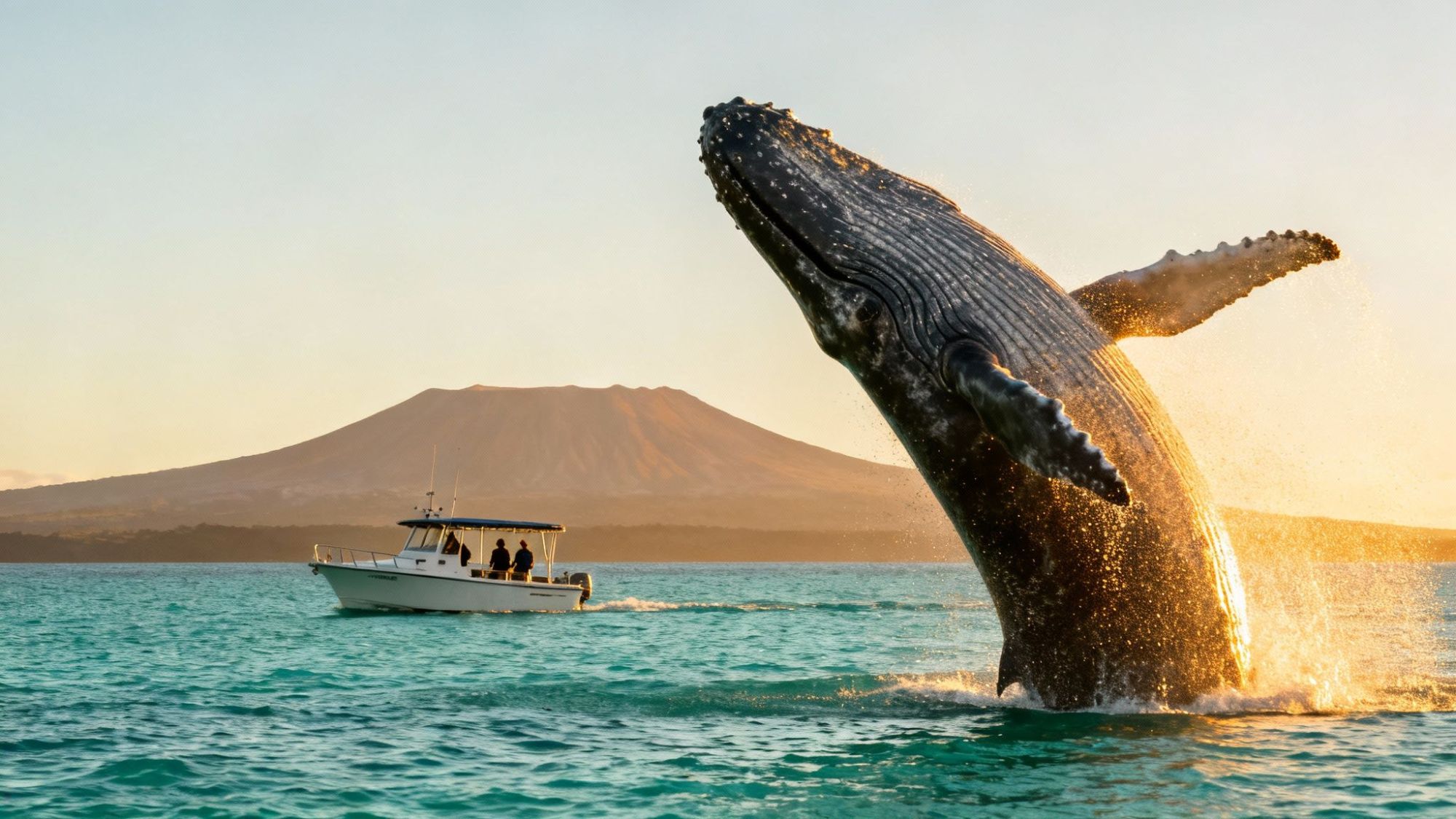
Taking a whale watching tour on the Big Island gives you a front-row seat to one of nature's most incredible migrations. If you want to see humpback whales, the absolute best time to come is from January through March. This is when thousands of these gentle giants crowd into the warm, sheltered waters off the coast to breed, give birth, and care for their new calves. The Kona and Kohala coasts pretty much turn into a breathtaking natural theater.
Your Guide to Big Island Whale Watching
Witnessing the annual humpback whale migration is one of the most awe-inspiring experiences Hawaii has to offer. Every year, these magnificent creatures, known as koholā in Hawaiian, make a truly remarkable journey. They travel nearly 3,000 miles from their frigid feeding grounds in Alaska all the way to the calm, warm sanctuary of our waters—a pilgrimage they make from November through May. You can learn more about this incredible journey in our guide to the humpback whale migration to Hawaii.
This guide is here to help you plan the perfect adventure, covering everything from the best viewing times to how to pick a great tour. As the top-rated and most-reviewed snorkel company in Hawaii, we at Kona Snorkel Trips live for creating unforgettable—and always respectful—wildlife encounters. Just see what thousands of our happy guests have to say:
An Epic Journey to Paradise
So, what is it about Hawaii that draws the humpbacks back year after year? It all comes down to safety and warmth. The waters off the Big Island, especially along the protected Kona and Kohala coasts, are the perfect nursery for them. It’s here that life's most important moments play out:
- Mating Rituals: You'll see males putting on dramatic competitions to attract females, which means spectacular displays of power like breaching and tail slapping.
- Birthing and Nursing: Pregnant females look for protected bays to give birth. The warm water is crucial for newborn calves, who are born with very little body fat, helping them survive and get strong.
- A Safe Haven: The area is mostly free of orcas, the humpbacks' main natural predator, making it a secure place for vulnerable calves to grow.
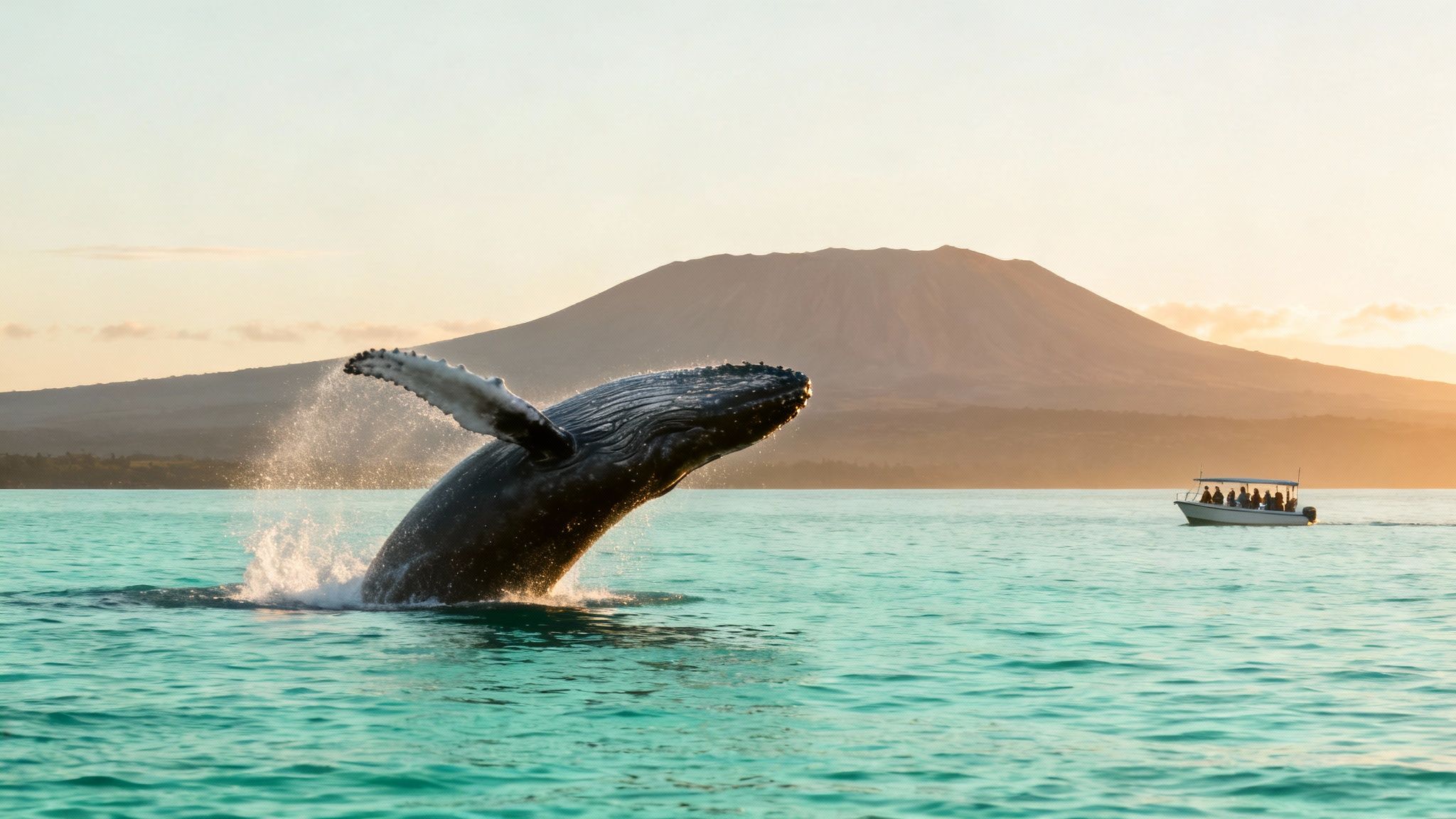
When you join a whale watching tour, you aren't just looking at animals. You're witnessing a vital chapter in their lives. And trust me, the sight of a 40-ton whale launching itself out of the water against a volcanic backdrop is a memory that will stick with you for a lifetime.
Understanding the Big Island Whale Season
If you want to have a truly unforgettable whale watching tour on the Big Island, timing is everything. While these gentle giants grace our waters for several months each year, there's a definite rhythm to their visit. The official season stretches from November through May, but the real magic happens in a much smaller, more intense window.
There's no debate: January to March is the peak season. This is when the highest number of humpback whales pack into the warm, sheltered waters off the Kona and Kohala coasts. So, why this specific time? It all comes down to the whale's ancient life cycle.
The Science Behind the Season
These peak months are all about breeding and giving birth. The ocean absolutely comes alive with some of the most dramatic wildlife displays you'll ever witness. You'll see male humpbacks forming "competitive pods," all vying for a female's attention with incredible shows of raw power.
This is your best chance to see a breathtaking breach, where a 40-ton whale launches its entire body out of the water. You'll also see powerful tail slaps and pectoral fin slaps—their way of communicating—which send sounds echoing for miles across the surface. Another amazing sight is the "spy-hop," when a whale pops its head straight up out of the water to get a better look at you.
The sheer density of whales during this period is astonishing. To put it in perspective, volunteer observers during a single day in January 2025 recorded an astounding 2,121 humpback whales around the Hawaiian Islands.
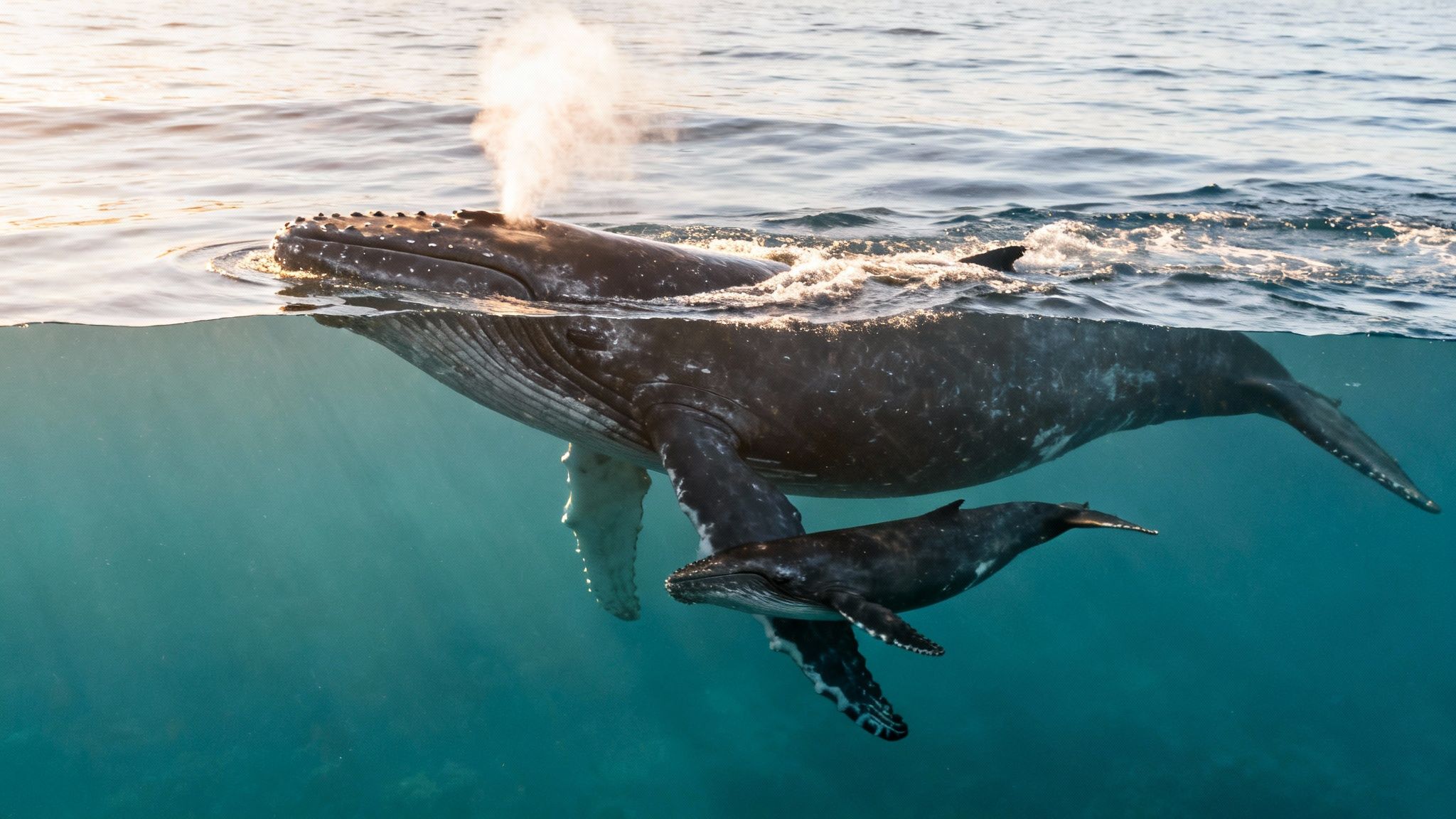
These numbers, tracked through community efforts like the annual Sanctuary Ocean Counts, really underscore why planning your trip for peak season makes such a huge difference. As we get into late February and March, the vibe on the water changes a bit. You'll start to see more moms with their newborn calves, sticking close to the surface while the mothers teach their little ones the ropes before the long swim back to their Alaskan feeding grounds.
A Month-by-Month Activity Guide
Knowing what's happening month-to-month helps you set the right expectations for your tour. Each phase of the season offers a totally unique glimpse into the lives of these incredible animals. For a complete deep-dive, check out our guide to the Big Island whale season in Hawaii.
To give you a quick snapshot, here’s a calendar that breaks down what you can expect throughout the season.
Big Island Whale Watching Season Calendar
| Month | Sighting Probability | Common Whale Behaviors |
|---|---|---|
| October – November | Low | The first few scouts arrive. Sightings are exciting but rare. |
| December | Moderate | Numbers are building. You'll start to see more consistent activity and early mating rituals. |
| January – February | Very High (Peak) | The absolute best time. The water is full of whales, with lots of breaching, tail slapping, and competitive pods. |
| March | High | Still fantastic. This is prime time for spotting mothers with their newborn calves. |
| April – May | Low | The last of the whales, usually moms and calves, begin their journey north. Sightings become less frequent. |
This calendar should help you plan, but remember, these are wild animals on their own schedule. Every single trip out on the water is a unique adventure
Why the Kona and Kohala Coasts Are the Best Spots for Whale Watching
When you're dreaming up the perfect whale watching trip on the Big Island, where you go is just as important as when you go. While you might get lucky and spot humpbacks anywhere around the island, the west side—specifically the Kona and Kohala coasts—is the undisputed heart of the action. This isn't just by chance; it's all thanks to the island's incredible and powerful geography.
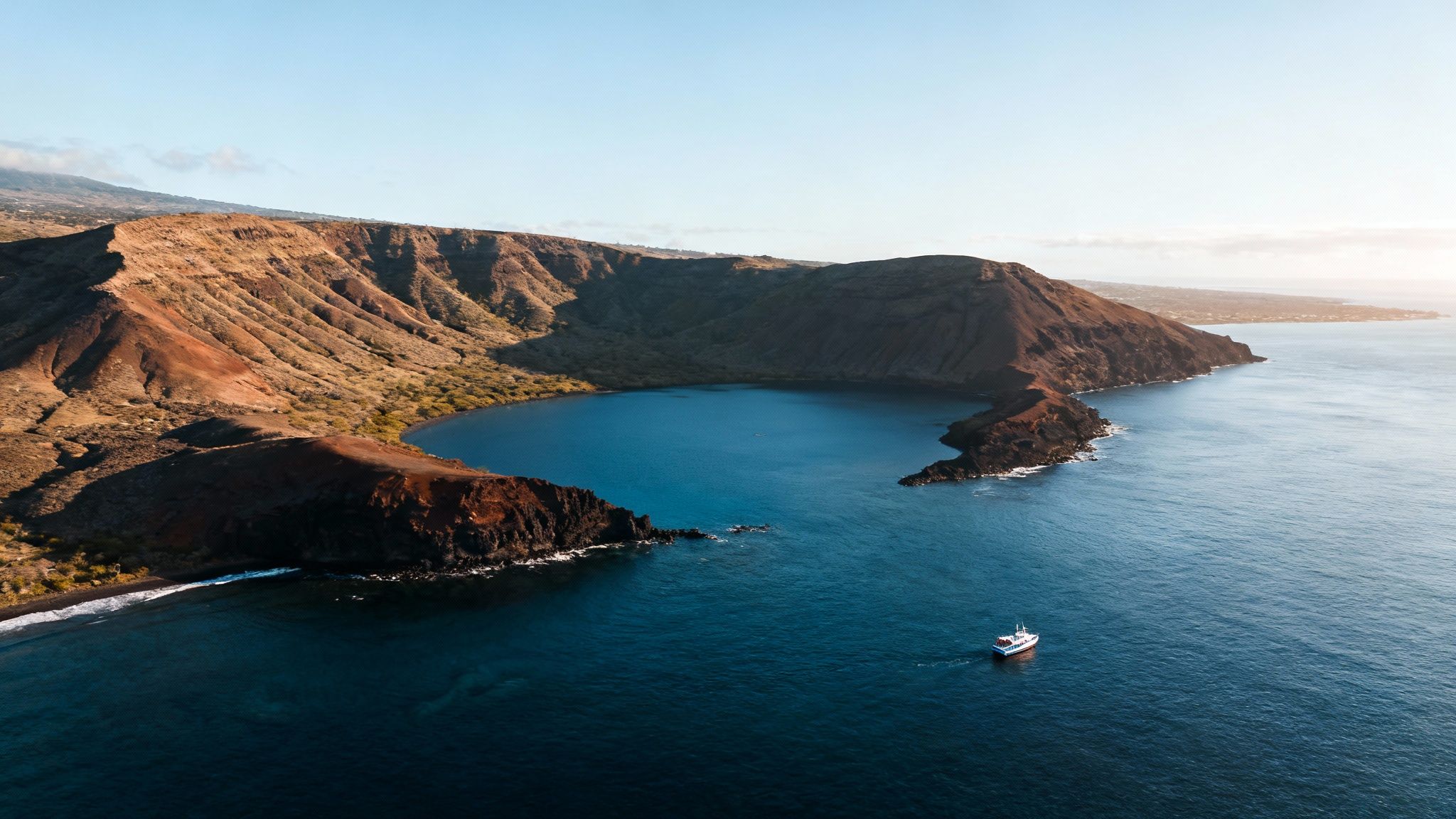
Picture the island’s two colossal volcanoes, Mauna Kea and Mauna Loa, acting as gigantic natural shields. They stand tall against the powerful northeasterly trade winds, creating a huge, calm "wind shadow" all along the leeward (western) coast. This effect leaves the waters off Kona and Kohala remarkably serene and protected, a world away from the choppy, wind-whipped conditions you'll often find over on the Hilo side.
These calm seas are a win-win, creating the ideal environment for both the whales and for us.
A Natural Nursery for Gentle Giants
For a mother humpback whale who has just made a grueling 3,000-mile swim from Alaska and is about to give birth, these tranquil waters are nothing short of a sanctuary. The calm surface makes it much easier for her brand-new calf, which has very little body fat, to come up for air and nurse without having to fight against constant waves.
This protected environment is exactly why the Kona and Kohala coasts become the main nursery for the entire North Pacific humpback population. It's the perfect place for them.
- Sheltered Waters: The lack of strong winds and big swells means less stress for both moms and their babies.
- Deep Coastal Areas: The seafloor here drops off quickly, giving these enormous animals plenty of room to move around comfortably, even close to shore.
- A Safe Place to Learn: The calm conditions give calves a safe space to practice essential whale behaviors, like breaching and tail slapping, with mom right by their side.
This incredible concentration of mothers, calves, and male whales competing for mates makes for a viewing experience that is just electric with activity.
Better Views and a Smoother Ride for You
Of course, all these geographical perks translate directly into a better tour for you. The calmer the water, the smoother and more comfortable the boat ride—a huge plus if you're worried about getting seasick. But even more importantly, that flat, glassy surface makes spotting the whales so much easier.
Think about it: a whale's spout, that first tell-tale puff of mist, stands out like a beacon against a calm surface. In choppy water, it can easily get lost in the spray. This clarity allows our captains to spot whales from much farther away, giving you more time to watch them respectfully.
The data backs this up, too. Aerial surveys consistently show the Kohala coast as the absolute best place for whale sightings, sometimes with two to three times more encounters than other parts of the island. By choosing a tour that leaves from the west side, you're simply putting the odds in your favor for an amazing day on the water.
To dive deeper into what makes this spot so special, check out our detailed guide to Kona whale watching.
How to Choose Your Perfect Whale Watching Tour
Picking the right whale watching tour on the Big Island can be the difference between a good day and an absolutely unforgettable one. With so many boats and companies out there, it helps to know what you're looking for. Think of it like choosing the right hiking trail—some are easy and comfortable, while others are a bit more rugged and wild.
The first big decision you'll make is the type of boat you go out on. This choice really sets the tone for the entire trip, from how comfortable you'll be to how close you feel to the action.
Big Boat vs. Small Boat: What Is the Difference?
The big, stable catamarans are a fantastic choice if comfort is your priority. They almost always have shaded seating, bathrooms right on board, and even snack bars. This makes them a perfect fit for families with kids or anyone who gets a little queasy on the water. The ride is just smoother, and being higher up on the deck gives you a great panoramic view for spotting distant spouts.
Now, if you're looking for a bit more of an adventure, the smaller boats are where it's at. These are often rigid-hulled inflatable boats (RIBs) or Zodiac-style rafts. With way fewer passengers, you get a much more personal experience and an eye-level view that puts you right in the heart of the ocean. It's a faster, bumpier ride for sure, but the thrill of being that close to the water is something you'll never forget.
A truly special feature to look for is an underwater hydrophone. The best tours will have one. Your guide will drop it into the water, and you'll get to hear the haunting, complex songs of the male humpback whales echoing up from the deep. It’s a magical experience that connects you to their world in a way that just seeing them can't.
Key Factors to Consider Before Booking
Once you have a boat style in mind, a few other details will help you nail down the perfect trip for your schedule and expectations.
- Tour Duration: Most tours last somewhere between 2 to 4 hours. The shorter trips are great if you're trying to pack a lot into your day. Longer trips, though, give you more time on the water, which naturally boosts your chances of having those really incredible, long-lasting encounters.
- Departure Times: You'll find tours heading out in both the morning and afternoon. Mornings often have calmer seas and that beautiful, soft light that's perfect for photos. But don't count the afternoons out! The whales are active all day, and afternoon trips can be just as spectacular.
- Group Size: Are you a social butterfly or do you prefer a quieter vibe? The big catamarans might have 50+ people, creating a lively atmosphere. Smaller rafts often keep it to around 15-20 guests, which allows for a more intimate trip and more one-on-one time with your guide.
Questions to Ask Your Tour Operator
Before you hand over your credit card, don't be shy about asking a few pointed questions. A solid, reputable company will have no problem answering these and will appreciate that you care.
- What's your sighting success rate during peak season? Nobody can guarantee a wild animal will show up, but a seasoned operator should confidently tell you they have a very high success rate—often 95% or better—from January through March.
- How experienced are your captain and naturalist guide? This is huge. A great guide does more than just drive the boat; they bring the whole experience to life with fascinating insights into whale behavior, biology, and the local marine ecosystem.
- What is your policy on respectful wildlife viewing? Make sure they confirm their strict adherence to the federal law requiring all vessels to stay 100 yards away from humpback whales. This isn't just about following rules; it's about a deep respect for these incredible animals and protecting them for generations to come.
What to Expect on Your Whale Watching Adventure
The moment you step onto the boat, the feeling is electric. You can taste the salt in the air, and there's a buzz of excitement from everyone on board. It all starts with a quick, friendly check-in, followed by a pre-departure briefing that’s actually really important. This is where the captain goes over safety stuff, but more importantly, shares the latest scoop on where the whales have been spotted recently. It gets you amped up for what’s coming on your whale watching tour on the Big Island of Hawaii.
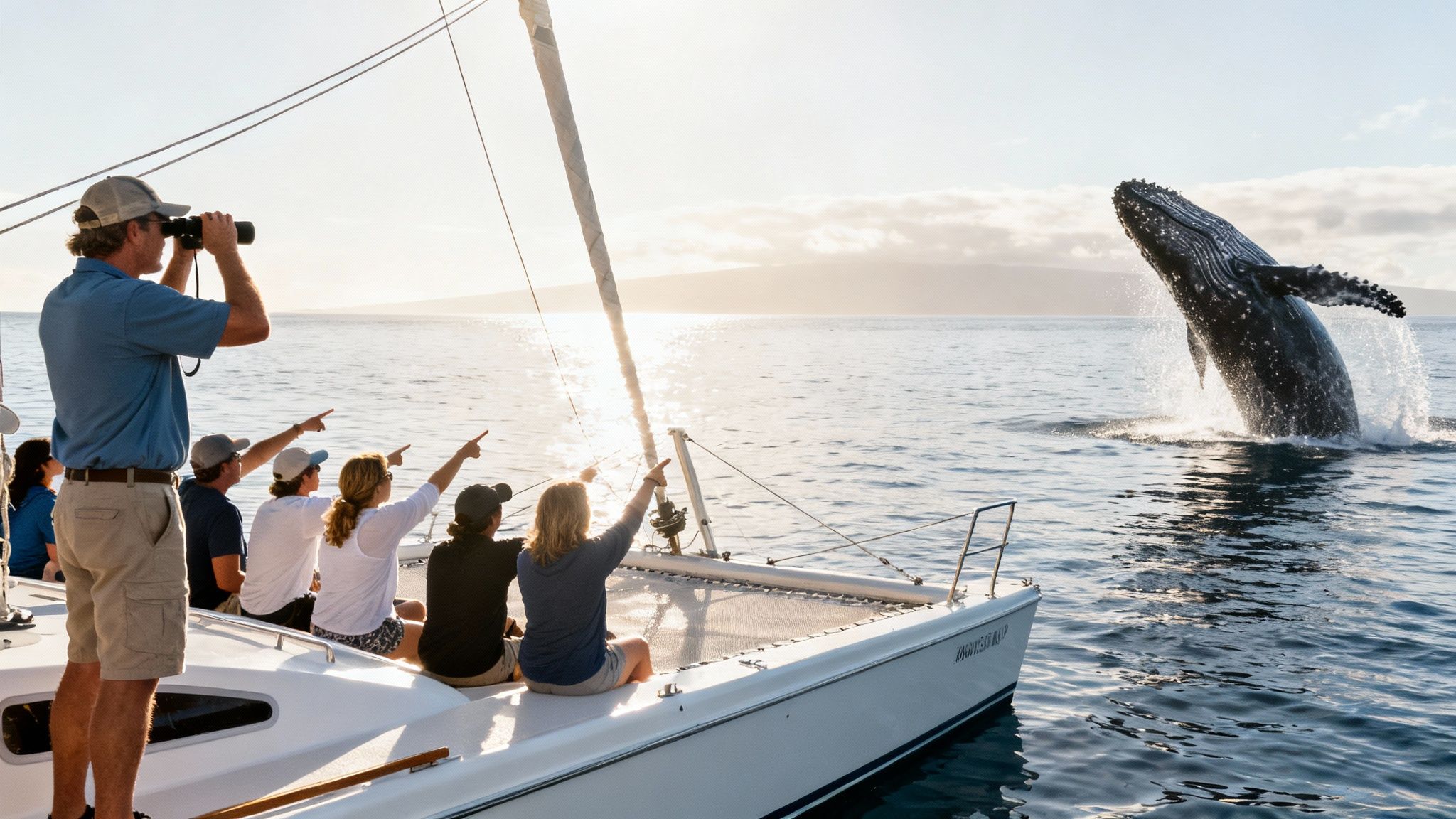
As the boat pulls away from the Kona coast, the real thrill kicks in. Everyone’s eyes are glued to the horizon, scanning the vast blue for that first giveaway. Then, you hear a shout—someone’s spotted it! A misty plume of spray hanging in the air. A spout! The captain skillfully steers the boat closer, always keeping a respectful distance, and suddenly the true size of these gentle giants starts to sink in.
The Unforgettable Sights and Sounds
Honestly, nothing can prepare you for seeing a 40-ton humpback whale launch its entire body out of the water in a massive, jaw-dropping breach. It’s a moment of pure power and grace that feels completely surreal. You don't just hear the crash back into the water; you feel it resonate through the boat.
But the big aerial displays are just part of the show. You might also see some other classic humpback behaviors:
- Powerful Tail Slaps: A loud, echoing crack as a massive tail smacks the water's surface, a clear form of communication.
- Curious Spy-Hops: When a whale pokes its head straight out of the water, almost like it's trying to get a better look at you.
- Socializing Pods: Groups of whales cruising together, sometimes with males putting on a show to compete for a female.
And the whales aren't the only stars. Keep your eyes peeled for playful pods of spinner dolphins racing the boat's wake or the peaceful sight of a Hawaiian green sea turtle (honu) gliding just below the surface. A whale tour is just one of many other amazing water adventures the Big Island has to offer.
A huge part of any good tour is a deep respect for the wildlife. Federal law is crystal clear: boats must stay at least 100 yards away from humpback whales. This isn't just a rule; it's a critical buffer zone that keeps the whales, especially mothers with their new calves, from getting stressed. It lets us witness their natural behavior without causing any harm.
Choosing a company that lives by these rules is everything. It ensures an ethical, sustainable experience and helps protect these incredible animals so they can keep returning to Hawaiian waters for generations.
Essential Packing List for Your Whale Tour
Showing up prepared can be the difference between a good whale watching tour and an absolutely unforgettable one. Packing the right things means you’ll be comfortable, protected from the elements, and ready to capture every incredible moment out on the water.
Think of this less as a strict list of rules and more as your toolkit for an amazing day. After all, the Hawaiian sun is no joke, even with those lovely ocean breezes.
Sun and Sight Essentials
- Reef-Safe Sunscreen: This is non-negotiable. Regular sunscreens have chemicals like oxybenzones that are seriously harmful to Hawaii's fragile coral reefs. Do your skin and our ocean a favor and grab the good stuff.
- Polarized Sunglasses: These are a total game-changer out on the water. They slice right through the blinding surface glare, making it way easier to spot a distant whale spout or the dark shape of a humpback just below the surface.
- Hat with a Strap: A wide-brimmed hat is great for keeping the sun off your face and neck. But that chin strap? It's the real hero. It’ll keep your hat on your head instead of in the Pacific when the boat gets moving.
Comfort and Gear
Beyond just sun protection, a few other items will make your trip much more enjoyable.
- Light Jacket or Windbreaker: It can be a gorgeous, warm Kona day, but once you're out on the open ocean, the wind can have a surprising chill. A light layer is perfect for cutting that breeze and staying cozy.
- Camera with a Zoom Lens: Whales are massive, but federal law requires boats to stay 100 yards away. A zoom lens is your best friend for getting those stunning, detailed photos without disturbing these gentle giants.
- Binoculars: Don't underestimate a good pair of binoculars! They're fantastic for scanning the horizon for activity and getting a much closer look at a breach or a pod of playful dolphins in the distance.
Here's a quick checklist to make packing a breeze:
Your Whale Watching Tour Checklist
| Item | Reason |
|---|---|
| Reef-Safe Sunscreen | Protects your skin and Hawaii's coral reefs. |
| Polarized Sunglasses | Cuts water glare, making it easier to see whales. |
| Hat with a Strap | Provides sun protection and won't fly off in the wind. |
| Light Jacket | Keeps you warm against the surprisingly chilly ocean breeze. |
| Camera with Zoom | Captures detailed photos from a safe distance (100 yards). |
| Binoculars | Great for spotting distant spouts and other marine life. |
| Reusable Water Bottle | Stay hydrated! Most tours offer refills. |
| Seasickness Medication | If you're prone to motion sickness, take it before you board. |
Packing for a day on the water is pretty straightforward once you’ve done it a few times. The key is just being prepared for sun, wind, and incredible sights.
For more ideas on what to bring for any water-based adventure, our guide on what to wear for snorkeling has some great tips that apply here, too. And if you're planning other outdoor fun, this general advice for packing essentials is super helpful for any kind of excursion.
Your Big Island Whale Watching Questions, Answered
Planning your whale watching adventure is exciting, but it's natural to have a few questions pop up. As guides who are out on the water every day, we get asked these all the time. Here are some straight-up answers to help you get everything sorted for the perfect trip.
Is a Morning or Afternoon Tour Better for Seeing Whales?
Honestly, both morning and afternoon trips are fantastic for whale sightings. The whales are active all day long, doing their thing whether it's 9 AM or 2 PM.
The real difference-maker is usually the ocean conditions. Mornings on the Kona coast are famous for being glassy and calm. This makes for a super smooth ride and the lighting is just incredible for photos. If you're someone who prefers a calmer sea, definitely aim for a morning tour.
Ultimately, the best time is the one that fits your schedule. You’re going to have a great shot at seeing whales either way.
Are Whale Sightings Guaranteed on Tours?
We're dealing with wild animals in their natural habitat, so a 100% guarantee is never something you can promise. That said, during the peak season from January to March, your chances of seeing humpbacks are incredibly high—we're talking upwards of 95% on most days.
Any good tour company will have a stellar success rate. Our captains have been doing this for years; they know the whales' favorite hangouts and how to find them. It never hurts to ask about a company's policy, though. Some might offer a voucher for a future trip if you happen to get unlucky, just in case.
How Close Can the Tour Boats Get to the Whales?
This is a big one, and it's all about respecting the animals. Federal law is very clear: all boats must stay at least 100 yards away from humpback whales. This isn't just a rule; it's a critical protection for the whales, especially when they're here for the very important business of mating and raising their calves.
A reputable tour operator will always put the whales' well-being first and respect these regulations. But here's where the magic happens: whales are curious creatures. Sometimes, they decide to check us out, swimming right up to the boat while we're completely stopped. Those are the moments you never forget.
Can I Combine Whale Watching with Snorkeling?
Absolutely! Combination trips are super popular, and for good reason. You get the best of both worlds. It’s important to know you can't actually snorkel with the whales themselves—those federal protection laws are strict.
What a combo trip looks like is this: we'll head to a world-class snorkel spot, like the protected waters of Kealakekua Bay, to explore the vibrant coral reefs and swim with tropical fish. Then, we'll venture out into the deeper blue to find the humpbacks.
If you're really focused on an epic snorkel adventure, you can't go wrong with a dedicated Captain Cook Snorkeling Tour. And for another truly mind-blowing Big Island experience, the Manta Ray Night Snorkel is something you'll be talking about for the rest of your life.