
Whale Watching on the Big Island: Top Tips and Best Spots
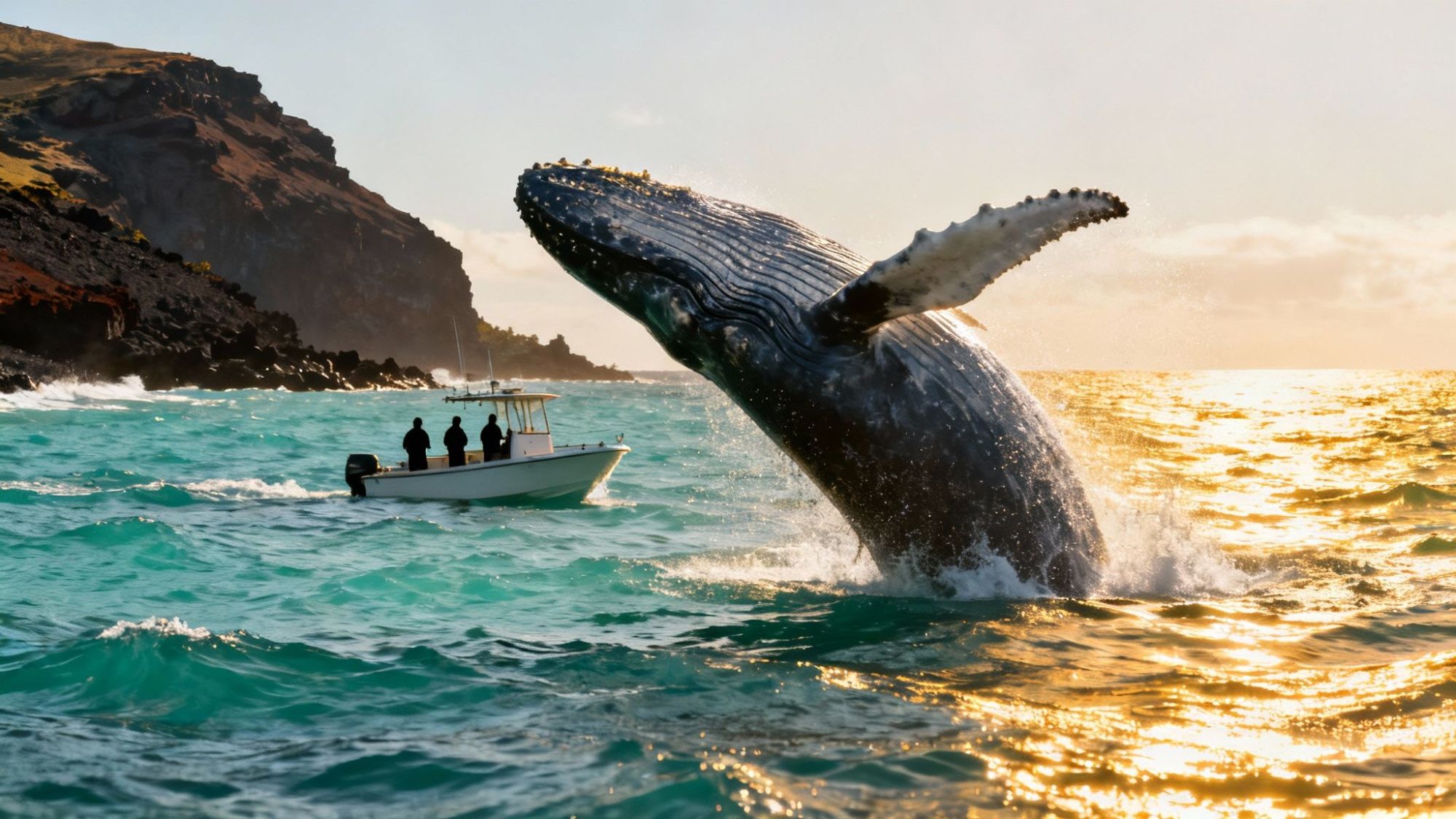
Whale watching on the Big Island delivers some of the most memorable wildlife encounters you can imagine. Every winter, migrating North Pacific humpback whales come to Hawaiian waters, and between January and March you’ll catch them mating, calving, and even breaching right off shore.
Kona Snorkel Trips is the top rated and most reviewed snorkel company in Hawaii offering small-group ocean adventures that combine safety and personalized service.
Whale Watching On The Big Island Essentials
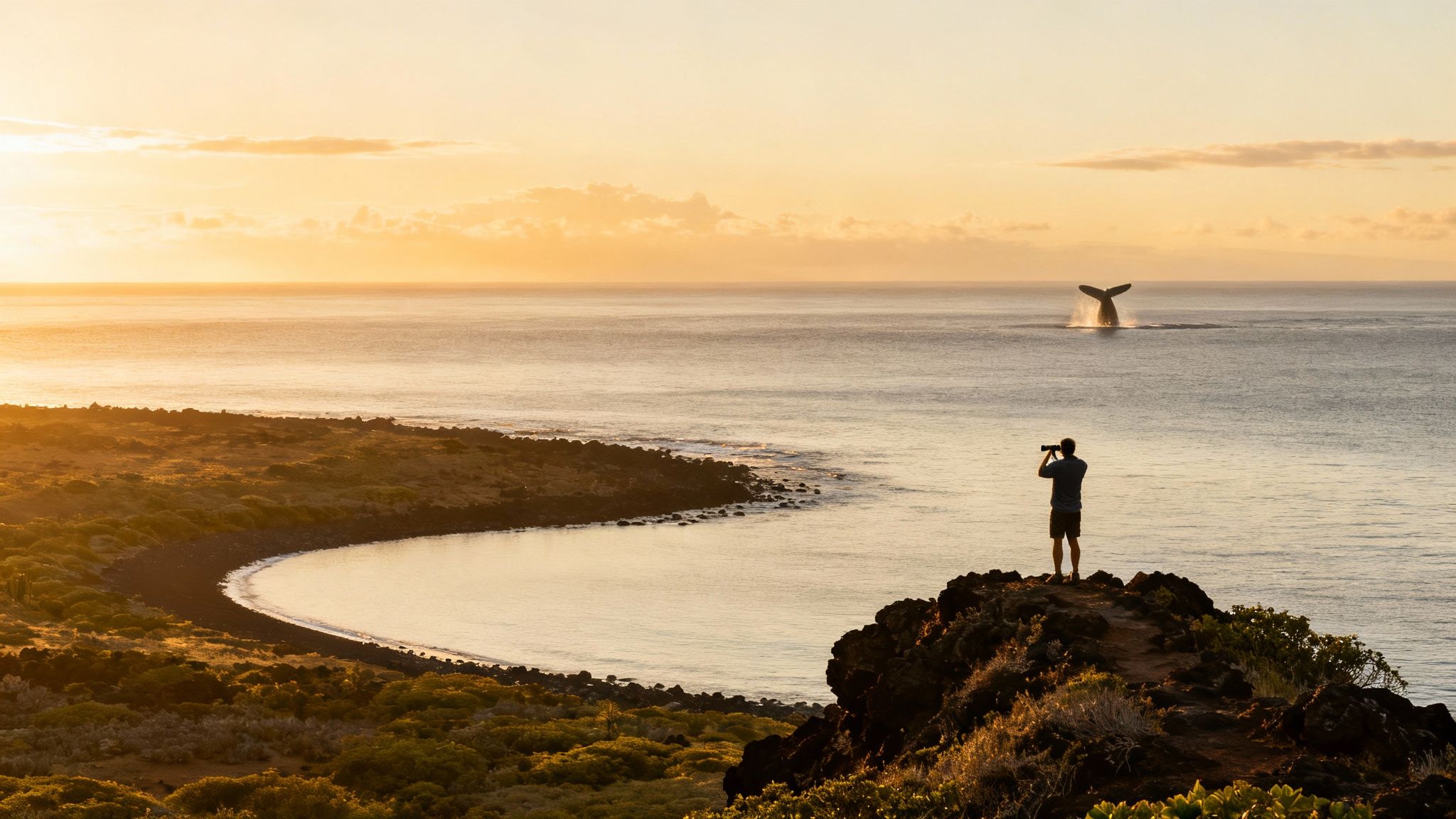
Each winter roughly 12,000 North Pacific humpback whales migrate to Hawaiian waters, making Hawaiʻi home to over half of the entire population. Peak concentrations sweep the islands from January through March, centering the best viewing spots right here on the Big Island. For a deep dive into migration patterns, check out this LiquidHawaii report.
Top Viewing Methods
- Shore Spotting at Kealakekua Bay, Puako, and Hapuna Beach gives you free, cliff-top or beachfront views with minimal gear.
- Boat Excursions depart daily from Kailua-Kona and the Kohala Coast, often featuring glass-bottom sections and knowledgeable guides.
- Snorkel Tours let you slip beneath the surface in small groups led by Kona Snorkel Trips experts for an underwater perspective.
- Seasonal Timing aligns perfectly: January–March brings mating dances, mother-calf pairs, and dramatic breaches.
To help you plan at a glance, here’s a quick reference:
Season Timing and Viewing Opportunities
| Season Window | Expected Whale Activity | Top Locations |
|---|---|---|
| January–March | Mating displays, calving, breaching | Kealakekua Bay, Puako, Kohala Coast, Hapuna Beach |
With this snapshot in hand, you can zero in on the dates and spots that promise the most action.
You might be interested in our guide on whale season on the Big Island.
Key Viewing Bays
Big Island bays often act like natural amphitheaters, amplifying every splash and song the whales share. The shape and depth of each bay determine how close whales drift to shore.
- Case Study: Early mornings at Puako often bring glass-calm seas—and frequent breaching shows just beyond the reef.
“Watching a humpback breach against the sunrise felt like seeing giants perform in their own stadium.”
Picking the right bay—and the right hour—can turn a good whale-watch into an unforgettable spectacle. Later on, we’ll cover behavior clues, gear checklists, and responsible-viewing guidelines to make your experience both thrilling and ethical.
Quick Start Tips
- Pick Peak Dates
Aim for January through March to maximize sighting odds. - Choose Your Method
Shore, boat, or snorkel—each offers its own kind of magic. - Reserve Early
Top tours fill up fast; book weeks in advance to lock in the best guides. - Pack Essentials
Don’t forget polarized sunglasses, reef-safe sunscreen, and binoculars for shore-side spotting.
Starting with these pointers ensures you’ll make the most of your time on the Big Island—and set yourself up for the chapters ahead. Enjoy every whale moment, and remember to watch responsibly!
Understanding Whale Behavior And Species
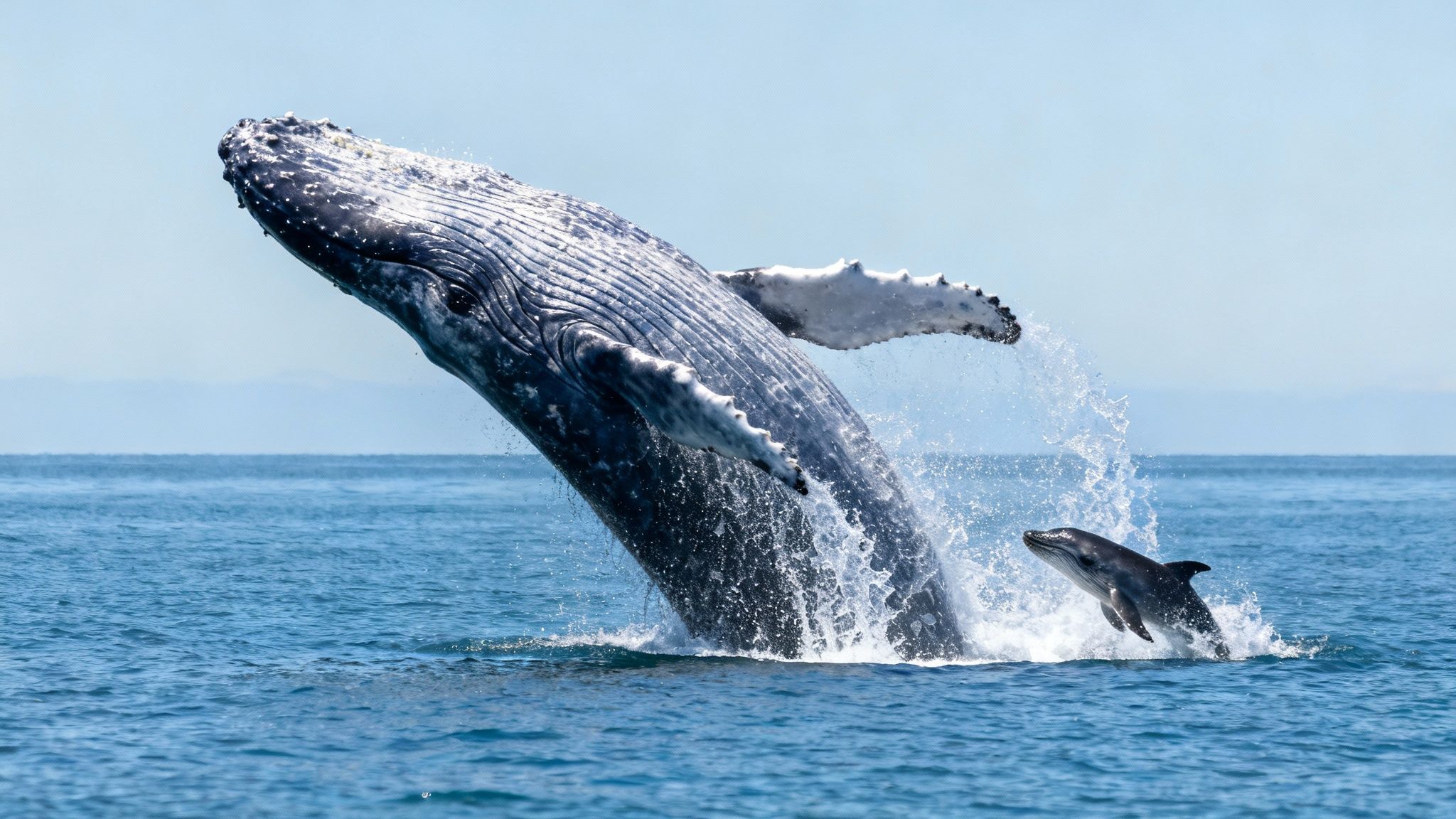
Watching humpback whales off Hawai‘i’s coast is like catching a live performance in an ocean amphitheater. They roll, breach, and slap as if calling out to friends—or showing off for an audience.
Each splash carries a message. A single tail slap can echo across the sea just as a clap fills a packed stadium.
Signature Moves And Their Meanings
-
Breaching
A massive leap that sends spray skyward. Whales use this flourish to signal strength, and it may help shake off pesky barnacles. -
Tail Slaps
A rhythmic beat on the water’s surface. Sometimes it warns others of nearby vessels, other times it simply draws attention. -
Pectoral Fin Waves
Gentle, slow arcs where a whale waves its “arm.” This movement often shows up in tender mother–calf exchanges.
Migration Path And Seasonal Peaks
Each winter, humpbacks paddle almost 3,500 miles from Alaska down to Hawaiian shores. They aim to arrive between January and March, the prime window for mating and calving.
Imagine a cross-country road trip with scenic rest stops—deep-water havens where whales pause to conserve energy. During the 2025 Sanctuary Ocean Count surveys, community scientists recorded 714 humpback whales altogether. Volunteers on the Island of Hawai‘i logged 28 whales from eight shoreline points. Dive deeper into these results on the NOAA community data page.
Mother Calf Pairs As A Highlight
Spotting a mother–calf pair is like watching a dance duo in perfect sync. The calf stays close, nursing and practicing powerful kicks under its mother’s eye.
“Seeing a calf untangle from its mother’s side feels like watching a toddler take first steps,” a volunteer observer noted.
They favor shallow bays—natural classrooms where calm waters make teaching essential swimming skills a gentle affair.
Daily Movement Patterns
Whales follow a sun-driven schedule around Kona and Kohala bays, much like commuters on a familiar route.
| Time Of Day | Typical Behavior | Common Locations |
|---|---|---|
| Early Morning | Resting & Nursing | Kealakekua Bay, Puako |
| Late Morning | Social Displays | Kailua-Kona Reefs |
| Afternoon | Deep-Water Feeding | Offshore Drop-Offs |
| Evening | Slow Drift Home | Ninole, Honokohau Harbors |
- Start at dawn in sheltered coves for peaceful sightings.
- By late morning, watch for playful interactions at reef edges.
- Afternoon trips often meet whales out in deeper water hunting krill.
- As dusk falls, they drift toward quieter anchorages to rest.
Timing your outing can make the difference between catching that dramatic breach or enjoying a serene shore-side glimpse.
Recognizing Behavior Signals
Whales speak through movement. Learn to spot their subtle cues and you’ll know what’s coming before it surfaces.
- Slow pectoral fin waves often mean relaxed socializing.
- A rapid series of tail slaps usually hints at an imminent breach.
- “Logging” (floating at the surface) signals rest or sleep mode.
“Spotting a flutter of pectoral waves gave us a ten-second heads-up before an impressive breach,” shared a local photographer.
Pair these insights with migration timing and bay usage, and you’ll be reading the whales’ ocean language like a pro. Next up: matching your viewing method—shore, boat, or snorkel—to the behaviors you most want to witness.
Best Locations And Viewing Methods
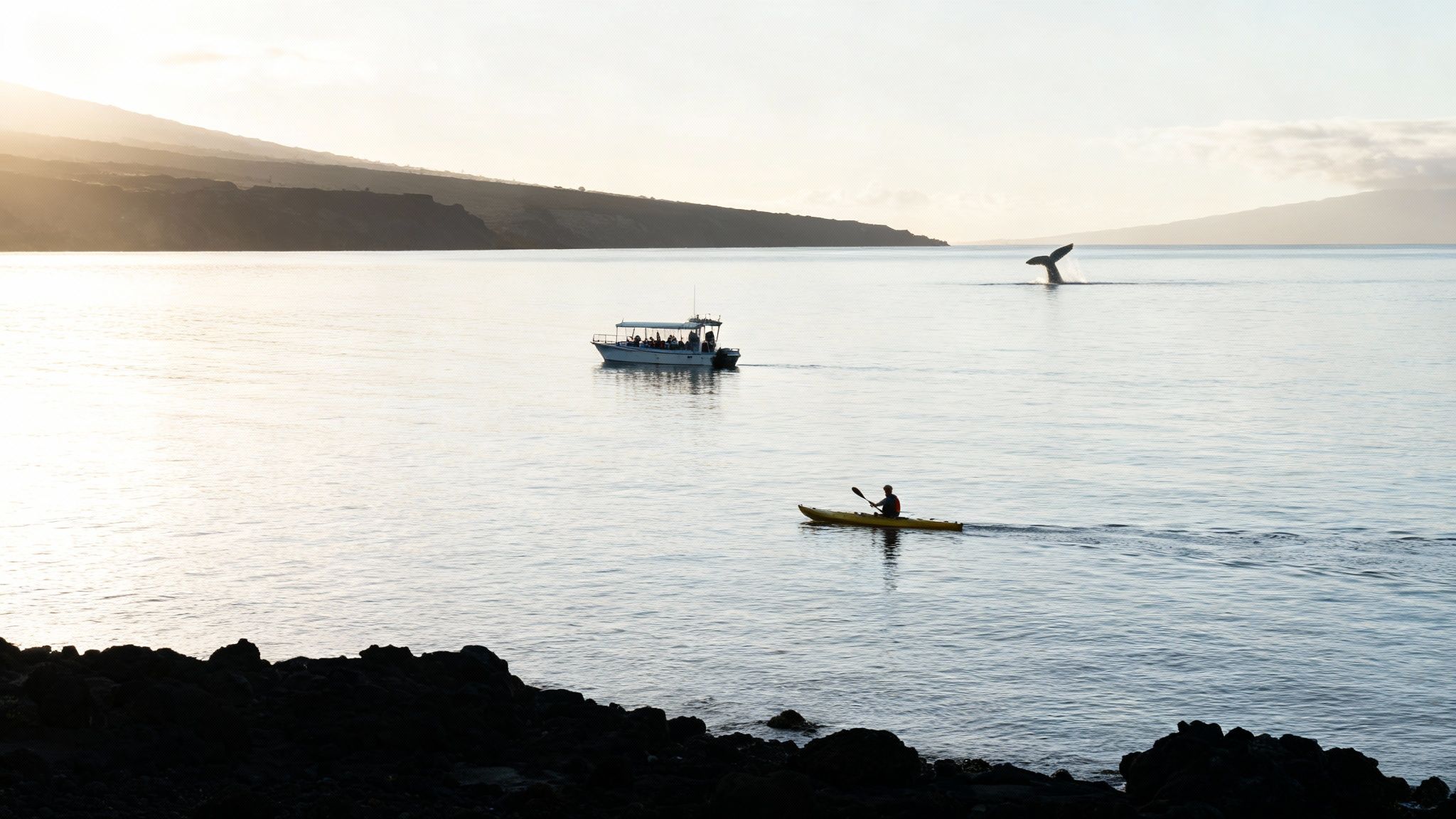
Picking your whale-watching vantage point on the Big Island is a lot like snagging front-row concert tickets. You want every splash, breach, and tail-slap in clear view. Below, we lay out the pros and cons of shore watching, boat excursions, and snorkel trips—so you can tailor your adventure.
Weather swings and tides play a huge role in spotting whales. Learn to read wind, swell, and currents, and you’ll know exactly where and when to head out.
Shore Spotting Highlights
Shore watching gives you flexibility and zero booking hassles. Grab your coffee, settle in at dawn, and let the show begin.
Ideal viewing comes in the early morning when the sea lies calm. By midday, thermals can push pods farther offshore and blur your line of sight.
- Puako Bay: Calm dawn swells, frequent breaches right off the reef
- Kealakekua Bay: Steep cliffs funnel whales closer to shore
- Hapuna Beach: Wide, open horizon makes tail-slaps easy to spot from the sand
No reservations needed—just pack binoculars and check wind direction. A light offshore breeze can turn a mirror-flat ocean choppy, masking distant splashes.
Boat Tour Advantages
Heading out from Kailua-Kona Harbor means close-up encounters guided by locals who know whale language.
- Kailua-Kona Tours: Small groups, glass-bottom viewing, life jackets provided
- Kohala Coast Cruises: Longer runs to deep-water feeding zones
- Private Charters: Custom timing and routes—premium flexibility at a higher cost
Some midday trips feel crowded as multiple boats converge. Dawn kayak or small-vessel tours often deliver quieter waters and more intimate sightings. Larger boats, however, offer shaded decks and restrooms.
“On our dawn kayak outing at Kohala, we logged more than ten breaches in 90 minutes,” recalls one local guide.
Federal safety rules from NOAA require vessels to keep a 100-yard buffer to protect the whales and ensure ethical viewing.
Snorkel Viewing Experience
For an underwater perspective, snorkeling lets you glide beneath the surface alongside these giants. Certified guides keep groups small and safety top-of-mind.
- Group Size: Limit of eight snorkelers for minimal noise and maximum mobility
- Gear Included: Masks, fins, snorkels, flotation vests, plus a full safety briefing
- Underwater Views: Spot gentle pectoral-fin waves and hear whale pulses through hydrophones
Snorkel trips work best when whales cruise near reefs. If they’re feeding in deeper waters, combine a snorkel outing with a boat tour to boost your odds.
| Method | Pros | Cons | Best Spots |
|---|---|---|---|
| Shore | Free access, panoramic views | Distance from whales, weather reliant | Puako Bay, Hapuna Beach |
| Boat | Close encounters, knowledgeable guides | Cost, seasickness potential | Kona Harbor, Kohala Coast |
| Snorkel | Underwater insight, small groups | Requires skill, seasonal proximity | Kealakekua Bay, Honaunau |
Reading Sea Conditions
A quick glance at wind and swell forecasts can make or break your sighting.
- Swell Height: Under two feet favors shore and snorkel trips
- Wind Direction: Offshore breezes create mirror-like surfaces
- Tide Level: Low tide can expose reef but often brings whales closer to drop-offs
- Weather Windows: Clear skies boost visibility and boat safety
Real-time charts help you time outings when whales linger in shallow bays. A sudden swell spike might push them past your favorite lookout in minutes.
Choosing Your Perfect Spot
Think of whale watching here as a pick-your-own adventure at sea. Are you comfortable on a rocking deck or prefer dry land?
- If you crave excitement, boat tours deliver surface thrills.
- If you want peace and simplicity, shore watching can’t be beat.
Mix and match methods for the best results. An early boat tour, midday snorkel, and sunset cliff-top watch can turn a good day into an unforgettable one. Keep a field guide handy to identify pods and track behaviors—soon you’ll be reading whale activity like a pro.
How To Choose The Right Tour
Selecting a whale watching tour feels a lot like picking the perfect vessel for an ocean journey—comfort, clear sight lines, and experienced crew all matter.
First, compare boat sizes and layouts. Smaller craft often mean less engine noise and more room to roam on deck.
Then dig into guide credentials. Years spent on Kona’s waters, local ecological know-how, and valid licenses can turn a good trip into an unforgettable one.
Evaluating Vessel And Crew
Boat design sets the tone for stability and viewing comfort. Wide, open decks cut down on roll, while raised platforms give you an unobstructed panorama of the sea.
- Vessel Capacity: Aim for boats carrying no more than 30 passengers to keep the outing personal.
- Crew Certification: Verify guides hold a U.S. Coast Guard license and current first-aid training.
- Local Expertise: Choose teams who live and breathe Kona’s seasonal whale patterns.
Safety Standards And Regulations
You want excitement—but never at the cost of safety. A trustworthy operator follows NOAA’s 100-yard rule, keeping a respectful distance from the whales.
- Life Jackets: Inspect for proper fit and availability for every passenger.
- Emergency Gear: Ensure marine radios, flares, and a stocked first-response kit are on board.
- Insurance Cover: Ask about liability coverage and medical evacuation policies.
“A strict safety protocol reduces stress for both passengers and whales,” notes a marine biologist.
Eco Credentials And Conservation
A responsible whale-watch shows respect for marine life as much as it does for passengers. Look for eco-certifications or reef-safe initiative memberships.
- Read recent reviews for mentions of ethical practices and guides who treat whales with respect.
- Confirm adherence to NOAA approach guidelines by inspecting operator websites or asking on deck.
- Identify tours that channel part of their earnings into local conservation programs.
Why Kona Snorkel Trips Stands Out
Kona Snorkel Trips tops the charts thanks to lifeguard-certified guides who know Big Island waters inside and out.
They cap each voyage at 24 guests, so everyone gets a prime viewing spot. Onboard hydrophones add a magical element—tune in to the whales’ own “underwater radio.”
For a side-by-side comparison of local operators, check our detailed review of the best whale watching tours in Kona Hawaii.
Booking And Accessibility Tips
Plan ahead during the January–March peak to lock in your preferred dates. A clear cancellation policy helps if weather forces a change.
- Reserve in Advance: Book at least 4 weeks ahead when whale season peaks.
- Flexible Payments: Verify which deposits are refundable and when balances are due.
- Accessibility: Inquire about wheelchair lifts and easy-step ladders.
- Departure Times: Dawn sails often mean calmer seas and more active whales.
Kona Snorkel Trips provides instant online booking and a friendly support team by phone.
“Instant booking and clear policies removed all stress,” says one satisfied guest.
By scrutinizing boat quality, crew expertise, safety measures, and eco-credentials, you’ll embark with confidence. Respect NOAA regulations and your guide’s instructions to keep interactions safe and memorable. With the right tour, every sighting of a breaching humpback becomes a story you’ll tell for years.
What To Bring And Preparation Tips
Packing for a whale-watch on the Big Island is like prepping for a day-long hike—you need gear for whatever the ocean throws at you. With the right items in hand, you can keep your eyes on the horizon instead of digging through a backpack.
A sharp pair of 8×42 binoculars turns distant flukes into unforgettable close-ups. Polarized sunglasses cut glare and protect your vision with 100% UV-blocking lenses.
A waterproof case is non-negotiable for cameras and phones. And when the sun, wind, and spray all make an appearance, layering a moisture-wicking shirt, fleece mid-layer, and windbreaker gives you quick flexibility.
- Binoculars: Choose 8×42 models for crisp detail and steady handling.
- Polarized Sunglasses: Eliminate glare with lenses offering 100% UV protection.
- Reef-Safe Sunscreen: Pick an oxybenzone-free formula to keep reefs healthy.
- Layered Clothing: Mix moisture-wicking, insulating, and windproof pieces.
- Waterproof Case: Shield electronics from unexpected splashes.
Think about deck comfort too. Non-slip shoes help you stand firm if the boat rocks. And even if you’ve never felt queasy at sea, a pack of ginger chews or motion-sickness wristbands is a smart fallback.
Staying Comfortable While At Sea
Salt spray and sun can add up quickly out on deck. Stay ahead of dehydration by sipping from a reusable water bottle throughout the day.
Pack light snacks like trail mix or energy bars to keep your energy up. Avoid greasy foods that might work against you if the boat tosses about.
A small dry bag for keys, your phone, and any medication ensures you won’t have to hunt below deck when you need something.
| Item | Purpose |
|---|---|
| Reusable Bottle | Maintain hydration |
| Trail Mix | Provide sustained energy |
| Dry Bag | Protect valuables |
| Wristbands | Prevent motion sickness |
Before you head out, check the marine forecast. Aim for swell under two feet and offshore breezes to turn the ocean surface into a glassy canvas—ideal for spotting whales.
Reading Marine Forecasts
Decoding forecast icons feels a bit like reading an ocean map. East swells, for instance, often carry waves that can nudge whales farther offshore.
Keep an eye on local advisories—those sudden weather shifts can make the difference between a smooth trip and choppy conditions.
“Planning with accurate forecasts can boost your sighting success by up to 35%.”
Final Packing Reminder
Create a pre-trip checklist and tick items off as you go. You’ll avoid last-minute panics and that “where did I put my sunglasses?” moment.
Back up reservations, permits, and emergency contacts as digital copies. If something goes missing, you’ll still have what you need.
- Label gear: Tag bags and cameras with your name and phone number.
- Charge fully: Ensure all devices are topped up before boarding.
- Check-In: Let someone onshore know your itinerary and return time.
- Review Guidelines: Brush up on NOAA’s 100-yard approach rule to stay compliant.
- Practice: Test binocular focus and camera settings at home.
Respecting marine life and following these practical tips not only makes your adventure smoother but also supports whale conservation. Pack thoughtfully, stay curious, and let the whales put on the show.
“Always travel light, pack wisely, and let the whales inspire you with each dazzling breach.”
Conservation and Responsible Viewing
Being a guest in someone’s home—that’s exactly how we should think of a whale encounter. It’s about respect, connection, and making sure we leave no trace.
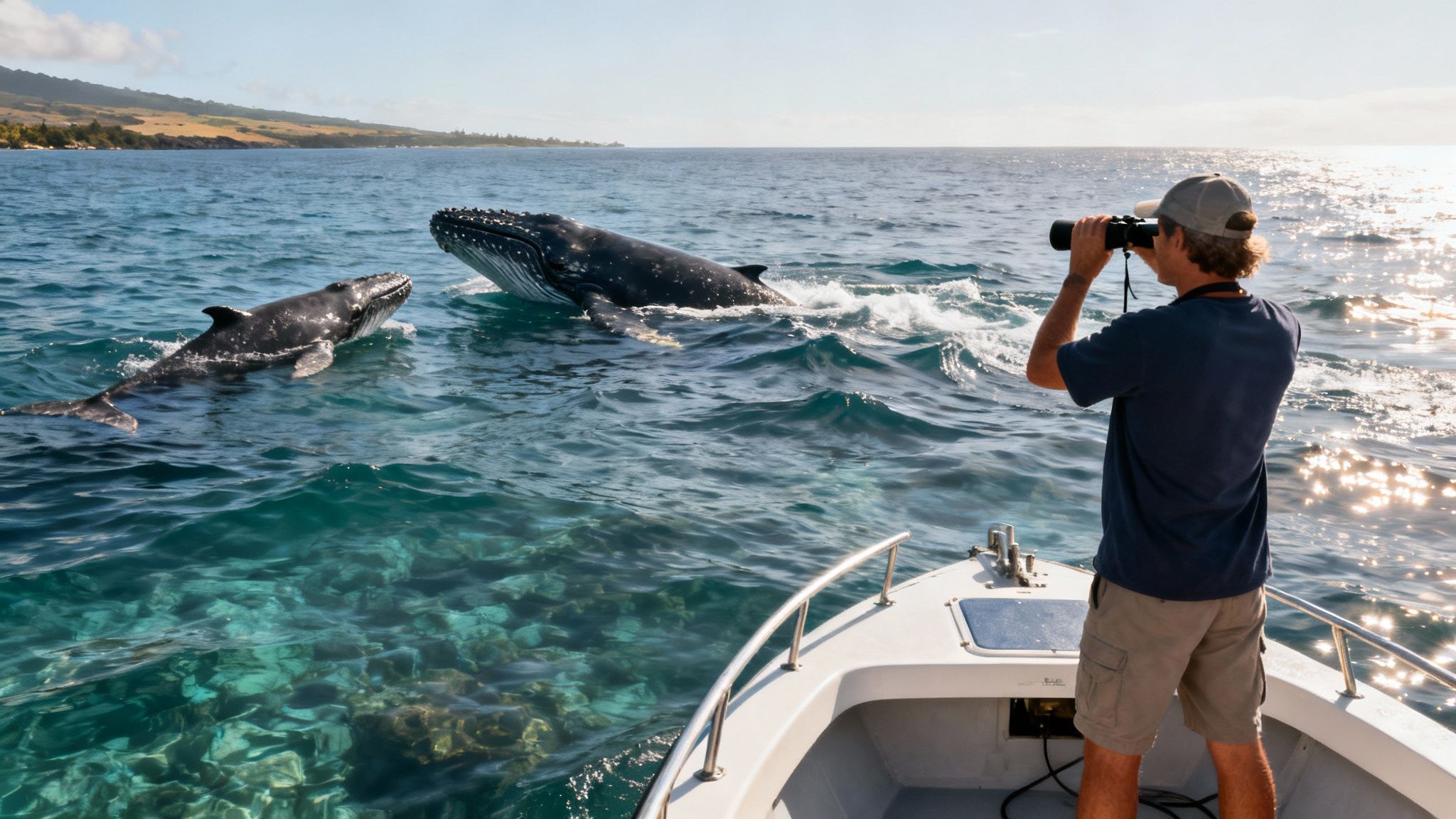
Federal and state rules draw firm lines around these gentle giants. We keep a 100-yard approach distance, and if a whale signals stress, our engines cut—employing a strict no-chase policy.
Rules for Approaching Whales
- 100-Yard Approach: Stay at least 100 yards away from whales—boats, kayaks, and snorkelers alike.
- No-Chase Policy: If a whale changes course, kill the engine and drift—no pursuit.
- Slow Speed: Enter idle or no-wake mode when within 300 yards of a whale.
- Regulation Enforcement: Violations can lead to hefty fines or vessel impoundment.
| Vessel Type | Approach Limit | Special Notes |
|---|---|---|
| Private Boat | 100 yards | Must cut engines |
| Tour Boats | 150 yards | Coordinated approach |
| Kayaks | 100 yards | No chase policy applies |
Think of these as house rules: they keep everyone safe and let whales carry on naturally. From the right distance, you’ll often witness calm, unguarded behaviors—spouts, breaches, even tender mother–calf interactions.
Community Science Contributions
Every whale watch can double as a field study. Citizen scientists and tour operators join forces to collect data that drives policy.
Counts happen three times per season, feeding into one of the world’s longest-running humpback monitoring programs. These figures help refine approach distances and seasonal guidelines. Find the latest results on Big Island Video News.
Volunteer options include:
- Docent-led counts at Puako Bay or Kekaha Kai State Park
- Logging sightings via the official app, complete with GPS-tagged photos
- Quarterly training sessions to sharpen your ID skills
Each logged sighting nudges regulations and whale-season planning forward.
Learn more about humpback population trends in our article on whether humpback whales will be taken off the endangered species list in 2016.
“Citizen scientists help shape regulations and protect whales for future generations.”
Best Practices for Responsible Viewing
- Reduce Underwater Noise: Power down electronics you don’t need and throttle back the engine.
- Avoid Mother–Calf Pairs: Give extra room when protective behaviors appear.
- Use Eco-Friendly Tours: Book outfits that follow NOAA guidelines and reinvest in conservation.
- Support Local Groups: Volunteer or donate to research and habitat-protection initiatives.
Small groups and silent engines often encourage whales to swim closer—curiosity over fear.
On a recent Kona Snorkel Trips excursion, guides powered down near a resting pod. The whales drifted in, curious about the silent vessel, offering guests a once-in-a-lifetime photo op.
Consider adopting a whale through NOAA’s Adopt-a-Whale program or contributing to local conservation funds.
Your choices on land ripple into the ocean, safeguarding the feeding and breeding grounds these whales depend on.
Blend the rules, science, and respectful habits on every outing. That way, we ensure these majestic creatures grace Hawaiian waters—today, tomorrow, and for generations to come.
FAQ
We’ve gathered the questions you’re most likely asking before heading out to sea. From timing your visit to picking the right vantage point, these answers deliver real-world tips so you can relax and enjoy the show.
Best Time For Whale Watching On The Big Island
When should you pencil in your trip? Humpbacks arrive in Hawaiian waters between January and March, bringing their mating rituals, playful breaches, and protective mothers with calves along for the ride. These months act like nature’s stage door, where every dawn is your front-row ticket.
- Peak Months: January, February, March
- Estimated Whales: 12,000+ humpbacks in Hawaiian waters
- Best Viewing Time: Early morning, when seas calm and visibility is highest
Think of dawn as your secret weapon—fewer winds, more serenity.
Do Shore Spotters Need Reservations
Shore watching is entirely free, but prime cliff ledges and beach lookouts can fill up fast, especially on holiday mornings. You don’t need a boat to scan the horizon; cliffs and beaches become your personal observatories.
- Arrive at least 30 minutes before sunrise
- Pack binoculars, polarized sunglasses, and reef-safe sunscreen
- Check wind direction and tide levels for the clearest view
Like picking the best seat in a stadium, timing and location matter.
Can Snorkel Tours Bring You Close To Whales
If you crave a chaser’s-eye view, licensed snorkel tours can bring you within respectful range—close enough to sense the whales stirring the ocean around you. Underwater, you might spot a mother and calf gliding side by side, a scene straight out of a nature documentary.
- Small groups (under 10 guests)
- Gear provided: snorkel kit, flotation vest, mask
- Comprehensive safety and etiquette briefing before you dive
“The hydrophone lets you tune in to whale songs, making each encounter unforgettable.”
How To Minimize Impact On Marine Life
Whale watching isn’t about thrills at any cost; it’s admiration from a respectful distance. Think of yourself as a guest at a private concert— the quieter you are, the more genuine the performance.
- Maintain a 100-yard approach distance at all times
- Choose eco-certified tour operators and reef-safe products
- Power down engines and avoid sudden maneuvers around pods
Approaching whales responsibly allows you to witness natural behaviors without disturbance.
How Far In Advance Should I Book A Whale Watching Tour
Tours fill quickly during peak season. If you have your heart set on a favorite vessel or time slot, a little foresight goes a long way.
- Book at least 4 weeks in advance
- Aim for reservations by early December for January departures
- Confirm cancellation and weather policies before you commit
Last-minute bookings often mean fewer choices and higher prices. Planning beats panic every time.
Armed with these tips—the when, the where, the how—you’re ready to chase breaching giants safely and respectfully.
Ready to book your whale-watching adventure? Visit Kona Snorkel Trips at https://www.konasnorkeltrips.com to secure your spot and explore more ocean experiences.