
Whale Watching on the Big Island a Complete Guide
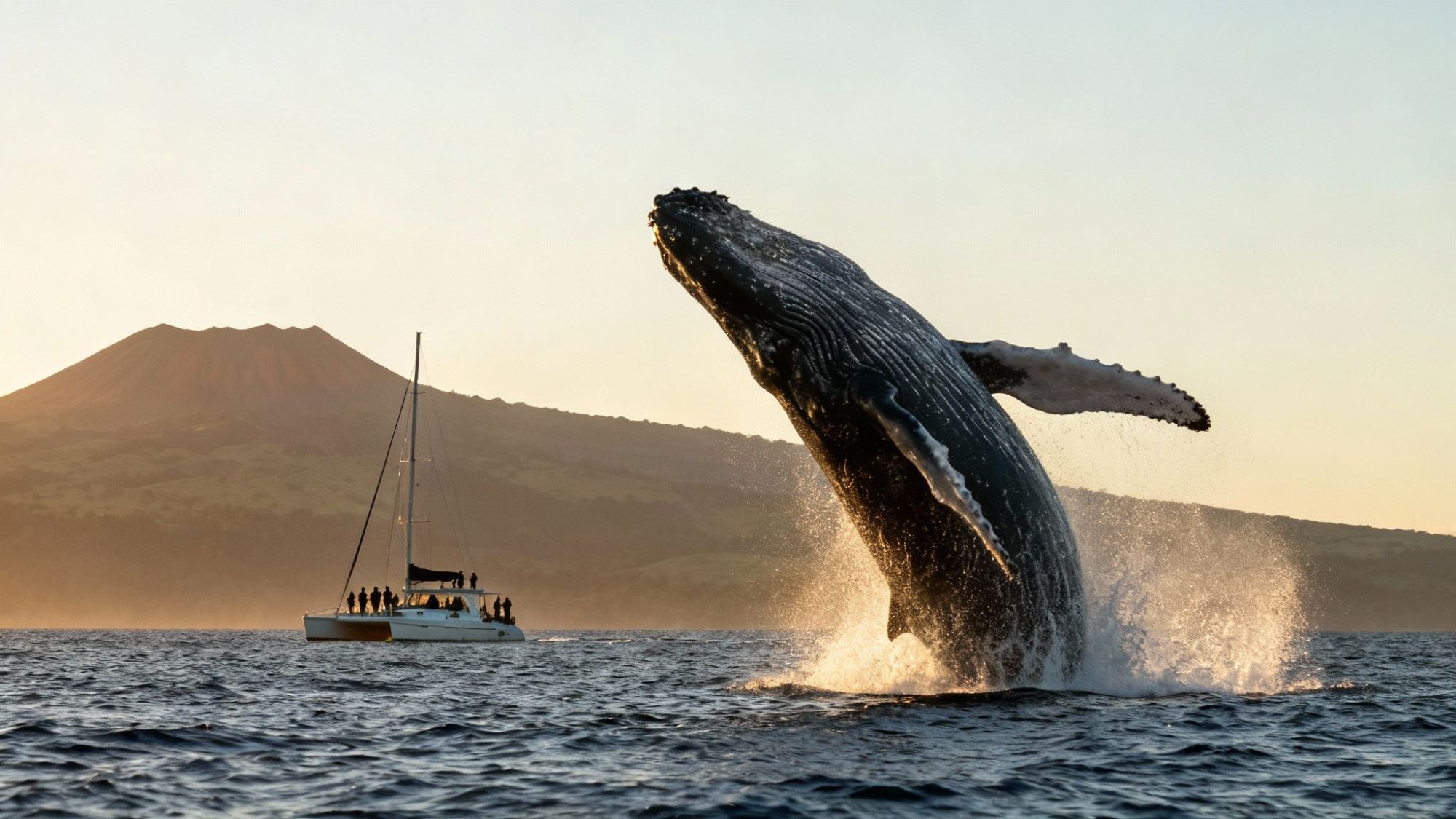
There's nothing quite like seeing a 40-ton humpback whale explode from the ocean's surface. It's a moment that sticks with you forever, and honestly, there's no better place to experience it than right here in Hawai‘i. The Big Island, in particular, puts on one of the world's most incredible shows from December through March, when thousands of these gentle giants flock to our warm, protected waters to breed and raise their young.
Your Guide to Big Island Whale Watching
Every winter, the calm, deep blue waters off the Big Island's western coast become the planet's busiest nursery for North Pacific humpback whales. In Hawaiian, we call them koholā. After an exhausting 3,000-mile swim from their chilly feeding grounds up in Alaska, they finally arrive.
What happens next is pure magic. They put on breathtaking courtship displays, teach their brand-new calves how to be whales, and fill the air with their hauntingly beautiful songs. This yearly pilgrimage is what makes whale watching on the Big Island a truly world-class spectacle.

Think of this guide as your complete playbook for planning the perfect whale watching adventure. We’ll cover everything you need to know, from the absolute peak times for sightings to the best spots to watch from shore.
Of course, for a truly up-close encounter, getting out on the water is key. As the top rated & most reviewed snorkel company in Hawaii, we at Kona Snorkel Trips run incredible seasonal whale watching tours that are all about creating those lifelong memories.
What Makes Big Island Whale Watching Special
There's a reason the whales love the Kona and Kohala coasts, and it's the same reason we do. The deep, calm waters right near the shore create the perfect safe haven for mothers and their newborn calves. This unique geography means you don't have to motor for hours out to sea to get jaw-dropping views.
The secret sauce is the combination of deep offshore waters and the massive volcanoes like Mauna Loa and Hualālai acting as a natural shield. This creates exceptionally calm sea conditions, making for a much more comfortable and rewarding trip for everyone on board.
This guide will break down everything you need to feel prepped and genuinely excited for your trip. We're going to get into:
- The Best Time to See Whales: We’ll help you pinpoint the peak weeks and months when the action is non-stop.
- Top Land-Based Viewing Locations: Discover the best spots along our stunning coastline where you can watch for free.
- Choosing the Right Boat Tour: We’ll walk you through the different options for getting on the water so you can find the perfect fit.
- Responsible Viewing Practices: Learn the do's and don'ts of observing these majestic animals safely and respectfully.
By the time you're done reading, you'll have everything you need to plan a truly unforgettable whale watching journey on the Big Island.
Understanding the Humpback Whale Migration
To really get the most out of whale watching on the Big Island, it helps to know a little about the incredible pilgrimage these animals make every single year. This isn't just a casual swim south for the winter; it's one of the longest, most demanding migrations in the entire animal kingdom, an epic journey driven by the ancient rhythms of life itself.
Each year, the North Pacific humpback whales set out on a grueling 3,000-mile journey from their chilly feeding grounds up in Alaska. They spend the summer months there, gorging on krill and small fish, packing on the massive layers of blubber they'll need to survive the trip and the months ahead.
Once the Alaskan waters start to ice over, the whales begin their long trek south to the warm, protected waters surrounding the Hawaiian Islands. This isn't a vacation for them—it's a critical part of their life cycle. They come here specifically to breed, give birth, and nurse their newborn calves in a safe, warm environment.
Why Hawaii Is the Perfect Nursery
The waters off the Big Island's Kona and Kohala coasts are like a five-star resort for pregnant females and new mothers. Shielded by our massive volcanoes, the deep, calm channels create a peaceful sanctuary with far fewer predators than the open ocean.
You can think of it as the ultimate underwater nursery. It’s warm, it's safe, and it lets the mothers pour all their energy into caring for their calves without the constant stress of looking over their shoulder for danger. This high concentration of mothers and calves is exactly why the Big Island offers such a spectacular whale watching experience.
Of course, the male whales, or bulls, make the journey too, but they have a different agenda. They're here to compete for mates, and they put on some of the most jaw-dropping shows you'll ever see. Keep an eye out for "heat runs," where males aggressively chase a female, or watch them breach high out of the water and slap their massive tails to get a female's attention.
Pinpointing the Peak Whale Season
While you can spot whales here from November all the way through April, the absolute best time for whale watching on the Big Island is from January through March. This is the undisputed peak of the season.
During these months, the whale population in Hawaiian waters hits its highest numbers. It’s no longer a question of if you’ll see a whale, but how many.
The peak season lines up perfectly with the busiest time for calving and breeding. With literally thousands of whales in the area, your chances of seeing dramatic behaviors like breaching, tail slaps, and competitive male pods are at their absolute highest.
This is when the ocean just feels alive. The sheer number of whales means you can often spot multiple pods from a single viewpoint, whether you're on a boat tour or just watching from shore. If you want to experience the full, awe-inspiring power of the humpback migration, you have to plan your trip for these core months. For a deeper dive, check out our complete guide to the Big Island's whale season.
Understanding the Shoulder Months
What if your trip falls just outside that prime window? Don't worry, you can still have an amazing time during the shoulder months.
- November & December: These early months are when the first arrivals start showing up. Sightings get more and more frequent as December rolls on. You'll likely see more adult whales and those competitive male pods as the season starts to ramp up.
- April & May: This is the tail end of things. You'll mostly see moms with their growing calves, sticking around in the warm waters to nurse and help the little ones build strength for the long swim back north to Alaska.
Humpback whales, or koholā as they’re known here, are a true cornerstone of the Big Island's marine world. Scientists figure that around 12,000 humpback whales—more than half of the entire North Pacific population—migrate to Hawaiian waters every year. While the "official" season is November to May, we often get early birds. One recent season, the very first humpback was spotted off the Kona coast on October 30! You can read more about the first whale sightings of the season to see just how much the timing can shift from year to year.
Finding the Best Shoreline Viewing Spots
You absolutely do not need to be on a boat to experience the magic of whale watching on the Big Island. Some of the most incredible, goosebump-inducing moments happen right from the shoreline. It’s just you, the ancient lava rock, and these gentle giants putting on their stunning acrobatic show against the vast blue of the Pacific. It's an accessible, totally free, and deeply rewarding way to connect with the annual migration.
The trick is knowing where to look. While you might get lucky anywhere along the coast, certain spots consistently offer front-row seats. The western coast, particularly the Kohala and North Kona districts, is the undisputed champion for land-based viewing.

This part of the island is blessed with high coastal cliffs and scenic overlooks that drop off into the clear, deep near-shore waters that the whales love. Just picture it: you're sitting on a sun-warmed lava field, feeling the gentle breeze, when a 40-ton humpback suddenly launches itself out of the water just offshore. It’s a spectacle you’ll never, ever forget.
Top Spots on the Kohala Coast
The Kohala Coast is legendary for a reason. Its elevated bluffs and pristine parks create a natural theater for whale watching. Here are a few can't-miss spots:
- Puʻukoholā Heiau National Historic Site: This place is a powerhouse, both culturally and for wildlife viewing. The visitor center offers a high, unobstructed perch over the ocean where whales are spotted all the time. It’s a fantastic place to start, and the rangers on hand are often happy to share insights.
- Lapakahi State Historical Park: Head a bit further north, and you'll find this park, which mixes fascinating Hawaiian history with killer coastal views. The rugged, undeveloped coastline means fewer crowds and a more serene vibe for scanning the horizon for spouts and breaches.
- Kapaʻa Beach Park: Known for its stunning scenery, Kapaʻa offers wide-open ocean vistas perfect for a whale watch picnic. Pack a lunch, spread out a blanket, and settle in for a few hours of patient observation.
These locations are hotspots for a reason. The Big Island is a major hub for the annual Sanctuary Ocean Count, a citizen science project that tracks humpback whales. Year after year, the data shows the Kohala coast is the prime location for shore-based sightings. Volunteers here spot whales two to three times more frequently than at other island locations!
During peak months, it's not uncommon for observers to log between 3 and 6 whales every 15 minutes. You can discover more about these amazing whale count findings to get a real sense of just how active this coastline gets.
North Kona Viewing Points
While the Kohala Coast gets a lot of the glory, the North Kona coast has some fantastic spots of its own, many of which are super convenient to Kailua-Kona.
Pro Tip: Your most essential piece of gear for shoreline whale watching is a good pair of binoculars. Sure, you can spot a big breach or a tail slap with the naked eye, but binoculars bring the action right to you. You'll see more subtle behaviors and get a much better feel for the sheer scale of these incredible animals.
Keep an eye out for these easily accessible locations:
- Kekaha Kai State Park: Home to gorgeous beaches like Kua Bay and Mahaiʻula Beach, this park is more than just sand. The lava rock formations surrounding these coves provide elevated platforms that are perfect for scanning the ocean.
- Scenic Overlooks on Highway 270: As you drive the Akoni Pule Highway along the northern coastline, you’ll see tons of unnamed pull-offs. Don't be shy about safely pulling over. These elevated viewpoints are often the best-kept secrets for spectacular, uninterrupted views of whale activity.
Watching from the shore definitely requires some patience, but the payoff is immense. It offers a totally different perspective—a quiet, contemplative experience where the land and sea meet, and you get to be a witness to one of nature's greatest events.
Choosing Your Ideal Whale Watching Tour
Watching humpbacks from the shoreline is a beautiful, peaceful experience, for sure. But nothing—and I mean nothing—compares to the thrill of seeing these magnificent creatures up close from a boat. A tour gets you out on the water, giving you a completely different perspective and the chance for a truly personal encounter with the koholā.
Picking the right whale watching on the Big Island tour is the key to making your adventure perfect. It can feel like there are a million options out there, but it really just boils down to what kind of day you want to have. The boat you choose plays a huge part in shaping that experience.

Think of it like choosing between a spacious, comfy tour bus and a zippy, go-anywhere jeep. Each gives you a totally unique way to see the sights, and the best one is all about your personal style.
Comparing Different Tour Boats
Let's break down the most common types of boats you'll find running whale watching tours in Kona. This should help you pick the perfect match for your crew.
- Large Catamarans: These are the big, stable tour buses of the sea. They’ve got tons of space to walk around, often have restrooms and snack bars, and give you a super smooth ride. They're a fantastic choice for families with small kids or anyone who gets a little wobbly on the water.
- Smaller Powerboats: Think of these as a more intimate way to get out there. Boats like the ones we use at Kona Snorkel Trips offer a small-group setting. That means you get more one-on-one time with the crew, it’s way less crowded, and you’re closer to the water for those jaw-dropping photos.
- Zodiacs (Rigid-Hulled Inflatable Boats): These are the agile jeeps of the ocean. Zodiacs are fast, nimble, and sit low to the water, which makes for a thrilling, spray-in-your-face kind of adventure. They're perfect for adrenaline junkies but might be a bit too bumpy for some folks.
Here at Kona Snorkel Trips, our seasonal whale watching tours run on comfortable, well-sized boats that give you both stability and that small-group feel. You really get the best of both worlds.
What to Expect on a Typical Tour
Most high-quality whale watching tours on the Big Island are way more than just a boat ride. They’re educational deep-dives designed to give you a whole new appreciation for these incredible animals.
A great tour will almost always have a marine naturalist or a super-experienced captain providing expert commentary. They can point out specific whale behaviors, explain the incredible journey of their migration, and answer every question you can think of. It’s like having a wildlife documentary narrator with you in real-time.
One of the most magical moments on any tour is when the captain drops a hydrophone into the water. This underwater microphone lets you hear the hauntingly beautiful songs of the male humpback whales. It's an experience that is truly otherworldly.
When you're looking at different tours, make sure to read the fine print. Knowing the trip duration, what’s included (like snacks or gear), and the company’s approach to responsible wildlife viewing is a must. It's also smart to check out the general conditions for cancellation just in case your plans go sideways.
To get a feel for what a top-notch experience looks like, take a look at our detailed guide on Kona whale watching tours. Going with a reputable operator like Kona Snorkel Trips ensures your adventure will be safe, respectful, and absolutely breathtaking.
Preparing for Your Whale Watching Adventure
Turning a good whale watching trip into a truly unforgettable one often comes down to a little bit of prep work. Whether you’re posting up on a coastal bluff with a pair of binoculars or heading out on the open ocean, some simple planning lets you relax and just soak in the magic. It really just means thinking ahead about what to bring and how to stay comfortable.
A big piece of that puzzle is timing. While you can spot whales all day long, the early morning hours often give you an edge. We've seen that whale sightings around 8:00 a.m. can be about 50% higher than at noon, making it the sweet spot for anyone watching from shore. It’s no coincidence that the annual Sanctuary Ocean Count—a huge citizen science project—runs its surveys from 8:00 a.m. to 12:15 p.m.
What to Pack for Your Excursion
Having the right gear with you can make all the difference. A well-thought-out bag for your whale watching on the Big Island trip keeps you comfortable, shielded from the elements, and ready to capture every incredible moment.
Before you head out, it's a good idea to run through a quick packing list. Whether you're staying on land or heading out on a boat, a few key items will make your experience much better.
| Your Whale Watching Packing Checklist | |||
|---|---|---|---|
| Essential Item | Why You Need It | Shore | Boat |
| Polarized Sunglasses | Cuts through the ocean glare to help you spot whales more easily. | ✅ | ✅ |
| Reef-Safe Sunscreen | Protects your skin from the intense sun and our fragile coral reefs. | ✅ | ✅ |
| Binoculars | Brings distant whale activity into sharp focus. A must-have for shore! | ✅ | ✅ |
| Camera with Zoom Lens | Captures those frame-worthy shots that a phone camera just can't get. | ✅ | ✅ |
| Light Jacket/Windbreaker | Ocean breezes can be chilly, even on warm Kona days. | ✅ |
These basics will set you up for success, letting you focus less on being uncomfortable and more on the amazing views in front of you.
Staying Comfortable on the Water
For a lot of folks, the one worry that hangs over a boat tour is the chance of getting seasick. That gentle ocean roll can get to even the most seasoned travelers, but it definitely doesn't have to spoil your day. The trick is to be proactive, not reactive.
Taking a few preventative steps an hour or two before you even board the boat is your best bet. Once you start feeling queasy, it’s a lot tougher to turn things around.
Simple things can work wonders: stay hydrated, skip the heavy or greasy breakfast, and keep your eyes fixed on the stable horizon. If you know you're prone to motion sickness, an over-the-counter remedy can give you great peace of mind. We've put together a full rundown of tips in our guide on how to prevent seasickness on your boat tour.
It's also smart to think about travel protection for any trip. For those enjoying this adventure in their golden years, a good guide to travel insurance for seniors can offer some valuable info and help ensure a worry-free experience. A little preparation goes a long way toward a spectacular day on the water.
How to Watch Whales Responsibly
Seeing Hawaiʻi's magnificent humpback whales is a privilege, and with that comes a shared responsibility—a kuleana—to protect them. Our actions, whether we're visitors or locals, have a direct impact on these incredible animals. When we practice respectful wildlife viewing, we ensure they can carry on with their vital business of breeding and raising their young without being disturbed.
This isn't just a friendly suggestion; it's the law. Both federal and state regulations are in place to keep these marine mammals safe from harassment. The single most important rule to remember for whale watching on the Big Island is the mandatory approach distance.

Everyone in the water—boats, kayakers, paddleboarders, swimmers, you name it—must stay at least 100 yards away from humpback whales. That's about the length of a football field. This buffer gives them the space they need to breathe, nurse their calves, and just be whales without feeling stressed.
Choosing Ethical Tour Operators
The absolute best way to make sure your encounter is a positive one for the whales is to go with a tour company that cares more about their well-being than getting a super-close photo for Instagram. An ethical operator gets it: we are visitors in the whales' home, and we need to act like it.
So, how can you tell you're booking with a good company?
- They Follow the Rules: A good guide will be upfront about the 100-yard rule and stick to it, no exceptions. They will never chase, crowd, or cut off a whale's path.
- They Educate Their Guests: The best tours feel like a floating classroom. A knowledgeable naturalist will be on board, teaching you about whale behavior, conservation, and why responsible viewing is so important.
- They Let the Whales Lead: Responsible tours are "whale-paced." This means the whales call the shots. If a curious whale decides to swim closer to the boat (it happens!), a good captain will cut the engines and just let the moment unfold naturally.
This is the whole philosophy behind our seasonal whale watches at Kona Snorkel Trips. We want every trip to be both breathtaking for you and completely respectful to the whales.
Supporting Broader Conservation Efforts
When you follow these simple rules, you're part of a much bigger conservation story. The waters around the main Hawaiian Islands are a designated Hawaiian Islands Humpback Whale National Marine Sanctuary. This protected area was created specifically to safeguard the whales and their critical habitat.
The sanctuary does more than just protect the whales; it also supports research and helps educate the public. By following the guidelines and choosing ethical tours, you're directly helping the sanctuary's mission to preserve this incredible natural wonder for generations to come.
When you understand and respect these guidelines, you stop being just a spectator and become a guardian of the ocean. Your mindful presence helps make sure the majestic koholā will continue to grace the Big Island's waters for many, many years.
Common Whale Watching Questions
Even the most seasoned traveler has a question or two before heading out on the water. Here are some of the most common things people ask us about whale watching on the Big Island, with some straightforward, honest answers to get you ready for the adventure.
What Is the Absolute Best Month for Whale Watching?
While you can see whales from November through April, the real peak, the time when the action is non-stop, is from January through March. This is when the humpback population in Hawaiian waters hits its absolute highest.
If you’re dreaming of seeing those incredible breaches and powerful tail slaps, this three-month window is your best bet for a truly spectacular show.
Are Morning or Afternoon Tours Better?
This is a classic question, and honestly, both have their perks. Mornings along the Kona coast are famous for being glassy and calm. That smooth surface makes it way easier to spot a whale spout from a mile away, and the light is just perfect for photos.
Afternoons can sometimes stir up a bit of wind and surface chop, but that's not always a bad thing. We've noticed that a little texture on the water can sometimes get the whales more active. Most of our captains have a soft spot for the calm of the morning, but you really can’t go wrong either way.
How Close Can We Legally Get to the Whales?
This one is incredibly important for protecting these amazing animals. Federal and state law is crystal clear: all boats, kayaks, swimmers, and paddleboarders must stay at least 100 yards away from humpback whales. To put that in perspective, think of the full length of a football field.
Any reputable tour company worth its salt follows this rule to the letter. We know the thrill of being close, but the whales' well-being always, always comes first. Sometimes, a curious whale will decide to check us out. When that happens, a good captain knows to just cut the engines and let the whale be in charge of the encounter. It's their ocean, after all.
What Other Marine Life Might I See?
Humpbacks are the winter superstars, no doubt about it. But the waters off the Big Island are just teeming with life year-round. While you're out there, keep an eye peeled for some of our other local residents:
- Spinner Dolphins (Naʻiʻa): You'll often see these guys in huge, energetic pods. They're famous for their incredible acrobatic spins and are an absolute joy to watch.
- Hawaiian Green Sea Turtles (Honu): It's common to spot these graceful old souls popping their heads up for a breath of air, especially closer to the coastline.
- Manta Rays (Hahalua): Seeing a manta during the day is less common, but it definitely happens! Spotting one of these gentle giants gliding near the surface is a real treat.
Every trip is a new roll of the dice. You just never know what the ocean will decide to show you, and that's half the fun of it.
For an unforgettable journey into the world of these gentle giants, book a seasonal whale watching tour with Kona Snorkel Trips. We prioritize small groups, education, and responsible viewing to create memories that will last a lifetime.