
Your Guide to Whale Watching on the Big Island
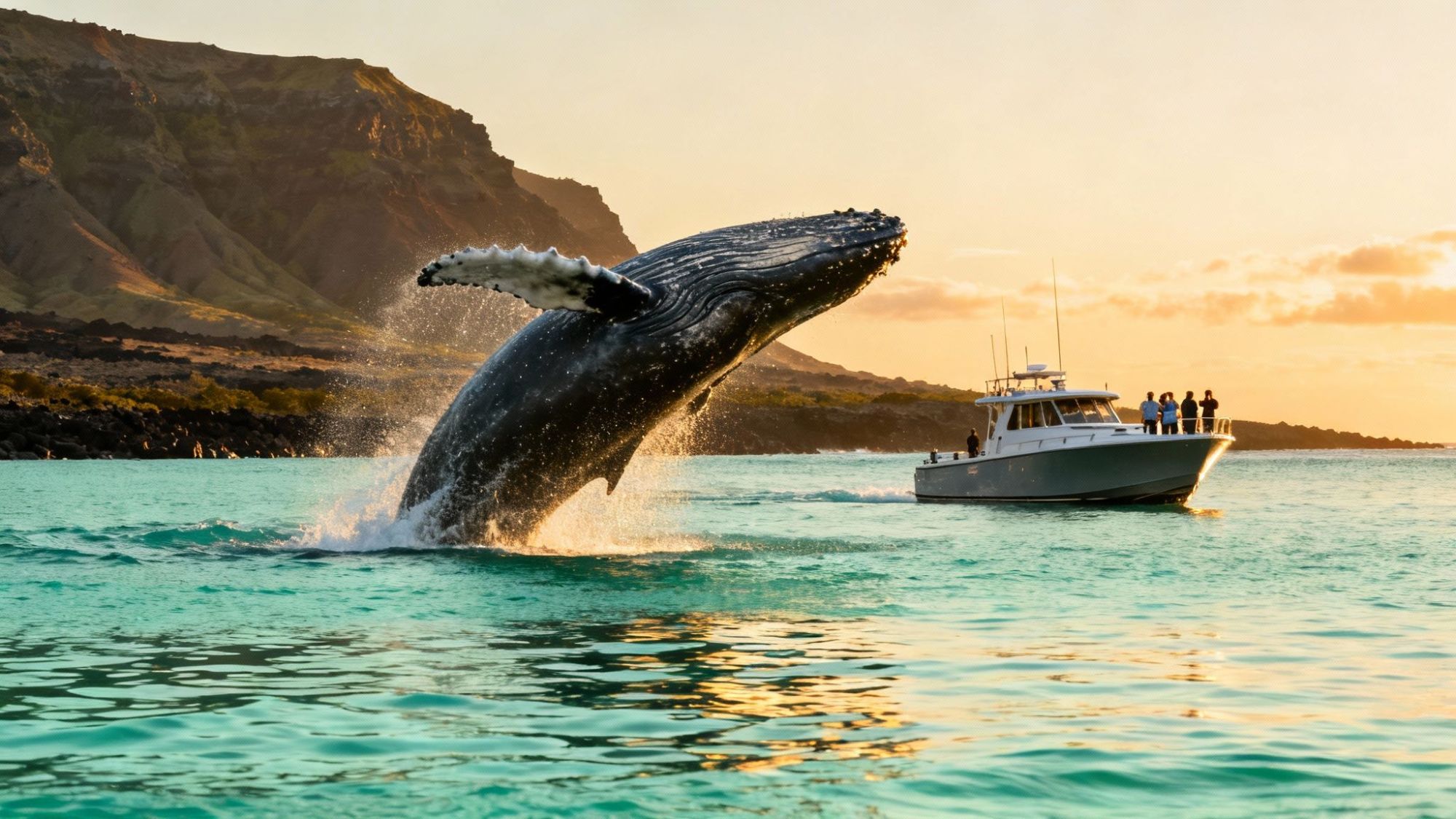
Picture this: the calm surface of the ocean suddenly shatters as a 40-ton humpback whale explodes into the air. It’s a moment of pure, raw nature, and it’s the kind of magic that defines whale watching on the Big Island. This guide is your ticket to seeing it for yourself, especially during the peak season from mid-December through March.
At Kona Snorkel Trips, the top rated & most reviewed snorkel company in Hawaii, we're passionate about sharing these incredible moments.
Why the Big Island Is a Whale Watching Paradise
Every year, like clockwork, the Big Island becomes center stage for one of the most incredible events in the natural world: the annual humpback whale migration. These gentle giants travel over 3,000 miles from their chilly feeding grounds up in Alaska, all the way down to the warm, sheltered waters surrounding Hawaii.
This epic journey isn't just a vacation for them. It's driven by the most fundamental instincts—mating, giving birth, and raising their newborn calves in a safe, warm nursery.
The Kona and Kohala coasts are practically custom-made for this. The waters here are calm, clear, and relatively shallow, creating a perfect sanctuary. The island itself acts as a massive shield, blocking the strong ocean currents and winds. That's a huge deal for the baby calves who need to conserve every ounce of energy.
A Front-Row Seat to Nature's Greatest Show
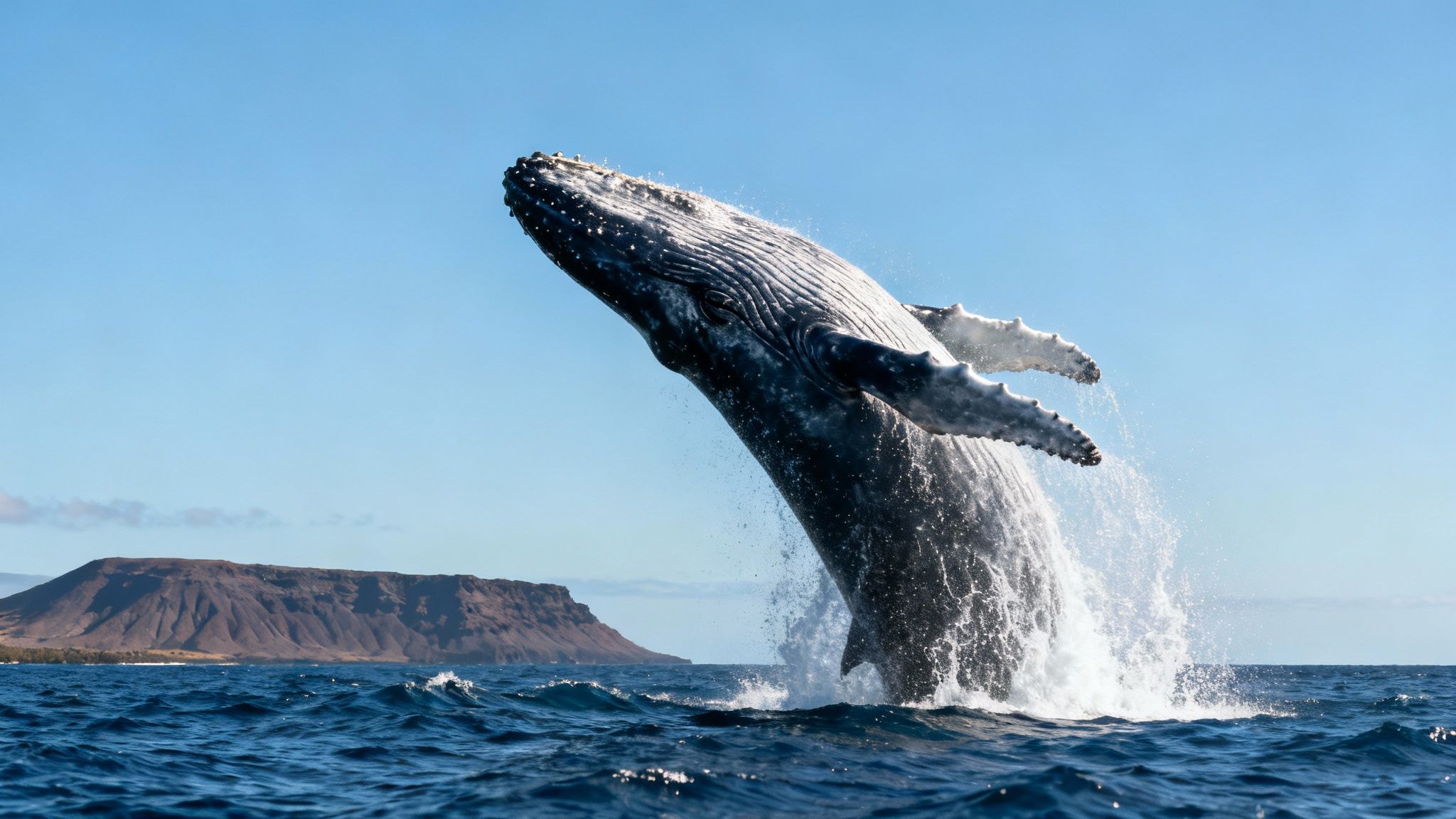
When you head out on a whale watching tour, you're not just a spectator; you're witnessing a crucial chapter in the humpback's life story. You'll see them communicating with powerful tail slaps that echo across the water or maybe even catch your breath as one launches its entire body out of the sea in a full breach.
Witnessing these behaviors firsthand offers a profound connection to the marine world. It's a humbling experience that highlights both the immense power and the surprising grace of these magnificent animals.
As Hawaii's top-rated and most-reviewed snorkel company, we at Kona Snorkel Trips live and breathe this ocean ecosystem. Our crew knows exactly where to go, all while following strict safety and conservation rules to protect these animals. We're genuinely passionate about sharing this with you and making sure your trip is unforgettable—and respectful.
This guide has everything you need to plan your adventure, from figuring out the best time to go to knowing what all those spectacular behaviors mean. Let’s dive in and make it happen.
Pinpointing the Best Time for Your Whale Watching Trip
Timing is everything if you want to experience the true magic of whale watching on the Big Island. Sure, you might catch a few early birds in November or some stragglers in May, but the real show has a very specific season. You can think of the Kona coast as a grand central station for humpback whales—it gets incredibly busy, but only for a few key months.
The prime viewing season officially kicks off in mid-December and barrels right through to the end of March. This is the window when thousands of humpback whales cruise into Hawaii's warm, protected waters to do what whales do: mate, give birth, and raise their newborn calves. If you plan your trip during these four months, your chances of seeing some incredible surface action go through the roof.
Even within that peak season, there’s a sweet spot. January and February are when things really hit a fever pitch. The waters are practically boiling with activity, and it’s totally normal to see multiple pods of whales from the boat at any given time.
It's a powerful sight, and one that speaks volumes about international conservation efforts that have helped humpback populations rebound. During this peak period, seeing 20-30 whales per hour isn't out of the ordinary—it’s a non-stop display of raw, natural beauty.
Morning Calm vs. Afternoon Action
Once you’ve got your month picked out, you’ll need to decide on the time of day. Morning and afternoon trips each have their own vibe, and the best one for you really just comes down to what you're looking for.
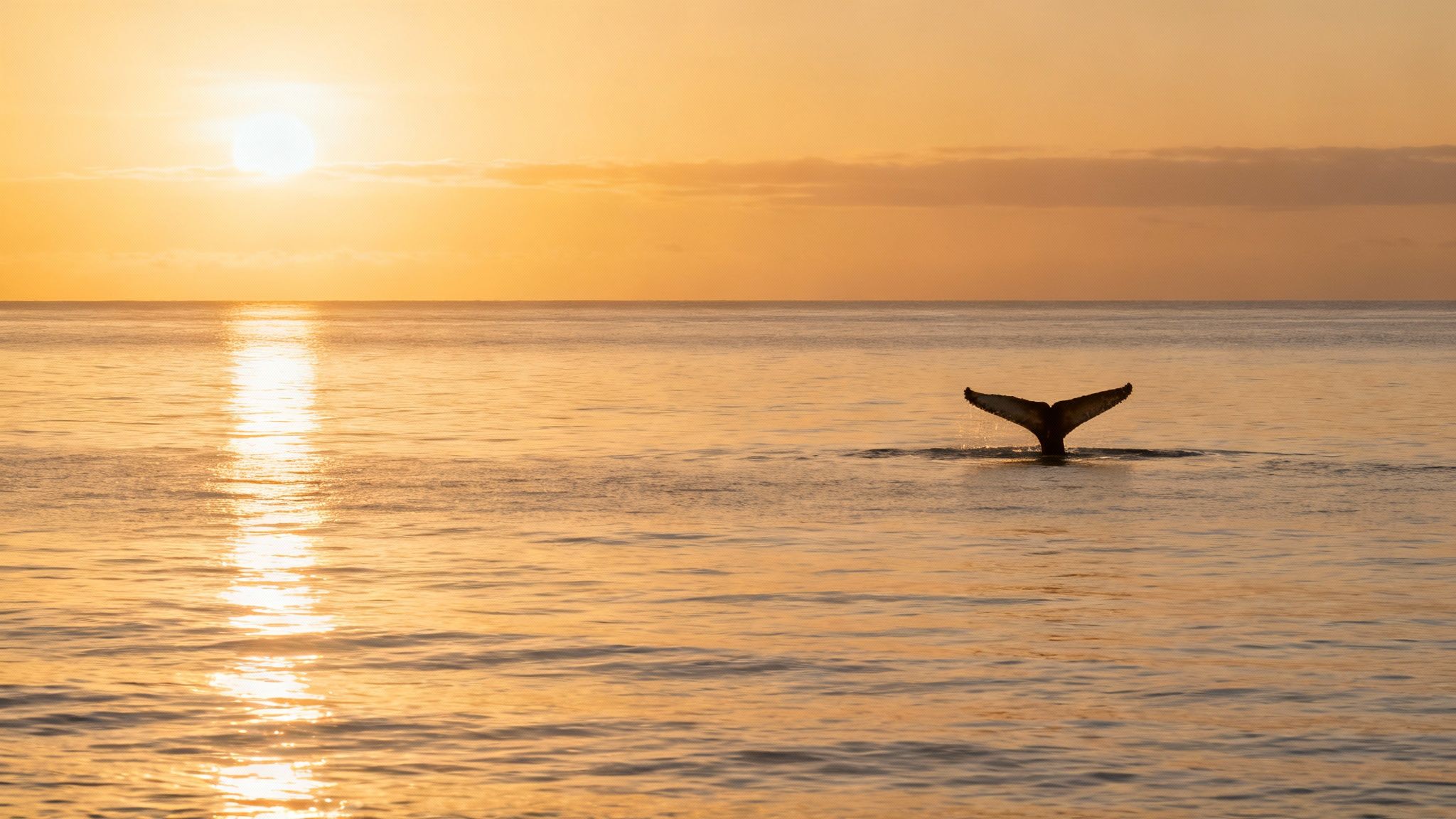
Morning tours, which often head out right around sunrise, are famous for glassy, calm ocean conditions. The water can be so smooth it looks like a mirror, making it super easy to spot those distant spouts or the slightest fluke movement. It's the perfect setup for photographers trying to get that perfect, crisp shot or for anyone who just wants a peaceful start to their day.
On the other hand, afternoon tours can sometimes offer more dynamic whale behavior. As the sun gets higher and the wind picks up a little, the whales seem to get a bit more energetic. That can mean more breaching, more tail slaps, and all-around more action. The water might be a bit choppier, but the potential for a high-energy show makes the afternoon just as exciting.
Pro-Tip: If you're someone who gets seasick, the morning tour is almost always your best bet. Those calmer waters make a huge difference and will help you enjoy the experience without feeling queasy.
A Monthly Guide to Big Island Whale Watching
To help you get your travel plans just right, here's a quick look at what to expect month by month during the season. Knowing the subtle shifts in activity can be the key to planning the ultimate whale watching trip. You can dive even deeper with our comprehensive guide to the Big Island whale season.
This table breaks down what you can expect each month so you can align your vacation with the best possible whale action.
Big Island Whale Watching Season Month by Month
| Month | Whale Activity Level | Typical Weather | Booking Recommendation |
|---|---|---|---|
| December | Increasing | Generally sunny and pleasant, with calm seas. The official start of the season brings the first large groups. | Book at least a few weeks in advance, especially for dates around the holidays. |
| January | Peak | Excellent weather continues, with consistently high numbers of whales, including mothers with newborn calves. | This is a prime month. Book your tour as far in advance as possible to secure a spot. |
| February | Peak | The highest concentration of whales. Expect frequent sightings and a wide range of behaviors. | The busiest month for tours. Booking 1-2 months ahead is highly recommended. |
| March | High but Decreasing | Great whale activity continues, especially in the first half. You'll see whales starting their journey back north. | Still very popular. Book several weeks ahead, particularly if your trip falls during spring break. |
Ultimately, no matter which month you choose within the season, you're in for an unforgettable experience. The key is to book ahead and get ready to be amazed.
Choosing Your Adventure: Boat Tour vs. Shore Viewing
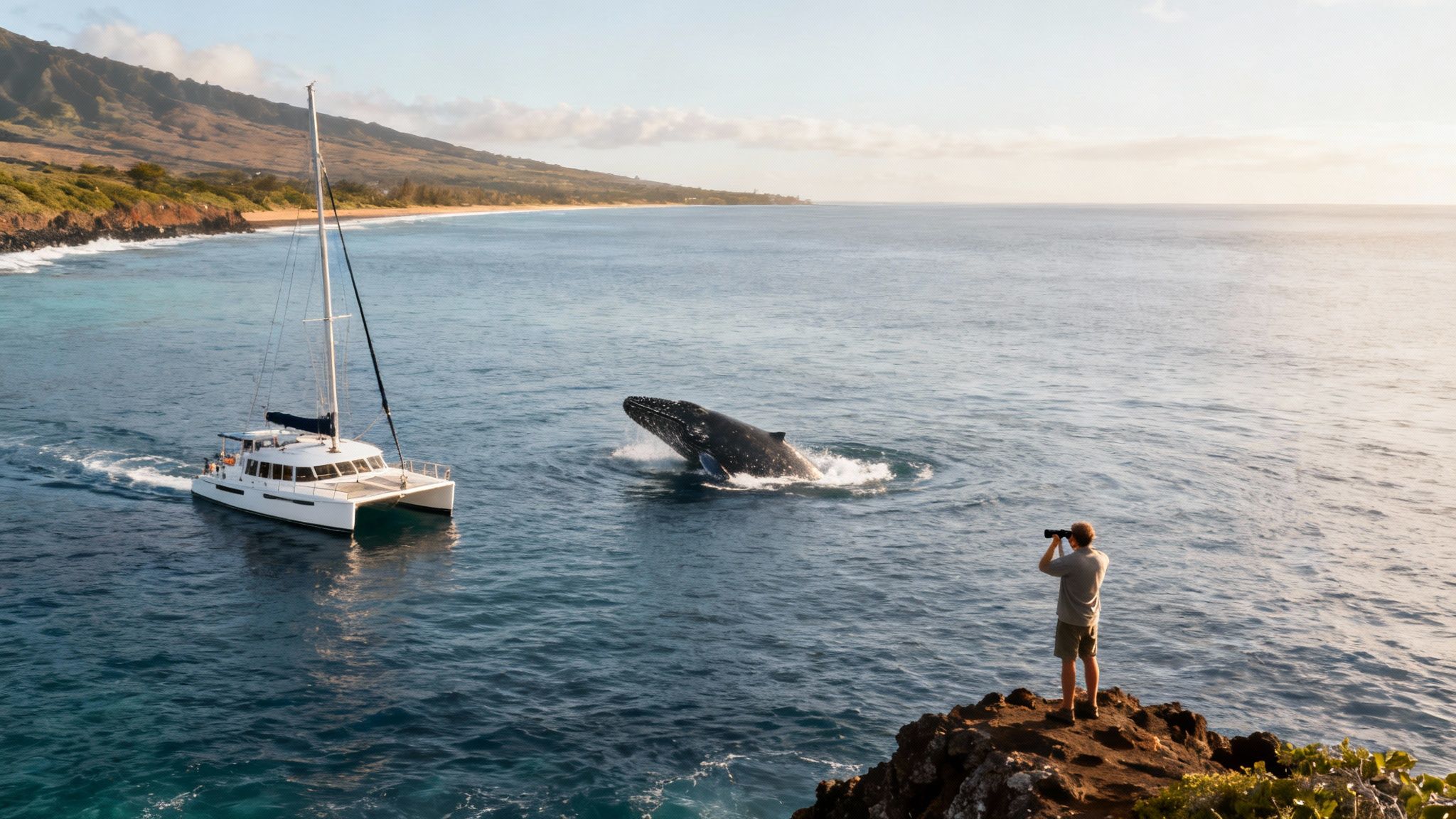
So, you're ready to see some whales. When it comes to whale watching on the Big Island, you've got two fantastic options, and they offer completely different perspectives. You can get out on the water for an up-close-and-personal boat tour, or find a beautiful lookout and watch from the coastline. The best choice really boils down to the kind of experience you're after—an immersive, guided adventure or a more relaxed, self-paced observation.
Getting a Front-Row Seat on a Boat Tour
Taking a boat tour is like getting a front-row seat to nature's greatest show. There's simply nothing that compares to being on the water, feeling the raw energy of a 40-ton animal launching itself out of the ocean nearby. The powerful whoosh of a whale exhaling through its blowhole is a sound that will stick with you forever.
On a boat, you’re in the hands of seasoned experts. The captains and crews are out there every single day of the season, tracking the whales’ movements and learning their patterns. They can read the animals' behavior in real-time, explaining the difference between a competitive pod of males and a mother gently teaching her calf. That expert narration adds a rich layer of understanding you just can’t get from shore.
An expert guide doesn't just find whales; they help you connect with them. By explaining the nuances of whale behavior, they transform a simple sighting into a profound and educational wildlife encounter.
Plus, many tours come equipped with hydrophones. These underwater microphones let you listen to the hauntingly beautiful songs of male humpbacks—an otherworldly experience that’s absolutely impossible from land. For a deeper look at what different companies offer, check out our guide on the best whale watching tours in Kona, Hawaii.
The Freedom of Shoreline Viewing
On the flip side, watching from shore has its own unique advantages, and the biggest ones are flexibility and freedom. It's completely free, and you can come and go as you please, scanning the horizon for as long as you like. This makes it a great option for families with small children who might get restless, or for anyone on a tighter budget.
The key to a successful land-based viewing is finding a spot with some elevation. A higher vantage point gives you a panoramic view of the ocean, making it much easier to spot the tell-tale puff of a distant blowhole or the massive splash from a breach. Just be sure to bring a good pair of binoculars—they can bring the action surprisingly close.
Some of the best shoreline spots include:
- Puʻukoholā Heiau National Historic Site: Its name literally means "hill of the whale," and for good reason. The elevated grounds offer sweeping, unobstructed ocean views.
- Lapakahi State Historical Park: This is another excellent high-elevation lookout along the Kohala Coast, perfect for spotting pods as they cruise the coastline.
- Kapaʻa Beach Park: This spot comes with the wonderful bonus of shaded picnic areas, so you can settle in for a more comfortable and leisurely viewing experience.
These locations are so reliable that they're used by community science initiatives like the Sanctuary Ocean Count. This program has been tracking whale populations from shore since 1996. In January 2025, volunteers at 40 shoreline sites across the Big Island spotted an incredible 493 humpback whales in a single day. You can find more details about these amazing community efforts and their findings on Big Island Now.
Comparing Your Options Side-by-Side
To help you decide what's right for you, let's break it down.
| Feature | Boat Tour | Shore Viewing |
|---|---|---|
| Proximity to Whales | Excellent. You get safely and legally close for incredible, eye-level views. | Distant. You'll need binoculars for a good view of specific behaviors. |
| Cost | Paid. Tours have a cost but provide significant value. | Free. An excellent budget-friendly option. |
| Expert Guidance | Yes. An experienced crew provides invaluable context and insights. | No. You are on your own to spot and interpret behaviors. |
| Experience | Immersive. You feel the ocean spray and hear the whales breathe. | Relaxed. A peaceful and flexible way to watch at your own pace. |
| Sensory Details | High. You can potentially hear whale songs via hydrophone. | Low. You'll only be able to see the action from afar. |
Ultimately, both methods are rewarding ways to experience the magic of whale season. A boat tour delivers an unforgettable, up-close adventure, while shoreline viewing offers a serene and accessible alternative. For many of our visitors, the perfect trip ends up including a little bit of both
So, What's a Big Island Whale Watching Tour Really Like?
There’s a special kind of energy you feel when you step onto a whale watching boat. It’s pure anticipation. The trip doesn’t just start when you see a whale; it begins the moment you're on board, with your captain and crew walking everyone through a quick but important safety briefing. They'll show you the ropes—where the life jackets are, key features of the boat, and what to do in an emergency—so everyone can relax and get ready for the main event.
Once you motor out of the harbor, the real magic starts to build. Your crew aren't just boat operators; they're seasoned naturalists who live and breathe this stuff. They’ll start sharing incredible stories and facts about the humpback whales, like their epic 3,000-mile journey from Alaska to Hawaii. This isn't just a sightseeing trip; it's a chance to connect with these animals on a much deeper level.
The Boat Matters: Picking Your Ride
The kind of vessel you're on will absolutely shape your whale watching experience on the Big Island. Different boats offer totally different vibes, so it helps to know what you’re signing up for.
- Catamarans: Think stability and space. These are larger boats with wide, open decks, giving you plenty of room to move around for that perfect photo angle. Because they're so stable, catamarans are a fantastic choice if you've got kids in tow or if you're worried about seasickness.
- Zodiacs (Rigid-Hulled Inflatable Boats): If you're craving a more adventurous, close-to-the-action feel, a zodiac is your ticket. These boats are smaller, faster, and sit low in the water, putting you practically at eye-level with the ocean. When a whale surfaces nearby, it feels incredibly intense and personal.
No matter which you choose, a great captain is the key. They know these waters like the back of their hand, expertly positioning the boat for the best views while always putting the whales' safety first.
The Moment Everyone's Waiting For
And then, it happens. Someone—usually a crew member with an eagle eye—shouts, "Thar she blows!" and points. Everyone scrambles to look. You’ll spot a puff of mist hanging in the air against the deep blue of the Pacific. That's the "spout," the whale's exhale, and it sends a jolt of pure excitement through everyone on board.
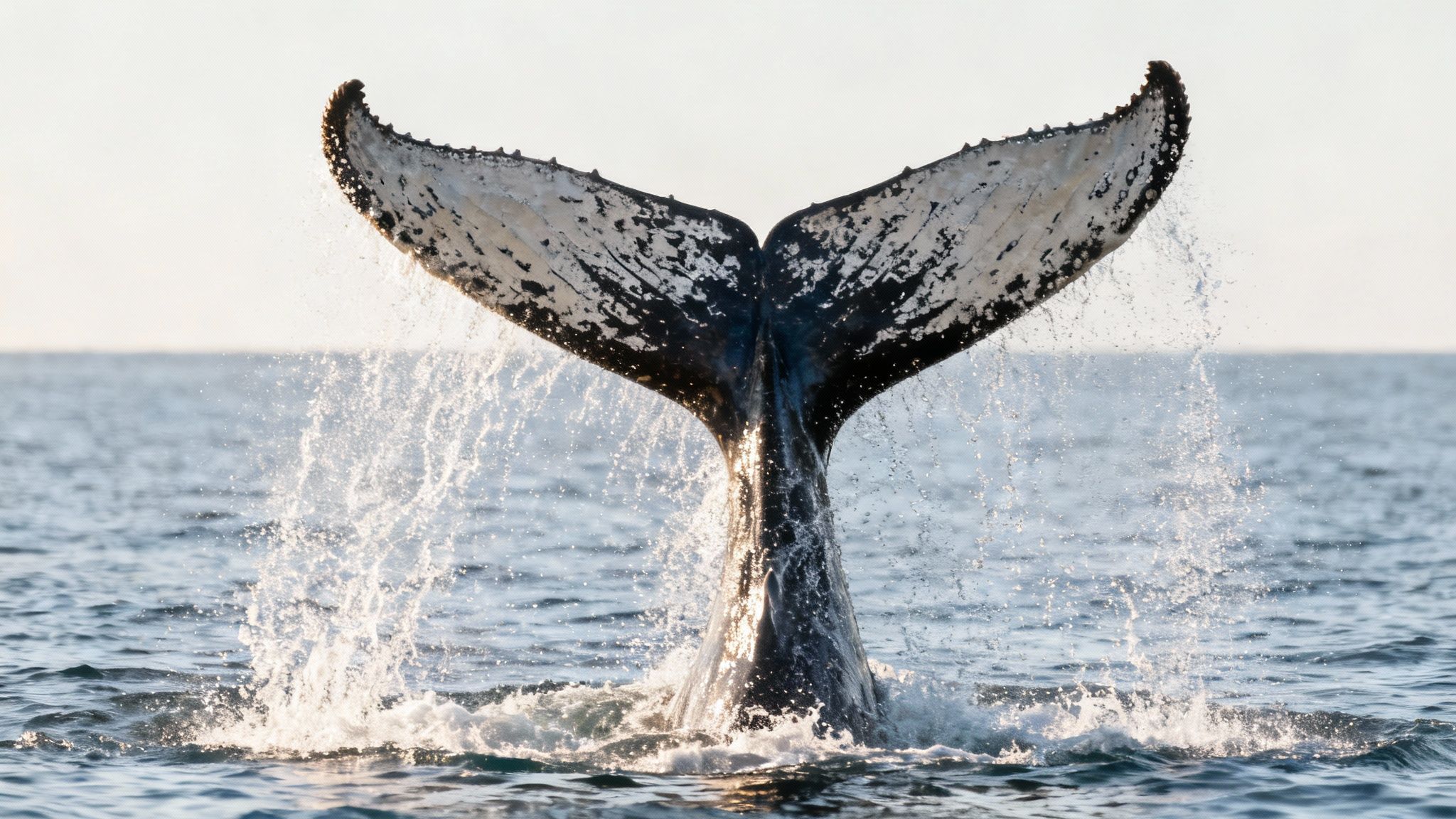
The captain will carefully ease the boat closer, and that's when the sheer size of these animals truly hits you. A massive, dark shape will rise from the depths, and if you’re lucky, you'll see the iconic fluke—that massive tail—lift gracefully out of the water before the whale dives back down. It’s one of those moments that a photo just can't do justice. Your naturalist guide will be right there, explaining what you’re seeing, whether it’s a mother and her new calf, a solo male, or a competitive pod chasing a female.
"Aboard a tour, you're not just a passenger; you are an active participant in a wildlife discovery mission. The crew’s knowledge and passion are infectious, turning every observation into a lesson about the ocean's delicate ecosystem."
Watching with Respect: How We Protect the Whales
Every reputable tour operator on the island is deeply committed to responsible whale watching. Humpback whales are a protected species, and there are strict federal laws in place to make sure we don't disturb them. This is especially true for the mothers and their newborn calves, who need plenty of space and calm.
The golden rule is that all boats must stay at least 100 yards away—that's about the length of a football field. This is not a suggestion; it's the law, and it's vital for the whales' well-being. A professional crew will never chase down or harass a whale. Instead, they'll position the boat and often cut the engines, creating a peaceful environment. Sometimes, if the whales are curious, they might even choose to approach the boat on their own terms. This respectful, hands-off approach makes for the best and safest encounters for everyone involved and ensures these amazing animals will be here for generations to come.
Understanding Humpback Whale Behaviors
Seeing a humpback whale is one thing. But really understanding what you're seeing? That changes the entire game. Every leap, splash, and sound out there has a purpose, and learning to read the signs transforms your whale watching on the Big Island trip from just sightseeing into a real connection.
Think of it like this: at first, it's all just incredible noise and movement. But after a little while, you start picking up on the patterns. You begin to see the language. It’s your chance to go from a simple spectator to an informed observer of one of nature's greatest shows.
Once you can spot these behaviors, you'll have a much deeper appreciation for the complex social lives these gentle giants lead right here in our warm Hawaiian waters. You'll see how they talk, compete, play, and raise their calves.
The Iconic Breach and Other Surface Action
The breach is the showstopper. It’s what everyone secretly hopes to see. This is when a whale weighing up to 40 tons launches its entire body out of the water in a mind-blowing display of sheer power. That moment of silence as it hangs in the air, followed by the colossal splash… it's something that leaves you absolutely speechless.
So, why do they do it? Scientists have a few solid theories. It could be a way to communicate over long distances, a technique to knock off pesky parasites like barnacles, a show of dominance to other whales, or maybe—just maybe—they do it for the pure joy of it.
But the breach is just one move in their playbook. Humpbacks have a whole vocabulary of surface actions, and each one tells a story.
-
Tail Slap (Lobtailing): You'll know this one when you hear it. A whale lifts its massive tail fluke out of the water and smacks it down with incredible force. The sound is sharp and loud, like a cannon shot echoing across the ocean. It's often seen as a warning or a sign of agitation.
-
Pectoral Fin Slap: Humpbacks have the longest pectoral fins (their side flippers) in the whale world, stretching up to 15 feet long. They'll often roll onto their side and just slap these giant fins on the water over and over. It's another form of communication, something we see a lot when whales are socializing.
-
Spyhop: This might be the most charming behavior of all. A whale will point itself straight up in the water and slowly lift its head out, like a submarine periscope. It gives them a good look around above the surface, and honestly, it always feels like they're just as curious about us as we are about them.
Listening to the Song of the Sea
Beyond all the incredible things you can see, one of the most hauntingly beautiful parts of whale watching is something you can only hear. Male humpback whales are famous for their complex, looping songs. These melodies can last for more than 20 minutes at a time and travel for miles and miles underwater.
These aren't just random sounds; they're structured musical compositions with verses and choruses that repeat, much like our own music. While researchers are still figuring it all out, the songs are widely believed to be tied to mating rituals and staking out territory.
Many tour boats on the Big Island carry a hydrophone—an underwater microphone. During a quiet moment, the captain might drop it into the ocean, and suddenly, the boat is filled with this incredible underwater concert. Hearing their songs is an otherworldly experience that connects you directly to the deep, mysterious world just beneath the waves.
How to Prepare for Your Whale Watching Trip
A little bit of prep goes a long, long way in making sure your day out on the water is comfortable and absolutely unforgettable. Getting your gear sorted means you can just relax and focus on the main event—whale watching on the Big Island—without a single distraction. When you show up for your tour feeling ready and well-equipped, you're setting the stage for a perfect adventure.
Trust me, you'll want to think beyond just a t-shirt and shorts. While that Kona sun feels amazing, things can change in a hurry once you're on the open ocean. A great trip is all about being ready for whatever the Pacific decides to throw at you.
Your Essential Onboard Checklist
Packing the right stuff can be a total game-changer. A well-thought-out bag means you're comfortable, shielded from the elements, and ready to snap a photo of every incredible moment. Here’s my go-to list of must-haves for any whale watching trip.
- Polarized Sunglasses: This one is non-negotiable. Regular sunglasses just make things darker. Polarized lenses are magic—they slice right through that intense glare coming off the water, letting you spot whales and other marine life way more easily.
- A Secure Hat: A wide-brimmed hat is your best friend against the powerful Hawaiian sun. Just make sure it has a chin strap or fits snugly; you don't want it flying off the second the boat gets up to speed.
- Reef-Safe Sunscreen: We all have a part to play in protecting Hawaii's fragile marine ecosystems. Opt for a mineral-based sunscreen (look for zinc oxide or titanium dioxide) to protect your skin without hurting our precious coral reefs.
- Camera with a Wrist Strap: You're definitely going to want photos, but boats can rock when you least expect it. A simple wrist or neck strap is your insurance policy against sending your phone or camera for an accidental swim.
Dressing for Success on the Water
The real secret to comfort on any boat tour? Layers. Even on the toastiest days, the breeze coming off the ocean can create a serious wind chill, especially in the morning or when the boat is cruising from one spot to another.
I always recommend starting with a light base like a t-shirt or tank top, but be sure to bring a long-sleeved shirt or a light windbreaker you can toss on over it. This simple strategy lets you adjust on the fly as the temperature changes, keeping you perfectly comfortable from the moment you leave the harbor to the moment you get back.
Pro-Tip: Wear comfortable, non-slip footwear. Think sandals with a backstrap or proper boat shoes. A wet deck can get slick in a hurry, and having solid footing is key to moving around the boat safely.
Proactive Tips for Motion Sickness
The mere thought of seasickness is enough to give some folks anxiety, but it absolutely does not have to spoil your day. The trick is to be proactive, not reactive. If you wait until you start feeling queasy, it's usually too late.
Consider grabbing an over-the-counter remedy like Dramamine or Bonine, but the key is to take it at least an hour before you even step on the boat. This gives it time to actually work. Some people also have great luck with natural alternatives like ginger chews or acupressure wristbands. For a full breakdown of all the options, learn more in our detailed guide on how to prevent seasickness and find what works for you. Showing up prepared means you'll feel great and can soak in every moment of this incredible experience.
A Few Whale Watching Questions Answered
Heading out on a whale watching tour is an incredible experience, but it’s totally normal to have some questions buzzing around your head before you get on the boat. We get asked a lot of the same things by our guests, so let's clear up a few of the most common ones right now.
Is Morning or Afternoon Better for Spotting Whales?
This is the classic debate, and honestly, you can't go wrong either way. Both times of day offer a fantastic shot at seeing whales, but they have different vibes.
Morning trips are famous for that glassy, calm water. If you’re worried about getting seasick, or you just love that peaceful, smooth-as-silk ocean, morning is your best bet. The calm surface can also make it a little easier to spot those distant spouts breaking the horizon.
On the other hand, afternoons can be when the real action heats up. As the day warms up, we sometimes see the whales get a bit more energetic. This can mean more of those jaw-dropping behaviors like full-body breaches and powerful tail slaps. It really just comes down to whether you prefer calmer seas or the chance for more high-energy action.
How Close Can the Boat Actually Get to the Whales?
Giving the whales their space is our absolute number one priority out on the water. Federal law is crystal clear: all boats have to stay at least 100 yards away from humpback whales. To put that in perspective, think of the length of a football field. This rule is super important for keeping the whales safe and stress-free, especially for the new moms with their calves.
A good, professional tour operator will never, ever chase or crowd a whale. That’s just not how it’s done. We're experts at positioning the boat respectfully for the best possible views without breaking that 100-yard bubble. The coolest part? Often, if we just cut the engines and hang out quietly, the whales' own curiosity takes over. They might just decide to swim over and check us out, which is a truly unforgettable moment.
What Else Might We See Besides Humpbacks?
While the humpbacks are definitely the stars of the show during the winter season, the ocean off the Kona coast is just buzzing with life. It's almost a guarantee that you'll run into a pod of playful spinner dolphins. You haven't lived until you've seen them launch themselves out of the water in a full acrobatic spin!
Keep your eyes peeled, because you could also spot:
- Hawaiian green sea turtles (honu), just gracefully cruising near the surface.
- Pilot whales, which travel in big, close-knit family groups.
- The occasional oceanic whitetip shark or even a massive (but gentle) whale shark.
Every single trip is different. You're not just going whale watching; you're diving into a rich Pacific ecosystem where anything can happen.
Can I Bring My Kids on a Whale Watching Tour?
You bet! Whale watching is an incredible adventure for the whole family. Seeing a 40-ton whale launch its entire body out of the water is something a kid will remember for the rest of their life. It’s the kind of experience that can spark a real passion for the ocean.
Most tour companies, ours included, love having families on board. It’s always smart to double-check for any age restrictions when you book, just in case. For the little ones, we usually suggest a morning tour when the ocean is likely to be a bit calmer and more comfortable for them.
Ready to make some memories with these gentle giants that you'll be talking about for years? Kona Snorkel Trips specializes in small-group tours with expert guides who live and breathe this stuff. We'd love to share the wonder of the ocean with you. Book your whale watching adventure with us today!