
A Guide To Whale Watching Kona Big Island

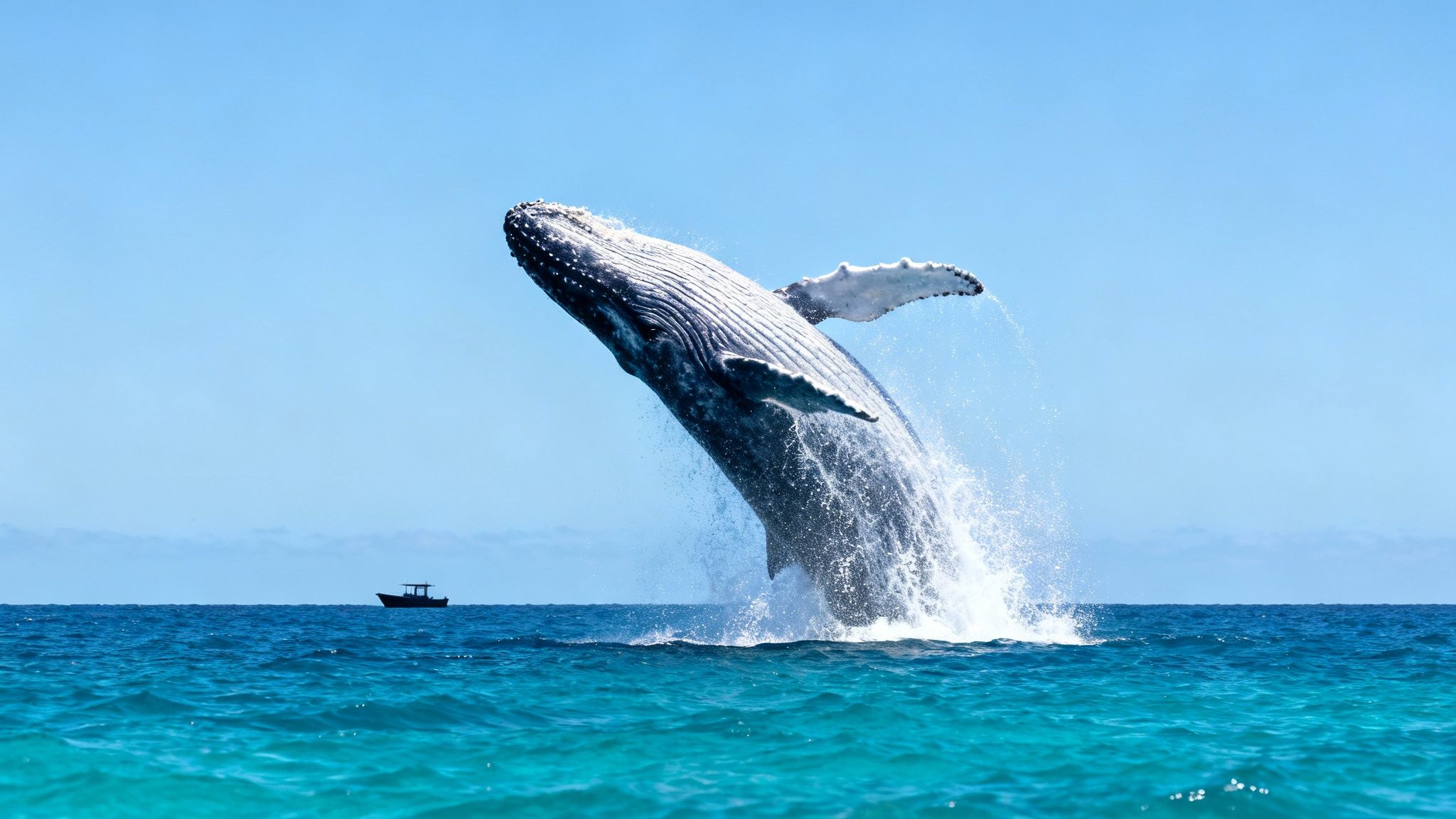
Picture this: the calm, turquoise water off the Kona coast suddenly explodes as a 40-ton humpback whale throws its entire body into the air. That incredible, heart-stopping moment is what this guide is all about.
Every winter, thousands of humpback whales make their way to Kona's warm, sheltered waters, putting on one of the most spectacular wildlife shows on Earth. It's an experience we live for, and we want to help you see it for yourself.
Your Guide To Kona's Humpback Whale Season
Witnessing the annual humpback whale migration is, without a doubt, one of the most awe-inspiring things you can do in Hawaii. But before we get into the nitty-gritty, it's important to know that your choice of tour operator really matters. As the top rated & most reviewed snorkel company in Hawaii, Kona Snorkel Trips is all about creating unforgettable and respectful wildlife encounters. We live and breathe for these moments out on the ocean.
The Epic Journey To Hawaiian Waters
Every year, these magnificent creatures travel an unbelievable 3,000 miles from their chilly feeding grounds up in Alaska. Their destination? The warm, protected waters around the Hawaiian Islands, which basically turn into a massive nursery where they mate, give birth, and raise their newborn calves.
This whole journey is an incredible feat of endurance, driven by pure instinct. The whales travel for months without eating a single bite, relying entirely on the fat reserves they've built up. It makes our whale watching season more than just a tourist attraction—it’s a front-row seat to a crucial chapter in the life of one of the planet's largest mammals.
Why Humpbacks Choose Kona
So, why Hawaii? The short answer is safety and warmth. The waters off the Big Island, especially along the Kona and Kohala coasts, offer the perfect conditions for the most important moments in a humpback’s life.
- Breeding and Mating: These waters become a grand stage where males compete for mates. You might see them in spectacular "competitive pods," showing off incredible power and agility.
- Birthing: Pregnant females actively seek out the calm, shallow bays to give birth to their calves in a relatively safe, protected environment.
- Nursing: A newborn calf has very little body fat, so the warm water is essential for its survival. Here, they can nurse and build up strength for their first long swim back north.
This vital life cycle is what makes whale watching in Kona so special. You aren't just looking at animals swimming by; you're witnessing a new generation begin. The warm, clear waters here are also largely free of orcas—the humpbacks' main natural predator—making it just about the perfect nursery.
Finding The Best Time For Your Whale Watching Trip
Timing is everything when you're planning a whale watching trip in Kona. Sure, you might get lucky and spot a stray humpback outside of the main season, but if you want to see something truly spectacular, you need to sync up with their annual migration calendar. Think of it like this: you want to show up to the party when it's in full swing, not when they're just setting up or cleaning up afterward.
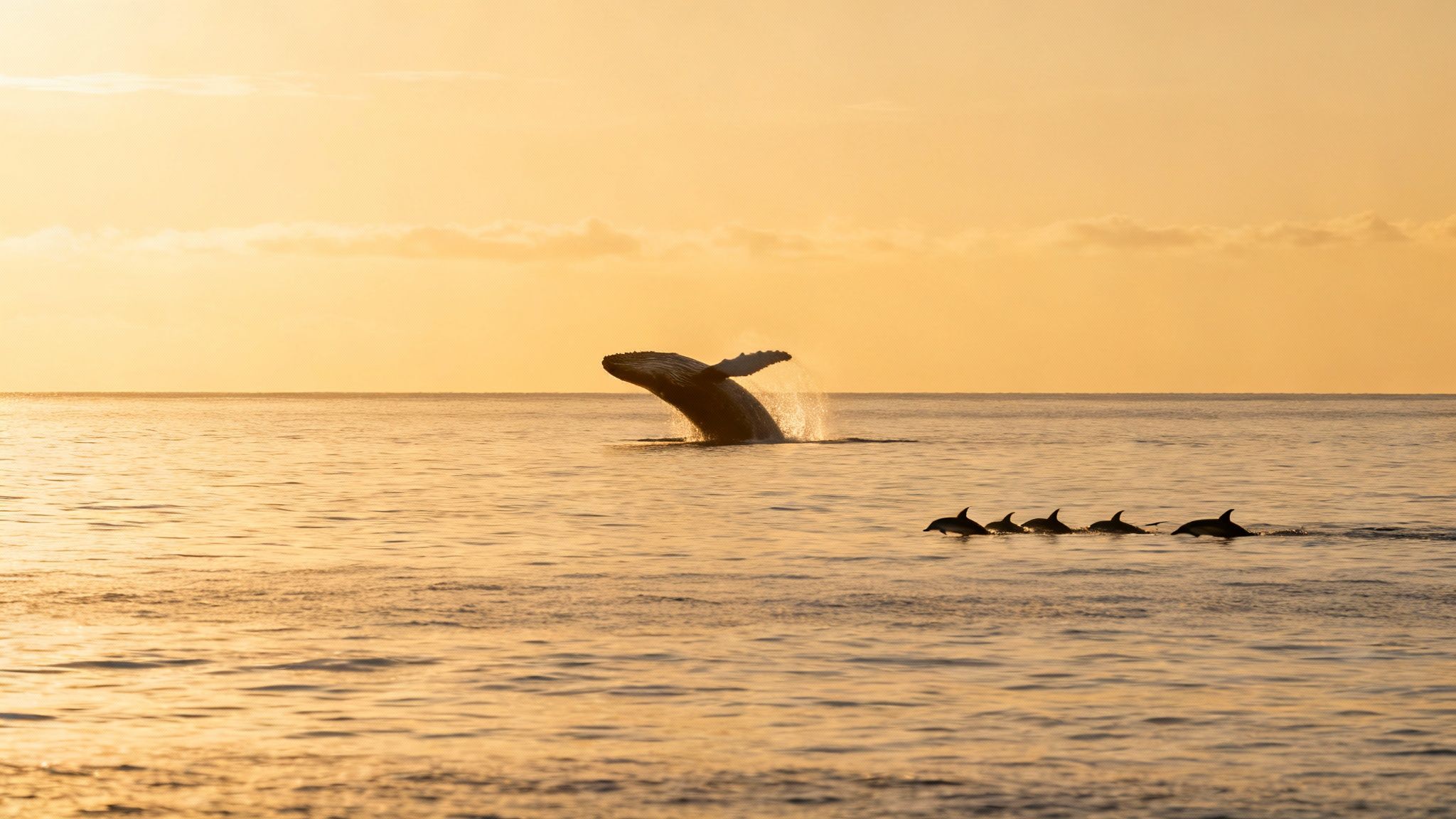
The official whale season runs from December through March. But even within that window, the energy and activity levels change a lot from month to month, offering a totally different vibe depending on when you come.
The Peak Season: January through March
If you're after the most electrifying, action-packed whale watching, January through March is without a doubt the prime time. This is when the waters off Kona are absolutely buzzing, teeming with thousands of humpback whales. It's the heart of their breeding and calving season, which means the ocean comes alive with some of the most dramatic behaviors you can imagine.
During these months, you’re far more likely to see:
- Competitive Pods: Big groups of males chasing after a single female, putting on powerful, acrobatic shows to win her over.
- Mothers and Calves: There’s nothing quite like watching a newborn calf learn to breach right alongside its mom. It's a truly heartwarming sight.
- Constant Surface Action: With so many whales packed into one area, the number of breaches, tail slaps, and spy-hops goes through the roof. Get your camera ready.
The sheer density of whales during this peak is just mind-boggling. We're talking more than 12,000 koholā (humpback whales), which is over half of the entire North Pacific population, all gathering right here. This incredible concentration is exactly why Kona becomes a global hotspot for whale lovers every single winter.
So, if your schedule is flexible, this three-month window is your absolute best bet for that classic, jaw-dropping whale watching tour you've been dreaming of.
The Shoulder Seasons: December & April
While the peak season gets all the glory, the "shoulder" months have their own special charm. These bookends to the season offer a different, often more serene, whale watching experience.
The early arrivals start trickling in during late fall. The early season, from December to early January, is when you'll see the first migrants arriving from their long journey. It's an exciting time, full of anticipation.
By April, most of the whales have started heading back north to their feeding grounds in Alaska. But you'll often see the last groups lingering, which are usually new mothers with their calves. They stay behind to let the little ones build up strength and blubber for the cold journey ahead. It makes for some incredibly touching and gentle viewing opportunities.
For a full rundown of what to expect month by month, check out our detailed guide to the Big Island whale season.
A Month-By-Month Guide To Whale Watching
To help you get a clear picture of the whole season, we've put together a simple calendar. It breaks down what you can expect to see each month so you can line up your travel dates with the kind of whale activity you're most excited about.
Kona Whale Watching Calendar
| Month | Humpback Whale Activity | Common Behaviors | Other Marine Life |
|---|---|---|---|
| Nov – Dec | Low to Moderate | The first arrivals show up. You'll see spouts and the occasional breach from scouts. | Spinner dolphins, bottlenose dolphins, and pilot whales are commonly seen. |
| Jan – Mar | High (Peak Season) | This is the main event! Expect frequent breaches, tail slaps, and competitive pods. | All year-round residents are active, with better chances of seeing large dolphin pods. |
| April | Moderate to Low | The population thins, but mothers and calves are often spotted resting for their trip. | Manta rays become more active near the surface as the water warms. |
| May – Oct | Very Low / Rare | Humpback sightings are extremely rare. The focus shifts to Kona's resident marine life. | This is prime time to see pilot whales, false killer whales, and various dolphins. |
This calendar should give you a good starting point for planning the perfect trip. No matter when you come, there's always something incredible to see in Kona's waters.
Discovering Where To See Whales On The Big Island
Knowing when to look for humpback whales is only half the battle; knowing where is just as important. Luckily, the Big Island boasts some of the most reliable and downright spectacular whale-watching spots on the planet. The calm, warm, and protected waters along the western coast are a natural sanctuary, making this the perfect final destination for their long annual migration.

The Kona and Kohala coasts are, without a doubt, the epicenters of whale activity. The island’s massive volcanoes act as a giant shield, blocking the powerful trade winds and creating serene ocean conditions perfect for new mothers and their calves. It's this natural protection that draws thousands of whales back to these same waters, year after year.
The Kona And Kohala Coasts: A Humpback Nursery
The stretch of ocean from Kona up to the Kohala Coast isn't just a pretty postcard view—it’s a vital nursery. The shallow depths and balmy water temperatures create a safe haven where pregnant females can give birth and nurse their young, far from the constant threat of predators like orcas.
This sheltered environment is critical. It allows the newborn calves to conserve precious energy, nurse often, and quickly build the thick layer of blubber they’ll need for their first grueling journey back to Alaska. When you’re whale watching on the Big Island, you're getting a front-row seat to one of nature's most tender and crucial life stages.
Viewing From The Water: The Ultimate Experience
Sure, you can spot a spout or a breach from shore, but nothing compares to the immersive experience of a boat tour. Getting out on the water puts you at eye-level with these gentle giants, offering a perspective that’s simply impossible from land. The sound of a powerful exhalation, the sight of a massive fluke rising silently from the depths—it’s an encounter that connects you directly to the raw power of the ocean.
Tours leaving from Honokohau Harbor, just a bit north of Kailua-Kona, are perfectly positioned to get you into the prime whale zones quickly. An experienced crew knows how to read the subtle cues of the ocean, guiding you to the most active spots for an adventure you won't soon forget.
"Being on a boat brings you into their world. You don’t just see the whales; you feel their presence. Hearing a 40-ton animal breathe just a few hundred feet away is a sound that stays with you forever."
Jumping on a tour is really the best way to guarantee a respectful, safe, and deeply meaningful experience.
Top Land-Based Viewing Spots
If you'd rather keep your feet on solid ground or want to keep an eye out after your tour, the Big Island’s coastline has some fantastic viewpoints. The trick is to find a spot with good elevation; it gives you a panoramic view of the ocean and makes it much easier to spot those distant spouts and breaches.
Here are some of the best locations for shore-based whale watching:
- Puʻukoholā Heiau National Historic Site: It’s no coincidence that the name of this historic site literally translates to "hill of the whale." Its elevated perch offers commanding views over the very waters where humpbacks love to gather.
- Lapakahi State Historical Park: This park is another excellent vantage point along the Kohala Coast. The clear, unobstructed sightlines make it a prime spot for scanning the horizon, so don't forget your binoculars.
- Kapaʻa Beach Park: Located near Lapakahi, this park has the added bonus of covered picnic areas. You can watch for whales in comfortable shade, making it a great place to settle in for an afternoon.
Watching from these scenic lookouts provides a different, but equally rewarding, experience. It gives you a real sense of the ocean's vastness and the sheer scale of the whales' winter home. Whether you choose to explore by boat or from the shore, the opportunities for incredible whale watching in Kona are everywhere.
How To Choose The Perfect Whale Watching Tour
With so many whale watching outfits on the Big Island, picking the right one can feel a little daunting. But it's worth taking a minute to figure out what you want, because your choice of boat and crew will absolutely define your day on the water. The goal is to find an adventure that's not just a thrill, but also safe, educational, and genuinely respectful of these magnificent animals.
When you choose the right tour, you're setting yourself up for a personal and unforgettable encounter. Every little detail, from the size of the boat to the knowledge of the guides, plays a part.
Vessel Style: Big Boats Versus Small Boats
The kind of boat you're on completely sets the vibe for the trip. You've basically got two choices, and they offer totally different experiences.
-
Large Catamarans and Vessels: These are your stable, comfort-cruisers. Think restrooms, shaded seating, and maybe even a snack bar. Their big, spacious decks give you plenty of room to walk around, making them a fantastic choice for families with little kids or anyone who gets a bit wobbly on the water. The ride is generally smoother, offering a relaxed platform for whale spotting.
-
Small-Group Rafts and Zodiacs: If you're craving a more thrilling, down-at-the-waterline experience, this is it. These zippy boats are faster and sit much lower, which makes everything feel more intimate and adventurous. You're right there, close to the action, feeling the sea spray and hearing the whales' powerful breaths without a crowd around you. This is the go-to for serious photographers and anyone wanting a more direct connection with the ocean.
So, what's your priority? A steady, family-friendly cruise, or a nimble, up-close adventure? Answering that one question is the best first step to finding your perfect Kona whale watching tour.
A Checklist For Vetting Tour Operators
Let's be honest, not all tour companies are created equal. To make sure you're going out with a solid, ethical operator, run through this quick mental checklist. A little homework now makes a world of difference later.
1. Commitment to Regulations and Conservation
A responsible operator's first priority is always the whales' well-being. They absolutely must follow NOAA's rules, which means staying at least 100 yards away from humpbacks. Don't be shy—ask them about their conservation work. Do they help with research or local cleanups? A real commitment to protecting the marine environment is the clearest sign of a quality company.
2. Expert Onboard Guides
The best tours have marine naturalists on board, not just boat drivers. A knowledgeable guide can turn a simple sightseeing trip into a fascinating learning experience. They'll explain what those whale behaviors mean, answer your questions, and share incredible facts about the entire marine ecosystem. It adds so much value to the trip.
3. Safety Record and Certifications
Safety is non-negotiable. Look for a company with a squeaky-clean safety record and check that their crew is certified in first aid and CPR. Good companies are always transparent about their safety gear and protocols.
4. Positive Reviews and Reputation
Check out recent reviews on Google or TripAdvisor. Consistent, glowing feedback about the crew, the sightings, and the overall vibe is a great sign you're picking a winner for your whale watching Kona Big Island adventure.
"A great tour is more than just seeing whales; it's about understanding them. The passion and knowledge of the guides can elevate the experience from memorable to life-changing."
Booking Your Tour In Advance
Once you've zeroed in on a few operators you like, don't wait around to book. During the peak season from January to March, Kona is buzzing with people who are all there to see the whales. The best tours—especially those awesome small-group zodiacs—get booked up weeks, sometimes even months, ahead of time.
Booking early locks in your spot and gives you the best choice of dates. This is super important if you're on a tight travel schedule. A little bit of planning goes a long way to make sure you don't miss out on what could be the absolute highlight of your Big Island vacation.
For a deeper dive into specific companies, our guide to the top whale watching tours in Kona can give you more insights to help you choose.
What To Expect During Your Kona Whale Tour
There's a special kind of energy on a boat just before a whale watch tour. You feel it the moment you step aboard and the Kona coast starts to shrink behind you. The air is salty and thick with anticipation as everyone’s eyes fix on the deep blue horizon, scanning for that first sign.
Then, it happens. Someone points, a murmur ripples through the passengers, and you see it: a misty puff hanging in the air. That first spout is the signal that your Big Island whale adventure has truly begun.
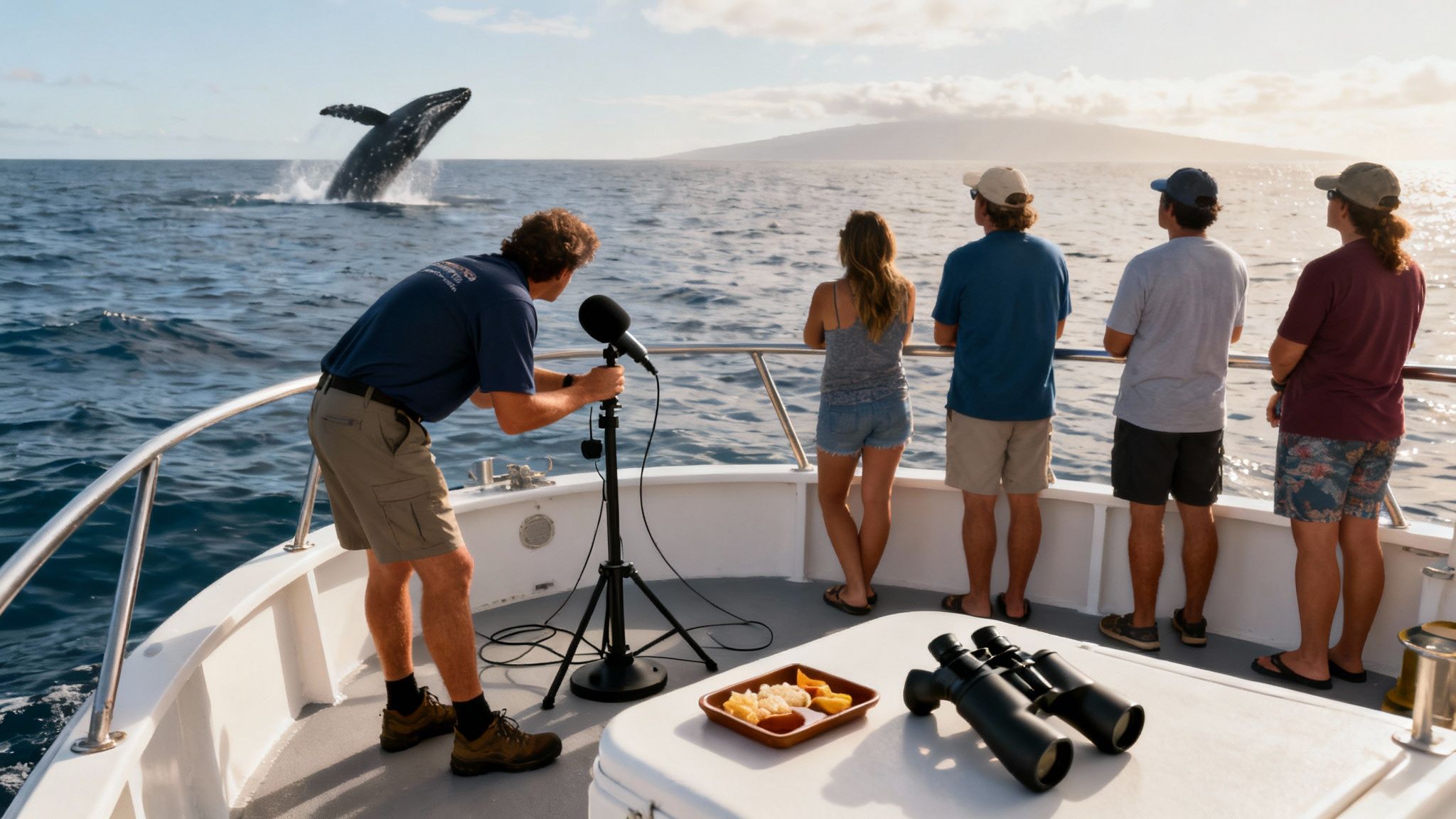
As the captain eases back on the throttle, keeping a respectful distance, the sheer scale of these animals really hits home. No photo can ever do justice to the heart-stopping moment a 40-foot, 40-ton humpback launches itself out of the water in a massive breach. It’s an awesome display of raw power and surprising grace that feels like it’s from another world.
Decoding The Oceanic Ballet
One of the best parts of any whale watching Kona Big Island tour is getting to understand what you're actually seeing. A great guide will act as your translator, decoding this oceanic ballet and turning a fun trip into a truly fascinating one.
- Breach: The full-body leap that everyone hopes to see. Scientists figure it could be anything from long-distance communication to shaking off parasites, or maybe even just for the fun of it.
- Tail Slap (or Fluke Slap): A loud, cracking slap of the tail on the water. This is a dramatic move that might be a warning to other whales or just another way to get a message across the waves.
- Pectoral Fin Slap: You'll see a whale roll onto its side and smack its long pectoral fin on the surface over and over. This is classic social behavior, often seen when groups of whales are hanging out.
- Spy-Hop: A real crowd-pleaser. This is when a whale pops its head straight out of the water to get a look around. It honestly feels like they're just as curious about us as we are about them.
Volunteer-led efforts like the Sanctuary Ocean Count and Great Whale Count give us an incredible snapshot of these behaviors. On the last Saturday of March, for instance, the final count tallied an impressive 714 humpback whales (koholā) across the islands, with volunteers carefully noting all the surface activities you’ll be seeing.
More Than Just Sightings
A truly memorable tour goes beyond just what you can see. Many boats, especially the smaller ones, carry a hydrophone. During a quiet moment, the captain might lower this underwater microphone into the ocean.
When you put on the headphones, you’ll hear the complex, haunting songs of male humpback whales echoing up from the deep. It adds a whole new layer to the experience, connecting you to their world in a way sight alone never could.
Most tours run between two and four hours and usually include some light snacks and drinks. If you're someone who gets a bit queasy on the water, a little preparation goes a long way. We've got some great advice in our guide on how to prevent seasickness that you should check out before you go.
Your Kona Whale Watching Questions Answered
Getting ready for an adventure on the water always brings up a few questions. To make sure you feel totally prepared for your whale watch, we've put together some straightforward answers to the things travelers ask us most. Think of this as your quick-reference guide for finalizing your plans with confidence.
What Is The Best Time Of Day For Whale Watching In Kona?
We nearly always recommend the morning trips. The ocean off the Kona coast is typically at its calmest then, making for a glassy, smooth ride that's easier on the stomach and better for spotting whales. That mirror-like surface makes every spout and splash pop against the horizon.
That said, the whales are out there all day long. Afternoon tours can be just as incredible, and sometimes they're a little less crowded. The choice really comes down to your own schedule and whether you prefer the calmest possible seas.
Are Whale Sightings Guaranteed On A Tour?
Here’s the honest truth: these are wild animals on their own schedule, in their own home. That's what makes every single encounter so special. Because of that, sightings can never be 100% guaranteed.
However, during the peak season from January to March, the chances are incredibly high. The best local tour operators have success rates well over 95%. Many will even offer you a free return trip if you don't see any whales. It’s always worth asking about their specific policy when you book—it shows they're committed to giving you a great experience.
What Should I Bring On A Whale Watching Tour?
A little bit of preparation goes a long way to making your day on the water comfortable and fun. The conditions out on the ocean can be quite different from what you feel on shore.
Here’s a short list of must-haves for your whale watching Kona Big Island tour:
- Reef-Safe Sunscreen: Protect your skin and protect our delicate coral reefs at the same time.
- Polarized Sunglasses: This is a real game-changer. They cut the glare off the water's surface, making it so much easier to see what's just below.
- A Hat and Light Jacket: A hat is essential for sun protection, and a light windbreaker is perfect for when that cool ocean breeze picks up.
- Camera with a Zoom Lens: You'll want this to capture those amazing moments from a respectful distance.
- Seasickness Medication: If you even think you might be prone to motion sickness, it's a good idea to take something beforehand. Just follow the directions, and you'll have a much more pleasant trip.
How Close Can The Boats Get To The Whales?
Federal law is very clear on this, and for good reason. All boats must stay at least 100 yards away from humpback whales. This rule is strictly enforced to protect these incredible animals, especially the mothers with their brand-new calves who are resting in our waters.
A responsible and ethical tour operator will never break this rule. The magic happens when the whales themselves decide to get curious. It's not uncommon for a whale to approach a boat on its own, leading to some truly breathtakingly close encounters. A professional captain knows to cut the engines and let the whale be in control, always prioritizing their space and safety.