
Whale Watching Kona Big Island: The Essential Guide
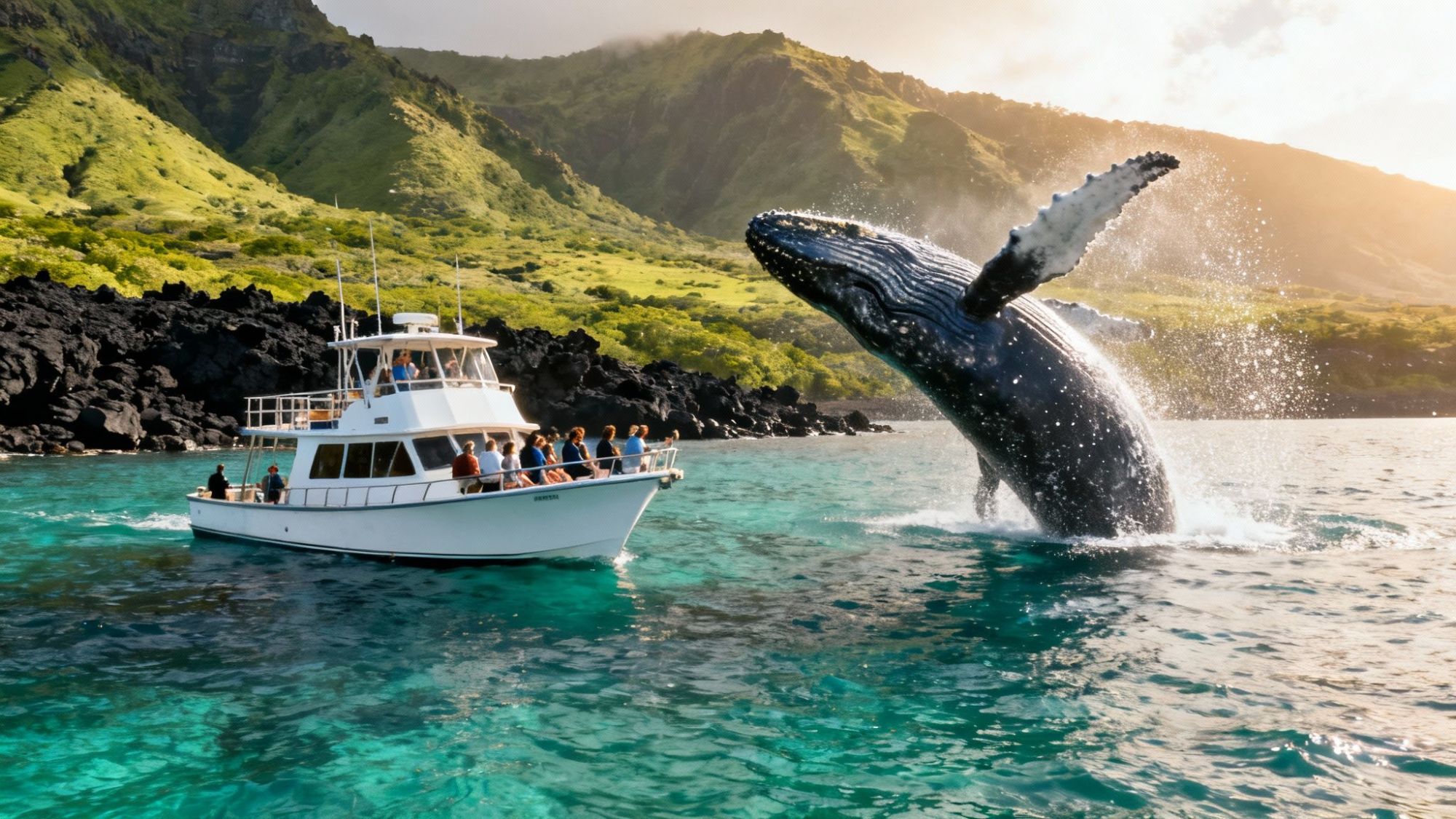
Picture this: the calm, turquoise surface of the Pacific suddenly erupts as a 40-ton humpback whale torpedoes into the sky. This isn't something you watch on a nature channel; it's a very real, heart-pounding possibility when you're whale watching here in Kona. As Kona Snorkel Trips, the top rated & most reviewed snorkel company in Hawaii, we live for creating these moments, bringing you face-to-face with these gentle giants of the deep.
Witnessing Kona's Gentle Giants
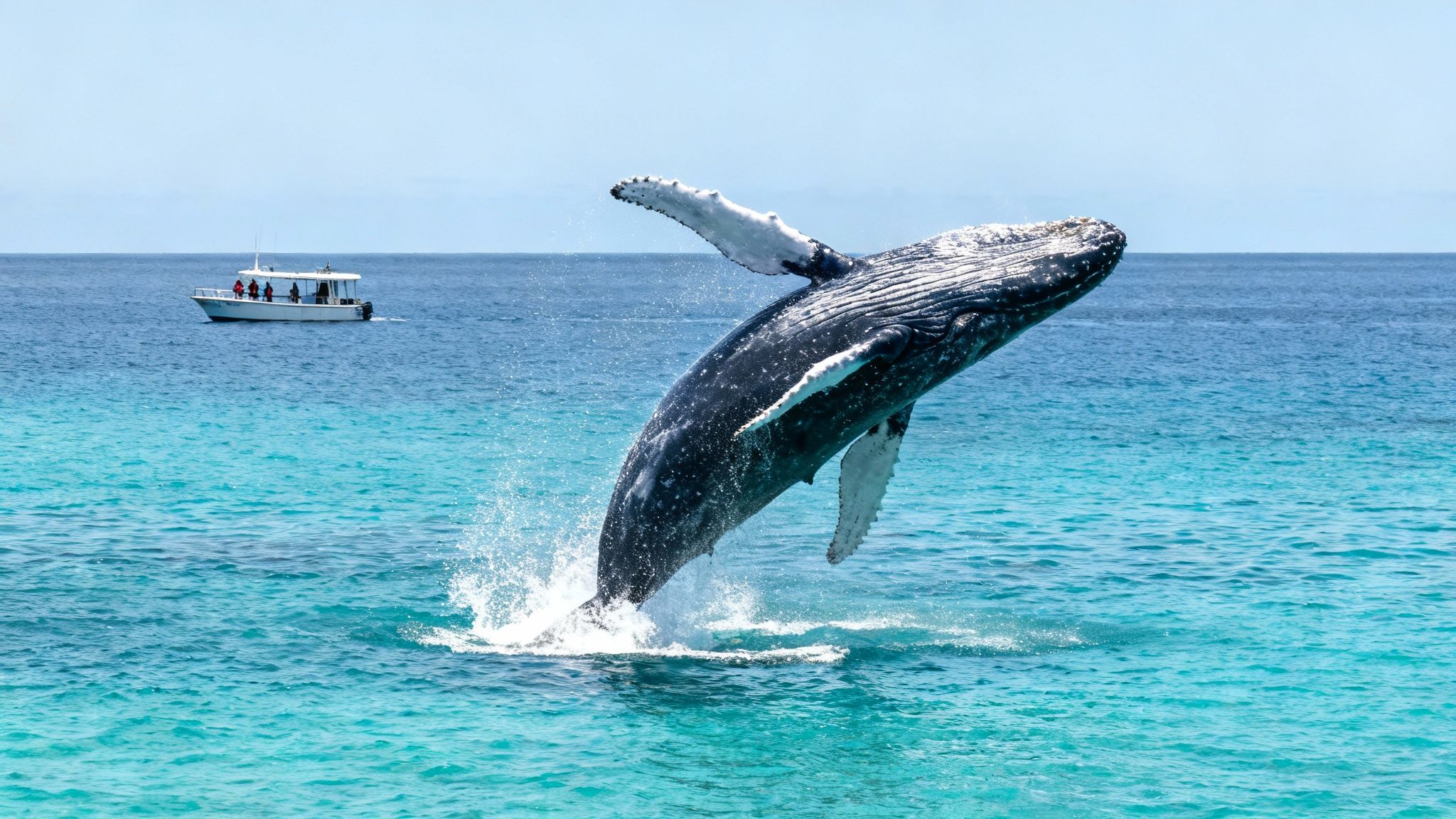
Every single winter, one of nature's most incredible events unfolds right off our coastline. Thousands of humpback whales complete an epic 3,000-mile journey from their chilly feeding grounds in Alaska, seeking out the warm, sheltered waters of Hawaii.
This massive migration turns the ocean into a living stage for some of the most breathtaking displays you'll ever see. Kona's unique underwater landscape, with deep, calm waters protected by our massive volcanoes, creates the perfect sanctuary for these massive marine mammals. It’s here they come to rest, mate, and give birth.
Why Kona is a Whale Watching Paradise
The waters off the Big Island are so much more than just a tropical vacation spot for the whales—they are a critical nursery. This is what makes a whale watching kona big island tour such an intimate and special glimpse into their world.
You're not just looking for a distant spout on the horizon. Out here, you can see a whole range of behaviors:
- Mating Rituals: Get a front-row seat to the action as powerful males compete for females in dramatic, churning "competitive pods."
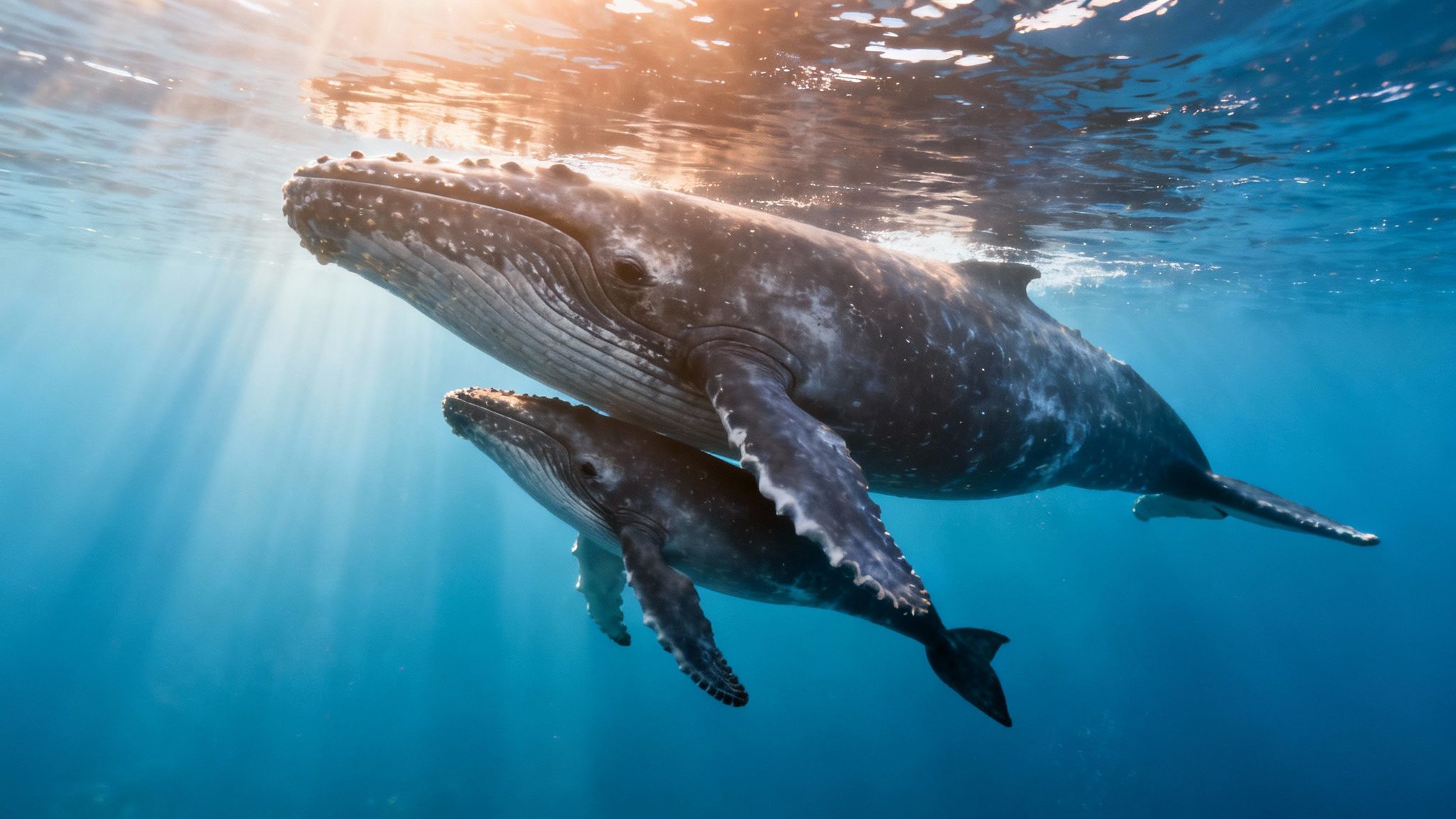
- Nurturing Calves: It's common to spot newborn calves sticking close to their mothers, learning the ropes and gaining strength in Hawaii's safe waters.
- Acrobatic Displays: From mighty tail slaps that echo across the water to curious "spy-hops" and, of course, the awe-inspiring full-body breach that everyone hopes to see.
For anyone who loves seeking out new thrilling outdoor adventure activities, there's nothing quite like this. Seeing the sheer scale of these animals against the volcanic backdrop of the Big Island is a truly humbling, unforgettable experience.
This annual pilgrimage is what cements Kona's reputation as a world-class destination for marine wildlife encounters. Once you understand the 'why' behind their long journey, you gain a much deeper appreciation for every single moment you spend on the water.
By choosing Kona for your trip, you're placing yourself right in the middle of one of the most important humpback whale habitats on the planet. And this is just scratching the surface. To dive deeper, check out our complete guide on whale watching on the Big Island and get ready for the magic that awaits.
The Incredible Journey of Humpback Whales to Hawaii
Every winter, something magical happens in the calm waters off the Kona coast. It's the grand finale of one of the planet's most epic migrations. Thousands of humpback whales complete a phenomenal pilgrimage, traveling over 3,000 miles from the frigid, nutrient-rich feeding grounds of Alaska. This isn't just a trip; it's a journey driven by the most powerful instincts in nature.
Imagine setting off on a road trip that takes two full months, but you can't stop for food even once. That’s exactly what these gentle giants do. They spend their summers feasting on krill and small fish, packing on immense fat reserves. Then, they rely solely on that stored energy to fuel their relentless swim south to the Hawaiian archipelago.
This incredible feat of endurance has one vital purpose: to reach the warm, protected waters that serve as their ancestral nursery.
A Tropical Haven for a New Generation
So, why Hawaii? It all comes down to safety and warmth. The waters off the Big Island, especially along the Kona coast, offer the perfect sanctuary for the most critical moments in a humpback's life. These calm, shallow bays are a haven where pregnant females can give birth and mothers can nurse their young without the constant threat of predators like orcas.
Newborn calves, known as kohola in Hawaiian, are born with very little blubber to insulate them. The balmy 75°F water here is absolutely crucial for their survival. It allows them to focus on nursing and gaining the strength they’ll need for their own first migration back north.
The annual humpback whale migration to Hawaiian waters is a truly remarkable event, with scientists estimating that more than half of the entire North Pacific humpback population returns here each year. These whales undertake this epic journey to use Hawaii's warm, shallow bays as a safe haven for mating, giving birth, and raising their newborn calves. Discover more insights about this incredible migration on Kona Snorkel Trips.
The Grand Stage for Humpback Life
For anyone enjoying a whale watching kona big island tour, this annual cycle provides a front-row seat to some truly spectacular behaviors. The calm sea becomes a stage for dramatic mating rituals, with powerful males competing for the attention of females in awe-inspiring displays of strength.
You'll get to witness mothers patiently teaching their calves essential life skills, often seeing the little ones mimic the adults with playful tail slaps and clumsy breaches. This deeper understanding of their purpose here really transforms the whale watching experience. You're not just observing animals; you're witnessing a vital and ancient chapter in the circle of life, played out against the stunning backdrop of the Big Island.
Finding the Best Time for Your Whale Watching Trip
Timing is everything if you want to catch the best show on the water. While the first humpback whales start showing up in Hawaiian waters as early as November, the real spectacle takes a few months to build. Think of it like a music festival: the early arrivals are the opening acts, but the headliners don't really take the stage until peak season.
The absolute best window for whale watching is from January through March. During these months, the whale population hits its peak concentration, and the ocean just comes alive. This is when you're most likely to see the really dramatic stuff—the breaches, the tail slaps, and all the most energetic behaviors.
Understanding the Seasonal Rhythm
The whole whale season follows a pretty predictable rhythm. In November and December, you'll see the first arrivals staking their claim. By January, the waters are bustling. This is when you'll often find the most intense action, like males competing in boisterous "heat runs" or mothers patiently teaching their newborn calves the ways of the ocean.
As March rolls around, the activity stays high, but you might start to notice a subtle shift. We tend to see more mother-calf pairs as the little ones build up strength for their long migration north. Come late April and May, the whales begin their trip back to their Alaskan feeding grounds, and sightings naturally become less frequent.
To really dial in your travel dates, you can dive deeper into the specifics of the Big Island's whale season.
Morning vs. Afternoon Tours: Which is Better?
Once you’ve picked the right month, the next question is what time of day to go. Honestly, both morning and afternoon trips have their perks, and the "best" choice really just comes down to what you're looking for.
Morning Tours (Typically 8 AM – 12 PM):
- Calmer Waters: The ocean is often glassy in the morning before the afternoon trade winds kick in. This can make for a much smoother ride.
- Easier Spotting: That calm, flat surface makes it a lot easier to spot a whale's spout from way off in the distance.
- Vibrant Lighting: That crisp morning light is fantastic for photos, making the deep blues of the ocean really pop.
Afternoon Tours (Typically 1 PM – 5 PM):
- More Active Whales: Some folks swear the whales, especially the calves, get a bit more playful and active in the afternoon.
- Dramatic Lighting: The lower-angled sun in the afternoon can create some absolutely stunning, dramatic light. A breach against a golden sky is something you'll never forget.
- Fewer Boats: Sometimes the afternoons can be a little less crowded out on the water.
At the end of the day, there isn't one "perfect" time. Whales are wild animals, and they're active all day long. The most important thing you can do is book your trip during those peak season months to give yourself the best possible shot at an unforgettable encounter. Whether you're an early bird or prefer the afternoon sun, the key is simply to get out on the water.
So, Where Are the Best Spots to See Whales?
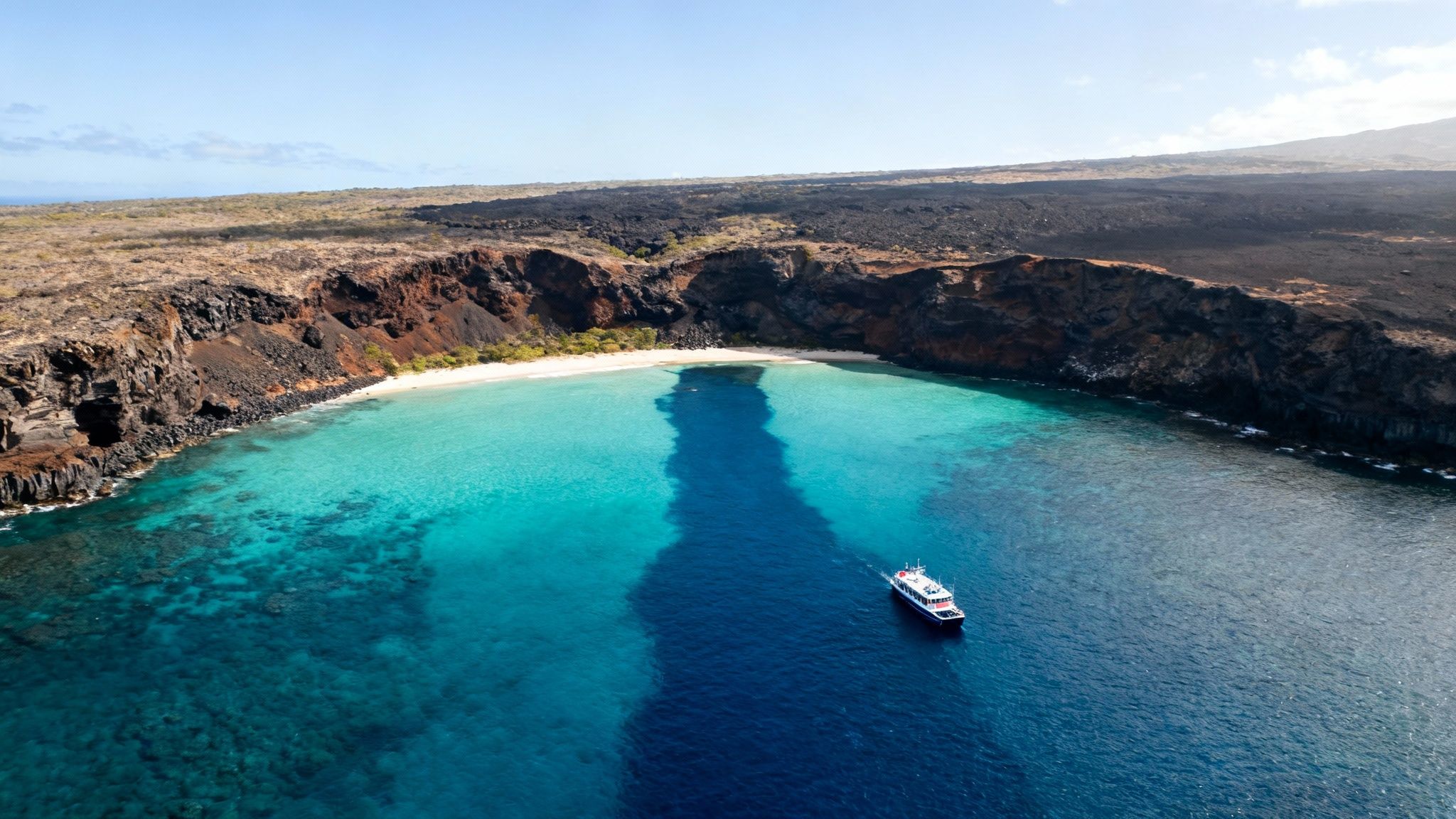
While you can technically get lucky and spot a humpback from almost anywhere along the Big Island's western coastline during peak season, some areas just act like magnets for these gentle giants. Knowing where to look dramatically boosts your odds of getting a front-row seat to the action.
The undisputed champions for whale watching in Kona are the Kona and Kohala coasts.
There's a good reason for this. It's not just a coincidence; the unique underwater geography here makes it a perfect whale sanctuary. The seafloor drops off sharply just a short trip from shore, creating deep channels right next to calm, protected waters. This setup allows the whales to travel, rest, and nurse their calves in safety, all without venturing far from the deep blue highways they prefer.
That magical combination of deep-water access and sheltered bays is the secret sauce that makes this stretch of coastline a world-class destination.
The Legendary Kohala Coast
When it comes down to sheer numbers and how often you'll see whales, the Kohala Coast is the crown jewel. This sun-drenched northern part of the island is legendary among locals and tour boat captains for its incredible whale activity. During the peak months of January and February, the ocean here practically boils with life.
The Kohala coast is, without a doubt, the premier whale-watching destination on the Big Island. Sightings can be two or three times more frequent here than anywhere else on the island. For anyone hoping to maximize their chances, the North Kona and the north and south Kohala districts are where you want to be. You can learn more about what makes this area such a hotspot by exploring these insights on Big Island whale watching.
Fantastic Viewing From Shore
A boat tour gets you right in the middle of the experience, but you don't always need to leave land to witness the magic. If you'd rather watch from the shore with a good pair of binoculars, the Big Island has several outstanding viewpoints, especially along the Kohala Coast where the elevation gives you a perfect vantage point.
Here are a few of the best spots for land-based viewing:
- Puʻukoholā Heiau National Historic Site: The name literally translates to "hill of the whale," which tells you everything you need to know. Its high perch offers sweeping, panoramic views over the ocean.
- Lapakahi State Historical Park: This is another fantastic spot with high bluffs overlooking the water, giving you a clear line of sight to spot those distant spouts and breaches.
- Kapaʻa Beach Park: This park has the added bonus of covered picnic pavilions, so you can comfortably scan the horizon for whales while enjoying some shade.
Whether you opt for an ocean adventure or a relaxing day watching from a coastal bluff, positioning yourself along the Kona or Kohala coasts is your absolute best bet for an unforgettable encounter.
How to Choose the Perfect Whale Watching Tour
With so many boats heading out to see the humpbacks, picking the right tour can feel a little overwhelming. The secret is figuring out what kind of experience you're after and matching a tour to your vibe, your group, and your hopes for the day. Getting this right is the difference between a good trip and an absolutely unforgettable one.
The biggest choice you'll make is the boat itself. Think of it like deciding between a comfortable tour bus and a zippy little dune buggy—each gives you a totally different perspective on the adventure. Your vessel choice really sets the tone for the entire trip, from how comfortable you are to how connected you feel to the ocean.
Comparing Vessel Types
The size and style of the boat are probably the most important factors in how your tour will feel. Here in Kona, you generally have two main options, and they couldn't be more different.
-
Large Catamarans: These are the big, steady platforms of the whale watching world. Thanks to their dual-hull design, they are incredibly stable, which is a massive relief for anyone who gets a little queasy on the water. They usually come with perks like restrooms, shaded seating, and lots of space to move around, making them a fantastic option for families with kids or bigger groups who value comfort.
-
Small Rafts (Zodiac-style): If you're craving a more heart-pounding, up-close-and-personal encounter, you can't beat a low-slung raft. These nimble boats put you right at eye-level with the whales. Every breath, every splash feels immediate and intense. Their speed also means the captain can zip over to a sighting quickly, getting you to the action faster. This is the ride for adventure-seekers who don't mind a bit of sea spray and want to feel every moment.
No matter which boat you're on, the real magic comes from the crew. A great captain and a knowledgeable naturalist can turn a simple boat ride into a fascinating lesson, sharing incredible insights into whale behavior and the world they live in.
What Makes a Top-Tier Operator
Beyond the boat, the company running the show is what truly makes or breaks the experience. As you look at your options, focus on operators that are clearly committed to both their guests' safety and the well-being of the whales.
Look for a company that’s known for responsible wildlife viewing. That means they follow all federal regulations to the letter, always keeping a respectful distance of at least 100 yards from the whales. Reputable operators like Kona Snorkel Trips lead by example, showing that you can have mind-blowing encounters without stressing out these amazing animals.
Finally, think about the crew's expertise. The best guides are passionate marine naturalists who can tell you what's happening when you see a massive breach or a curious spy-hop. Their commentary adds a whole new layer of appreciation to the incredible show unfolding in front of you. For a deeper dive, check out our breakdown of the best whale watching tours in Kona, Hawaii. Choosing the right team ensures your day on the water is safe, respectful, and something you'll talk about for years.
Preparing for Your Day on the Water

A little bit of prep work is the secret ingredient that turns a good whale watching trip into an absolutely unforgettable one. When you show up with the right gear, you can just relax and focus on the incredible show unfolding right in front of you.
Knowing what you're looking for also makes the day way more exciting. Every splash, spout, and fluke has a story to tell, and learning to read those signs is all part of the fun. You're not just a spectator; you're getting a real glimpse into their complex world.
What to Pack for Comfort and Success
Packing smart is all about staying comfortable so you can enjoy every second. Even on a warm Kona day, the breeze coming off the water can have a surprising chill, and that Hawaiian sun is always stronger than you think out on the open ocean.
Here’s a quick checklist of things you'll be glad you brought:
- Polarized Sunglasses: Seriously, don't leave these behind. They slice right through the harsh glare on the water, making it so much easier to spot the whales and even see what’s going on just below the surface.
- Reef-Safe Sunscreen: Protect your skin and our fragile coral reefs at the same time. You’ll be out in the sun for hours, and it’s intense.
- A Light Jacket or Windbreaker: It’s almost always cooler on the water. A light layer will be your best friend when the boat gets moving or a few clouds roll in.
- Camera with a Zoom Lens: Your phone is great for scenery, but a proper zoom lens will let you capture those breathtaking, detailed shots of the whales from a respectful distance.
- Binoculars: These are a game-changer for getting a closer look at distant spouts or catching subtle behaviors you might have missed with the naked eye.
Understanding Common Whale Behaviors
Once you’re out there, you'll start seeing all kinds of amazing displays. Knowing what they mean adds a whole new layer of appreciation to your whale watching kona big island adventure.
Breach: This is the one everyone hopes for—that spectacular full-body leap out of the water! Scientists figure it could be a way to communicate, shake off pesky parasites, or maybe it's just for the sheer joy of it.
Spy-Hop: You'll see a whale poke its head straight up out of the water to get a look around. It’s pure curiosity in action, as if they’re just as interested in checking us out as we are in them.
Pectoral Fin Slap: A whale will often roll onto its side and smack its long fin on the water's surface, which makes a surprisingly loud sound. You'll often see this in social groups; it's a classic form of communication.
Your Kona Whale Watching Questions Answered
Even with all the excitement building, it's totally natural to have a few questions before you head out on the water. Getting the inside scoop helps you plan your trip with confidence, so you know exactly what to expect from your whale watching kona big island adventure. We've pulled together some of the most common questions we hear to help you get ready.
Is Seeing Whales Guaranteed on a Tour?
While Kona's whale season gives us an incredibly high success rate for sightings—especially from January to March—humpback whales are wild animals, and they're going to do what they want. Because of this, no tour operator can 100% guarantee a sighting.
That said, experienced captains and crews live and breathe these waters. They use their deep knowledge of whale behavior and the local spots to put you in the best possible position to see them. Many companies might offer a return trip voucher if no whales are spotted, so it's always smart to check their policy when you book.
How Close Can Tour Boats Get to the Whales?
For the safety and well-being of the whales, every tour operator has to follow strict federal regulations. Boats are legally required to stay at least 100 yards away from humpback whales.
This respectful distance is crucial for protecting the mothers and calves who have traveled thousands of miles to rest in these waters. But whales are curious creatures, and they often decide to approach boats on their own. This can lead to some incredibly close and personal encounters that are completely on their terms.
A good, reputable tour company will always put the whales' welfare first, letting the animals control the interaction every time.
What Is the Best Type of Boat for Whale Watching?
The "best" boat really comes down to your personal style and what you're looking for in an experience.
- Larger Catamarans: These offer more stability, which is a big plus for anyone prone to motion sickness. They usually have amenities like restrooms and shaded areas, making them a great fit for families.
- Smaller Rafts (Zodiac-style): If you're looking for a thrill, these boats offer a more adventurous, up-close-to-the-water experience. They're nimble and can often move more quickly to where whales have just been spotted.
While you're zeroing in on whale watching, you might also have bigger questions about your visit to Kona. For general travel tips for your trip, other resources can fill in the gaps. Ultimately, picking a tour that matches your vibe will make the day that much more unforgettable.