
Whale Watching Kona: Your Ultimate Guide to Ocean Giants
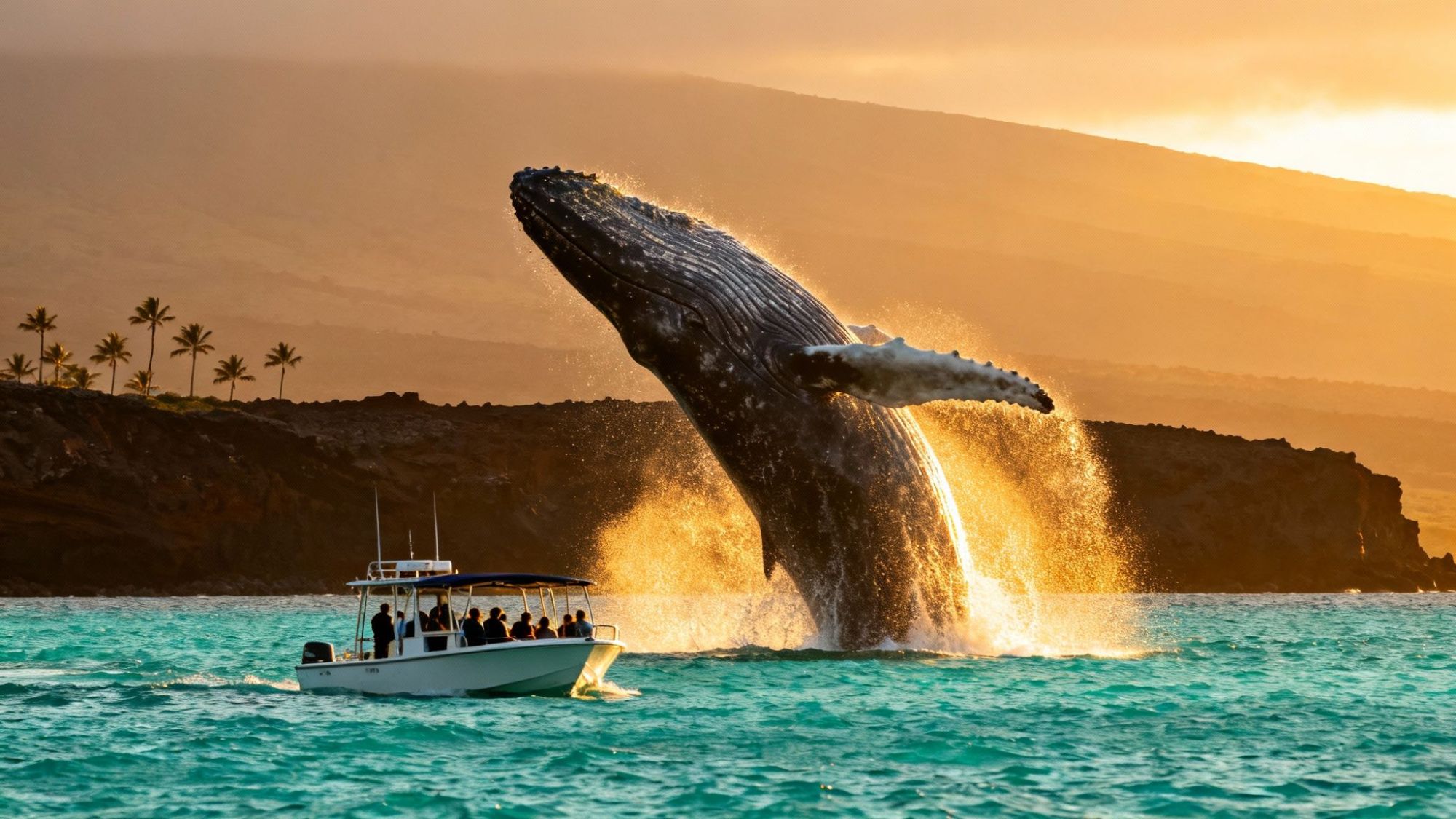
Picture this: a 40-ton humpback whale explodes out of the turquoise Pacific, its entire body airborne against the backdrop of Kona's dramatic volcanic coast. This isn't just something you see on a nature documentary; it's a real, electrifying moment that happens every winter during whale watching in Kona. As the top-rated and most-reviewed tour company in Hawaii, our whole mission at Kona Snorkel Trips is to bring you face-to-face with these unforgettable sights.
Your Gateway to Kona's Gentle Giants
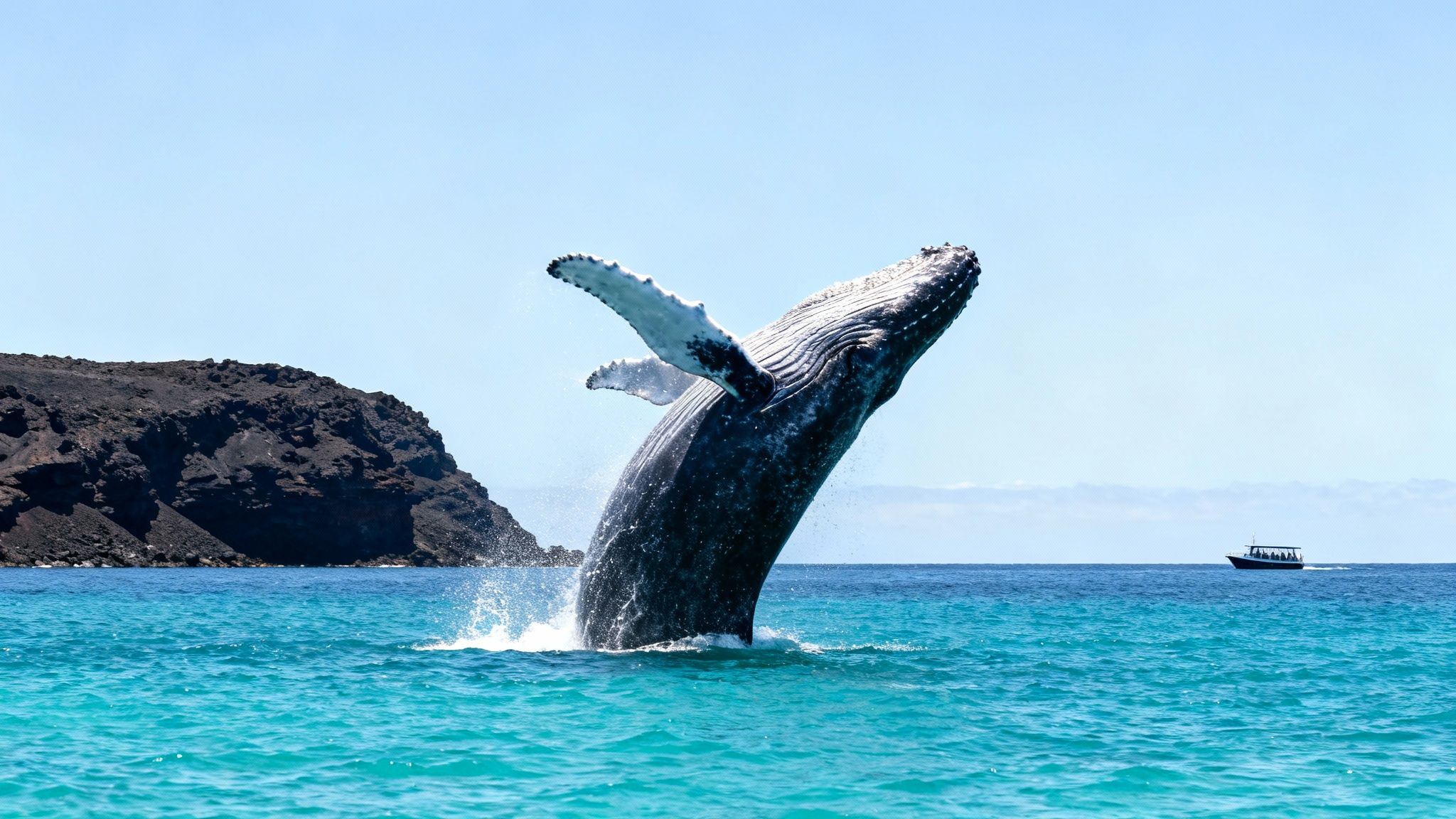
Every winter, the calm waters off the Kona coast transform into a world-renowned sanctuary for one of nature's most incredible events. This guide is your ticket to that experience. We'll walk you through everything you need to know to witness the great humpback whale migration and plan an adventure you’ll be talking about for years.
The Epic Journey to Paradise
The story of whale watching in Kona actually begins thousands of miles away in the frigid waters of Alaska. Each year, more than 8,000 humpback whales undertake a grueling 3,500-mile migration from their northern feeding grounds to the warm, sheltered bays of Hawaii. The Big Island's Kona coast just happens to be one of the best places on the planet to see this spectacle unfold. To get the full story, check out why Kona is the ultimate whale watching destination.
This massive journey is pure instinct. The whales travel for months on end, fasting the entire way and living off their fat reserves. They're driven to reach the protected Hawaiian waters to mate, give birth, and nurse their newborn calves in a safe environment. The warm, calm sea off Kona is the perfect nursery, offering a haven largely free from predators like orcas.
A Deeper Connection with Nature
Let me tell you, watching these massive, intelligent animals in their natural element is more than just a cool sight—it’s a genuinely moving experience. It connects you to the rhythm of the ocean in a way that’s hard to describe.
Beyond the jaw-dropping breaches and tail slaps, whale watching is one of the most powerful mindfulness activities you can do. It forces you to be completely present. Hearing the loud whoosh of a whale's breath or seeing a calf playfully splash next to its mom creates a sense of wonder that sticks with you long after you're back on shore. This guide will show you exactly how to find that feeling for yourself.
Understanding the Kona Whale Season
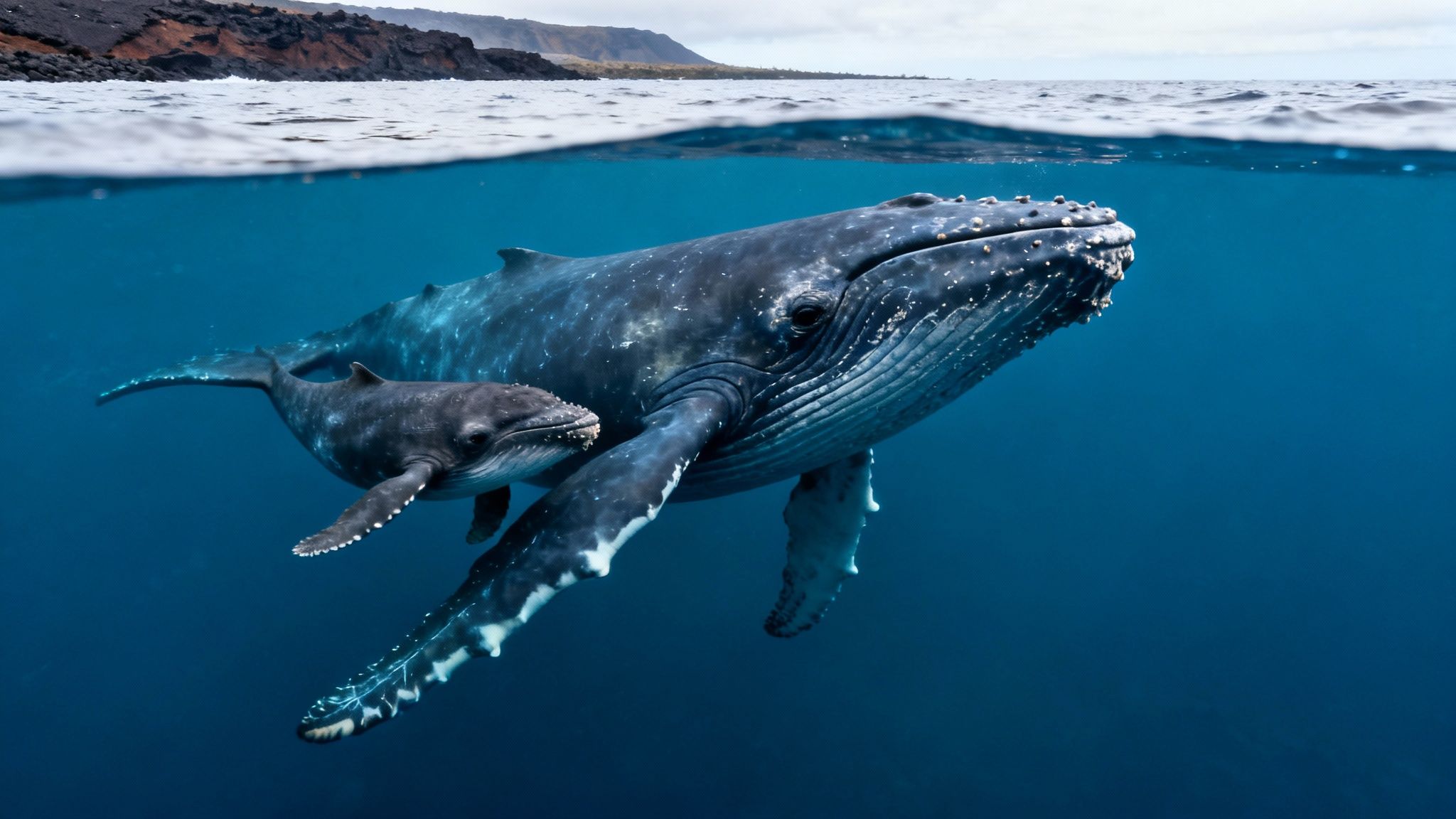
Timing your whale watching trip in Kona is a bit like planning for a spectacular natural festival. It’s an annual event, and knowing exactly when to show up makes all the difference in what you'll see. This isn't just a few whales passing by; it's a massive, instinct-driven migration.
Every single year, thousands of humpback whales journey an incredible 3,000 miles from their frigid feeding grounds in Alaska all the way to the warm, protected waters of Hawaii.
Amazingly, they make this entire trek without eating, relying solely on their fat reserves. Their purpose is simple but absolutely vital: to mate, give birth, and nurse their newborn calves in a safe, warm nursery. The Kona coast, with its calm, deep channels so close to shore, is the perfect sanctuary for these new families.
Peak Season for Maximum Action
While the first eager whales can sometimes be spotted as early as November, the real show truly kicks off in December and runs strong through March. This four-month window is the prime time for whale watching.
But if you’re looking to experience the absolute peak of the action, you’ll want to plan your visit for January or February. During these two months, the whale population is at its highest density. The waters are literally alive with activity, offering you the greatest chance to witness a whole range of behaviors.
This is when you’re most likely to see those iconic, full-body breaches, witness intense competition between males in "competitive pods," and catch tender moments between mothers and their brand-new calves.
To help you plan, here’s a quick month-by-month look at what you can expect.
Kona Whale Watching Season at a Glance
| Month | Whale Activity Level | Typical Behaviors Observed |
|---|---|---|
| November | Low | First arrivals spotted. Mostly singular whales. |
| December | Moderate | Numbers increasing. Mating behaviors begin. |
| January | Peak | Highest concentration. Breaching, competitive pods. |
| February | Peak | Calving season in full swing. Mothers and calves. |
| March | High | Still very active, but some whales begin their trip north. |
| April | Moderate to Low | Last mothers and calves remain. Sightings are less frequent. |
| May | Very Low | The season is effectively over. A rare straggler may be seen. |
This table gives you a great starting point, but remember, these are wild animals on their own schedule!
Why Kona Is a Whale Magnet
So, what makes Kona such a reliable whale watching spot? It all comes down to its unique underwater geography. Unlike many other places, the deep water where humpbacks feel safe and comfortable is extremely close to the coastline. For us, that means less travel time on the boat and more time spent actually watching these gentle giants.
The island's massive volcanoes also act as a natural shield, protecting the leeward coast from strong trade winds. This creates the calm, clear waters that are ideal for both the whales and for us whale watchers. This protected environment is precisely why so many humpbacks choose Kona as their five-star nursery for the next generation. To get an even deeper understanding, you can explore the nuances of the full whale season in Hawaii.
The season begins to wind down in April and May, as the last of the mothers and calves start their long journey back north. While a few sightings are still possible, they become far less frequent, marking the quiet end of another spectacular migration cycle.
Choosing Your Ideal Whale Watching Experience
When you’re dreaming of seeing humpback whales in Kona, you really have two main ways to go about it: getting out on the water for a boat tour or trying your luck from the scenic coastline. Each has its own vibe, but let’s be honest, one of them gets you a whole lot closer to the magic.
A guided boat tour is, without a doubt, the best way to truly connect with these animals. Think of it like this: watching from shore is like seeing a concert from the cheap seats in the back of a stadium. A boat tour puts you front and center. You’re right there on their level, out on the water, which is the only way to really grasp the sheer size and power of a 40-ton whale. It’s an experience that’s just impossible to replicate from land.
The Unmatched Benefits of a Boat Tour
Hopping on a tour with an experienced crew turns a simple sightseeing trip into a full-blown educational adventure. We’re not just pointing at whales; we’re helping you understand what you're seeing.
- Up-Close Encounters: A boat gets you respectfully close to the action. You'll hear the powerful whoosh of a whale exhaling through its blowhole and might even feel the mist from a massive tail slap.
- Expert Narration: Our crew lives and breathes this stuff. We can tell you the difference between a breach, a spy-hop, and a pec slap as it’s happening, giving you a running commentary that brings the whole scene to life.
- The Underwater Symphony: This is the cool part. Many tours, ours included, drop a hydrophone into the water. This incredible little device lets you listen in on the complex, haunting songs of the male humpback whales. Hearing it echo through the ocean is something you’ll never forget.
If you're weighing your options, it can be helpful to see what different companies offer. You can check out a roundup of some of the top whale watching tours in Kona to get a feel for what’s out there.
Whale Watching from the Shore
For those who’d rather keep their feet on solid ground, watching from the coastline can still be a pretty special way to spend an afternoon. The trick is to find a high vantage point with a wide-open view of the ocean. The Kohala and North Kona coasts are legendary for this.
There's a reason for that. Extensive aerial surveys have actually mapped out these areas as "red zones" because of the sheer density of humpback whales. In these spots, sightings are often two to three times more frequent than anywhere else on the island, with January and February being especially mind-blowing.
You can absolutely spot distant breaches and spouts from the shore, especially with a good pair of binoculars. But it’s a much more passive experience. The raw, emotional punch of being near a 40-ton animal as it surfaces next to your boat? That's something only a tour can deliver.
So, while watching from shore is a fantastic and free activity, a boat tour offers a profoundly more engaging and dynamic encounter. It's the best way to fully immerse yourself in the magic of the whale watching Kona season. To get a complete picture of what makes these trips so special, take a look at our detailed guide to whale watching on the Kona Big Island.
What to Expect on Our Kona Whale Watching Tour
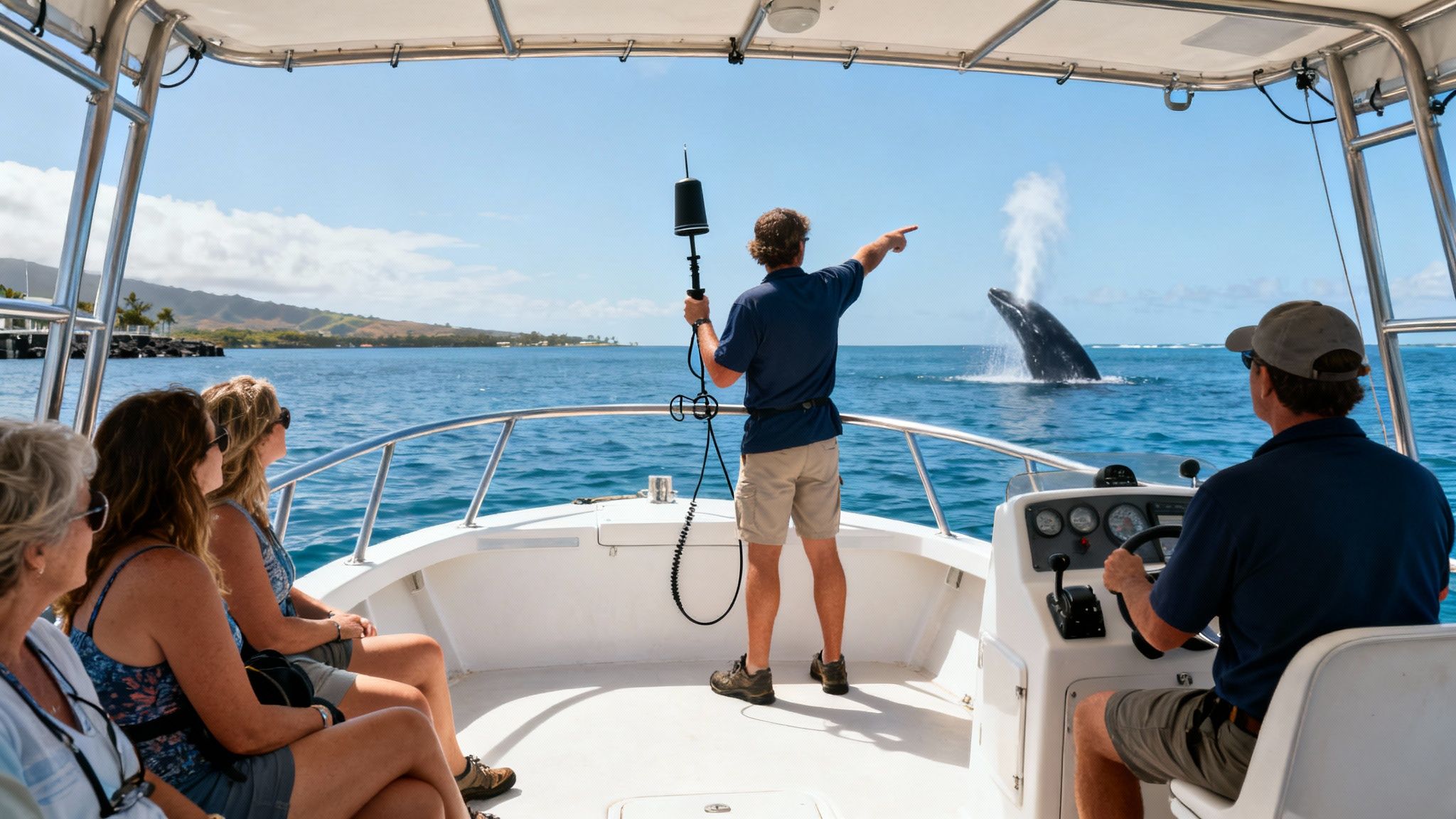
Hopping aboard one of our boats isn’t just about seeing whales; it’s about having an authentic ocean adventure. The whole experience starts with a smooth, easy check-in at Honokohau Harbor, where our crew is ready to welcome you. From the moment we pull away from the dock, you’ll be scanning the horizon, full of that special anticipation for the first magical sign of a humpback.
We’re serious about keeping our tours small. Why? Because we believe that a more intimate setting creates a real, personal connection with the ocean and its incredible inhabitants. You won’t be jostling for a view on a crowded deck. Instead, you get a front-row seat to the action, making every moment feel like it's happening just for you. This is what makes our whale watching Kona tours different.
The Thrill of the Search
Our expert marine naturalist crew is the heart and soul of the whole operation. They’ve spent years out on these waters, and they know exactly where and how to look for humpbacks. They’ll point out the subtle signs that a novice eye might miss—a distant puff of mist hanging in the air or a slight ripple on the water's surface that just looks… different.
As we get closer, you can feel the excitement build. The first thing you’ll probably hear is the powerful whoosh of a whale’s breath shooting from its blowhole. It’s an unforgettable sound that tells you the adventure has truly begun. Our crew will be right there, explaining the amazing behaviors you're witnessing as they happen.
- Breaches: The classic, full-body leap out of the water. It’s a breathtaking display of raw power and surprising grace.
- Spy-Hops: A moment of pure curiosity when a whale pokes its head straight up out of the water to look around, almost like it’s checking you out, too.
- Tail Slaps: You’ll hear this one before you see it. A loud, impressive smack of the fluke on the water's surface, used for communication or just showing off.
A Symphony from the Deep
One of the most unique parts of our tours is the underwater hydrophone. When the conditions are just right, our crew lowers this special microphone into the calm water, and you get to listen in on something truly otherworldly.
The complex and haunting songs of the male humpback whales can travel for miles underwater. Hearing their beautiful, echoing melodies is a deeply moving experience that connects you to the mystery of the deep ocean in a way that visuals alone cannot.
This mix of small groups, expert narration, and unique technology turns a simple sightseeing trip into an awe-inspiring, personal, and educational journey. We’re all about creating a memorable experience that brings you closer to the magic of whale watching in Kona.
Practicing Responsible and Respectful Whale Watching
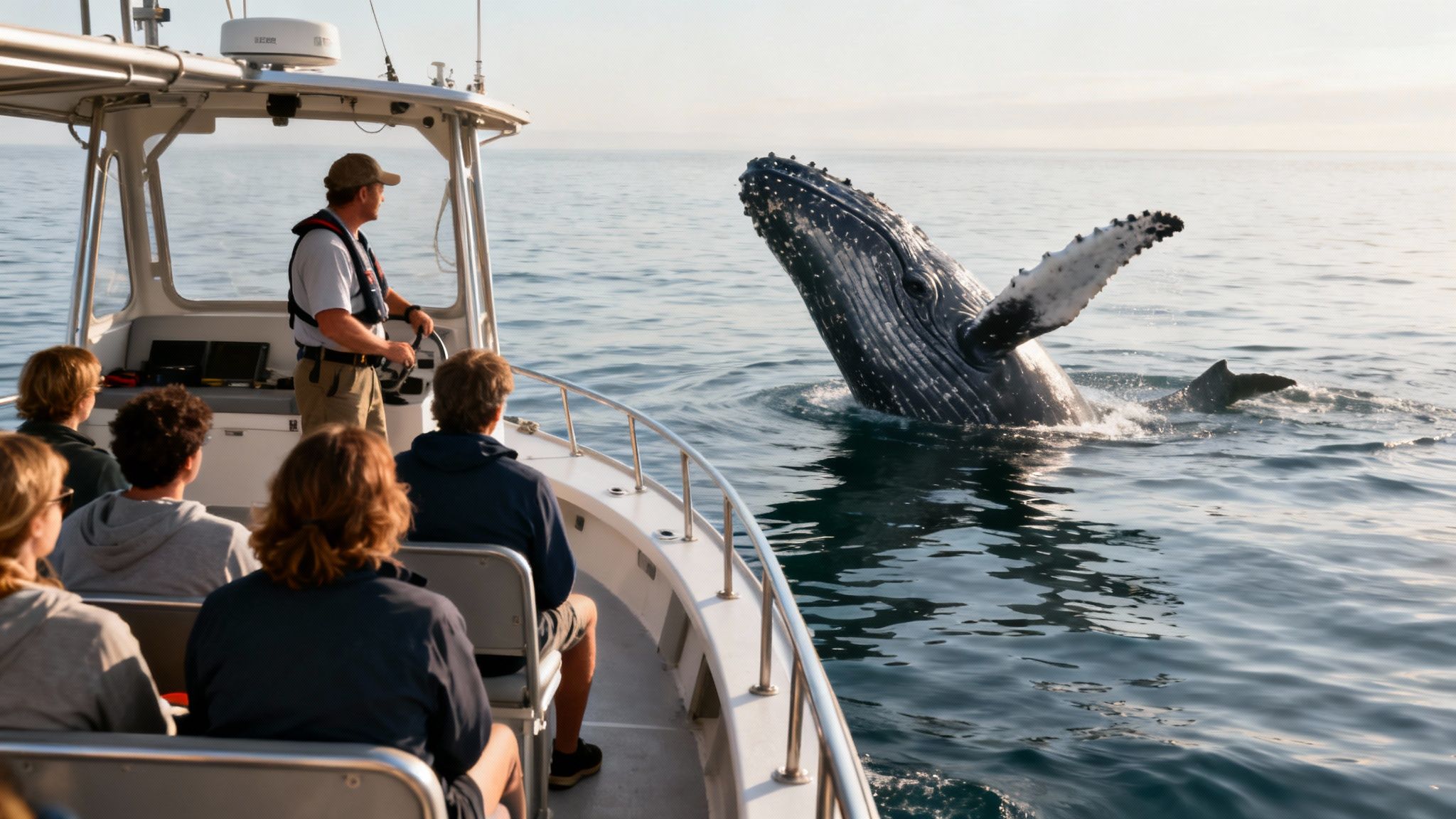
There are few moments in life that can truly prepare you for the sight of a 40-ton humpback whale launching itself out of the blue Kona water. It's an unforgettable privilege, and with that privilege comes a big responsibility.
These incredible animals have traveled thousands of miles to get here. The warm, safe waters off our coast are their nursery—a place to mate, give birth, and care for their newborn calves. Our entire approach to whale watching in Kona is built around one simple idea: we are guests in their home. Any disturbance can cause serious stress, especially for a new mom who is fiercely protective of her little one.
Following the Law and Showing Respect
To make sure the whales are safe and undisturbed, there are strict federal and state regulations we live by. The single most important rule is the mandatory 100-yard approach distance from any humpback whale. This isn't just for boats; it applies to everyone, from kayaks to paddleboards.
Think of that 100-yard buffer as the whale's personal space. It’s not just a suggestion, it’s the law. This distance lets them go about their business—nursing, resting, playing—without feeling pressured or threatened by our presence. Our licensed captains are total pros at navigating these rules, getting you amazing views while always honoring this critical boundary.
When Whales Get Curious
Now, every so often, the whales decide to break the rules themselves. It’s a rare and truly mind-blowing event we call a "whale mugging," where a curious whale chooses to swim right up to our boat.
When a whale mugging happens, regulations require our captains to put the boat's engines in neutral and just sit tight. We let the whale run the show, allowing it to check us out and move on whenever it's ready. This way, the encounter is 100% on their terms, making for a moment of pure, respectful magic.
This is exactly why going out with an experienced, ethical tour operator makes all the difference.
Your Role in Responsible Whale Watching
As one of our guests, you also play a huge part in protecting these animals. A little bit of good etiquette goes a long way in making sure we have zero negative impact.
- Keep Your Voices Down: Sound travels incredibly well through water. Please keep your conversations at a low volume so we don't startle the whales.
- Never, Ever Try to Swim With Whales: It is illegal and extremely dangerous to get in the water with humpback whales.
- Keep Our Ocean Clean: Make sure no trash, hats, or anything else goes overboard. Let's leave their home cleaner than we found it.
By following these simple guidelines, you help us ensure our presence is a peaceful one. You're helping to protect the magnificent whale watching Kona season for many, many years to come.
How to Prepare for Your Whale Watching Tour
A little bit of prep goes a long, long way when you're heading out on the open ocean. To make sure you have the best possible whale watching Kona experience, it’s smart to think ahead. That way, you can stay comfortable and just focus on the incredible show the humpbacks are putting on.
Being ready for the elements is everything. The Hawaiian sun is no joke, even on an overcast day, and it bounces right off the water, making it even stronger. At the same time, the morning breeze out on the water can have a real chill to it, especially when the boat is cruising. Your comfort is our top priority, so we’ve put together a practical checklist to help you pack like a seasoned pro.
Your Essential Packing List
Thinking through what to bring and wear can turn a good trip into a truly great one. Every item on this list is here for a reason—to make sure you have the best time possible.
- Layered Clothing: A t-shirt is a good start, but absolutely bring a light jacket or windbreaker. You can peel it off as the day warms up or throw it on if the wind picks up.
- Reef-Safe Sunscreen: Protecting Hawaii's fragile marine ecosystem is a responsibility we all share. Please stick to mineral-based sunscreens (the active ingredients are zinc oxide or titanium dioxide) to protect your skin and our precious coral reefs.
- Polarized Sunglasses: These are a total game-changer out on the water. They cut right through the surface glare, making it so much easier to spot whales and other marine life just below the surface.
- Hat with a Strap: A wide-brimmed hat is awesome for sun protection, but you'll want one with a chin strap. The wind loves to steal hats, and you don't want yours to become an offering to the sea gods!
- Non-Slip Footwear: Boat decks can get wet. Wear something comfortable with good grip, like boat shoes, sneakers, or sandals that strap on securely.
Bringing the right gear means you won't be distracted by being too cold, too hot, or getting a nasty sunburn. Instead, you can be fully present for that breathtaking moment when a 40-ton whale breaches right before your eyes.
And of course, don't forget your camera! A decent zoom lens will be your best friend for capturing those stunning, frame-worthy photos from a respectful distance.
One last thing—if you know you're prone to motion sickness, it's always best to be proactive. For some simple but super effective strategies, take a look at our guide on how to prevent seasickness before you come out. A little planning really does make for a perfect day on the water.
Got Questions About Kona Whale Watching? We've Got Answers.
You're planning the trip of a lifetime, and you've got questions. It's totally normal! To help you finalize your plans and book your tour with total confidence, we've pulled together the most common questions we get about whale watching in Kona.
Is a Whale Sighting Guaranteed on Your Tour?
Because we're dealing with wild animals on their own schedule, we can't make a 100% promise. That said, your chances during peak season are through the roof. From January through March, these Kona waters are basically one of the busiest humpback nurseries on the entire planet.
Our captains have spent years on this water, and they know just where to look. It's incredibly rare for us to have a peak-season tour that doesn't include some truly amazing encounters. We're really, really good at finding whales.
What Is the Best Time of Day for Whale Watching?
Honestly, the whales are active all day long, so the "best" time really boils down to what kind of ocean conditions you prefer.
Mornings in Kona are famous for calm, glassy water. This can make for a super smooth ride and makes it easier to spot those tell-tale spouts way off in the distance. But the afternoons can be just as epic, sometimes with even more action on the surface. Our advice? Pick the time that fits your vacation schedule best—the whales will be ready to put on a show regardless!
Are Kids Welcome on the Whale Watching Tours?
Absolutely! Whale watching in Kona is one of those magical, core-memory kinds of experiences that families talk about for years. Nothing beats the look on a kid's face the first time they see a 40-ton animal leap completely out of the water.
Our boats are safe for all ages, and our crew loves to share fun facts that keep our younger guests hooked. Just let us know the ages of your children when you book so we can have the right-sized life vests ready for them.
Your family's safety and fun are what matter most to us. We work hard to create a comfortable, exciting vibe for everyone on board, making sure it's an adventure you'll never forget.
Can We Swim With the Whales?
Nope, and this one is a hard and fast rule. Federal law strictly prohibits anyone from swimming with or intentionally getting too close to humpback whales. For their safety and yours, we are required to stay at least 100 yards away at all times.
Our tours are all about respectful, responsible watching from the boat. This gives us an incredible—and perfectly safe—front-row seat to see their natural behaviors without disturbing them in their critical breeding and calving grounds.
Ready for an ocean adventure you won't forget? Join Kona Snorkel Trips to witness these gentle giants up close. Book your whale watching tour today!