
whale watching kona: Your Guide to Incredible Encounters
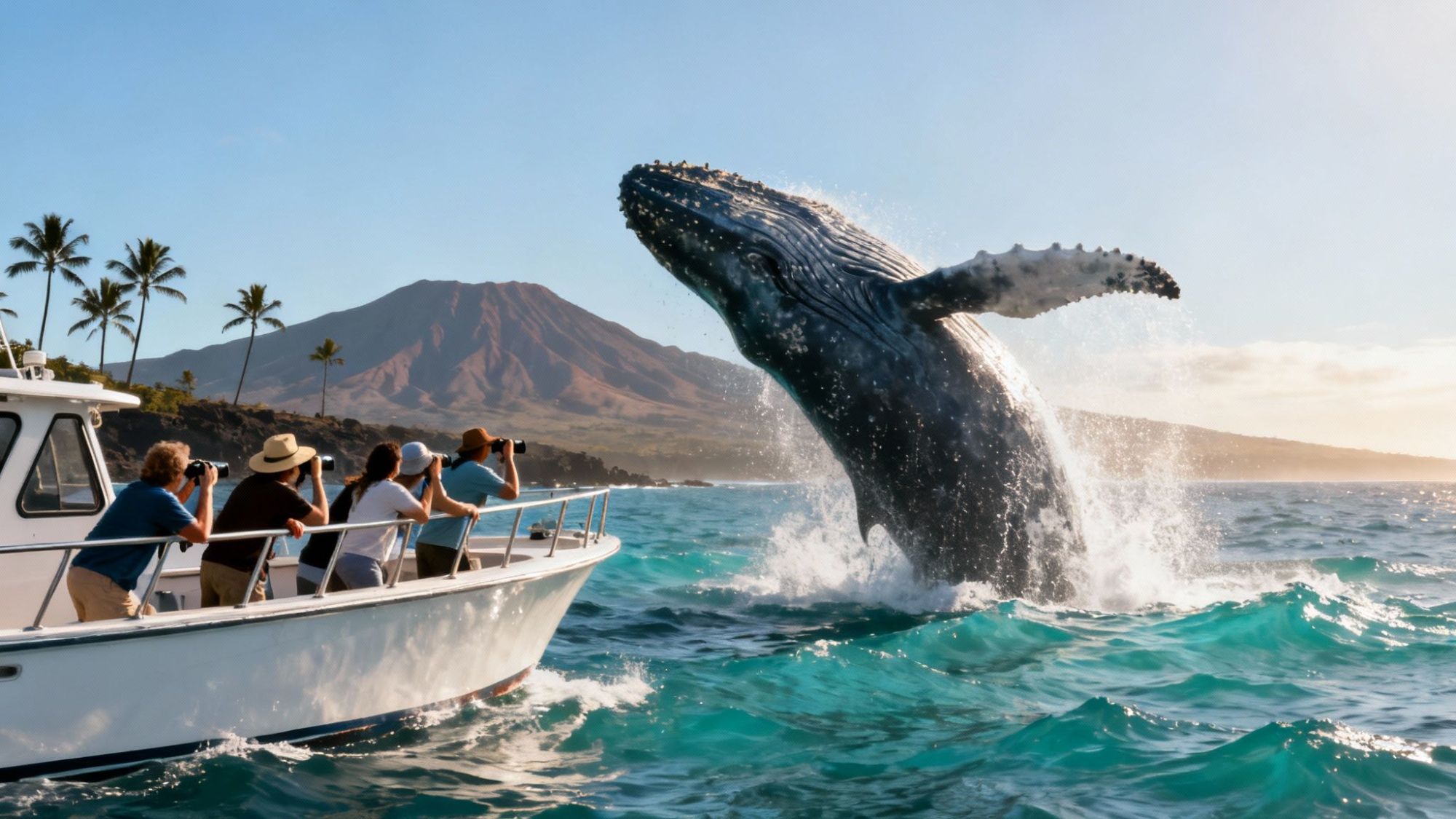
Picture this: the calm, turquoise water of the Kona coast suddenly explodes as a 40-ton humpback whale rockets out of the blue, hanging in the air for a breathtaking moment before crashing back down. That incredible sight isn't some rare, lucky glimpse—it's the heart and soul of winter in Kona, hands down one of the best places on the planet to see these gentle giants.
Experience the Magic of Kona Whale Watching
If you're dreaming of a once-in-a-lifetime adventure with these magnificent creatures, you've come to the right place. Every winter, thousands of humpback whales make the long journey to Hawaii's warm, sheltered waters to breed, give birth, and raise their newborn calves. It's a natural spectacle that's equal parts raw power and tender grace, and the Kona coast offers a front-row seat to it all. As Hawaii's top-rated and most-reviewed snorkel company, we at Kona Snorkel Trips live for sharing this wonder with our guests.
We'll walk you through everything you need to know, from the absolute best time of year to go, to how to choose an ethical tour that puts the whales' well-being first. Honestly, understanding the incredible journey these animals take just makes seeing them in person that much more profound.
Why Kona Is a Premier Whale Destination
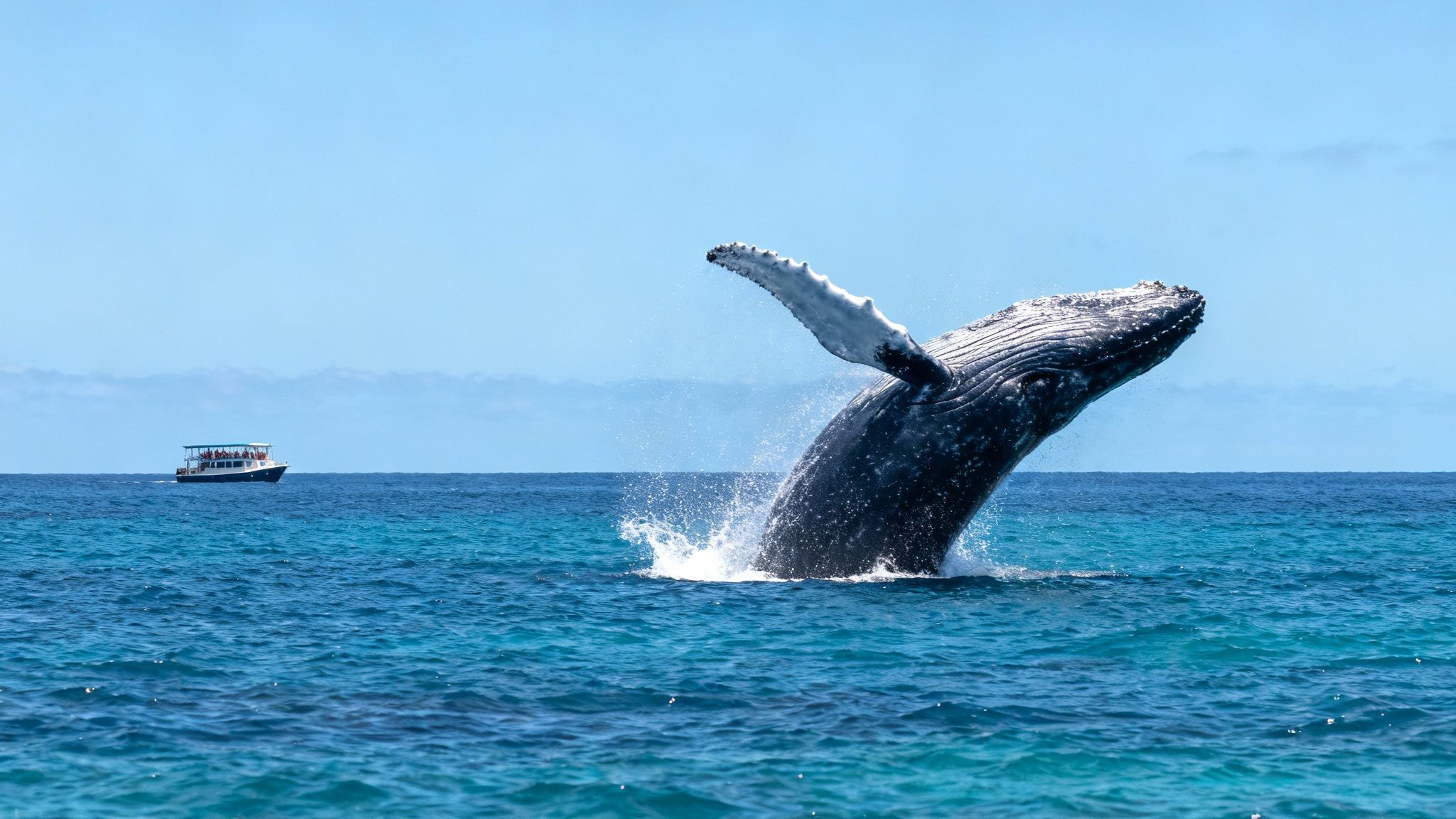
The waters off the Kona coast aren't just beautiful; they're the perfect nursery for humpback whales. It's not a coincidence they choose this spot year after year. A few key ingredients make this a world-class location for whale watching:
- Calm, Protected Waters: The sheer size of the Mauna Loa and Hualalai volcanoes acts as a massive shield, blocking the strong trade winds and leaving Kona's waters much calmer than other parts of the islands.
- Deep Offshore Waters: The ocean floor here drops off fast, really close to shore. This gives the deep-diving whales the security of deep water while staying near the coast, which means more frequent and easier sightings for us.
- Warm, Clear Conditions: That warm tropical water is crucial for newborn calves. They're born without the thick layer of blubber adults have, so they need these bath-like temperatures to thrive.
This perfect combination draws an incredible number of whales every season, making whale watching in Kona an experience you'll never forget. This is so much more than just a boat ride; it's a chance to connect with one of the most spectacular migrations on Earth.
Understanding the Kona Whale Watching Season
Figuring out the best time for whale watching in Kona isn’t about luck. It's about knowing the rhythm of one of the planet's most incredible migrations. Your chances of having a mind-blowing experience really come down to when you show up. We're talking about knowing when the humpbacks arrive, when the action really gets going, and what you’re likely to see at different points in their Hawaiian vacation.
The whale watching season here is directly tied to the humpbacks' travel plans. They come to our warm, protected waters to breed and give birth. While the official season runs from mid-December through March, things really hit their peak in January and February. This is when the highest concentration of whales is in the area, and your odds of seeing dramatic breaches, tail slaps, and fin waves go through the roof.
Kona Whale Watching Season At-a-Glance
To give you a clearer picture, here’s a quick month-by-month breakdown of what’s happening out on the water. Think of it as your cheat sheet for planning the perfect trip.
| Month | Whale Activity Level | What You're Likely to See |
|---|---|---|
| December | Low to Moderate | The first "scouts" arrive. Exciting early sightings, but less frequent. |
| January | Peak | High numbers of whales. Breaching, tail slapping, and competitive pods. |
| February | Peak | The highest density of whales. The most dramatic and frequent activity. |
| March | Moderate to High | Fewer adults, but this is the prime time to see newborn calves with their mothers. |
This table helps you match your travel dates with your whale watching goals. Whether you want peak action or tender family moments, there’s a perfect time to visit.
The Early Arrivals
The first few humpbacks start rolling into Kona's warm waters around late November and early December. We like to call them the "scouts"—often younger whales or just the eager ones ready to claim their spot for the season. Seeing one of these early arrivals is a special kind of thrill, a sneak peek of the massive show that’s about to unfold.
Peak Season: The Main Event
If you want action, January and February are your months. This is, without a doubt, the peak of whale watching in Kona. The population swells to its highest density, turning our calm coastal waters into a stage for the most spectacular behaviors. It’s your best shot at witnessing the awesome power of a 40-ton animal launching its entire body out of the water in a full breach.
During these peak months, the social scene is on fire. You'll often see "competitive pods," where multiple males are chasing a single female, showing off with incredible acoustic and physical displays. Witnessing that raw, powerful competition is an experience that stays with you forever.
With so many whales around, sightings are common, and the encounters are often up close (while keeping a safe and respectful distance, of course). The ocean just feels electric.
Late Season: Mothers and Calves
Things start to shift a bit in March. The total number of whales begins to drop as some start the long journey back to their Alaskan feeding grounds. But March offers something truly special: it’s prime time for spotting mothers with their newborn calves.
The moms use Kona's protected waters as a nursery, teaching their babies essential life skills. You might see a calf attempting its first breach or clumsily slapping its tail, mimicking its mother. These moments are incredibly heartwarming and provide a different kind of magic, showing the gentle, nurturing side of these ocean giants.
For an even deeper dive into the timing, check out our complete guide to the Big Island whale season. Understanding these monthly shifts will turn your trip from a simple boat ride into a real connection with nature's incredible schedule.
What to Expect on Your Whale Watching Tour
There’s a special kind of excitement that builds the moment you step onto the boat. As we pull away from the harbor, the stunning Kona coastline stretches out behind us, and the deep blue expanse ahead is humming with possibility. This is where the humpbacks come to play, and you're heading right into their world.
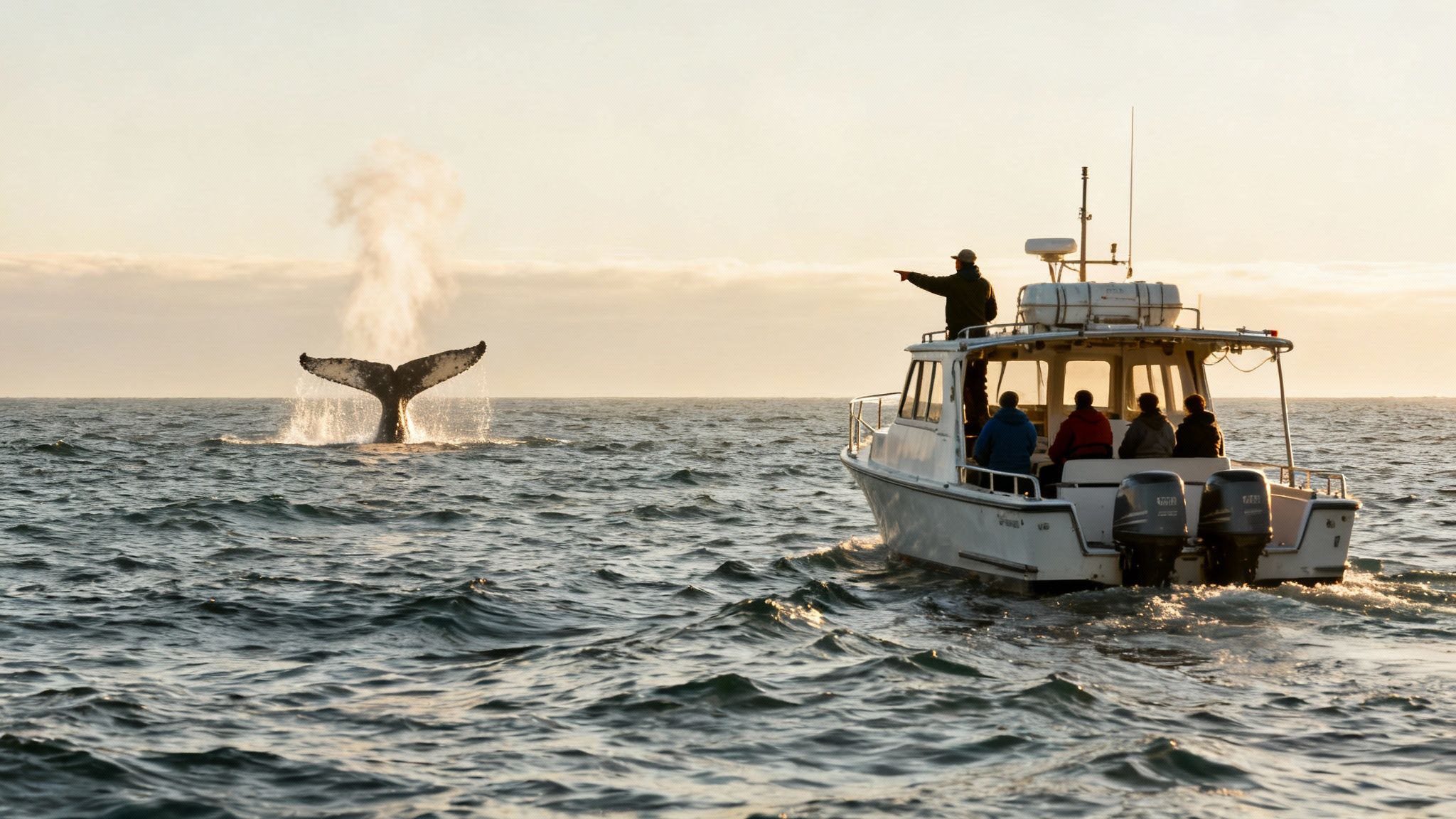
Often, the first sign of life is a faint puff of mist hanging in the air against the horizon. That’s the "blow," the visible plume of air and water from a whale surfacing to breathe. A seasoned captain knows exactly what that subtle sign means and will begin navigating the boat for a closer—but always respectful—look. That first glimpse builds a palpable sense of anticipation on board; something incredible is about to happen.
Witnessing Breathtaking Whale Behaviors
As we draw nearer, a whole world of whale activity can unfold right before your eyes. This is the magic of watching wild animals—no two tours are ever the same. You might see a range of jaw-dropping behaviors, each with its own story to tell.
Here are a few of the incredible displays you might see while whale watching in Kona:
- The Breach: This is the iconic moment everyone dreams of seeing. A whale launches its massive body almost completely out of the water, crashing back down with a thunderous splash that echoes across the ocean.
- The Tail Slap: You'll hear this one before you see it. A whale lifts its enormous fluke (tail) high into the air and smacks it down on the surface with incredible force.
- The Spy-Hop: Pure curiosity on display. A whale positions itself vertically, poking its head straight out of the water to get a good look at its surroundings—including you and the boat!
- The Pec Slap: Similar to a tail slap, but this time the whale is on its side, slapping a long pectoral fin against the water and creating a loud, distinct sound.
A guided tour is so much more than just a boat ride. Our expert naturalists are on board to translate what you're seeing. They can explain the difference between the aggressive displays of a competitive pod and the gentle movements of a mother teaching her calf, turning a simple sighting into a rich, unforgettable story.
The Kona Snorkel Trips Experience
At Kona Snorkel Trips, we live for creating these unforgettable encounters during our seasonal tours. We've always believed that a smaller group makes for a more intimate and powerful connection with the wildlife. Our guides don't just point out whales; they share their passion and deep knowledge of marine biology, helping you appreciate the complex social lives of these gentle giants.
We operate with a profound respect for the ocean and its inhabitants, strictly following all federal guidelines to ensure the whales are never stressed or disturbed. This approach allows for natural, authentic interactions where the whales are in control. Our goal is to leave you not just with photos, but with a deeper appreciation for Hawaii's marine ecosystem and memories that will last a lifetime.
How to Choose the Best Whale Watching Tour
Picking the right tour for whale watching in Kona is what makes the difference between a good day and an unforgettable one. There are tons of options out there, so it's all about finding an operator that fits your vibe—whether you’re looking for a thrill ride, total comfort, or a deep dive into marine biology. Making the right choice turns a simple boat ride into a memory you’ll talk about for years.
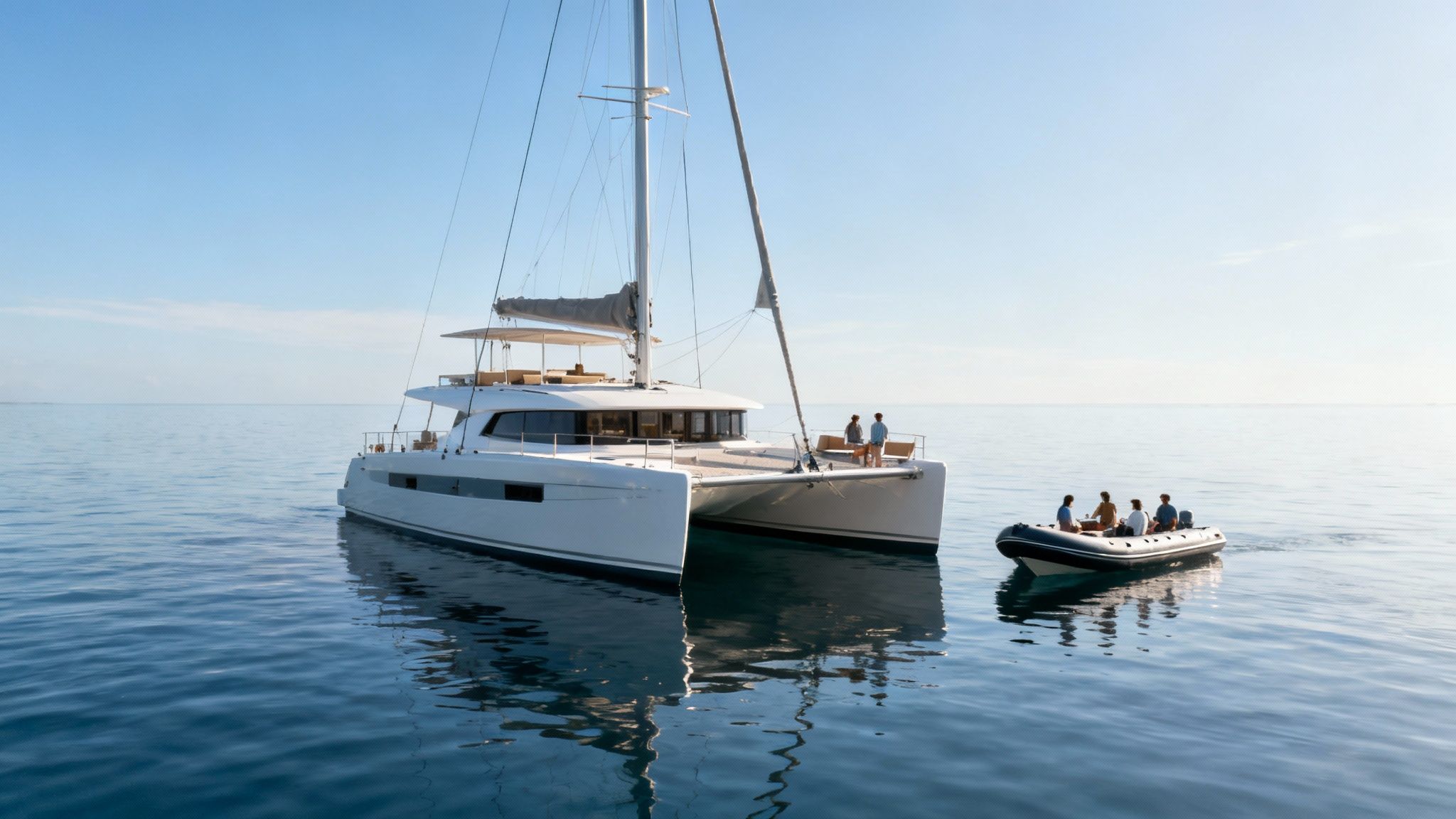
The boat itself really shapes your adventure, and believe me, they aren’t all the same. Smaller, zippy zodiacs give you that thrilling, close-to-the-water feeling where you’re right there in the action. On the other hand, a big, stable catamaran offers a much smoother ride with more space to move around and amenities like a restroom, which is a lifesaver for families or anyone who gets a little wobbly on the water.
Key Factors for Selecting a Tour
Once you've thought about the boat, a few other things separate a decent tour from a truly great one. Focusing on these details ensures you'll have a safe, respectful, and mind-blowing encounter with Kona’s humpback whales.
- Small Group Sizes: This is a huge one. Smaller groups mean a more personal, intimate experience. You get better views, less crowding, and a real chance to connect with what you're seeing. At Kona Snorkel Trips, we're all about small-group tours for that very reason—it brings you closer to the incredible wildlife.
- Experienced Naturalist Guides: A knowledgeable guide is worth their weight in gold. Look for tours with certified naturalists on board who can explain what you're seeing, interpret the whale behaviors, and answer all your questions. It changes everything.
- Ethical Practices: A truly responsible operator always puts the whales first. That means they follow federal laws to the letter, staying at least 100 yards away, and operate with a "whale-first" philosophy that keeps disturbances to an absolute minimum.
The Importance of Ecotourism
Whale watching is more than just a fun activity; it’s a massive part of Kona's economy and culture. Back in 2008, about 50 tour operators took an estimated 330,000 passengers out during the 120-day season. When you choose an operator dedicated to conservation, you’re helping protect the very animals you came here to see, making sure they’ll be back for generations to come.
Choosing a tour is about more than just seeing whales; it's about supporting a sustainable model of tourism. Your choice directly impacts the health of the marine environment and the well-being of its incredible inhabitants.
At the end of the day, a little research goes a long way. While you’re weighing your options, you might even get curious about the business side of things. For a peek behind the curtain at how companies handle their event ticketing and sales, some resources can shed light on those operations. To really dig into the local scene, check out our guide on whale watching tours in Kona, Hawaii. Taking a few extra minutes to compare will help you find the perfect fit for your adventure.
Where to Find Whales Along the Kona Coast
It's not just luck that makes Kona one of the best whale-watching spots on the planet; it’s the geography. The Big Island's coastline is practically custom-designed to be a humpback whale sanctuary, offering the perfect mix of safety and comfort they need for breeding and raising their young.
The real secret is the calm water. The sheer size of Hualalai and Mauna Loa shields the Kona and Kohala coasts from the blustery trade winds. This creates a massive leeward side where the ocean is often as flat as a lake—an ideal, energy-saving nursery for new mothers and their vulnerable calves.
Prime Viewing Locations
During peak season, you can spot whales almost anywhere along the coast, but some areas are definitely more active than others. Getting out on a boat is, hands down, the best way to get up close and personal. Experienced captains know exactly where the whales tend to hang out.
But you can still get lucky from the shore! All you need is a decent pair of binoculars and a little bit of patience. Your best bet is to find a spot with a bit of elevation for a wider view of the ocean.
- Kaloko-Honokōhau National Historical Park: A beautiful stretch of coastline where you can often spot a spout or a breach in the distance.
- Puʻukoholā Heiau National Historic Site: This spot, located a bit further north, overlooks waters famous for heavy whale traffic.
Don't just take our word for it. The Sanctuary Ocean Count, a yearly citizen science project, has been tracking this for decades. Since 1996, they've documented thousands of sightings. During the busiest months, it's not uncommon for observers to spot 3 to 6 whales every 15 minutes. The Kohala coast, in particular, often reports sightings up to three times more frequently than other areas. You can dig into the data yourself on the Sanctuary Ocean Count website.
Once you understand how the island’s geography works, it’s easy to see why whale watching in Kona delivers such reliable and spectacular encounters. It's a perfect storm of natural protection and ideal conditions. For a deeper dive into their migration patterns, check out our complete guide to whale watching on the Big Island.
Practicing Responsible and Respectful Viewing
Getting to see these gentle giants up close is a privilege, and it comes with a shared responsibility to protect them. The absolute foundation of responsible whale watching in Kona is knowing and respecting the rules of the road—or in this case, the rules of the ocean. These aren't just polite suggestions; they are federal regulations put in place to keep both you and the whales safe.
The most critical rule to remember is the 100-yard minimum distance. Federal law is very clear on this: all vessels have to stay at least 100 yards away from humpback whales. To put that in perspective, think about the length of a football field. That buffer is absolutely vital for their well-being, giving them the space they need to move, breathe, and care for their young without feeling stressed or threatened.
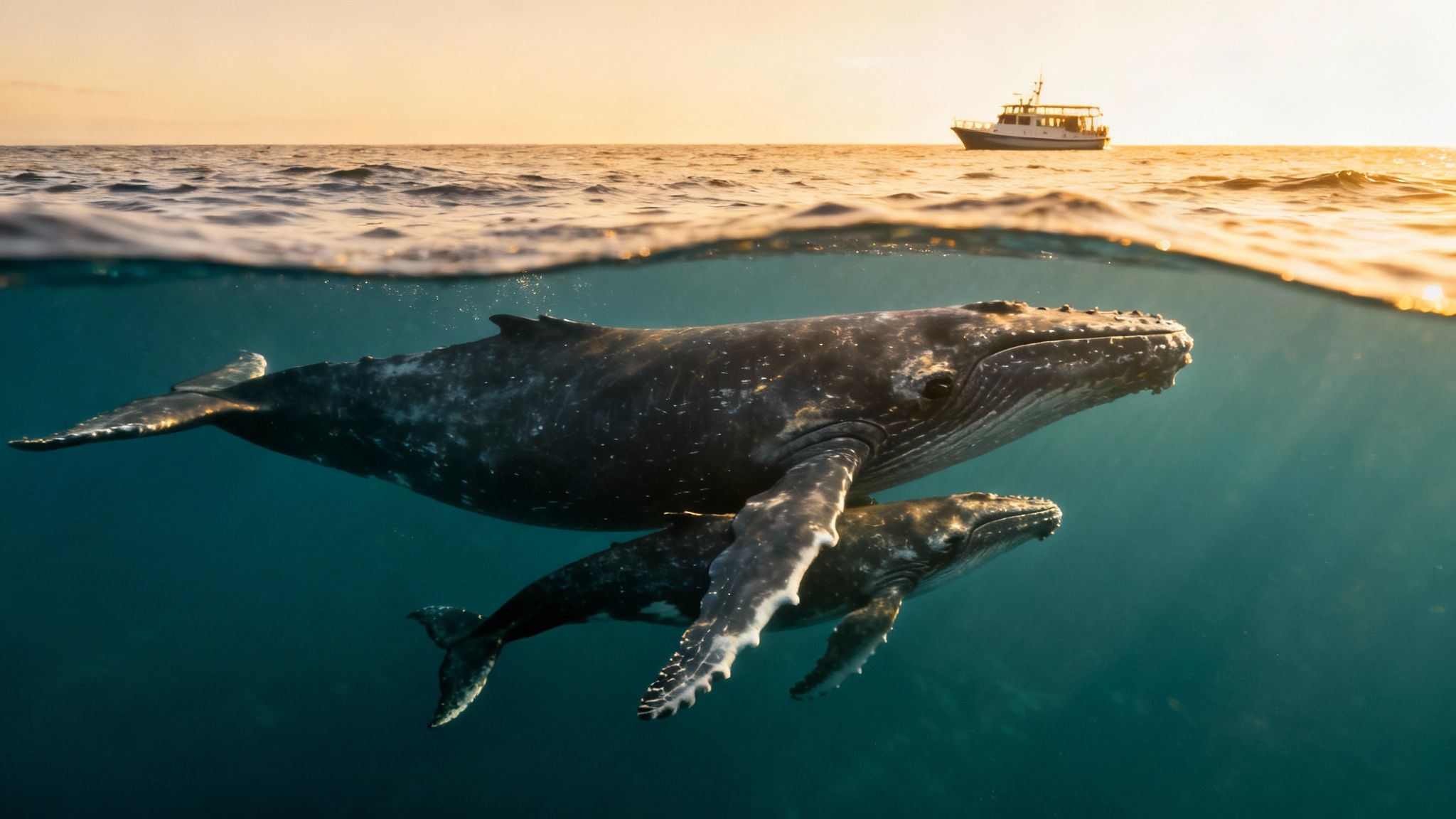
Why This Space Matters
This 100-yard buffer is especially critical for new mothers and their incredibly vulnerable calves. When boats get too close, it can interrupt crucial behaviors like nursing, resting, and all the essential survival skills a mother needs to teach her baby. A stressed mother or calf is not a healthy one, and constant disturbances can have serious long-term impacts on the entire population.
When you're picking a tour, look for operators who don't just follow these laws but actively champion them. A truly ethical tour company will always:
- Never chase, pursue, or encircle whales.
- Slow down to a crawl when anywhere near marine life.
- Limit their viewing time if a whale shows any signs of distress.
By selecting an operator that puts conservation first, you become a partner in protecting Hawaii's delicate marine ecosystem. Your choice directly supports sustainable tourism and helps ensure these incredible animals continue to return to Kona's waters for generations to come.
Choosing the right tour isn't just about following rules; it’s about making a positive impact. It means you can have a breathtaking, once-in-a-lifetime experience while knowing you're also helping to protect these magnificent creatures.
Your Kona Whale Watching Questions Answered
To make sure you're totally ready for this adventure of a lifetime, we've put together answers to the questions we hear most often about whale watching in Kona. We’ll cover everything from what to throw in your bag to whether you're guaranteed to see a whale, so you can book your tour feeling completely prepared and excited.
What Should I Wear and Bring on the Tour?
Out on the water, comfort is everything. The key is to dress in light layers. Even on the sunniest Kona days, the breeze on the ocean can be cool, so a light jacket or windbreaker is always a smart move.
You won't want to forget these essentials:
- Sun Protection: This is non-negotiable. The sun reflecting off the water is intense. Pack sunscreen, a good hat with a wide brim, and a pair of polarized sunglasses.
- Camera or Smartphone: You’re going to want to capture these moments! Make sure whatever you're using is fully charged before you leave the shore.
- Binoculars: While we'll do our best to get you close, a pair of binoculars can give you a jaw-dropping, up-close view of a breach or tail slap happening further away.
- Medication: If you know you're prone to seasickness, it's always best to take your preferred remedy before the boat leaves the harbor.
And a pro tip: once you've arrived in Kona, check out the welcome info at your rental. Many hosts include great local tips on activities like this in their Airbnb Welcome Book.
Are Whale Sightings Guaranteed?
This is a big one. While Kona in peak season (January and February) is one of the most reliable places on the planet to see humpbacks, it's crucial to remember we're entering their world. These are wild animals, not performers in a theme park.
No tour company can, or should, ever guarantee a sighting. What we can promise is that our experienced captains use years of local knowledge—reading the water, understanding whale behavior—to put you in the absolute best position to have an incredible encounter. The odds are overwhelmingly in your favor during the season, but nature always has the final say.
Is This Tour Suitable for Kids and Families?
Absolutely! Whale watching is one of the best family activities you can do in Kona. It’s a pure shot of wonder and excitement that creates memories you’ll talk about for years.
It’s an amazing opportunity to introduce kids to the magic of the ocean in a way that's both educational and just plain thrilling. Our boats are safe and comfortable for all ages, but if you have very young children, it's never a bad idea to double-check with us when you book.
What Other Marine Life Might I See?
The humpback whales may be the main event, but the waters off Kona are buzzing with life. The supporting cast is pretty spectacular.
It's incredibly common for us to be joined by pods of playful spinner dolphins, famous for their acrobatic leaps and spins. You also have a great chance of spotting Hawaiian green sea turtles (honu) surfacing for a breath, and we sometimes encounter short-finned pilot whales or a variety of unique seabirds. Every single trip is different, offering a new glimpse into the incredible biodiversity of the Pacific.
Ready to witness the magic of Kona's humpback whales yourself? Kona Snorkel Trips offers intimate, small-group tours led by expert naturalists who are passionate about sharing the wonder of Hawaii's marine life. Book your seasonal whale watching adventure today!