
Your Ultimate Guide to whale watching kona
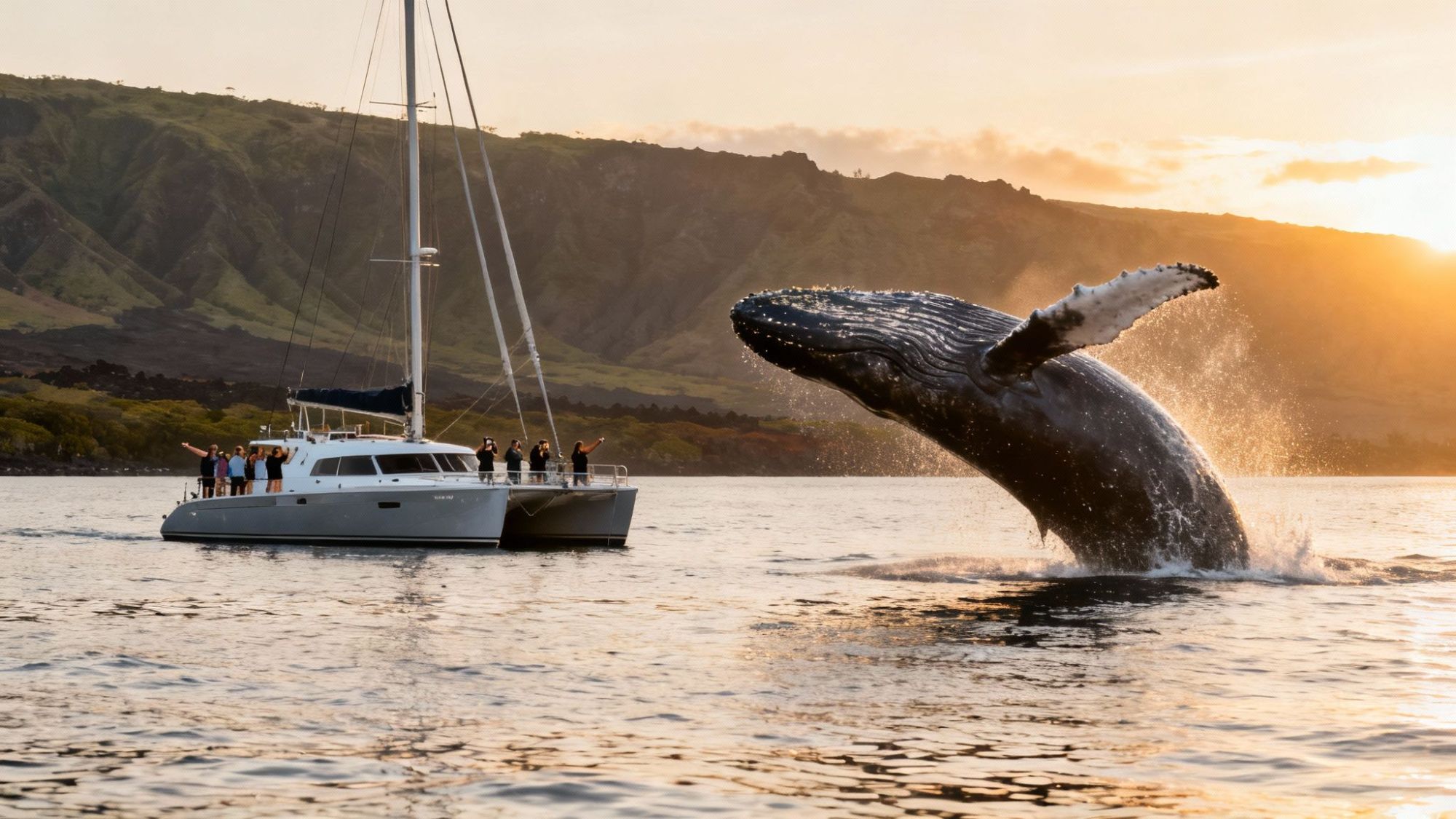
Picture this: the turquoise Pacific suddenly bursts open, and a 40-ton humpback whale skyrockets into the air. That's the unforgettable magic of whale watching here in Kona, and if you want to catch this incredible show, the absolute peak season is from January through March.
Experience the Magic of Kona Whale Watching
This guide is everything you need to plan a truly once-in-a-lifetime whale watching adventure in Kona. We'll walk you through picking the perfect tour with Hawaii's top-rated and most-reviewed company, Kona Snorkel Trips, and share some insider tips to make your day out on the water absolutely spectacular.
Every winter, Kona's calm, protected waters become a vital nursery for thousands of humpback whales migrating down from the cold of Alaska. This massive annual journey makes the Big Island one of the best places on the entire planet to see these gentle giants.
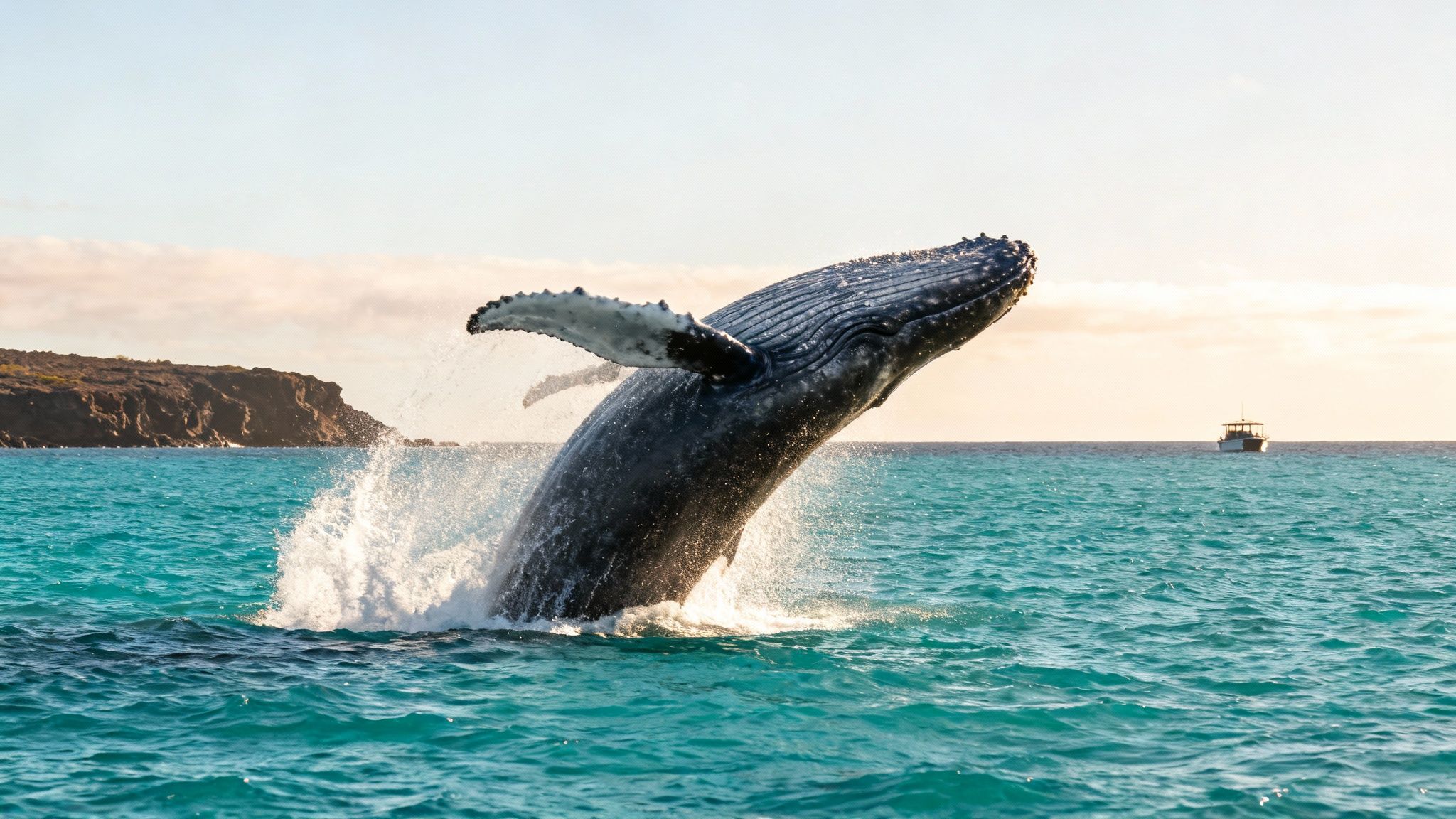
Why Kona is a Whale Watching Paradise
So, what makes Kona so special? It's all about geography. The Kona coast is tucked behind the massive volcanoes of Mauna Loa and Hualalai, which act as a natural shield against the powerful trade winds. This creates exceptionally calm, clear seas—perfect conditions for the whales and for us.
These placid waters are a safe haven where humpback mothers can give birth and nurse their newborn calves. The warm, shallow environment is exactly what the young whales need to build up strength for the long, demanding swim back to their Alaskan feeding grounds.
For visitors, this translates into an incredible opportunity. The sheer concentration of whales, combined with the calm ocean surface, dramatically boosts your chances of a spectacular encounter. You're not just looking for a needle in a haystack; you're visiting the haystack itself.
A whale watching tour in Kona isn't just a boat ride. It’s an immersive experience into the life cycle of one of Earth's most majestic creatures, set against the stunning backdrop of the Hawaiian islands.
This unique combination makes every single trip out here special. You might see a mother gently nudging her calf to the surface to breathe, or you might witness a powerful male breaching completely out of the water. The possibilities for awe-inspiring moments are simply endless.
Finding the Best Time for Your Whale Encounter
When it comes to whale watching, timing isn't just important—it's everything. If you want a truly jaw-dropping experience, you've got to plan your trip around the humpbacks' own schedule.
The absolute best time for whale watching in Kona is from January through March. This is the sweet spot. Thousands of humpback whales pack the warm, protected waters off our coast to breed, give birth, and nurse their new calves. It's a massive family reunion, and we get a front-row seat.
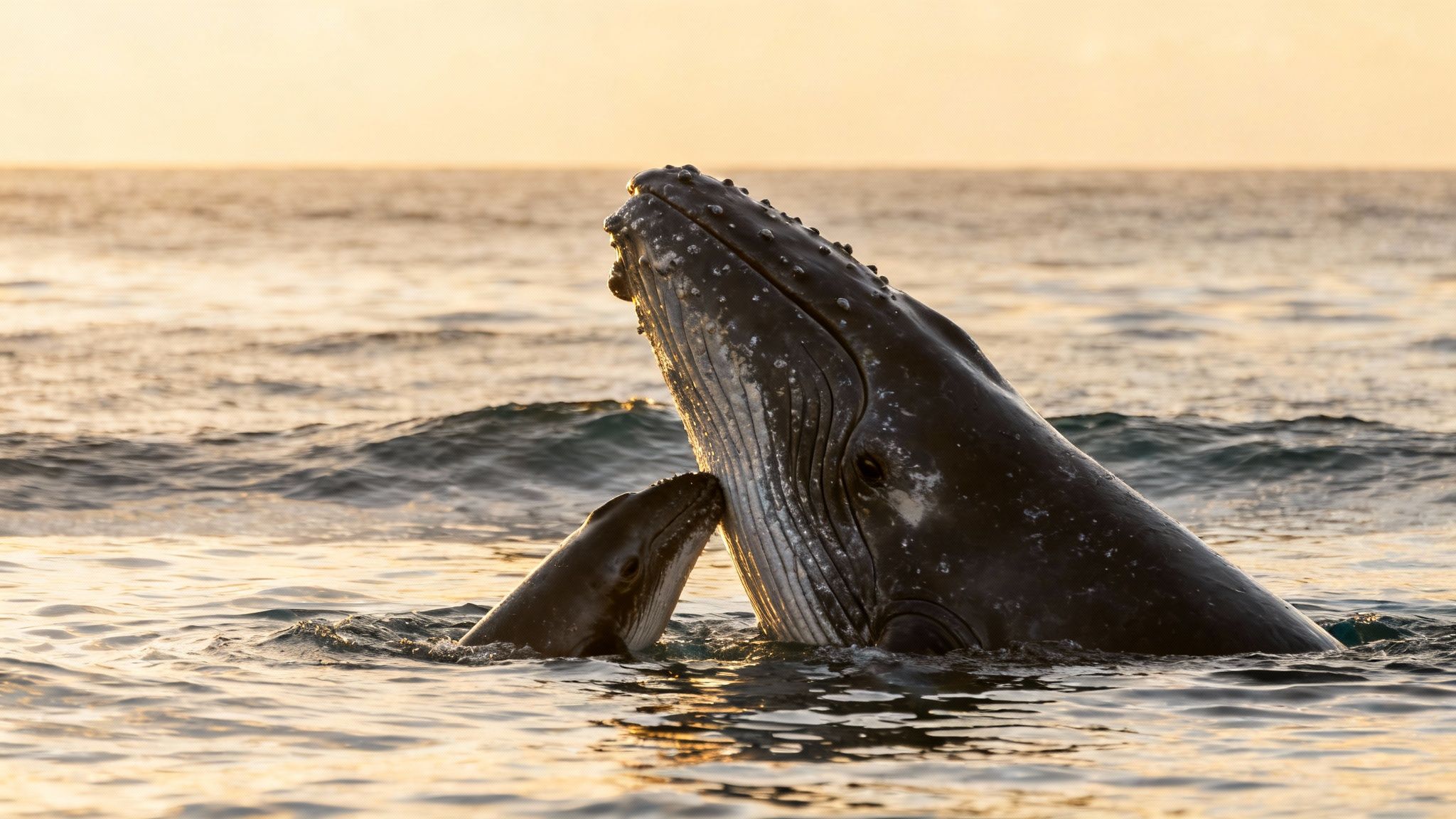
During these peak months, the sheer number of whales makes sightings practically a guarantee. The ocean is just alive with activity. You'll see everything from thunderous breaches that send spray flying high into the air to quiet, tender moments between a mother and her calf. It's a spectacle that has to be seen to be believed.
Morning Calm vs. Afternoon Action
Okay, so you've picked a great month to visit. Now, what time of day should you go out? Honestly, there’s no wrong answer here—it really comes down to what kind of vibe you're looking for.
- Morning Tours: If you love glassy, calm water, the morning is for you. The Kona coast is typically super smooth before the afternoon winds kick in, which makes for a comfortable ride and makes spotting whales that much easier. The soft morning light is also a photographer's dream.
- Afternoon Tours: As the day heats up, so does the whale activity. The ocean might be a little choppier, but your reward could be more energetic surface action. Plus, there’s nothing quite like seeing a whale breach against the dramatic light of the late afternoon sun.
Whether you're an early bird or prefer a lazy afternoon, you’re setting yourself up for an amazing day. For a deeper dive into the seasonal patterns, check out our full guide to the whale season in Hawaii.
No matter when you go during peak season, the key is to simply get out on the water. The more time you spend looking, the more you're likely to see.
The whole season has a rhythm to it. The first scouts start showing up in late fall, and their numbers build steadily through December. By April, you'll see the last moms and calves getting ready for their long swim back to Alaska—a really touching finale to an incredible natural event.
Kona Whale Watching Season At a Glance
To help you pinpoint the perfect time for your trip, here’s a quick month-by-month breakdown of what you can typically expect out on the water.
| Month | Whale Activity | Viewing Conditions |
|---|---|---|
| November – December | Early Arrivals: The first whales begin to arrive. Sightings are possible but not guaranteed. Numbers build toward the end of December. | Excellent: Seas are typically calm, and there are fewer boats on the water. |
| January | Peak Season Begins: A dramatic increase in whale numbers. Lots of males competing for females, leading to very active surface behavior. | Great: Water is generally calm, especially in the mornings. Sightings are very frequent. |
| February | The Absolute Peak: The highest concentration of whales. This is prime time for seeing a bit of everything—breaches, tail slaps, and newborns. | Great to Good: Conditions are still excellent, though afternoon trade winds can pick up. |
| March | Peak Season Continues: Still thousands of whales, with a noticeable increase in mothers and calves. A great time for seeing nurturing behaviors. | Good: Weather remains beautiful. This is one of the most popular months, so book ahead! |
| April | Late Season Departures: The last groups, mostly mothers and their young calves, begin their journey north. Sightings become less frequent. | Excellent: Beautiful spring weather with typically calm seas. A quieter time on the water. |
This table gives you a general idea, but remember, these are wild animals on their own schedule! Every day is a little different, which is part of what makes it so exciting.
How to Choose Your Perfect Whale Watching Tour
Picking the right tour for your whale watching Kona adventure is a bigger deal than you might think. Not all trips are the same, and your choice of boat, crew, and tour style really shapes the whole experience. Let’s be honest, the vessel itself is one of the biggest factors.
You’ll see everything from large, stable catamarans to small, zippy zodiac-style rafts. Each one offers a totally different vibe on the water. The best one for you really just depends on what you’re looking for—total comfort, getting right down to the water level, or something in between.
Comparing Boat Types
Large catamarans are a fantastic option, especially if you've got family in tow or you're just not a fan of a rocky ride. That dual-hull design makes them incredibly stable, which is a huge relief if you’re worried about seasickness. These boats usually have perks like bathrooms, shady spots to sit, and room to stretch your legs, making the whole trip feel relaxed and comfortable.
On the other end of the spectrum, you have the smaller zodiac-style boats. These things are a thrill. Because you’re sitting so low to the water, you get a much more personal, eye-level view of the whales. They're nimble and quick, which makes for a fast-paced, exciting adventure. The trade-off? You’ll feel the bumps more and have less cover from the sun and spray, so they’re a better fit for the more adventurous soul.
The Value of an Expert Crew
The boat is important, but the crew can take a good trip and make it truly unforgettable. My advice is to always look for tours led by a seasoned captain and, if possible, a marine naturalist. A great captain knows these waters like the back of their hand—they know where the whales tend to hang out, which dramatically increases your chances of a spectacular encounter.
A tour with a marine naturalist on board is like having a backstage pass to the ocean. They don't just point out whales; they interpret their behavior, explain their life cycle, and answer your questions, adding a rich educational layer to your experience.
This kind of expert commentary turns a simple sightseeing trip into something so much deeper. You'll learn the difference between a pec slap and a tail lob, and some boats even have underwater hydrophones so you can hear the whale songs live. That kind of insight just elevates the entire day. To get a feel for what’s out there, you can check out the different kinds of whale watching tours in Kona, Hawaii.
Key Details to Check Before Booking
Before you hit that "book now" button, it pays to double-check a few practical details. These little things can make a huge difference in how much you enjoy your day.
- Tour Duration: Most tours last between 2 to 4 hours. A longer trip gives you more time on the water to find the whales and watch them without feeling rushed.
- What's Included: See if they provide snacks, drinks, or even snorkel gear. Some operators offer combo trips, like dedicated Kona whale watching tours that include snorkeling, which can be a great way to pack more into your day.
- Sighting Guarantee: During peak season, many of the best companies are so confident they'll find whales that they offer a guarantee. This usually means if you don't see any, you can come back for another trip for free.
Thinking about these points will help you find a tour that’s the perfect match for your group's budget, comfort, and adventure level. It’s the best way to set yourself up for an incredible day out on the water.
What to Expect on Your Whale Watching Adventure
The excitement is almost tangible when you step onto the boat for your whale watching tour. You can feel it buzzing between the other guests and the crew. As the engines hum and the boat glides out of the harbor, you're heading into the vast, blue Pacific, and the anticipation really starts to build. Everyone's scanning the horizon, eyes wide, waiting for that first sign.
Then it happens. A collective gasp, a pointed finger from the captain, and the famous cry, "Thar she blows!" Off in the distance, a misty cloud of spray shoots into the air. This is the "blow," a whale's massive exhale that can rocket up to 15 feet high, and it's almost always the first thing you'll spot. As the boat slows and cautiously approaches, the true, mind-boggling scale of these animals starts to sink in.
Decoding Whale Behaviors
Part of the magic is seeing the whales' spectacular behaviors up close. It's not just random splashing; each action tells a story, and knowing what you're looking at adds a whole new layer of wonder to the experience.
- The Breach: This is the ultimate showstopper—a whale launching its entire 40-ton body clean out of the water. Scientists have a few theories: it could be a way to communicate, a method for shaking off pesky parasites, or maybe, just maybe, an expression of pure joy.
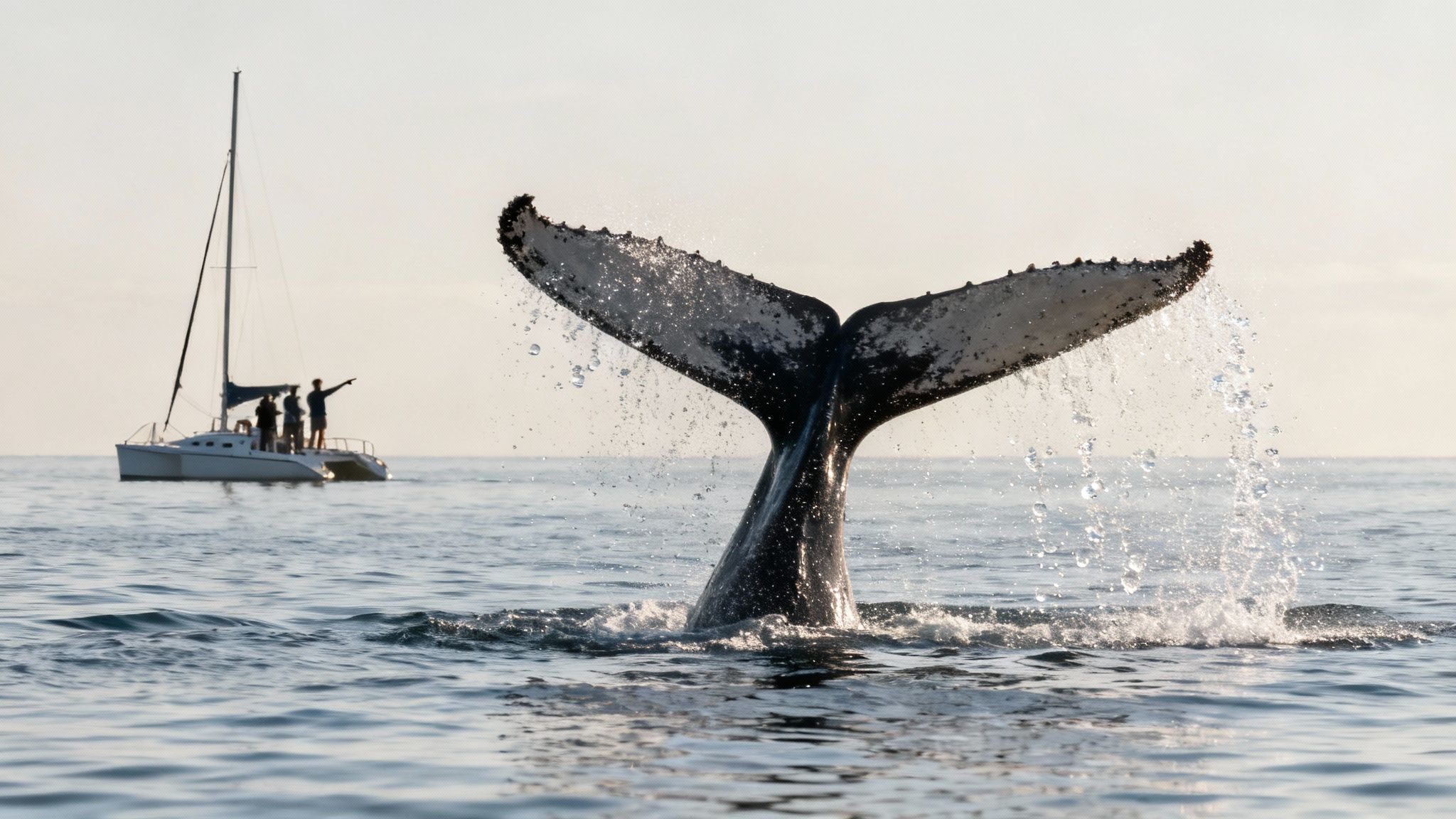
- The Tail Slap (Lobtailing): You'll see the whale's enormous fluke rise high above the waves before smacking down with incredible force. The sound is like thunder. This is likely a warning to other whales or even a clever way to stun nearby fish for an easy meal.
- The Spyhop: Suddenly, a whale will poke its head straight out of the water, looking around as if it's treading water. It's checking out its surroundings, which includes your boat! It’s a moment of raw curiosity that feels like the whale is looking right at you.
Hearing a humpback's song for the first time is a hauntingly beautiful experience that stays with you long after you've returned to shore. It's the sound of the deep ocean itself.
The Soundtrack of the Ocean
One of the most profound parts of a whale watching tour is when you get to listen in on their world. Many tour boats, including ours, carry hydrophones—basically, underwater microphones. The captain can drop one into the ocean, and suddenly, the boat is filled with the complex, eerie, and melodic songs of the male humpback whales. These songs can travel for miles underwater and are a crucial part of their mating rituals.
Floating on the calm Kona waters, listening to these ancient melodies, is a truly moving experience. Once you're back on land, you might just be inspired to seek out more amazing water adventures on your trip. And to make sure you're feeling great for any time on the water, check out our tips on how to prevent seasickness before you head out.
Of course! Here is the rewritten section, crafted to sound like an experienced local guide.
Gearing Up for the Big Day
A little bit of prep can be the difference between a good whale watching trip and an amazing one. When you're comfortable and have what you need, you can kick back and focus on the incredible show the humpbacks put on. Honestly, a well-packed bag is the first step to a perfect day out on the water.
Let's start with the sun. The Hawaiian sun is no joke, and when it reflects off the ocean, it’s even stronger. You absolutely need a good, high-SPF reef-safe sunscreen. It’s a must for protecting your skin and our fragile coral ecosystems. A wide-brimmed hat and polarized sunglasses are also non-negotiable. The sunglasses are especially key—they cut right through that intense glare on the water, making it way easier to spot a misty whale spout or a breach in the distance.
Comfort is Key
Beyond sun protection, a couple of other items can make a world of difference. If you're someone who gets a little queasy on the water, planning ahead is your best friend.
Morning tours often mean calmer seas, which can help a lot. You can also grab some over-the-counter motion sickness medicine before you head out, but just make sure you follow the directions. Staying hydrated and keeping your eyes fixed on the steady horizon line are simple tricks that really work wonders, too.
Bringing the Keiki (Kids)?
If you've got the little ones with you, their comfort is everything. Choosing a larger boat usually means you'll have access to a bathroom and some shaded spots, which can be absolute lifesavers. It's also a great idea to bring a few simple snacks and maybe a small activity to keep them happy between whale sightings. A happy kid makes for a happy boat trip for everyone.
Getting That Perfect Photo
You're going to want to remember this day, which means snapping some great pictures. You don't have to be a pro photographer, but a few simple tips can seriously up your photo game.
- Bring the Zoom: Whales can show up anywhere, anytime, and often at a distance. A camera with a decent zoom lens lets you get those awesome, frame-filling shots without getting too close and disturbing them.
- Speed Up Your Shutter: Whales move fast—especially when they breach. A fast shutter speed, something like 1/1000s or higher, is what you need to freeze that incredible action and avoid blurry shots.
- Stay Ready: The best moments happen in a flash. Keep your camera on and in your hands. You don't want to be fumbling with your bag when a 40-ton whale suddenly launches itself out of the water!
The real secret to great whale photography is anticipation. Look for the signs, listen to what the crew is pointing out, and just be ready to capture that raw power when the moment comes.
By packing smart and thinking ahead about comfort, you're all set for a truly unforgettable whale watching adventure here in Kona.
Why Responsible Whale Watching Matters
Seeing a 40-ton humpback whale launch itself out of the water is something you never forget. It's a true privilege, and that privilege comes with a heavy dose of responsibility. Choosing the right, ethical tour operator for your whale watching kona adventure isn't just a minor detail—it's the single most important decision you'll make for the well-being of these incredible animals.
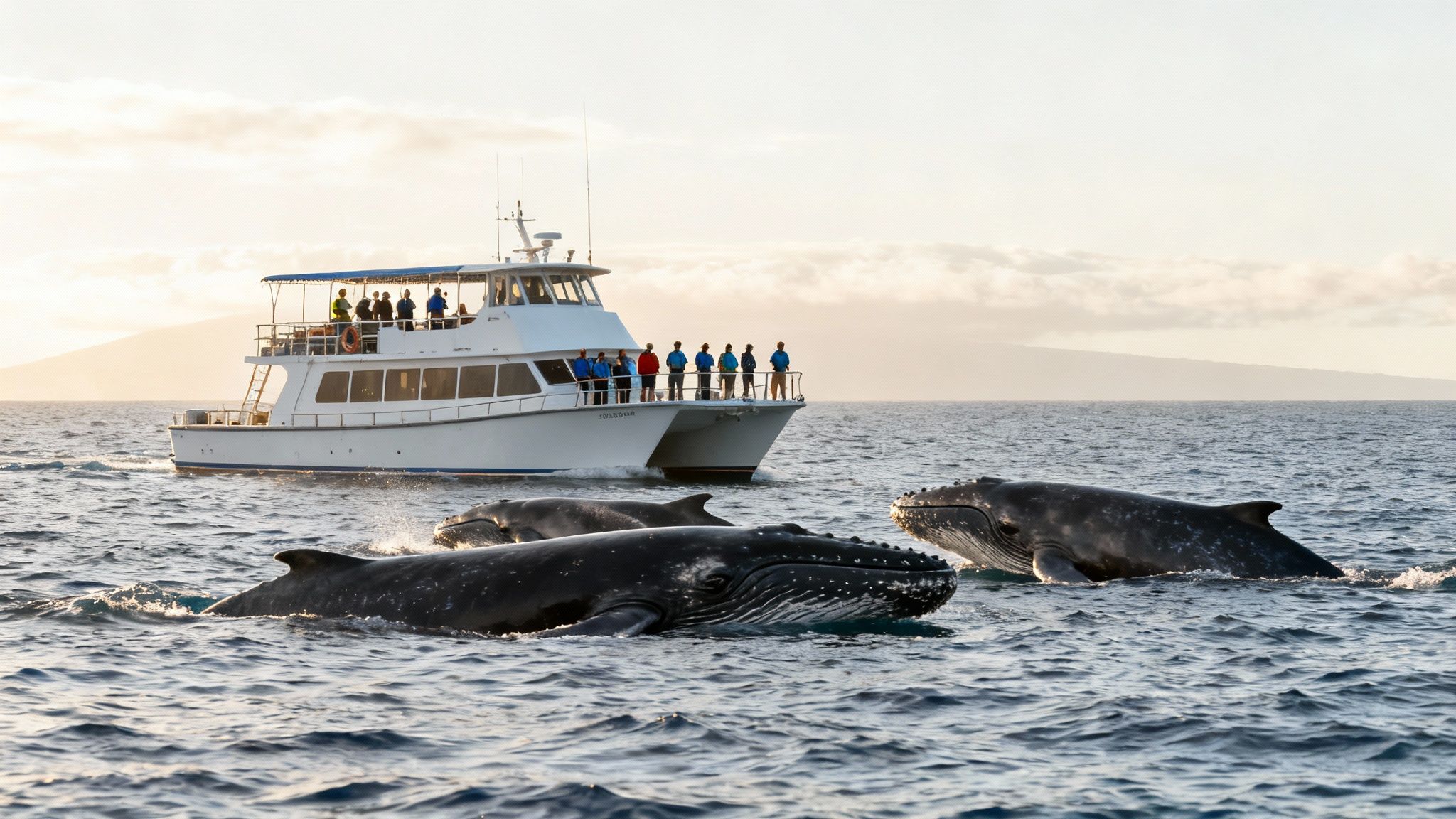
This is about making sure our presence doesn't disrupt the very creatures we’ve traveled so far to admire. It means putting their safety and natural behavior first, way ahead of getting that slightly closer photo.
Respecting Their Space
There’s a reason federal and state laws exist: to keep the whales safe. The rules are simple but crucial: all boats must stay at least 100 yards away from humpback whales in Hawaiian waters. To put that in perspective, that’s the full length of a football field.
This buffer zone is especially critical for new mothers and their calves. A boat getting too close or chasing after them can cause immense stress. It can interrupt vital nursing and rest, or even worse, separate a calf from its mom.
A good tour company knows these rules by heart and follows them without question. Their captains are experts at positioning the boat for amazing views while giving the whales all the space they need to be wild.
By choosing a tour that follows the law, you're directly contributing to the conservation of these animals. Your incredible experience becomes a positive force, supporting a sustainable industry that helps protect Hawaii's marine ecosystem for generations to come.
Your Role in Conservation
When you book a trip with a company that’s serious about ethical practices, you’re essentially casting a vote with your dollars for the future of Hawaii’s humpbacks. You’re backing businesses that properly train their crews in safe viewing protocols and often contribute to local research and conservation work.
Your choice ensures that the awe-inspiring spectacle of whale watching in Kona can continue as a healthy, sustainable, and magical experience for everyone. It’s a simple decision that makes a profound impact, turning your adventure into something both memorable and meaningful.
Got a few more questions rattling around in your head? It's totally normal. We've talked about a lot, so let's tackle some of the most common things people ask before they head out on the water.
Is Whale Watching in Kona Really Worth It?
One hundred percent, without a doubt. I've been out on these waters for years, and the magic never fades. The Kona coast is one of the most incredible and reliable places on the entire planet to see humpbacks doing their thing. We've got calm, protected waters and a huge concentration of whales during the peak season (January through March). It’s not just a boat ride; it’s a world-class wildlife experience you’ll be talking about for years.
What Are My Chances of Actually Seeing a Whale?
During peak season, your odds are ridiculously good—we’re talking over a 95% success rate. The whales are so thick out there that it's more a question of how many you'll see, not if you'll see one. In fact, most of the top-notch tour operators here are so confident they offer a "sighting guarantee." What that usually means is if you hit that super rare, unlucky day and don't see a whale, they'll take you out again for free.
Ever wonder why Kona is such a whale magnet? Our massive volcanoes, Mauna Loa and Hualalai, block the winds and create a calm, protected offshore playground. It’s perfect for the whales, and it makes for a much smoother, more enjoyable ride for us, too.
Can I Just Watch for Whales From the Shore?
Sure, you absolutely can! Find a good vantage point along the coast, and you can definitely spot the signs—a distant spout of mist or the splash of a breach on the horizon. It's a fun way to pass the time.
But let me be real with you: it doesn't even come close to being on a boat. Out on the water, you truly grasp their immense size. You witness their social behaviors up close. And nothing, nothing, compares to the moment your captain drops a hydrophone in the water and you hear their haunting songs echoing up from the deep. It's an experience that will give you goosebumps.
What Else Might I See Out There?
While the humpbacks are definitely the main event, they're not the only ones in the show! It's super common to be joined by a playful pod of spinner dolphins, often leaping and twisting right alongside the boat. We also frequently spot our beloved Hawaiian green sea turtles (honu) coming up for a breath. And if you're really lucky, you might even catch a glimpse of more elusive species like false killer whales or pilot whales. You just never know what the ocean will decide to share with you on any given day.
Your unforgettable whale watching adventure in Kona is just a booking away. Join Kona Snorkel Trips for an intimate, respectful, and awe-inspiring encounter with these gentle giants. Book Your Whale Watching Tour Today