
Whale Watching Kona: Your Ultimate Guide
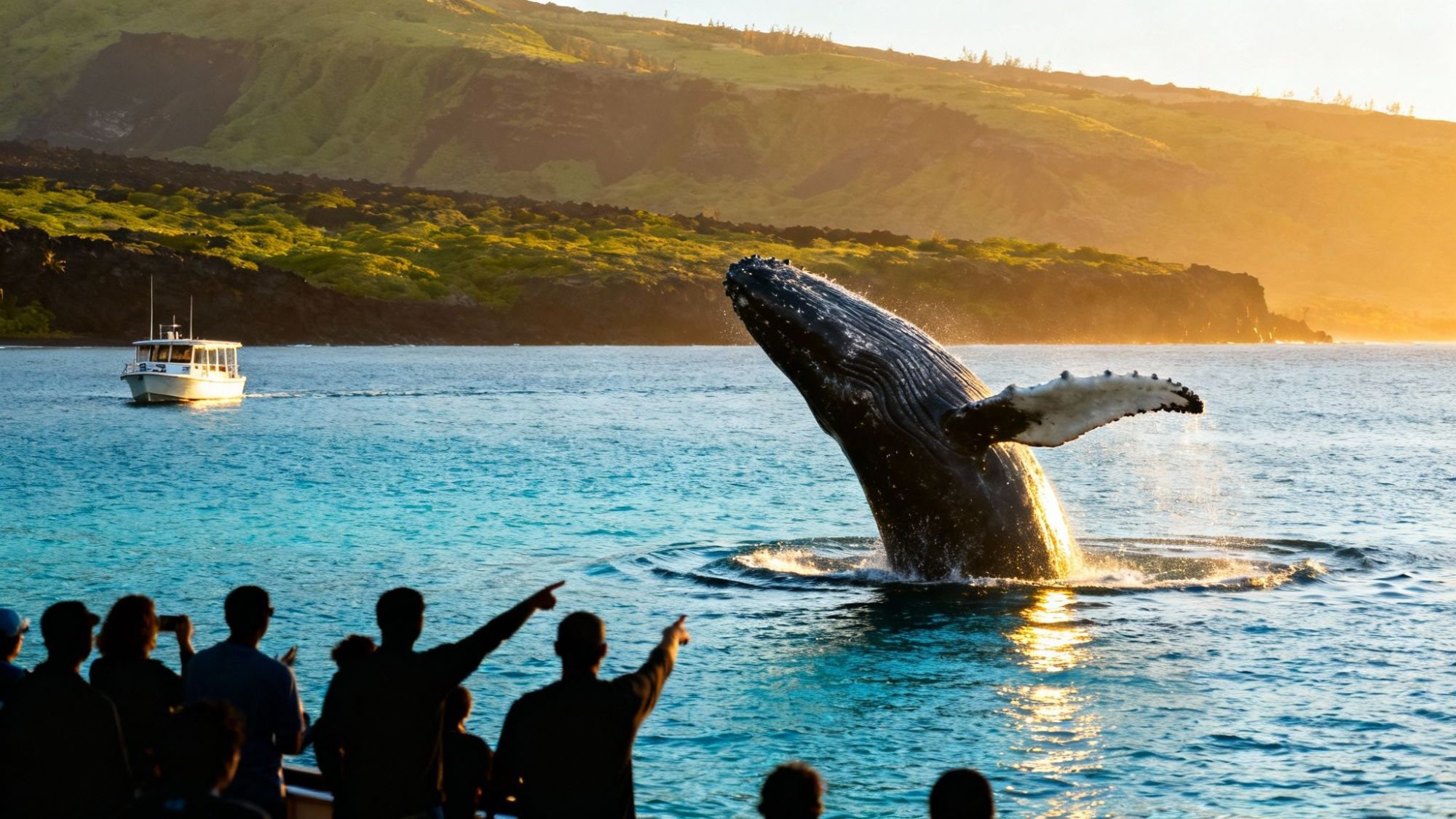
Whale watching in Kona is something else entirely. We're talking about truly special, up-close encounters with migrating humpback whales, the kind of moments that stick with you forever. If you want to be right in the middle of the action, plan your trip for December through March. That's when things really kick into high gear.
As the top rated & most reviewed snorkel company in Hawaii, Kona Snorkel Trips is ready to show you the adventure of a lifetime.
Why Kona is the Epicenter for Whale Watching
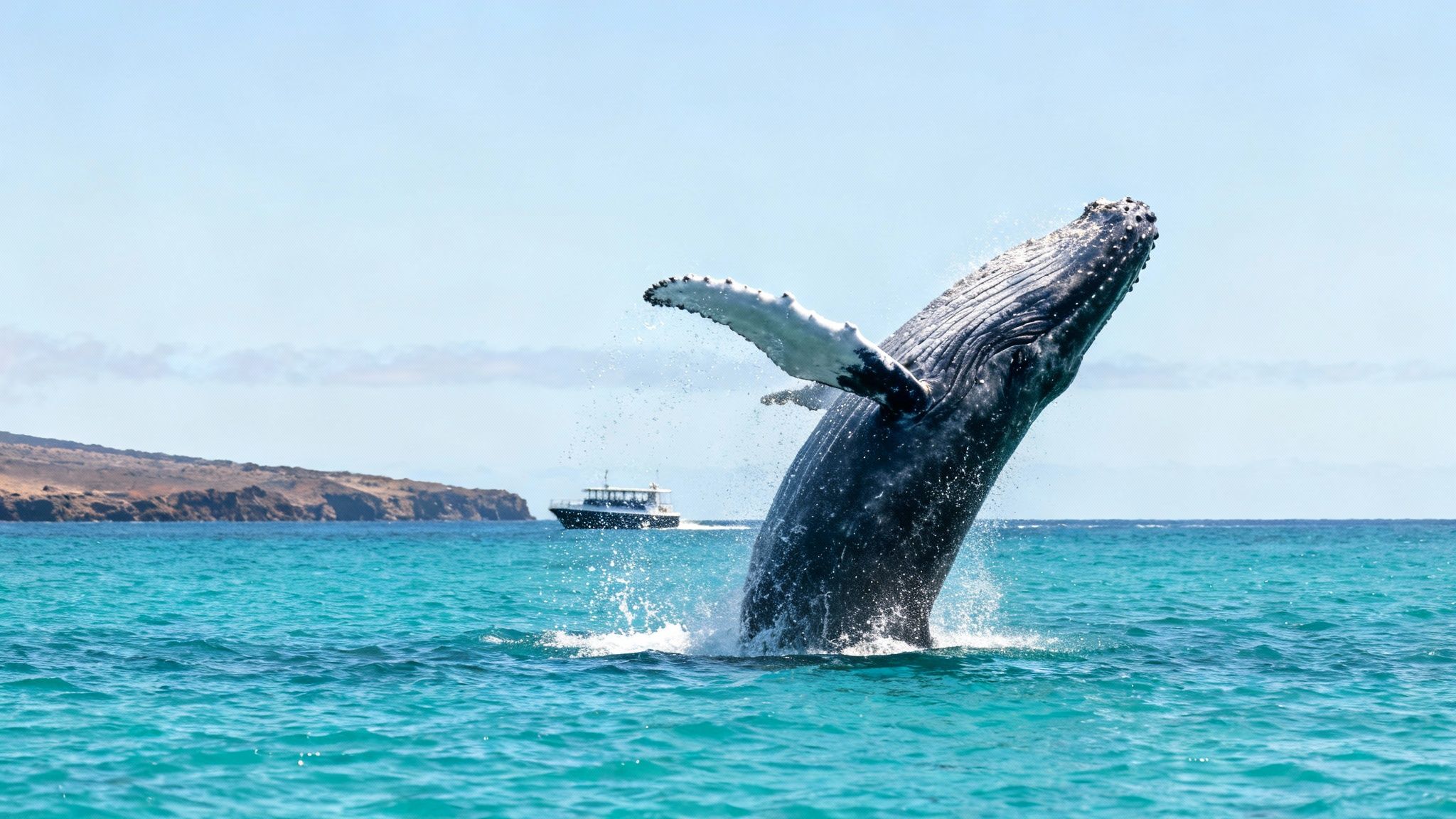
So, what makes the Kona coast so special? Every winter, our calm, sheltered bays become the preferred Hawaiian vacation spot for more than 8,000 humpback whales escaping the frigid waters of Alaska. They come here to breed, give birth, and raise their young.
It’s an incredible spectacle. You don't have to wait long after leaving the harbor to see the show begin—gentle breaches, powerful tail slaps, and curious spy-hops are all part of the daily routine here.
For those planning a trip, here's a quick rundown of what to expect.
Kona Whale Watching at a Glance
| Topic | Key Highlights |
|---|---|
| Peak Season | The magic happens from December to March. |
| Main Species | Majestic Humpback whales are the stars of the show. |
| Tour Types | Get out on the water with a boat tour or watch from shore. |
| Avg. Sightings | It's common to see 3–6 whales every 15 minutes during peak season. |
| Our Recommendation | We're proud to be the top-rated and most-reviewed operator: Kona Snorkel Trips. |
This little cheat sheet should help you start dreaming up your perfect whale watching adventure on Kona's crystal-clear waters.
Fun Fact: It's not just a few people out on the water. Over 330,000 visitors take whale watching tours across Hawaii each season, making it a cornerstone of the island experience.
Local operators like us at Kona Snorkel Trips really focus on making the experience personal. We keep our groups small so you have a front-row seat, and our expert guides are there to share their knowledge and passion. Of course, safety and responsible viewing practices come first, ensuring we have a respectful encounter every time.
Different Ways to See the Whales
You’ve got options. Classic half-day boat tours get you right into the heart of the action, while sunset cruises add a touch of evening magic to the experience. If you prefer to stay on land, there are also some fantastic shore-based vantage points.
During peak season, boats depart daily from Honokohau Harbor, and we typically offer 3 departure times to fit any schedule. Most trips last about 2–3 hours and include a full narration from our crew.
Even if you visit outside of humpback season, you're not out of luck. Pelagic tours can reveal year-round residents like dolphins and pilot whales, so there's always something amazing to see.
A Few Key Things to Remember
- Small Groups Matter: On a Kona Snorkel Trips tour, a smaller group means more personal attention from the guide and way better photo opportunities. No jostling for a good view!
- Calm Waters: The protected waters along the Kona coast mean our tours are almost always comfortable and smooth.
- Flexible Timing: Having multiple departure times gives you the flexibility to work around other plans and pick the best weather window.
Ready to see it for yourself? Let's start planning your trip to witness Kona’s incredible whale spectacle. The following sections will dive deeper into everything you need to know.
Decoding Whale Season and Migration Secrets
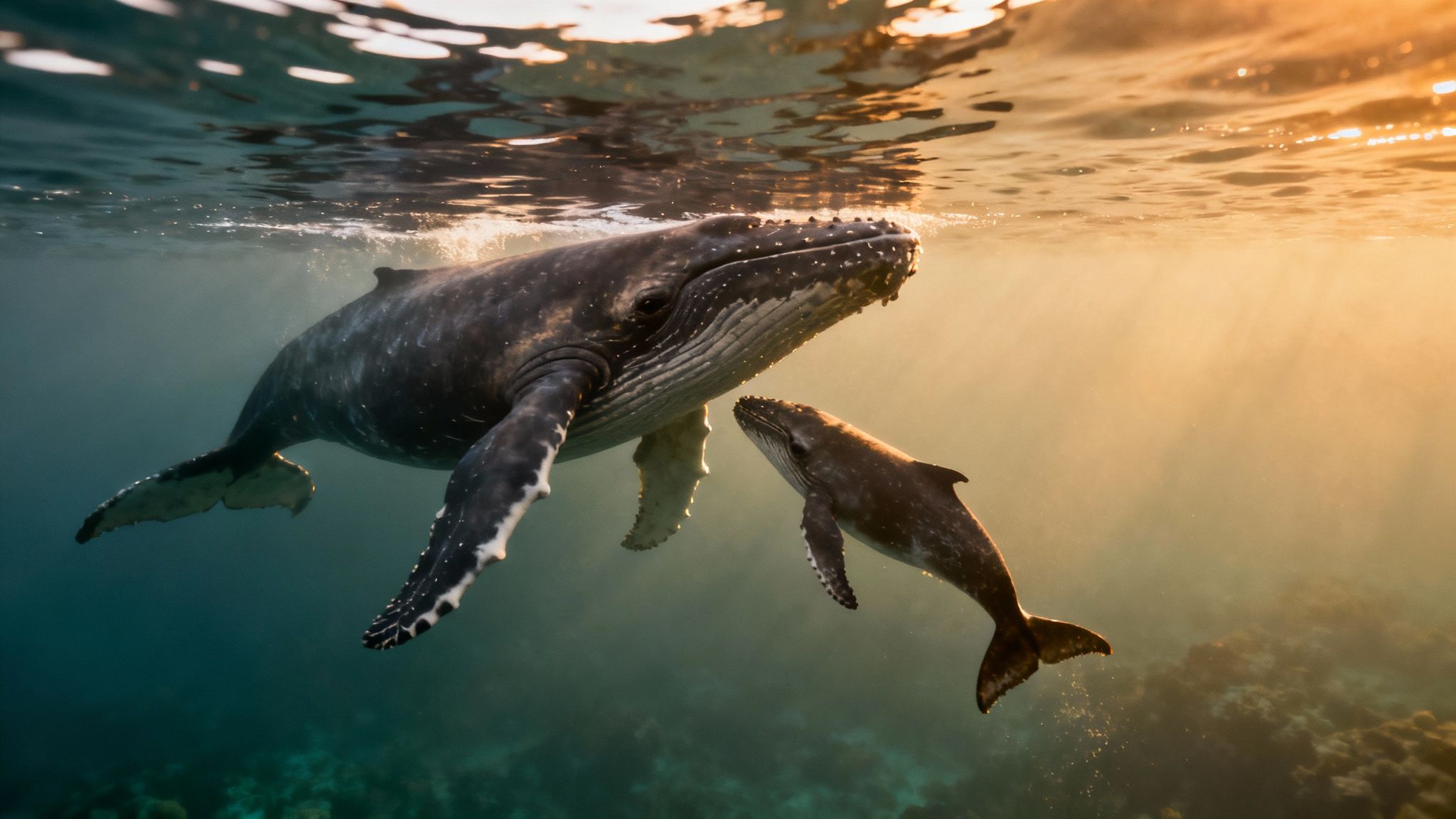
Every year, something truly magical happens along the Kona coast. It’s a spectacle driven by ancient rhythms, an epic journey that brings thousands of humpback whales from the frigid waters of Alaska to our warm, welcoming seas. This isn’t just a quick swim—it's a massive migration across more than 3,500 miles of open ocean.
So, why Kona? The answer is simple: it’s the perfect nursery. Our coast is sheltered by the massive volcanoes Mauna Loa and Hualalai, creating a calm, protected leeward side. This tranquility is exactly what pregnant female whales are looking for.
They travel all this way to give birth in a safe haven, far from the Arctic chill and many natural predators. Newborn calves are born with very little blubber, so the warm Hawaiian waters are crucial for their survival, helping them conserve precious energy.
The Epic Journey from Alaska
Just think about that for a second. These whales travel for six to eight weeks without eating a single bite. They survive entirely on the fat reserves they spent all summer building up in their Alaskan feeding grounds. It’s an unbelievable display of endurance.
This incredible voyage is timed perfectly with the seasons. As winter approaches and food becomes scarce up north, the whales head south. This predictable, instinct-driven pattern is what makes whale watching in Kona such a reliable and awe-inspiring experience year after year.
For a deeper dive into their timing, check out our guide on the Big Island whale season.
Pinpointing the Peak Season
While the first whales might be spotted as early as October, the real action kicks off in December and runs straight through March. If you’re here during this window, your chances of a memorable encounter are fantastic.
But if you want the absolute best, aim for January and February. These are the peak months. The waters are brimming with the highest concentration of humpbacks, which means more spectacular surface displays—think breaches, tail slaps, and pectoral fin waves. It's also when you see the most competitive behavior from males vying for the attention of females.
The sheer number of whales is hard to wrap your head around. More than 8,000 humpback whales make the trip to Hawaii each winter. In the heart of the season, it’s not unusual for our crews to spot an average of 3 to 6 humpback whales every 15 minutes in Kona’s prime locations.
This density of activity is what puts Kona on the map as a world-class whale watching destination. It’s an incredible natural phenomenon that we’re lucky enough to share with visitors from around the globe.
Beyond the Peak Months
Don't worry if you can't make it in January or February. The "shoulder" months offer their own unique magic.
- Early Season (December): This is when the first wave of large adults arrives. The waters are a little less crowded, which can make for a more serene and personal experience as you welcome the whales back.
- Late Season (March): This is prime time for spotting mothers and their newborn calves. You get to witness incredibly tender moments as moms teach their babies how to be whales before they all begin the long journey back north.
Understanding this annual cycle gives you a much deeper appreciation for what you're seeing. Every breach, every spout, every fluke that disappears below the waves is part of a much larger story of survival, instinct, and the unbreakable bond between these gentle giants and the waters of Kona.
Meet the Marine Giants of the Kona Coast
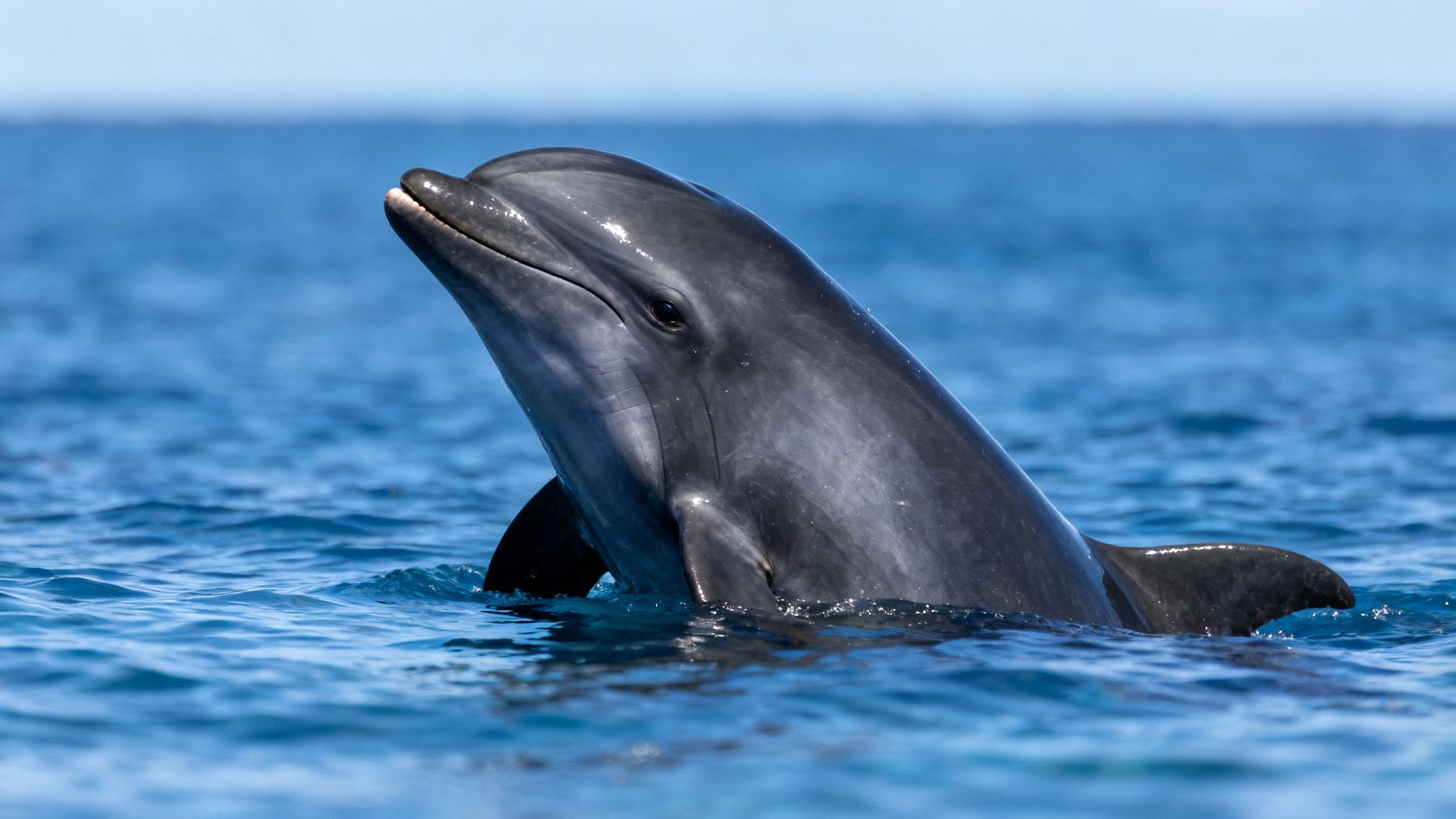
Sure, the humpback whales steal the show every winter, and for good reason. They're magnificent. But the waters off the Kona coast are a bustling metropolis for marine life all year long, and a good day of whale watching in Kona often gets even better with surprise visits from a whole cast of other incredible creatures.
Knowing who else might show up turns a simple sightseeing trip into a true wildlife expedition. The thrill of seeing a dorsal fin slice through the water is one thing, but being able to put a name to the face and understand its behavior? That’s next level.
Kona's deep, nutrient-rich waters aren't just a travel destination for humpbacks; they're a permanent home for several other fascinating species. It's these year-round residents that make Kona such a reliable spot for incredible encounters, no matter when you visit.
The Year-Round Residents of Kona
While humpbacks are seasonal visitors, many other giants live here full-time. Here are a few of the local celebrities you might meet.
- Short-Finned Pilot Whales: These guys are some of the most social and curious animals in the ocean. You'll often find them hanging out in big family pods, and they're known for "spyhopping"—poking their heads straight out of the water to get a better look at what's going on.
- Melon-Headed Whales: Seeing these sleek, fast swimmers is a real treat. They typically travel in huge, tightly-packed pods, sometimes numbering in the hundreds. It’s a breathtaking sight to see them moving so gracefully together through the deep offshore waters.
- Beaked Whales: These are the deep divers of the whale world—elusive, mysterious, and rarely seen. They spend most of their lives in the crushing depths far from shore, so spotting one is a lucky and privileged moment.
The incredible biodiversity doesn't stop there. Photo-ID studies have cataloged at least 1,200 individual short-finned pilot whales around Hawaii, plus two resident populations of melon-headed whales. The consistent presence of these species, along with others like false killer whales and even sperm whales, cements Kona’s reputation as a world-class wildlife destination.
Understanding Whale Behaviors
Part of the magic of whale watching is figuring out the story behind their actions. You’re not just looking at animals; you’re witnessing communication, play, and raw power.
A whale breach is one of the most powerful displays in all of nature. Imagine something the size of a school bus launching its entire 40-ton body out of the water. Scientists think it could be a way to communicate, shake off parasites, or maybe—just maybe—it’s an expression of pure joy.
Here are a few other common behaviors to keep an eye out for:
| Behavior | Description | What It Might Mean |
|---|---|---|
| Spyhop | The whale rises vertically, poking its head straight out of the water. | Pure curiosity. The whale is literally getting a better look at you and the boat. |
| Tail Slap | The whale forcefully smacks its tail flukes against the water's surface. | This can be a warning, a way to talk to others in the pod, or even to stun fish. |
| Pec Slap | The whale rolls on its side and slaps a long pectoral fin on the water. | Often a social signal, like a wave to others in the group. |
| Blow | The visible spray of water and air when a whale exhales at the surface. | This is just the whale breathing! The shape and size can even help identify the species. |
Recognizing these behaviors adds a whole new layer to your tour. You go from simply seeing a whale to understanding what it might be doing or saying. To learn more about what you might witness out on the water, check out our in-depth guide to Big Island whale watching. Every trip is a new chance to witness these incredible displays firsthand.
Choosing Your Perfect Viewing Spot
Deciding where to watch the whales in Kona is one of the biggest choices you'll make, and it shapes your entire experience. You've got two main options: scanning the vast blue horizon from our rocky shores or getting a front-row seat on a boat tour.
Each one offers a totally different perspective. Watching from land is simple, free, and you can go whenever you want. Hopping on a boat departing from Honokohau Harbor, on the other hand, puts you right in the action with expert guides. Let's break them down so you can figure out what’s best for you.
Why Location Matters
It’s not just about getting a good view. The underwater landscape along the Kona coast actually creates natural "highways" for the whales. They follow predictable paths along the reefs, which means certain spots are magnets for feeding, playing, and all the incredible behaviors we hope to see. Knowing where to be is half the battle.
Shoreline Viewing vs. Boat Tours
To put it simply, are you looking for a quiet, contemplative experience from a distance, or an up-close, immersive adventure? This table breaks down the key differences to help you decide.
| Aspect | Shore Viewing | Boat Tours |
|---|---|---|
| Access | Free or very low-cost, accessible anytime | Paid tours departing from Honokohau Harbor |
| Proximity | Distant views—you'll see them, but from afar | Up-close encounters, approaching within a safe 100 feet |
| Photo Ops | A good telephoto lens is a must | Fantastic angles are much easier to capture |
| Experience | A quiet, peaceful, almost meditative vibe | An immersive, narrated journey with expert insights |
| Cost | $0–$25 (for park entry, if any) | $60–$150 per person |
Choosing between the shore and a boat really comes down to what kind of memory you want to create. Both are amazing ways to witness these gentle giants, just in very different ways.
Shoreline Viewing Highlights
There's something incredibly peaceful about finding your own little perch on the coast and waiting. It feels like you're in a wildlife hideaway, just you and the ocean. The cliffs and beaches along the Kona coast offer these massive, panoramic views where you can watch the ocean come alive.
You'll definitely want to bring a good pair of binoculars or a camera with a telephoto lens to get a better look at those distant spouts and breaches. It’s an incredible feeling when you spot one, but it can also leave you wishing you were just a little bit closer.
Pros
- It's incredibly budget-friendly, with many spots having zero admission fees.
- You can find quiet, secluded spots to watch the whales go about their business completely undisturbed.
Cons
- Your comfort is entirely dependent on the weather, and rough surf can easily spoil the view.
- Getting those crystal-clear, frame-worthy photos requires some serious camera gear.
Top Shoreline Spots
For some of the best land-based whale watching Kona has to offer, head to Puako Beach Park. The cliffside views are spectacular. If you're looking for something a bit quieter, Kiholo Bay has some fantastic rocky outcrops perfect for setting up shop. For easy access, Manini Beach offers plenty of parking and a wide-open shoreline.
Boat Tour Advantages
Getting on a whale watching boat is like being handed a backstage pass to the greatest show on Earth. Instead of watching from the stands, you’re gliding right alongside these magnificent animals (always maintaining a safe and respectful distance, of course).
The real game-changer is having an expert guide on board. They're not just pointing out whales; they're interpreting behavior in real-time, sharing fascinating facts, and giving you a much deeper appreciation for what you're seeing. This is how you get those truly memorable photos and the stories you’ll be telling for years.
Benefits
- Those close encounters are everything. Every spout, every tail slap, every breach is right there in front of you.
- Most tours offer snacks and drinks to keep you comfortable during the trip.
- Small group sizes mean you won't be fighting for a view and can get a more personalized experience.
Considerations
- You absolutely have to book in advance, especially during the peak season from January to March.
- The cost can range from $60 to $150 per person, so it's more of an investment.
"There's nothing like being out on the water with them. Getting closer just enriches every single moment of a Kona whale watch."
Boat Tour Tips
Ready to head out on the water? A little preparation goes a long way.
- Book a morning tour. The seas are almost always calmer, and the crisp morning light is perfect for photography.
- Dress in layers. It can get surprisingly cool out on the ocean with the morning breeze, even in Hawaii.
- Bring a waterproof bag. Protect your phone, camera, and other electronics from spray. Don't forget sunscreen!
- Shoot video, too! Photos are great, but a video of a full breach captures the energy in a way a still image can't.
- Check the forecast. A quick look at the wave and wind forecast can help you pick the calmest day for your adventure.
What to Expect on Your Whale Watching Tour
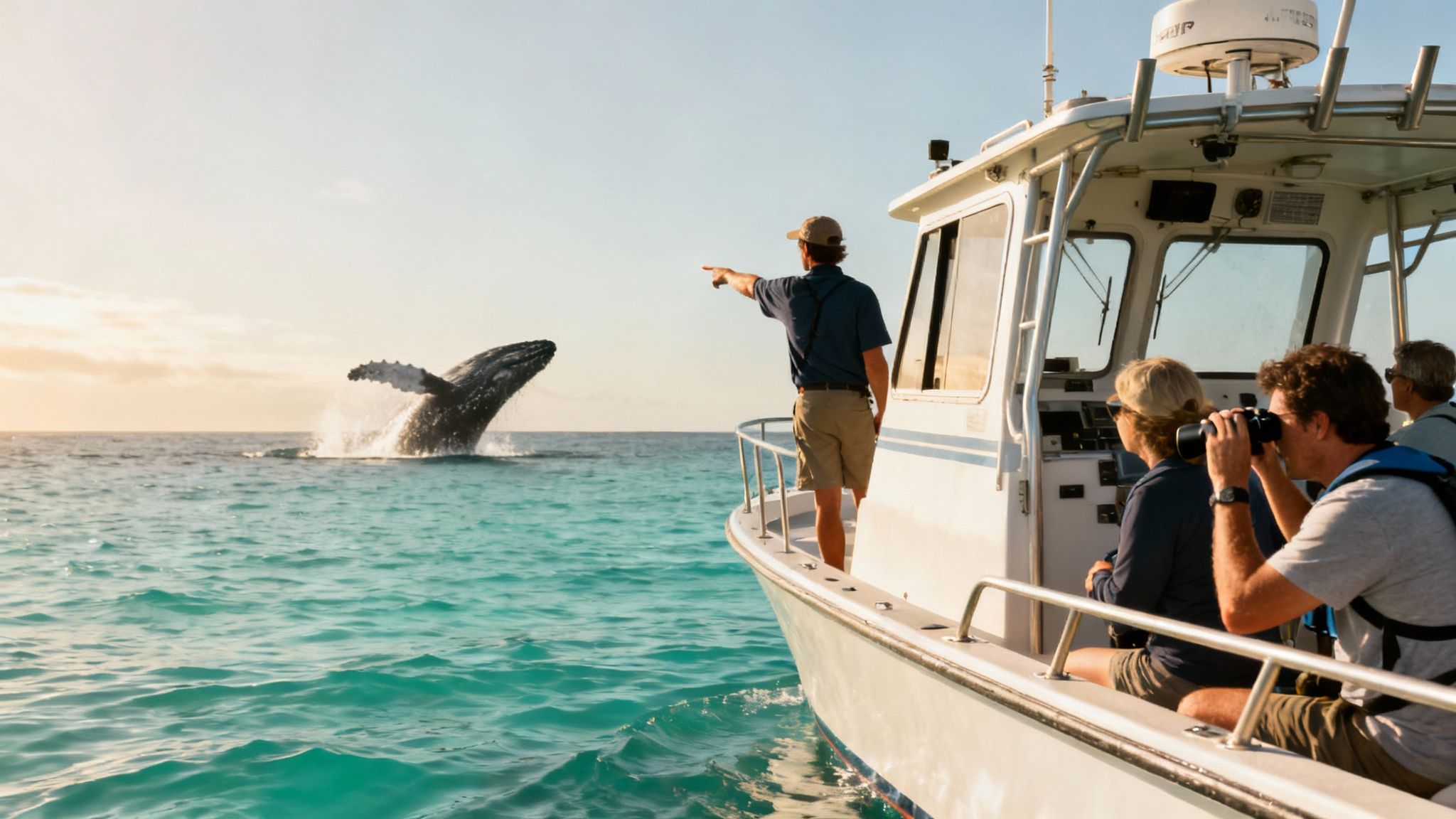
There's a special kind of excitement that builds the moment you step onto the boat for a whale watching tour. It's a feeling of pure anticipation. Knowing how the adventure unfolds from start to finish helps you just relax and soak it all in, making sure you don’t miss a thing.
Most trips kick off at Honokohau Harbor. After a friendly welcome and a quick check-in, you'll meet the captain and crew. These folks aren't just driving the boat; they're seasoned marine naturalists and lifeguard-certified guides whose passion for the ocean is absolutely contagious. They’ll run through a quick but important safety briefing to make sure everyone feels secure before casting off the lines.
As the boat heads out into the open blue, your guide will start sharing incredible facts about Kona’s marine ecosystem and, of course, the humpback whales you’re all there to see. This is where you really see the value of a guided tour. It’s one thing to see a whale, but it’s another to understand what you’re seeing.
The Onboard Experience
The kind of boat you’re on can really shape your day. Here in Kona, most operators—including us at Kona Snorkel Trips—prefer smaller, nimbler boats. The whole vibe is more intimate. You get unobstructed views and can easily chat with the guides and ask questions. It’s a world away from being just another face in the crowd on a huge vessel.
Comfort is key, and you can generally expect a few nice touches:
- Snacks and Drinks: Most tours provide light refreshments like water, juice, and local snacks to keep your energy up.
- A Restroom: Tour boats are usually equipped with a marine head (that's boat-speak for a toilet) for your convenience.
- Shade: While you’ll want to be right on the rail for the perfect photo, a shaded spot is a welcome escape from the strong Hawaiian sun.
Your guide is the star of the show. They’re experts at spotting the slightest signs of whale activity—a distant puff of spray on the horizon or a flicker of movement. They bring the whole experience to life by explaining the behaviors you're witnessing, turning a simple sighting of a tail slap or a thunderous breach into a story you’ll never forget.
Safety and Responsible Viewing
Nothing is more important than your safety and the well-being of the whales. The crew is fully trained to handle any situation, and the boats have all the necessary safety gear. A huge part of any tour is learning about how to watch wildlife responsibly.
By federal law, all boats have to stay at least 100 yards away from humpback whales. This rule is absolutely critical for protecting these amazing animals from stress and making sure we don't disturb their natural behavior.
This respectful distance doesn't take away from the experience at all. In fact, it often makes it better. When the whales feel safe, they’re more likely to go about their business, and sometimes their curiosity even brings them closer to check us out. Our guides are masters at positioning the boat for the best possible views without ever crowding the whales.
Pro Tips for Capturing the Moment
Getting that perfect photo of a whale is the ultimate souvenir. Here are a few tips from the crew to help you nail the shot:
- Always Be Ready: Whales show up without any warning. Keep your camera on and in your hands.
- Use Burst Mode: When the action starts, just hold down that shutter button. This fires off a bunch of shots in a row, so you’re much more likely to catch the peak of a breach.
- Watch the Guide: Your guide has a sixth sense for this. Pay close attention to where they’re looking and pointing—they can often predict where a whale will surface next.
- Put the Camera Down: Seriously. Don't spend the whole trip staring through a lens. Some of the most powerful memories are the ones you just take in with your own two eyes.
How to Book the Right Kona Whale Watching Tour
Picking the perfect whale watching tour in Kona can feel a little overwhelming. A quick search brings up a sea of options—different boats, tour times, and companies all promising an amazing day. So, how do you choose the one that’s actually right for you?
The secret is to think less about just finding an available boat and more about matching the trip to your own personal style. What do you really want out of the experience? Are you hoping for an intimate, small-group vibe where you can chat with the guide? Or would you feel more comfortable on a larger, more stable boat with extra amenities? Figuring this out first will make your decision a whole lot easier.
Key Factors to Consider Before Booking
When you start digging into your options for whale watching in Kona, remember you’re booking a whole experience, not just a seat on a boat. The vessel itself, the knowledge of the crew, and the company's whole approach to wildlife viewing are what separate a decent trip from an unforgettable one.
Here are the big things to look for:
- Vessel Size and Group Capacity: We’re biased, of course, but smaller boats like ours at Kona Snorkel Trips really do offer a more personal adventure. With fewer people on board, you get wide-open views for photos and plenty of chances to talk one-on-one with the naturalists.
- Tour Duration: Most tours in Kona run between 2.5 to 3 hours. Honestly, that's the sweet spot. It gives you plenty of time to find whales and watch them do their thing without feeling rushed or spending the whole day at sea.
- Eco-Friendly Practices: This one’s huge. A great operator is all about responsible wildlife viewing. Look for companies that make it a point to follow federal guidelines, staying at least 100 yards away from the whales. It shows they put the animals' well-being first.
- Guide Expertise: A fantastic crew can make the entire trip. Experienced, lifeguard-certified guides and marine naturalists do more than just point and shout "Whale!" They help you understand what you're seeing, share incredible facts, and answer all your questions, which adds so much depth to the experience.
Making Your Reservation
Once you've narrowed it down to a few operators that feel like a good fit, booking is usually pretty simple. Most companies have online booking that shows you exactly what’s available, so you can lock in your spot easily. If you have any specific questions, don't be afraid to just give them a call. A friendly, helpful person on the other end of the line is always a good sign.
Here’s a pro tip: Always ask about their sighting guarantee and what happens if the weather turns. While no one can promise you'll see whales—they are wild animals, after all—many of the best operators offer a "rain check" to join another tour if you don't get lucky.
To make sure everything goes smoothly, it's worth learning from the common mistakes to avoid when booking a cruise trip, as a lot of that advice applies here, too. The biggest takeaway? Plan ahead, especially if you're visiting during the peak months of January and February.
Going with a local expert like Kona Snorkel Trips just gives you an edge. We live and breathe these waters, so we know the patterns and the best places to find the action. Our small groups and flexible schedules are all designed to give you the best possible shot at an amazing encounter. To see what really sets a great tour apart, check out our deep dive on the best whale watching tours in Kona, Hawaii. When you know what to ask, you can book with total confidence.
Frequently Asked Questions About Kona Whale Watching
Even the most experienced travelers have a few questions before heading out on the water. Getting the practical stuff sorted out—what to bring, how tours deal with weather, and what to expect—means you can relax and just soak in the incredible experience ahead. Here are the answers to some of the questions we get all the time.
What Should I Wear and Bring on the Tour?
Layers are your best friend out here. Mornings on the water can start off with a cool breeze, but that classic Hawaiian sun will warm things up in a hurry. A light jacket or windbreaker over your t-shirt and shorts is usually the perfect combo.
Here’s a quick rundown of the must-haves:
- Sun Protection: Don't even think about leaving the dock without it. We're talking reef-safe sunscreen, a good hat that won't fly off, and a pair of polarized sunglasses.
- Camera or Smartphone: You're going to want proof of this! Make sure your device is fully charged. A waterproof bag or case isn't a bad idea either, just in case of sea spray.
- Binoculars: While you don't need them, a good pair of binoculars can bring a distant breach right up close. It's a game-changer for spotting other marine life, too.
- Medication: If you're someone who gets seasick, it's a smart move to take your go-to remedy before you board, following the package directions. Better safe than sorry!
What Is the Best Time of Day for a Tour?
We get this one a lot. Honestly, there's no bad time, but morning tours are popular for a couple of good reasons. First, the ocean tends to be glassier in the morning, which makes for a smoother, more comfortable ride. That early light is also fantastic for photos, cutting down on the harsh glare you can get midday.
That said, afternoon trips can be just as mind-blowing. The whales are active all day long, and the golden, late-afternoon sun can cast a magical glow over the whole scene. It really just comes down to your own schedule and what works best for you.
Are Whale Sightings Guaranteed?
This is the big one. While Kona has some of the most reliable whale watching anywhere on the planet, we're dealing with wild animals in their natural home. No one can ever guarantee what they'll do or where they'll be.
But here’s the good news: your chances of seeing whales during peak season (January and February) are sky-high. Any reputable tour operator has an incredible success rate and will pull out all the stops to find whales for you.
Many of us local outfits, including Kona Snorkel Trips, also have a "sighting guarantee." What that usually means is if the whales decide to be shy on your trip, you can come back again for free on another tour (depending on availability). It’s always a good idea to double-check the specific policy when you book.
What Happens if the Weather Is Bad?
Your safety is always, without a doubt, the number one priority. Our captains live and breathe these waters, and they're constantly watching the weather and sea conditions. If things look unsafe—think high winds, big swells, or a serious downpour—the tour will be canceled.
When that happens, you'll get the choice to either reschedule for another day or get a full refund. Don't sweat the small stuff, though. A little passing shower is common in Hawaii and rarely puts a damper on the adventure.
Ready to witness the magic for yourself? At Kona Snorkel Trips, we offer intimate, small-group tours led by expert guides to give you the best possible experience. Book your unforgettable whale watching adventure today!