
Whale Watching Kailua Kona: Your Guide to Humpback Season
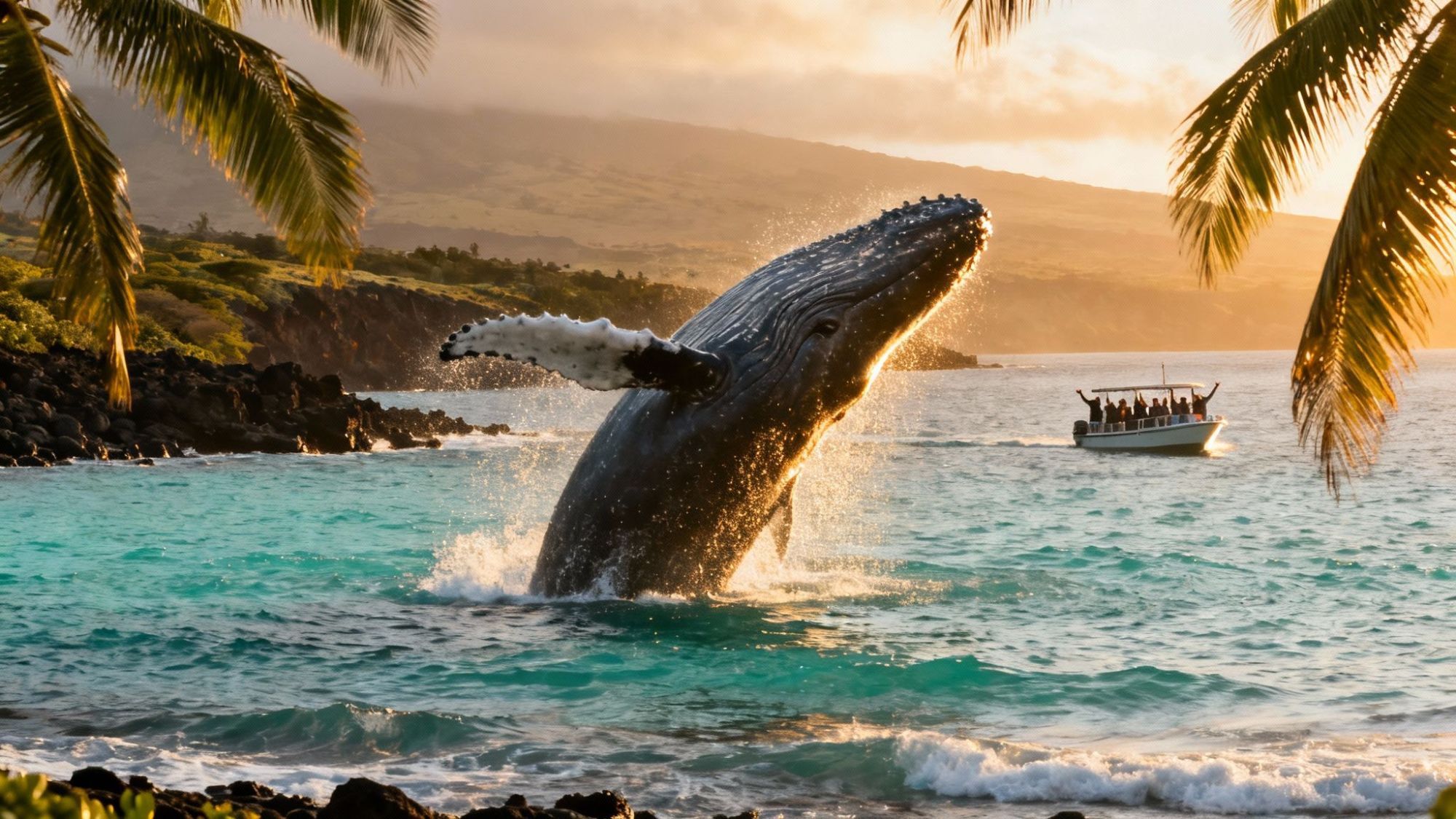
Picture this: the brilliant turquoise water off the Kona coast suddenly explodes as a massive, 40-ton humpback whale rockets out of the sea and into the air. It's a breathtaking, unforgettable moment, and it’s the kind of magic that makes whale watching in Kailua-Kona one of the best places on Earth to see these gentle giants. This guide is your ticket to that experience, walking you through everything you need to plan an incredible adventure.
When you're ready to witness this incredible migration, going with the right crew makes all the difference. As the top-rated and most-reviewed snorkel and tour company in Hawaii, Kona Snorkel Trips is all about creating exceptional and respectful marine encounters.
Why Kailua Kona is a Whale Watching Paradise
Every year, thousands of North Pacific humpback whales make an epic 3,500-mile trek from their chilly feeding grounds in Alaska all the way to Hawaii's warm, protected waters. The Kailua-Kona coast, with its calm seas and deep underwater shelves, is one of their absolute favorite spots. It’s here they come to breed, give birth, and raise their newborn calves in a safe, nurturing environment.
When you're ready to witness this incredible migration, going with the right crew makes all the difference. As the top-rated and most-reviewed snorkel and tour company in Hawaii, Kona Snorkel Trips is all about creating exceptional and respectful marine encounters.
Choosing to go whale watching in Kailua Kona puts you right in the heart of the action. During peak season, our coastline becomes a playground for humpbacks. You'll see everything from jaw-dropping breaches to powerful tail slaps—displays that are as awe-inspiring as they are moving.
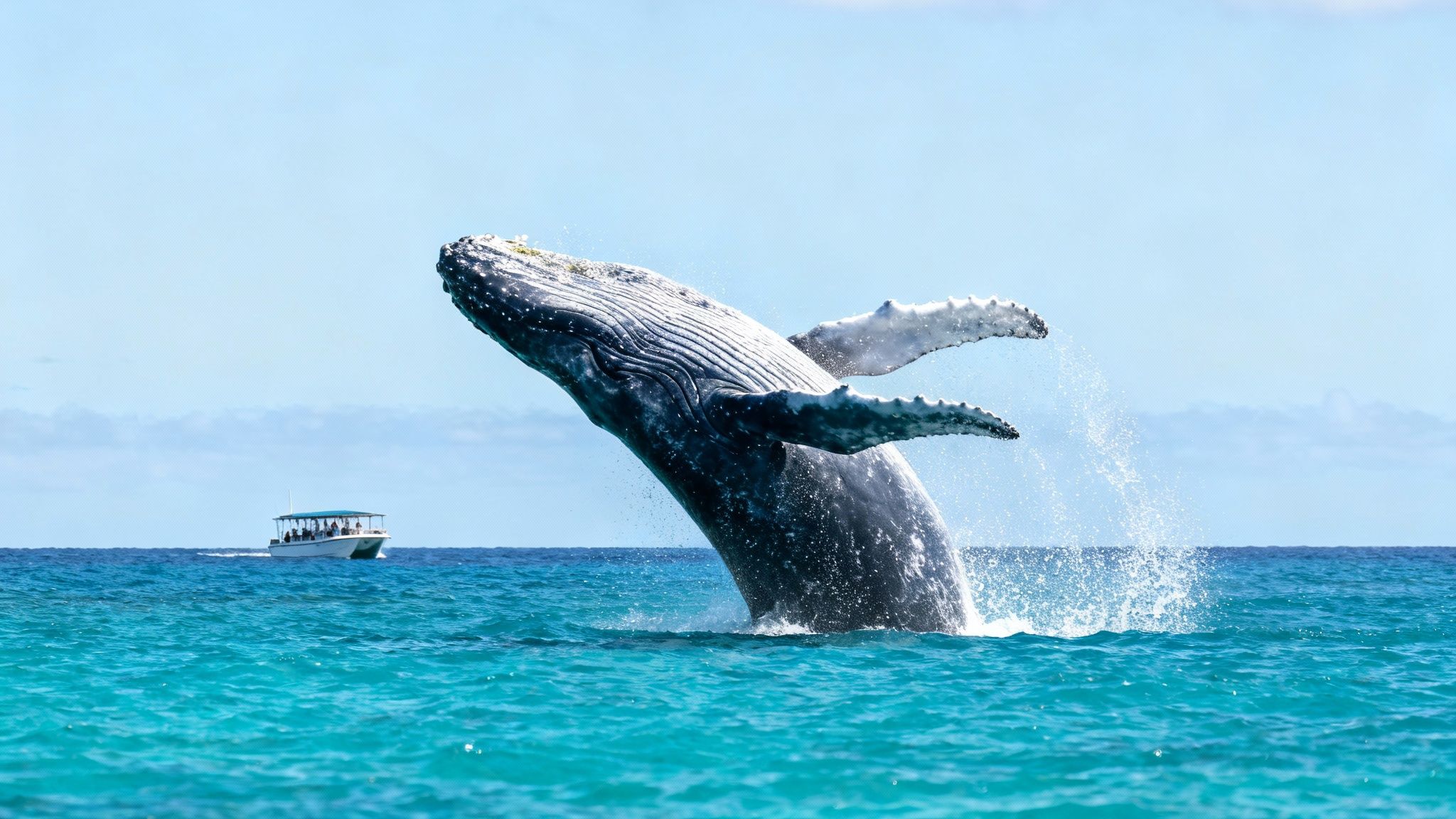
To give you an idea of what your adventure will look like, here’s a quick rundown of what makes a whale watching trip here so special:
- Peak Viewing Season: While the official season runs from December through April, January and February are the sweet spots when the highest number of whales are in the area.
- Common Behaviors: Keep your eyes peeled for all kinds of amazing displays, including breaches, tail slaps, pectoral fin slaps (pec slaps), and spy-hopping, where they poke their heads out of the water to look around.
- Tour Duration: Most tours last between 2.5 to 3 hours, giving you plenty of time to find whales and soak in the stunning Kona coastline from the water.
- Other Marine Life: It’s not just about the whales! You'll often spot playful spinner dolphins, sea turtles (honu), and all sorts of local seabirds along the way.
We'll dive deeper into all of this, making sure you're totally prepared for a day on the water you'll never forget. We’ll cover the best times to go, what you'll see, and how to pick the perfect tour for you.
When to See Whales in Kona
Timing is everything when you're hoping for an incredible whale watching trip in Kailua-Kona. The spectacular show you see from the boat is really the grand finale of an unbelievable journey. Every year, these majestic humpback whales travel thousands of miles from the cold, food-rich feeding grounds of Alaska all the way to Hawaii's warm, protected waters. This isn't a vacation for them; it's a critical part of their life cycle.
The Kona coast, with its calm, deep waters, becomes the perfect nursery. They come here specifically to breed, give birth, and look after their newborn calves in a place that’s relatively safe from predators like orcas that patrol their northern feeding territories. This annual migration completely transforms our coastline into a bustling hub of whale activity.
The Peak Whale Watching Season
You might spot the first trailblazers as early as November or see the last stragglers heading home in May, but the official whale season runs from mid-December through April. Now, if you want to give yourself the absolute best chance of seeing the most whales and the most jaw-dropping behaviors, you need to aim for the peak of the season.
For whale watching in Kailua-Kona, that sweet spot is without a doubt January and February.
During these two months, the whale population in Hawaiian waters is at its densest. This incredible concentration of whales means your tour is packed with constant opportunities for sightings. The humpback whale migration to Hawaii is a stunning natural event, with over 8,000 whales traveling a mind-boggling 3,500 miles. During the peak months of January and February, it's not unusual for our boats to spot between 3 to 6 humpback whales every 15 minutes. You can dive deeper into this amazing migration and what makes Kona a prime viewing area.
The sheer number of whales during peak season is astounding. It’s not just about seeing one whale in the distance; it’s about being surrounded by activity—a tail slap here, a spout there, and the constant possibility of a full breach.
Planning Your Trip for Maximum Sightings
Understanding this timing is the key to planning a trip you’ll never forget. While a tour in March or April can still be absolutely wonderful, the frequency of sightings often starts to dip as some whales begin their long journey back north. By scheduling your trip during that peak window, you're statistically putting yourself in the best possible position for a truly memorable encounter with these gentle giants.
For anyone planning their trip, it's helpful to understand the full scope of the Hawaii whale season. I'd strongly recommend booking your tour well in advance, especially for a trip in January or February, as this is the busiest time for all of us operators. Doing so secures your spot to witness one of the planet's most awe-inspiring migrations right here off the Kona coast.
What to Expect on a Whale Watching Tour
There's a special kind of energy on a boat when you're heading out to find whales in Kailua-Kona. It’s this shared feeling of hopeful excitement. As you pull away from the harbor, the stunning Kona coastline is your backdrop, and everyone on board starts scanning the horizon, waiting for that first sign.
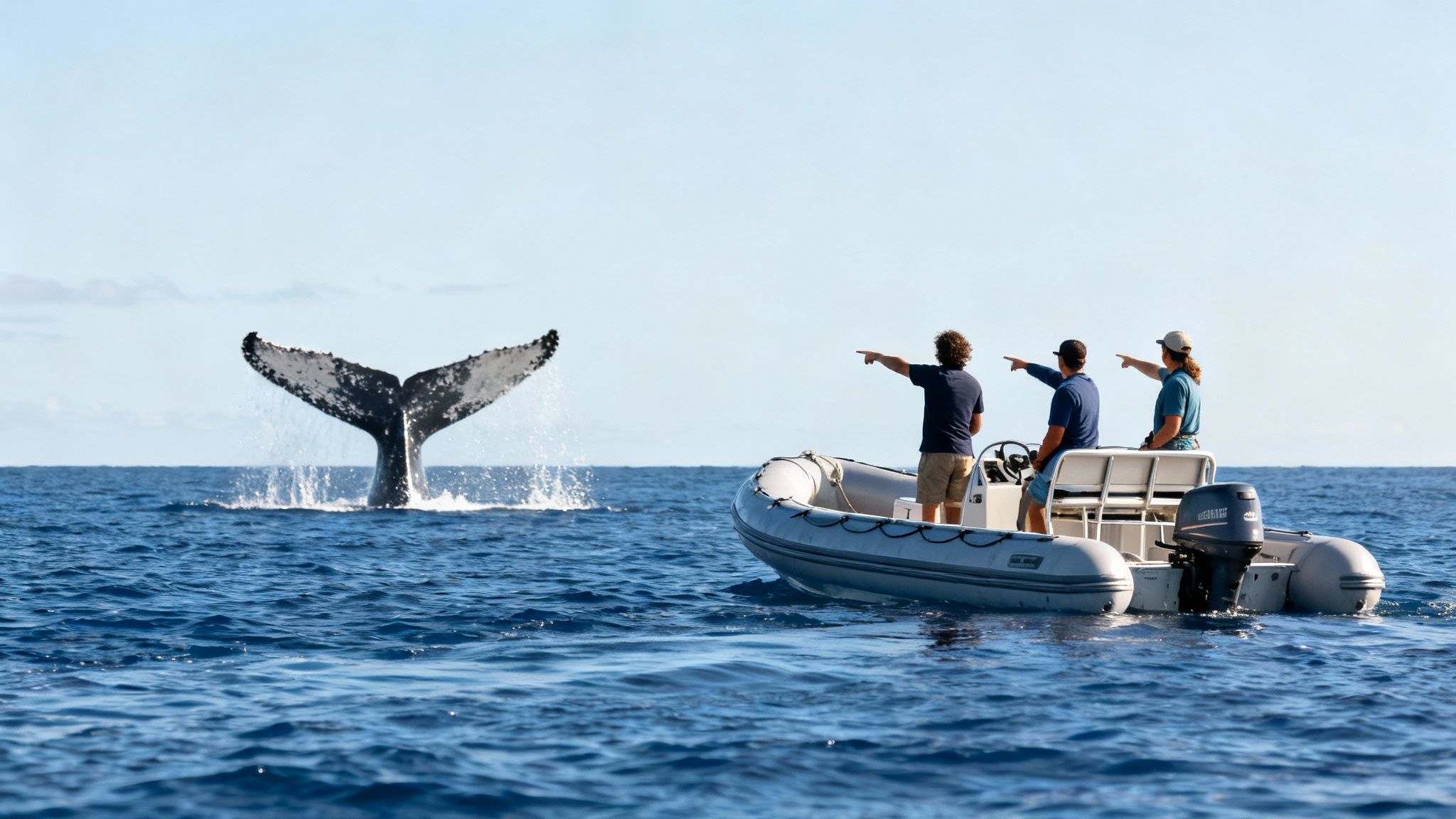
Most trips are around 2.5 to 3 hours, which is the sweet spot—plenty of time to find these gentle giants without feeling rushed. It usually starts with someone spotting a distant puff of mist. That's the "blow," and it can shoot up to 15 feet in the air. Once you see that, the real show is about to begin as your captain respectfully navigates closer.
Decoding Whale Behaviors
Once you’re near a pod, you're not just watching random splashing; you're seeing a complex language unfold right before your eyes. Every leap and slap has a purpose, and having an experienced naturalist on board to explain what you're seeing makes all the difference.
You’re likely to witness some truly spectacular behaviors:
- The Breach: This is the one everyone dreams of seeing. A whale propels its entire massive body out of the water and comes crashing back down with a sound and splash you'll never forget. Is it to communicate? Shake off parasites? Or just pure, unadulterated joy? We may never know for sure, but it's breathtaking.
- Tail Slap (Lobtailing): Get ready for a loud thwack! A whale will lift its powerful fluke (the tail) high out of the water and slam it down on the surface. That sound travels for miles underwater, likely as a warning or a way to talk to other whales nearby.
- Spy-Hop: This is one of the most magical moments. A whale will poke its head straight up out of the water, almost like a periscope, to take a look around. For a brief second, you might feel like you've made eye contact with one of these incredibly intelligent and curious animals.
Choosing Your Vessel
The kind of boat you pick for your whale watching Kailua Kona tour really shapes the whole adventure. Each type offers a totally different vibe.
Smaller boats, like rigid-hulled inflatable rafts, put you right down at water level. It's an intimate and thrilling ride, and these boats are fast and nimble, so they can cover a lot of ocean quickly.
On the flip side, larger catamarans offer a more stable, comfortable experience. You'll have more room to walk around, plus amenities like restrooms and shaded seating. This makes them a great choice for families or anyone who's a bit worried about getting seasick. Knowing the difference helps you pick the tour that perfectly matches your idea of a great day on the water.
Finding the Best Whale Viewing Locations
While a guided boat tour will always get you the most intimate, up-close-and-personal encounters, you don't necessarily need to be on the water to witness the magic of whale watching in Kailua Kona. The Big Island's jaw-dropping coastline offers up plenty of fantastic spots to see humpbacks right from the shore, you just have to know where to look.
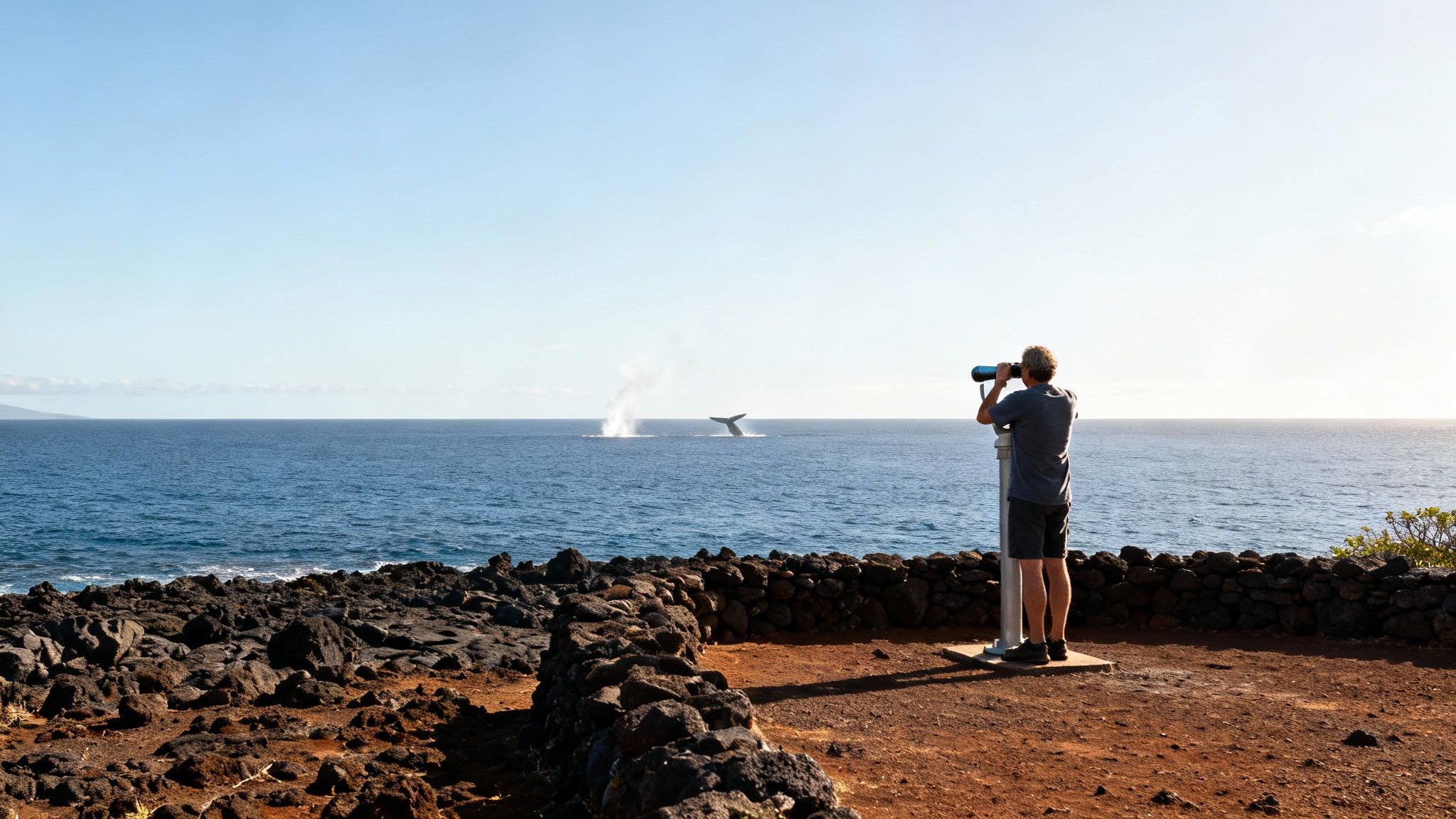
The entire western coast of the Big Island, from Kona all the way up to the Kohala Coast, is considered prime whale territory. These waters are part of the Hawaiian Islands Humpback Whale National Marine Sanctuary, a protected area that's absolutely crucial for their survival.
For those of us watching from land, certain spots are just plain better than others. They offer elevated views and clearer sightlines, making them ideal for posting up for a day of whale spotting with a good pair of binoculars.
Top Land-Based Viewing Spots
If you're planning a day of shore-based whale watching, some locations are known to deliver better results than others. While the Kona coast is great, the Kohala Coast—just north of Kailua-Kona—is widely recognized as the island's true hotspot.
Seriously, sightings there can be two or three times more frequent than in other areas. It's statistically your best bet for seeing these magnificent creatures from land. For a deeper dive, you can check out our overview of whale watching on the Big Island to learn more about regional patterns.
For the best chance of success, here are a few local-favorite locations:
- Puʻukoholā Heiau National Historic Site: The name literally translates to "hill of the whale," which tells you everything you need to know. This spot offers a high vantage point overlooking the ocean where whales are frequently seen.
- Kekaha Kai State Park: With its gorgeous beaches and wide-open views of the ocean, this park is a perfect place to set up for an afternoon of whale watching.
- Kapaʻa Beach Park: Located right on the Kohala Coast, this park provides another excellent shoreline perspective for spotting distant breaches and blows.
The peak viewing months from these Kohala Coast spots are January and February. By March, the total number of whales you'll see typically decreases by about half as they begin their long migration back north.
And while watching from shore is a wonderful experience, nothing—and I mean nothing—compares to seeing a 40-ton whale surface near your boat. It gives you a sense of scale and connection that’s simply impossible to get from land, making a guided tour an absolutely essential part of any Kona adventure.
How to Choose a Responsible Tour Operator
Picking the right tour operator for your whale watching Kailua Kona adventure is about so much more than just finding a boat. It’s about being a part of something bigger—supporting a healthy marine ecosystem and the local community that thrives on responsible tourism. Your choice really does matter, and it has a direct impact on the magnificent humpback whales you’ve come all this way to see.
Whale watching is a huge part of Hawaii’s economy, bringing in up to $11 million in revenue each year. During the 120-day whale season, roughly 50 tour operators guide an estimated 330,000 passengers. With that much activity on the water, it's absolutely essential to pick an operator who puts the whales' well-being first.
Look for Federal Law Compliance
This is the big one. The clearest sign of a responsible operator is their strict, unwavering commitment to federal regulations. It is illegal for any vessel to approach a humpback whale within 100 yards (300 feet). This isn't just a friendly suggestion; it's a critical law designed to prevent stress and disturbance, especially for mothers with their young calves.
A truly great captain will never, ever chase or corner a whale. The best ones know how to read the animals. They'll position the boat parallel to the whale's path, cut the engines, and let the whale decide if it wants to get a closer look. It’s all about respect.
An operator who is upfront about these rules and makes a point to follow them on every trip is showing you they're serious about protecting the animals. To get a better feel for what a great tour looks like, check out our guide on what to look for in whale watching tours in Kona Hawaii.
Prioritize Education and Experience
A fantastic whale watch isn't just about seeing a tail slap from a distance—it's about understanding the "why" behind it. The best operators, like us here at Kona Snorkel Trips, know this. We invest in having knowledgeable guides or marine naturalists on board who can turn a simple boat ride into a fascinating educational journey.
Look for operators that:
- Employ Marine Naturalists: Having an expert on board who can explain whale behaviors, migration patterns, and the wider marine environment adds incredible value to your trip. You'll learn so much more.
- Have Experienced Captains: There's no substitute for experience. A seasoned captain who knows these waters like the back of their hand can anticipate whale behavior, leading to better, more respectful sightings without ever stressing the animals.
- Promote Conservation: Look for companies that walk the talk. Those that actively participate in or promote conservation efforts are showing a genuine dedication to being true stewards of the ocean.
When you choose an operator that ticks these boxes, you know your money is going to a business that truly cares for the marine world we all love.
Preparing for Your Whale Watching Trip
A little bit of prep work can make the difference between a good day on the water and an absolutely unforgettable one. Getting your gear ready before you head out means you can relax and focus on the main event—spotting those magnificent humpbacks. The perfect whale watch tour really starts before you even step on the boat.
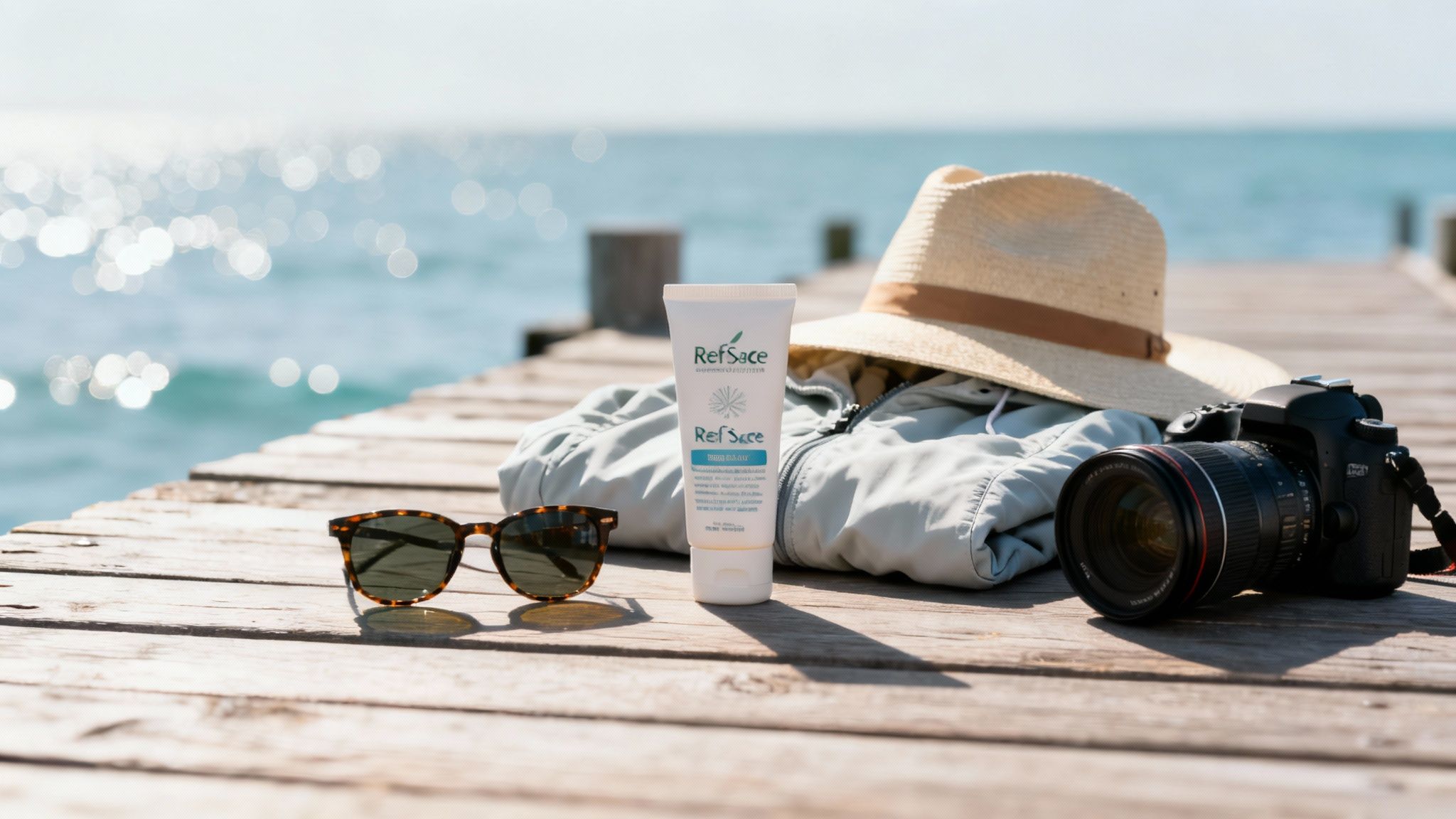
Think of it like packing for a day at the beach, just with an oceanic twist. The sun reflecting off the water is no joke, and being prepared is key to staying comfortable for the whole 2.5 to 3-hour trip.
What to Bring Aboard
To make sure you have the best possible experience, we recommend packing a small bag with a few key items. This stuff will keep you comfortable, protected, and ready for whatever the ocean has in store.
- Polarized Sunglasses: Seriously, these are a game-changer. They slice right through the surface glare, making it so much easier to spot whales and other marine life just under the water.
- Reef-Safe Sunscreen: Protecting your skin is vital, but so is protecting our fragile coral ecosystems. Always go for a mineral-based, reef-safe option.
- A Hat and Light Jacket: A wide-brimmed hat is your best friend against the Kona sun. It's also smart to bring a light, water-resistant jacket to fend off those cool ocean breezes that can pop up once we're offshore.
- Camera or Smartphone: You're definitely going to want to capture the magic, so double-check that your device is fully charged before you leave.
Tips for Photographers and Preventing Seasickness
Hoping to snag that perfect, jaw-dropping breach shot? Your best friend will be a camera with a decent zoom lens. Use a fast shutter speed to freeze the action and fire away in burst mode—it dramatically increases your chances of catching that perfect moment. After you've captured some amazing shots, you might want to learn how to create a photo slideshow to share the experience with everyone back home.
And if you're someone who gets a little queasy, don't let the fear of motion sickness ruin your adventure. You might want to take an over-the-counter remedy like Dramamine or Bonine the night before and again the morning of your tour. Staying hydrated, keeping your eyes on the horizon, and getting plenty of fresh air can also make a world of difference.
Kona Whale Watching FAQs
Alright, let's wrap this up by tackling some of the most common questions we get about whale watching in Kailua-Kona. Getting these last few details sorted out will help you feel totally ready to book your tour and prepare for an incredible day on the water.
What Is the Absolute Best Month for Whale Watching?
While you can see whales from roughly mid-December through April, the hands-down peak months are January and February. This is the sweet spot. The concentration of humpback whales along the Kona coast hits its absolute highest point for the year during this window.
What does that mean for you? It translates directly into more frequent and more dynamic sightings. You just have a much better shot at witnessing the full range of behaviors. If your travel dates have some wiggle room, aim for these two months to really maximize your chances.
Is a Morning or Afternoon Tour Better?
This is a classic question, and honestly, you can't go wrong with either. Both times of day offer fantastic opportunities to see whales, but they each have a slightly different vibe that might appeal to you.
- Morning Tours: The ocean is usually at its calmest first thing in the morning. That glassy water and softer light can make it way easier to spot whale spouts and other activity on the surface.
- Afternoon Tours: Some folks—guides included—feel that the whales can get a bit more active as the day wears on. You might have a better chance of seeing more energetic behaviors like breaching in the afternoon.
At the end of the day, the best time is the one that fits your schedule. The whales are out there doing their thing all day long.
How Likely Am I to See Whales?
During the peak season of January and February, your chances are extremely high. The sheer number of whales in our waters makes it pretty unusual not to have multiple encounters during a tour.
But—and this is important—we always have to remember these are wild animals in their natural home. Our seasoned captains know exactly where to look and what to look for, but sightings can never be 100% guaranteed. That little bit of unpredictability is part of what makes every single sighting so special and thrilling.
What Other Marine Life Might I See?
A whale watch tour is rarely just about the whales! The waters off the Kona coast are buzzing with other incredible marine life, so you'll want to keep your eyes peeled for more than just humpbacks.
It’s incredibly common to be greeted by a pod of playful spinner dolphins, who absolutely love to surf the wave created by the front of the boat. You also might spot our gentle Hawaiian green sea turtles, or honu, coming up for a breath of air. And of course, there are always plenty of local seabirds cruising around.
Ready to experience the magic for yourself? A whale watching tour is an essential part of any Kona vacation. Join the expert crew at Kona Snorkel Trips for an unforgettable adventure on the water.