
Whale Watching in Kailua Kona: A Complete Guide
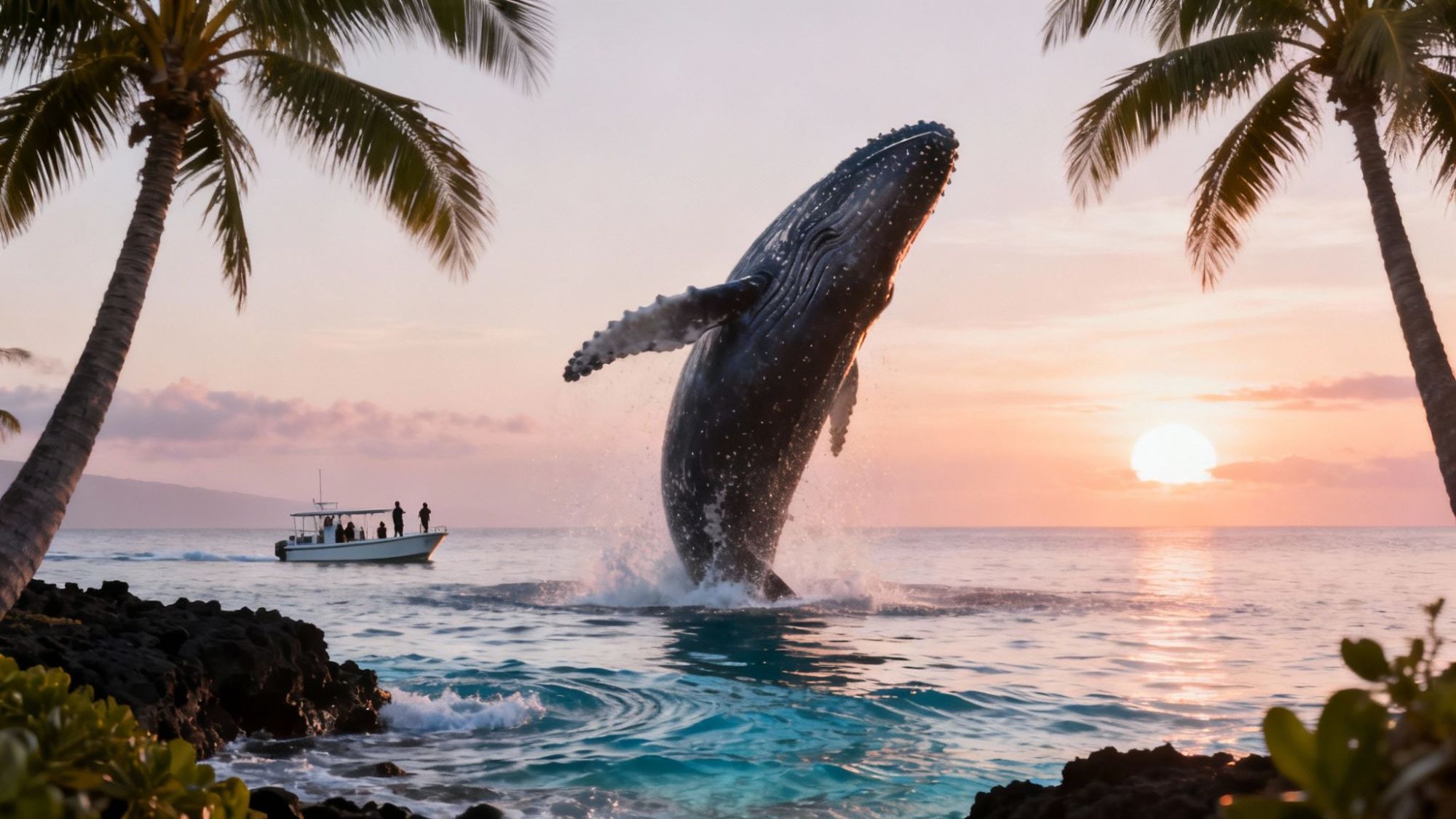
Picture this: the calm surface of the ocean suddenly shatters as a 40-ton humpback whale explodes into the air. That's not a scene from a nature documentary—it's the incredible reality of whale watching right here in Kailua-Kona. Our warm, protected waters are a sanctuary for these gentle giants, making this one of the best places on earth for a marine adventure you'll never forget.
Your Guide to Kona's Whale Watching Season
Every winter, the Kona coast transforms. It becomes a bustling nursery and social club for thousands of North Pacific humpback whales, turning the Big Island into a front-row seat for one of nature's greatest shows. This annual migration is your chance to witness breathtaking displays of raw power and surprising grace.
Here at Kona Snorkel Trips, we live for sharing these moments. As the top-rated and most-reviewed snorkel company in Hawaii, we keep our tours small and our guides passionate. It’s all about creating a personal, unforgettable encounter. But don't just take our word for it—see what fellow travelers have to say.
When to Witness the Spectacle
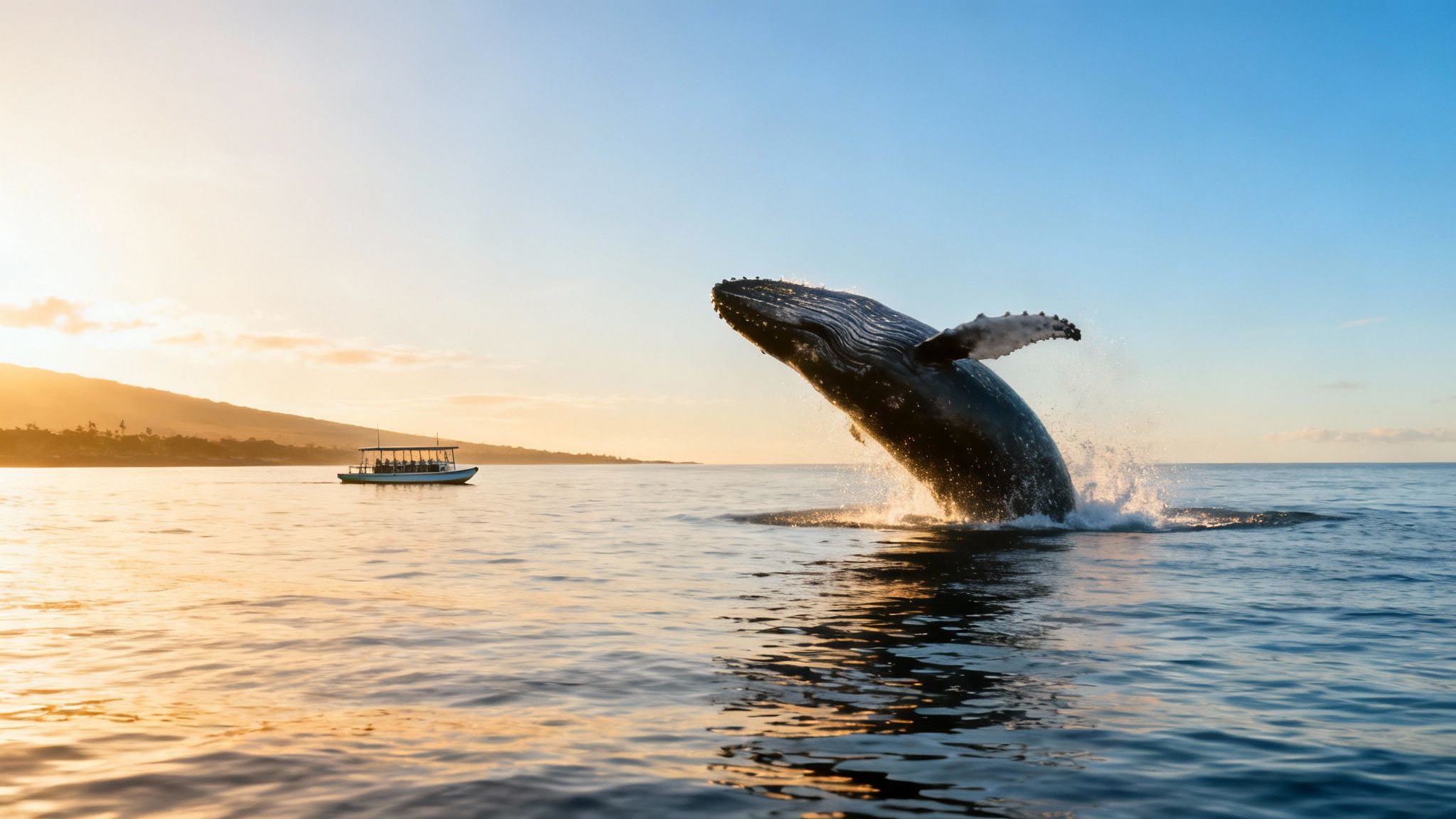
Timing is everything. The official whale watching season in Kailua-Kona runs from mid-December through March, but the real magic happens during the peak months of January and February. This is when the concentration of humpbacks is at its highest, meaning your chances of seeing incredible behaviors—like breaches, tail slaps, and pec fin waves—go through the roof.
Just how many are we talking about? During this peak window, local research counts have clocked averages of 3 to 6 humpback whales every 15 minutes in hotspots around the Big Island. While a boat tour gets you up close, you can even spot them from shore at places like Puʻukoholā Heiau National Historic Site and Kekaha Kai State Park, where the higher vantage point helps. Get the full scoop on what to expect during Kona's whale season to help dial in your plans.
Why Kona is a Prime Location
Kona isn't just a popular spot for whale watching; it's practically designed for it. Our unique geography, with the massive volcanoes of Mauna Loa and Hualālai, shields the coastline from the gusty trade winds. This creates exceptionally calm, clear water—a perfect scenario for both the whales and for us.
This protected environment offers a few key advantages:
- A Safe Haven for Calves: The warm, sheltered waters are an ideal nursery for mothers to give birth and raise their newborns, far from deep-water predators.
- Unbeatable Visibility: That glassy surface makes it so much easier to spot a whale's spout (or "blow"), a breach, or other surface activity from far away.
- A Smoother Ride: For us humans, the gentle sea conditions mean a much more comfortable and pleasant boating experience, so you can focus on the whales, not your stomach.
The predictable arrival of the whales combined with our perfect ocean conditions is what cements Kona's reputation as one of the best, most reliable places in the world for a stunning whale watching adventure.
The Incredible Journey of Humpback Whales
Every winter, something truly epic happens just off the Kona coast. It’s a story of survival, instinct, and a journey so massive it’s hard to wrap your head around. The humpback whales you see here didn't just show up—they traveled thousands of miles for a very important reason.
This whole incredible migration kicks off in the icy, food-packed waters of Alaska. For months, these giants do nothing but feast on krill and small fish, packing on the layers of blubber they'll need to survive the trip and the intense breeding season. Then, guided by an instinct honed over millennia, they point south and start swimming. All 3,500 miles of it.
Hawaii: The Ultimate Marine Nursery
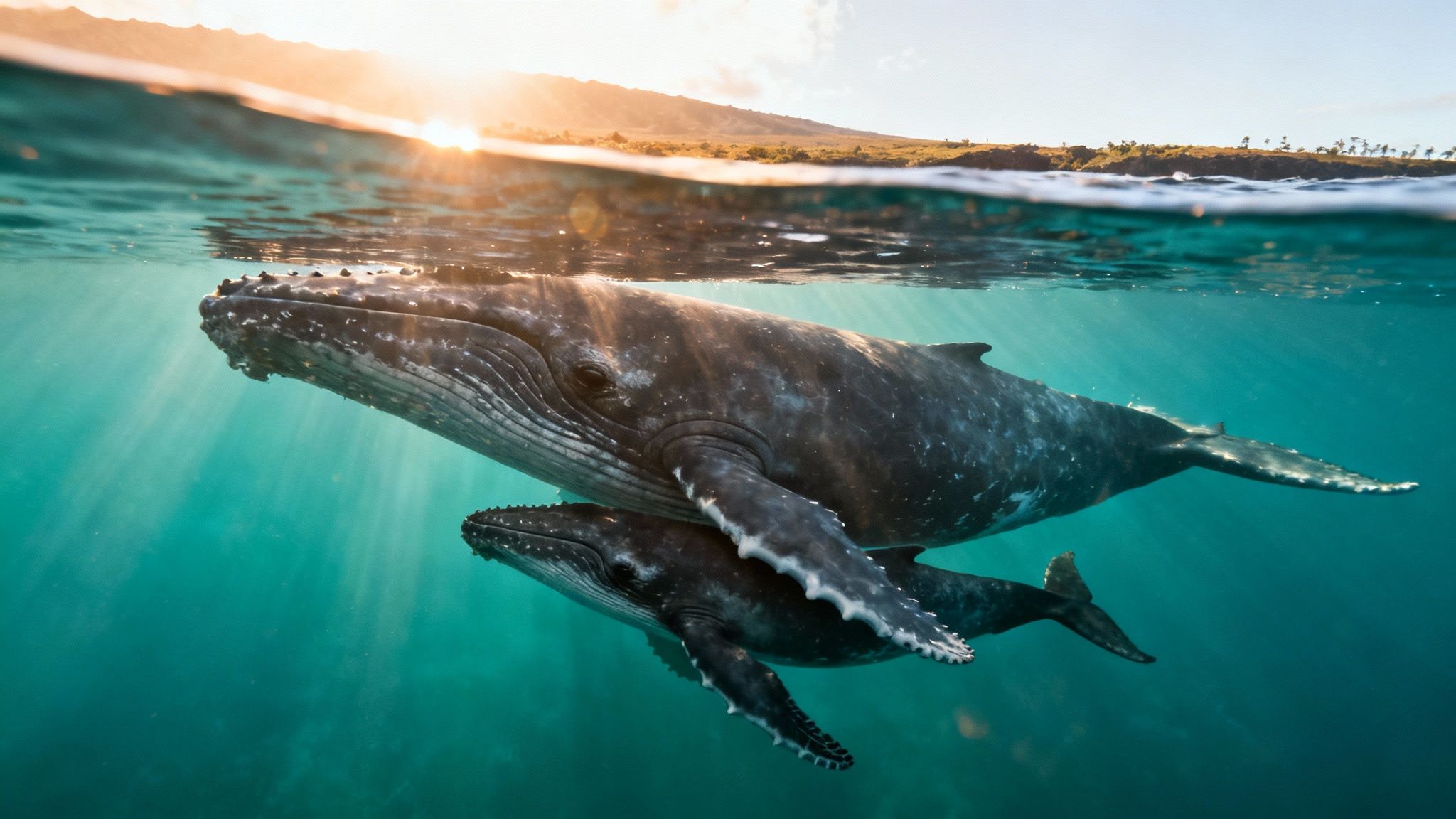
So, why Hawaii? It all comes down to safety and warmth. Those chilly Alaskan waters might be a great buffet, but they’re no place for a newborn whale. Calves are born with very little body fat, so the warm, protected Hawaiian waters are absolutely critical for them to survive their first few months.
The Hawaiian Islands basically become a massive, safe nursery. The whales don't feed here; their entire focus shifts to mating, giving birth, and nursing their young in a place with far fewer predators.
This journey is a marathon, not a sprint. The whales swim for weeks on end, living entirely off their fat reserves. When you realize the immense effort it took for them to get here, every breach and tail slap you witness takes on a much deeper meaning. It's not just a cool show; it’s a celebration of life and the finale of an unbelievable voyage.
More Than Just Humpbacks in Kona's Waters
While the humpbacks are the stars of the winter season, Kona's waters are bustling with life all year long. Unlike the migrating humpbacks, several other marine mammal species call this place home permanently. To get a real sense of their journey, it helps to see where they fit within the marine ecosystem's apex predator pyramid.
The local cast of characters is pretty amazing. On any given trip, you might run into:
- Short-finned pilot whales: Super social animals that often hang out in large family pods.
- False killer whales: Don't let the name fool you; they're actually a massive species of oceanic dolphin.
- Cuvier's beaked whales: These guys are deep-divers and pretty elusive, so a sighting is a rare treat.
- Melon-headed whales: Often seen in huge groups of hundreds, which is an incredible sight.
This biodiversity is what makes every trip out on the water so unique. While the local short-finned pilot whale population numbers close to 20,000, the humpbacks are just seasonal visitors. Their population is spread across the islands, but they have their favorite spots. The Kohala coast, for example, often has two to three times more sightings than other parts of the Big Island.
Knowing all this really changes your perspective. A whale watching tour becomes less about just seeing an animal and more about connecting with a crucial chapter in its life story, all playing out against the stunning backdrop of Kailua-Kona.
Decoding the Language of Whales
When you’re out on the water, you're not just looking at random splashes and jumps; you're witnessing a conversation. Humpback whales have an incredible range of surface behaviors, and each one has a purpose. Learning to spot them turns a simple sighting into a front-row seat to their complex social lives.
Think of it like learning a new language where every leap and splash is a word. From a thunderous breach that sends water flying for miles to a gentle fluke-up dive, every move tells a story. Here's a quick guide to help you interpret the incredible show playing out right in front of you.
The Iconic Breach: A Display of Power
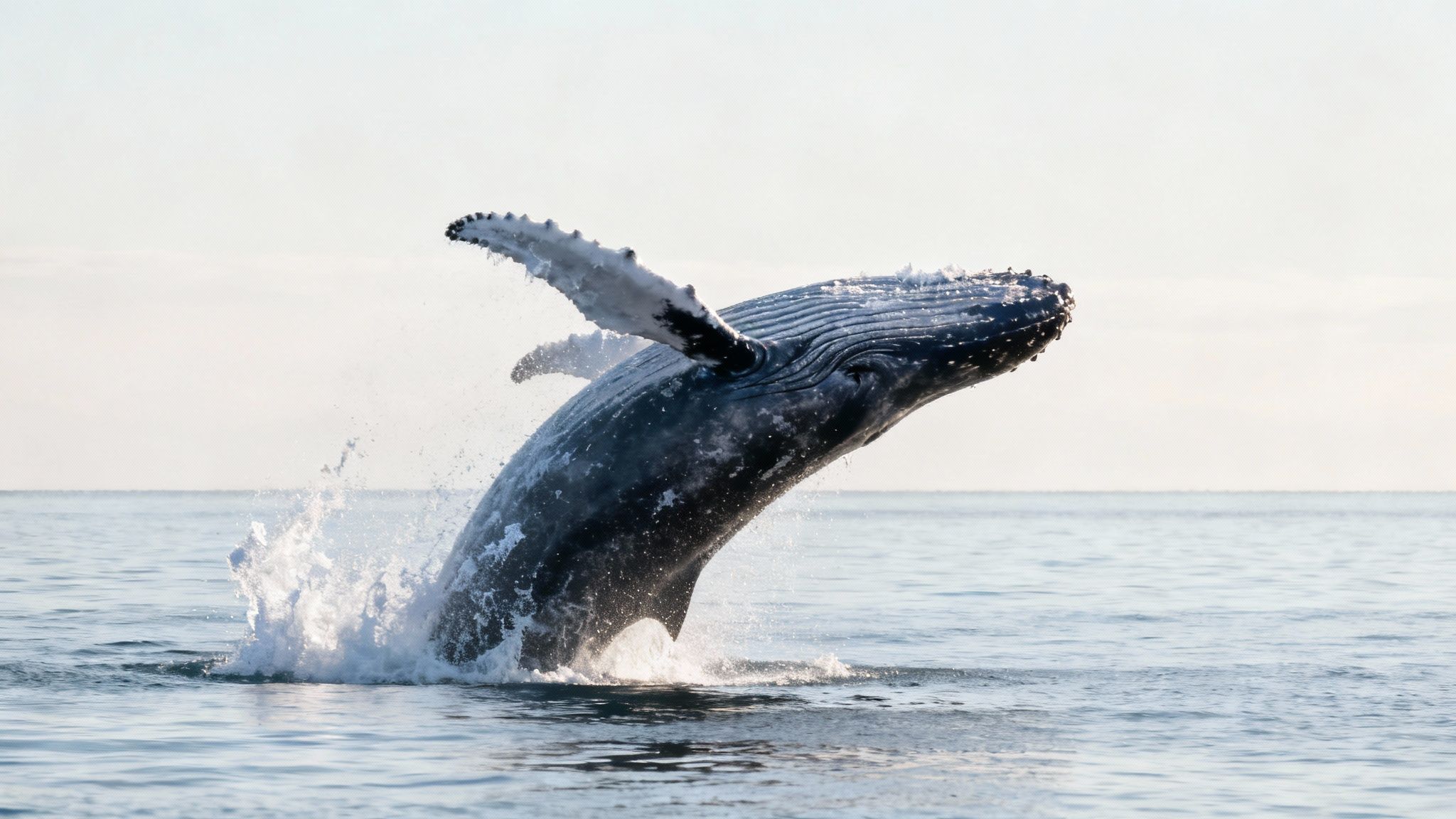
The breach is the showstopper. This is when a whale launches up to 90% of its body out of the water, often twisting mid-air before crashing back down with an unbelievable splash. You can hear the sound for miles.
But why do they do it? It’s not just for show. Researchers think a breach can mean a few different things:
- Communication: That massive splash creates a loud boom that travels far underwater, like a long-distance call to other whales.
- Dominance: For males competing over a female, a bigger, louder breach is a clear sign of strength. It’s pure intimidation.
- Housekeeping: A hard landing can help shake off annoying barnacles and whale lice that latch onto their skin.
- Just for Fun: Sometimes, especially with the younger whales, it really might just be pure joy and energy.
Tail Slaps and Pec Slaps: Making Some Noise
While not as dramatic as a full breach, tail and pectoral fin slaps are powerful ways whales get their point across, especially for shorter-range signaling.
A tail slap (or lobtailing) is exactly what it sounds like: the whale lifts its massive fluke out of the water and smacks it down hard. The sound is sharp and percussive, almost like a gunshot. It's often seen as an aggressive signal or a warning to other whales—or even boats—to keep their distance. Think of it as a whale's way of saying, "Back off!"
A pec slap, on the other hand, is when a whale rolls onto its side and repeatedly slaps its long pectoral fin against the surface. This seems to be less aggressive and might be a way of getting another whale’s attention or just signaling its location to the rest of the pod.
When you see these slaps, you're watching a direct form of communication. It's the whale equivalent of clapping your hands or stomping your feet to make a point.
The Spyhop and the Blow: A Closer Look
Not all whale behavior is loud and splashy. The spyhop is one of the most fascinating and gentle things you might see. The whale positions itself vertically in the water and slowly pokes its head above the surface, sometimes rotating to get a full 360-degree view.
It’s an act of pure curiosity. The whale is literally checking out its above-water world, including your boat. It’s one of those peaceful, captivating moments where it feels like the whale is watching you just as much as you're watching it.
And of course, there's the blow—often the very first sign that a whale is nearby. That misty plume isn't water from its lungs; it's the forceful exhale of warm, moist air condensing in the cooler atmosphere. An adult humpback's blow can shoot up to 15 feet high. For us whale watchers, it's the signal to get ready for the show.
To help you get a better handle on what you're seeing, here’s a quick cheat sheet for the most common humpback behaviors you might encounter on your tour.
Common Humpback Whale Behaviors and Their Meanings
| Behavior | What to Look For | Possible Meaning |
|---|---|---|
| Breach | A whale launching most of its body out of the water and crashing down. | Communication, display of dominance, removing parasites, or play. |
| Tail Slap (Lobtailing) | The forceful slapping of the fluke (tail) against the water's surface. | A warning signal, aggression, or a way to stun prey. |
| Pectoral Fin Slap | The whale lies on its side and repeatedly slaps its long fin on the water. | Gaining attention from other whales or general communication. |
| Spyhop | The whale raises its head vertically out of the water to look around. | Curiosity; observing its surroundings above the surface. |
| Blow (Spout) | A plume of mist shot into the air as the whale exhales at the surface. | Breathing. The shape and size can help identify the whale species. |
| Fluke-Up Dive | The whale lifts its tail flukes high into the air before a deep dive. | Preparing for a long, deep dive, often for feeding. |
| Peduncle Throw | A very aggressive move where the whale throws the back half of its body sideways out of the water. | An intense display of aggression or agitation, often in competitive groups. |
Keep in mind that whale behavior is complex, and scientists are still learning the specifics. Sometimes, a single action can have multiple meanings depending on the context, but this table gives you a great starting point for understanding the action on the water.
How to Choose the Right Whale Watching Tour
Picking the right whale watching tour in Kailua-Kona can feel like a major decision, but it's what separates a good day on the water from an absolutely unforgettable one. With plenty of operators out there, the best choice really boils down to the kind of experience you’re hoping for. The first big fork in the road is the size of the boat, because that single factor shapes your entire trip.
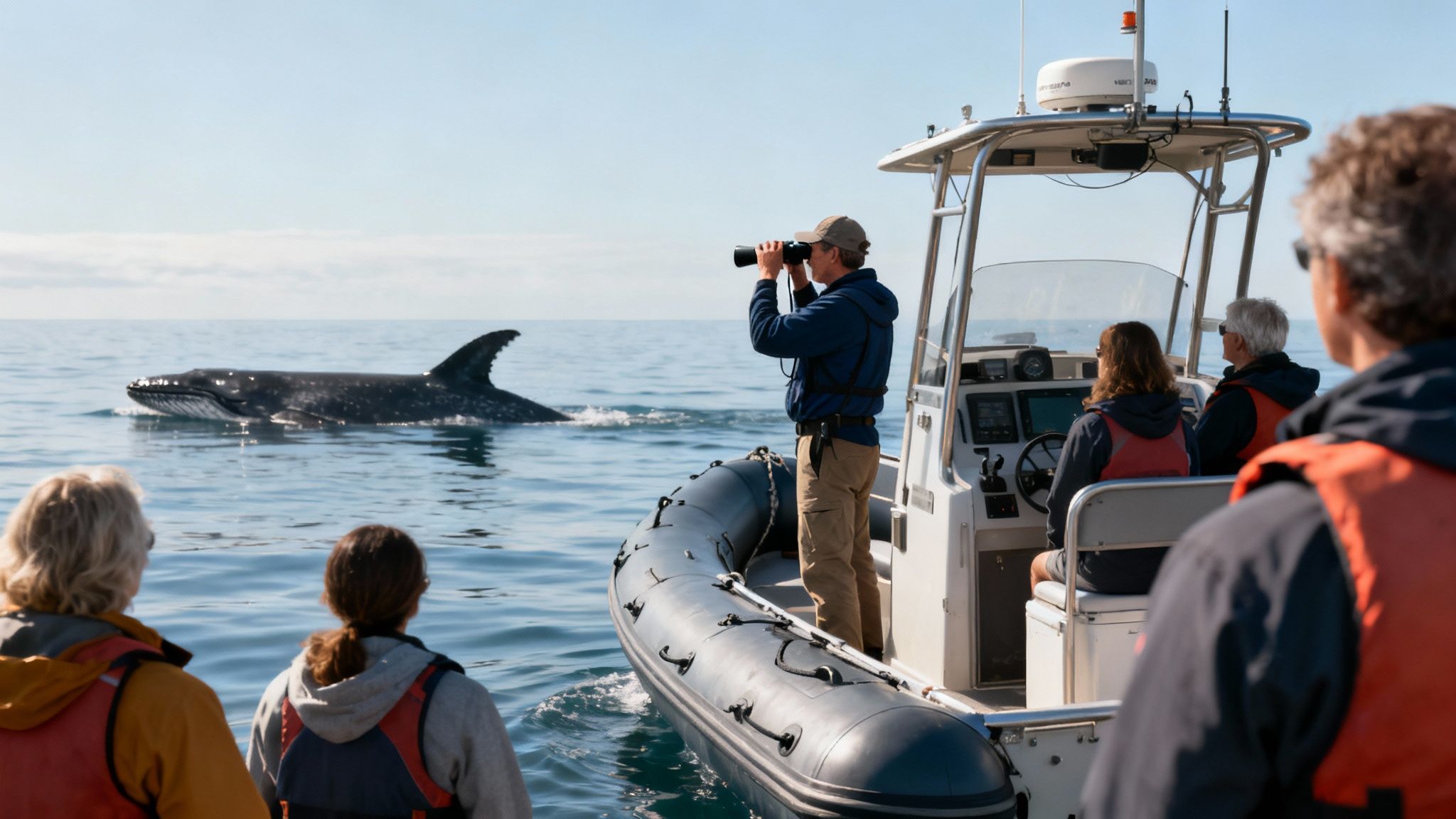
Small Rafts vs. Larger Vessels
Smaller, zippy rafts give you an intimate, right-on-the-water perspective that feels incredibly personal. These boats are fast. That means they cover more ground and can react in a flash when whales are spotted way off in the distance. Being so low to the water puts you nearly at eye-level with the ocean's surface, forging a powerful connection with everything around you.
On the other hand, larger vessels offer more stability and creature comforts. If you're worried about getting seasick or just prefer a smoother ride, a bigger boat is almost always the way to go. They usually come with perks like restrooms, shaded areas, and more room to walk around—a huge plus for families or anyone on a longer tour.
The right boat for you depends on what you value most. Are you after a thrilling, up-close adventure, or a comfortable, stable viewing platform? Both are fantastic ways to experience whale watching in Kailua-Kona.
The Non-Negotiable: Guide Expertise
No matter what kind of boat you’re on, the single most important ingredient for a rich, educational trip is the expertise of your captain and crew. A great captain doesn't just steer the boat. They read the water, understand whale behavior, anticipate their next move, and position the vessel respectfully for the best possible views without stressing the animals.
An onboard naturalist or marine biologist takes the whole experience to another level. They can tell you what those behaviors you're seeing actually mean, share mind-blowing facts about the humpback life cycle, and answer all your questions on the spot. That kind of insight adds so much depth to every single sighting.
Here at Kona Snorkel Trips, our guides are not only lifeguard-certified but are also passionate storytellers who make the ocean's drama come alive. Their knowledge is what sets our tours apart, making sure you walk away with a genuine appreciation for these magnificent giants.
Prioritizing Safety and Sustainability
A responsible tour operator always, always puts the whales' well-being first. That means sticking to the federal laws requiring boats to stay at least 100 yards away from humpback whales. This isn't just a rule; it's a critical practice to avoid causing stress, especially for mothers with brand-new calves.
When you choose a company committed to ethical viewing, your adventure directly supports marine conservation. This industry is a big deal for the local community. Back in 2008, about 50 tour operators across the state guided roughly 330,000 passengers during the season, showing just how important sustainable ecotourism is. These efforts, combined with citizen science programs, are what help protect the very animals we all come here to admire.
Ultimately, finding the best tour is about matching the boat style to your comfort level and making sure the company has experienced guides and a rock-solid commitment to doing right by the whales. If you want to dive deeper, check out our in-depth guide to the different types of whale watching tours in Kona to help you lock in your decision.
Packing for Your Whale Watching Adventure
The difference between a good day and a truly epic day whale watching often comes down to what you brought with you. Being comfortable out on the water lets you soak in every incredible moment, instead of worrying about being too hot, too cold, or getting fried by the Hawaiian sun.
Packing smart is easy. Think of it like dressing for a cool, breezy morning that quickly turns into a brilliant, sunny afternoon. You just need to be ready for both without dragging your whole closet on board.
Dress for Success on the Water
The temperature on the ocean can fool you. A cool morning breeze as the boat heads out might feel a bit chilly, but once that Kona sun is high in the sky, it can get plenty warm. The absolute best strategy? Dress in layers.
- Start with a light base layer: A t-shirt or tank top is perfect.
- Add a warm layer: A light jacket, fleece, or windbreaker is your best friend for cutting the wind chill on the ride out. You can always peel it off as the day heats up.
- Keep it comfy on the bottom: Shorts or lightweight pants are ideal for flexibility and comfort.
- Choose the right shoes: Go for non-slip footwear with a solid grip, like boat shoes or sneakers. For safety on a moving boat, it's best to leave the flip-flops at home.
Essentials for Sun and Sea
The Hawaiian sun is no joke, especially when it’s bouncing right off the water’s surface. When you're packing, remember that protecting your skin is key, and it's worth putting some thought into choosing the best sunscreen.
Remember, Hawaii state law requires the use of reef-safe sunscreen to protect our delicate coral ecosystems. Look for products that are free of oxybenzone and octinoxate.
Besides sunscreen, a couple of other items are non-negotiable for a good time:
- Polarized Sunglasses: These are a total game-changer. They don't just dim the brightness; they slice right through the ocean's glare, making it so much easier to spot a whale's misty blow or the curve of a fin breaking the surface.
- A Wide-Brimmed Hat: A hat with a chin strap is a smart move to keep it from taking a flight of its own. It’ll give your face and neck some much-needed shade.
Capturing the Moment and Staying Comfortable
To help you remember this experience forever, here's a quick checklist of essentials to pack. It covers everything from camera gear to comfort items, ensuring you're fully prepared.
Essential Whale Watching Checklist
| Item Category | Essentials to Pack | Pro Tip |
|---|---|---|
| Apparel & Footwear | T-shirt, Light Jacket/Windbreaker, Shorts, Non-slip Shoes | Layers are key! The temperature can change quickly out on the water. |
| Sun Protection | Reef-Safe Sunscreen (oxybenzone & octinoxate free), Polarized Sunglasses, Wide-Brimmed Hat | Polarized lenses cut through ocean glare, making it much easier to spot whales. |
| Gear & Optics | Camera with a Zoom Lens, Binoculars | A zoom lens lets you get incredible close-up shots while respecting the whales' space. |
| Personal Items | Reusable Water Bottle, Snacks | Staying hydrated is crucial, especially under the warm Hawaiian sun. |
| Comfort & Wellness | Motion Sickness Medication/Remedy | Take any remedies before you board the boat for them to be most effective. |
A camera with a decent zoom lens is fantastic. It lets you capture those frame-worthy shots of a tail slap or a breach without the boat needing to crowd the whales. Binoculars are also great for getting a detailed look at behaviors happening a little further away.
Finally, if you even think you might be prone to motion sickness, it pays to be prepared. Over-the-counter options like Dramamine or natural remedies like ginger chews can be a lifesaver. Just be sure to take them before you get on the boat, as they don't work nearly as well once you're already feeling queasy. A little prep ensures nothing gets in the way of the wonder.
Protecting the Whales We Love
Seeing a humpback whale launch itself out of the deep blue is a powerful, humbling moment. But with that privilege comes a big responsibility. When we head out for a day of whale watching in Kailua-Kona, we're guests in their massive ocean home, and it’s critical that we act with respect.
Being a good guest starts with knowing the rules—the laws designed to keep these marine giants safe. Both federal and state regulations are crystal clear: all boats must stay at least 100 yards away from humpback whales. That's the full length of a football field.
This isn't just some random number; it's a critical buffer zone that gives them the space they need.
Why the 100-Yard Rule is So Important
For humpback whales, Hawaii’s waters are a sanctuary. This is where they come to give birth, nurse their newborn calves, and find a mate. All of these activities take a huge amount of energy and demand a stress-free environment.
When boats get too close, they can throw a wrench into these vital behaviors.
The noise and presence of a vessel can accidentally separate a mother and her calf, interrupt a whale that's trying to rest, or add stress to an already intense competition between males. Calves are especially vulnerable. They have to surface for air way more often than adults and depend completely on their moms for protection. The 100-yard rule gives them the space they need to thrive.
Choosing a tour operator who respects these laws isn't just about following the rules—it's about actively helping conserve the species. A good guide knows how to create a breathtaking experience without ever compromising the well-being of the whales.
Choosing an Eco-Conscious Operator
So, how can you tell if a tour company is truly committed to doing things the right way? Look for operators who practice what is known in Hawaiian culture as ‘pono’—acting with righteousness and respect.
An eco-conscious tour operator will:
- Publicly state their commitment to following every single viewing guideline and law.
- Educate their guests on why these rules matter and what the whales' behavior means.
- Approach whales slowly and parallel to their direction of travel, never cutting them off or chasing them down.
- Limit their viewing time, especially when mothers and calves are present.
Your choice of tour operator has a direct impact. By supporting companies that put the health of the marine environment first, you’re voting with your wallet for sustainable tourism. It's how we ensure the incredible whale watching Kailua-Kona is known for can continue for generations to come.
Bigger Challenges and How You Can Help
Beyond just watching from a respectful distance, humpback whales face other serious threats out in the open ocean. Ship strikes and getting tangled in fishing gear are two of the biggest dangers they face. These incidents can cause severe injury or death, impacting the entire population.
While their numbers have thankfully rebounded, leading to discussions about changes to the humpback whale's endangered species status, these threats are a constant concern for their future.
Organizations here in Hawaii and around the world are working tirelessly on these issues through research, rescue efforts, and advocating for better policies. As an informed visitor, you become an advocate, too. By learning about these challenges and choosing responsible tour companies, you contribute to a culture of conservation that lasts long after you've left the water.
Got Questions About Whale Watching in Kona? We’ve Got Answers.
As you get ready for what’s sure to be an unforgettable adventure, you might have a few lingering questions. It’s only natural. Here are some of the most common things we get asked by fellow ocean lovers planning their trip.
What Is the Absolute Best Month for Whale Watching in Kona?
While you can have incredible sightings anytime from December through March, if you have to pick just one month, make it February. This is when the humpback population in Kona's waters is at its absolute peak.
In February, it feels like the ocean is just buzzing with energy. You've got a higher chance of seeing all kinds of behaviors—from new mothers teaching their calves to breach, to big, rowdy groups of males competing for a female's attention. That competition often leads to some of the most dramatic surface action you can imagine, like powerful breaches and tail slaps.
Can I Actually See Whales from the Shore in Kona?
You sure can! While nothing beats the up-close perspective of a boat tour, you can absolutely spot whales right from the coastline.
If you’re planning to do some land-based whale watching, you’ll want to find a spot with a good, high vantage point. A great pair of binoculars is your best friend here—they make all the difference between seeing a distant puff of mist and actually watching a whale.
A couple of our favorite spots are:
- Puʻukoholā Heiau National Historic Site: The elevation here gives you a fantastic, wide-open view of the ocean, perfect for scanning the horizon for spouts.
- Kekaha Kai State Park: The long, beautiful coastlines offer plenty of space to find a spot and watch for a breach or a fluke.
What Happens If We Don’t See Any Whales on Our Tour?
That’s a fair question, and one we hear a lot. It’s good to remember that these are wild animals, and we're visiting their home on their terms. There's never a 100% guarantee. That said, the odds of seeing whales during the peak season in Kona are incredibly high.
To give you peace of mind, many top-notch tour operators—including us here at Kona Snorkel Trips—offer a "whale guarantee," especially during the prime months of January and February. The policy is usually pretty simple: if your tour doesn't spot any whales, you can come back out on another trip for free. It’s our way of making sure you get the experience you came for. Just be sure to check the specific guarantee policy with whichever company you book with.
Ready to experience the magic for yourself? Kona Snorkel Trips specializes in small-group tours that get you closer to the action. Our expert guides live and breathe this stuff, and they can't wait to share it with you. Book your whale watching tour today and make some memories that will stick with you forever.