
Your Guide to Whale Watching in Kona HI Tours and Seasons
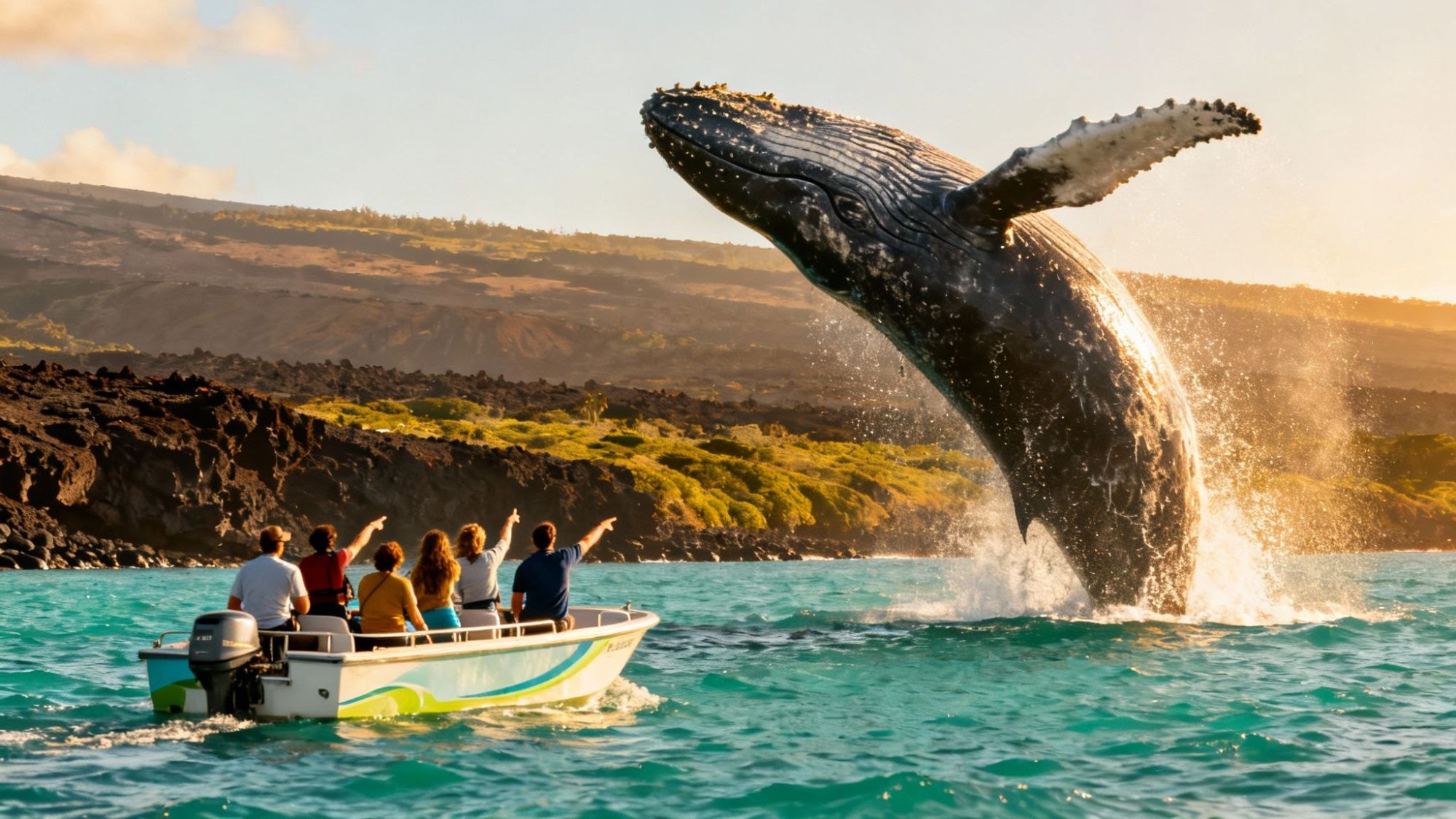
Picture this: the calm, turquoise water of the Kona coast suddenly explodes as a 40-ton humpback whale launches its entire body into the air, perfectly silhouetted against the Hawaiian sun. This isn’t just a postcard fantasy; it's a very real, and very regular, part of the peak season for whale watching in Kona, HI.
If you're dreaming of an encounter like this, you've come to the right place. This guide will walk you through everything you need to know for a truly unforgettable adventure.
Experience the Magic of Kona Whale Watching
Every winter, something incredible happens. The protected waters along the Kona coast become a bustling nursery and sanctuary for some of the ocean's most magnificent creatures. This annual humpback whale migration is a world-class natural event, drawing people from all over the globe hoping for a front-row seat.
As Hawaii's top-rated and most-reviewed snorkel and tour company, we at Kona Snorkel Trips are obsessed with creating intimate, respectful experiences with these gentle giants. Don't just take our word for it—see what our guests have to say.
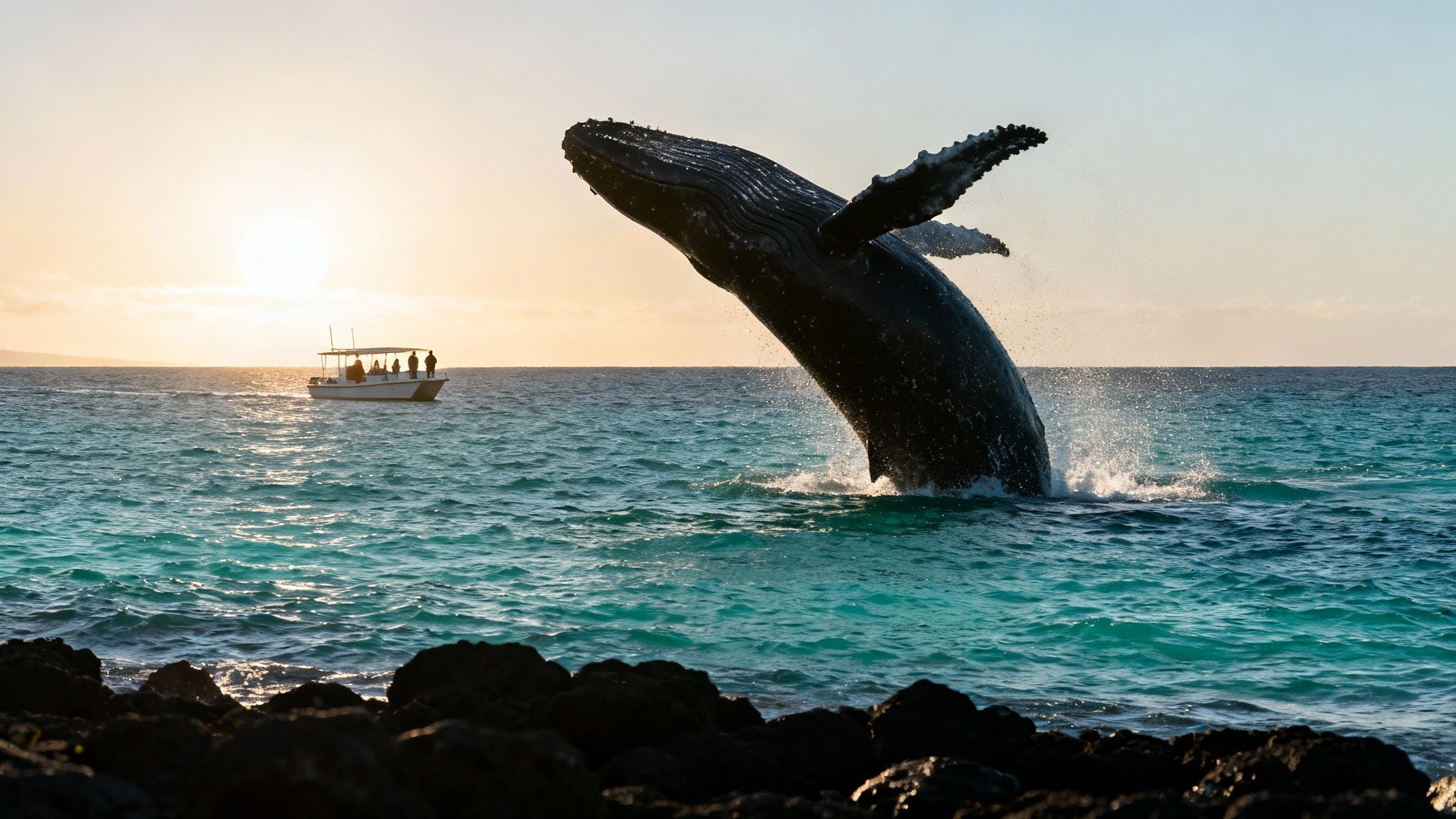
We'll cover the absolute best times to visit, how to pick a tour that's truly eco-friendly, and all the amazing things you might see. We're here to make sure your trip is safe, responsible, and utterly magical.
Why Is Kona a Premier Whale Watching Destination?
So, what makes Kona the place to be? It all comes down to a unique mix of geography and one of the most epic journeys in the animal kingdom. Each winter, over 8,000 humpback whales travel a staggering 3,500 miles from the frigid feeding grounds of Alaska to Hawaii's warm, sheltered bays.
This isn't a vacation for them. These warm waters are the perfect safe haven for the whales to breed, give birth, and nurse their newborn calves, helping them grow strong before the long swim back north.
The action really heats up from December through March, with January and February being the absolute peak. During these months, the waters along the Kohala Coast just off Kona are buzzing with activity—sightings are often 2 to 3 times more frequent here than anywhere else. This makes for some incredibly reliable and spectacular tours.
What You Can Expect to See
A whale watching tour with us isn't just a boat ride; it's a full immersion into a living, breathing marine world. While seeing a massive adult breach is the holy grail, there's a whole catalog of fascinating behaviors you might witness.
Here’s a little of what you can keep an eye out for:
- Tail Slapping: You'll feel the power when a whale slaps its massive tail (fluke) on the water. It's a loud, percussive sound they use to communicate.
- Spyhopping: This is one of my favorites. A whale will poke its head straight up out of the water, almost like a submarine's periscope, to get a good look around.
- Mothers and Calves: There’s nothing quite as touching as watching a mother whale gently guide and teach her newborn calf. It’s a truly heartwarming sight.
- Competitive Groups: Sometimes you'll stumble upon a group of males energetically competing for a female's attention. It can lead to some seriously dramatic surface action!
Choosing the right tour operator is everything when it comes to having a great—and responsible—time. For a deeper dive, check out our guide on Big Island whale watching. We’ll get you prepped and ready for a day of pure wonder on the water.
Understanding the Kona Whale Watching Season
When it comes to seeing whales in Kona, timing is everything. Seriously. The success of your trip completely hinges on matching your visit to the annual migration of humpback whales—a massive journey driven by ancient, primal instincts.
Every year, these gentle giants travel thousands of miles from the cold, food-rich waters of Alaska down to the warm, protected bays of the Kona coast. This isn't just a vacation for them; it's an essential part of their life cycle. Our calm, clear waters offer a safe haven to breed, give birth, and nurse their newborn calves, far from the predators and harsh conditions up north. This incredible event turns Kona into one of the best whale watching spots on the planet.
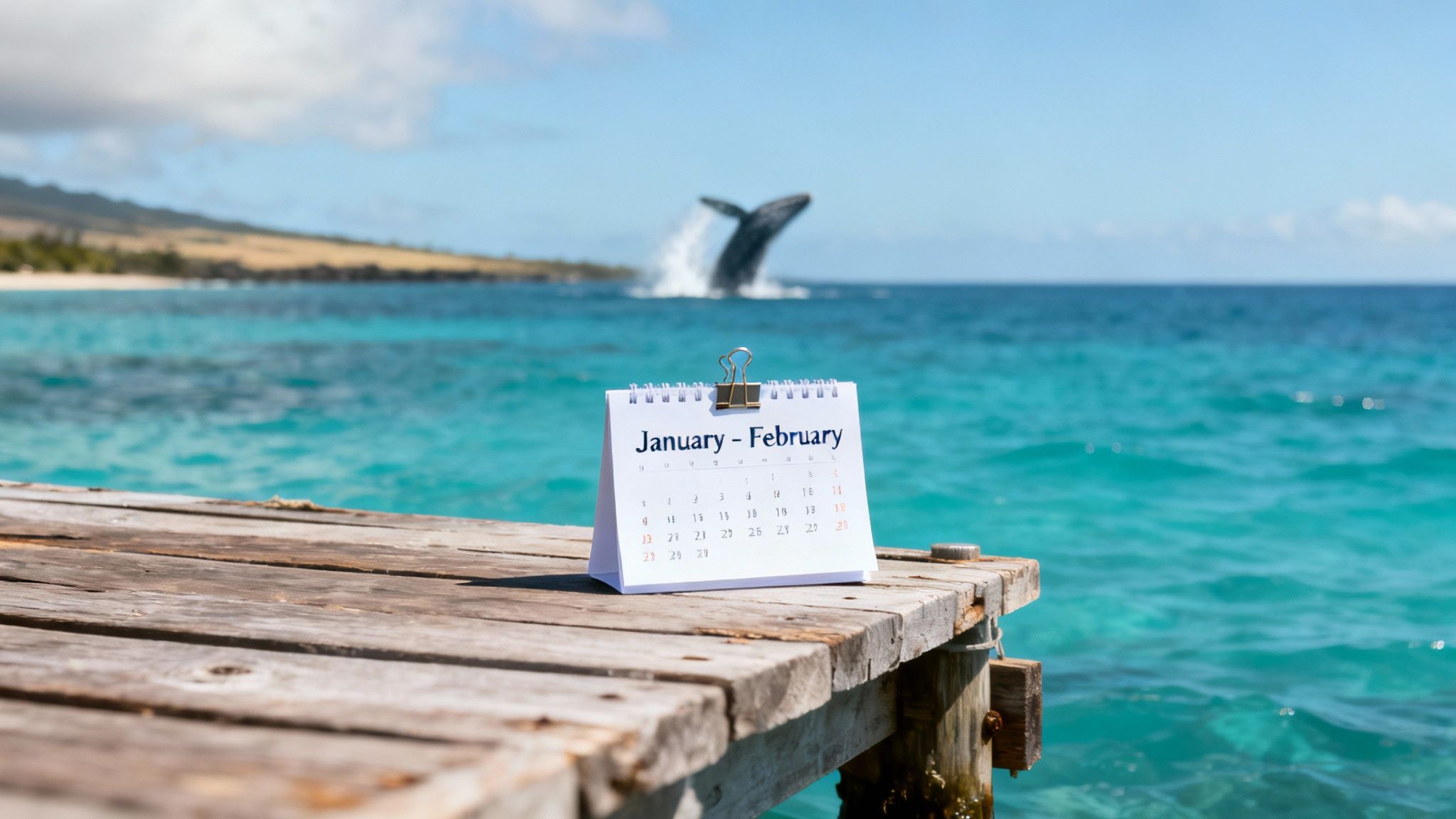
Peak Season vs. Shoulder Months
While you can technically spot whales from December through March, the level of action changes dramatically from week to week. Knowing the difference between "peak" and "shoulder" season helps set the right expectations for your tour.
- Peak Season (January & February): This is the Super Bowl of whale watching. The absolute highest concentration of humpbacks is right here off the Kona coast. This is your best chance to see the really dramatic stuff—breathtaking breaches, powerful competition pods of males, and those unbelievably tender moments between a mother and her brand-new calf.
- Shoulder Seasons (December & March): These months bookend the peak season and still offer fantastic opportunities. In December, you'll catch the early arrivals, which are often large, energetic males. By March, you’ll see the last of the moms and calves as they get ready for the long swim back to Alaska.
The experience you get is directly tied to this natural schedule. A trip in March can be absolutely beautiful, but a tour in late January puts you right in the heart of the action. To dive deeper into the month-by-month breakdown, check out our complete guide to the Big Island whale watching season.
To make it even simpler, here's a quick look at what to expect throughout the year.
Kona Whale Watching Season At A Glance
| Month | Whale Activity Level | What to Expect |
|---|---|---|
| Jan-Feb | Peak | The highest concentration of whales. Frequent sightings of breaches, spyhops, and mother-calf pairs. The absolute best time to go. |
| March | High | Still excellent, with many mothers and calves lingering as they prepare to head north. A great month for seeing nursery behavior. |
| December | Good | The first arrivals appear, often energetic males. Sightings become more consistent as the month progresses. |
| April | Low | The season is winding down. You might get lucky and spot a few stragglers, but the main event is over. |
| May-Nov | Very Low | Humpbacks are back in Alaska feeding. Other resident marine life like dolphins and pilot whales can be seen. |
This table shows why planning is so important—aiming for January or February dramatically increases your chances for an unforgettable encounter.
The Science Behind the Sightings
Our confidence in Kona whale watching isn't just based on good luck; it's backed by solid data. For 30 years, the Sanctuary Ocean Count, a massive citizen science project, has been tracking whale numbers. And what they've found lines up perfectly with what we see on our tours.
During peak season in January and February, it's common for observers to spot between 3 to 6 whales every 15 minutes. Think about that! This incredible consistency is why our tours boast over a 95% success rate for sightings. It’s what makes Kona a world-class destination.
Key Takeaway: If you want the highest probability of seeing multiple whales and a ton of surface action, book your trip for January or February. The numbers don't lie—that's when the ocean off Kona is truly alive.
Choosing the right time is the first—and most important—step in planning a whale watching trip you'll remember forever. Get the timing right, and you're setting yourself up to witness one of the most magnificent spectacles in the entire natural world.
How to Choose the Perfect Whale Watching Tour
Picking the right whale watching tour in Kona can make or break your experience. It’s the difference between a decent boat ride and a day you’ll talk about for the rest of your life. You’ve got options, from massive catamarans to quick, nimble rafts, so the first step is figuring out what kind of adventure you’re really after. They aren't all the same, and your choice sets the tone for the whole trip.
The biggest fork in the road is tour group size. Big boats can hold a lot of people, and while that might sound fine, it often comes with some serious downsides. Think about it: a crowded deck means jockeying for a good spot at the rail and can make the whole thing feel more like a floating shuttle bus than a genuine wildlife encounter.
The Small-Group Advantage
This is where a small-group tour really changes the game. Imagine not having to peek over a dozen heads just to see a whale breach. At Kona Snorkel Trips, we've built our entire philosophy around this. A smaller group just naturally creates a more intimate vibe, where every single person gets a front-row seat.
Here’s why a smaller boat makes for a way better day:
- Unobstructed Views: With fewer people on board, you get a clear, wide-open view. This is a huge deal, especially if you’re trying to snap that perfect photo or just want to soak it all in without someone’s elbow in your way.
- A Truly Personal Experience: Our lifeguard-certified guides aren't just boat drivers. On a small tour, they have the time to actually talk with you, answer your questions, and share their deep knowledge of whale behavior and our local ecosystem. It feels less like a lecture and more like a conversation with an expert friend.
- Closer to the Action (Responsibly): Now, we follow all federal regulations to a T, which means staying 100 yards away from the whales. But smaller boats are just more agile. Our captains can maneuver into the best possible viewing angles without ever stressing out the animals—giving you a perspective the big boats just can’t get.
Choosing a small-group tour takes the experience from just watching whales to truly connecting with them. It becomes an engaging, educational, and deeply personal adventure.
Your Checklist for a Quality Tour Operator
Boat size is a big piece of the puzzle, but a few other things separate the great operators from the merely average ones. When you book, you’re not just paying for a ride; you’re investing in a safe, ethical, and high-quality experience. As you look at your options for whale watching in Kona, use this mental checklist to guide you.
A company that really cares will always put the well-being of the whales and their guests first. You can dig deeper into the different options in our guide to Big Island whale watching tours.
Key Questions to Ask Before You Book:
- What’s their safety record and what are the crew’s certifications? Safety has to be priority number one. Look for companies that are upfront about their crew being lifeguard, CPR, and First Aid certified. A spotless safety record is non-negotiable.
- Is there a strong educational component? A great tour does more than just find whales—it helps you understand them. Does the crew share cool facts about whale biology, behavior, and migration? Do they have a hydrophone so you can actually hear the whale songs?
- Are they committed to ethical wildlife viewing? The best operators are conservationists at heart. They’ll proudly talk about following federal distance laws and might be part of programs like Dolphin SMART. If anyone promises to get you "illegally close," run the other way.
- What are people saying in the reviews? Check for consistent, positive feedback about the crew's knowledge, the boat's condition, and the overall vibe. A long history of happy customers is the best sign of a well-run tour.
Pro Tip: Don’t let price be your only guide. A tour that costs a little more often means you're getting a better-maintained boat, more experienced guides, and a real commitment to doing things the right way. That investment pays off with a much richer and more memorable day on the water.
By asking these questions, you can pick a tour that matches your values and guarantees a respectful, safe, and totally awe-inspiring adventure with Kona's magnificent humpback whales.
What to Expect on Your Whale Watching Adventure
The magic starts the moment you arrive. Forget crowded cattle-maran tours; your adventure begins with an easy check-in at Honokohau Harbor, where the warm Kona air is buzzing with anticipation. Step aboard our boat, and you’ll immediately feel the difference of a small-group tour—no crowds, just a genuine welcome from our lifeguard-certified guides.
As we cruise out of the harbor, the dramatic volcanic coastline of the Big Island stretches out behind us. Our guides will start sharing stories about the local ecosystem and what to keep an eye out for. Then, that perfect moment arrives. The captain cuts the engine, the boat goes quiet, and you hear the one thing everyone's been waiting for: "Whale spotted!"
Decoding Whale Behaviors You Might See
Seeing a humpback whale in its natural habitat is pure, unfiltered awe. These giants are surprisingly expressive, and knowing what you’re looking at adds a whole new level of wonder to the experience. They're not just splashing around; they're communicating.
Here are a few of the incredible displays you might get to see while whale watching in Kona, HI:
- Breach: This is the iconic, show-stopping move. A whale launches its entire 40-ton body out of the water, landing with a splash so big it seems to shake the whole ocean. Why do they do it? It could be to talk to other whales, shake off pesky barnacles, or maybe—just maybe—it’s pure joy.
- Tail Slap (Lobtailing): You’ll hear a loud crack echo across the water as a whale smacks its massive tail fluke on the surface. It’s a powerful form of communication, sending sound waves traveling for miles underwater.
- Pectoral Fin Slap: Humpbacks have the longest pectoral fins (their side fins) of any whale, reaching up to 15 feet long. They'll often roll on their side and just slap these giant fins over and over, making a surprisingly loud noise.
- Spyhop: This one feels personal. A whale will pop its head straight out of the water, holding itself vertically to get a good look around. In that moment, it feels like they’re just as curious about you as you are about them.
These aren't just random acts; this is the language of whales. Each behavior gives us a little peek into the complex social world of these gentle giants.
An Underwater Concert Like No Other
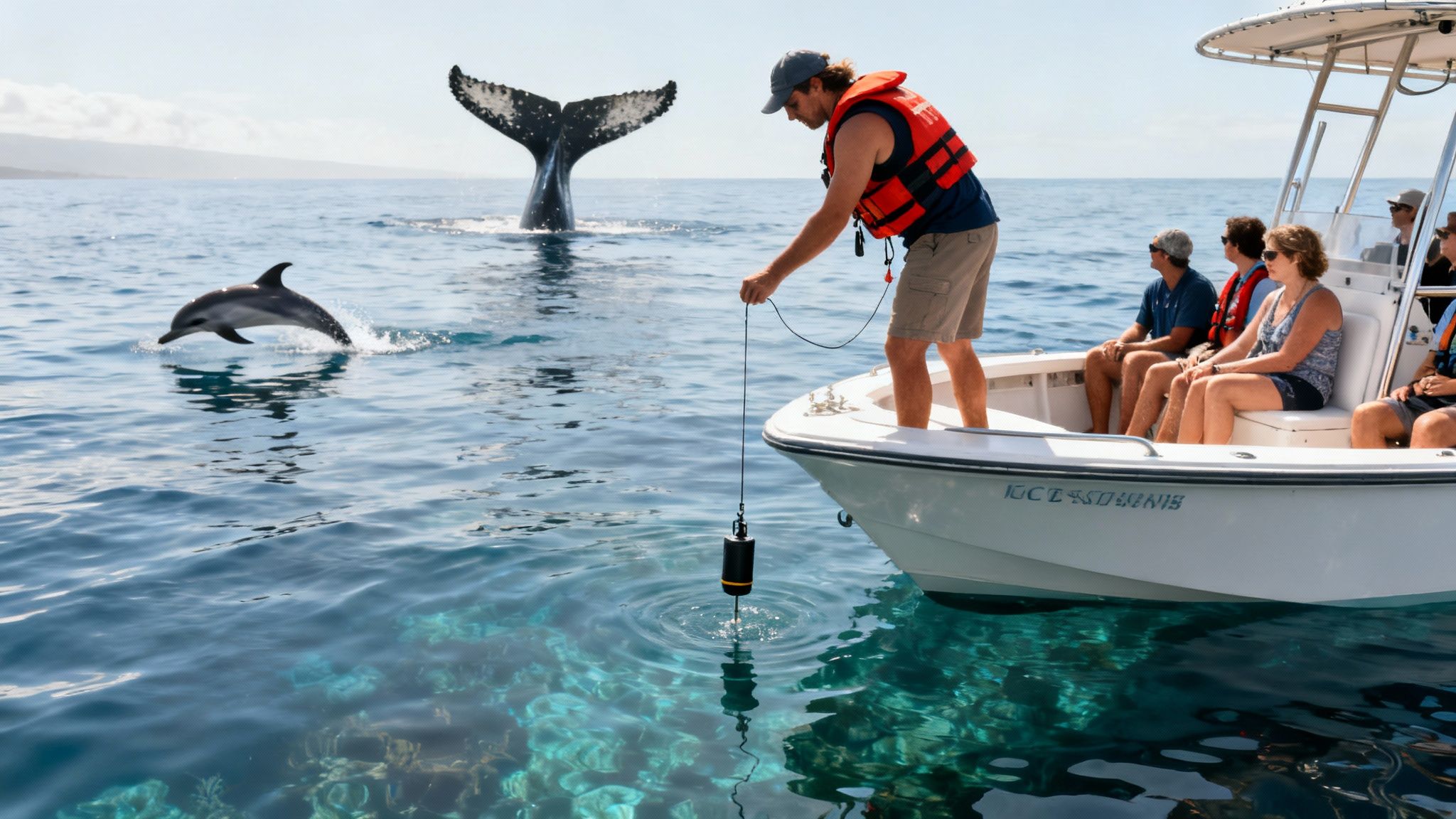
One of the most moving parts of our tour is something you can't see, but you'll feel it in your soul. We'll drop a special underwater microphone, called a hydrophone, into the quiet water. This lets us listen in on the complex, hauntingly beautiful songs of the male humpback whales.
These aren’t just simple grunts or calls. They are intricate, structured melodies with repeating themes, sung only by the males during breeding season. The sound can carry for hundreds of miles, and hearing it live is a deeply moving experience that plugs you right into their mysterious world.
Floating on the water in silence, listening to this ancient underwater orchestra, is often the moment our guests talk about for years to come. It's a powerful reminder of just how intelligent and culturally rich these animals are.
Kona's Vibrant Marine Ecosystem
Humpbacks might be the headliners during whale season, but they share the stage with an amazing supporting cast. The Kona coast is a biodiversity hotspot, and every tour brings a chance for a surprise guest appearance.
Keep your eyes peeled for acrobatic pods of spinner dolphins, who are famous for their breathtaking leaps and spins. You might also spot a graceful sea turtle (honu) coming up for a breath or even a pod of shy pilot whales. This incredible variety makes every trip different. You’re not just going on a whale watch; you're exploring a thriving oceanic world that’s absolutely teeming with life.
Practicing Responsible and Ethical Whale Watching
When we head out on the water, we're not just visitors; we're guests in the whales' home. It’s an incredible privilege that comes with a serious responsibility to make sure our awe and excitement don't cause them any harm. Being ethical and responsible isn't just a nice-to-have—it's the very foundation of sustainable whale watching and the only way we can protect these gentle giants for our kids and grandkids to see.
The single most important decision you can make is choosing an operator who puts the whales' well-being first, way ahead of getting a slightly closer photo. That choice is a direct investment in the health of the entire marine ecosystem.
The 100-Yard Rule and Why It Matters
Federal law is perfectly clear on this: all boats have to stay at least 100 yards away from humpback whales in Hawaiian waters. This isn't just some random number. Think of it as a critical buffer zone, a lifeline for the thousands of new mothers who travel all the way to Kona's warm, safe waters to give birth and nurse their calves.
Getting too close can cause a massive amount of stress. It can interrupt vital behaviors like resting, feeding, or that crucial bonding time between a mom and her baby. A stressed-out mother might feel forced to move her calf to a less protected area, or she might not get the rest she desperately needs. Both scenarios can have dire consequences for the calf's chances of survival.
At Kona Snorkel Trips, we don't just follow this rule—we live by it. Our captains are masters at positioning our boats for absolutely fantastic views without ever crowding the whales.
Every so often, a curious whale will decide to check us out and approach our boat on its own. We call these "whale muggings," and they are truly unforgettable, awe-inspiring moments. The encounter happens entirely on the whale's terms, which is exactly how it should be.
Our Commitment to Conservation
Our dedication to doing things the right way goes far beyond just obeying the law. We are proud participants in the Dolphin SMART program, a voluntary initiative that recognizes tour operators who are serious about responsible wildlife viewing. It means we stick to a strict set of principles designed to minimize our impact on all marine life, not just the whales.
These kinds of conservation efforts have led to incredible success stories. Not too long ago, humpback whales were on the brink of extinction due to commercial whaling. Thanks to decades of legal protection and a collective commitment to responsible practices, their numbers have made a spectacular comeback. If you want to dive deeper into what makes a tour truly responsible, you can learn more about the best whale watching tours on the Big Island of Hawaii and the high standards we hold ourselves to.
When you book with a responsible operator, you’re doing more than just buying a ticket. You’re casting a vote for a future where both people and whales can thrive in these beautiful Hawaiian waters, becoming an active part of this amazing conservation story. Your choice really does make a difference.
How to Prepare for Your Whale Watching Trip
A little prep work can make the difference between a good whale watching trip and an absolutely incredible one. If you take just a few minutes to grab the right gear, you’ll be comfortable and ready for anything. That way, you can focus on the amazing show the whales are putting on instead of wrestling with a nasty sunburn or missing the perfect photo.
And don't let the sunny Kona weather fool you. It might feel nice and warm at the harbor, but once you're out on the water, that ocean breeze can bring a serious chill. A bit of planning is all it takes to stay comfortable from start to finish.
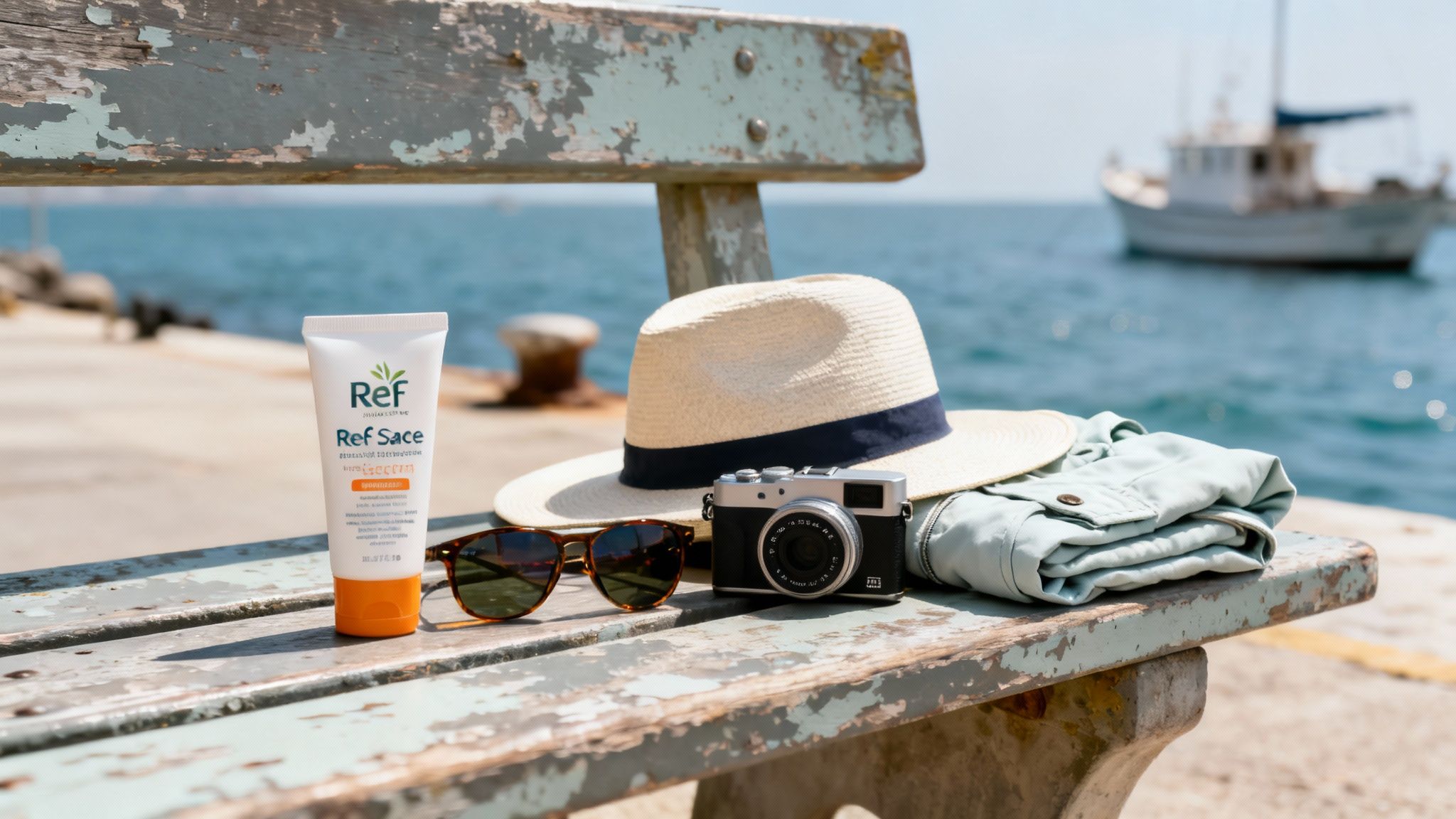
Your Essential Packing Checklist
Think of this as your must-have list for a perfect day of whale watching in Kona, HI. Tossing these few things in your bag will make the whole experience that much better.
- Reef-Safe Sunscreen: The Hawaiian sun is no joke, and it’s even stronger when it’s bouncing off the water. Do your skin and our delicate coral reefs a favor by grabbing a mineral-based sunscreen. Just look for zinc oxide or titanium dioxide on the label.
- Polarized Sunglasses: These are a total game-changer out on the water. They don’t just cut the brightness; they slice right through the ocean's glare. You'll be amazed at how much easier it is to spot whales and other critters just below the surface.
- Light Jacket or Windbreaker: Seriously, even on the hottest Kona days, it can get surprisingly brisk out on the open ocean, especially with that morning breeze. A light layer is all you need to stay cozy.
- Hat and/or Visor: A wide-brimmed hat is your best friend for keeping the sun off your face and neck. Just make sure it’s snug or has a chin strap—you don't want it flying off into the Pacific!
As you get your gear together, checking out some practical travel gifts can be a great way to find some of these essentials. Also, our guide on what to wear for snorkeling has some solid tips on sun-protective clothing that works just as well for a day on the boat.
Tips for a Smooth Ride and Great Photos
A couple of extra pointers can elevate your trip, especially if you get a little queasy on boats or are dying to capture that epic breach shot.
Motion Sickness Prevention: If you know you're prone to seasickness, don't wait until you feel it coming on. Your best bet is to take an over-the-counter remedy like Dramamine or Bonine the night before your trip, and then again the morning of. Once you’re on the boat, try to keep your eyes fixed on the stable horizon line instead of the boat’s rocking—it really helps.
When it comes to photos, speed is everything. Whales can be fast and unpredictable. The easiest trick is to set your camera or phone to "burst mode." If you're using a DSLR, cranking up the shutter speed to something like 1/1000s will freeze the action. This gives you a much better chance of nailing that split-second moment a whale launches into the air. Just remember to always maintain a respectful distance, and never fly a drone near marine mammals—it's illegal and stressful for the animals.
Your Kona Whale Watching Questions Answered
Even after planning, you probably still have a few questions rolling around in your head. It's totally normal. We get asked these all the time, so think of this as your final briefing before we head out on the water for an incredible day.
So, What’s the Absolute Best Month to See Whales in Kona?
While you can see whales all winter long, if you want the absolute peak of the action, you’ll want to be here from mid-January through the end of February. This is when the highest number of humpbacks are in town, so to speak, for their annual calving and mating season.
During this prime window, everything is turned up to eleven. You're far more likely to see the really dramatic stuff—full-body breaches, powerful tail slaps, and the intense action of competition pods. If you have any wiggle room in your travel plans, this is the time to aim for.
Are We Guaranteed to See Whales?
Because we're dealing with wild animals on their own schedule, nobody can ever truly guarantee a sighting with 100% certainty. That said, the odds during peak season in Kona are ridiculously high—it's why this is one of the best places on the planet for whale watching.
On our tours at Kona Snorkel Trips, we see whales on well over 95% of our trips in January and February. Our captains have spent years on these waters and have a sixth sense for spotting activity, which puts the odds firmly in your favor for an amazing encounter.
Key Insight: While no reputable company will offer a money-back guarantee for wildlife, Kona's peak season success rate is so high that it’s about as close to a sure thing as you can get in nature.
What's the Real Difference Between a Small Boat and a Big Boat?
The boat you choose completely changes the vibe of your tour. A smaller boat is all about getting an intimate, up-close feel for the experience.
Here’s the breakdown:
- Small Boat Tours: Think of it as a front-row seat. With just a handful of other guests, you never have to jostle for a view at the rail. We can also maneuver the boat more easily to get you the best possible angle (while always staying a legal distance away, of course). It’s just a much more personal day, where you can easily chat with the guides.
- Large Boat Tours: These can feel more like being in a floating crowd. Your view might be blocked, and it's tougher to get that one-on-one connection with the crew and the ocean. They might have more amenities, but the trade-off is often a less personal, more distant experience.
If you’re looking for a genuine connection and a day that feels like your own private adventure, a small-group tour is the way to go, hands down.
How Close Do the Boats Actually Get to the Whales?
This is a super important question, and it gets right to the heart of responsible whale watching. Federal law is crystal clear: boats must maintain a minimum distance of 100 yards from humpback whales. That’s about the length of a football field.
This rule is there for a very good reason—it protects the whales, especially new moms and their calves, from getting stressed out or hurt. We take this very seriously and follow these guidelines to the letter. Every once in a while, a curious whale might decide to check us out and swim closer. When that happens, it's an unbelievable moment, and it’s always completely on their terms.
Can I Get in the Water and Swim with the Whales?
Nope, definitely not. It is illegal to intentionally swim or snorkel with humpback whales in Hawaiian waters. The rules are in place to keep both you and these massive animals safe.
Our goal is to witness their natural behavior without getting in their way. The best—and only legal—way to experience the magic of Kona's humpback whales is from the deck of a responsible tour boat, watching them do their thing in their own world.