
Whale Watching In Kona HI Your Ultimate Guide To Big Island Tours
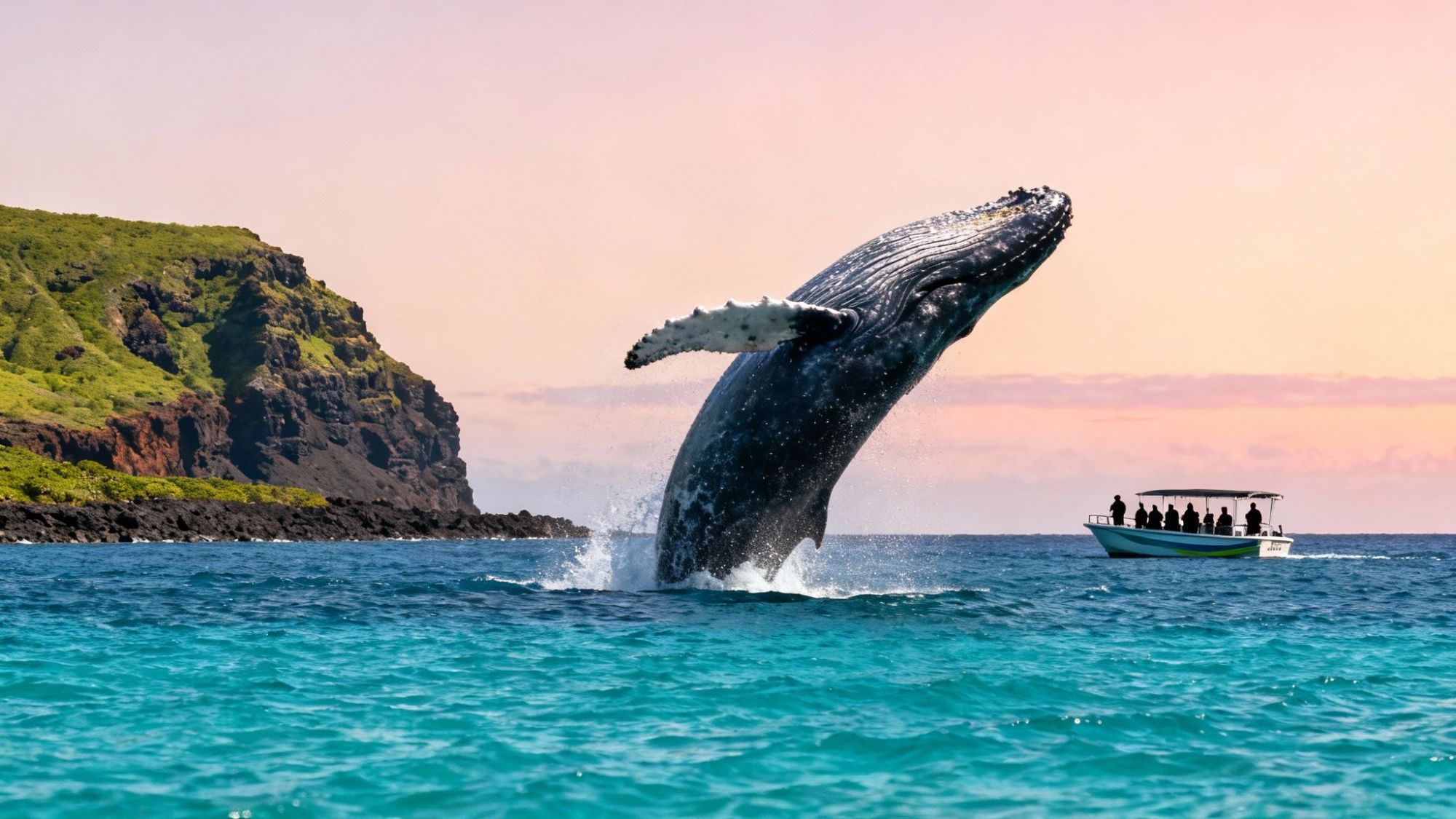
Picture this: the calm, turquoise water off the Kona coast suddenly explodes. A 40-ton humpback whale launches itself into the air, its massive body hanging for a moment against the backdrop of ancient volcanic shores. This isn't a scene from a nature documentary; it's what happens here every winter.
This guide is everything you need to know to plan your own unforgettable whale watching adventure in Kona, HI.
Your Ultimate Kona Whale Watching Adventure
We're going to break down exactly why Kona is one of the best places on Earth for the annual whale migration, what you can expect to see, and how to pick the perfect trip. As Hawaii's top-rated and most-reviewed snorkel company, we at Kona Snorkel Trips run some incredible seasonal whale watching tours that get you right into the heart of the action.
But don't just take our word for it—see what our guests have to say. Now, let's dive in and make your whale watching dream a reality.
Why Whales Choose Kona
The magic of Kona's whale season actually starts thousands of miles away in the frigid waters of Alaska. Every single winter, more than 8,000 humpback whales make an epic 3,500-mile journey to the warm, protected waters of Hawaii. It’s this incredible migration that turns Kona into a world-class whale watching destination.
This trek is one of the longest of any mammal on the planet, all driven by the primal need to find a safe place to breed, give birth, and nurse their newborn calves. The waters just off the Kona coast are the perfect nursery.
Sheltered by the enormous volcanoes Hualālai and Mauna Loa, the ocean here is unusually calm and deep close to shore, creating a natural sanctuary. This unique geography is precisely why so many whales gather here, which means consistent and truly spectacular sightings for us.
A whale watching tour in Kona is so much more than just spotting whales. You're witnessing a vital chapter of their lives—watching mothers teach their babies how to be whales, all in a peaceful, natural environment.
What Makes The Experience So Unique
Unlike anywhere else, whale watching in Kona happens against a dramatic backdrop of black lava rock cliffs and lush green mountains. The water is often so clear you can see these gentle giants moving below the surface long before they even break for air. It’s this combination of stunning scenery and abundant wildlife that makes every single trip special.
To get a better feel for what it's like out there, check out our guide on whale watching tours on the Big Island. An outing here is a full-blown immersion into the world of marine giants.
So, what really sets this adventure apart?
- Incredible Proximity: The deep water right off the coast means we don't have to motor for hours to find the whales. They're already here.
- Awe-Inspiring Behaviors: Seeing a full breach, a powerful tail slap, or a curious spy-hop isn't a rare event—it's a common sight during peak season.
- Expert Guidance: Our local guides live and breathe this stuff. They share fascinating insights into whale biology and conservation, adding a whole other layer to your trip.
Keep these things in mind as you plan, and you'll be set for a truly mind-blowing encounter with the giants of the ocean.
Why Kona Is An Unrivaled Whale Watching Hotspot
So, what’s the big deal about whale watching in Kona, HI? What makes it so different from anywhere else on Earth? It all comes down to the Big Island’s one-of-a-kind geography.
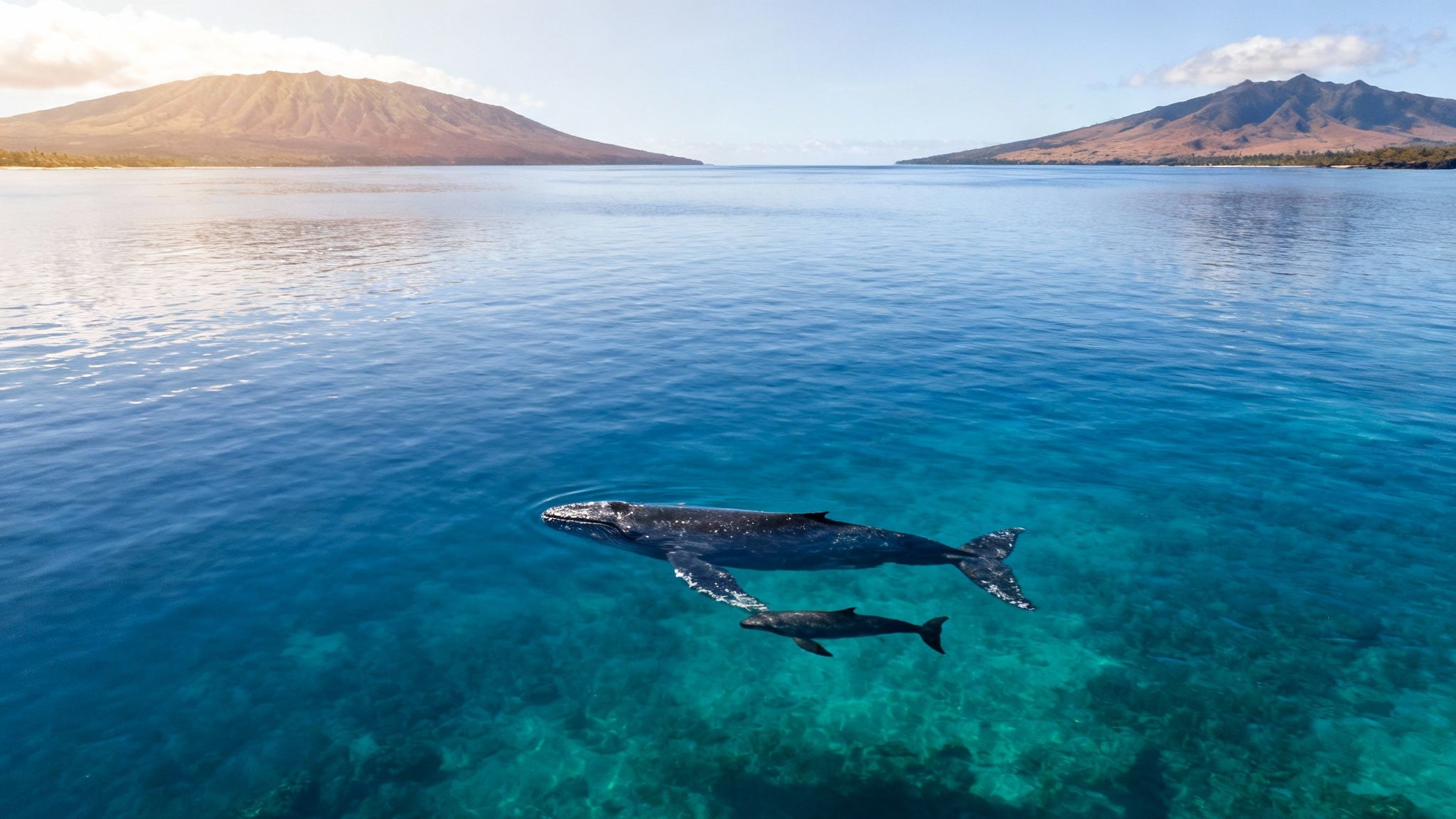
Picture the deep waters off the Kona and Kohala Coasts as a massive, warm, and welcoming ocean cradle, perfectly tucked away from the wild, open Pacific. This incredible natural sanctuary is created by the sheer size of Mauna Loa and Hualalai, two of the world's largest volcanoes. They literally block the powerful trade winds, creating a calm, protected patch of ocean known as a "wind shadow."
For thousands of migrating humpback whales, this is exactly what they’re looking for. These calm, deep, and warm waters are the perfect nursery for them to breed, give birth, and raise their newborn calves in safety.
A Natural Nursery For Giants
This protected spot doesn’t just attract a few whales; it draws in one of the highest concentrations of humpback whales found anywhere on the planet during the winter. What’s really special is that this deep water is remarkably close to shore, which means you don’t have to motor for hours to find yourself in prime whale territory.
For you, that translates directly into more frequent, more reliable, and more mind-blowing sightings. The sheer number of whales here is simply off the charts.
This is especially true along a specific stretch of coastline. In fact, Kona's Kohala Coast is a global whale watching mecca, with sightings 2 to 3 times more frequent than in other parts of the Big Island. It's all thanks to that perfect recipe of calm, deep water that humpbacks love for socializing and nursing.
What This Means For Your Tour
Kona’s unique underwater landscape and calm conditions are what set the stage for the magical, up-close encounters that make a whale watching tour unforgettable. Here’s how it directly improves your experience:
- Calmer Seas: The shelter from the volcanoes often means smoother boat rides. This makes the trip more comfortable for everyone, especially families or anyone who gets a little queasy on the water.
- Clearer Water: Less wind and fewer strong currents lead to incredible water clarity. You can often see the whales’ entire bodies gliding gracefully beneath the surface before they even break for air.
- More Active Whales: In these safe and peaceful waters, whales feel comfortable enough to show off their full range of behaviors. You’ll see mothers tenderly teaching their calves and males competing for mates with spectacular breaches and powerful tail slaps.
The geography of Kona isn't just a backdrop for whale watching; it's the very reason the show is so spectacular. It creates a natural amphitheater where these magnificent creatures feel safe enough to live out the most intimate and dramatic parts of their lives.
This combination is what makes a trip here so special. You aren't just an observer; you're a guest in the whales' chosen winter home.
The Kona Advantage
At the end of the day, Kona's geographic perks create a perfect situation for both the whales and the people who come to admire them. The predictable calmness and high density of whales allow us to provide consistently amazing experiences.
This reliability is a huge reason why so many people return year after year for their whale watching in Kona, HI, adventure. The conditions are just perfect for creating memories that last a lifetime.
The close proximity of the whales, the crystal-clear water, and the stunning volcanic coastline all come together to create a wildlife encounter that's truly immersive and unforgettable. That’s what sets Kona apart as a hotspot that is simply without equal. You can dive deeper into what makes the Big Island such a prime location for whale watching in our detailed guide.
Finding The Perfect Time For Your Whale Watching Trip
When it comes to whale watching in Kona, timing is everything. Seriously. While the official season stretches from December through March, the real sweet spot—the time when the magic truly happens—is during the peak months of January and February.
This is when the highest numbers of humpback whales pack into Kona's calm, sheltered waters. The sheer density of whales during this time means you're treated to a constant, unbelievable show of behaviors. We're talking about everything from breathtaking full-body breaches to powerful tail slaps that echo right across the water.
To help you nail down the perfect time for your trip, it's best to think of the season in three distinct phases. Each part of the season offers a slightly different vibe, but all of them are pretty incredible.
H3: Early Season Excitement
The first whispers of whale season arrive in December and early January. This is when the first waves of migrating humpbacks start showing up, and it's a super exciting time. The first arrivals are often the sub-adults and males, who are eager to make their presence known.
You'll see a ton of competitive behavior during this period. Think impressive breaches, pectoral fin slaps, and tail lobs as the males show off, trying to establish dominance and get the attention of the females arriving soon after. While you might see slightly fewer whales than in peak season, the raw energy and action can be absolutely electrifying.
H3: Peak Season Prime Time
From mid-January through the end of February, Kona basically becomes the global headquarters for humpback whales. This is the absolute peak of the season, and the waters are just teeming with thousands of them.
This is also when most of the calves are born, making it the best time to spot newborns sticking close to their moms. Watching a mother whale patiently teach her baby the ropes is a truly heartwarming sight you'll never forget. The sheer number of whales means you're looking at near-constant action, and your chances of seeing multiple pods and a huge range of behaviors are as good as they get.
During peak season, it's not a question of if you'll see whales. It's a question of how many you'll see and what jaw-dropping things they'll be doing.
H3: Late Season Goodbyes
Once March rolls around, the season starts to wind down. This late-season period is mostly about the last groups of whales, primarily mothers with their now-stronger calves, getting ready for the long trip back to their Alaskan feeding grounds.
This time of year gives you a wonderful chance to see the tender, powerful bond between mother and calf up close. The pace is often a bit more relaxed, with a lot of nurturing behaviors on full display. Even though the total number of whales is dropping, the sightings often feel more intimate and deeply moving—a perfect, poignant end to the season.
If you're looking to go even deeper, check out our full article on the Big Island whale watching season.
Kona Whale Watching Season At A Glance
To make planning a bit easier, here’s a quick breakdown of what you can expect during each phase of the season.
| Season Phase | Months | Typical Whale Activity | Sighting Likelihood |
|---|---|---|---|
| Early Season | December – Early Jan | Competitive males arriving, breaching, tail slaps, active pods | Good to Very Good |
| Peak Season | Mid Jan – Late Feb | Highest concentration, newborns with mothers, constant activity | Excellent |
| Late Season | March | Mothers & calves preparing to leave, nurturing behaviors | Very Good to Good |
No matter when you come between December and March, you're in for a treat, but this table should help you pick the perfect window for the experience you're hoping for.
Morning vs. Afternoon Tours: Which Is Better?
Another big decision is whether to book a morning or an afternoon tour. Both are fantastic, but there are a few subtle differences that might sway you one way or the other.
Morning Tours (Typically 8 AM – 12 PM): The ocean off the Kona coast is famous for being glassy and calm in the mornings. This makes for a super smooth ride and makes it much easier to spot a whale spout from a distance. The light is also perfect for photography, with the morning sun lighting up the whales just right.
Afternoon Tours (Typically 1 PM – 4 PM): The afternoons can sometimes kick up a bit more of a breeze, making the water a little choppier. On the flip side, some folks swear that whale activity, especially with playful calves, picks up as the day goes on. Plus, the afternoon light can create some stunning, golden-hour photo ops as the sun starts to dip.
Honestly, there's no "bad" time to go whale watching during the season. It really just comes down to your personal schedule and what you prefer when it comes to ocean conditions and lighting.
How To Choose Your Ideal Whale Watching Tour In Kona
When whale season hits its peak, the sheer number of whale watching in Kona, HI, tours can make your head spin. But don't worry, finding the right trip is actually pretty straightforward. It just comes down to knowing what kind of experience you're looking for.
Are you an adventurer craving an up-close thrill? Or a family looking for a comfortable, stable ride? From nimble zodiacs to roomy catamarans and fully custom private charters, there’s a perfect boat out there for you. Let's look at the main options so you can pick your perfect day on the water.
Small-Group Vessels: The Up-Close Adventure
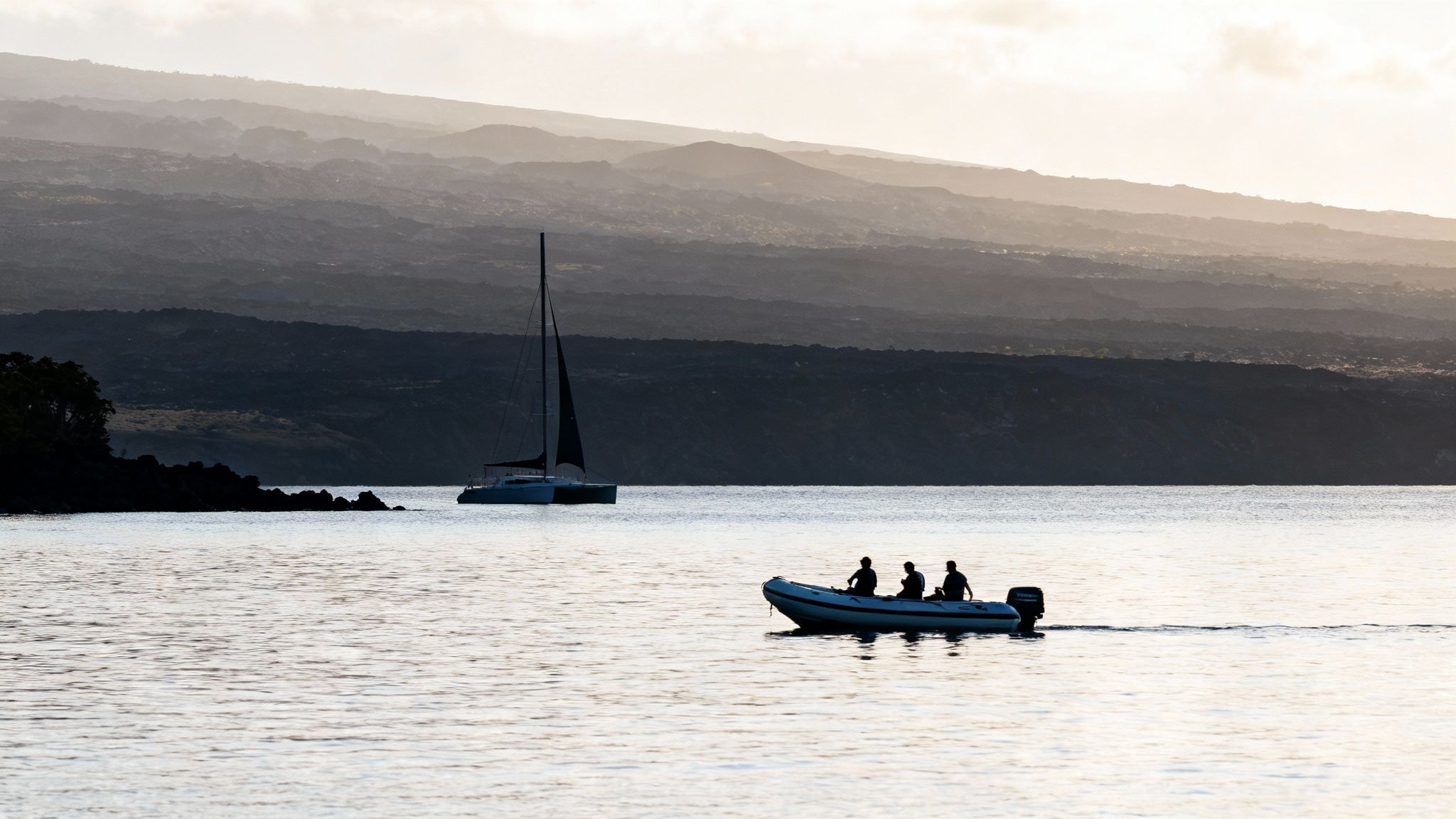
If you want a personal, heart-pounding encounter, a small-group vessel like a zodiac or a rigid-hull inflatable boat (RIB) is the way to go. This is the kind of tour we live and breathe at Kona Snorkel Trips, and for good reason. These boats are fast and maneuverable, and they sit low on the water, giving you an incredible eye-level view that puts you right in the middle of the action.
With a smaller group—usually fewer than 20 people—you won’t be fighting for a view. Every seat is a good one. It also means you can chat directly with your guides, turning a simple boat ride into a deep dive on whale behavior.
Key Takeaway: Small boats deliver a more intimate and adventurous experience. The tradeoff? It can be a bumpier ride with fewer creature comforts like restrooms, so they’re a better fit for folks without mobility issues or a tendency for serious seasickness.
Large Catamarans: The Stable And Social Option
For those who put comfort and stability first, you really can't go wrong with a large catamaran. Their wide, steady design makes them a fantastic choice for families with small kids, older folks, or anyone who just wants a super smooth ride.
These boats offer tons of space to stretch your legs, lots of shade, and amenities like bathrooms and snack bars. The experience is less personal with a bigger crowd, but the raised viewing decks can offer a great bird's-eye perspective for spotting whales breaching in the distance.
Here’s a quick rundown:
- Vessel Type: Zodiac/RIB vs. Catamaran
- Group Size: Intimate (6-20) vs. Large (50-100+)
- Experience: Thrilling, eye-level views vs. Stable, comfortable cruising
- Best For: Adventurous couples/small groups vs. Families, large groups, comfort-seekers
Private Charters: The Ultimate Custom Experience
Looking for total freedom and exclusivity? A private charter is the answer. You get the whole boat for your group, which means you call the shots. If you want to linger with a particularly playful pod or just float quietly and listen to whale songs through a hydrophone, it’s your day.
This is the ultimate option for a special celebration, serious photographers, or a family that wants a completely private and tailored adventure. It's definitely the priciest route, but the ability to design your perfect whale watching tour is a luxury you can’t beat.
The Essential Checklist For Vetting Tour Operators
No matter which boat you lean towards, picking a reputable and responsible company is the single most important decision you'll make. A great crew can take a trip from "good" to "unforgettable."
Before you book any whale watching in Kona, HI, tour, run through this checklist to make sure the operator is top-notch:
- Safety First: Only go with companies that have lifeguard-certified guides. This is non-negotiable. It means the crew is professionally trained to handle any in-water emergency, giving you total peace of mind.
- Eco-Friendly Practices: A good operator respects the whales and their home. Look for a company that strictly follows federal viewing laws (staying 100 yards away unless a whale approaches you), supports conservation, and teaches guests why protecting our marine life matters.
- Educational Value: The best tours don't just find whales—they help you understand them. Having an onboard naturalist or a guide who really knows their stuff transforms the trip. You’ll learn to spot different behaviors and leave with a much deeper appreciation for these gentle giants.
- Positive Reviews: What are other people saying? Check recent reviews on sites like Google. Consistent, glowing feedback about the crew, the boat, and the overall experience is a huge green flag for a quality operator.
By keeping these points in mind, you can confidently pick a tour that's safe, educational, and respectful to the incredible animals you came to see. To learn more about all the different trips available, check out our guide to the best whale watching tours on the Big Island.
A Firsthand Look At Your Kona Whale Watching Experience
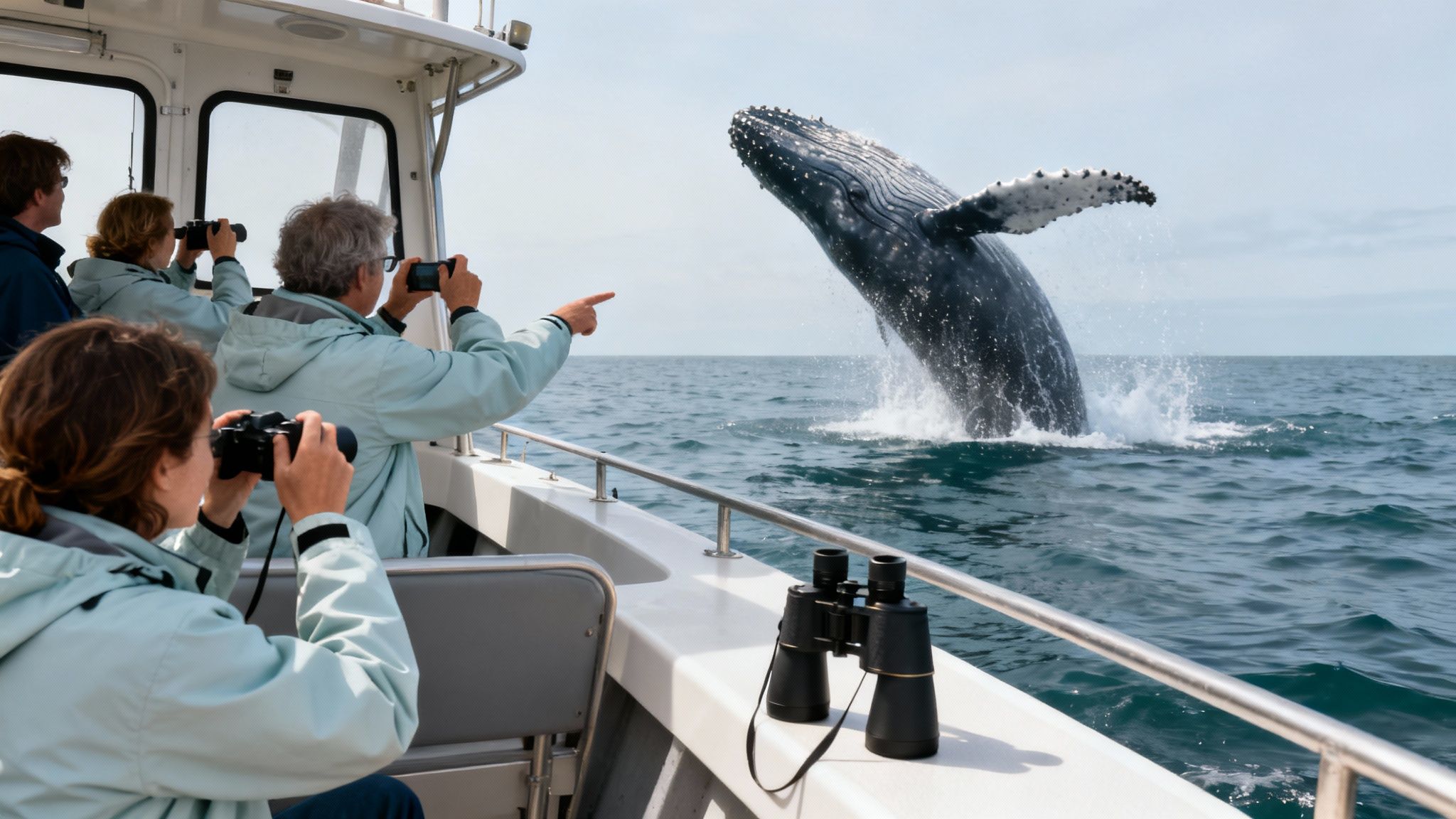
So, what’s it really like on a whale watching tour in Kona? Picture this: the salty spray hits your face as you pull out of the harbor. The warm Hawaiian sun is on your skin, and the boat rocks gently as you head out into that deep, endless blue of the Pacific. You can feel the excitement building with every wave.
Then, the moment you’ve been waiting for. The captain cuts the engines and points to the horizon. Someone shouts, and all eyes lock onto a misty plume of spray shooting up from the surface. This is where your adventure truly begins—a real-life encounter with the gentle giants of the ocean.
Understanding Whale Behavior
Seeing a whale is incredible. Understanding what it's doing is a whole other level. These animals have a stunning way of communicating right at the surface, and your guide will be your translator, helping you decode their every move.
These aren't just random splashes; you're watching a complex language unfold. Seeing it happen live gives you a profound glimpse into their world.
Here are a few of the most common behaviors you might get to see:
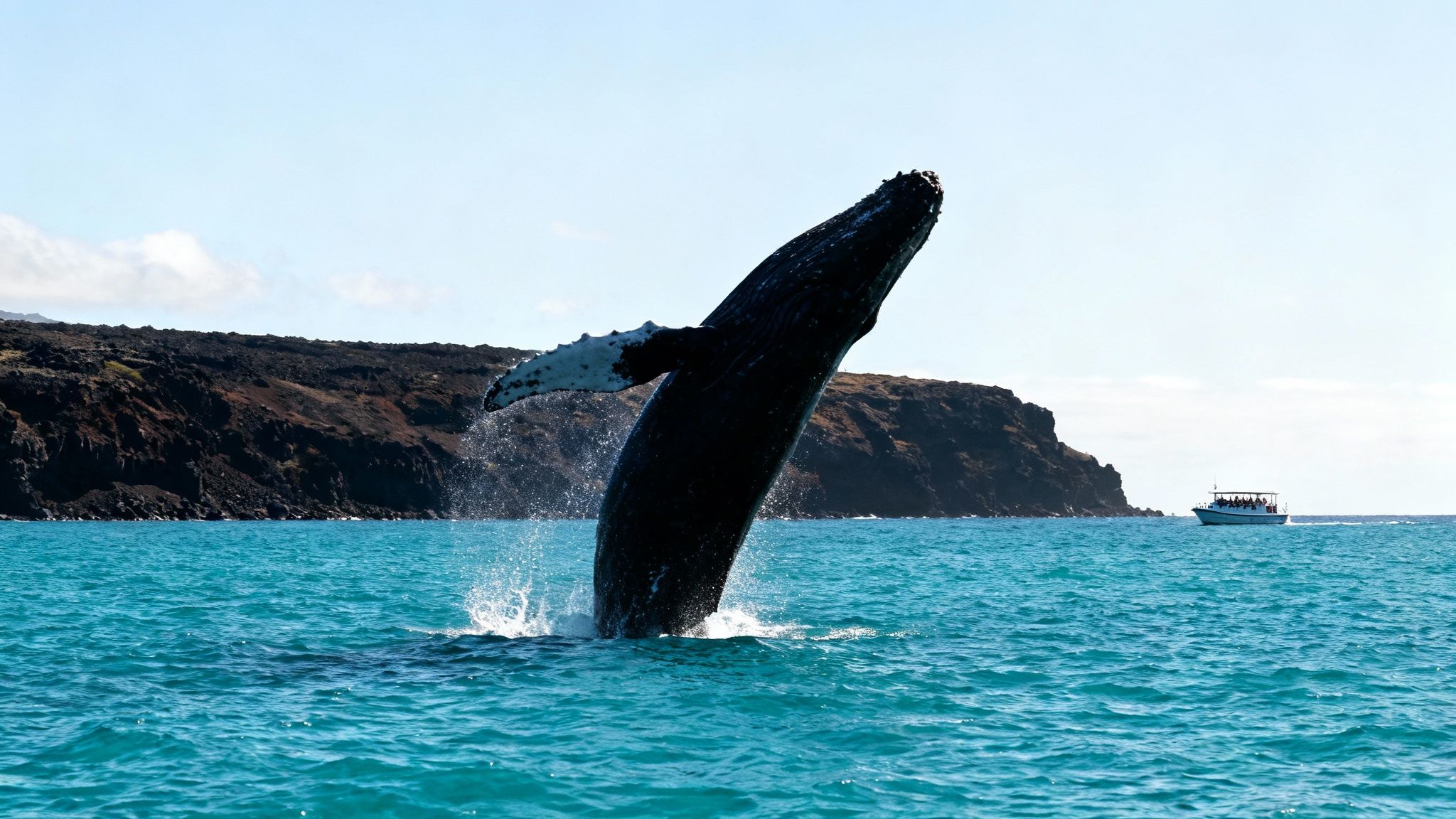
- Breach: This is the big one—the iconic shot everyone hopes for. A whale launches its entire 40-ton body clean out of the water, crashing back down in a thunderous splash. They might do it to communicate, shake off pesky parasites, or maybe just for the sheer joy of it.
- Tail Slap (Lobtailing): You’ll see a powerful slap of the whale's massive tail on the water's surface. That loud, booming sound travels for miles underwater and can be a warning or a way to get another whale's attention.
- Spy-hop: This one feels personal. A whale pokes its head straight up out of the water, almost like a periscope, to get a good look around. They’re checking out their surroundings, and that includes you and your tour boat!
- Pectoral Fin Slap: Humpbacks have the longest pectoral fins (their side flippers) in the animal kingdom. They’ll often roll onto their side and slap them against the water, creating another loud sound used for communication.
The Haunting Songs Of The Humpback
One of the most unforgettable parts of a Kona whale tour isn’t something you see, but something you feel deep in your chest. Many tour boats, including ours, come equipped with an underwater hydrophone.
Your captain will lower this special microphone into the ocean, and suddenly, the boat will fill with the haunting, complex songs of the male humpbacks. These intricate melodies can travel for hundreds of miles and are some of the most sophisticated sounds in the entire animal kingdom.
Listening to whale song through a hydrophone is like tapping into an ancient, underwater symphony. It's a profoundly moving experience that connects you to the mystery of the deep in a way that sight alone simply can't.
Your Essential Packing Checklist
To make sure you can just relax and soak in every moment, it pays to come prepared. Being comfortable is the key to enjoying the experience without any distractions.
Here's what we recommend bringing for a perfect day on the water:
- Polarized Sunglasses: A total game-changer. They cut the glare off the water, making it so much easier to spot whales and see what’s happening just below the surface.
- Reef-Safe Sunscreen: The Hawaiian sun doesn't mess around, even on cloudy days. Protect your skin and our precious coral by using a mineral-based, reef-safe sunscreen.
- Light Jacket or Windbreaker: Even on a warm day, it can get chilly out on the open water with the wind, especially on morning tours. A light layer makes all the difference.
- Camera with a Zoom Lens: You’re going to want to capture that jaw-dropping breach. A good zoom lets you get amazing shots without getting too close and disturbing the whales.
- Binoculars: Whales are enormous, but a pair of binoculars brings the action right to you, letting you see the details of their markings and behaviors from a safe distance.
- Hat and Light Scarf: A wide-brimmed hat is a must for sun protection. A light scarf can be surprisingly useful for taming windblown hair.
- Reusable Water Bottle: Staying hydrated is key. Most eco-friendly tours offer water, but bringing your own bottle is always a great move.
With these items packed, you'll be set for a comfortable, safe, and truly unforgettable whale watching in Kona HI experience.
Your Kona Whale Watching Questions Answered
To help you lock in your plans with total confidence, we've put together answers to the questions we hear most often about whale watching in kona hi. Think of this as your quick-start guide to clear up any last-minute uncertainties. From spotting guarantees to how close the boats can get, we'll give you the practical know-how to make your adventure smooth and unforgettable.
Are Whale Sightings Guaranteed On Kona Tours?
Let's be real—whales are wild animals, so nobody can ever promise a sighting with 100% certainty. That said, your chances during peak season in Kona (think January and February) are ridiculously high. We're talking success rates well over 95% for any reputable tour.
Honestly, the concentration of humpbacks is so dense that it's less a question of if you'll see them and more a question of how many. Many tour operators are so confident they'll find whales that they offer a 'sighting guarantee.' If you don't see any, you get to come back for another trip, on the house. This makes booking a tour a pretty low-risk, high-reward decision during the winter months.
How Close Can Tour Boats Legally Get To The Whales?
This is a big one. Federal regulations are in place to protect these magnificent animals, and every tour operator in Hawaii is required to follow them strictly. Legally, boats must stay at least 100 yards (91 meters) away from humpback whales. This buffer gives them the space they need without feeling stressed by our presence.
But here's where it gets interesting. Whales are incredibly curious, and they don't always follow the rules! Sometimes, they'll swim right up to a boat on their own—a behavior we affectionately call a 'mugging.'
When a whale decides to investigate a boat, captains are required by law to put the engines in neutral and simply let the whale run the show. This ensures a safe, respectful encounter for everyone and often leads to those magical, up-close moments you'll never forget.
Maintaining this respectful distance is so important, especially for the new mothers and their calves who've traveled thousands of miles to these safe, warm waters.
What Other Marine Life Can I See On My Tour?
While the humpbacks are definitely the stars of the show in winter, Kona's waters are bustling with life all year long. Your whale watch is basically a full-blown marine safari, so keep those eyes peeled!
You'll almost certainly run into a pod of spinner dolphins, famous for their incredible acrobatic leaps and spins. They love to play in the boat's wake.
Other common friends you might meet include:
- Bottlenose dolphins: Often seen cruising by in larger groups.
- Spotted dolphins: Known for being super playful and, you guessed it, their spots.
- Pilot whales or false killer whales: A rarer and always thrilling sight.
- Honu (Hawaiian Green Sea Turtles): You'll frequently spot them chilling near the coast, popping their heads up for a breath of air.
Are The Tours Suitable For Children And Seniors?
Absolutely. The vast majority of whale watching tours are family-friendly and a perfect fit for all ages, from toddlers to grandparents. Reputable companies like ours prioritize safety above everything, with lifeguard-certified guides and stable, well-maintained boats.
For families with very young kids or seniors who might prefer a smoother ride, a larger, more spacious catamaran is a fantastic and comfortable choice. They usually have more shade and amenities like an onboard restroom.
On the other hand, smaller, faster zodiac-style boats can offer a more adventurous, and sometimes bumpier, ride. These might have age or mobility restrictions, so it's always smart to check with the tour operator first. A quick call can ensure everyone in your group has a comfortable and amazing time. You can get a better sense of what's out there by checking out our guide to different Kona whale tours.
Why Do Whales Breach?
There is nothing—and I mean nothing—like watching a 40-ton humpback launch its entire body out of the water. It’s a sight that sticks with you forever. But why on earth do they do it?
Well, scientists have a few ideas. It could be a powerful form of communication, with the colossal splash sending a message that travels for miles underwater. It’s also thought to be a handy way to knock off pesky parasites like barnacles. And, just maybe, they do it for the sheer fun of it. It might just be a form of play, especially for the younger, more energetic whales. The real reason is likely a mix of all three.
Ready to see the magic of Kona's humpback whales for yourself? Kona Snorkel Trips specializes in intimate, small-group seasonal whale watching tours that put your experience—and the well-being of the whales—first.
Book your adventure today and make some memories that will last a lifetime on the beautiful Kona coast: https://konasnorkeltrips.com