
A Guide To Whale Watching In Kona Hawaii
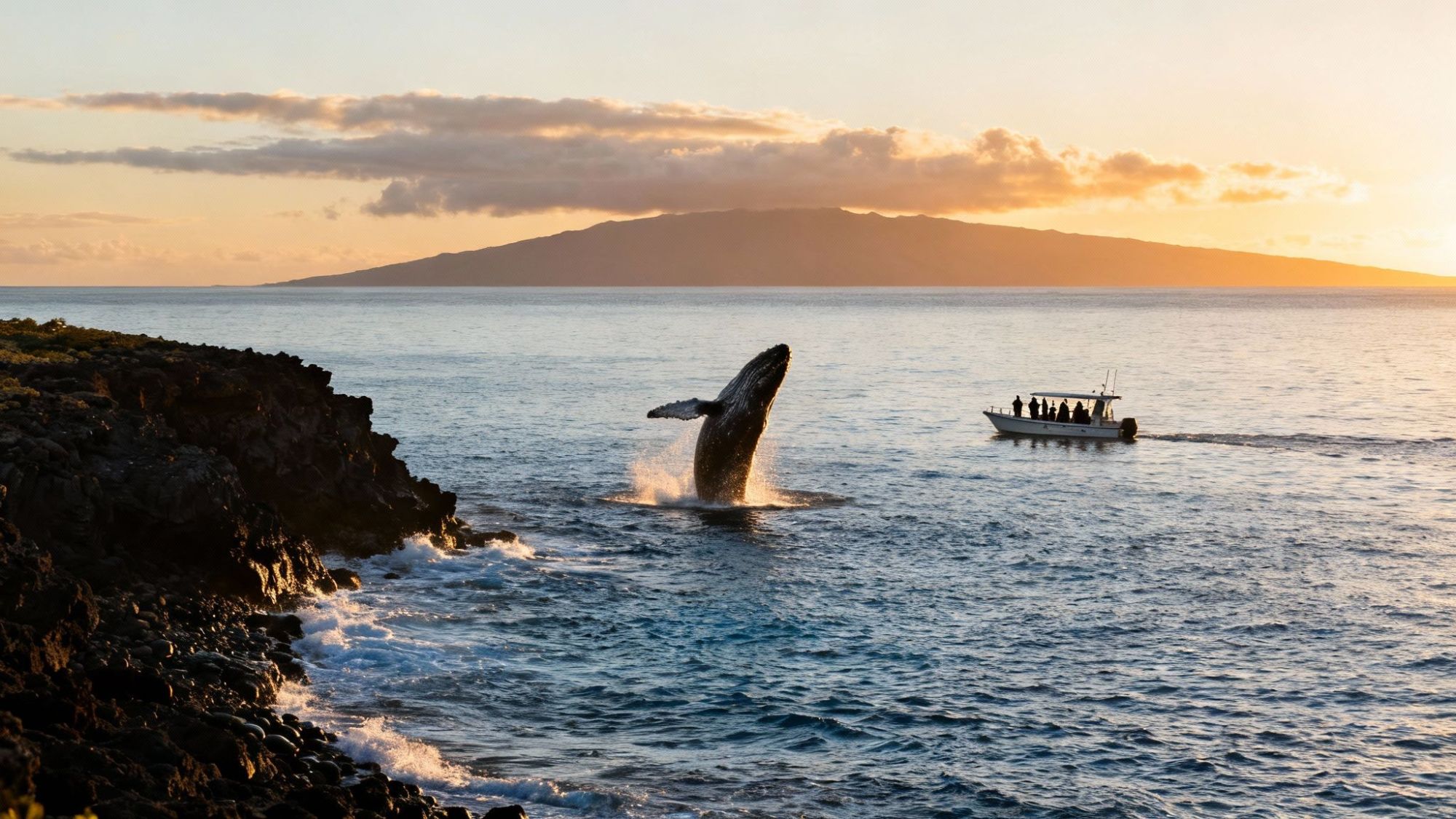
Witnessing a humpback whale breach is an experience that stays with you forever. Here in Kona, we're lucky enough to have a front-row seat to one of nature's greatest shows, especially during the peak season from January through February.
During these winter months, thousands of humpback whales journey to Kona's warm, protected waters. They come here to breed and raise their newborn calves, which means sightings are practically a daily event. For the best conditions, morning tours are usually the way to go—the seas tend to be calmer, and the light is just perfect for watching these gentle giants.
Your Essential Guide To Kona Whale Watching
Think of this as your complete playbook for planning the ultimate whale watching trip in Kona. We've packed it with all the essential info you need to make sure your time on the water is nothing short of incredible. As Hawaii's top-rated and most-reviewed snorkel company, we at Kona Snorkel Trips live and breathe the ocean, and we're passionate about creating unforgettable experiences for our guests. Our reviews tell that story better than we ever could.
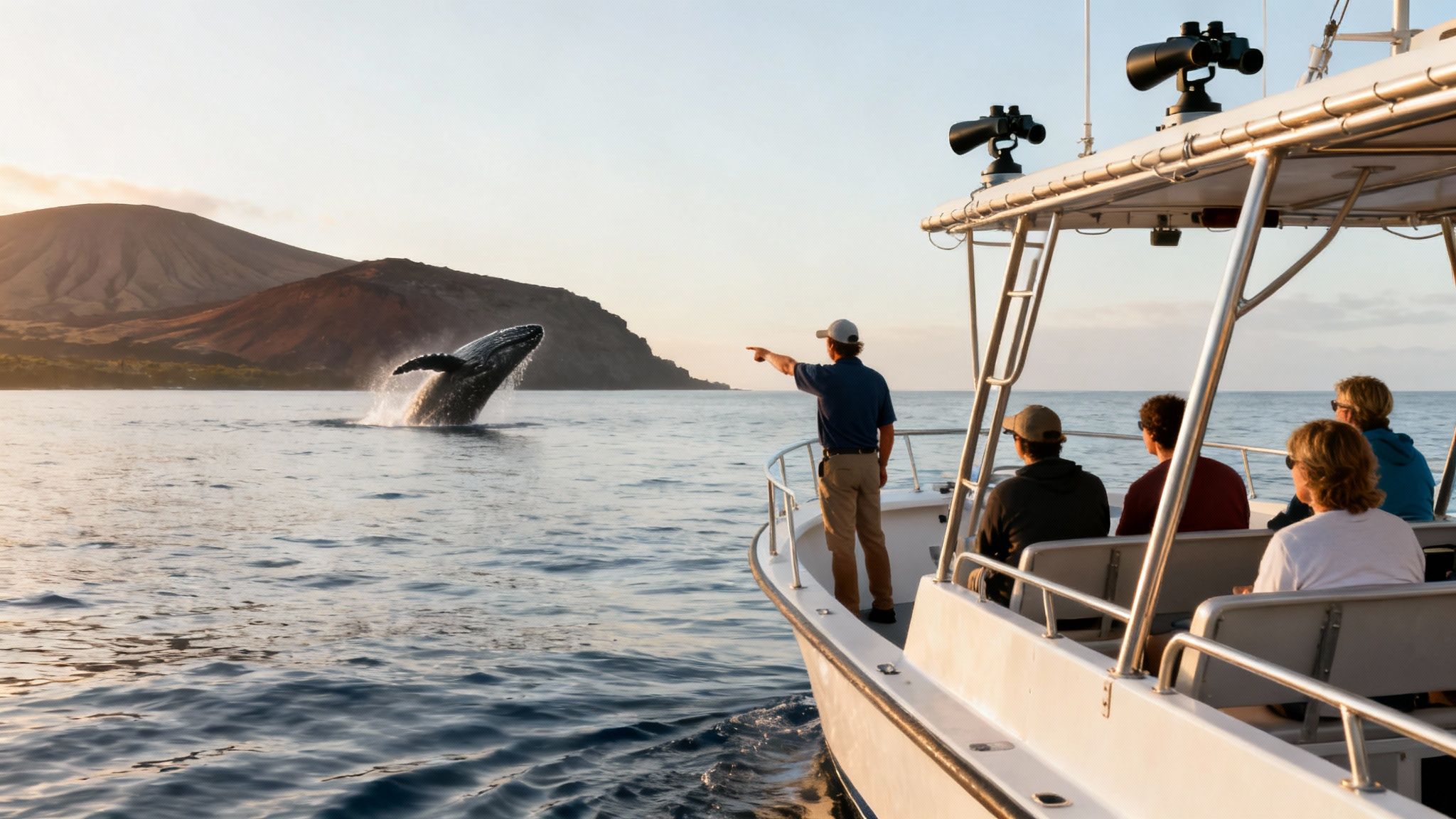
This guide will walk you through everything, from the peak of the migration to what you should pack. But first, let's start with a quick snapshot of the most important planning details.
Kona Whale Watching At A Glance
Getting the basics right is the key to an amazing tour. The season, time of day, and even the type of boat you choose can make a huge difference in your experience. Here’s a quick rundown to get you started.
| Key Factor | Recommendation |
|---|---|
| Peak Season | Aim for January and February. This is when the highest concentration of whales is in our waters. |
| Best Time of Day | Morning tours (7 AM – 11 AM) almost always offer the calmest seas and best light for photos. |
| Best Viewing Method | A small-group boat tour gets you closer to the action while still being respectful of the whales. |
| Essential Gear | Don't forget polarized sunglasses, a camera with a zoom lens, and a light jacket for the breeze. |
Getting these four things dialed in will set you up for success before you even leave the harbor.
Preparing For Your Day On The Water
Getting out on the Pacific is the highlight for most visitors, but it's smart to be ready for whatever the ocean has in store. Even on a glassy day, the gentle rock of the boat can be a new sensation for some.
A little prep goes a long way in making sure you have a fantastic time. If you've ever felt a bit queasy on the water, don't worry—there are plenty of simple tricks to stay comfortable. We've put together a full guide on how to prevent seasickness that covers everything from ginger chews to over-the-counter options. Taking care of this beforehand means you can focus 100% on the incredible sight of humpbacks playing in their winter home.
Understanding The Great Whale Migration To Kona
Every winter, the calm, blue waters off the Kona coast become the final stop for thousands of travelers who have journeyed an incredible distance. These aren't tourists arriving by plane; they are majestic humpback whales, finishing one of the most epic migrations in the entire animal kingdom. This annual pilgrimage is the very reason whale watching in Kona, Hawaii, is a world-class spectacle.
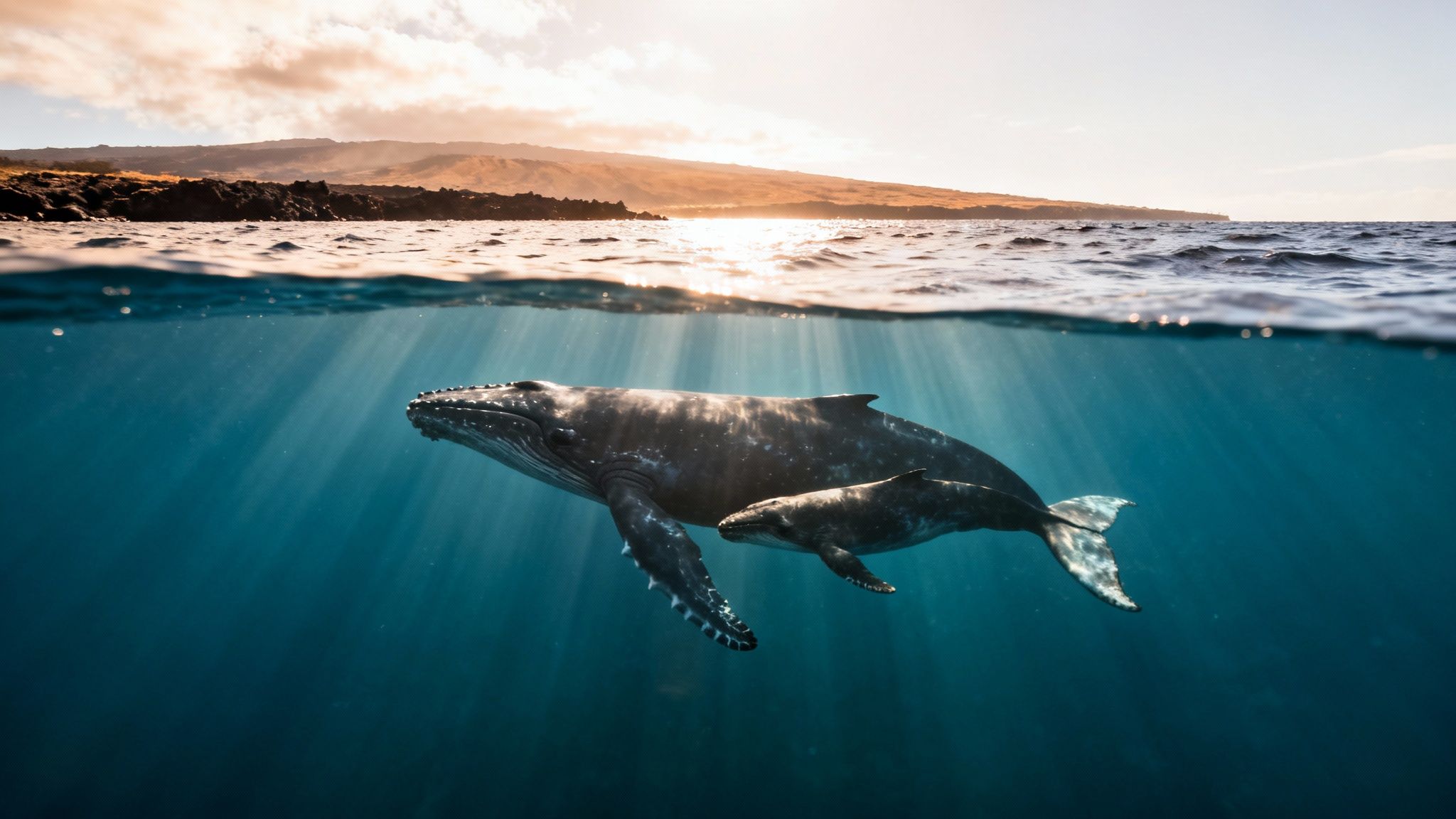
The story starts 3,500 miles away in the frigid, nutrient-rich seas of Alaska. Humpbacks spend their summers there gorging on krill and small fish, packing on the massive blubber reserves they'll need for the grueling trip ahead. As the Alaskan winter sets in and food vanishes, a powerful, ancient instinct takes over.
This instinct pushes them south—not for food, but for something far more crucial to the survival of their species: a safe place to give birth and raise their newborn calves.
Why Kona Is The Perfect Whale Nursery
The Hawaiian Islands, especially the waters around the Big Island, are pretty much the ideal setup for a whale nursery. The water is warm, shallow in all the right places, and amazingly clear. It’s a world away from the cold, murky feeding grounds up north.
Kona’s geography gives it a special edge. The enormous volcanoes of Hualālai and Mauna Loa act as natural shields, blocking the coast from strong trade winds. This creates exceptionally calm and protected bays that are, for all intents and purposes, the perfect, sprawling nursery for baby whales.
A newborn humpback calf has very little body fat. The warm, bathtub-like waters of Kona (around 75°F or 24°C) let the calf save precious energy. Instead of fighting off the cold, it can focus everything on nursing and growing strong.
These sheltered waters are absolutely vital. Calves have to learn how to swim, breathe, and bond with their mothers without getting tossed around by rough seas. Kona provides a safe haven where these first crucial life lessons can happen in peace.
The Epic Journey And Social Spectacle
The migration itself is a demanding two-month trek. What’s truly incredible is that the whales don't eat during this entire period—or for their whole time in Hawaii. They survive completely on the fat stores they built up in Alaska, which just shows how biologically important this journey is.
Once they get here, the social scene is fascinating. While pregnant females are looking for the calmest spots to give birth, male humpbacks are busy putting on dramatic shows to win the attention of females. This is when you'll see some of the most awe-inspiring behaviors, turning the ocean into a stage for powerful, breathtaking displays.
Each winter, more than 8,000 humpback whales make this incredible migration from Alaska to Hawaii, and Kona is a premier global hotspot for it all. This yearly event, peaking between January and February, turns our coast into a bustling nursery where males compete with breaches, tail slaps, and those famous, haunting songs. Local operators report that during these peak months, boat tours spot an average of 3 to 6 humpback whales every 15 minutes in prime areas, thanks to our calm, sheltered bays. The Sanctuary Ocean Count, a huge community science effort, backs this up: one year, volunteers counted 493 humpback sightings just from Big Island shorelines. This phenomenon supports a thriving local industry, with sighting success rates often topping 90% on tours, making it a must-do for visitors. You can dive into more amazing facts about this annual whale migration.
Decoding the Whale Behaviors You'll See
When you’re out on the water, you're not just looking at random splashes—you're watching an ancient, complex language unfold. Every leap, slap, and spout tells a story. Getting a feel for these behaviors turns a simple sightseeing trip into a front-row seat for one of nature's greatest dramas.
You don’t need to be a marine biologist to get the gist. Think of it like learning a few key phrases in a new language. Once you can spot the common surface displays, you'll start to understand what's happening, whether it's a raw show of strength, a moment of pure curiosity, or a tender interaction between a mother and her calf.
The Power Plays: Breaches and Slaps
Some of the most incredible behaviors are all about making a big impression. These are the powerful, noisy displays that get everyone’s heart racing. They're often a form of communication or a way for males to show their dominance while competing for a female.
-
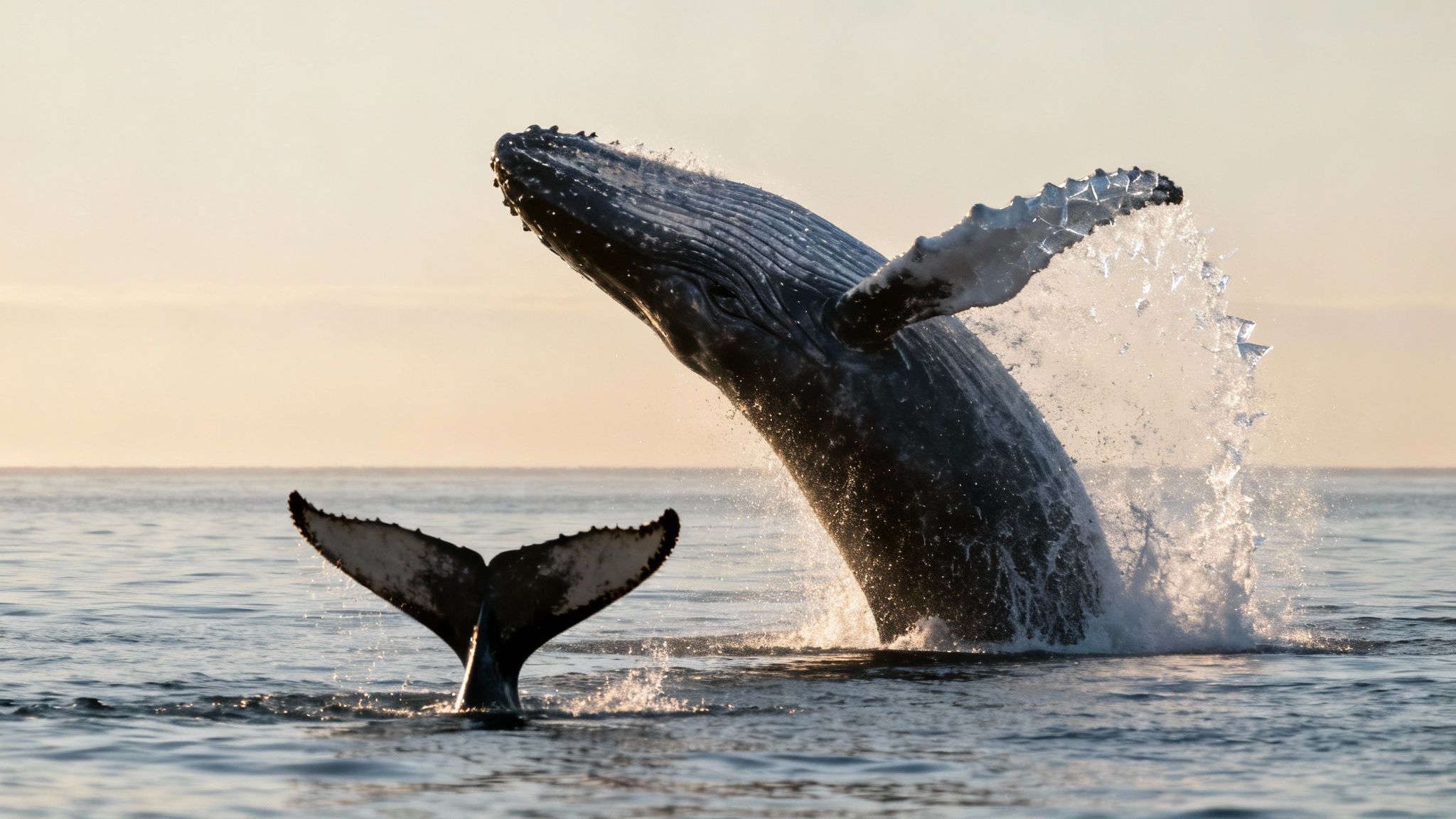
The Breach: This is the big one—the iconic move everyone hopes to witness. A humpback propels its entire 40-ton body almost completely out of the water, crashing back down in a thunderous explosion of spray. It's the cetacean equivalent of shouting at the top of your lungs. It could be a sign of excitement, a warning to other males, or maybe even just a way to scratch an itch and dislodge some barnacles.
-
Pectoral Fin Slap (Pec Slap): Humpbacks have massive pectoral fins that can be up to 15 feet long. You'll often see them roll onto their side and repeatedly slap one of these giant fins on the water's surface, creating a loud crack that echoes across the ocean. It’s another powerful way to get noticed.
-
Tail Slap (Lobtailing): Much like a pec slap, a whale will lift its fluke (tail) high out of the water and slam it down with incredible force. The boom can travel for miles underwater, acting as another way whales announce their presence or agitation.
These explosive actions are classic moves in the competitive mating rituals that make Kona's waters so electric during whale season. If you spot a group of males chasing a female (known as a "competition pod"), you'll likely see these behaviors as they all try to prove they're the strongest and fittest suitor.
The Curious and Cautious Side
Not every action is a thunderous display of power. Sometimes, you get a glimpse into their quieter, more inquisitive nature. These moments reveal a different side of humpback life, especially when you see the gentle interactions between a mother and her vulnerable newborn calf.
A mother whale and her calf will often be much quieter. You might see the calf practicing tiny breaches or gently nudging its mother. These tender moments are a reminder that Kona’s waters are, first and foremost, a nursery.
Here are a few of the more subtle behaviors to watch for:
-
Spyhopping: Pure curiosity in action. A whale positions itself vertically in the water and pokes its head straight up, sometimes bringing its eyes completely above the surface. It’s literally taking a look around to see what’s going on, whether it's checking out your boat or another group of whales.
-
Head Lunge: This one is a bit more aggressive than a spyhop. A head lunge is a forceful forward thrust, bringing the whale's head and upper body out of the water. You'll often see this in competitive groups, and it’s a clear display of intimidation toward a rival.
-
The Blow: This is the first and most common sign that whales are nearby. The "blow" is simply the whale exhaling air from its lungs through its blowholes. A humpback's distinctive, heart-shaped spray can be spotted from miles away, giving you the first clue that the show is about to begin.
Watching these different actions helps you piece together the social dynamics of these incredible animals. A day of whale watching in Kona is a chance to see it all—from the raw power of a full breach to the gentle curiosity of a spyhopping calf.
Choosing Your Ideal Whale Watching Adventure
Alright, so you’ve got a picture in your mind of the incredible whale behaviors you might see. The next question is, how do you want to experience it? Your choice here really shapes the whole adventure, and whale watching in Kona, Hawaii, gives you two fantastic ways to do it: spotting them from the dramatic lava-rock coastline or getting right out on the water with a dedicated boat tour.
Each option offers a completely different perspective on this amazing natural spectacle.
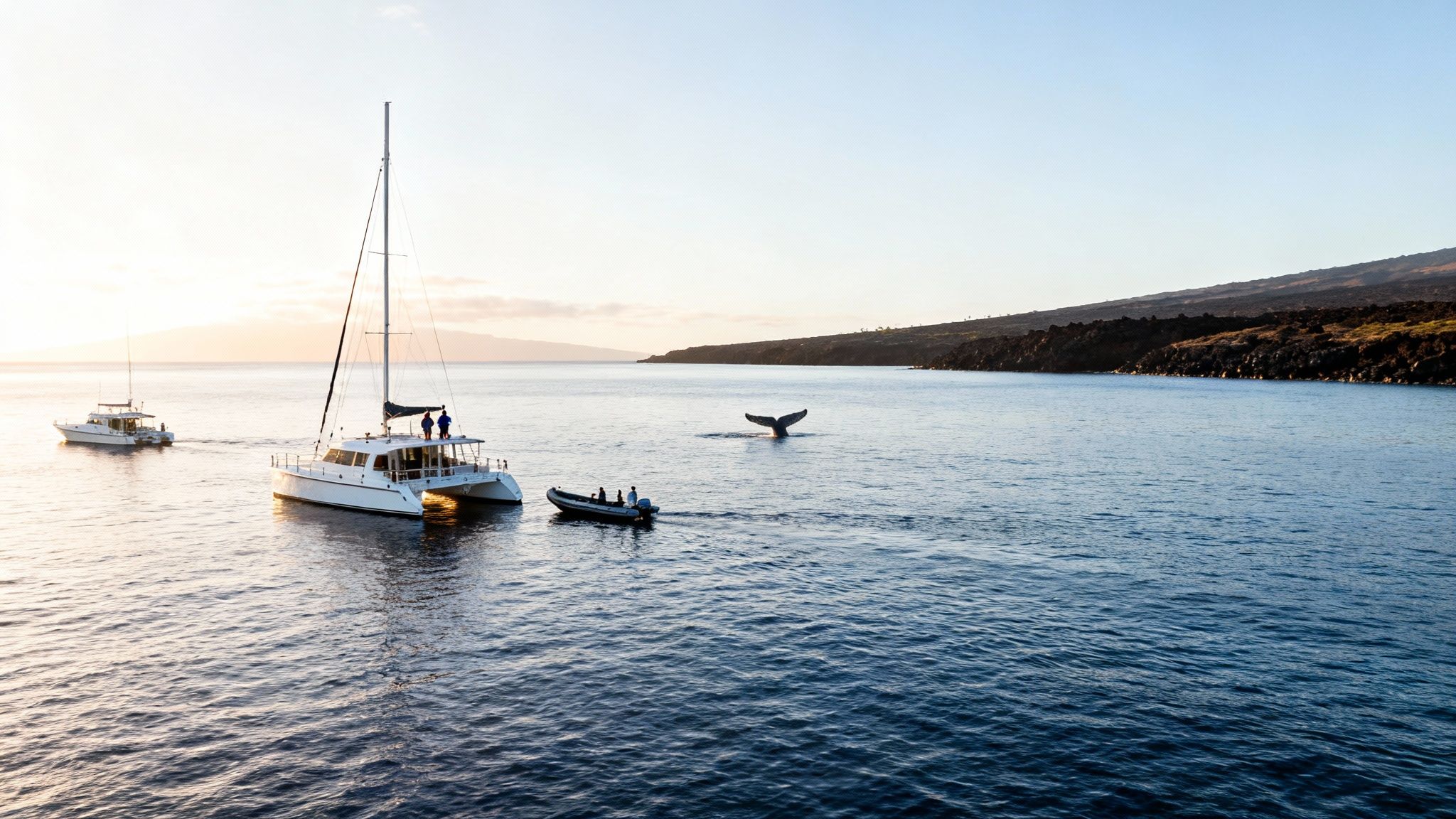
Watching from the shore is a panoramic, unhurried experience. You can scan the horizon at your own pace, maybe with a picnic lunch. A boat tour, on the other hand, puts you right in the middle of the action for a much more intimate and dynamic encounter. Let’s break down both so you can figure out what’s perfect for your trip.
Shore-Based Whale Watching Hotspots
Seeing whales from land is a fantastic—and totally free—way to witness the migration. The key is finding a spot with an elevated, unobstructed view of the ocean. Luckily, the Kona and Kohala coasts are dotted with perfect locations where you can just settle in and wait for the show.
One of the most famous spots is the Puʻukoholā Heiau National Historic Site. The name itself even translates to "hill of the whale," which tells you everything you need to know about its history as a prime viewing area. Its high vantage point gives you a sweeping view over the channel where whales are seen all the time.
Here are a few other go-to spots for shore-based viewing:
- Lapakahi State Historical Park: This quiet park has beautiful coastal trails with clear ocean views, making it a peaceful place to spot distant blows and breaches.
- Kapaʻa Beach Park: Located up on the Kohala Coast, this park is another reliable spot. You can often see pods passing by, especially during the peak months of January and February.
- Kekaha Kai State Park: The rugged, beautiful coastline here has tons of vantage points. Just find a comfy spot on the lava rocks and start scanning the horizon.
Pro Tip: For shore-based watching, patience and good optics are your two best friends. A quality pair of binoculars is an absolute must-have; it’s the difference between seeing a distant splash and clearly identifying a tail slap. Bring a chair, some water, and just enjoy the experience.
Selecting The Perfect Boat Tour
For a truly immersive experience, nothing beats a boat tour. Being out on the water gets you closer to the whales (while still respecting legal distances), lets you hear the incredible whoosh of a breach, and often gives you the chance to listen to their haunting songs through an underwater hydrophone.
But not all tours are created equal. The boat you're on and the philosophy of the crew will make a huge difference in your experience.
Comparing Vessel Types
The kind of boat you choose really sets the tone for your whole trip. From large, stable catamarans to quick and nimble rafts, each has its own vibe.
- Catamarans: These are your most stable and comfortable option, which is perfect if you have young kids or are worried about seasickness. They usually have amenities like restrooms and shaded seating, making for a super relaxed tour.
- Zodiacs (Rigid-Hulled Inflatable Boats): If you're feeling a bit more adventurous, a Zodiac offers a thrilling, low-to-the-water ride. These smaller, faster boats can cover more ground, but just be ready for a bumpier trip and more exposure to sun and spray. It's a blast.
- Small Group Vessels: This is often the sweet spot. Operators like Kona Snorkel Trips focus on smaller groups, which means you always have a great, unobstructed view and can easily chat with the knowledgeable guides. It’s just a more personal and educational way to connect with the wildlife.
To get a sense of the different options out there, you can explore the island's Top 5 Whale Watching Kona Big Island Tours. For an even deeper look at what makes for a truly great trip, our guide to the best whale watching Big Island tours has more detailed insights.
Picking the right boat and a reputable crew that respects the animals is the last crucial step to creating a Kona whale watching memory you’ll never forget.
When To Go For The Best Whale Sightings
Let's be honest, timing is everything when you're planning a whale watching trip in Kona. While you can technically spot whales from December through March, hitting the absolute sweet spot can turn a good day on the water into an unforgettable one—the kind where the ocean just feels alive.
Think of it like planning a trip to see fall colors. You don't want to go too early or too late; you want to be there right when the display is at its most brilliant. For whale watching here, that peak happens right in the middle of winter.
Pinpointing The Peak Whale Season
While you might see the first few whales arriving in November and the last stragglers heading out in April, the undisputed best months are January and February. This six-to-eight-week window is when the concentration of humpback whales off the Big Island hits its absolute peak for the year.
This is the heart of the migration. The maximum number of whales have finally finished their long trek from Alaska, and the waters are buzzing with activity. You'll see males competing for mates, and mothers teaching their brand-new calves how to be a whale. The frequency of sightings just skyrockets, and it's not unusual to encounter multiple pods on a single trip.
The Best Time Of Day For Your Tour
Once you've zeroed in on the month, the next question is what time of day to book your tour. You can see whales anytime, but if you ask any seasoned boat captain in Kona, they'll almost always point you toward the morning.
-
Morning Tours (7 AM – 11 AM): The biggest advantage here is the weather. Kona's waters are famously calmer in the early hours before the afternoon trade winds kick in. That means a much smoother ride and clearer conditions for spotting whales. The lower sun angle also cuts down on the glare, making it easier to spot blows, breaches, and other action from far away.
-
Afternoon Tours (12 PM – 4 PM): If a morning trip just doesn't fit your schedule, don't worry—an afternoon tour is still an incredible option. The whales are active all day, so your chances of amazing sightings are still fantastic. Just come prepared for potentially breezier weather and a bit more chop on the water.
The bottom line is pretty simple: for the calmest seas and best all-around viewing conditions, book a morning tour. But if the afternoon is what you've got, you'll still have a phenomenal chance to see the whales.
Kona's whale watching season, running from December through March, lines up perfectly with the arrival of thousands of humpbacks. However, January and February are the prime months, when the waters off the Kona and Kohala Coasts are just teeming with activity. Data from local operators confirms the Kohala Coast boasts sightings 2 to 3 times more frequent than other areas, with many tours reporting near-guaranteed encounters during this peak. Even the official Sanctuary Ocean Count backs this up, logging hundreds of whales per event, like the 493 sightings on the Big Island during a single January count.
For a deeper dive into what to expect each month, check out our complete guide to the whale season on the Big Island. It's packed with even more insights to help you nail the timing for your trip.
Respectful Viewing And Whale Conservation
There's nothing quite like the feeling of seeing a humpback whale launch itself out of the water. It’s a powerful, humbling experience, and one we’re lucky to have right here in Kona. But with that incredible privilege comes a serious responsibility to protect these animals. This isn't just about being nice; it’s about following the law and ensuring the safety of the whales who travel thousands of miles to use these waters as their nursery.
The single most important thing to know is the mandatory approach distance. The rules are non-negotiable, and for very good reason.
The 100-Yard Rule
Every single vessel—from tour boats to kayaks and even paddleboards—is required by federal and state law to stay at least 100 yards away from any humpback whale. To give you a sense of scale, that’s the length of a football field. This isn't just some random number; it's a carefully determined buffer zone that gives whales the space they need to go about their lives without feeling stressed or threatened.
This space is especially crucial for new mothers and their calves. A mother whale needs to rest and nurse her baby without the constant pressure of boats getting too close. Causing them stress can force them to burn precious energy, get separated, or even flee to rougher, less-protected waters, which is a huge risk for a vulnerable calf.
Any good tour operator knows this rule by heart and will never, ever chase a whale for a closer look. They understand that the most magical encounters happen when a curious whale decides to approach a quiet, stationary boat on its own terms. Respecting their space is what allows us to witness the very behaviors we came to see in the first place.
The Role Of The National Marine Sanctuary
Much of the water where this spectacular migration unfolds is part of the Hawaiian Islands Humpback Whale National Marine Sanctuary. This protected area was created specifically to safeguard the whales and the critical habitat they rely on for breeding and calving.
The sanctuary has a three-part mission:
- Protection: They're the ones enforcing the rules that keep whales safe from boat strikes and harassment.
- Research: They support the science that helps us better understand whale behavior, population health, and the threats they face.
- Education: They work to get the word out, teaching everyone about responsible wildlife viewing and why conservation matters so much.
When you choose a tour operator who respects and follows the sanctuary's guidelines, you're doing more than just going on a boat ride. You're casting a vote for conservation. A great tour doesn't just show you whales; it leaves you with a real appreciation for the effort it takes to protect these gentle giants for generations to come. Your choice truly matters.
Got Questions About Whale Watching in Kona?
As you get ready for your big whale watching adventure, you probably have a few last-minute questions. It happens to everyone! Getting these details sorted out ahead of time means you can just relax and enjoy the show once you're on the water. Here are the answers to the questions we hear most often.
What Should I Bring on a Kona Whale Watching Tour?
Packing smart is the secret to a great day at sea. Sun protection is non-negotiable, so grab some reef-safe sunscreen, a good hat, and polarized sunglasses. Seriously, the polarized lenses are a game-changer—they cut the glare right off the water, making it way easier to spot the whales.
It's also a good idea to dress in layers. Even on the sunniest Kona day, it can get surprisingly breezy out on the ocean. A light waterproof jacket is usually perfect. And of course, your camera! If you have a zoom lens, bring it, along with extra batteries. Binoculars are fantastic for getting those up-close views without disturbing the animals.
One last thing: if you're prone to motion sickness, it’s best to take your preferred remedy before the boat even leaves the harbor. Most good tours provide water and snacks, but it never hurts to double-check when you book.
Is a Whale Sighting Guaranteed on My Tour?
Okay, let's be real—these are wild animals, and nobody can control them with 100% certainty. That said, your chances of seeing humpbacks during Kona's peak season are about as close to a sure thing as you can get. In January and February, it’s not uncommon for boat tours to have a sighting rate over 95%. The sheer number of whales in the calm, protected waters off the Kona coast is just incredible during these months.
In fact, many of the best tour operators are so confident they'll find whales that they actually offer a sighting guarantee. This usually means that if your trip strikes out (which is rare!), you can come back and join another tour for free on a different day. Just make sure to ask about the specifics of their guarantee when you're booking.
Will We See Other Marine Animals Besides Whales?
Oh, absolutely! A whale watch in Kona often turns into a full-on marine safari. The waters here are buzzing with life. We almost always run into pods of acrobatic spinner dolphins, famous for their incredible aerial twists and flips.
You might also spot bottlenose and spotted dolphins cruising by. It’s common to see Hawaiian Green Sea Turtles (Honu) chilling at the surface, and if you get really lucky, you could catch a glimpse of pilot whales or even a majestic manta ray. The naturalist guides on board are experts at spotting all kinds of ocean life, which just adds to the thrill of the day.
Ready for an unforgettable day with Hawaii's gentle giants? Book your next adventure with the best in the business, Kona Snorkel Trips. Check out all of our award-winning tours at Kona Snorkel Trips.