
Your Guide to Whale Watching in Kona Hawaii
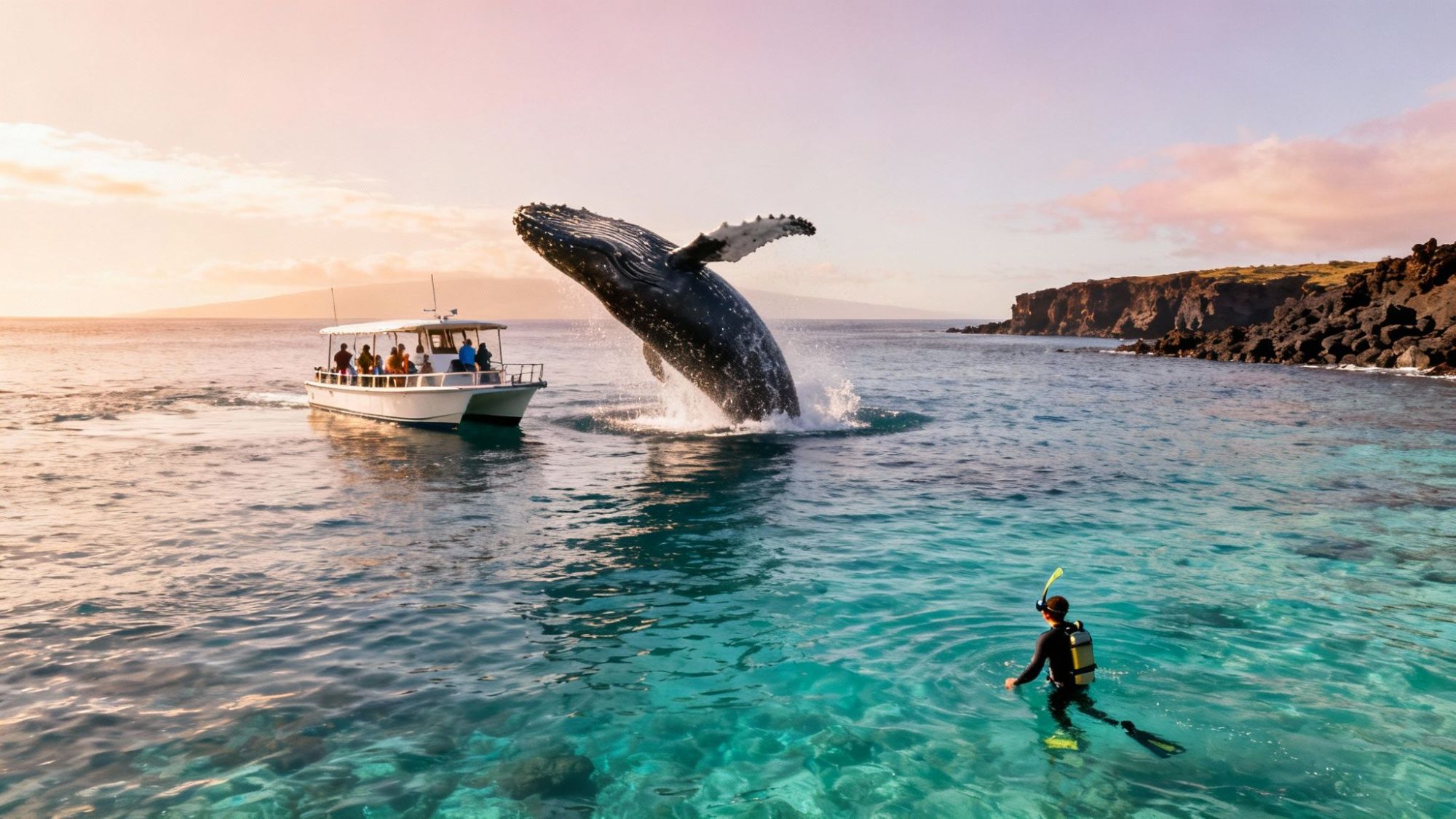
Welcome to the ultimate guide for whale watching in Kona, Hawaii! There's a reason this is a world-famous spot for witnessing the majestic humpback whale migration. The calm, protected waters off the Kona coast are the perfect sanctuary for these gentle giants to breed and calve, giving visitors a front-row seat to one of nature's most incredible shows.
Your Guide to Unforgettable Kona Whale Watching
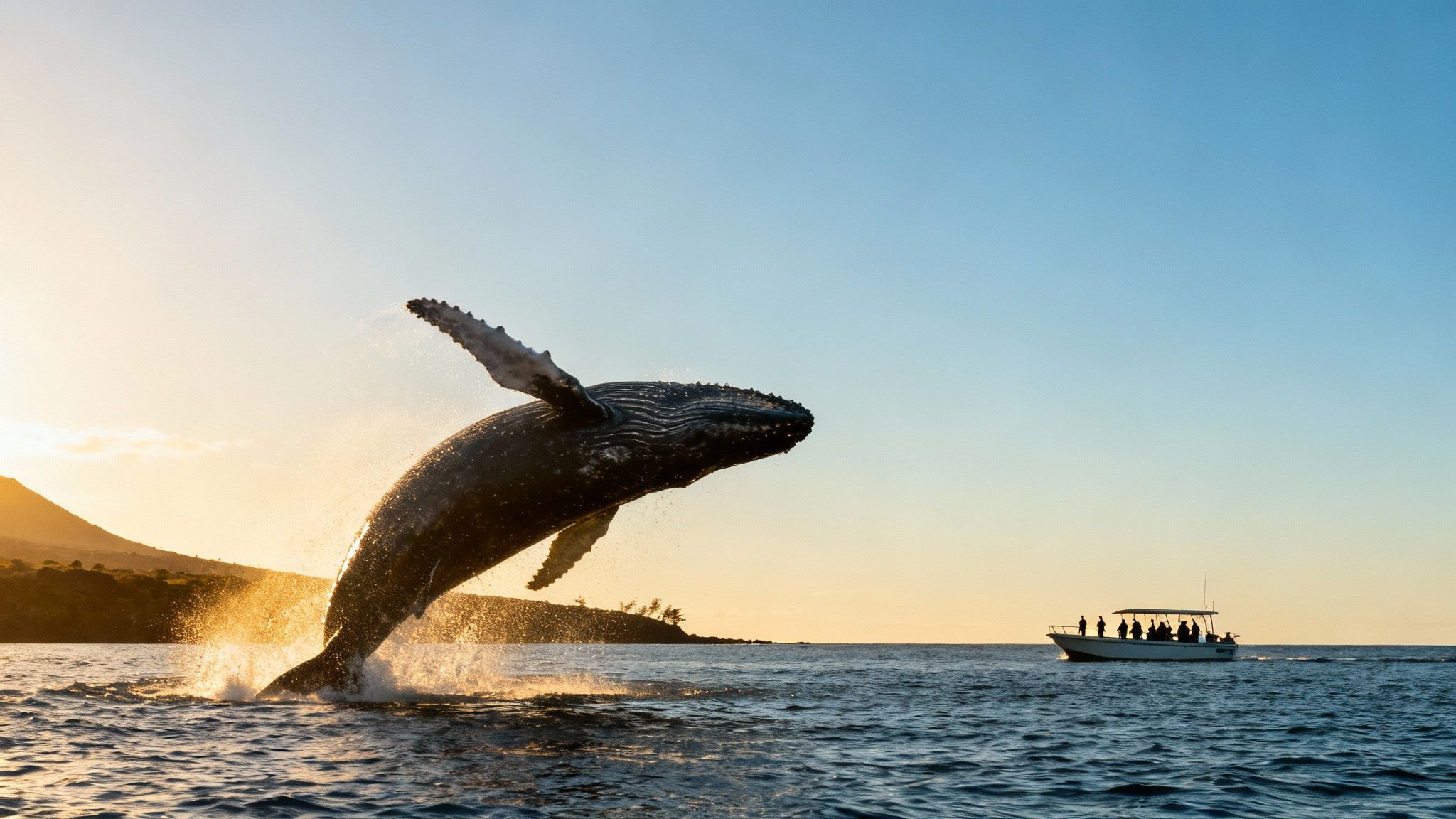
The Big Island is so much more than fiery volcanoes and lush landscapes; it's a critical stop on one of the planet's most epic journeys. Every winter, thousands of humpback whales travel all the way from the frigid waters of Alaska to the warm, sheltered bays of Kona. This annual pilgrimage creates an unparalleled opportunity for us to see these massive mammals in their natural element.
When you're ready for your own adventure, picking the right guide makes all the difference. As the top-rated and most-reviewed snorkel company in Hawaii, Kona Snorkel Trips is all about creating exceptional ocean experiences led by knowledgeable, passionate local experts. We're committed to safety, education, and responsible wildlife viewing to ensure every trip is one you'll never forget.
The Magic of the Humpback Migration
It's hard to wrap your head around the journey these whales make. Each year, over 8,000 humpback whales travel roughly 3,500 miles to the Kona coast between December and March. This instinct-driven migration is all about finding the calm, protected waters that Kona’s volcanic geography provides—the perfect place to breed, give birth, and nurse their young.
January and February are the peak months. On a good day, you can see an average of 3 to 6 whales every 15 minutes. It’s truly a sight to behold.
Whale watching in Kona isn't just another tour; it’s an immersive experience. Hearing a whale's song through an underwater hydrophone or feeling the splash from a 40-ton adult breaching nearby is a profound connection to the natural world that stays with you forever.
As you plan your trip, understanding the world of specialty recreation and marine experiences can make your adventure even richer. Kona offers a unique blend of awe-inspiring wildlife encounters and stunning scenery that makes it a premier destination. Getting ready for your tour means knowing what to look for—from powerful tail slaps to curious spyhopping, each behavior tells a story about the intricate social lives of these creatures.
This guide will walk you through everything you need to know to make your whale watching trip an unforgettable highlight of your Hawaiian vacation.
When's the Best Time for Whale Watching in Kona?
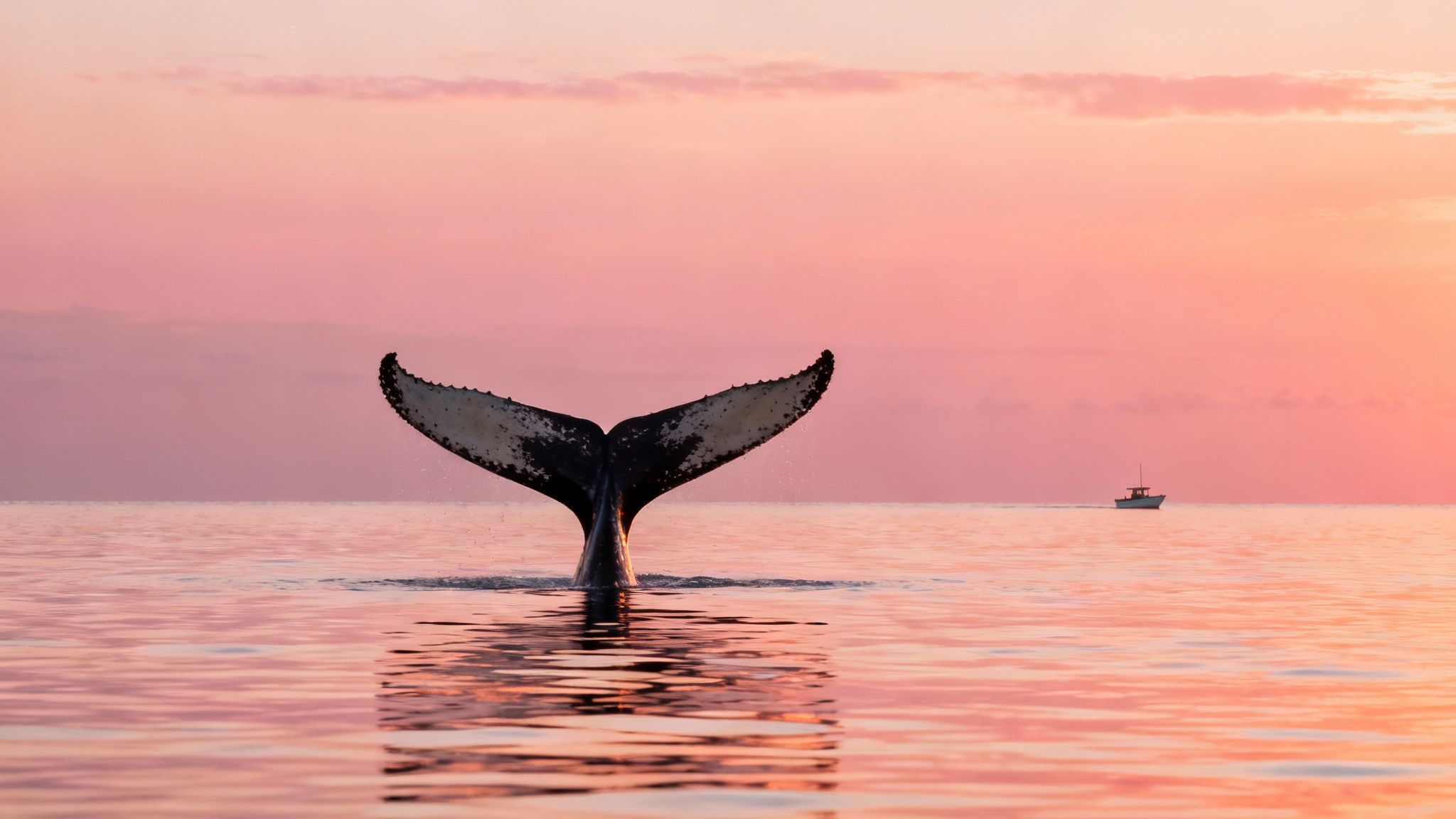
Timing is everything if you want to experience the true magic of whale watching in Kona. While these gentle giants grace our waters for a few solid months, knowing exactly when to book your tour can be the difference between a nice boat ride and a jaw-dropping, unforgettable encounter.
The official season runs from December through March, but the number of humpbacks and their activity levels change a lot within that window. Think of it like a bell curve. The first whales start trickling in around late November, with more and more arriving each week. Then, come April, they start heading back to their feeding grounds in Alaska, and the numbers begin to dwindle.
To help you plan, here's a quick look at what you can expect each month.
Kona Whale Watching Season At A Glance
This table gives you a monthly snapshot of the whale watching scene here in Kona, so you can pick the perfect time for your trip.
| Month | Whale Activity Level | Typical Behaviors Observed | Ocean Conditions |
|---|---|---|---|
| December | Moderate | First arrivals, occasional breaches, tail slaps. Calving begins. | Generally calm, pleasant weather. |
| January | Peak | High concentration of whales. Breaching, competitive pods, mothers with newborns. | Excellent. Calm mornings are common. |
| February | Peak | Highest activity. Frequent breaches, pectoral fin slapping, spyhopping. | Great conditions, though winds can pick up. |
| March | High to Moderate | Still very active, but numbers begin to decline late in the month. Last chance to see calves. | Can be windier, but still very good. |
| April | Low | Last few whales departing. Sightings become much rarer. | Variable as seasons change. |
As you can see, while the whole season is special, if you're looking for the most action, you'll want to aim for the heart of it.
The Peak of the Action: January and February
If you want the absolute best shot at seeing the full spectacle, January and February are the undisputed champions. This is when the Kona coast is practically buzzing with humpback activity. The sheer concentration of whales is at its highest, meaning sightings aren't just likely—they're frequent.
During these prime weeks, you’re most likely to witness those awe-inspiring breaches, where a 40-ton whale launches its entire body out of the water. It’s also when you’ll see dramatic "competitive pods"—groups of males chasing a single female, showing off with powerful tail and fin slaps. Best of all, it's the perfect time to spot newborn calves sticking close to their moms, learning the ropes in Kona’s warm, protected waters.
For a deeper dive into the seasonal specifics, check out our complete guide to the whale season on the Big Island.
Morning vs. Afternoon: Choosing Your Tour Time
Okay, so you've picked your month. Now, should you go in the morning or the afternoon? Honestly, both have their perks, and the best choice really comes down to your priorities.
The old saying, "the early bird gets the worm," often holds true out here. Morning tours typically have calmer seas because the winds haven't kicked up yet. This makes for a smoother ride, which is a huge plus for families with little ones or anyone who gets a bit queasy.
The light in the morning is also fantastic for photos. You get that soft, golden glow that really makes the whales pop, without the harsh glare of the midday sun. From what we see out on the water, the whales seem to be pretty active in the morning, too.
That said, afternoon trips have their own charm. The late afternoon light can be absolutely stunning, casting a warm glow over the water for a different kind of beautiful photo op. While the ocean might be a little choppier, the whale activity can be just as incredible.
At the end of the day, you're watching wild animals, and they don't exactly stick to a schedule. But by thinking about the ocean conditions and lighting, you can pick the time that works best for you and set yourself up for an amazing day on the water.
Comparing Kona Whale Watching Tour Options
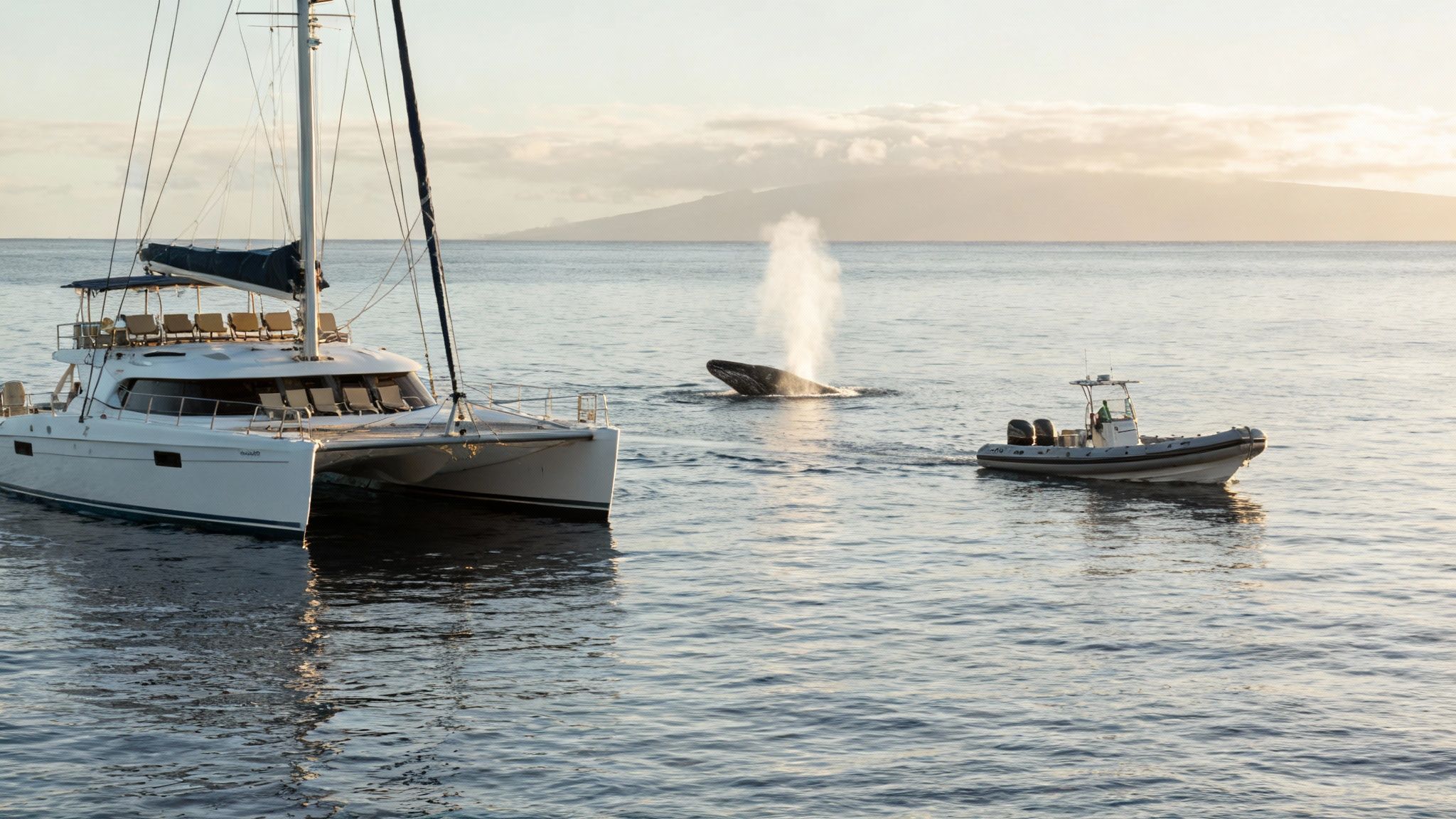
Picking the right time of year is half the battle; choosing the right tour for whale watching in Kona, Hawaii, is the other half. The boat you're on completely shapes your day on the water, dictating everything from how close you can get to your comfort level. Luckily, Kona has a wide range of vessels, each offering a totally different kind of adventure.
Forget a simple pros and cons list. The best way to look at this is by figuring out what you want from the experience. Are you bringing the kids and need a stable ride with snacks and a restroom? Or are you a die-hard photographer who needs to be at water level for that perfect shot? Your answer points you straight to the right boat.
Getting familiar with the various whale watching tours available in Kona will make sure you pick the perfect one for your group's adventure.
The Large Catamaran Experience
Big, roomy catamarans are a go-to choice for a lot of folks, and it's easy to see why. These boats are all about stability and comfort, making them a fantastic option for families, big groups, or anyone who's a bit worried about feeling green around the gills.
Their twin-hull design cuts down on the rocking and rolling, giving you a much smoother ride. Once you're on board, you'll find the kinds of amenities that just make the trip easier for everyone.
- Plenty of Shade: You’ll have a place to duck out of that strong Hawaiian sun.
- Onboard Restrooms: A game-changer, especially on longer tours or if you have kids with you.
- Multiple Viewing Decks: These give you a higher vantage point, which is great for spotting whales from far away.
The catamaran is about making whale watching accessible and comfortable. It's the ideal pick for a laid-back, family day where the journey is just as much fun as the sightings. You trade a bit of that up-close intimacy for a ton of amenities and a rock-steady ride.
This setup is perfect if you want to walk around, grab a drink, and enjoy a more social, relaxed day without missing out on the incredible views.
The Zodiac and Small Vessel Adventure
If you’re craving a more heart-pounding, personal encounter, a zodiac-style raft or small vessel delivers a completely different kind of thrill. These boats are quick, nimble, and ride low to the water, putting you practically eye-to-eye with the whales.
That proximity gives you a perspective you just can’t get from a bigger boat. You feel the sea spray, you hear the "whoosh" of their breath, and you really grasp the massive scale of these animals. It’s a powerful, humbling experience.
But this adrenaline rush comes with trade-offs. You're more exposed to the elements, and the ride is definitely bumpier, so it might not be the best fit for very young kids or anyone with back problems. Amenities are basic—think limited shade and no bathroom.
This is the tour for the adventurer or the serious photographer who values that low, unobstructed angle above all else. For a closer look at all the different boats, check out our guide to whale watching tours on the Big Island.
Finding Your Perfect Match
So, which one is for you? Let's walk through a couple of common scenarios to make it crystal clear.
Scenario 1: The Family with Young Kids
You’ve got a 5-year-old and an 8-year-old who are dying to see whales. Your main concerns are safety, comfort, and keeping them happy.
- Recommendation: Go with a large catamaran. The stability keeps seasickness at bay, the bathroom is a lifesaver, and the kids can move around without being cooped up. Plus, the high viewing decks make it easy for little ones to see over the railings.
Scenario 2: The Aspiring Wildlife Photographer
You're hoping to capture that one-in-a-million shot of a breaching humpback. Your absolute priority is getting the best angle and being able to move fast when the action happens.
- Recommendation: A zodiac or small vessel, no question. The low-to-the-water view makes for much more dramatic photos. The captain can whip the boat around in an instant to get you in the perfect position when a whale suddenly surfaces.
At the end of the day, the best whale watching in Kona, Hawaii tour is the one that matches what you're hoping to get out of it. Think about your group and what's important to you, and you'll be sure to pick an experience that you'll be talking about for years to come.
Of course. Here is the rewritten section, crafted to sound like an experienced local guide.
Discovering Kona's Year-Round Whale Residents
When people think of whale watching in Kona, Hawaii, they immediately picture the magnificent humpbacks that fill our waters every winter. And for good reason! But here’s something a lot of folks don't realize: the show doesn't end when the humpbacks head back north in the spring.
Kona's deep, nutrient-rich waters are a year-round sanctuary for a whole host of other cetaceans. This means that no matter when you visit, you have a fantastic shot at a memorable encounter out on the water. It’s a different experience than the peak humpback season, but every bit as rewarding.
Meet Kona's Permanent Marine Mammals
Beyond the seasonal migration, Kona’s coast supports a thriving community of resident whales and dolphins. These animals live, hunt, and raise their young right here, year-round.
The residents we see most often are the highly social short-finned pilot whales. These guys are incredibly intelligent and curious, often traveling in large, tight-knit family pods. With their dark, robust bodies and distinctive bulbous heads, they're easy to spot as they cruise through the calm Kona waters. It's always a treat to see them.
The Diversity of Kona's Waters
The secret to Kona's incredible biodiversity is its unique underwater geography. The seafloor drops off steeply just offshore, creating the perfect deep-water habitat for a rich variety of marine life. This is why our tours from April to November are just as exciting; the focus simply shifts from humpbacks to the other amazing creatures that call this place home.
And we're not talking about just a few animals. Scientific studies estimate there are at least 1,200 individual short-finned pilot whales living here permanently, with some numbers as high as 20,000 across the Hawaiian Islands. We also have two resident groups of melon-headed whales—a smaller Kohala population of about 400 to 500 individuals and a larger offshore group topping 8,000 whales. You can discover more about Kona’s diverse wildlife on our blog.
Kona's year-round whale populations transform it from a seasonal hotspot into a constant hub of marine activity. While humpbacks are the main event from December to March, the "off-season" provides a unique chance to encounter species like beaked whales, false killer whales, and pilot whales, showcasing the incredible depth of this marine environment.
This consistent presence of fascinating cetaceans is why Kona has earned its reputation as a world-class destination for marine enthusiasts, no matter the season.
Rare and Exciting Sightings
On top of our regular residents, Kona's deep waters sometimes offer up a real surprise—a glimpse of a rarer, more elusive species. These encounters are a true testament to the health of our local ecosystem and always get the whole boat buzzing, crew included.
Some of these special visitors include:
- False Killer Whales: Despite the name, they're actually a massive species of dolphin. Seeing their sleek, dark bodies slicing through the water is something you won't forget.
- Sperm Whales: These deep-diving giants are occasionally spotted further offshore. It takes a lucky day, but it happens!
- Beaked Whales: Several species of these shy, deep-diving whales live around Hawaii, but they are notoriously hard to spot, making any sighting a truly special event.
Every single trip out on the water holds the potential for a new discovery. That’s what makes whale watching in Kona, Hawaii, a genuine adventure any day of the year.
Practicing Responsible and Safe Whale Watching

There’s nothing quite like the moment a humpback whale surfaces near your boat. It’s a powerful, humbling experience, and it comes with a big responsibility. When you're whale watching in Kona, Hawaii, you're a guest in their home—a critical nursery where mothers nurse their newborn calves. Being a respectful guest isn't just a good idea; it's essential for the well-being of these incredible animals.
The most important step you can take is choosing a tour operator who is genuinely committed to conservation. The best companies don't just follow the rules; they champion them. They see every tour as a chance to educate their guests and foster a deep appreciation for the ocean. Their goal is to give you an unforgettable experience without stressing the whales or changing their natural behavior.
Following the Rules of the Ocean
To protect Hawaii's humpbacks, there are strict federal and state regulations in place. These aren't just suggestions—they are laws designed to give the whales the space they need, especially mothers with their vulnerable young.
The biggest rule is about distance. All boats are legally required to stay at least 100 yards away from humpback whales. That’s the length of a football field. This buffer minimizes disturbance and keeps the whales from feeling threatened by boat traffic.
It's a common myth that getting closer means a better tour. The truth is, a truly exceptional experience comes from watching natural, undisturbed behavior from a respectful distance. A great captain knows exactly how to position the boat for fantastic views while giving the whales their space.
Of course, sometimes a curious whale decides to break the rules and approach a boat on its own. If this happens, vessels are required to put their engines in neutral and just let the whale pass by. This is what we call a "whale mugging," and it's always on the animal's terms, making for a magical and safe encounter for everyone.
Your Guide to a Safe and Comfortable Trip
Beyond protecting the whales, making sure you’re safe and comfortable will make your day on the water that much better. A little bit of prep goes a long way when you're out on the open ocean.
Your safety starts before you even step on board. The Hawaiian sun is no joke, and the reflection off the water makes it even stronger. Make sure to pack and apply reef-safe sunscreen, wear polarized sunglasses to cut the glare, and bring a hat for extra shade.
Here are a few more tips to ensure you have a great day:
- Prevent Seasickness: The ocean is unpredictable, and even calm-looking days can have a bit of swell. If you're prone to motion sickness, it's smart to take medication beforehand. For more tips, check out our guide on how to prevent seasickness.
- Stay Hydrated: Drink plenty of water throughout the tour. It's easy to get dehydrated under the sun without realizing it.
- Listen to the Crew: Pay close attention to the safety briefing at the beginning of your tour. The crew will go over everything you need to know to stay safe on their vessel.
- Hold On: When the boat is moving, always keep one hand free to hold onto a railing for stability. It can get bumpy out there!
By following these simple guidelines and choosing a responsible tour operator, your whale watching in Kona, Hawaii adventure will be everything you hoped for: memorable, safe, and respectful of the magnificent animals you came all this way to see.
Planning Your Perfect Kona Ocean Adventure Day
A spectacular day of whale watching in Kona is about so much more than just the time you spend on the boat. With a little bit of planning, you can stitch together the perfect Big Island memory, turning a great tour into an unforgettable day. It really comes down to packing the right stuff and knowing how to pair your ocean adventure with other classic Kona experiences.
When you’re comfortable and prepared, you can focus on the important things—like the pure awe of watching a 40-ton humpback launch itself out of the water. Trust me, you don’t want to be distracted by a nasty sunburn when that happens.
Your Essential Whale Watching Checklist
Packing for a boat trip in Hawaii is pretty straightforward, but getting it right makes all the difference. The Kona sun is no joke, and when it reflects off the water, it’s even more intense. Protection is key.
Here’s a quick rundown of what you’ll want to have with you:
- Reef-Safe Sunscreen: Help protect our delicate coral reefs by choosing a mineral-based sunscreen. Look for zinc oxide or titanium dioxide on the label.
- Polarized Sunglasses: These are a game-changer. They cut the glare right off the water’s surface, making it easier to spot whales and saving your eyes from a lot of strain.
- A Hat with a Strap: A wide-brimmed hat is great for shade, but the wind on the water is sneaky. A chin strap will keep your hat on your head and not in the Pacific.
- Light Layers: Those early morning tours can start off a bit cool. A light jacket or long-sleeved shirt that you can peel off later is always a smart move.
- Camera with a Zoom Lens: Your phone will get the job done, but if you have a camera with a decent zoom, bring it. You'll capture some incredible, detailed shots of the whales from a respectful distance.
The single most overlooked item is often a reusable water bottle. Staying hydrated is critical under the warm Kona sun. Most tours provide water, but having your own bottle ensures you drink enough throughout the trip, keeping you feeling fresh and ready for adventure.
Crafting the Perfect Kona Itinerary
Your whale watching in Kona tour is the main event, but it slots in perfectly with other local activities. Most trips last around two to three hours, which leaves you a ton of time to explore what makes this coast so special.
My go-to recommendation is to book a morning tour. The ocean is usually calmer then, and you’ll be back ashore with the entire afternoon free. Once you're back on land, you can wander over to one of Kailua-Kona’s fantastic waterfront restaurants for lunch.
After you've refueled, think about heading up the mountain to a local coffee farm. The cool, misty air of the Kona coffee belt is such a refreshing change from the sunny coast. Kicking back for a tasting tour is the perfect way to wind down the afternoon.
Extending Your Ocean Exploration
If your whale watching trip leaves you craving more ocean time, you’re in luck—Kona has some of the best snorkeling in the world. It's easy to build a full day dedicated to marine life by tacking on another underwater adventure.
For history buffs and reef lovers, an afternoon trip out to Kealakekua Bay to see the Captain Cook Monument is a must. If you're looking for an exceptional guided experience in this protected marine life conservation district, check out Captain Cook Snorkeling Tours. They really know the area.
Or, for something truly unique, you can cap off your day with Kona's world-famous manta ray night snorkel. Imagine it: watching giant whales breach in the sunlight, then spending the evening as giant mantas glide gracefully below you in the moonlight. For a top-tier manta experience, Manta Ray Night Snorkel Hawaii is an outstanding choice. Combining these day and night ocean adventures creates a Hawaiian marine life experience you’ll never forget.
Of course, you've got questions! Planning a whale watching trip is exciting, and knowing what to expect makes it even better. We get asked all sorts of things by our guests, so we've put together some of the most common ones to help you get ready for an incredible day on the water.
Is a Whale Sighting Guaranteed on a Kona Tour?
This is the big one, isn't it? Since we're dealing with wild animals in their own backyard, nothing can ever be 100% guaranteed. However, during the peak season from January through March, your chances of seeing humpbacks are sky-high. Our experienced crews live and breathe these waters and have an uncanny knack for finding them.
Many of the best tour operators, including us at Kona Snorkel Trips, are so confident that they offer a guarantee. If you don't see a whale, you can come back out on another trip for free until you do. It's our way of showing you we're committed to giving you that unforgettable experience.
Think of a "guarantee" less as a promise to control nature and more as a testament to the sheer number of whales in Kona's waters. It’s a reflection of the operator's confidence and dedication to a quality tour.
What Kinds of Whale Behaviors Might I See?
This is where the magic really happens, because every single trip is different. You have the chance to see some truly spectacular displays of power and grace that you'll be talking about for years.
Here are a few of the show-stopping behaviors to look out for:
- Breach: This is the iconic money shot! A whale launches its entire massive body out of the water in a colossal splash.
- Tail Slap: You'll see (and hear) a powerful smack as a whale lifts its huge tail fluke and slaps it on the surface. It's one way they communicate.
- Pectoral Fin Slap: A whale rolls onto its side and just starts slapping its long pectoral fin on the water, over and over. It's another common social signal.
- Spyhopping: My personal favorite. A whale pokes its head straight up out of the water, almost as if it's trying to get a better look at you and the boat!
Can I Hear the Whales Sing During the Tour?
Yes, and trust me, it’s an experience that will give you chills. Most professional whale watching boats in Kona come equipped with a hydrophone, which is basically an underwater microphone. When the conditions are right, the crew can drop it into the deep blue and play the complex, haunting songs of the male humpbacks right over the boat’s speakers. Hearing that melody live connects you to the ocean in a way that’s hard to describe.
Are Kona Whale Watching Tours Family-Friendly?
Absolutely! We love seeing families out on the water. These tours are a fantastic way to introduce kids to the wonders of marine life. For families with little ones, or anyone who's a bit worried about motion sickness, I'd recommend choosing a larger, more stable boat like a catamaran. Booking a morning tour is also a great idea, as the seas are generally at their calmest then, making for a smooth and comfortable ride for everybody.
Ready to witness the magic of the humpback migration for yourself? Kona Snorkel Trips offers intimate and respectful whale watching tours with expert guides who are genuinely passionate about sharing the wonder of Kona's marine life. Book your adventure today for an experience you'll never forget.