
Whale Watching Hawaii Big Island A Complete Tour Guide
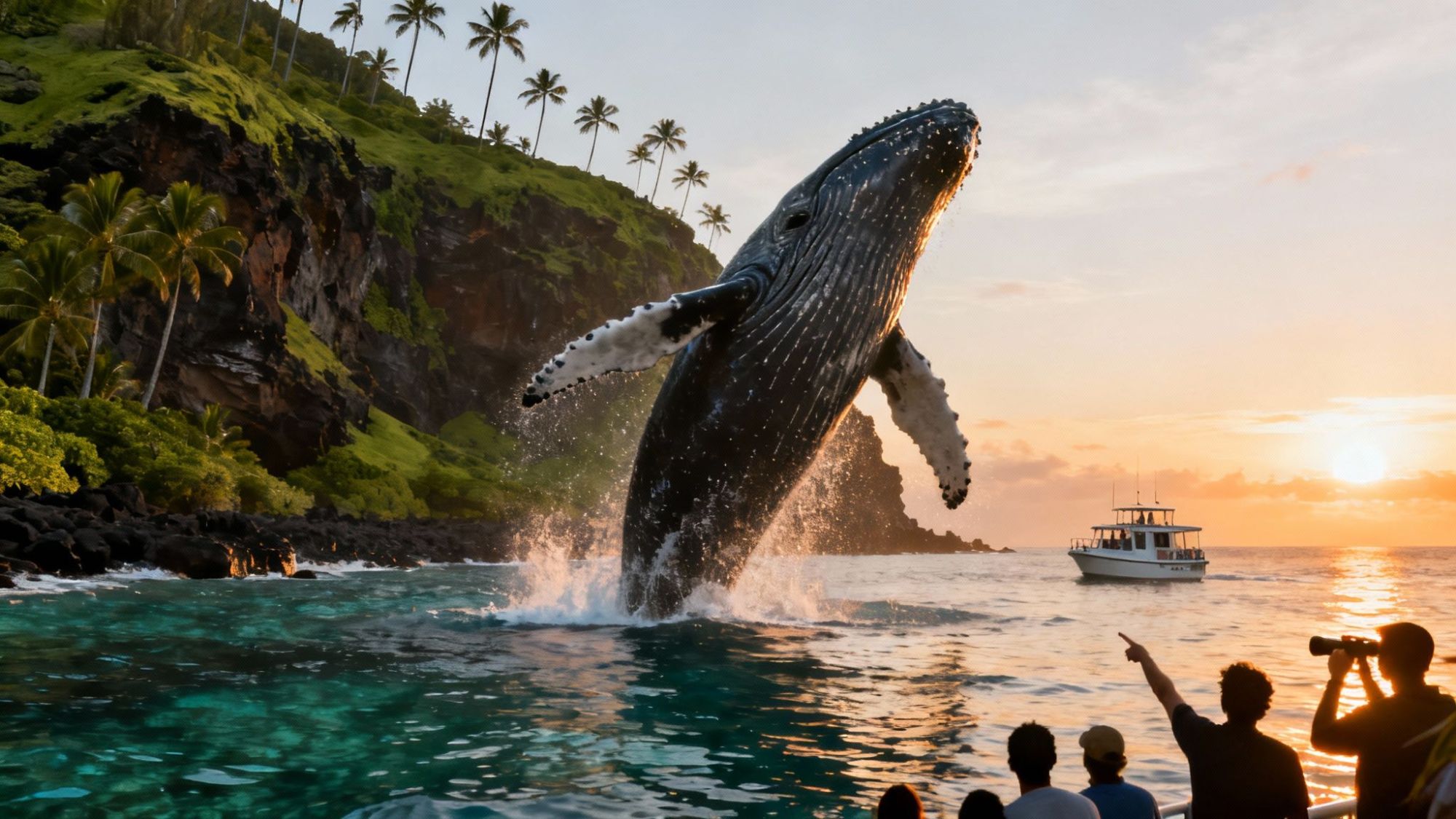
There’s nothing quite like the sight of a 40-ton humpback whale exploding out of the ocean, especially when it’s set against the Big Island’s dramatic volcanic coastline. From December through March, the waters off Hawaii become one of the world's most incredible stages for wildlife. This isn’t just another boat tour; it’s a front-row seat to an ancient and absolutely awe-inspiring migration.
Your Ultimate Guide to a Big Island Whale Encounter
As the top rated & most reviewed snorkel company in Hawaii, Kona Snorkel Trips is excited to share this guide with you.
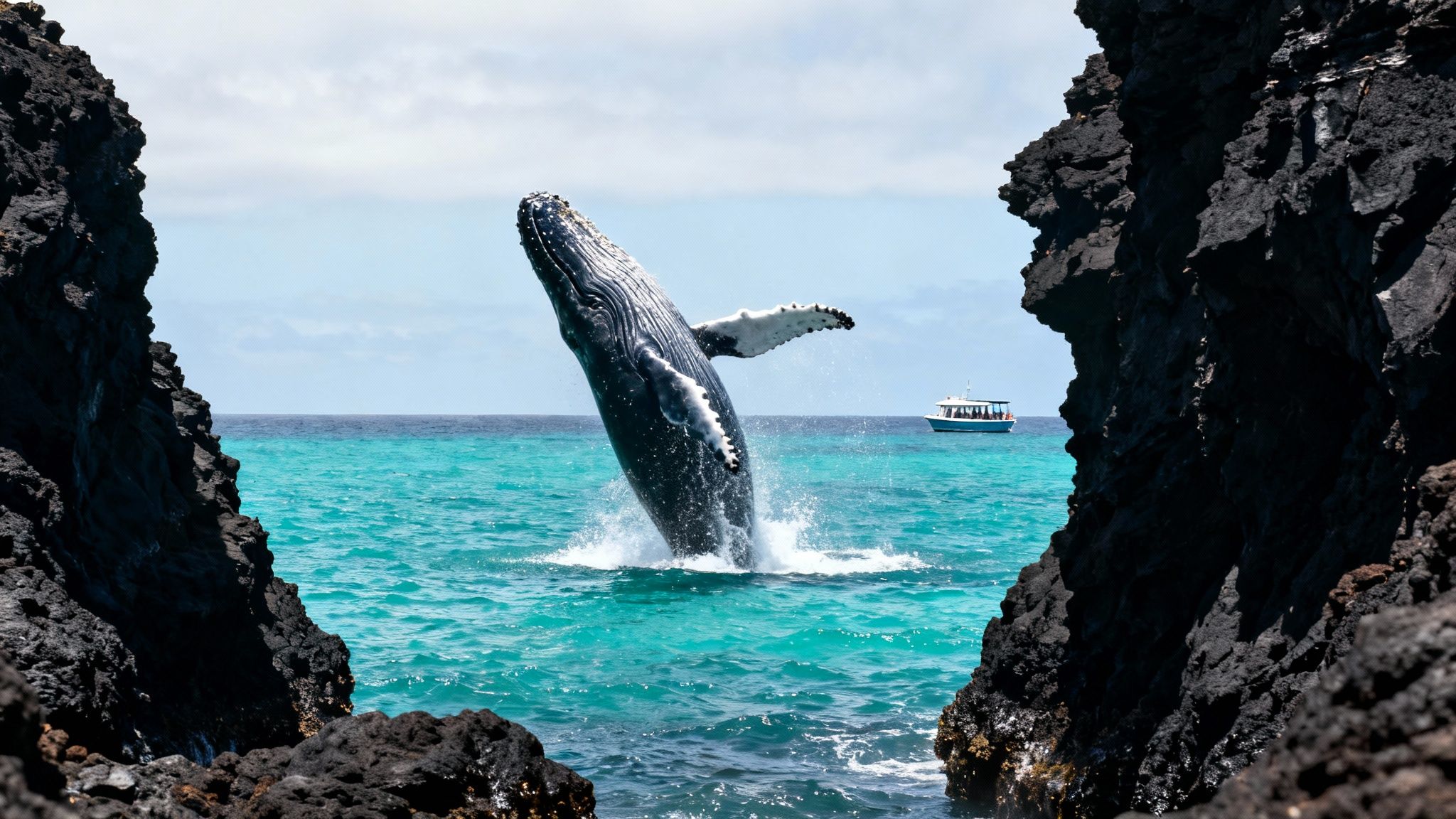
Every single winter, the warm, sheltered waters off the Kona coast host one of nature’s grandest events. We've put together this guide to unpack everything you need to know about why the Big Island is one of the best places on the planet to see this spectacle for yourself.
This annual pilgrimage involves thousands of humpback whales traveling over 3,000 miles from their chilly feeding grounds in Alaska. They make this incredible journey fueled entirely by their fat reserves, swimming nonstop for weeks to reach their tropical destination.
Why Hawaii's Big Island
So, why this massive migration? The reason is both simple and profound. Hawaii's calm, warm, and relatively shallow waters are the perfect spot for humpbacks to carry out the most important parts of their lives.
- A Safe Nursery: Pregnant females come here to give birth, keeping their newborn calves away from the frigid northern waters and predators like orcas.
- Mating Grounds: The area transforms into a competitive arena where males show off for females with breathtaking displays of power and acrobatics.
- A Place to Grow: Newborns don't have the thick blubber adults do, so they thrive in the warm ocean while they nurse and build strength for their first trip back north.
This natural cycle turns the waters off the Big Island into a bustling hub of activity. At the season's peak in February, over half of the North Pacific's 26,000 humpbacks—that’s somewhere between 12,000 to 18,000 animals—gather here after their long swim.
What This Guide Covers
To make sure you have the absolute best experience, this guide will walk you through all the essentials. We’ll get into the best times to visit, where to look for whales (from both land and sea), and what to expect from different types of tours.
When you join a tour, you’re not just a spectator; you're witnessing a vital chapter in the life of one of the planet's most majestic creatures. This experience connects you directly to the raw, untamed spirit of the ocean.
We'll also give you some pointers on choosing an adventure that's both thrilling and respectful of these gentle giants. For those looking to pack more into their day, many operators offer more than just whale watching. You can often find a fantastic wildlife watching and historical sightseeing tour that highlights the rich biodiversity and culture of the Kona coast. Our goal is to give you everything you need to plan an unforgettable and responsible encounter with these amazing animals.
Navigating the Rhythms of the Big Island Whale Season
Timing is everything when it comes to whale watching on the Big Island. While you can technically spot humpbacks anytime from November through April, the experience you'll have on the water changes dramatically from one month to the next. Think of it like a massive, months-long party: the first arrivals in late fall are the early birds, but January and February are when the celebration is truly in full swing.
Getting in tune with this natural rhythm is the real secret to planning your perfect trip. Are you hoping to witness the raw power of males competing for a mate, or the quiet, tender moments between a mother and her brand-new calf? Your answer will point you to the best window for your visit.
The Ebb and Flow of the Humpback Migration
The whale season doesn't just switch on and off like a light. It builds to a spectacular crescendo and then slowly, beautifully fades away. Every single phase of the season offers something unique, all of it driven by the powerful instincts of the thousands of humpback whales that journey down from Alaska.
-
Early Season (November – December): The first scouts begin to show up, often subadults and newly pregnant females. Sightings are a bit more sporadic, but the feeling of spotting that first whale of the season is electric. It’s generally a quieter, more peaceful time on the water.
-
Peak Season (January – March): This is it. This is the heart of the action. The waters are absolutely bustling as the bulk of the humpback population arrives. It's when you have the best chance of seeing the most dramatic behaviors, from jaw-dropping breaches to super-energetic competitions between males.
-
Late Season (April – May): The last to head back north are often the new moms with their calves. By now, the calves have had a few months to pack on the pounds and get stronger. You'll often see them practicing their new skills, trying out breaches and playing near their watchful mothers. It's a truly touching way to see the season wind down.
Why Peak Season Is So Spectacular
There's a good reason everyone talks about January and February as the absolute peak months. The sheer density of whales in the water is at its highest, which means the frequency—and quality—of your sightings goes way up. A trip during this window gives you the best odds of witnessing the entire spectrum of humpback behavior.
You’re far more likely to see big, active groups of whales. One of the most incredible sights is a "competitive pod," where you might see several massive males chasing a single female. This isn't a gentle courtship; it involves dramatic pursuits, powerful tail slaps, and breathtaking breaches as each one tries to prove they're the strongest.
The sheer concentration of whales during peak season transforms the ocean into a dynamic stage. Every direction you look holds the potential for an unforgettable encounter, making it the most reliable time for a truly awe-inspiring whale watching adventure.
At the same time, this is also when many calves are being born. While moms with newborns tend to stick to shallower, more protected waters, there is nothing more moving than seeing a tiny (well, tiny for a whale!) calf surface for a breath right next to its gigantic mother.
To help you visualize the whole season, here's a quick breakdown:
Big Island Whale Watching Season at a Glance
This table breaks down the whale watching season month by month, highlighting typical whale activity and sighting probability to help you plan your trip.
| Month | Whale Activity | Sighting Probability |
|---|---|---|
| November | First arrivals, mainly subadults. Sightings are less frequent. | Low to Moderate |
| December | Population builds. More consistent sightings. | Moderate |
| January | Peak activity begins. High density of whales, competitive pods. | Very High |
| February | Absolute peak. Highest concentration of whales and diverse behaviors. | Very High |
| March | Still peak season, but activity starts to slow. Mothers/calves visible. | High |
| April | Many whales begin migration north. Mothers with calves are common. | Moderate |
| May | The last few stragglers, typically mothers and calves, depart. | Low |
No matter when you come, each phase has its own magic. For a deeper dive into what each month holds, you can learn more about the Big Island whale watching season in our complete guide.
Ultimately, it all comes down to what you want to see. For the highest odds of action-packed behaviors and multiple sightings, you just can't beat the peak. But for a calmer experience that might offer a profoundly touching glimpse of a mother and her calf, the later weeks of the season can be just as rewarding.
Finding the Best Whale Viewing Spots on the Island
Knowing where to look for humpback whales is just as important as knowing when. While you could get lucky anywhere along the Big Island's western coast, some spots are legendary for a reason, consistently delivering more dramatic and frequent encounters.
From windswept cliffside parks to the calm, protected waters just offshore, the island’s geography sets the perfect stage for an unforgettable show.
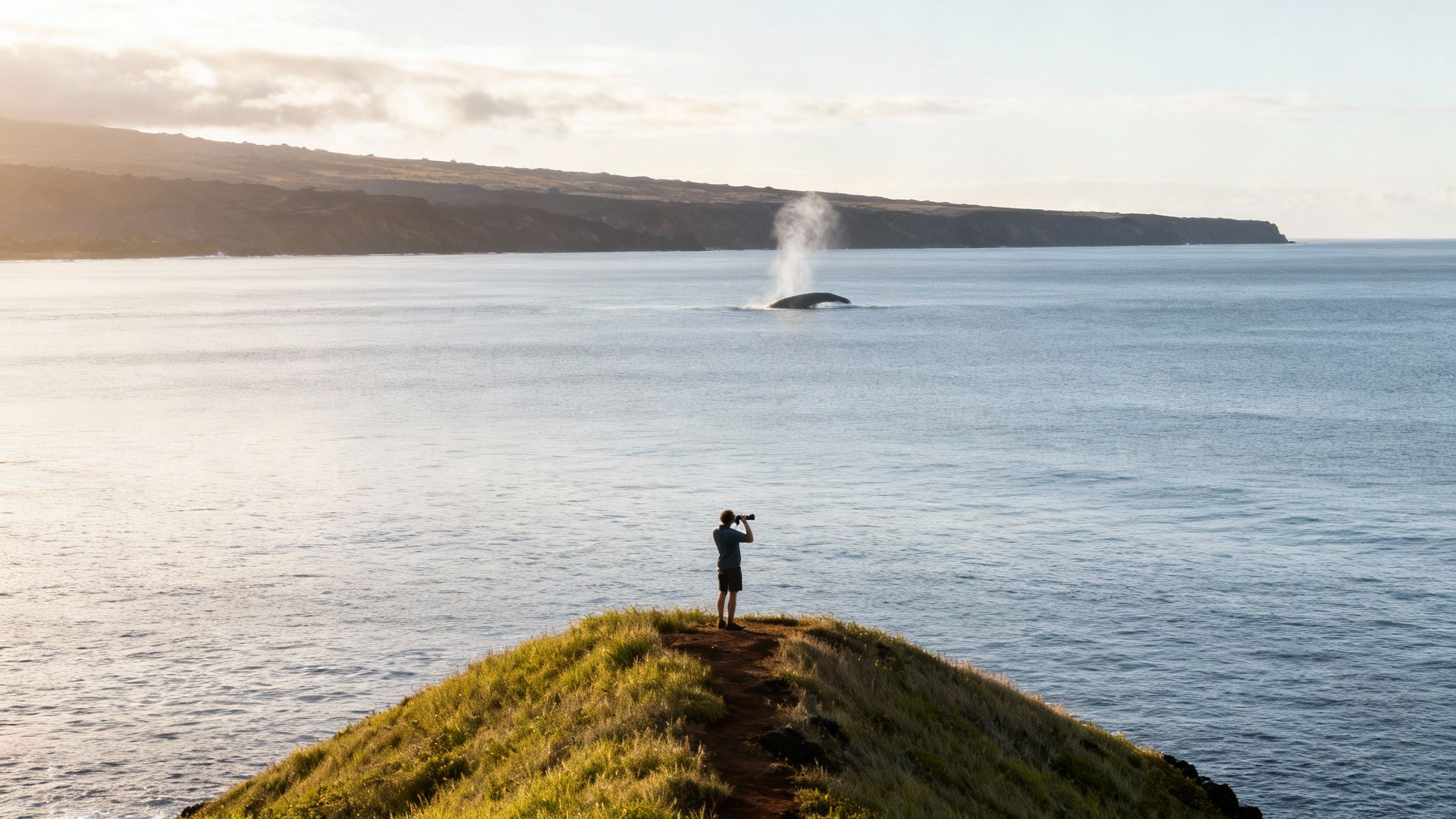
Whether you prefer the stability of solid ground or the immersive feeling of being right there on the water, you've got incredible options. The key is understanding what makes each location special.
Prime Land-Based Viewing on the Kohala Coast
You absolutely do not need a boat to witness the magic. The island's sun-drenched Kohala Coast is famous for its spectacular land-based viewpoints, giving you panoramic ocean vistas from high above the water.
An elevated vantage point is your best friend when scanning the horizon. It makes spotting those distant spouts, breaches, and tail slaps so much easier. My advice? Bring a good pair of binoculars, find a comfy spot, and just be patient. The morning hours often bless you with the calmest, glassiest water, making a whale's breath stand out like a puff of smoke against the deep blue sea.
Here are a few of the top spots to post up:
- Puʻukoholā Heiau National Historic Site: The name literally means "hill of the whale," which tells you everything you need to know. This culturally significant site offers incredible, sweeping views over the ocean where humpbacks are a common sight all season.
- Lapakahi State Historical Park: Another fantastic spot with high bluffs overlooking the water, this park gives you a clear, unobstructed line of sight for miles. It gets hot and dry out here, so be sure to bring plenty of water and sun protection.
- Kapaʻa Beach Park: Located near Lapakahi, this park has the wonderful advantage of shaded picnic pavilions. You can comfortably watch for whales for hours, shielded from that strong Hawaiian sun.
These spots are so reliable, they're key locations for the annual community whale count. The Kohala coast consistently logs two to three times more sightings than other areas of the island. During the peak months of January and February, volunteers here average 3 to 6 whales per 15-minute interval. That's a testament to the sheer number of whales that love this coastline.
The Unmatched Experience of a Boat Tour
Watching from shore is a thrill, but nothing—and I mean nothing—compares to being out on the water. A boat tour offers a perspective that land simply cannot match, bringing home the true scale and majesty of these gentle giants.
The Big Island’s west coast, especially around Kona and Kohala, is uniquely perfect for this kind of adventure. The island’s massive volcanoes, Mauna Kea and Hualālai, act as a natural wall, shielding the leeward coast from the powerful trade winds. This creates some of the calmest ocean conditions in all of Hawaii, making for a smooth, comfortable ride.
Getting out on the water transforms you from a distant observer into an intimate guest in the whales' world. The calm, clear waters of the Kona coast allow for close, respectful encounters that are simply not possible from shore.
This protective shield is exactly why the waters here are so clear and inviting—not just for us, but for the whales themselves. Pregnant females and new mothers with their calves specifically seek out these tranquil bays to rest, nurse, and teach, away from the rougher open ocean.
Taking a tour from Kailua-Kona puts you right in the heart of this protected marine sanctuary. An experienced crew knows exactly where to look and how to read whale behavior, dramatically increasing your chances of seeing those spectacular breaches and spy-hops. To get a better sense of what these trips are like, check out our guide on whale watching in Kailua-Kona.
Ultimately, a boat tour is an immersive, educational, and deeply moving experience that connects you directly with the awe-inspiring world of the humpback whale.
How to Choose Your Perfect Whale Watching Tour
Picking the right boat for your whale watching Hawaii Big Island adventure can feel a little overwhelming with all the options out there. But it really just boils down to matching the tour with your own personal vibe. Once you get a feel for what each type of boat offers, you'll be able to confidently book an excursion that's the perfect fit for you and your crew.
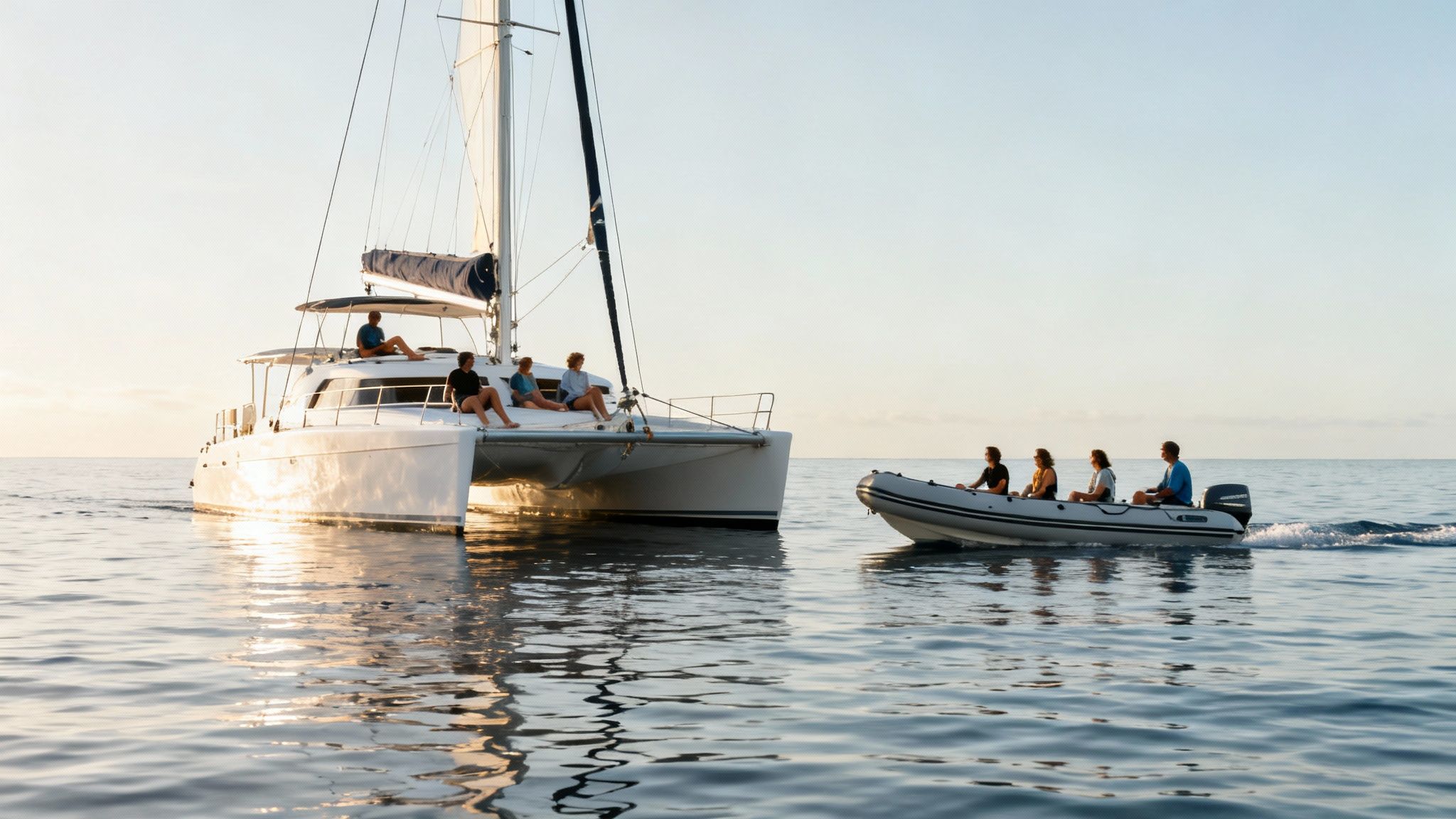
From big, comfy catamarans that are great for families to zippy little rafts that get you right in the action, your choice of vessel really sets the tone for the entire day.
Comparing Your Vessel Options
Think about it like choosing a car for a road trip. Are you the type who wants a big, spacious RV with all the comforts of home? Or would you rather have a stripped-down Jeep that can handle any off-road adventure? Whale watching boats offer that same kind of variety.
-
Catamarans and Larger Vessels: These are the workhorses of the whale watching world. Thanks to their dual-hull design, they are incredibly stable, making them a fantastic choice if you've got young kids or if anyone in your group is worried about seasickness. They usually come with perks like restrooms, shady spots to sit, and snacks, making the whole trip feel relaxed and comfortable.
-
Zodiacs and Raft-Style Boats: If you're looking for a bit more of a thrill, these smaller, faster boats deliver an adrenaline-pumping, close-to-the-water experience. They're super nimble, so the captain can quickly zip over to a splash in the distance. Just be ready for a bumpier ride and a bit more spray—it's an adventure in every sense of the word.
-
Private Charters: For the ultimate personalized day on the water, nothing beats a private charter. You get the whole boat to yourselves, which means you can work with the captain to create your dream itinerary. This is perfect for serious photographers, special celebrations, or any group that wants a more intimate whale encounter without the crowds.
Choosing a tour isn't just about the boat; it's about the philosophy of the operator. An eco-conscious company prioritizes the whales' well-being, ensuring your incredible experience doesn't come at their expense. This commitment is the hallmark of a truly exceptional tour.
What Makes a Tour Truly Stand Out
Beyond the boat itself, a few key things can take a tour from "good" to "unforgettable." These are the little details that turn a simple sightseeing trip into a genuinely rich and educational experience.
First up is the crew. A top-notch tour is run by a skilled captain and, most importantly, a marine naturalist guide. These folks are more than just whale spotters; they give you a play-by-play of the behaviors you're seeing, explaining the science behind every breach and tail slap. They completely bring the ocean to life.
Another absolute game-changer is a hydrophone. The crew lowers this underwater microphone into the water so you can listen to the haunting songs of the male humpback whales. Hearing their complex calls echoing up from the deep is a powerful experience that connects you to their world in a way that just seeing them can't.
Finally, always go with an operator that strictly follows federal laws, keeping a respectful distance of at least 100 yards from the whales. This isn't just about safety; it shows a real commitment to conservation. Responsible tourism is what helps protect the incredible marine life you've come all this way to see. To get an idea of what a premier experience looks like, check out these Kona whale tours that tick all these boxes.
Learning to Speak Whale and Spot Other Marine Life
A whale watching tour on the Big Island is so much more than just seeing a spout on the horizon. It’s about learning to understand an ancient, powerful language spoken through incredible displays of energy and grace. Once you know what you’re looking at, the whole experience becomes richer and way more memorable.
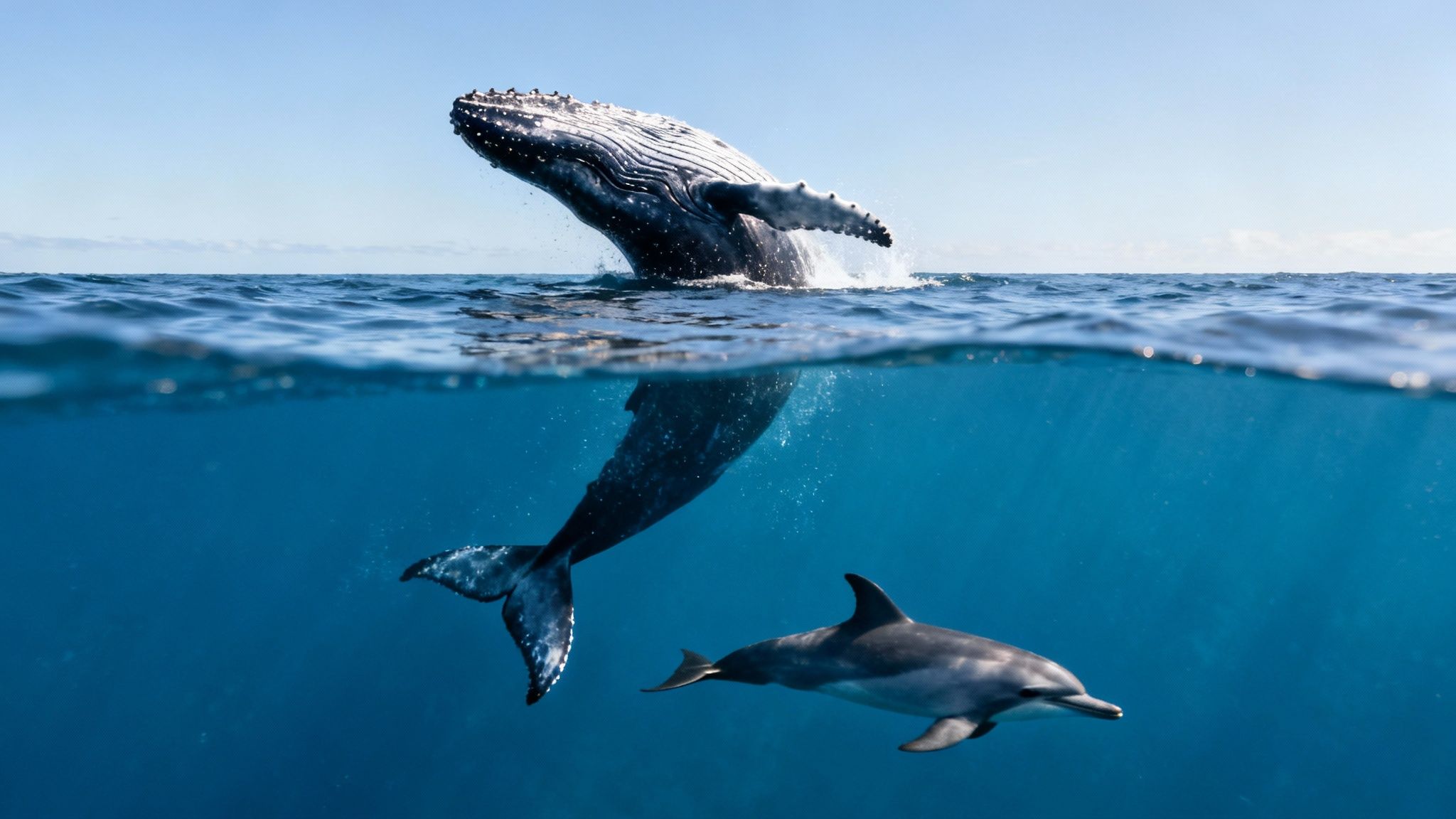
This guide will help you translate the most common humpback behaviors, turning you from a casual spectator into someone who can really appreciate one of nature's greatest shows.
A Visual Guide to Whale Behavior
Every move a humpback makes has a purpose, whether they're communicating, showing off, or just having a good time. Learning to spot these behaviors adds a whole new layer to every encounter out on the water.
- The Breach: This is the one everyone dreams of seeing—that iconic, full-body leap straight out of the water. Scientists have a few theories: it could be a way to talk to other whales far away, an effort to shake off pesky skin parasites, or maybe, just pure joy.
- The Tail Slap (Lobtailing): You'll hear this one before you see it. It's a loud, forceful smack of the tail (fluke) on the water's surface. Think of it as a warning shot to other whales or a show of dominance when things get competitive.
- The Spyhop: This one feels personal. A whale will poke its head straight up out of the water, almost like it's treading water. It’s a moment of pure curiosity, as if the whale is just as interested in checking you out.
One of the most surreal things you can experience on a tour is listening to the complex songs of male humpbacks through a hydrophone. These haunting melodies can travel for over 20 miles underwater and are a crucial part of their mating rituals.
Beyond Humpbacks: A Diverse Marine Safari
While the humpbacks are definitely the stars of the winter season, any whale watching Hawaii Big Island tour can quickly turn into a full-blown marine safari. The same nutrient-rich waters that bring in the whales support a huge variety of other incredible animals.
Keep your eyes peeled for pods of spinner dolphins, famous for their acrobatic leaps and spins. You might also catch a glimpse of bottlenose dolphins or the more elusive spotted dolphins playing in the boat's wake.
The Big Island is also home to several resident whale species you can spot year-round, including pilot whales, false killer whales, and even sperm whales in the deeper offshore waters. The entire ecosystem is vibrant and alive. To get familiar with the smaller, colorful characters of the reef, check out our handy Hawaiian fish identification guide.
The Big Island's Resident Whales
Beyond the seasonal migration of humpbacks, the Big Island's waters are a permanent home to other fascinating whale species. For instance, a pod of 400-500 melon-headed whales lives off the Kohala coast, part of a larger group of over 8,000 that call the deep waters around the Hawaiian Islands home.
These waters also hold a darker history. Over 300,000 sperm whales were killed in the waters off Hawaii between the 1800s and 1987. You can learn more about the Big Island's diverse whale populations and history and the conservation efforts now in place.
Your Essential Pre-Trip Planning Checklist
A little prep work before you head out on the water can make all the difference. Get these few things sorted, and you can spend your time focused on the whales, not wondering why you didn't bring a jacket or feeling a little queasy. This is our final rundown of practical tips to make sure your whale watching Hawaii Big Island trip is smooth, fun, and totally unforgettable.
From what to wear to how to book, we've got you covered. The goal is to step on that boat feeling confident and ready for one of the best experiences of your life.
What to Pack for Your Ocean Adventure
Dressing for a day at sea is all about smart, comfortable layers. It might be sunny and warm on the Kona coast, but things can change fast once you're on the open ocean.
- Layered Clothing: A t-shirt is a good start, but definitely bring a windbreaker or a light jacket. It’s almost always cooler on the water than it is on land, especially for those early morning tours.
- Polarized Sunglasses: Seriously, don't leave these behind. They cut the glare off the water like nothing else, making it so much easier to spot a distant spout or see a whale just below the surface.
- Reef-Safe Sunscreen: This is actually a Hawaii state law. Make sure your sunscreen is mineral-based (look for zinc oxide or titanium dioxide) to help protect our fragile coral reefs. Slather it on before you board.
- Camera with a Zoom Lens: Your phone will work in a pinch, but a real camera with a decent zoom lens will get you those incredible, detailed shots without breaking any distance rules.
- Binoculars: A good pair of binoculars can turn a distant splash into a front-row seat for a full breach. It just brings the action that much closer.
Staying Comfortable on the Water
The waters off the Kona-Kohala coast are known for being pretty calm, but it never hurts to be prepared for a little motion. The last thing you want is seasickness getting in the way of the show.
If you know you’re prone to motion sickness, think about taking an over-the-counter remedy before the tour starts (just follow the directions on the box). Once you're on the boat, find a spot with plenty of fresh air and try to keep your eyes on the horizon—it really helps. Staring down at your phone or camera for too long is a classic mistake that can make things worse. Sipping water and nibbling on some ginger chews or crackers can also work wonders.
Responsible wildlife viewing is everything. Federal law is crystal clear: all boats have to stay at least 100 yards away from humpback whales. To put that in perspective, that's about the length of a football field. This rule is crucial for keeping the whales, especially new moms and their calves, safe and stress-free.
Booking Your Tour Smartly
During peak season, which runs from January through March, these whale watching tours are incredibly popular. They can, and do, book up weeks ahead of time. To make sure you don't miss out, it's absolutely essential to reserve your spot well ahead of time. This is the best way to lock in your preferred date and get a spot on one of the better small-group tours.
And finally, getting inspired is part of the fun of planning any trip. For more ideas and general tips as you put your Big Island adventure together, you might want to explore other top travel blogs to see what else is out there.
Common Questions About Big Island Whale Watching
Let's put the finishing touches on your travel plans. I've pulled together answers to the questions I hear most often from guests getting ready for their first whale watching adventure here on the Big Island. Think of this as your final check-in to make sure you're feeling confident and ready for what's to come.
What Is the Absolute Best Month for Whale Watching?
While you can see whales all season long (November through April), if you want to hit the absolute peak, book your trip for February. It's the undisputed champion of whale season.
This is when the highest concentration of humpbacks has made it to our warm waters. It gives you the best odds of seeing it all—from the raw power of competitive pods to the incredibly tender moments between a mother and her brand-new calf.
Can I See Whales from Shore?
You bet! The Big Island is a fantastic place for land-based whale watching. The key is to get some elevation. Head to the scenic lookouts along the Kohala Coast, like the one at Puʻukoholā Heiau National Historic Site. Grab a good pair of binoculars, and you can easily spot the tell-tale spouts and breaches from there.
But, if you want that truly immersive, goosebumps-on-your-arms experience, you have to get on the water. Nothing compares to seeing their massive scale up close or hearing their songs through a hydrophone dropped right into the ocean. For that, a boat tour is a must.
Are Whale Sightings Guaranteed on a Tour?
Since we're dealing with wild animals operating on their own schedule, no company can honestly give you a 100% guarantee. However, I can tell you that the best local operators have incredibly high success rates, especially during the peak months of January through March.
It's worth noting that many of the most reputable tour companies are so confident they'll find whales that they offer a "whale guarantee." This usually means if you don't see any whales, you get to come back for another trip, free of charge. It's always a good idea to ask about the specific policy when you book.
What Is the Best Way to Avoid Seasickness?
The waters off the Kona-Kohala coast are famously calm, but it never hurts to be prepared, especially if you know you're prone to motion sickness. Your best bet is to take an over-the-counter remedy before the tour starts.
Once you're on the boat, stay outside in the fresh air and keep your eyes locked on the horizon—it's the most stable thing you can see. Looking down at your phone or through a camera lens for too long is a classic mistake that can make you feel worse. Staying hydrated and nibbling on simple snacks like crackers or ginger chews also helps a ton.
Ready to see the magic of the humpback migration for yourself? Come join us at Kona Snorkel Trips. We run intimate, small-group tours that get you closer to the action while always putting safety and respect for these incredible animals first. Book your unforgettable whale watching adventure today!