
Your Ultimate Guide to Whale Watching Hawaii Big Island
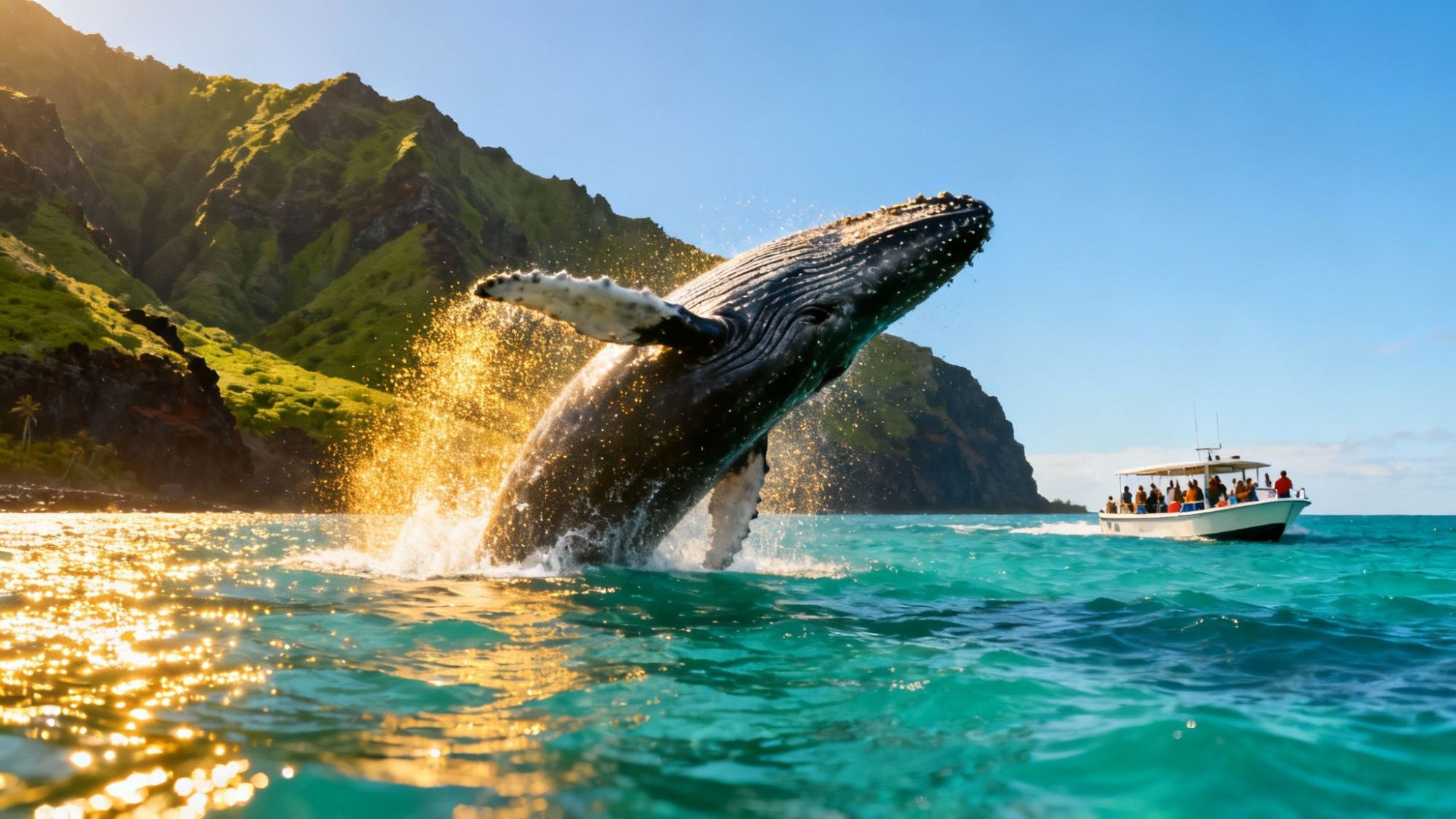
Picture this: a 40-ton humpback whale explodes from the turquoise Pacific, its entire body airborne for a breathtaking moment before crashing down in a splash that seems to echo for miles. This isn't a scene from a nature documentary—it's just another incredible day during whale watching season here on the Big Island.
Your Unforgettable Whale Watching Adventure Awaits
Witnessing the annual humpback migration is one of the most powerful, awe-inspiring events you can experience. The Big Island is a world-class stage for this spectacle, where the warm, protected waters offer a perfect sanctuary for these gentle giants to mate, give birth, and nurse their newborn calves.
To make sure you're in the best hands for this once-in-a-lifetime adventure, we want to give a shout-out to Kona Snorkel Trips. As Hawaii's top-rated and most-reviewed tour company, our local knowledge and deep passion for marine life are what turn a good trip into a truly unforgettable one.
Planning Your Adventure
This guide is built to give you everything you need to plan the perfect whale watching trip. We'll get into the best times to visit, the top spots for sightings (from both shore and boat), and how to pick an experience that fits your vibe. After all, understanding the why behind this incredible migration makes seeing it in person that much more meaningful.
Every single year, thousands of humpback whales travel over 3,000 miles from their feeding grounds in Alaska to the Hawaiian Islands. This epic journey is one of the longest annual migrations of any mammal, driven entirely by the instinct to find safe waters for the next generation.
To get you started, we've put together a quick-glance table with all the essential info. Use it as your cheat sheet for planning your adventure right now.
Big Island Whale Watching At a Glance
Here’s a quick rundown of the must-know details for planning your whale watching trip on the Big Island.
| Aspect | Details |
|---|---|
| Peak Season | January through March offers the highest concentration of whales. |
| Full Season | Whales are typically present from December through April. |
| Primary Species | North Pacific Humpback Whales (Megaptera novaeangliae). |
| Best Viewing Area | The Kohala Coast (northwest) is famous for its high sighting rates. |
| Tour Departure Hub | Most boat tours leave from the Kona coast. |
| Key Behaviors | Look for breaching, tail slaps, spy-hopping, and spouting. |
| Regulations | Boats must stay at least 100 yards away from all whales. |
Think of this as your starting point. Now, let's dive deeper into making your trip happen.
The Epic Journey of Humpback Whales to Hawaii
Every year, something truly magical happens off the coast of the Big Island. Thousands of North Pacific humpback whales complete one of the most incredible migrations on the planet—a grueling 3,000-mile swim from the chilly, food-filled waters of Alaska to the warm, welcoming embrace of Hawaii.
Think of it as an instinct-driven pilgrimage. This long trip isn't for a vacation; it's all about family. The islands are their ancestral breeding and calving grounds, a safe place to bring the next generation into the world.
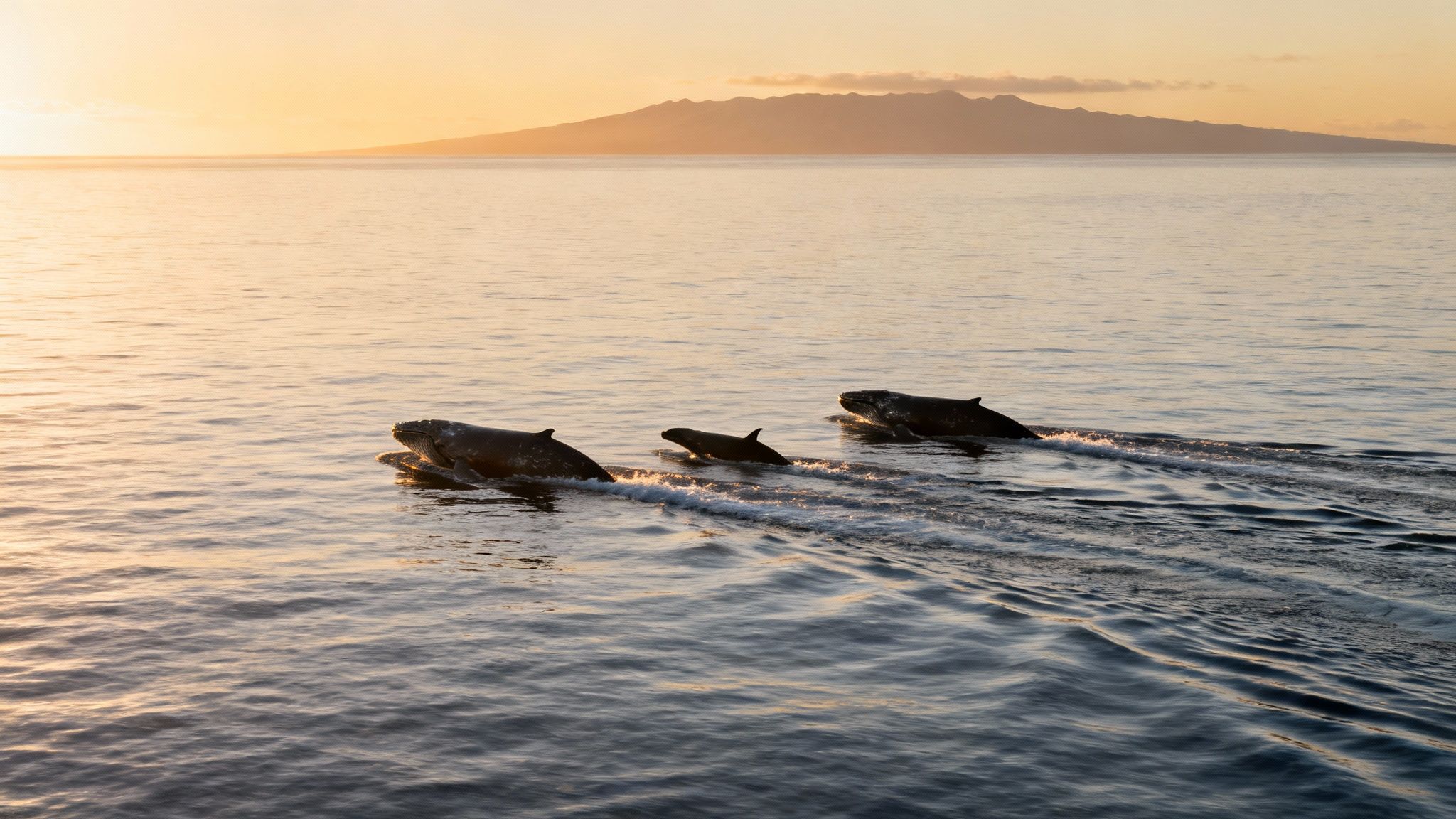
Amazingly, the whales travel for months without a single bite to eat, surviving entirely on the fat reserves they built up over the summer. Their arrival in Hawaiian waters is a critical moment. The warm, protected seas around the Big Island are the perfect tropical nursery, shielded from their main predators, orcas.
The Annual Migration Timeline
While the official whale watching season runs from December to April, the whales don't all show up at once. It’s more like a staggered arrival that creates a constantly changing and dynamic scene on the water.
The first to arrive are usually pregnant females and younger whales. They're followed by the mature males, and finally, the new moms with calves born the previous year.
The absolute peak of the action happens between January and March. During these months, the ocean is just buzzing with whale energy. You'll have the best shot at seeing the full range of behaviors, from spectacular breaches clear out of the water to the intense drama of competitive pods, where males vie for the attention of females.
The sheer number of whales here during peak season is mind-boggling. It literally transforms the waters off the Big Island into one of the most important humpback whale habitats on Earth. Any tour you take is a front-row seat to a natural wonder of global significance.
Knowing this annual rhythm is the secret to planning the ultimate whale watching Hawaii Big Island trip. For a deeper dive into what to expect month by month, check out our complete guide to the Big Island whale watching season.
Hawaii's Whale Population by the Numbers
The scale of this migration is hard to wrap your head around. Humpbacks travel over 3,000 miles just to get here, with the first trailblazers sometimes spotted as early as October. Their round trip is nearly 6,000 miles!
Each year, an estimated 26,000 Pacific humpback whales make their way to Hawaiian waters.
While the season officially kicks off in mid-December, the real frenzy is from January to March when the whale population density soars. During one Great Whale Count on January 27th, volunteers counted an incredible 493 humpback whales from Big Island shores alone. That was part of a statewide total of 2,121 sightings in a single day!
These numbers aren't just trivia; they're the reason the Big Island offers such reliable and breathtaking whale watching. The concentration of whales means sightings are frequent and often packed with action.
Why Hawaii is the Perfect Nursery
The whales don't choose Hawaii by chance. The islands offer a perfect trifecta of conditions that make them the ideal place to give birth and raise a calf.
- Warm Waters: A newborn calf has very little blubber to keep it warm. The Hawaiian waters, averaging around a balmy 77°F (25°C), are essential for its survival in those first critical weeks.
- Shallow Depths: The calm, shallow coastal areas are perfect for mothers to nurse their young without the dangers and effort of staying afloat in the deep, open ocean.
- Lack of Predators: The waters around Hawaii have very few orcas, the number one natural predator of humpback calves.
This combination creates a true safe haven, letting the next generation of humpbacks grow strong before making their very first trip north to the Alaskan feeding grounds with their mothers. It’s this life-or-death drama unfolding right off our coast that makes every whale watch tour a powerful glimpse into their world.
Finding the Best Whale Watching Hotspots
When it comes to unforgettable whale watching on the Big Island, it really is all about location, location, location. Not all coastlines are created equal in the eyes of a migrating humpback, and knowing the island’s unique geography is your ticket to getting front-row seats to the greatest show on Earth.
The Big Island’s underwater landscape is incredibly varied. This creates specific zones that are magnets for whales. Some areas offer deep, calm waters right near the shore, while others provide perfectly sheltered bays—the ideal nursery for a mother and her newborn calf. Knowing where to go dramatically boosts your chances of a truly jaw-dropping encounter.
The Unrivaled Kohala Coast
If there’s one undisputed champion of Big Island whale watching, it’s the Kohala Coast. This northwestern stretch of the island is legendary for its sheer concentration of humpback whales, especially mothers with their brand-new calves.
So, what's the secret? It’s all happening beneath the waves. The Kohala Coast has a unique bathymetry, meaning it has deep, protected waters incredibly close to the shoreline. This creates a perfect, safe nursery. Mothers don't have to venture into the rough open ocean, allowing them to conserve precious energy while they nurse their young.
This geographical gift pays off in a big way for us. The Kohala Coast simply reigns supreme, boasting whale sighting rates two to three times higher than other spots on the island. Data from over 20 years of Sanctuary Ocean Counts shows average sightings of 3 to 6 whales per 15-minute period, and in real hotspots, that number can spike to an incredible 15-20.
Top Shore-Viewing Locations
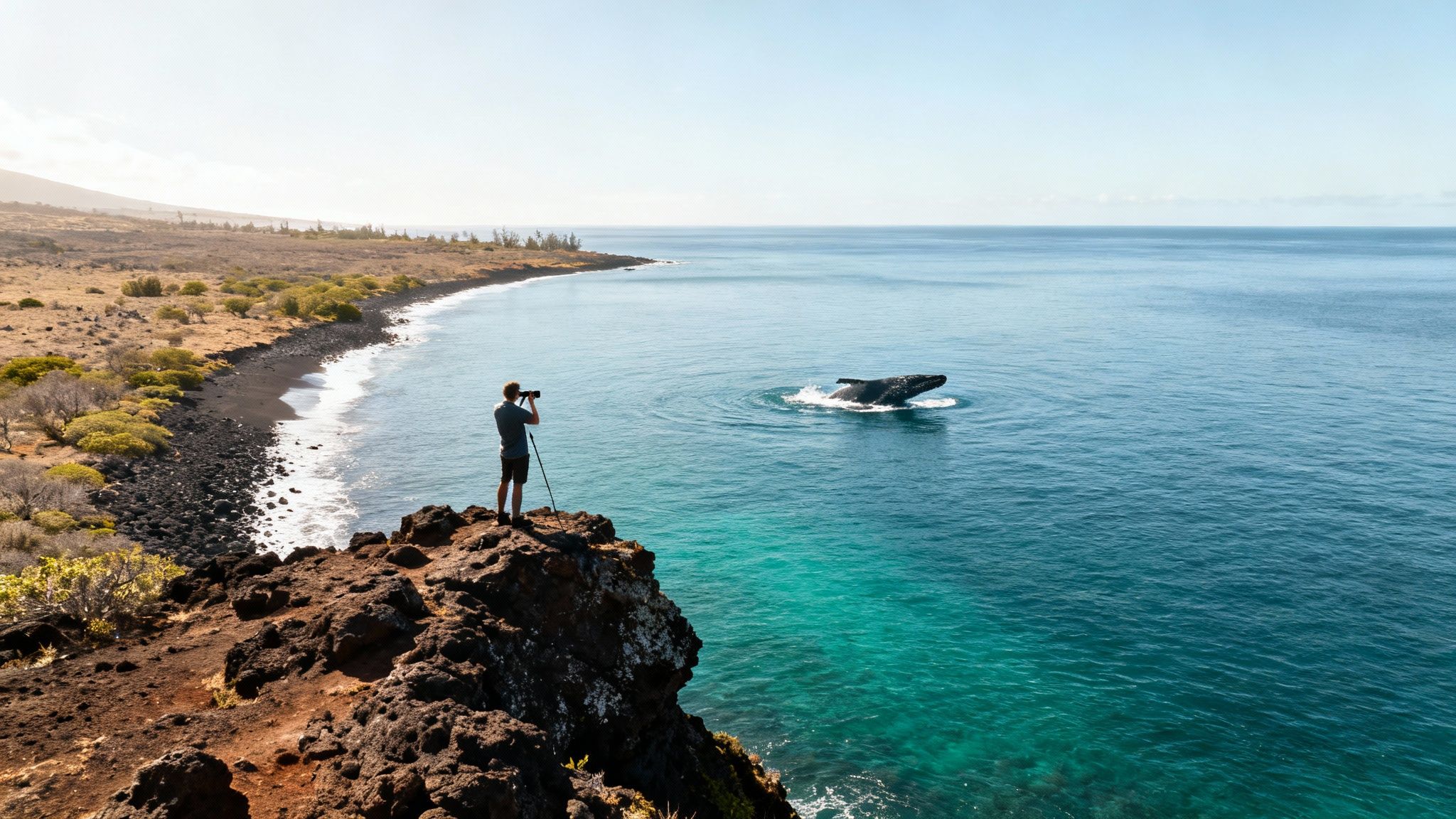
You don't always need a boat to witness the magic. With a good pair of binoculars and a little patience, you can catch plenty of action right from the land. The trick is to find an elevated vantage point that gives you a sweeping, unobstructed view of the ocean.
Here are a few of the best spots, all conveniently located along that prime Kohala Coast:
- Puʻukoholā Heiau National Historic Site: The name literally means "hill of the whale," and it definitely lives up to the hype. The high ground provides a commanding view over the very waters where whales love to gather.
- Lapakahi State Historical Park: This is another fantastic lookout with plenty of elevation. It’s typically dry and sunny here, so pack water and sun protection while you scan the horizon for spouts and breaches.
- Kapaʻa Beach Park: This park offers the perfect combo: great views and shaded picnic pavilions. You can watch for whales in total comfort.
Pro Tip: Mornings are often your best bet for shore viewing. The water is calmer and glassier, making it much easier to spot a distant spout or splash against the surface before the afternoon trade winds kick in.
Kona: The Hub for Boat Tours
While the Kohala Coast is the ultimate whale sanctuary, the Kona Coast to the south is the bustling hub for most boat tours. Why? Its calm, protected waters and numerous harbors make it the perfect launchpad for getting out on the ocean.
Departing from Kona gives tour operators quick access to the deep offshore waters where whales are often cruising. Because it's on the leeward side of the island, it's shielded from the strong trade winds, which means consistently calmer seas and a much more comfortable ride. This is exactly why you'll find such a great variety of tours leaving from Kailua-Kona and the nearby harbors.
Of course, choosing your launch point is just one piece of the puzzle. To help you build out the rest of your adventure, check out our guide on the best things to do on the Big Island. You can easily pair your whale watching trip with other unforgettable local experiences.
How to Choose Your Perfect Whale Watching Tour
Picking the right tour is probably the most important decision you'll make. It’s the difference between a good day on the water and an absolutely unforgettable one. The Big Island has a ton of options, and each gives you a unique window into the world of humpback whales. The best experience for you really just depends on what you’re after—maybe it's family-friendly comfort, an up-close adventure, or a day packed with multiple ocean activities.
The first big choice you’ll face is the boat itself. Your experience on a big, spacious catamaran is going to be worlds apart from a zippy little raft. Neither is better, they just serve different vibes and different groups. Getting a handle on these differences is the key to finding your perfect match for whale watching Hawaii Big Island.
Big Boats vs. Small Boats
Large, stable catamarans are usually the top pick for families with young kids, older folks, or anyone who gets a little green around the gills. Their dual-hull design cuts through the water, giving you a much smoother ride, even when the ocean has a bit of chop. These bigger boats also come with more creature comforts like onboard restrooms, shady spots to sit, and snacks, making sure everyone has a comfortable trip.
On the flip side, smaller, zodiac-style rafts offer a totally different kind of adventure. These boats are quick, nimble, and sit right on top of the water, giving you a thrilling, eye-level view that feels incredibly intimate. With fewer passengers, the whole thing feels more personal. You're right there in the action, feeling the spray and hearing every powerful breath the whales take.
Here's a quick breakdown to help you decide:
| Feature | Large Catamarans | Small Rafts (Zodiac-Style) |
|---|---|---|
| Best For | Families, seniors, large groups, those seeking comfort. | Adventurous travelers, photographers, small groups. |
| Experience | Stable, smooth ride with ample space and amenities. | Thrilling, fast-paced, intimate, and close to the water. |
| Group Size | Typically larger groups (30-100+ passengers). | Smaller, more personal groups (6-24 passengers). |
| Amenities | Often includes restrooms, shade, and food/drinks. | Minimal amenities; the focus is on the wildlife. |
The Power of Local Expertise
Boat size aside, the single most valuable thing on any tour is the crew. When you choose a seasoned local operator like Kona Snorkel Trips, you’re not just getting a boat ride; you’re getting guides who are expert naturalists and live and breathe these waters. A great crew does more than just spot whales. They read their behavior in real time, explaining what a tail slap means or breaking down the drama of a competitive pod.
A lot of the best tours carry hydrophones—underwater microphones. If the water is calm, the captain can drop one in, and you can actually hear the complex, haunting songs of the male humpbacks echoing up from the deep. It’s a completely magical experience that adds a whole other layer to the trip.
This kind of local knowledge is priceless. Captains who have spent years out here develop a sixth sense for where the whales might be, turning a good trip into a mind-blowing one. For a deeper dive into what makes a tour great, you can learn more in our guide to the best Big Island whale watching tours.
Combination Tours for the Ultimate Ocean Day
If you really want to make the most of your time on the water, think about a combination tour. These trips bundle whale watching with another awesome ocean activity, giving you a full day of adventure. It’s a great way to experience the best of the Big Island’s marine life without having to book separate excursions.
A super popular option is to pair your whale watch with a world-class snorkeling trip. As you look at different companies, you'll see specific Snorkeling Tours for Whale Watching that are designed to give you the best of both worlds. You can spend the morning mesmerized by massive humpbacks, then jump in the water to explore vibrant coral reefs packed with colorful fish. It's an incredible value and guarantees you won’t waste a single moment of your day on the ocean.
Ultimately, choosing the right tour is all about matching the boat, the crew, and the day’s plan to your own personal style.
So, What Are the Whales Actually Doing Out There?
Seeing a 40-ton humpback launch itself out of the ocean is one of those moments that just sticks with you. It’s pure magic. But when you start to understand why they’re doing it, the experience goes from just watching to truly connecting. You're no longer a spectator; you're reading the story as it unfolds right in front of you.
Every splash, slap, and leap has a purpose. These aren't just random movements. Whales are constantly communicating, socializing, or sometimes, just showing what looks like pure, unadulterated joy. Once you know what to look for, you start to see the patterns and understand the drama playing out on the water.
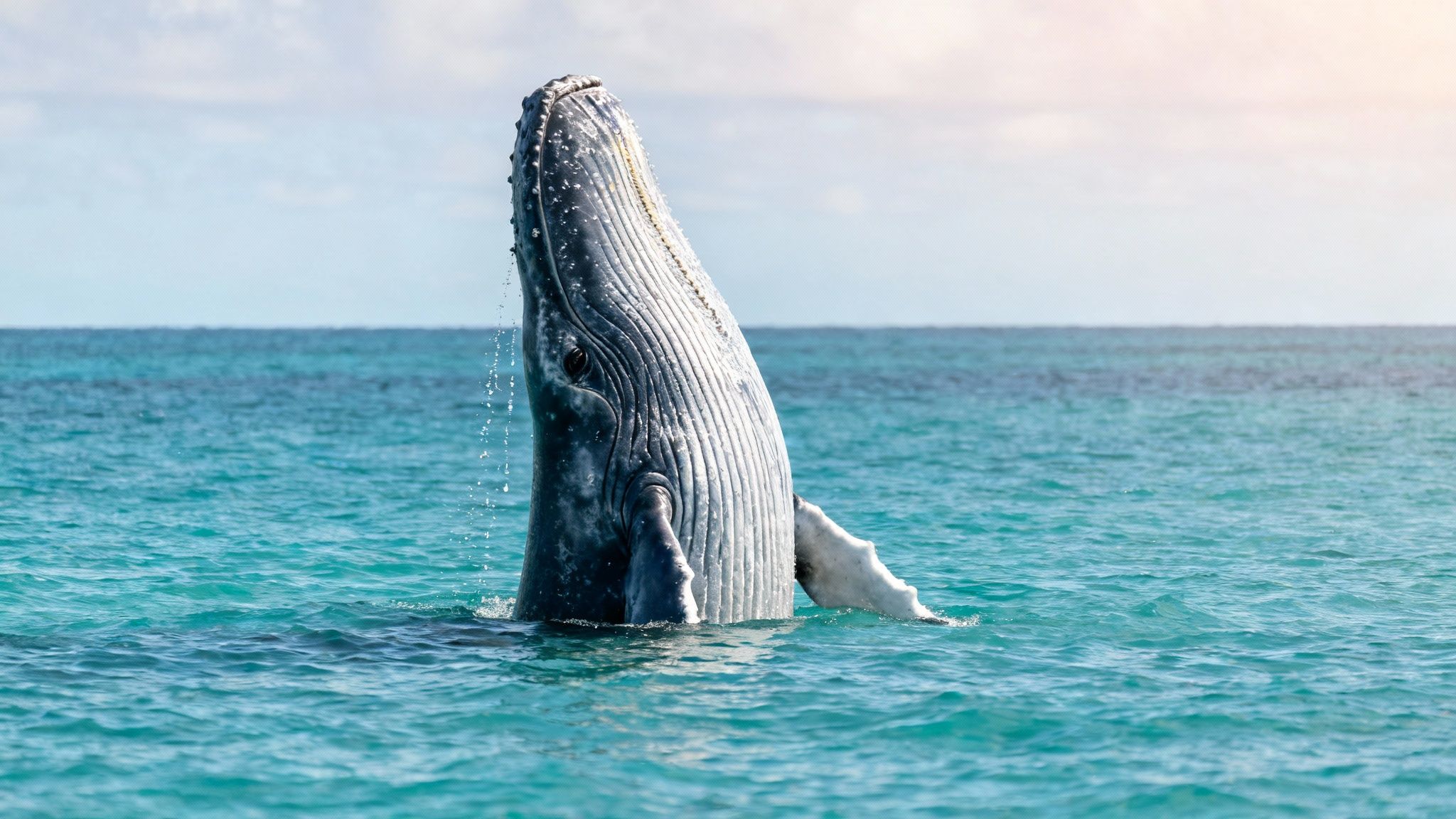
Common Humpback Behaviors to Spot
Getting familiar with a few key behaviors will totally change your trip. Here are the big ones you're likely to see off the Big Island coast:
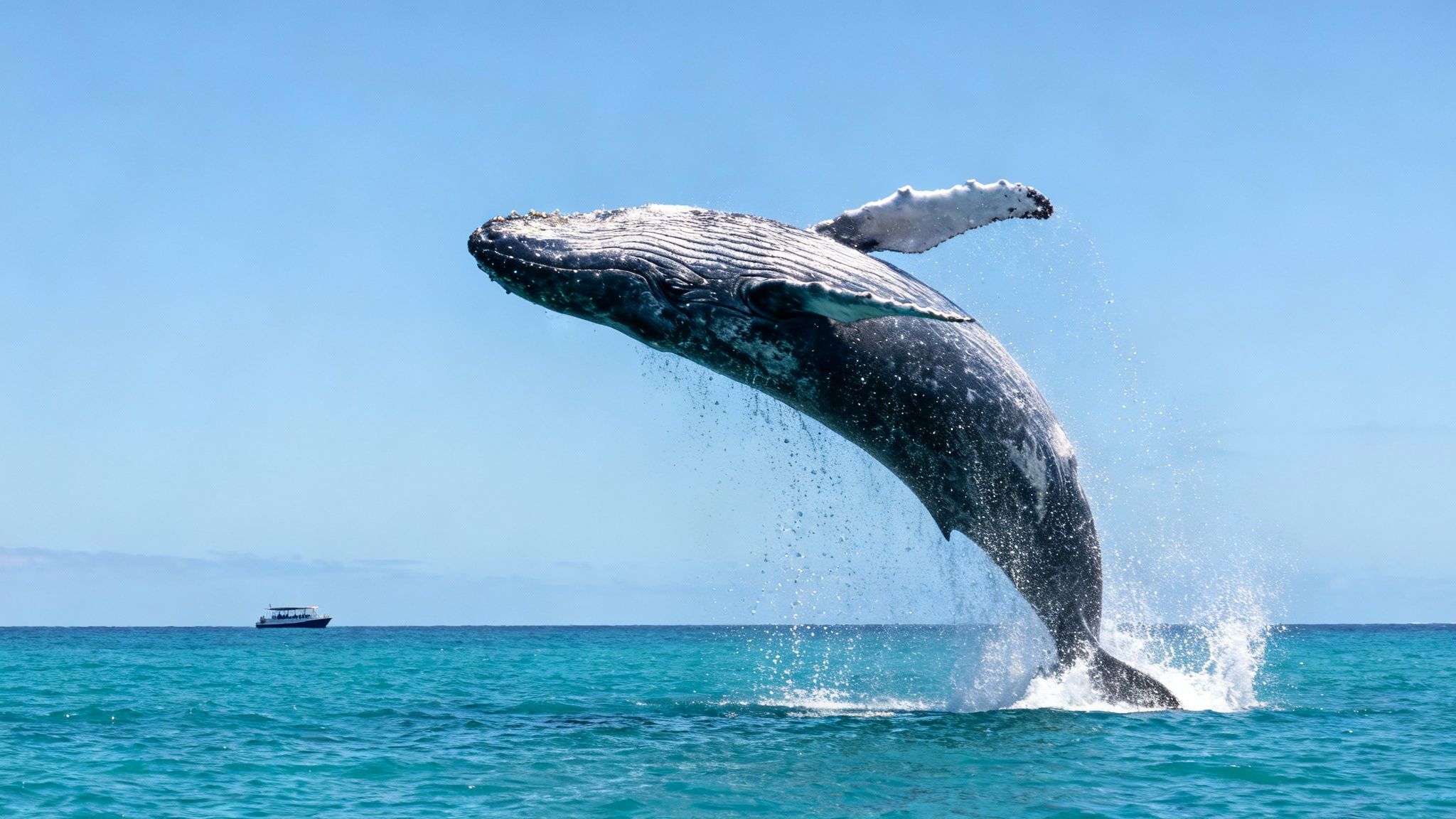
- The Breach: This is the showstopper. A whale rockets almost its entire body out of the water before crashing back down. Why? Scientists have a few ideas: maybe to knock off pesky parasites, to communicate across long distances, or simply to show other whales who's boss.
- The Tail Slap (or Fluke Slap): You'll often hear this one before you see it. A massive, powerful slap of the tail on the water's surface creates a sound that can travel for miles underwater. Think of it as a whale's way of sending a warning or getting another whale's attention.
- The Spy-Hop: This one feels personal. A whale will orient itself vertically, poking its head straight out of the water to get a good look around. It honestly feels like they're just as curious about us as we are about them.
- The Pectoral Fin Slap: Humpbacks have those famously long pectoral fins (their side flippers). They'll often roll onto their side and just slap one against the water over and over. Like a tail slap, it's another way they "talk" without making a sound, especially when they're hanging out in a group.
It’s a game-changer when you can put a name to the action. You’re no longer just seeing a splash; you're witnessing a conversation, a warning, or an incredible display of power.
Your Essential Packing Checklist
A little prep goes a long way to making sure you're comfortable and can focus on the whales, not on being cold or sunburnt. The Kona sun is glorious, but the ocean breeze and the glare off the water are no joke.
Here’s a quick list of things you’ll be glad you brought:
- Polarized Sunglasses: Seriously, this is the most important thing on the list. They cut the glare right off the water's surface, letting you spot shapes and movement below that you’d completely miss otherwise.
- Reef-Safe Sunscreen: Protect your skin, protect the coral. It’s a simple choice that makes a huge difference to Hawaii's fragile marine ecosystem.
- A Light Jacket or Windbreaker: Even on a hot day, it can get surprisingly chilly out on the open ocean with the wind, especially on a faster boat or during a morning tour.
- Camera with a Zoom Lens: Your phone is fine, but a real zoom lens will let you get those incredible, detailed shots from a safe and respectful distance without disturbing the whales.
- Binoculars: Perfect for scanning the horizon for that first puff of a distant spout or getting a much closer look at a pod that's keeping its distance.
With the right gear and a bit of knowledge, you’re all set for an absolutely unforgettable day on the water.
Whale Watching with Aloha and Responsibility
There's nothing quite like the moment you see a 40-ton humpback whale breach the water. It’s a profound experience, and one that comes with a shared responsibility to protect these incredible animals. Ethical whale watching isn't just about following rules; it’s about practicing aloha—deep respect and compassion—for the gentle giants that travel thousands of miles to our waters.
This journey isn't a vacation for them; it's a critical part of their life cycle. Humpbacks come to Hawaii to mate, give birth, and nurse their newborn calves in a safe, warm environment. Any disturbance can cause immense stress, especially for a new mother trying to shield her vulnerable baby from what she sees as a threat. This understanding is the bedrock of every responsible whale watching Hawaii Big Island tour.
Guardians of the Gentle Giants
The most important guideline for anyone on the water is simple, but it’s absolutely non-negotiable: keep a respectful distance. Federal and state regulations are clear that all vessels—from big tour boats to tiny kayaks and paddleboards—must stay at least 100 yards away from humpback whales. That's the full length of a football field.
This 100-yard buffer isn't some arbitrary number. It's a scientifically determined "personal space bubble" that lets the whales rest, nurse, and socialize without feeling harassed or threatened by us.
Choosing a tour operator who truly honors this space is everything. A responsible crew knows that the best encounters happen when the whales are relaxed and comfortable. They are masters at positioning the boat for spectacular views and photos without ever putting the animals at risk.
A Conservation Success Story
When you practice responsible whale watching, you become an active part of one of the greatest marine conservation stories ever told. Humpback whales have made a stunning comeback, fueling the Big Island's vibrant whale watching scene after their populations crashed in the 1960s. Today, the Pacific stock is a robust 26,000 strong.
This incredible resurgence is carefully monitored through efforts like the annual Sanctuary Ocean Counts, which are vital for the protection mandate of the Hawaiian Islands Humpback Whale National Marine Sanctuary. You can learn more about the incredible whale conservation efforts in Hawaii.
By choosing an ethical tour, you're directly supporting a sustainable industry that values conservation over intrusion. You're helping ensure that these magnificent creatures, and the unforgettable magic they bring to our islands, will continue to thrive for generations to come. It’s more than just good practice; it's our kuleana—our responsibility—to protect the marine life that makes Hawaii so special.
Got Questions About Whale Watching? We've Got Answers.
Let's wrap this up by tackling some of the most common questions we hear from travelers. Getting these details sorted out is the last step before you can book your trip with confidence and get ready for an incredible day on the water.
Is a Whale Sighting Guaranteed on a Tour?
This is the big one, isn't it? The honest answer is that we're dealing with wild animals on their own schedule, so an absolute 100% guarantee is impossible for any tour operator to make.
That said, during the peak season from January through March, your odds are fantastic. Most experienced crews in Kona report a 95-99% success rate for spotting whales. They know where to look. Many outfits, confident in their whale-finding skills, will offer a "rain check." If you happen to be on one of those incredibly rare trips where no whales show up, they'll often let you join another tour for free.
What’s the Best Time of Day to Go?
Whales are active all day long, so there's really no "best" time to see them breach or slap their tails. The real difference is in the experience on the boat.
Morning trips usually mean calmer, glassier seas. This makes for a super smooth ride and can make it easier to spot those tell-tale spouts way off in the distance. The afternoon, on the other hand, can bring a bit more wind and chop, but the lower angle of the sun creates absolutely stunning light for photos.
The bottom line? The best time of day is the one that fits your schedule. The whales will be out there doing their thing, ready to put on a show whenever you arrive.
Will I See Other Marine Life?
Oh, absolutely! While the humpbacks are the main event, a whale watching tour is more like a full-on marine safari. The waters off the Big Island are just buzzing with life.
It's incredibly common for a pod of playful spinner dolphins to show up and race the boat's bow wave. You also have a good chance of spotting pilot whales, sea turtles gracefully surfacing for a breath, and all sorts of local seabirds. Every single trip is different, offering a unique glimpse into Hawaii's amazing ocean ecosystem.
Are the Tours Safe for Everyone?
Yes, whale watching is a very safe activity for all ages, but the type of boat you choose makes a difference.
For families with small kids, grandparents, or anyone who prefers a steadier ride, a larger, more stable catamaran is the way to go. They offer plenty of room to move around, along with amenities like shade and restrooms. Smaller, zodiac-style rafts offer a more thrilling, down-in-the-action experience, but they can be bumpy and often have age or mobility restrictions. It's always a good idea to check with the tour operator directly to make sure their boat is a good match for your group.
You can find answers to even more questions on our full FAQ page.
Ready to see these gentle giants with your own eyes? Join Kona Snorkel Trips for a safe, respectful, and truly unforgettable adventure on the water. Book your whale watching tour today!