
Big Island Whale Watching: whale watching hawaii big island
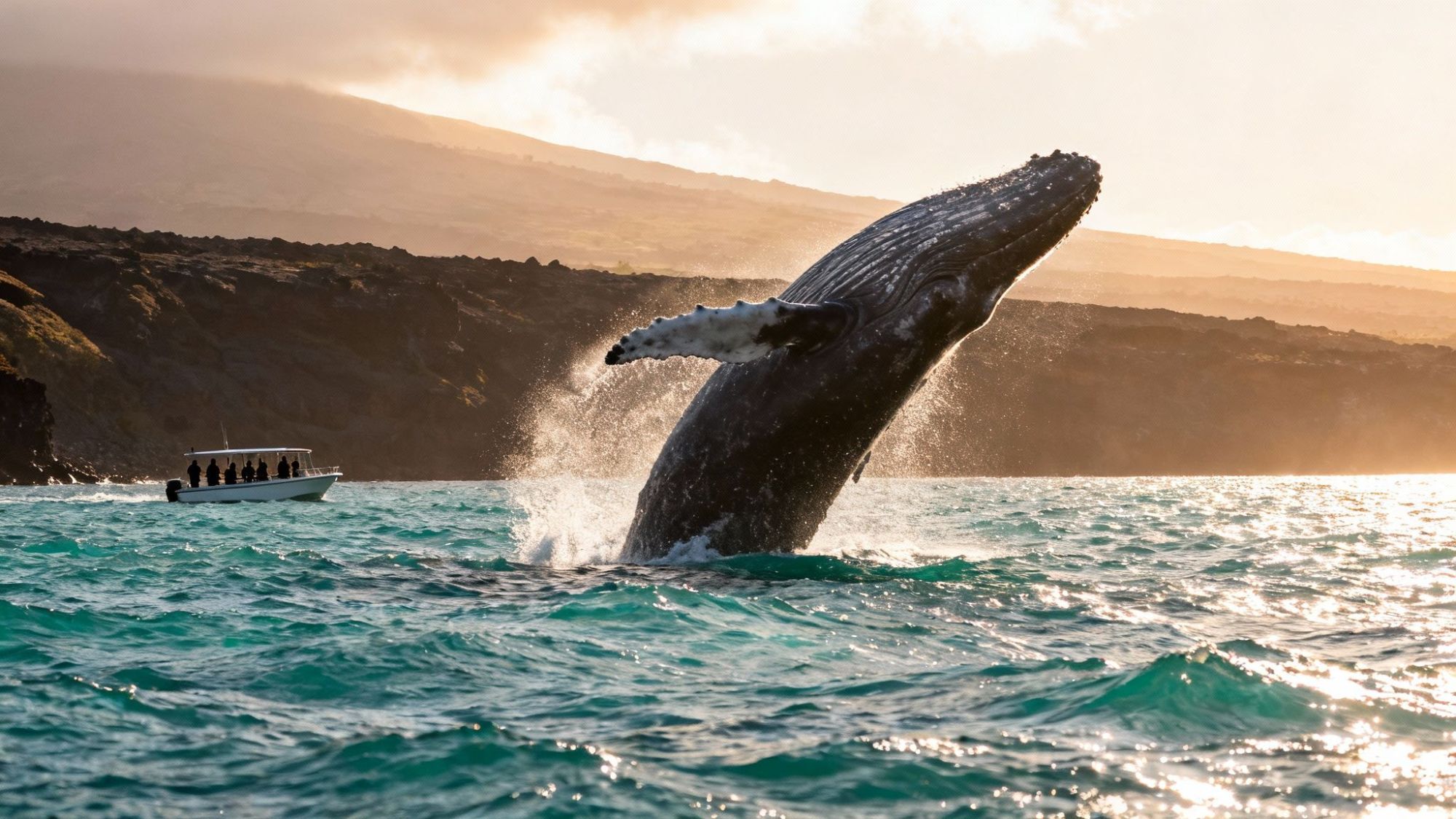
Picture this: a 40-ton humpback whale explodes out of the deep blue, completely clearing the water against the backdrop of the Big Island’s volcanic coast. It’s a moment that defines whale watching in Hawaii, and one you’ll never forget. Here in Kona, the calm, deep waters create some of the best and most reliable whale encounters on the planet, especially during the peak season from January to March.
Your Guide to an Unforgettable Whale Watching Adventure
This guide is all about turning that incredible image in your head into a real-life experience. At Kona Snorkel Trips, we're the top-rated and most-reviewed snorkel company in Hawaii because we live for these moments. Creating safe, respectful, and genuinely awe-inspiring adventures on the ocean is what we do. We're here to share that passion and help you plan the perfect trip.
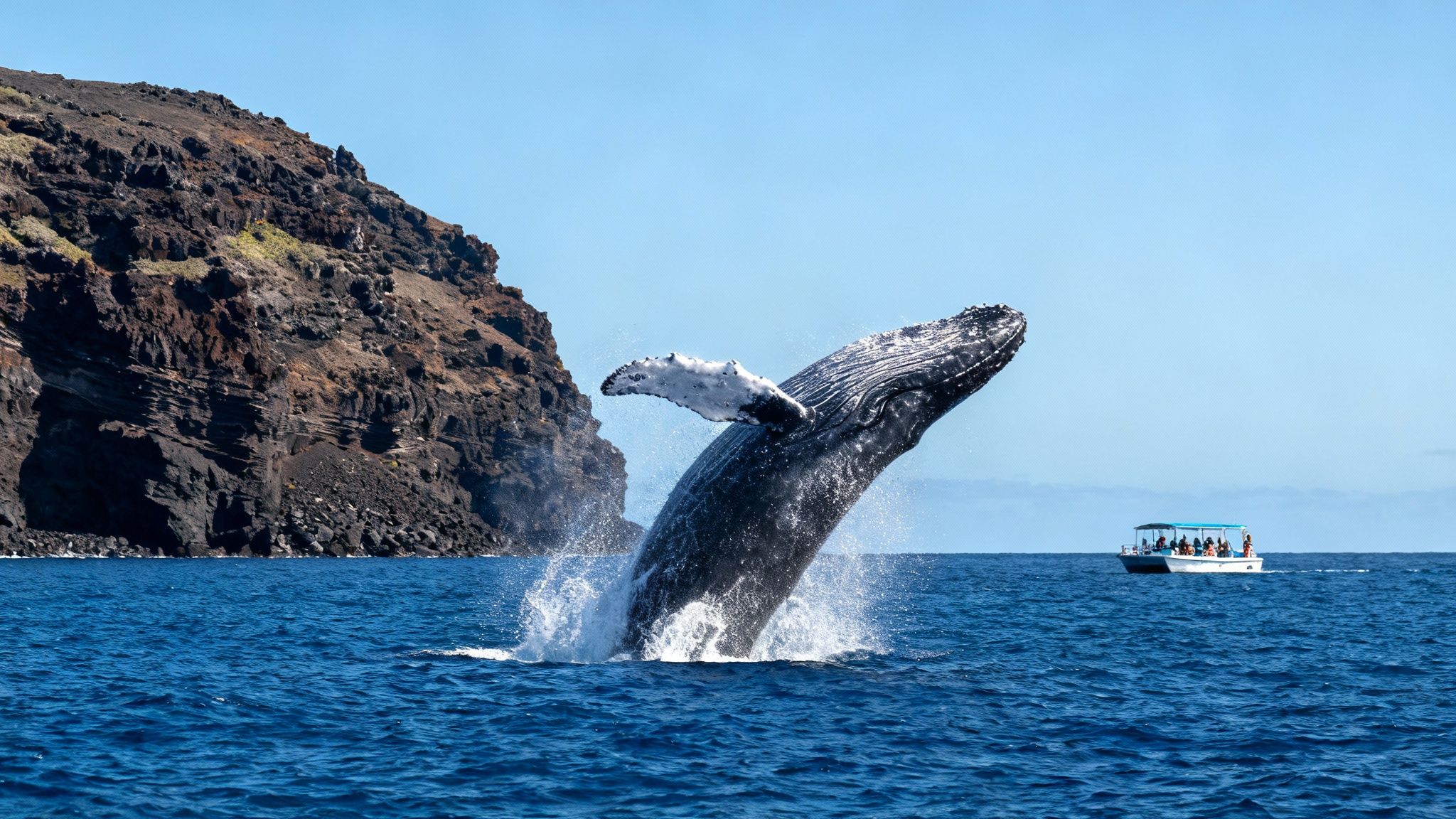
We’ve packed this guide with everything you need to know, from the best times and places to see whales to what you should expect once you’re out on the water. Let’s get you ready for an adventure that will stick with you for a lifetime.
What Makes the Big Island So Special for Whales?
It’s no accident the humpbacks choose the Big Island, especially the Kona coast. The island’s enormous volcanoes, Mauna Loa and Mauna Kea, act like a massive wall, creating a "wind shadow" that shields the western shoreline from gusty trade winds. The result? Incredibly calm and clear seas—perfect conditions for a mother whale and her brand-new calf.
On top of that, the ocean floor drops off steeply just a short distance from shore, giving the whales deep water that’s still close and protected. This unique combination is exactly what they’re looking for. It's the perfect spot for:
- Breeding: Males put on spectacular competitive displays to win over females, often right in front of tour boats.
- Birthing: Expecting mothers find a safe, calm sanctuary to welcome their young into the world.
- Nursing: Newborn calves, who have very little blubber, can rest and nurse in the warm, gentle water, building strength for the long migration back to Alaska.
When you see a whale here, you're not just spotting an animal. You're getting a front-row seat to a massive, natural nursery in action. It’s a powerful glimpse into a critical part of their lives, and it’s what makes the Big Island so magical.
Planning Your Ultimate Adventure
Knowing why the whales are here completely changes the experience. It’s more than just seeing a breach; it’s about understanding the thousands of miles they traveled to get here and the vital reason for their Hawaiian getaway.
With the right plan, you can time your trip to coincide with the absolute peak of this incredible natural event. To get started, dive into our complete Big Island whale watching guide. We’ll walk you through everything, from the best time of day to head out to what you should pack, ensuring your adventure is nothing short of spectacular.
The Great Migration: Why Whales Journey to Hawaii
Every single year, something incredible happens in the Pacific Ocean. An ancient instinct kicks in, and thousands of humpback whales begin one of the longest migrations of any mammal on Earth. This epic pilgrimage is precisely what makes whale watching on Hawaii's Big Island so special; you aren't just spotting an animal—you're witnessing the grand finale of a truly monumental journey.
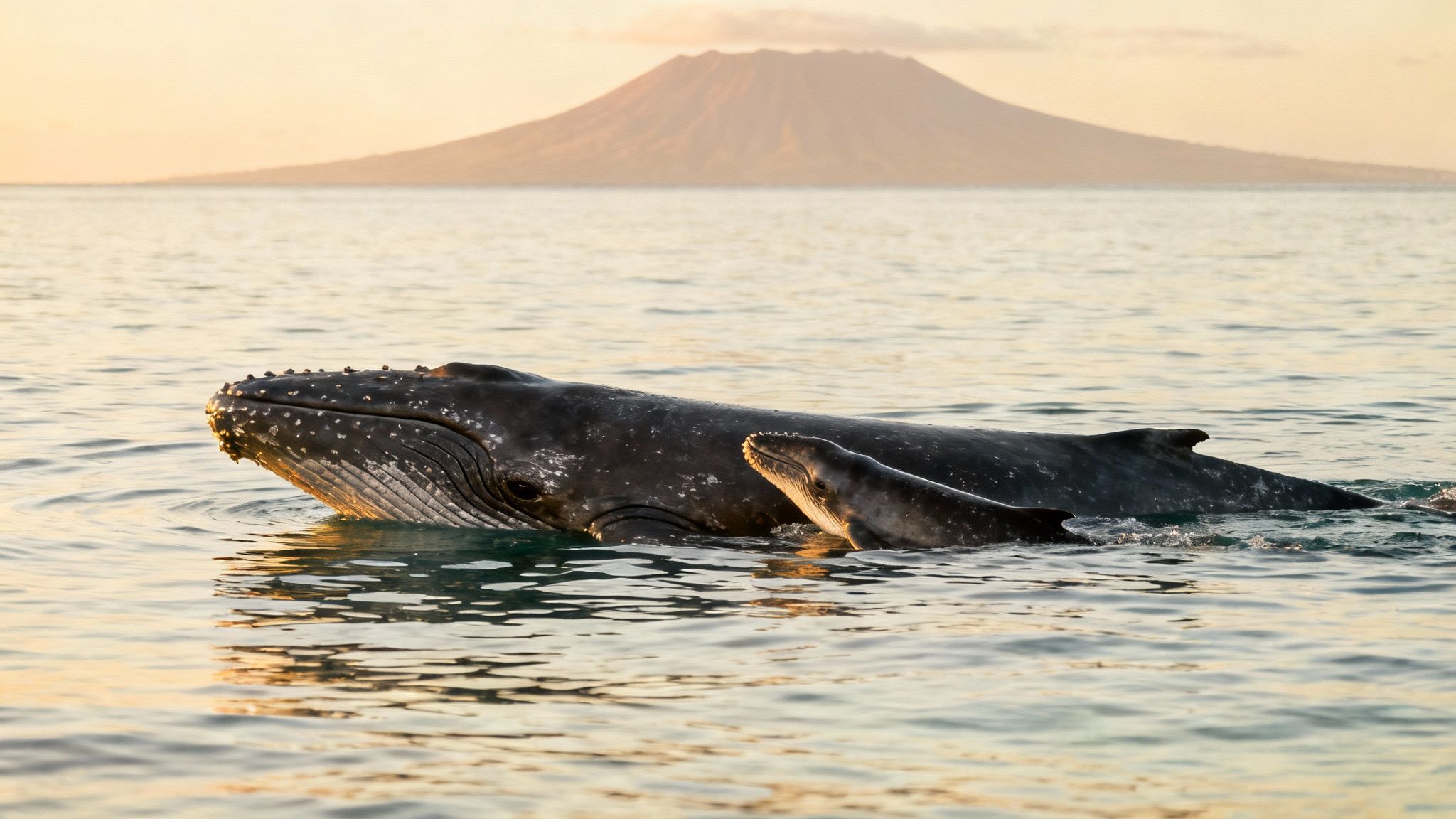
It all starts thousands of miles north, in the icy, food-packed waters of Alaska. The whales spend their summer there gorging themselves, packing on tons of krill and small fish to build up massive layers of blubber. This fat reserve is their fuel tank, and it has to be full enough to power their entire round-trip journey and their whole stay in Hawaii, a time when they barely eat a thing.
From Frigid Feasts to a Tropical Nursery
So why make a grueling, months-long swim of over 3,500 miles without stopping for a meal? The answer is simple: it's all about family. While the Alaskan seas are a fantastic buffet, they're a dangerous place for a newborn whale.
Think of the Hawaiian Islands as a giant, warm, protected maternity ward. The calm, clear, and relatively shallow waters here create the perfect environment for the most important moments in a humpback's life.
- A Safe Haven for Birth: Pregnant females travel here specifically to give birth. Newborn calves are born with very little blubber to insulate them, so the warm Hawaiian sea is critical for helping them conserve energy and body heat.
- Shelter from Predators: The waters around the Big Island are mostly free of orcas (killer whales), the humpback's main predator. This makes it a much safer nursery for vulnerable young calves.
- The Courtship Arena: Those same sheltered bays turn into a stage for some of nature's most spectacular courtship displays. Males will form competitive groups, showing off with powerful breaches and thunderous tail slaps, all to win the attention of females.
This annual trip isn't a vacation for the whales. It’s a deep, instinctual drive to make sure the next generation survives. Knowing this changes everything—a simple whale sighting becomes a moment of profound appreciation for their resilience and the delicate rhythm of their lives.
An Incredible Comeback Story
Seeing so many whales in Hawaiian waters today is a massive conservation win. After being pushed to the very edge of extinction by commercial whaling, the Pacific humpback population has made a stunning recovery, now estimated at around 26,000 whales.
Thousands of these gentle giants now complete the trek from Alaska to Hawaii each year. This has become a cornerstone of the state's economy, with whale watching generating about $20 million in business annually, much of it right here on the Big Island.
This amazing recovery led to major updates in their protection status. If you're curious about the history, you can learn more about when humpback whales were taken off the endangered species list. It’s a powerful reminder of what's possible when we commit to conservation, ensuring we can all continue to witness this spectacular migration for years to come.
When and Where to See Whales on The Big Island
Getting the timing right and knowing where to post up are the two biggest secrets to incredible whale watching on Hawaii's Big Island. Nail these two things, and your trip goes from a hopeful scan of the horizon to a front-row seat for one of the most spectacular shows on Earth. It all comes down to aligning your visit with the peak of the humpback whale migration.
Sure, the first whales might show up in November and you could spot a few stragglers hanging around into May, but the official season really kicks off in December and runs through April. If you're looking for that jaw-dropping, memory-of-a-lifetime experience, you'll want to aim for the absolute sweet spot.
The real heart of whale watching season is from mid-January through March. This is when the highest numbers of humpbacks are cruising around Hawaiian waters, meaning you get way more frequent—and much more dramatic—sightings.
During this peak window, the ocean just feels alive. You’re much more likely to witness those iconic full-body breaches, powerful tail slaps, and the thrilling chaos of competitive pods vying for attention. Seriously, planning your trip for these months stacks the deck in your favor for an unforgettable day.
The Best Viewing Spots From a Boat
There's no question about it: getting out on the water is the absolute best way to feel the true scale of these animals. A boat tour gets you safely and respectfully closer to the action, giving you a perspective you just can't get from the shore. The island's western coast is where all the best boat-based action happens.
The calm, sheltered waters along the Kona and Kohala Coasts are the undisputed champions for whale watching tours. Tucked away from the strong trade winds by the island's massive volcanoes, this side of the island serves up consistently smooth and clear conditions. It’s the perfect, protected nursery that mother whales and their calves seek out, making it a hotspot for tour operators who know exactly where to find them.
Top Shoreline Viewing Locations
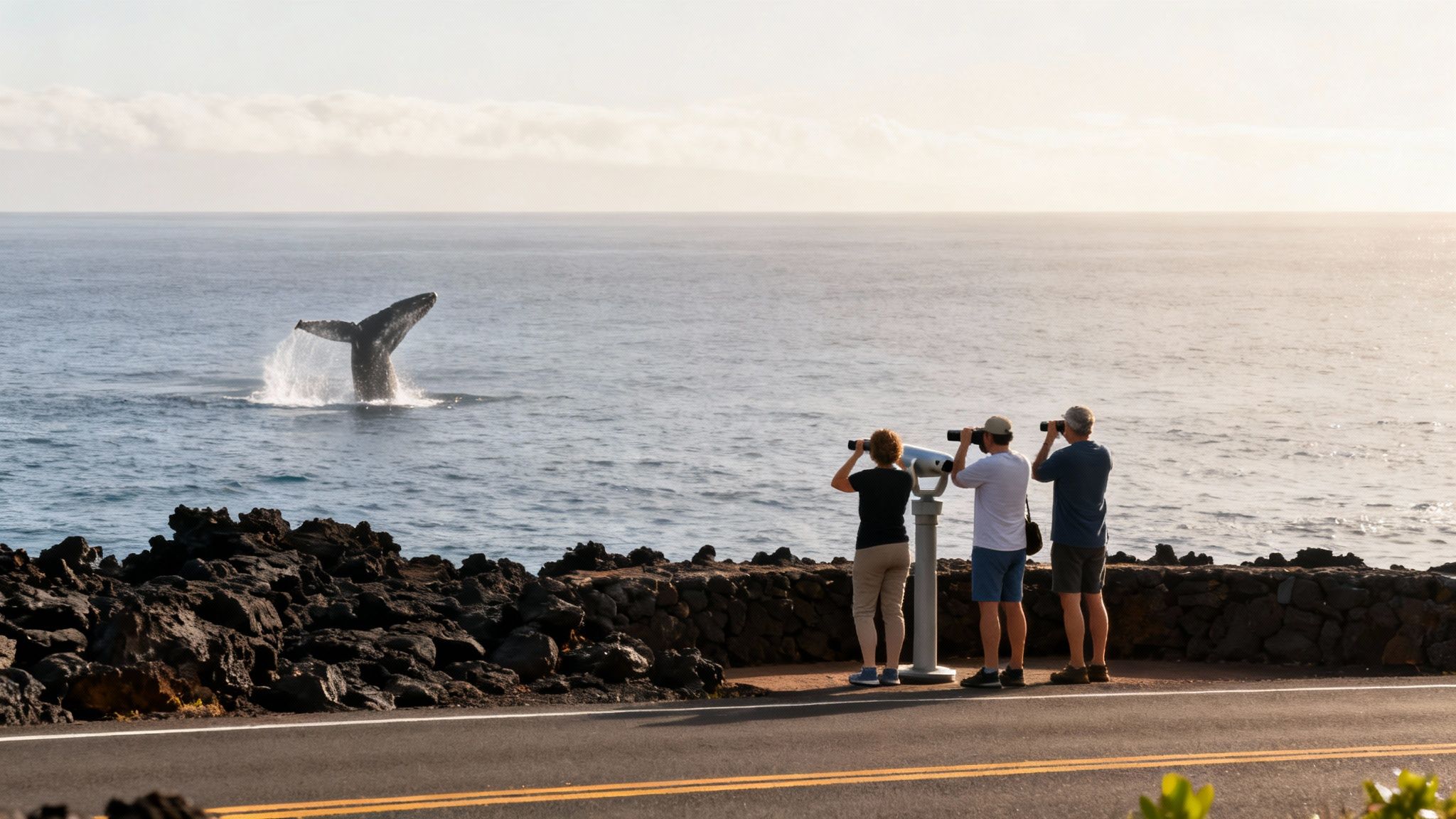
If you'd rather keep your feet on solid ground—or just want to keep the whale spotting going after your boat tour—the Big Island has some truly fantastic shoreline lookouts. The trick to land-based viewing is simple: get some elevation. The higher up you are, the more ocean you can see, making it much easier to spot those distant spouts and splashes.
The Kohala Coast is especially famous for its amazing land-based viewpoints. Here are a few spots you won't want to miss:
- Puʻukoholā Heiau National Historic Site: The name of this sacred spot literally translates to "hill of the whale," and it definitely delivers. Its elevated position offers incredible, unobstructed views over the marine sanctuary below.
- Lapakahi State Historical Park: This park is another killer spot with high-up views along the coast. It’s a pretty dry and sunny area, so make sure to bring plenty of water and sun protection while you scan the horizon.
- Scenic Overlooks: As you drive the Queen Kaʻahumanu Highway, especially between Kona and the Kohala resorts, keep your eyes peeled for the numerous scenic pullouts. Many of them offer a perfect perch for spotting whale activity from your car.
If you want to dive even deeper into the best times to visit, check out our complete guide to the Big Island whale watching season for more insider tips.
Big Island Whale Watching Locations At a Glance
So, should you book a boat tour or grab your binoculars and head for the coast? It really depends on the kind of experience you're after. Each has its own magic. A boat gets you close enough to feel the spray and hear the sounds, while the shoreline offers a peaceful, panoramic view of their world.
To help you decide, here’s a quick rundown of what to expect from the best spots on the island.
| Location | Viewing Type | Best For | What to Expect |
|---|---|---|---|
| Kona & Kohala Coasts | Boat Tour | Immersive, up-close encounters and hearing whale songs on a hydrophone. | Calm waters make for smooth rides. This is a nursery area, so expect to see mother and calf pairs. |
| Puʻukoholā Heiau | Shoreline | Unobstructed panoramic views from a historically significant site. | A high vantage point perfect for spotting distant breaches and spouts. Bring binoculars! |
| Lapakahi State Park | Shoreline | A less-crowded coastal perch with excellent elevated views. | Great for patient observers who want a quiet spot to watch the action unfold from afar. |
| Hwy 19 Scenic Pullouts | Shoreline | Convenient and casual spotting while driving the coast. | Easy-access spots for a quick look. You might get lucky and see a breach right from your car. |
Ultimately, whether you're on a boat feeling the rumble of a tail slap or watching peacefully from a cliffside, seeing these gentle giants in their natural habitat is an experience you won't soon forget.
How to Choose the Perfect Whale Watching Tour
Picking the right tour is probably the single most important decision you'll make for your whole whale watching adventure here on the Big Island. Think about it: the boat you're on, the crew showing you the ropes, and how many other people are with you—all of it completely shapes your experience. This is your inside guide to sifting through the options to find a trip that feels like it was made just for you.

The first thing to mull over is the boat itself. What kind of day on the water are you dreaming of? Are you after a super smooth, stable ride with lots of room to move around? Or do you want a more rugged, up-close adventure that puts you right at water level?
Comparing Vessel Types
Your choice of boat really sets the tone for the entire trip. Each one offers a totally different vibe, with its own pluses and minuses.
-
Large Catamarans: These are the big, steady workhorses of the whale watching world. With two hulls, they're incredibly stable, which is a massive bonus if you have little kids or if you're worried about getting seasick. They usually have nice perks like restrooms and shady spots to sit, but the tradeoff is you'll be sharing the experience with a bigger crowd.
-
Zodiac-Style Rafts: If you've got a little thrill-seeker in you, these zippy, low-to-the-water boats feel like a true ocean expedition. You are way closer to the surface, which can make for some jaw-dropping encounters that feel incredibly intimate. Just know, there's not much protection from sun or spray, and it can be a bumpy ride—so maybe not the best for tiny tots or anyone with back issues.
-
Smaller Powerboats: This is the sweet spot. These boats give you a much more personal feel than a giant catamaran but are more comfortable and stable than a zodiac. With a smaller group, you get more one-on-one time with the crew and a better, less crowded view of the whales.
It's not just about seeing a whale; it's about how you see it. On a smaller boat, the captain can often maneuver more carefully and even cut the engines, making for a quieter, more respectful—and honestly, more profound—moment.
Key Factors for a Memorable Trip
Besides the boat, a few other things separate a "good" tour from an unforgettable one. A truly great trip isn't just a boat ride; it's an educational and moving experience led by people who live and breathe this stuff.
First, always look for a tour with a naturalist guide on board. Having an expert there to explain what you're seeing in real-time adds so much depth. They can tell you the difference between a tail slap and a pec slap or share the latest science on why humpbacks breach. It turns a cool sighting into a genuine connection with these amazing animals.
Another total game-changer is a hydrophone. This is an underwater microphone they can drop into the ocean so you can actually listen to the haunting, complex songs of the male humpbacks. Hearing those otherworldly calls coming up from the deep is a powerful, full-body experience that seeing them just can't replicate.
The Value of an Experienced Captain
Maybe the most crucial piece of the puzzle is your captain's skill. A seasoned captain does way more than just steer the boat; they read the ocean and understand the whales. They have a sixth sense for where a whale might surface next and know how to position the boat for the best possible view—all without stressing out the animals.
And for those who want the ultimate experience, a private charter is the way to go. Companies like ours at Kona Snorkel Trips let you design your perfect day on the water, focusing on whatever you and your group want to do, far away from any crowds. You can dive deeper into all the options in our guide to the best Big Island whale watching tours.
Practicing Respectful Wildlife Viewing
Seeing a 40-ton humpback whale launch itself out of the water is something you never forget. It's a raw, powerful moment that connects you to the wild in a profound way. But this incredible privilege comes with a big responsibility. These whales have traveled over 3,000 miles to Hawaii's protected waters to find a mate, give birth, and raise their calves. How we act around them matters. A lot.
The number one rule is simple: give them space. Federal and state laws are crystal clear on this, and for good reason.
No boat, kayak, or paddleboard can legally get within 100 yards of a humpback whale. That's the entire length of a football field. This buffer is absolutely crucial, especially for new mothers and their calves who need to rest and conserve every bit of energy.
Good "whale etiquette" is non-negotiable. A truly responsible tour operator knows that chasing whales, cutting off their path, or circling them is not only illegal but deeply stressful for the animals. The best encounters, the ones that will stick with you forever, happen when the whales are in charge. When they're curious and comfortable, they might just decide to come check you out on their own terms.
Your Role in Conservation
When you choose to watch whales respectfully, you're not just a tourist—you're an active partner in their conservation. It’s about more than just keeping your distance on the water. To make sure your trip has a positive impact, it's worth thinking about the broader principles of sustainable marine tourism. Every little bit helps, from picking a tour operator who genuinely cares about the ocean to cutting down on single-use plastics that can harm the very ecosystem these whales depend on.
Hawaii is home to some amazing conservation efforts. The centerpiece is the Hawaiian Islands Humpback Whale National Marine Sanctuary, which acts as a safe haven for the whales during this vital time in their lives.
Joining a Community of Ocean Stewards
You can even get directly involved. Hawaii’s whale watching industry, with about 50 tour operators statewide, is a real conservation success story, full of people dedicated to protecting the animals they love.
There are also some cool citizen science projects you can join. The Sanctuary Ocean Count, which started back in 1996, brings together hundreds of volunteers and visitors to count humpbacks right from the shorelines of Oahu, Kauai, and the Big Island. It happens on the last Saturday of January, February, and March and gives scientists really important data on the whale population.
By understanding and practicing respectful viewing, you become part of the solution. You help ensure that the magic of whale season on the Big Island is something future generations can experience, protecting one of nature’s most incredible migrations.
Got Questions? We've Got Answers.
To help you get your plans locked in, here are some straightforward answers to the questions we hear the most about whale watching on the Big Island. We’ll cover everything from what to pack to what you can realistically expect on the water.
What Is the Best Time of Day for a Whale Watching Tour?
Honestly, the whales are active all day, so there's no single "best" time. That said, morning tours are often fantastic because the ocean is typically calmer—think glassy, smooth water. Those conditions make it much easier to spot a distant spout and enjoy a smoother ride.
But don't count out the afternoon! Afternoon trips can be just as amazing and often have fewer boats on the water, which can make for a more intimate experience. It really just comes down to whether you prefer calmer seas or fewer crowds.
What Should I Bring on My Whale Watching Trip?
A little preparation goes a long way in making your trip comfortable so you can focus on the show. Think of it like packing for a day at the beach, but on a boat.
- Sun Protection: This is non-negotiable. The Hawaiian sun is intense, and the glare off the water is no joke. Bring reef-safe sunscreen, polarized sunglasses, and a hat.
- Layers: Even on a warm Kona day, the breeze on the water can make things feel a bit chilly. A light jacket or windbreaker is always a good idea.
- Camera: You’ll want to capture that epic breach! A camera with a decent zoom lens will be your best friend for getting great shots of whales that aren't right next to the boat.
- Medication: If you’re even a little prone to motion sickness, it's a smart move to take your preferred remedy before you get on the boat.
Is Seeing a Whale Guaranteed on Every Tour?
Here's the honest truth: these are wild animals, and they operate on their own schedule. While sightings are incredibly likely during the peak season from January through March, no reputable company can offer a 100% guarantee. Their behavior is just too unpredictable.
But here’s the good news. Experienced crews have an almost sixth sense for finding whales. They know the local waters like the back of their hand, understand whale behavior, and can read subtle clues on the ocean's surface to give you the absolute best chance of a mind-blowing encounter.
What Other Marine Life Might I See?
A whale watching trip is really a full-on marine safari! It's not just about the humpbacks. We almost always see playful spinner dolphins putting on an aerial show or pods of bottlenose dolphins cruising right alongside us.
Keep an eye out for Hawaiian green sea turtles (honu) popping their heads up for a breath, too. And if you’re really lucky, you might even spot more elusive creatures like pilot whales. It’s a great reminder of how alive our ocean is.
Have more questions? We cover a lot more on the complete Kona Snorkel Trips FAQ page.
Ready to witness the magic of the humpback whale migration for yourself? Kona Snorkel Trips offers intimate, small-group tours that get you respectfully close to the action. Book your adventure with Hawaii's top-rated and most-reviewed snorkel company today.