
Whale Watching Hawaii Big Island: Your Guide
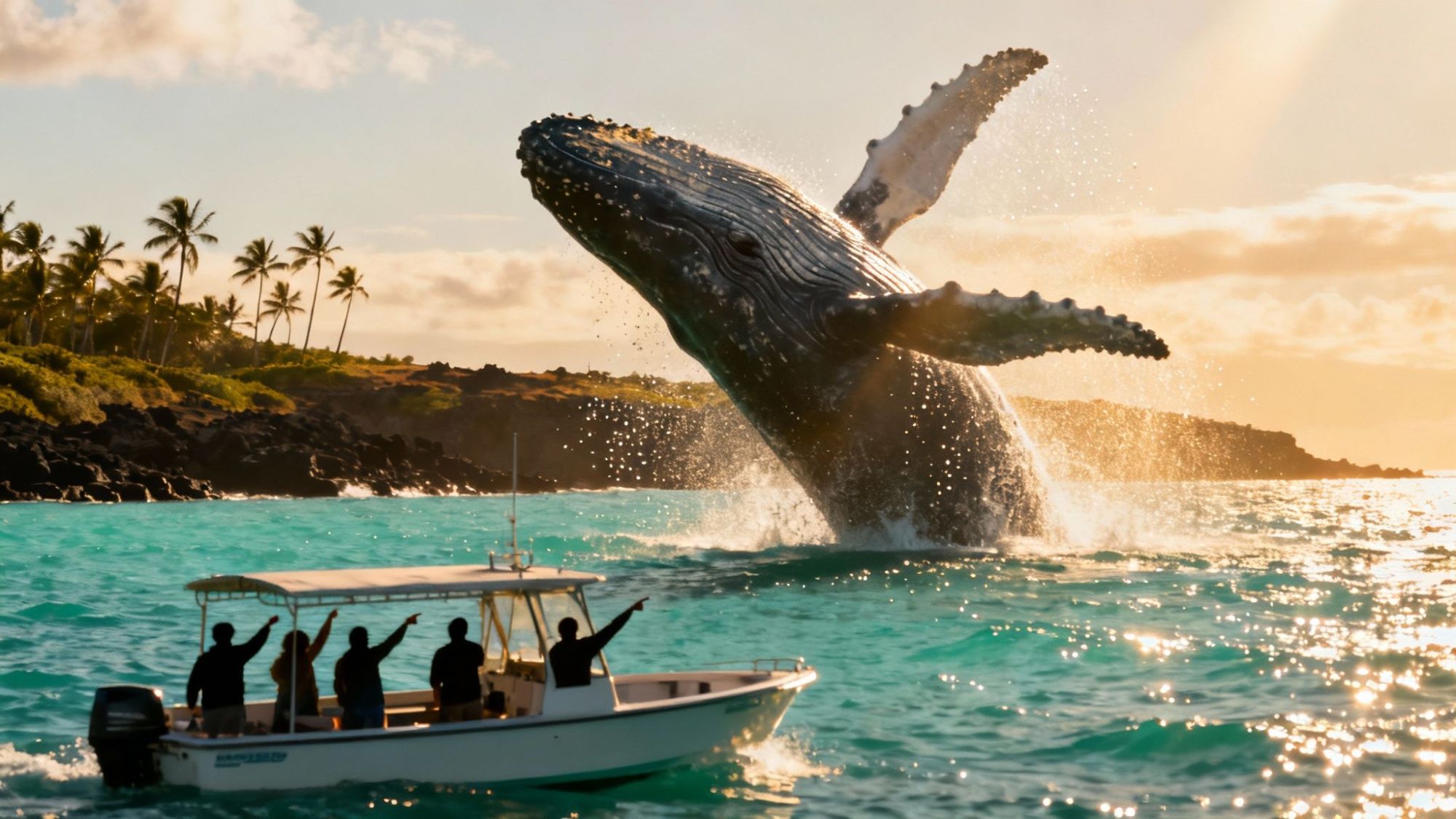
Picture this: a 40-ton humpback whale explodes from the turquoise water, its entire body hanging in the air for a split second against the Kona sun. This isn't just a scene you see on TV; it's a very real moment you can experience right here. If you're looking for one of nature's most incredible shows, you've come to the right place.
Your Big Island Whale Watching Adventure Awaits
Seeing the annual humpback whale migration is, without a doubt, one of the most powerful experiences Hawaii has to offer. Every single winter, these gentle giants make the epic journey from the icy feeding grounds of Alaska to the Big Island's warm, protected waters.
They come here for the important stuff: to find a mate, give birth, and nurse their newborn calves in a safe, calm environment. This incredible journey turns the Kona and Kohala coasts into a living stage for some truly breathtaking displays of power and grace.
If you want to get out on the water with a crew that knows their stuff, Kona Snorkel Trips is the top-rated and most-reviewed snorkel company in Hawaii. We live for creating these kinds of unforgettable moments. But don't just take our word for it—see what our guests have to say.
A Journey of a Lifetime
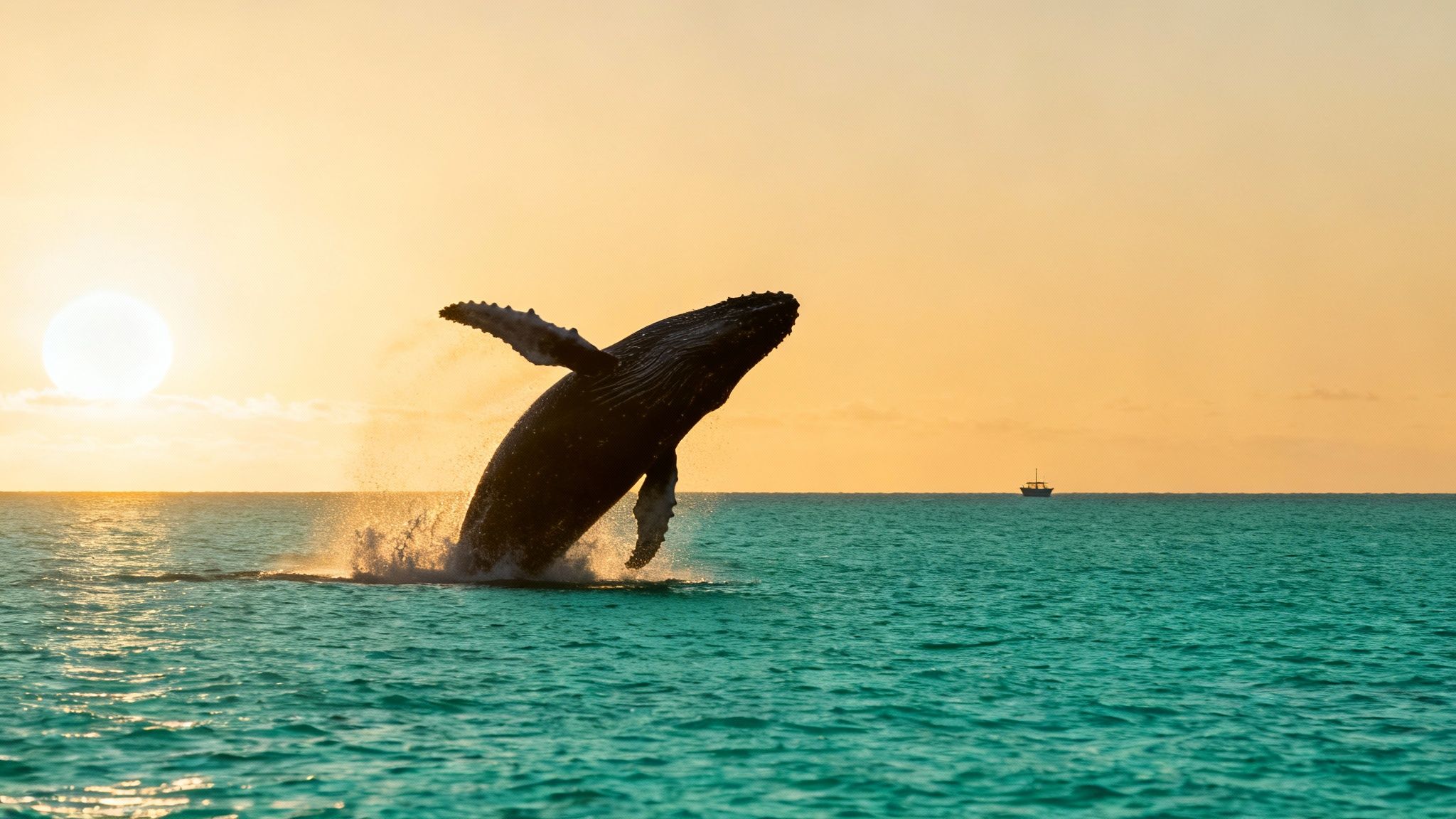
This annual migration is a true test of endurance. Humpbacks travel over 3,000 miles without a single bite to eat, surviving entirely on the fat reserves they built up over the summer. That's what makes this season so special—it’s not just a tourist attraction, it's a front-row seat to a critical and vulnerable part of their lives.
While whale watching is a definite highlight, you can discover a full list of the best things to do on the Big Island to fill out the rest of your vacation itinerary.
What’s even more amazing is that the Pacific humpback population is a huge conservation success story. Today, around 26,000 whales make the trip to Hawaii each year. It’s hard to believe that back in the 1960s, commercial whaling had pushed them to the very brink of extinction.
Why the Big Island Is a Whale Haven
So, why here? The Big Island, especially our western leeward coast, is the perfect sanctuary for these massive animals. The water is calm, warm, and just the right depth to serve as an ideal nursery for moms and their new calves.
- Protection from Predators: Our island’s geography acts as a natural shield, keeping them safe from their main predators, like orcas.
- Warm Water for Calves: Newborn calves don't have much body fat. The warm Hawaiian waters help them save precious energy while they nurse and get strong for the long trip back north.
- Perfect Depths: The coastal shelf is just right for mating rituals and raising the little ones.
All these factors come together to make a whale watching trip here a truly unique encounter. You’re not just seeing whales; you’re seeing them in their preferred winter home, relaxed and thriving.
Understanding the Humpback Migration Season
Timing is everything when you’re trying to see whales on the Big Island. The annual humpback migration isn't just a casual visit; it's a massive, instinct-driven journey that plays out right off our coast. These incredible animals travel thousands of miles from their chilly feeding grounds in Alaska to the warm, protected waters of Hawaii.
Why make such an epic trip? It all comes down to the fundamentals of life: mating, giving birth, and nursing their newborn calves in a safe, warm environment, far from the predators of the north. Getting a handle on the rhythm of their arrival and the different stages of their stay is the key to witnessing their most spectacular behaviors.
The Peak of the Season
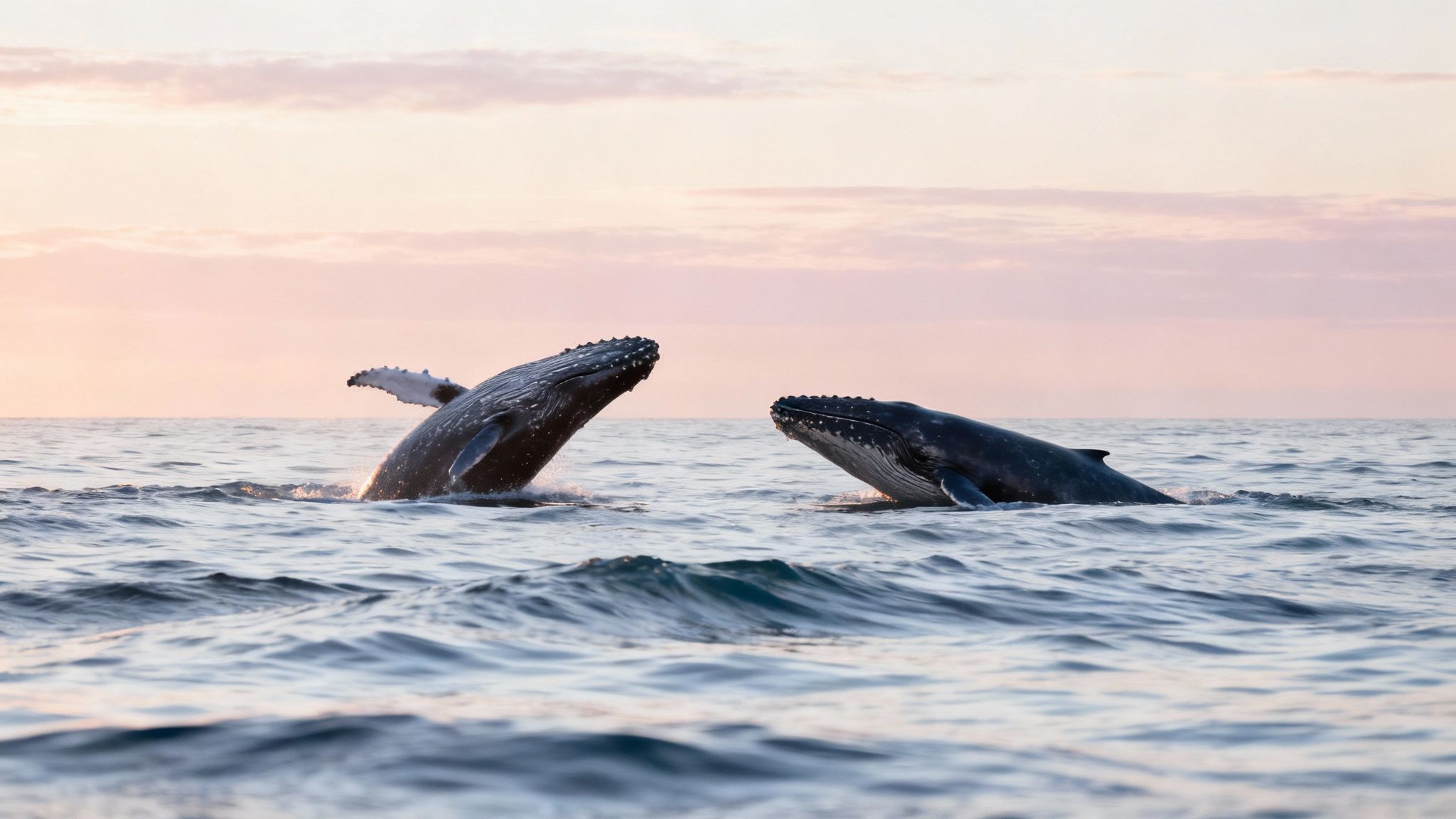
While a few early birds might show up in October, the official whale watching season here runs from December 15 through May 15. But the real action explodes between January and March. This is when the ocean is literally teeming with thousands of humpbacks that have just completed their incredible 3,500+ mile trek.
During these peak months, the water feels alive. It's your absolute best shot at seeing the full show—from jaw-dropping breaches clean out of the water to powerful tail slaps that echo across the waves. Planning your trip during this window gives you the highest odds of those unforgettable, up-close encounters.
For a deeper dive, check out our complete guide to the whale season on the Big Island.
The peak season isn’t just about the sheer number of whales. It’s about the raw energy in the water. This is when you'll see competitive pods of males chasing a female, a truly awe-inspiring sight, alongside the tender, quiet moments between a mother and her brand-new calf.
The Phases of Migration
The migration isn't an all-at-once event; it's more like a staggered arrival and departure, and each phase offers a unique experience.
- Early Season (November – December): The first to arrive are usually the "teenagers" (sub-adults) and moms who have just weaned last year's calf. You’ll start to see spouts on the horizon as the numbers slowly build.
- Peak Season (January – March): The party is in full swing. The majority of the population is here, including pregnant females ready to give birth and males looking to mate. This is prime time for action.
- Late Season (April – May): The last ones to leave are the new mothers with their calves. They stick around as long as possible, letting their babies pack on the blubber and strength needed for the long trip back north. Sightings during this time are often incredibly touching, focused on these new families.
Knowing this timeline helps you pick the right time to visit. If you’re after big numbers and dramatic social displays, aim for the peak months. If you’re hoping for heartwarming nursery scenes, the later part of the season can be truly special.
To help you plan the perfect whale watching Hawaii Big Island adventure, we put together this quick reference guide.
Big Island Whale Watching Season Calendar
Here's a simple breakdown of what to expect month by month, helping you visualize the flow of the season.
| Month | Whale Activity Level | Typical Sightings |
|---|---|---|
| October-November | Low | The first arrivals appear, often lone whales or small groups. Spouts are most common. |
| December | Moderate | The population steadily grows. Sightings are more frequent, with an occasional breach. |
| January-March | High (Peak) | The highest concentration of whales. Expect frequent breaches, competitive pods, and calves. |
| April | Moderate | Many whales start heading north. A great time to see mothers with their growing babies. |
| May | Low | The last moms and calves prepare to leave. Sightings become much less frequent. |
No matter when you come during the season, the chance to see these majestic giants is a memory you won't soon forget.
Where to Find Whales on the Big Island
When it comes to whale watching, not all of the Big Island's coastlines are created equal in the eyes of a humpback. You might get lucky and spot a distant spout from just about anywhere, but the real magic happens on the island's western side. The geography itself basically rolls out the welcome mat for these migrating giants.
The calm, sheltered waters off the Kona and Kohala coasts act as a massive, natural nursery and playground. Tucked away from the powerful trade winds by the towering volcanoes of Mauna Kea and Mauna Loa, this leeward side offers a consistently tranquil environment. That protection is a huge deal for new mothers and their vulnerable calves, who need calm seas to rest, nurse, and build strength for the long journey back to Alaska.
The Kona and Kohala Coasts: The Premier Viewing Zones
The waters along the Kona and Kohala coasts are, without a doubt, the hotspots for any whale watching Hawaii Big Island adventure. The ocean floor here slopes gently, creating the perfect depth for humpbacks to do their thing. This combination of calm seas and ideal depth makes it the most reliable place to witness everything from breathtaking breaches to tender moments between a mother and her calf.
It's possible to catch a glimpse of a whale from the eastern Hilo side, but the rougher, windward conditions make sightings far less frequent and predictable. The leeward coast just offers a consistently better—and more comfortable—experience for both the whales and the people watching them. You can dive deeper into the prime locations in our detailed guide to whale watching in Kona.
Best Spots for Shore-Based Whale Watching
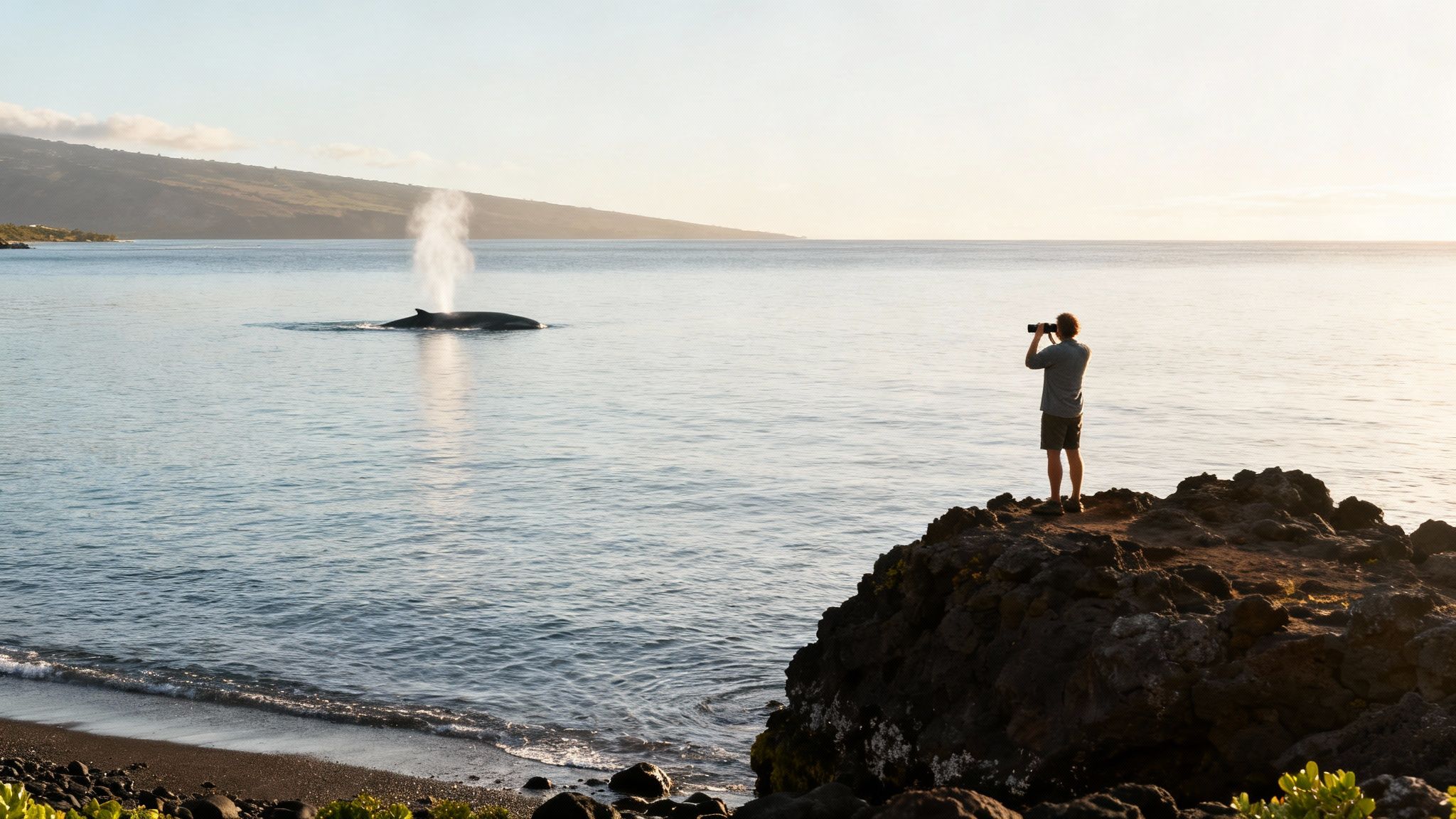
If you prefer to keep your feet on solid ground, the Big Island has some fantastic vantage points for spotting whales from shore. The trick is to find a spot with some elevation. It gives you a panoramic view of the ocean and makes it way easier to spot those distant spouts and splashes. Oh, and don't forget your binoculars!
Here are a few of the top locations for land-based viewing:
- Puʻukoholā Heiau National Historic Site: The name of this place literally translates to "hill of the whale," and for good reason. Its high perch offers sweeping, unobstructed views over the ocean where whales cruise by all the time during peak season.
- Lapakahi State Historical Park: This park gives you another excellent high-elevation viewpoint along the coast. It’s a dry and sunny area, so make sure to bring water and a hat while you scan the horizon.
- Kapaʻa Beach Park: Located near Lapakahi, this park has the added bonus of covered picnic pavilions. You can watch for whales in comfortable shade, making it a great spot to hang out for a few hours.
A little tip for watching from shore: patience is your best friend. Find a comfortable spot, scan the horizon slowly, and look for that tell-tale sign of a spout—a misty puff of air that hangs above the water for just a moment.
Why a Boat Tour Offers an Unmatched Perspective
Spotting a whale from shore is a total thrill, but nothing compares to the immersive experience of a boat tour. Getting out on the water puts you right in the heart of the action, offering a perspective that's simply impossible to get from land. An experienced crew knows how to respectfully navigate the whales' habitat, positioning the boat for incredible, eye-level views.
A guided tour turns your viewing from a passive observation into an active adventure. Hearing the thunderous crash of a breach or listening to the haunting underwater songs of a male humpback through a hydrophone is an experience that will stick with you for a lifetime. Choosing a tour on the leeward side ensures you're in the best possible place to find them.
How to Choose Your Ideal Whale Watching Tour
Picking the right tour for your whale watching Hawaii Big Island adventure is the difference between a good day on the water and an absolutely unforgettable one. The boat you're on really sets the stage for the whole experience. Are you picturing a spacious, stable catamaran that's perfect for families? Or maybe a zippy, zodiac-style raft that gets you right down at water level for a more intimate view? Each one offers a totally different perspective on these gentle giants.
Your decision really comes down to the kind of day you’re hoping for. Do you want a laid-back cruise with plenty of room to roam, or are you craving a more thrilling, close-to-the-action adventure? The good news is, both will get you amazing opportunities to witness the awe-inspiring behaviors of humpback whales.
The Value of an Expert Naturalist Guide
Beyond the boat itself, the single biggest game-changer for any tour is the crew. Having an experienced captain and a passionate naturalist on board is everything. These are the folks who can spot a faint spout on the horizon that the rest of us would completely miss.
More importantly, they're the ones who can translate what you're seeing. They’ll tell you the difference between a tail slap meant as a warning and one that's pure communication, or why a group of males is suddenly charging through the water. This kind of expert insight adds a whole new layer to the experience, turning a simple sightseeing trip into a genuine connection with the ocean. Their passion is infectious, and it’ll deepen your own appreciation for these magnificent animals.
What Sets Premier Operators Apart
When you're looking at tour companies, zero in on the ones that put responsible wildlife viewing first. Premier operators, like us here at Kona Snorkel Trips, are all about small group sizes. A smaller group just means a better, more personal trip where you’re not fighting for a spot at the rail. It also gives the captain the freedom to be more flexible, following the whales' lead for a more natural and respectful encounter.
Here's what to look for in a top-notch tour:
- Small Group Sizes: This is key for a more personal experience, better views, and direct access to the crew's knowledge.
- Experienced Crew: A seasoned captain and naturalist guide are crucial for finding whales and explaining their fascinating behaviors.
- Commitment to Safety: The operator should have a stellar safety record and walk you through all the procedures before you even leave the harbor.
- Respect for Marine Life: The best companies are serious about following federal regulations, always keeping a respectful 100-yard distance and making sure their presence doesn't disturb the whales.
To get a better feel for the amazing options out there, it’s worth checking out a few different highly-rated excursions. This list can help you get started: Top 5 Whale Watching Tours in Kona, Big Island.
Choosing an operator that’s dedicated to responsible practices does more than just guarantee a great trip—it helps protect these animals for years to come. Your choice is a vote for ethical, sustainable tourism.
Making Your Final Decision
At the end of the day, the best tour is the one that feels right for you. Think about what matters most. Is it the comfort of a larger boat? The up-close feel of a small group? Or the incredible stories and facts you'll learn from an expert guide? To make it easier, we put together a detailed comparison of the best Big Island whale watching tours that breaks down the pros and cons of each style.
Taking a few minutes to check on an operator's safety record, educational focus, and respect for the ocean will pay off big time. It’s the surest way to guarantee your time on the water is safe, fascinating, and something you'll be talking about for years.
What to Expect on Your Whale Watching Trip
There's a special kind of excitement that builds as you pull away from the Kona coast. The land slips away, and the air changes—it becomes cleaner, saltier, and thick with anticipation. Everyone's eyes are glued to that deep blue horizon, scanning for the first hint of life.
Then it happens. A shout goes up from a crew member or another passenger. You follow their pointed finger and see it: a misty puff of vapor hanging in the air for just a second. The first spout. That’s the moment your whale watching adventure really kicks off.
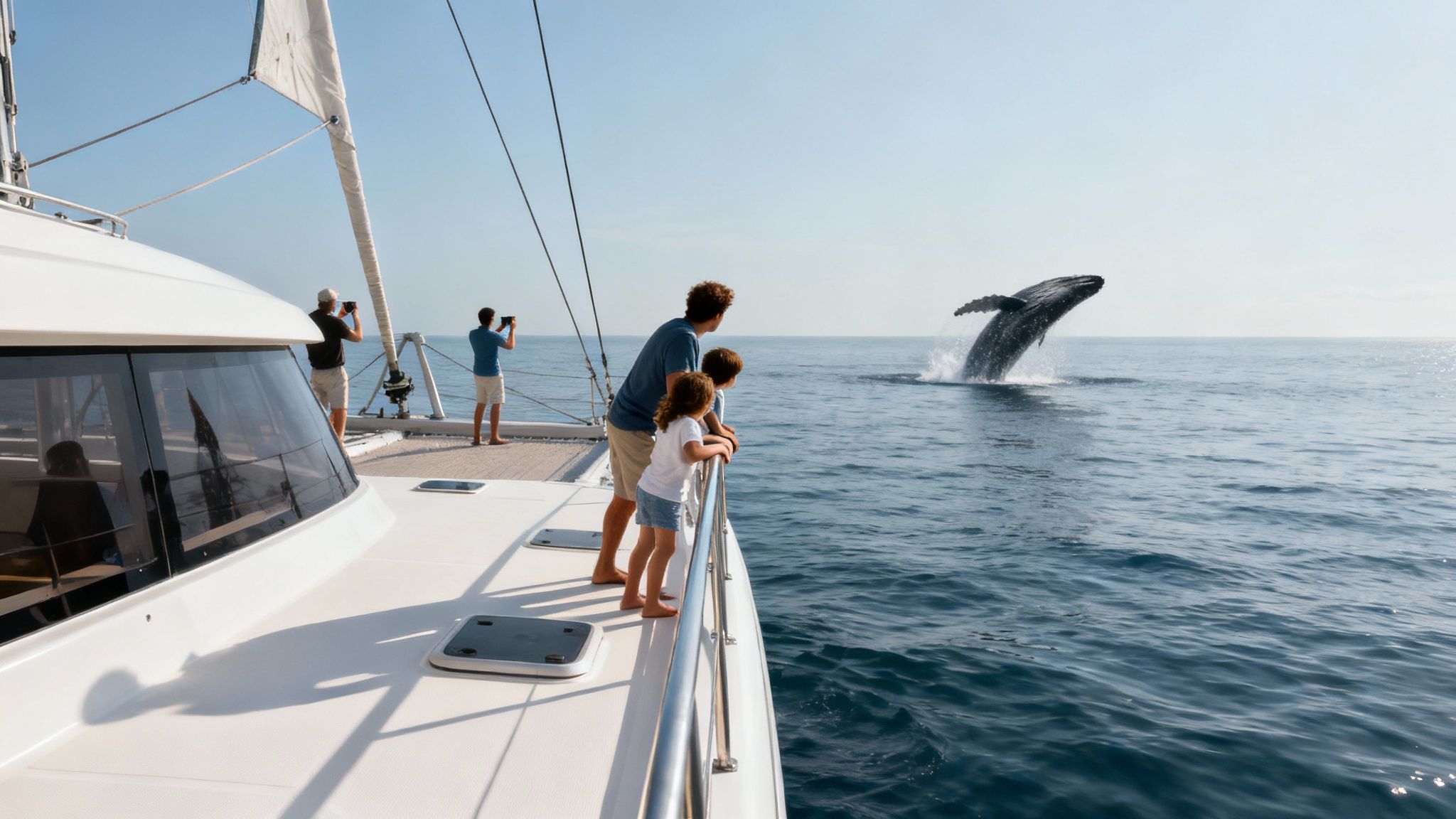
As the boat slows down and maintains a respectful distance, the sheer size of these animals finally sinks in. You can look at all the photos you want, but nothing—and I mean nothing—prepares you for the sight of a 40-foot, 40-ton humpback launching its entire body out of the water. A full breach is a moment of raw, unbelievable power that feels like it’s happening in slow motion.
Decoding Whale Behavior
One of the best parts of any whale watching Hawaii Big Island trip is figuring out what you're actually seeing. Every splash and surface behavior tells a story, and your guide will be there to translate the action for you.
- Breach: This is the iconic, full-body leap. Why do they do it? Scientists think it could be a way to communicate over long distances, shake off pesky parasites, or maybe it's just pure, unadulterated joy.
- Tail Slap: A loud, powerful slap of the fluke (tail) on the water. This can be a warning, a way of talking to other whales, or sometimes just playful showing off.
- Spy-Hop: A real crowd-pleaser. This is when a whale pokes its head straight up out of the water to get a look around. It feels like they're just as curious about us as we are about them.
- Pectoral Fin Slap: You'll often see a whale roll onto its side and smack its long pectoral fin on the water over and over. It’s another form of communication, especially common when whales are socializing.
Beyond the headliners, keep your eyes peeled for the supporting cast. It's common for pods of playful spinner dolphins to race the boat's bow wave, and you might even spot a graceful honu (Hawaiian green sea turtle) popping up for a breath.
A Practical Packing Checklist
Being prepared makes all the difference between a good day and a great day on the water. Even with that warm Kona sun, conditions out on the ocean can shift quickly.
Essentials for Your Trip:
- Polarized Sunglasses: This is a non-negotiable. They cut the glare right off the water, letting you see shapes and shadows beneath the surface you’d otherwise miss completely.
- Light Jacket or Windbreaker: Once the boat gets moving, that ocean breeze can have a real chill to it, even on the sunniest days.
- Reef-Safe Sunscreen: Protect your skin and protect the delicate coral ecosystems that make Hawaii's waters so vibrant.
- Camera with Zoom Lens: You'll definitely want to capture these moments, but don't forget to put the camera down and just be there to soak it all in.
- Binoculars: Not absolutely essential, but they're fantastic for getting a closer look at spouts or activity happening further away from the boat.
If you're prone to motion sickness, it's a good idea to plan ahead. For some solid tips on keeping your sea legs, check out our guide on how to prevent seasickness.
Remember, every trip is a unique encounter. We're on their turf, and no two excursions are ever the same. While sightings can never be guaranteed, the chance to witness something that will stick with you for a lifetime is always there during whale season on the Big Island.
Practicing Responsible Whale Watching
There's nothing quite like the moment you see a 40-ton humpback whale breach the water. It’s an experience that sticks with you, a memory you’ll replay for the rest of your life. But this incredible privilege comes with a massive responsibility.
These gentle giants have traveled thousands of miles to Hawaii’s warm, safe waters. This is their nursery, their sanctuary for mating and raising their calves. Any disturbance from us, no matter how well-intentioned, can cause major stress, especially for a new mother trying to protect her vulnerable baby.
That’s why there are strict federal and state regulations in place. Think of them less as rules and more as a way for all of us to show respect for these animals and their home.
The 100-Yard Rule
If you remember one thing, make it this: the 100-yard rule. It’s simple. No vessel of any kind—boats, kayaks, even paddleboards—can get within 100 yards of a humpback whale. That’s roughly the length of a football field.
This creates a vital buffer zone, a personal space that lets the whales move, rest, and care for their young without feeling cornered or threatened. Honoring this space is the cornerstone of responsible whale watching on the Big Island.
"A respectful distance isn’t just a law; it’s a sign of profound respect for the whales' ancient pilgrimage. It ensures that the whale season on the Big Island remains a safe and spectacular event for generations to come."
Choosing Ethical Operators
This is where you can make a huge difference. Your choice of a tour company matters. Top-tier operators like Kona Snorkel Trips don’t just follow the rules—we live by them. Our commitment to marine conservation runs deep. An expert crew knows exactly how to position the boat for incredible views and photo ops without ever crossing that critical 100-yard line.
To make sure your encounter is both unforgettable and respectful, it helps to understand the best practices for whale watching. The best tours aren’t just about seeing whales; they're about understanding them. Our guides will give you the inside scoop on the behaviors you’re witnessing, explaining why a calf sticks so close to its mom or what a powerful tail slap really means.
When you book an ethical whale watching Hawaii Big Island adventure, you're directly supporting businesses that are guardians of the ocean. Your decision turns a fun day on the water into a meaningful act of ecotourism, helping ensure these majestic animals continue to thrive in their winter home for years to come.
Your Big Island Whale Watching Questions Answered
To help you get everything sorted for your trip, we've put together answers to some of the most common questions we hear. Think of this as your quick-start guide to making sure your day on the water is absolutely perfect.
What Is the Absolute Best Time of Day to See Whales?
Hands down, early morning tours are usually the best bet. The ocean tends to be calmer, almost glassy, which makes it way easier to spot those tell-tale whale spouts on the horizon. The soft morning light is also incredible for photos.
Humpbacks are active all day, but those prime morning conditions give you a real edge for a fantastic experience. It’s just more comfortable and the visibility is often clearer.
Am I Guaranteed to See Whales on My Tour?
Since we're dealing with wild animals living their lives, nobody can ever promise a sighting with 100% certainty. That said, your chances are incredibly high, especially if you're here during the peak months from January through March.
Our experienced captains live and breathe these waters. They know the whales' favorite hangouts and are always in touch with other boats to find where the action is. Many top-notch operators, including us, offer a "whale guarantee"—if you don't see whales, you can join another tour for free.
Can I See Whales from Shore Without a Boat Tour?
You sure can! It's definitely possible to spot whales from land, especially along the elevated coastlines of Kona and the Kohala Coast. One of the best spots is the Puukohola Heiau National Historic Site—its name even means "hill of the whale." Just be sure to bring a good pair of binoculars to really get a decent look.
But let's be real, a boat tour is a completely different world. It gets you closer (respectfully, of course) and lets you truly feel the experience. It's one thing to see a distant splash, and another thing entirely to hear it.
A boat tour transforms your perspective from simply watching to truly experiencing. Hearing the thunderous sound of a breach or the deep whoosh of a spout is something you just can't get from the shore.
What Should I Do If I Am Prone to Seasickness?
Don't let a little motion sickness ruin an amazing day! The best trick is to take an over-the-counter remedy before you even get on the boat. Opting for a bigger, more stable boat like a catamaran can also make for a much smoother ride.
Once you're out there, stay in the fresh air and keep your eyes on the horizon—it really works. It’s also smart to give your crew a heads-up beforehand. We've seen it all and have plenty of tips to help you feel your best.
For a whale watching adventure you'll never forget, guided by a crew that puts safety and respect for the whales first, come join us at Kona Snorkel Trips. Explore our whale watching tours today!