
Whale Watching Big Island Tours – Your Ultimate Guide
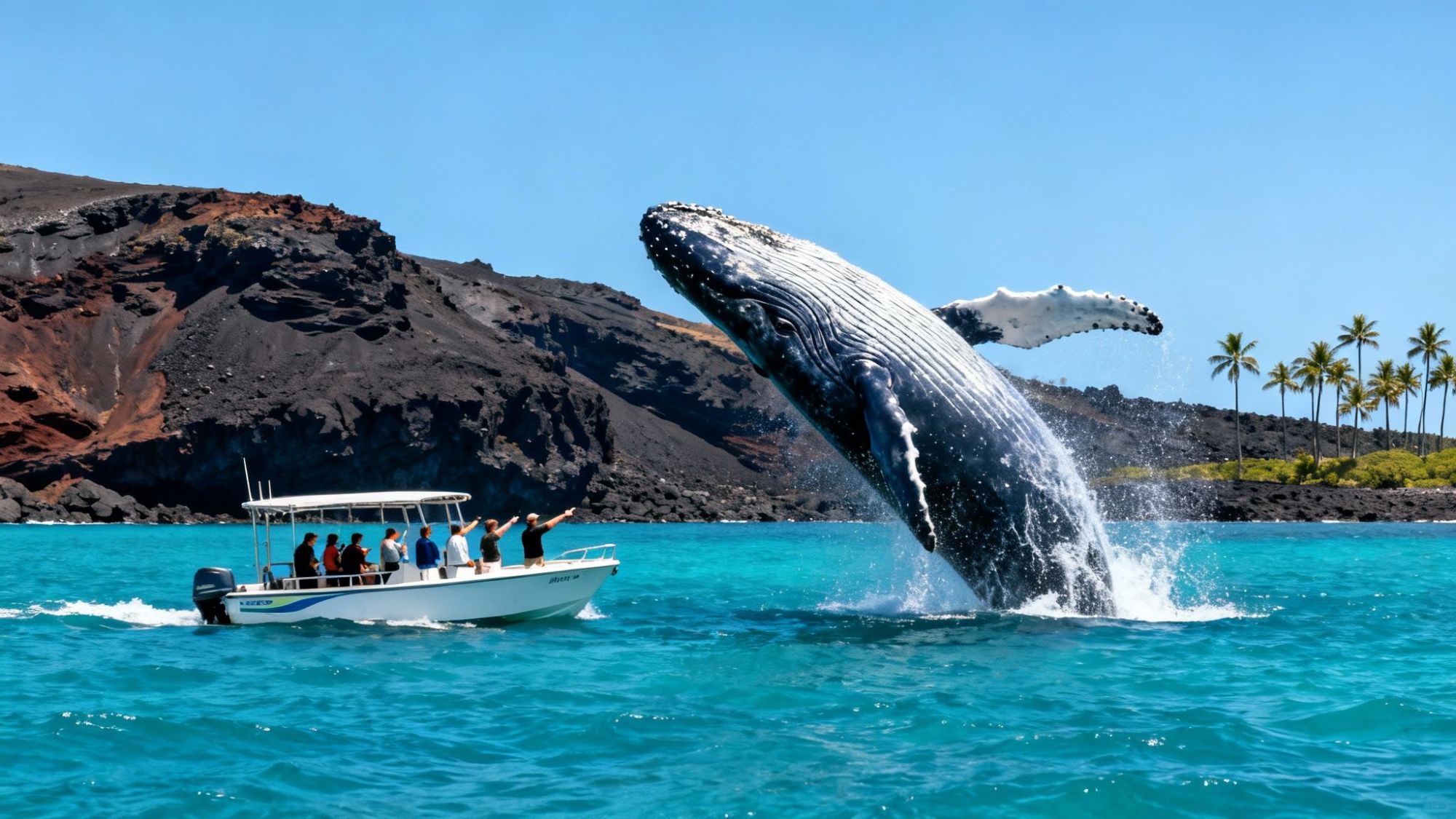
There's nothing quite like seeing a 40-ton humpback whale explode out of the ocean, and here on the Big Island, we have a front-row seat to some of the best whale watching in the world. The calm, protected waters along the Kona and Kohala coasts are the perfect sanctuary for thousands of these gentle giants every single winter.
As the top-rated and most-reviewed snorkel company in Hawaii, Kona Snorkel Trips has a reputation for delivering exceptional marine adventures.
Your Ultimate Guide to Big Island Whale Watching
Each year, an incredible migration takes place. Thousands of humpback whales travel over 3,000 miles from the frigid feeding grounds of Alaska, all the way to the warm, welcoming waters of Hawaii. They come here to mate, give birth, and raise their newborn calves, and the Big Island—with its deep offshore waters and sheltered bays—provides the perfect stage for this breathtaking show.
This guide is built from years of experience on these waters. We'll get into the absolute best times to visit, point you to the top spots for sightings, and help you figure out which kind of tour is the right fit for your adventure.
When you're dealing with Mother Nature, it always helps to go with a local expert who knows the ocean's rhythms. As Hawaii's top-rated and most-reviewed snorkel company, Kona Snorkel Trips has built a reputation for creating amazing, up-close marine encounters. That reputation comes from years of running safe, educational, and truly unforgettable trips out on the water.
Understanding the Big Island Whale Watching Season
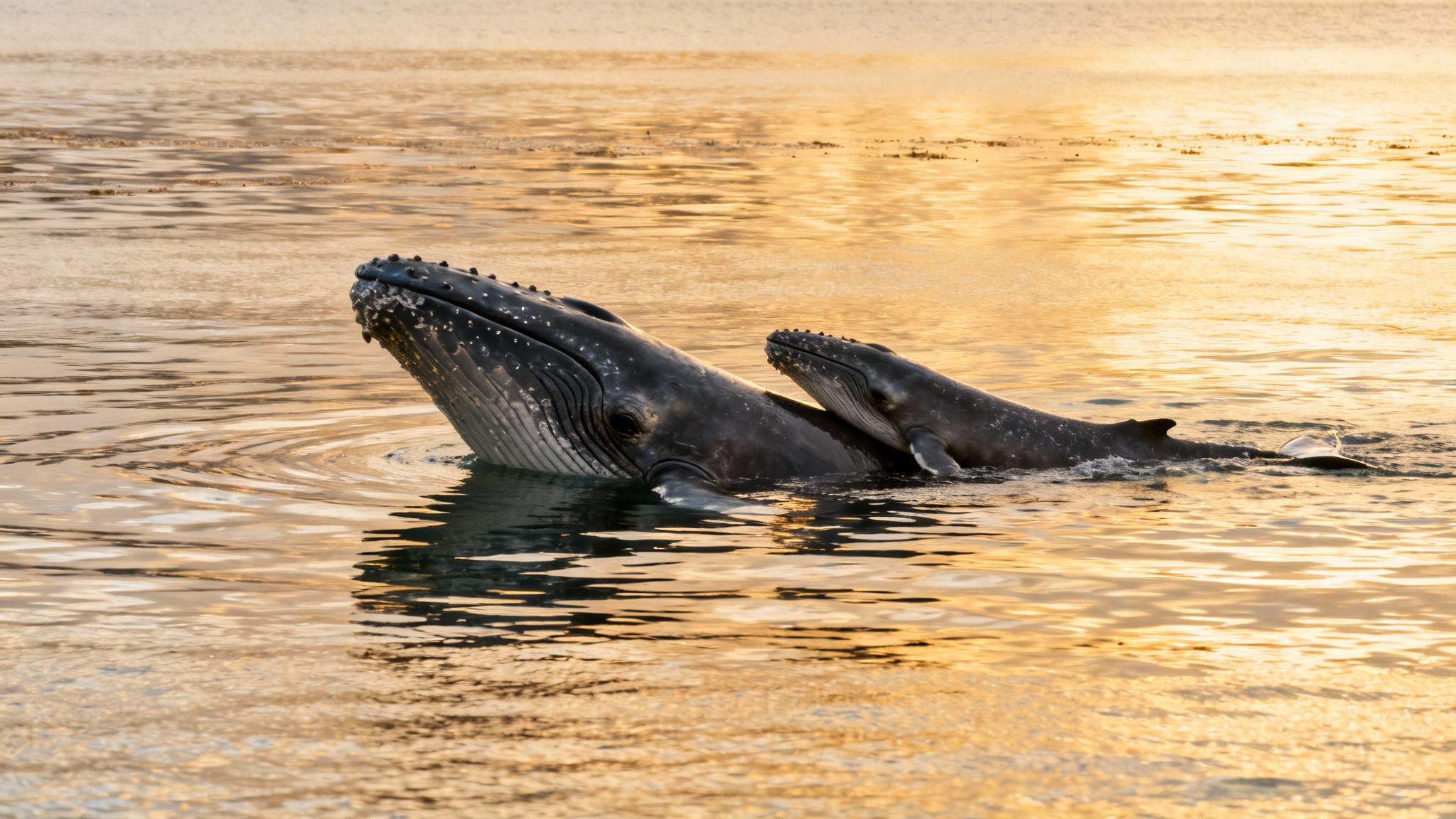
If you want to experience truly unforgettable whale watching on the Big Island, timing is everything. The incredible show you see off the Kona and Kohala coasts is actually the grand finale of an epic migration. Every year, thousands of North Pacific humpback whales travel an astonishing 3,000 miles from their chilly feeding grounds in Alaska to our warm, protected waters.
This isn't just a tropical vacation for them; it's a crucial part of their life cycle. The ocean surrounding the Big Island transforms into a massive, bustling nursery. Here, safe from most predators, female whales give birth and raise their newborn calves, teaching them everything they need to know before making the long trip back north. This annual gathering makes Hawaii one of the most important humpback whale habitats in the world.
The Peak Season For Whale Sightings
While you can technically spot whales from November through May, the absolute best time for a tour is during the peak months of January, February, and March. This is when the whale population hits its highest numbers, and the ocean is just electric with activity. If you're hoping to see the full range of whale behaviors, this is your window.
The sheer density of whales is hard to wrap your head around. It’s estimated that over 12,000 whales—more than half of the entire North Pacific humpback population—gather in Hawaiian waters during these peak months. This concentration massively boosts your chances of seeing multiple whales on a single trip.
The action you'll witness is nothing short of awe-inspiring. You might see males in dramatic competition pods, vying for the attention of females with powerful breaches and thunderous tail slaps. At the same time, curious calves test out their new strength, often playing near their watchful mothers.
What to Expect in the Shoulder Months
Don't worry if you can't make it during the absolute peak. Booking a tour in the shoulder months of December and April still offers a fantastic chance to see these giants.
In December, you'll catch the eager arrival of the first whales, which are often large males ready to compete. There's a palpable energy in the water as the population starts to build for the season.
April, on the other hand, provides a different but equally touching experience. This is when you'll often see the last of the mother and calf pairs. These moms have spent months nursing their young, and the calves are now bigger and stronger, getting ready for their very first migration to Alaska. Sightings might be a little less frequent than in February, but they often feel more intimate and profound.
Big Island Whale Watching Season at a Glance
To make planning a bit easier, here’s a quick rundown of what you can generally expect throughout the season.
| Month | Activity Level | What to Expect |
|---|---|---|
| November/December | Building | First arrivals, often large males. Excitement is high as the season kicks off. |
| January/February | Peak | Highest concentration of whales. The best time for frequent sightings and dramatic behaviors like breaching and competition pods. |
| March | Peak | Still very high activity. Lots of mothers with their growing calves. |
| April/May | Winding Down | The last of the mothers and calves linger before heading north. Sightings are more peaceful and poignant. |
This table is just a general guide, of course. The whales operate on their own schedule!
For a deeper dive into what each month holds, our complete guide to the Big Island whale season offers a detailed month-by-month breakdown.
Sometimes the season gets a surprisingly early start. The 2025 season, for example, had its first confirmed sighting way back on October 8th off the Puako coast, heralding an early migration from Alaska. You can read more about this season's early whale arrivals on liquidhawaii.com.
Finding the Best Whale Watching Spots
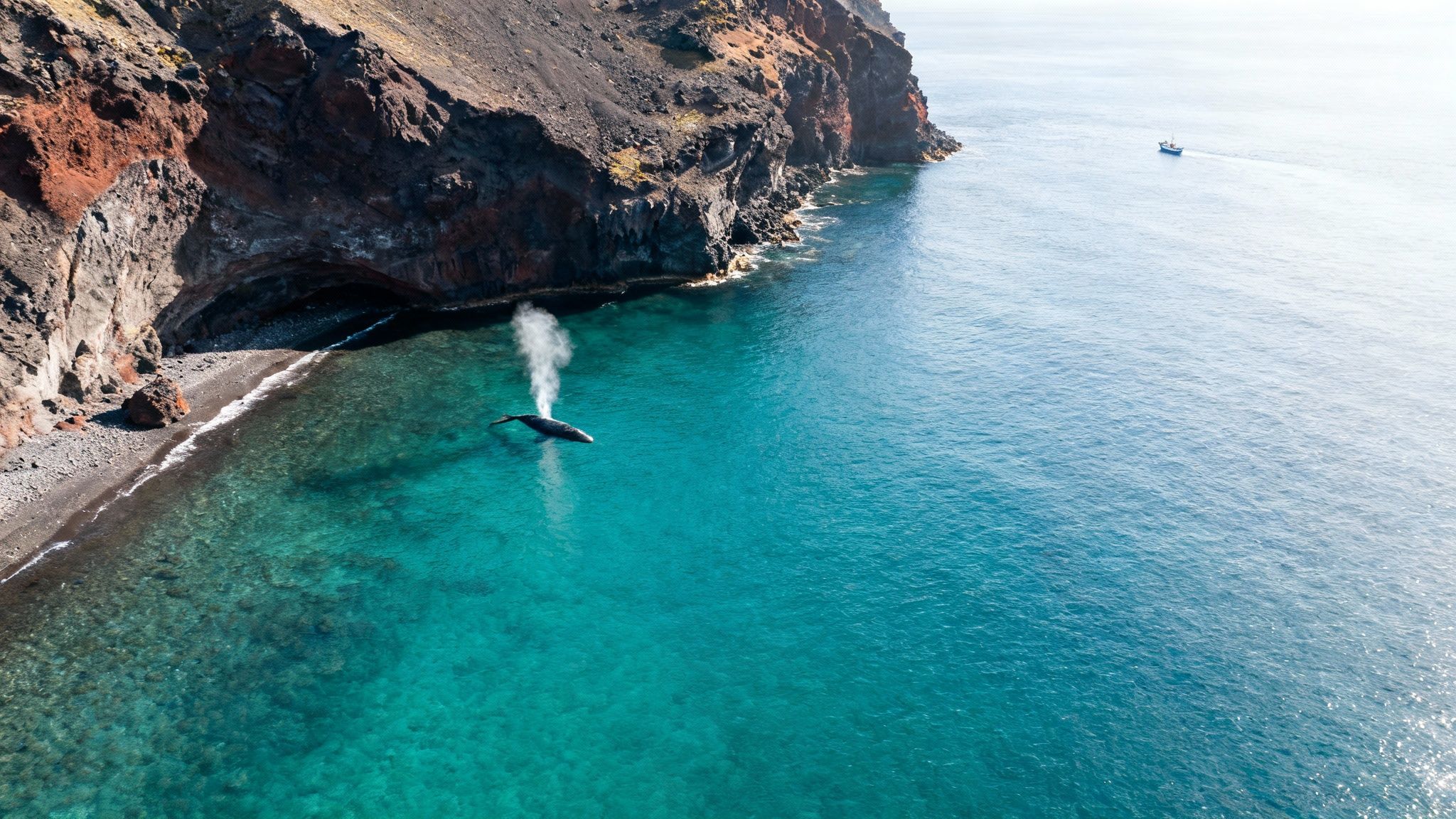
When it comes to whale watching Big Island tours, where you go is every bit as important as when you go. The Big Island’s entire western coastline is part of a National Marine Sanctuary, and for good reason—its unique underwater landscape creates the perfect nursery for humpback whales. The calm, shallow, protected waters are a safe haven for mothers to give birth and nurse their newborn calves.
That said, not all spots are created equal. Some areas consistently deliver more frequent and jaw-dropping sightings, turning a good trip into one you’ll talk about for years. Knowing these hotspots is the secret to maximizing your chances of an incredible encounter. The leeward (west) side of the island shields the ocean from strong trade winds, which means calmer seas and better viewing conditions, especially in the mornings.
The Unbeatable Kohala Coast
If there’s a capital city for the whale nursery, it’s the Kohala Coast. This stretch of coastline, running from Puako north to Upolu Point, is the undisputed champion of Big Island whale watching. Its sheltered bays and perfect water depths make it the go-to spot for mother whales and their young.
This isn’t just local knowledge; it's a fact backed by years of observation. The Kohala Coast consistently boasts sightings that are two to three times more frequent than anywhere else on the island. For you, that means more action, more breaches, and a much higher chance of witnessing those tender moments between a mother and her calf. The dramatic volcanic cliffs also provide a stunning backdrop you won’t soon forget.
The golden hour for whale watching here is early morning. Thanks to calmer seas and better light, sightings can jump by as much as 50% at 8:00 AM compared to noon. Getting an early start is absolutely worth it. You can learn more by checking out these Big Island whale watching tips.
Why the Kona Coast Shines
Just south of Kohala, the Kona Coast offers its own fantastic whale watching opportunities. While Kohala might have the sheer numbers, Kona is famous for its exceptionally clear, deep blue water. This visibility can make for some breathtakingly vivid sightings when the whales appear.
The waters off Kailua-Kona are another prime area where tour boats regularly find pods. A big plus for choosing a Kona tour is that it's often less crowded than the whale watching hotspots on Maui or Oahu. This gives you a more peaceful and intimate experience with the whales, without having to jostle for position with a fleet of other boats.
Whether you choose the bustling heart of the nursery on the Kohala Coast or the clear blue waters of Kona, the west side of the Big Island is where your adventure awaits.
Choosing Your Perfect Whale Watching Tour
With so many amazing options out there, picking the right tour can feel like a big deal. The trick is to match the style of the tour to what you’re hoping to get out of the day. Are you a family with young kids? A serious photographer? Or an adventurer looking for a thrill? No matter what, there’s a perfect whale watching Big Island tour waiting for you.
The first major decision you'll make is the type of boat. Each one offers a totally different vibe on the water, and it affects everything from your comfort level to how close you feel to the action. Getting a handle on these differences is the best first step to planning a day you'll never forget.
Large Catamarans The Stable Choice
Big, roomy catamarans are the go-to for a lot of visitors, and for good reason. Their dual-hull design makes them incredibly stable, which is a massive plus for anyone worried about seasickness or traveling with little ones.
These boats come with a lot of perks:
- Comfort and Amenities: You can pretty much count on having onboard restrooms, plenty of shade, and lots of space to move around.
- Excellent Viewing Platforms: Their elevated decks give you a fantastic vantage point for spotting whales from a distance and snapping incredible photos.
- Smooth Ride: That stability cuts down on the rocking and rolling, making it a much more comfortable experience for everyone, from toddlers to grandparents.
This is the ideal setup for families, first-time whale watchers, and photographers who need a steady platform to nail that perfect breach shot.
Small Rafts The Intimate Adventure
If you're craving something a bit more exhilarating—a real up-close-and-personal kind of encounter—then a smaller, nimble boat like a rigid-hulled inflatable (think Zodiac-style raft) is an unbeatable choice. These boats are fast, can turn on a dime, and sit low in the water, giving you a true whale’s-eye view of the action.
Being at water level in an agile raft makes a 40-ton humpback whale feel even more immense and powerful. It’s a humbling, awe-inspiring perspective that you just can't get on a bigger boat.
This type of tour is perfect for thrill-seekers and anyone who prefers a more intimate, small-group vibe. The trade-off is fewer creature comforts—you can expect a bumpier ride and no bathrooms—but the sheer excitement is off the charts.
Finding a Reputable Tour Operator
Once you've got a boat type in mind, the next move is picking a great company. A top-notch operator does way more than just find whales; they create a safe, educational, and respectful experience for both you and the animals.
Here’s a quick checklist to help you choose wisely:
- Experienced Naturalist Guides: Look for tours that have marine biologists or certified naturalists on board. Their expertise truly brings the whole experience to life.
- Commitment to Eco-Friendly Practices: Responsible operators stick to federal viewing guidelines like glue. The whales’ well-being should always be the number one priority.
- Small Group Sizes: Smaller groups mean a more personal trip and a better view for everybody on board. No craning your neck over a crowd!
- Stellar Guest Reviews: Hop on sites like Google and TripAdvisor and see what recent customers are saying. A long history of glowing reviews is always a great sign.
Keeping these points in mind, you can confidently book one of the many fantastic whale watching Big Island tours that fits your adventure style and values. For a deeper dive, check out our detailed guide on Kona whale watching to help you lock in your plans.
What to Expect on Your Whale Watching Adventure
The moment you climb aboard for your tour, you can feel the excitement buzzing in the air. Everyone’s here for the same reason—to see some of the biggest animals on the planet. Your adventure starts with a warm aloha from the crew, followed by a quick but important safety briefing. This is a great time to get your bearings on the boat and ask any last-minute questions before you cast off from the harbor and head for the open water.
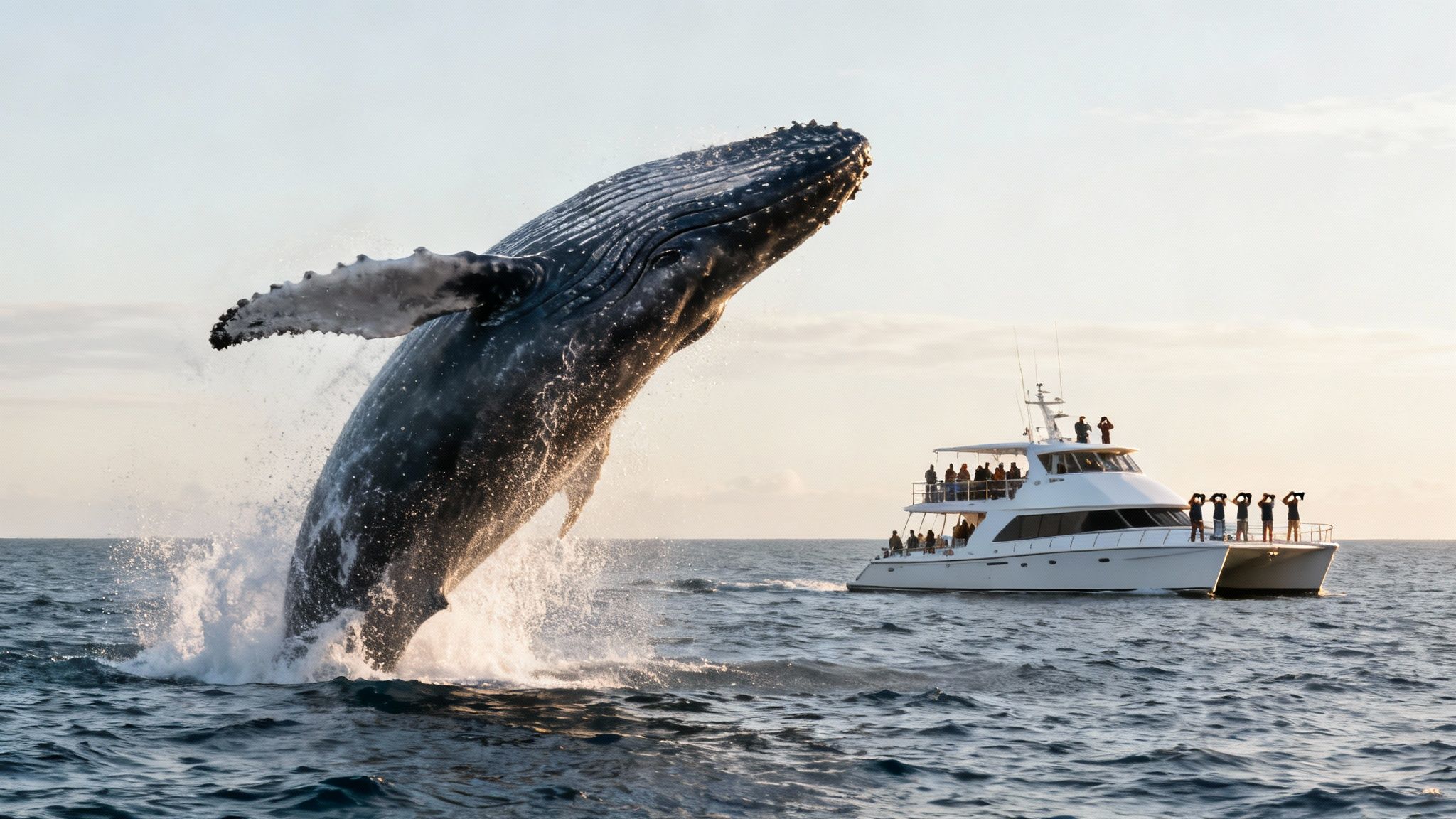
As the gorgeous Kona or Kohala coastline starts to shrink behind you, the real hunt begins. The guides have incredible, trained eyes—they can spot the tell-tale poof of a whale's blow from miles away. When they finally point and yell, “There she blows!”, your heart starts pounding. This is what you came for.
Witnessing Breathtaking Whale Behaviors
Out here, the ocean is the stage, and the humpback whales are the main act. No two tours are ever the same, but with a little luck, you might get to see some truly mind-blowing behaviors. Keep that camera ready.
- The Breach: This is the holy grail of whale watching. A 40-ton animal launching its entire body out of the ocean and crashing down with a splash that seems to shake the sea itself. It's a display of raw power you'll never forget.
- Tail Slap (Lobstailing): You’ll often see a whale lift its massive tail fluke high out of the water and slam it down. The sound is like a cannon blast that echoes for miles.
- Spyhop: This one feels personal. A spyhop is when a whale pops its head straight up out of the water to take a good look around—and that includes checking out your boat!
- Pectoral Fin Slap: A whale will sometimes roll onto its side and just start slapping its enormous, wing-like pectoral fin on the surface over and over. It's another powerful way they make their presence known.
A quick but important note: these are wild animals in their home. Federal law requires all boats to keep a safe and respectful distance of at least 100 yards. Any reputable tour operator follows these rules to the letter to make sure we’re just quiet observers, never a disturbance.
More Than Just Whales
While the humpbacks are definitely the headliners, your trip is really a full-on marine safari. Keep your eyes peeled for pods of acrobatic spinner dolphins, famous for launching themselves into the air and spinning like torpedoes. You’ll also likely spot a few honu (Hawaiian green sea turtles) cruising peacefully near the surface.
This isn’t just another boat trip; it’s a front-row seat to one of nature's greatest shows. During the 2025 season finale, volunteer-driven science logged an incredible 714 whales, with the Big Island's Kohala coast averaging 3-6 whales every 15 minutes during peak season. You can learn more about Hawaii's whale counts on BigIslandVideoNews.com.
How to Prepare for Your Day on the Water
A little bit of planning can be the difference between a good day on the water and an absolutely unforgettable one. Knowing what to pack for your whale watching Big Island tour just makes sure you’re comfortable, protected, and ready to soak in every moment. Think of it like any other outdoor adventure—having the right gear lets you focus on the fun.
When you're prepared, you can just relax and be present. Instead of squinting into the sun's glare off the water or getting chilled by the sea breeze, you'll be ready when a 40-ton humpback breaches right off the bow.
Essential Packing List for Your Tour
To keep it simple, here's a quick checklist of things you'll be glad you brought.
- Reef-Safe Sunscreen: The Hawaiian sun is no joke, and the reflection off the ocean basically doubles its intensity. Do your skin and our delicate coral reefs a favor by choosing a mineral-based sunscreen.
- Polarized Sunglasses: These are a total game-changer. They slice right through the surface glare, making it so much easier to spot whales and other marine life just under the water.
- Hat and a Light Jacket: A wide-brimmed hat is key for keeping the sun off your face and neck. And even on the warmest Kona days, the breeze out on the ocean can get surprisingly cool, so a light, wind-resistant jacket is always a smart move.
- Non-Slip Footwear: Boat decks can get slippery, it's just a fact of life at sea. Go for shoes with a solid grip, like boat shoes or sandals with rubber soles, so you can move around the vessel safely.
- Camera with a Zoom Lens: Your phone camera is good, but a real camera with a decent zoom will let you capture those incredible, detailed shots of the whales while still respecting their space and keeping a safe distance.
A Quick Note on Motion Sickness
Even on the calmest days, the gentle roll of the boat can get to some people. If you know you're prone to motion sickness, or you're just worried it might hit you, a few simple precautions can make all the difference. The classic trick is to keep your eyes fixed on the stable horizon—it really works.
For folks who are extra sensitive, you might want to consider an over-the-counter remedy before you even step on the boat. For a deeper dive into staying comfortable, check out our guide on how to prevent seasickness in Hawaii. A little prep goes a long way toward guaranteeing a fantastic day.
Common Questions About Whale Watching
To help you get your plans squared away, here are some quick answers to the questions we hear most often about whale watching on the Big Island.
Is a Whale Sighting Guaranteed on a Tour?
While we're dealing with wild animals here, and nothing can ever be a 100% certainty, the odds are overwhelmingly in your favor. Reputable local crews report a success rate of over 95% during the peak season from January through March. An experienced captain knows these waters like the back of their hand, and they use that knowledge of whale behavior and migration patterns to put you in the right place at the right time.
What Is the Best Time of Day for Whale Watching?
We're big fans of the morning tours. The ocean is usually calmer then, almost like glass, and the light is just perfect for getting those incredible photos. In fact, some whale count data shows that sightings can be up to 50% more frequent around 8:00 AM compared to the middle of the day. That said, afternoon trips are still fantastic and offer an amazing experience out on the water.
How Close Can the Boats Get to the Whales?
This is a really important one. Federal law is crystal clear: all boats have to stay at least 100 yards away from humpback whales. It's all about protecting these magnificent animals, and every responsible tour operator out here follows that rule to the letter. What’s amazing, though, is how often the whales themselves decide to close that gap. They're naturally curious and will sometimes swim right up to the boat, giving you a spectacular—and perfectly safe—close-up view.
Are the Tours Suitable for Children?
Absolutely! Whale watching is one of those experiences that lights up faces of all ages, from toddlers to grandparents. It’s a genuine adventure the whole family can share. Most companies welcome families aboard. If you have younger kids, you might find that the larger, more stable boats like catamarans are the most comfortable choice. They offer more room to move around and usually have amenities like a restroom right on board.