
Whale Watching Big Island Tours: The Ultimate Guide to Spotting Giants
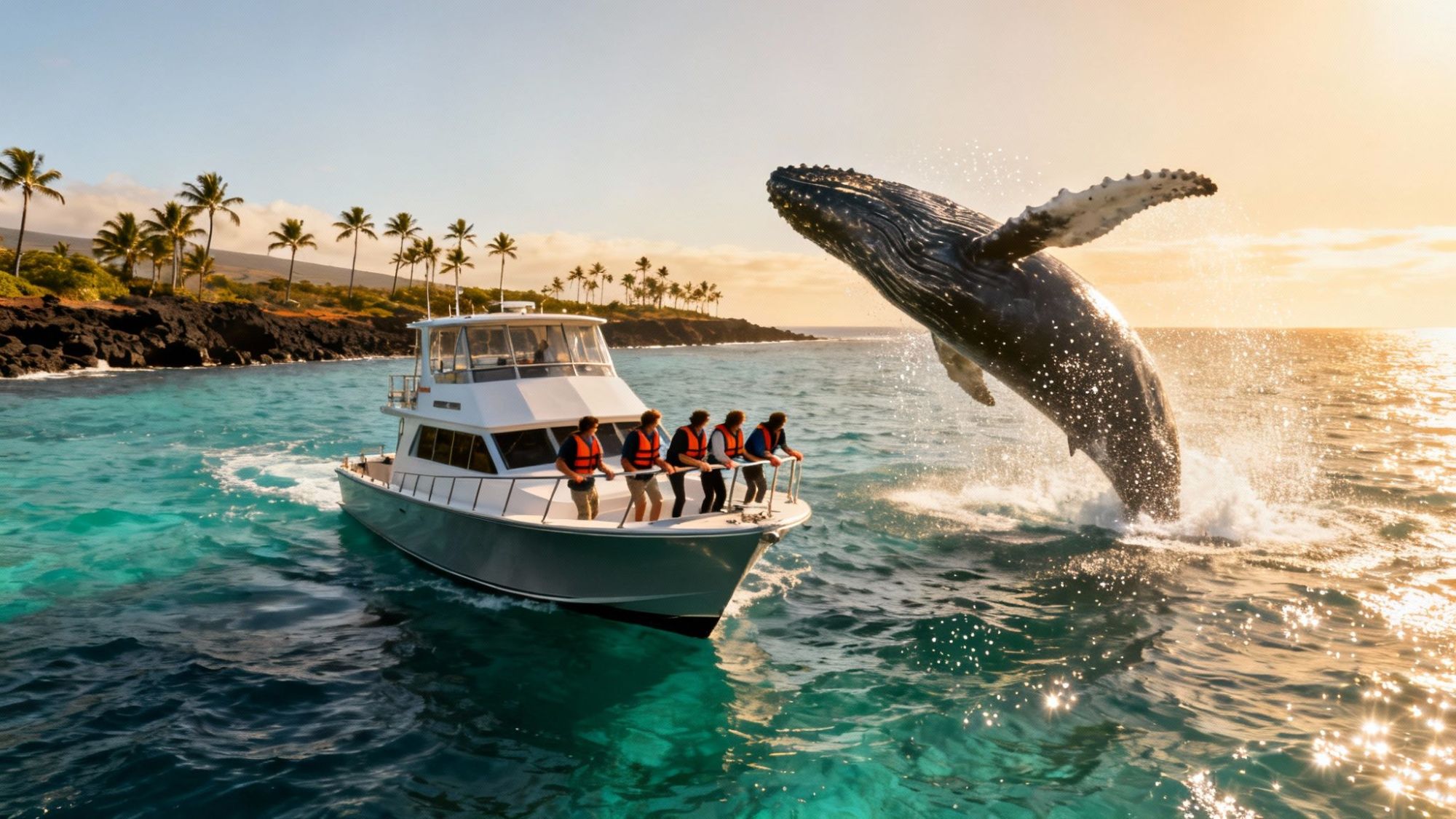
Picture this: the deep blue calm of the Pacific suddenly shatters as a forty-ton humpback whale throws its entire body into the air. That’s the kind of heart-stopping moment you get with whale watching Big Island tours, and it's easily one of the most incredible wildlife encounters you can have anywhere on the planet. Every year from January through March, thousands of these gentle giants turn Hawaiian waters into their personal nursery, creating memories that last a lifetime.
Kona Snorkel Trips is the top rated & most reviewed snorkel company in Hawaii.
Your Ultimate Guide to Big Island Whale Watching
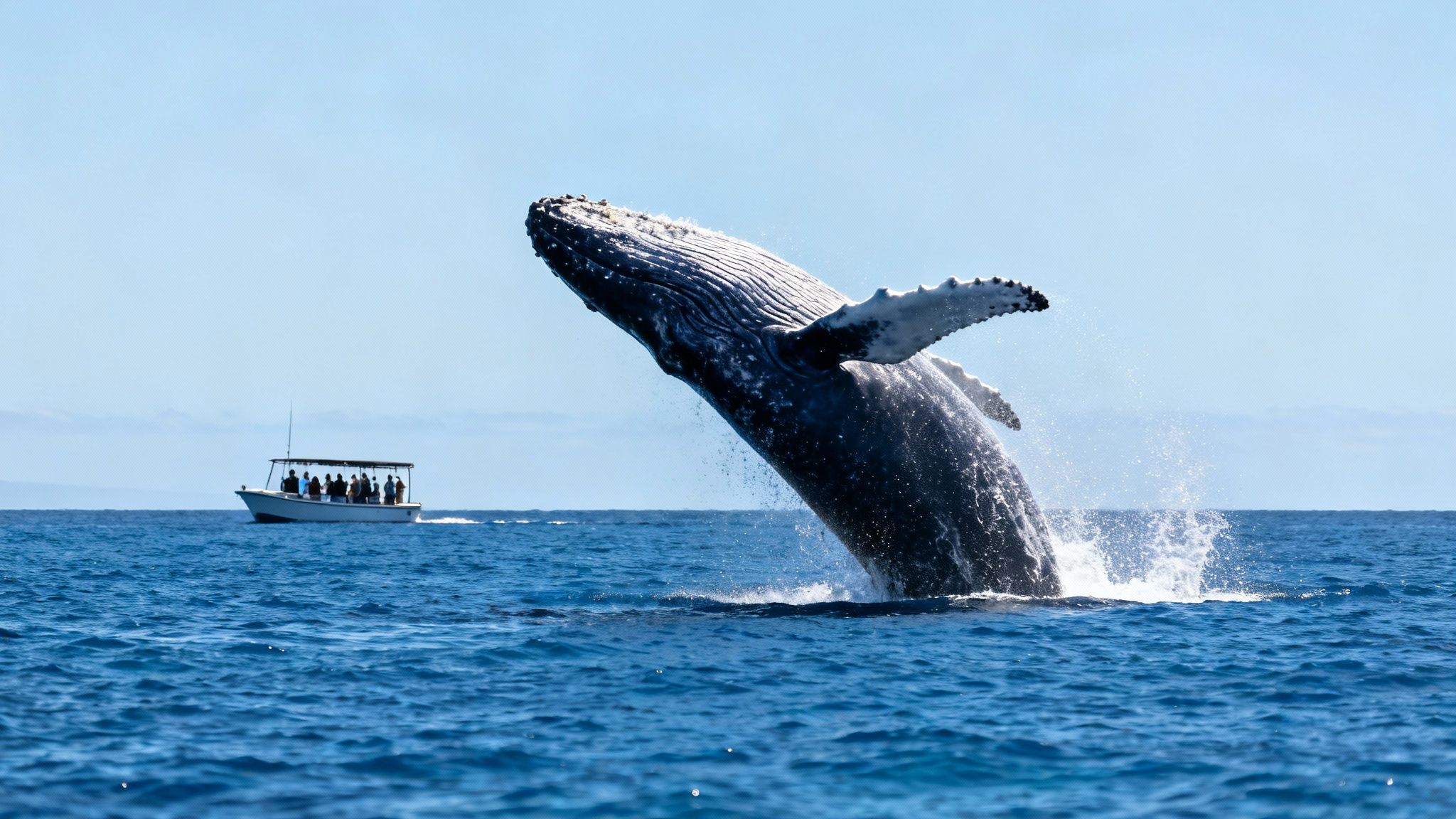
Each winter, a powerful, ancient instinct pulls thousands of humpback whales on an epic 3,000-mile journey from their chilly feeding grounds in Alaska. Their destination? The warm, sheltered, and stunningly clear waters right here off the Big Island. This isn't just a vacation for them; it's a critical part of their life cycle.
These calm waters are the perfect sanctuary for the most important work a whale has to do: mating, giving birth, and nursing their brand-new calves. With few natural predators like orcas around, the Kona and Kohala coasts become the ideal oceanic nursery. This annual migration transforms our island into a global hotspot for whale lovers and marine enthusiasts.
Why This Guide Is Your Essential Companion
With so many options out there for whale watching Big Island tours, figuring out where to start can feel a little overwhelming. That's where we come in. Think of this guide as your trusted resource, here to walk you through everything you need to know for the perfect adventure. Our goal is to make sure your experience is safe, respectful, and absolutely awe-inspiring.
Here’s a taste of what we’ll cover:
- The Migration Calendar: We'll pinpoint the absolute best times to visit for peak whale activity.
- Top Tour Choices: You'll get the rundown on different tours, from zippy rafts to spacious catamarans.
- Prime Viewing Locations: Discover the best spots on the island for watching from a boat or even from shore.
- Essential Packing Tips: Get a complete checklist of what to bring for a comfortable day on the water.
Choosing the right tour operator makes all the difference. A great crew doesn't just increase your chances of incredible sightings; they ensure the safety and well-being of these magnificent animals are always the top priority.
Throughout this guide, we'll be sharing our own insights from years of experience at Kona Snorkel Trips, recognized as the top-rated and most-reviewed snorkel company in Hawaii. We're passionate about creating intimate, small-group marine adventures that truly connect our guests with the ocean's magic. For us, a great tour is about more than just seeing whales—it’s about understanding their world and our role in protecting it.
So, whether you're a seasoned wildlife photographer hunting for the perfect shot or a family looking to create a once-in-a-lifetime memory, you're in the right place. The following sections will give you everything you need to turn your Big Island whale watching dream into a reality. Let’s dive in
Understanding the Humpback Whale Migration Calendar
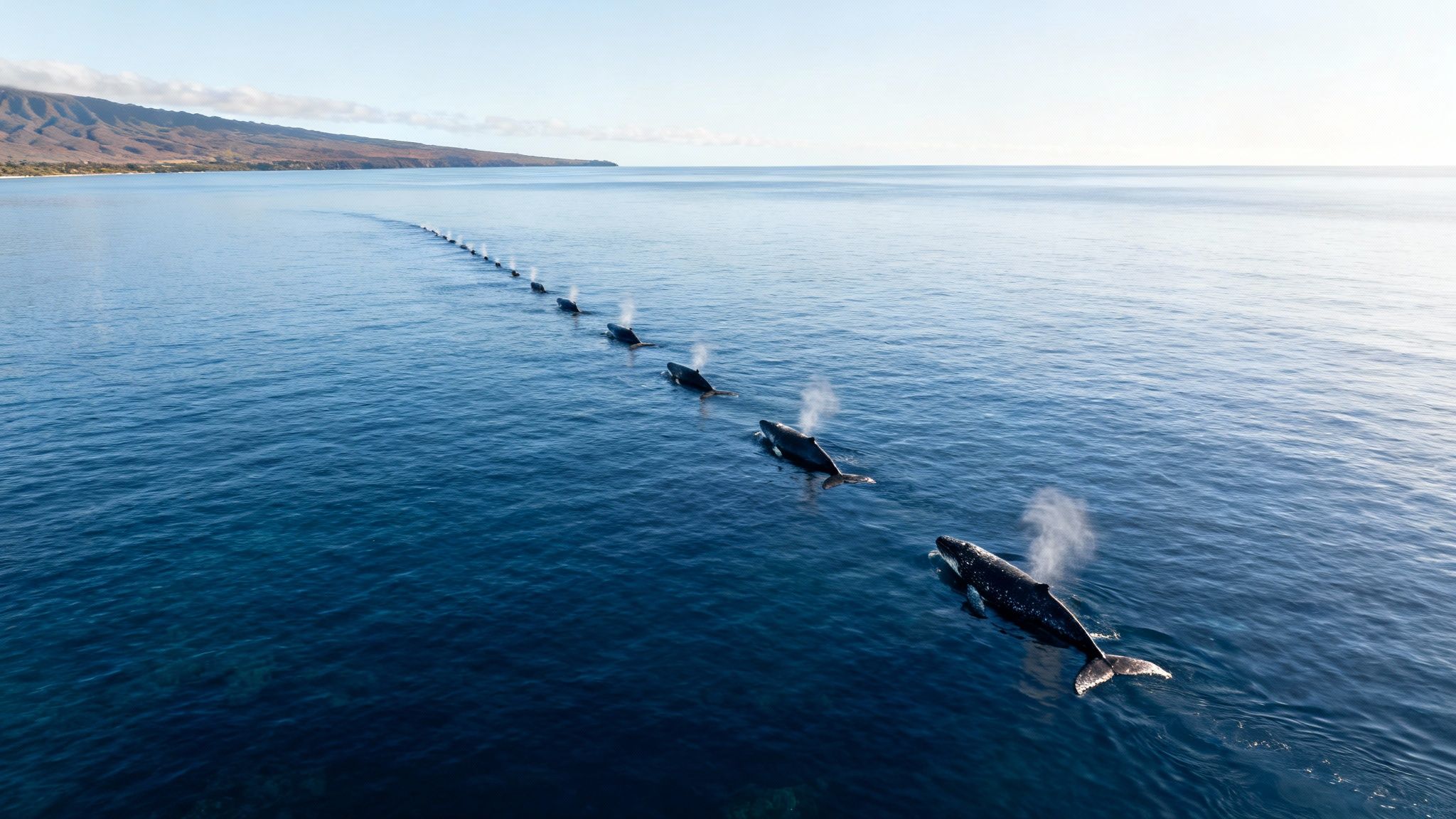
Timing your trip is everything when it comes to whale watching Big Island tours. The entire experience hinges on one of nature's most epic events: the annual 3,000-mile migration of humpback whales. These incredible animals travel all the way from the icy, food-rich waters of Alaska to the warm, sheltered seas around Hawaii.
Think about that for a second. This isn't just a leisurely swim. The whales travel for months without eating, burning through their fat reserves for the entire journey. It’s a trek driven by a primal need to reach a safe place to mate, give birth, and nurse their newborn calves.
A Tropical Nursery for a New Generation
So, why Hawaii? The Big Island, especially the leeward Kona and Kohala coasts, offers the perfect combo of warmth, clarity, and protection from the rough open ocean. It's a natural sanctuary.
Newborn calves have very little body fat, so the balmy 80°F (26°C) water here is critical for their survival. Plus, these waters are mostly free of orcas, the humpbacks' primary predator, making it the ideal oceanic nursery. Here, mothers can teach their young the ropes without constant fear.
Every splash, breach, and tail slap you see is directly connected to this chapter of their lives. You’re getting a front-row seat to one of the most important moments for these animals, from males competing for a mate to the quiet, tender bonds between a mother and her baby. To get a real feel for the timing, take a look at our complete guide to the Big Island whale season.
Peak Season: Your Best Bet for Spectacular Sightings
While a few early birds might show up in the fall, the real show starts in the winter. If you can, plan your trip during this peak window. Your chances of seeing something truly spectacular go way up.
The absolute best time for whale watching on the Big Island is from January through March. The whale population is at its highest, and the activity is off the charts.
This is when you’re most likely to witness the full range of behaviors that make these trips so unforgettable. We’re talking about competitive pods clashing at the surface and breathtaking, full-body breaches. The Kohala Coast, in particular, becomes a hotspot. Every year, thousands of whales arrive after their 3,000-mile journey, and the 2025–2026 season officially kicked off with a sighting off the coast on October 8, 2025.
Big Island Whale Watching Season At a Glance
Knowing what to expect month by month can really help you dial in your travel plans. While any day on the water can be magical, each part of the season has its own vibe. Here's a quick breakdown to help you decide when to go.
| Time of Year | Whale Activity Level | Typical Behaviors Observed |
|---|---|---|
| October – December | Low to Moderate | The first scouts arrive. Sightings are less frequent, but you'll spot the first spouts and maybe an occasional tail slap as more whales trickle in. |
| January – March | High (Peak Season) | This is prime time. Expect to see competitive male pods, frequent breaches, spy-hops, and heartwarming moments between mothers and their newborn calves. |
| April – May | Moderate to Low | The last to leave are often mothers with their now-stronger calves, starting the long trip back to Alaska. Sightings become less common as the season winds down. |
Booking your whale watching Big Island tour during the peak season really stacks the odds in your favor for an incredible day. With so many whales in the water, the sightings are more frequent, and the energy is just electric.
Choosing Your Ideal Whale Watching Tour
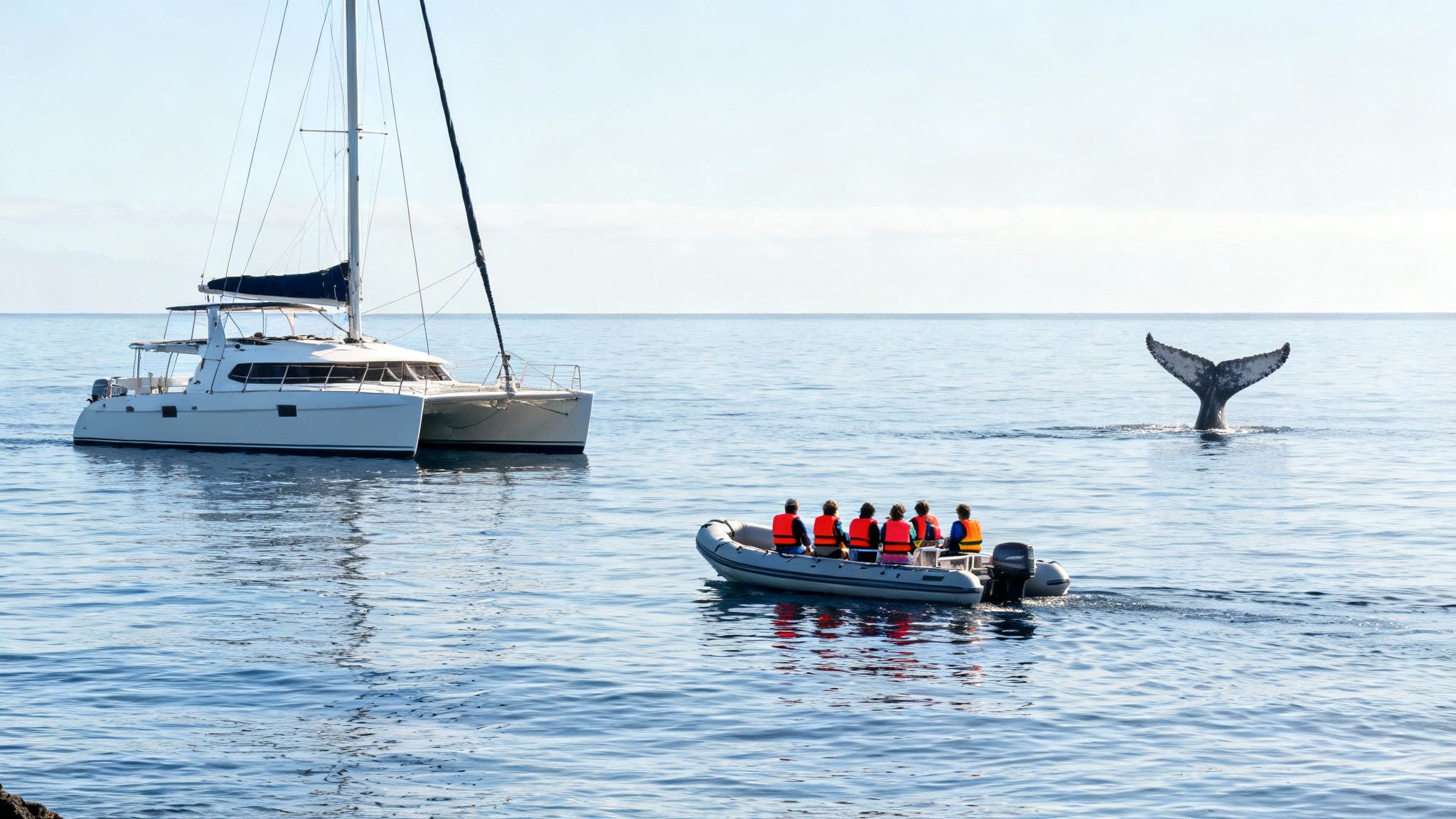
Picking the right boat for your adventure is a huge part of planning the perfect whale watching Big Island tour. It’s not just about getting on the water; the type of vessel you choose really shapes the whole experience, from how close you get to the action to your comfort level. The good news? There’s a perfect fit for every kind of traveler out there.
The biggest decision usually boils down to the size of the boat. Are you picturing a relaxing day on a big, stable catamaran with tons of room to roam? Or is your style more of a zippy, smaller raft that gets you right to the heart of the action? Each one has its own vibe and perks.
Let’s break it down so you can book a trip that hits all the right notes for your crew, your budget, and the memories you’re hoping to make.
Large Catamarans: The Stable and Spacious Choice
For a lot of folks, especially families with little ones or anyone who gets a bit wobbly on the water, big catamarans are the way to go. These boats are champs when it comes to stability. Their dual-hull design means they just glide over the ocean swells, making for a super smooth ride.
This stability creates a much more comfortable and laid-back atmosphere. Plus, you’ll usually find more amenities on board, which is a lifesaver on longer trips.
- Shaded Seating: Getting out of that intense Hawaiian sun is a blessing. These boats have plenty of it.
- Onboard Restrooms: A must-have, especially with kids or on a tour that lasts a few hours.
- Snack Bars: Many of the bigger boats have snacks and drinks available, which keeps everyone happy.
- 360-Degree Views: With decks you can walk all the way around, you’ll never miss a breach, no matter where it happens.
The trade-off for all this comfort and space is usually a bigger crowd. You get more room to move, but the experience might feel a bit less personal than what you'd find on a smaller tour.
Small Rafts: The Intimate and Agile Adventure
If you’re craving a more thrilling, up-close-and-personal encounter, then a small-group raft tour is probably right up your alley. These boats, often called rigid-hulled inflatables (or RIBs), are built for speed. They can cover a lot more water, which means a better chance of finding the most active whale pods.
Being so low to the water gives you a totally different perspective. You're practically at eye-level with the ocean surface, and when a 40-ton whale launches itself into the air nearby, it feels absolutely massive.
The real magic of a small-group tour is the intimacy. With fewer passengers, you get a front-row seat to the action and more personalized attention from the captain and crew, who can share deeper insights into whale behavior.
These tours are a bit of a wilder ride, so they’re generally not a great fit for very young children, pregnant women, or anyone with back issues. But for photographers and thrill-seekers, the low angles and quick maneuvering are second to none.
Specialized and Private Tour Options
Beyond the two main choices, you’ve got other fantastic ways to experience whale watching Big Island tours. If you like to mix things up, a combo tour is a brilliant option. You could spend the morning watching for tail slaps and breaches, then slide into the water to snorkel over a pristine coral reef in the afternoon.
For the ultimate experience, there's always a private charter. It's a premium choice, for sure, but the flexibility is unbeatable. You call the shots—customize the itinerary, decide how long to watch a particular group of whales, and have the entire boat to yourself and your group. It’s perfect for making a special occasion like an anniversary or family reunion truly unforgettable.
Prime Locations for Spotting Whales on the Big Island
When you're dreaming up your perfect whale watching tour on the Big Island, knowing where to go is just as important as knowing when. While you can technically spot humpbacks all around the island, some spots are just legendary for reliable, up-close encounters. It all comes down to the Big Island's unique geography, which creates the perfect conditions to draw whales to certain coastlines.
Think of the Big Island's massive volcanoes, Mauna Kea and Mauna Loa, as a giant natural shield. They block the powerful Pacific trade winds, leaving the western, or leeward, side of the island incredibly calm and protected. This effect turns the Kona and Kohala Coasts into a glassy, clear sanctuary that humpback whales just can't resist.
The Kona and Kohala Coasts: A Whale Haven
Hands down, the Kona and Kohala Coasts are the undisputed hotspots for whale watching here. These sheltered waters aren't just a nice perk for boaters; they serve as a critical nursery for humpback mothers and their brand-new calves. The calm seas mean the vulnerable young ones can rest, nurse, and build up strength without having to fight against rough waves.
This turns the whole area into a hub of whale activity. You'll often see mothers patiently teaching their calves essential life skills, while male whales patrol the area, sometimes putting on dramatic shows as they compete for mates. It's this sheer concentration of whales that makes tours leaving from Kona and the Kohala Coast so consistently amazing. The numbers are staggering; during a single day in January 2025, volunteers counted an incredible 493 whales just off Hawai‘i Island. You can see the full breakdown from the 2025 Great Whale Count.
The shallow, sheltered waters of the leeward coast create a safe haven that draws in the highest density of mother-calf pairs. This leads to more intimate and frequent sightings, often featuring the tender, playful interactions that make these tours so memorable.
It’s no surprise, then, that the vast majority of whale watching Big Island tours launch from harbors all along this western shoreline. It puts you right in the heart of the action.
Other Potential Viewing Areas
While the west side gets all the glory, it’s not the only place you might see a whale. The waters off the Hamakua Coast and near Hilo on the windward (eastern) side also get their fair share of humpback traffic. The big difference? The ocean conditions over there are typically much, much rougher.
The constant wind and ocean swells can make for a seriously bumpy ride and churn up the water, making it harder to spot whales from a distance. For this reason, tours from this side are far less common. But hey, if you find yourself over there, keep your eyes on the horizon—you never know when you'll spot that telltale spout. For a more detailed look at the best launch points, our complete guide to Kona whale watching has all the info you need.
Spotting Whales from Shore
You don't always have to be on a boat to feel the magic of whale season. The Big Island has some fantastic spots for watching from land, especially along the elevated bluffs of the Kohala Coast. Getting a little height is the key, as it gives you a sweeping, panoramic view to scan for spouts, breaches, and tail slaps.
For the best shot, head out in the morning. The ocean is usually calmer and the sun's glare isn't as intense. Grab a pair of binoculars, find a comfy spot, and settle in at one of these prime locations.
- Puʻukoholā Heiau National Historic Site: The name literally means "hill of the whale," and it lives up to it. The high ground offers incredible ocean views perfect for spotting distant pods.
- Lapakahi State Historical Park: Another excellent high-ground choice that looks out over the clear blue water.
- Kapaʻa Beach Park: This is a great, comfortable option with shaded pavilions, so you can watch for whales without baking in the sun.
Watching from shore is a wonderful way to spend an afternoon, but let's be honest—nothing compares to the perspective you get from the water. A boat tour gets you safely and respectfully closer to the action, giving you a true sense of the whales' awesome scale and power.
What to Expect During Your Day on the Water
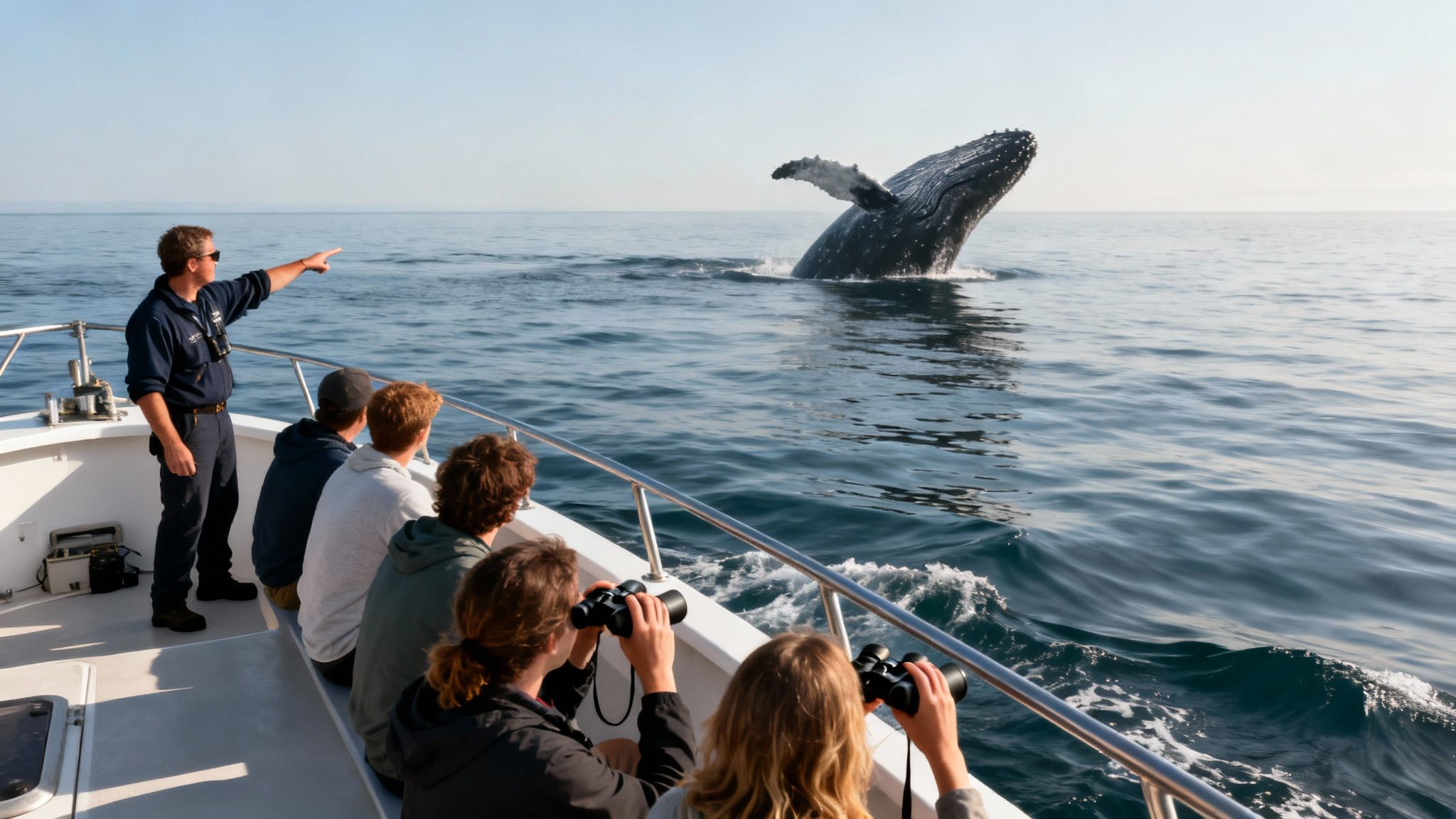
There’s a unique energy on the boat as it pulls away from the harbor. You can feel the shared excitement in the salty air as everyone’s eyes are glued to the deep blue horizon, wondering what the ocean will reveal. This is the moment the adventure truly begins.
Our crew loves this part. They’ll share stories about the coastline, point out local landmarks, and get you ready for the kinds of whale behaviors you’re hoping to see.
Then it happens. Someone spots it first—a misty puff of vapor hanging in the air. "Spout! Two o'clock!" The engine cuts to a low hum, and a respectful quiet settles over the boat. That’s the telltale breath of a humpback, and your heart starts pounding. The captain, an expert at reading the water, will skillfully navigate closer while always keeping a safe, legal distance.
Decoding Breathtaking Whale Behaviors
Seeing a whale is amazing, but understanding what you’re seeing takes the experience to a whole new level. Our guides are pros at interpreting the language of the whales, helping you spot the different surface antics that make every single sighting a unique story.
Here are a few of the incredible behaviors you might get to witness:
- Breach: This is the big one. Imagine a 40-ton animal launching its entire body out of the water in a jaw-dropping show of force. Scientists figure it might be a way to communicate over long distances, shake off pesky parasites, or maybe… they’re just having fun.
- Pectoral Fin Slap: You’ll see a whale roll onto its side and smack its massive, wing-like fin on the water's surface, over and over. Think of it as a social signal, kind of like waving hello to other whales in the area.
- Spy-Hop: A moment of pure curiosity. The whale lifts its head straight out of the water to get a good look around. It honestly feels like they’re just as interested in checking you out as you are in them.
- Tail Slap (Lobtailing): A loud, powerful slap of the tail flukes creates a massive splash. This can be a warning to other whales, especially males in a competitive group, or another powerful way to get a message across.
A Commitment to Responsible Wildlife Viewing
While the thrill of seeing these gentle giants is something you’ll never forget, every tour is guided by a deep respect for the animals and their home. Every reputable whale watching big island tour is run by certified captains who live and breathe responsible practices, strictly following all federal and state laws.
The most important rule of thumb is keeping a minimum distance of 100 yards from humpback whales. This isn't just a suggestion; it's the law. It creates a critical buffer zone to make sure we don't stress them out, especially the mothers with their brand-new calves.
Keeping our distance doesn't take away from the magic; it actually makes it better. It ensures the encounters are natural, happening completely on the whales' terms. A skilled captain knows exactly how to position the boat for incredible views and photos without ever crowding their space. It’s this commitment that protects the very animals we all come here to see, ensuring the magic of whale season will be here for generations.
If you’re new to boating or get a little queasy on the water, it’s always a good idea to prepare. We've got some great tips in our guide on how to prevent seasickness to make sure your day is comfortable from start to finish.
What to Pack for Your Whale Watching Tour
A little bit of planning can turn a great day on the water into a truly unforgettable one. Knowing exactly what to bring on your whale watching Big Island tour is the key to staying comfortable, protected, and ready for whatever the ocean throws at you. Think of this as your insider's guide to a perfect day at sea.
Most tour operators will cover the basics like water and maybe a few light snacks, but packing a few key items of your own can make all the difference. When you're prepared, you can stop worrying about the small stuff and just focus on the horizon, waiting for that next spectacular breach.
Essential Gear for Comfort and Viewing
Your comfort is everything when you're spending a few hours on the ocean. The Hawaiian sun is no joke, and conditions on the water can shift in a heartbeat, so it pays to be ready for anything.
-
Layered Clothing: Even on a beautiful, warm Kona day, the breeze out on the open water can have a surprising chill. A light jacket or windbreaker is the perfect fix. You can peel it off when the sun is beating down and throw it back on when the boat picks up speed.
-
Polarized Sunglasses: Seriously, don't leave the dock without these. The glare coming off the ocean's surface is intense, and your standard sunglasses just won't cut it. Polarized lenses are designed to slice right through that glare, which means you can actually see below the surface and spot whales more easily. It's a game-changer.
-
Reef-Safe Sunscreen: Protecting your skin is crucial, but so is protecting our fragile marine ecosystem. Always, always grab a mineral-based, reef-safe sunscreen. Look for active ingredients like non-nano zinc oxide or titanium dioxide to make sure you're not harming the coral reefs.
-
A Good Hat & Sun-Protective Gear: A wide-brimmed hat is your best friend for shielding your face and neck from direct sun. If you really want to be smart about it, a long-sleeved shirt made from UPF fabric offers an extra layer of protection without making you feel like you're in a sauna.
Capturing the Moment and Staying Prepared
Beyond the comfort basics, a few other items can really elevate your experience, especially if you're hoping to snag some killer photos or if you're someone who gets a bit queasy on the water.
If you're all about the photos, a camera with a decent zoom lens is your best friend. Whales are absolutely massive, but from the legally required (and respectful) distance of 100 yards, a good zoom brings all that incredible action right to you. Want to freeze that powerful breach in time? Crank up your shutter speed to avoid any motion blur.
Pro Tip: As tempting as it is, don't spend the entire trip staring through a viewfinder. Make a point to put the camera down and just be in the moment. Some of the most powerful memories are the ones you capture with your own eyes, not just on a memory card.
For anyone who feels a little green around the gills on a boat, it's always smart to take precautions. Over-the-counter motion sickness medication works wonders if you take it before you leave the dock. If you prefer a more natural route, ginger chews and acupressure wristbands are also really popular and effective options.
Lastly, while most boats have some sort of dry storage, it never hurts to bring a small waterproof bag or case for your phone and camera. An unexpected splash is all part of the fun of being on the ocean, and you'll be glad your expensive electronics are tucked away safely. With these things in your bag, you're all set for an incredible day of whale watching.
Your Big Island Whale Watching Questions, Answered
Planning a whale watching trip on the Big Island naturally brings up a few questions. As guides, we hear them all the time from guests getting ready to see these incredible animals for the first time. We’ve put together some answers to the most common ones to help you feel totally prepared for the adventure.
Can I Actually See Whales From Shore?
You bet! You don’t always need a boat to feel the magic. The Big Island has some fantastic spots for shoreline viewing, especially along the elevated bluffs of the Kohala Coast. The key is finding a good vantage point—the higher up, the better your chances of scanning the horizon for those telltale spouts and breaches.
But while watching from land is a peaceful way to spend an afternoon, it’s a whole different world out on the water. A boat tour gets you respectfully closer, giving you a true sense of the whales’ unbelievable size and power that you just can't appreciate from a distance.
What's The Best Time of Day For a Tour?
Honestly, any time you can get out on the water is a good time! Morning tours are super popular for a couple of reasons, though. The ocean is usually at its calmest then, creating glassy conditions that make spotting a spout from miles away much easier. That buttery morning light is also a photographer's dream.
That said, afternoon trips can be just as amazing. Whales are active all day, and the afternoon light often casts a gorgeous golden glow across the water. The whales don't punch a time clock, so the best time for a tour is really the one that works for you.
Are Whale Sightings Guaranteed?
This is a really important one. Because humpback whales are wild animals on their own epic migration, no one can ever promise a sighting with 100% certainty. We're just visitors in their massive ocean home, and they're on their own schedule.
However, your chances are incredibly high when you book during the peak season, from January through March. There are just so many whales in the water that the odds are stacked heavily in your favor. Plus, experienced captains know the whales' favorite hangouts and how to read the water, giving you the absolute best shot at a memorable encounter.
Just remember, every trip is unique. The ocean is always changing, and part of the thrill is in the unpredictability and the raw, authentic nature of it all.
So, How Many Whales Are We Talking About?
The numbers are truly staggering. We get a great snapshot from community science efforts, like the Hawaiian Islands Humpback Whale National Marine Sanctuary Ocean Count. It's a huge volunteer effort held several times during peak season.
In the final count of 2025, for instance, volunteers tallied 714 humpback whales around Hawai‘i in a single day. On the Big Island alone, 28 of those were spotted from just eight shoreline sites. You can get more details on these amazing volunteer counts over at Big Island Video News. These numbers give us a glimpse into the thriving population that returns here year after year.
Ready to make your own unforgettable memories with these magnificent creatures? At Kona Snorkel Trips, we specialize in small-group tours that offer intimate and respectful encounters. Book your whale watching adventure with us today!