
Whale Watching Big Island Tours: Your Ultimate Guide to Ocean Encounters
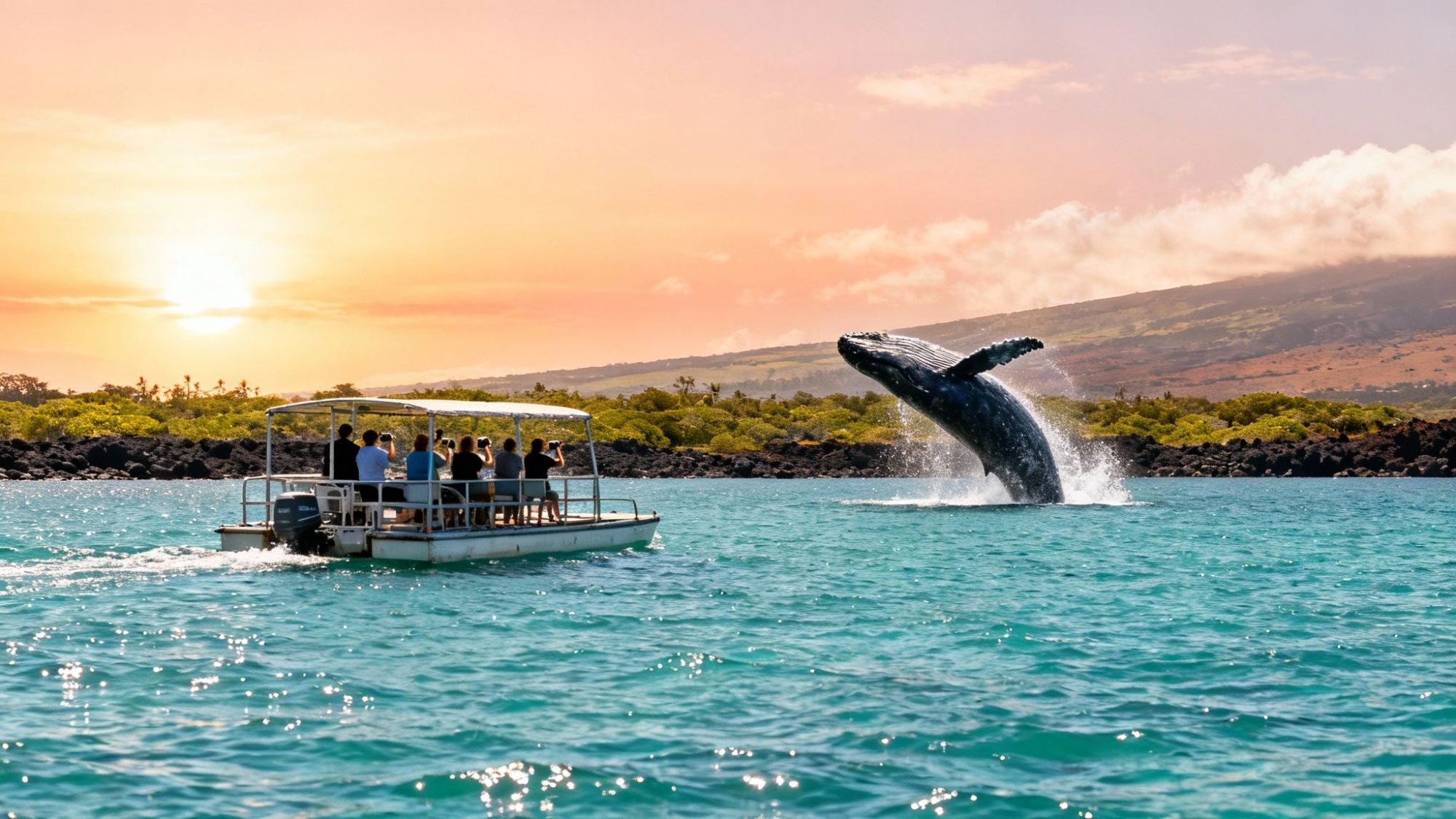
Picture this: a 40-ton humpback whale explodes out of the turquoise Pacific, hanging in the air for a breathtaking moment before crashing back down. It’s an unforgettable sight, and it’s the magic of whale watching on the Big Island. This isn't just any spot; it's a world-class destination where thousands of humpback whales gather every single year to breed and have their babies.
This guide is your roadmap to planning that very adventure, from start to finish.
Why Is the Big Island a Top-Tier Whale Watching Spot?
The reason the Big Island is so special for whale watching comes down to one of nature’s most incredible journeys. Every year, a huge portion of the North Pacific humpback population travels an astounding 3,000 miles from their chilly feeding grounds in Alaska to the warm, sheltered waters of Hawaii. It's an instinctual pilgrimage to mate, give birth, and nurse their young calves in a safe, warm environment.
When you’re ready to see it for yourself, we know a thing or two about creating incredible marine encounters. Kona Snorkel Trips is the top-rated and most-reviewed snorkel company in Hawaii, and we specialize in expert-led, small-group tours that get you closer to the magic.
Don't just take our word for it—here's what fellow adventurers have said after seeing this spectacle firsthand.

A Sanctuary for Gentle Giants
The waters off the Kona and Kohala coasts are particularly vital. They serve as a natural nursery, offering the perfect combination of warmth and protection for newborn calves, who haven't yet developed the thick blubber they need to survive in colder Alaskan waters. This simple fact turns our coastline into a bustling hub of whale activity all season long.
Getting out on a tour gives you a front-row seat to this crucial chapter in a whale's life. You aren’t just spotting animals in the distance; you're witnessing profound, real-life moments unfold. You’ll see mothers patiently teaching their calves to breach, and you might catch the awesome power of males competing for a mate.
What makes this experience so profound is understanding the "why." These whales travel for months without eating, relying solely on their fat reserves, all for the safety of their next generation in Hawaii's embrace.
What You Can Witness
This annual migration brings a whole playbook of breathtaking behaviors that you have a great chance of seeing on a tour. When you're out on the water, keep your eyes peeled for:
- Breaching: The iconic move where a whale launches its entire body out of the water. It’s pure power.
- Tail Slapping: A loud, powerful slap of the fluke on the surface, which is a form of communication.
- Spy-Hopping: This is when a whale pokes its head straight up out of the water to get a look around. They're as curious about us as we are about them!
- Nurturing Calves: One of the most touching sights is seeing a massive mother swimming closely alongside her newborn baby.
These are the moments that turn a simple boat trip into a memory you’ll talk about for years, creating a real connection with one of the planet’s most magnificent creatures.
Finding the Perfect Time for Your Whale Watching Tour
Timing is everything when it comes to planning an unforgettable day on the water. While you can spot whales off the Big Island from December through April, there’s a definite sweet spot that seriously boosts your odds of seeing the really spectacular stuff.
Think of it like trying to catch the perfect surf break. You can paddle out anytime, but showing up when the swell is peaking makes for a legendary session. For whale watching, that peak happens between January, February, and March.
During these months, the waters off the Kona coast are buzzing with the highest concentration of humpbacks. This is the time. It’s when you’re most likely to see those jaw-dropping breaches, powerful tail slaps, and the truly heartwarming sight of a brand-new calf swimming right beside its mom.

A Month-by-Month Guide to the Season
Every month of the season has its own unique vibe. Knowing what to expect can help you plan the perfect trip for what you want to see.
Here's a quick look at how the season unfolds, month by month, giving you an idea of what to expect out on the water.
| Month | Whale Activity Level | Common Behaviors to See | Tour Availability |
|---|---|---|---|
| December | Moderate | The first arrivals appear. You'll see individuals and small pods, often testing the waters. | Good, tours running daily. |
| January | High | Things really kick off. More males arrive, leading to energetic competition pods and surface action. | Excellent, prime booking time. |
| February | Peak | The absolute busiest month. The highest number of whales are present, including many new mothers with calves. | Peak Season – book well in advance! |
| March | Peak | Still peak activity, but with a "nursery" feel. Lots of moms and calves resting and playing. | Peak Season – book well in advance! |
| April | Waning | Whales begin their journey north. Sightings are still possible, especially early in the month, but become less frequent. | Good, but tapers off by month's end. |
While peak season offers the most action, the shoulder months can be special in their own way, often with fewer boats on the water.
Why This Timing Matters
This whole incredible spectacle is driven by one of nature's greatest migrations. Every year, an estimated 12,000 humpback whales—that's more than half the entire North Pacific population—make the long journey from their feeding grounds in Alaska to Hawaii's warm, safe waters to breed and give birth.
The first whale sighting of the year is always a huge deal for us locals. This past season, the first humpback was spotted off the Big Island on October 8th, which got everyone excited for what was to come. This massive influx of whales makes the waters around Puako, Waikoloa, and the Kohala Coast some of the best viewing spots in the world.
Booking your tour during the right window transforms a simple boat ride into a front-row seat for one of the most amazing shows on Earth. For an even deeper look into the rhythm of the season, check out our complete guide to whale season on the Big Island. At the end of the day, aiming for those peak months simply gives you the best possible chance for a truly awe-inspiring experience.
How to Choose the Right Whale Watching Tour

Picking the right whale watching tour is probably the single biggest decision you'll make for your trip. It's what separates a good day from an unforgettable one. Sure, you can sometimes spot whales from the shore, but nothing—absolutely nothing—compares to being out on the water. That's where you truly grasp the sheer scale and power of these incredible animals.
The trick is finding an operator that fits the vibe you're looking for.
Think of it like seeing a concert. You could be in the nosebleed section of a massive stadium, or you could have a front-row pass to a small, intimate venue. Big catamarans have their place, but smaller vessels, like the rafts we use at Kona Snorkel Trips, deliver a much more personal adventure. You're closer to the water, closer to the action (while always keeping a safe, respectful distance), and you feel every moment so much more.
This kind of up-close setting also means you have a direct line to your guide. No shouting over a crowd or straining to hear. You can ask questions and get real-time explanations of the amazing whale behaviors happening right in front of you.
Tour Size: The Intimate Advantage
When it comes to whale watching Big Island tours, bigger definitely isn't better. The size of your tour group will massively shape your entire experience.
- Small-Group Tours: We're talking fewer than 20 passengers. This creates a personal atmosphere, like you’re on a private expedition with new friends. It also gives the captain more flexibility to maneuver and find the best (and legal) viewing angles without stressing out the whales.
- Large-Group Tours: These boats can pack in 50, 100, or even more people. While they might have more onboard amenities, the experience can feel pretty impersonal. You’ll likely find yourself jockeying for a spot at the railing, and you might miss those quiet, awe-inspiring moments that make whale encounters so magical.
With a smaller group, the whole trip becomes a shared adventure. You can feel the excitement buzzing on the boat, and the collective gasp when a whale breaches creates a powerful memory you just don't get with a huge crowd.
Choosing a small-group tour means you get an eye-level perspective that makes you feel genuinely connected to the ocean and its giants.
The Educational Component: A Tour with a Purpose
A great tour does more than just find whales—it deepens your understanding of them. The best outfits hire captains and guides who are passionate marine naturalists, not just boat drivers. Their knowledge is what turns a boat ride into a true learning experience.
Picture this: you see a massive splash in the distance. A basic tour might just point it out. But an educational tour will have a guide explaining that you're watching a "pec slap," a form of communication a male humpback might be using to talk to other whales nearby. Suddenly, you're not just a spectator; you're an informed observer, like a marine biologist for the day.
This focus on education is the hallmark of a top-tier operator. They’ll often carry hydrophones—underwater microphones—so you can listen to the haunting, beautiful songs of the male humpbacks. It's an otherworldly experience that connects you to their world in a way you'll never forget. To learn more, check out the different kinds of whale watching tours on the Big Island available.
Safety and Eco-Consciousness Are Non-Negotiable
Above all else, the safety of both the passengers and the whales has to be the number one priority. A reputable company will have a perfect safety record and be totally upfront about their procedures, starting every tour with a thorough safety briefing.
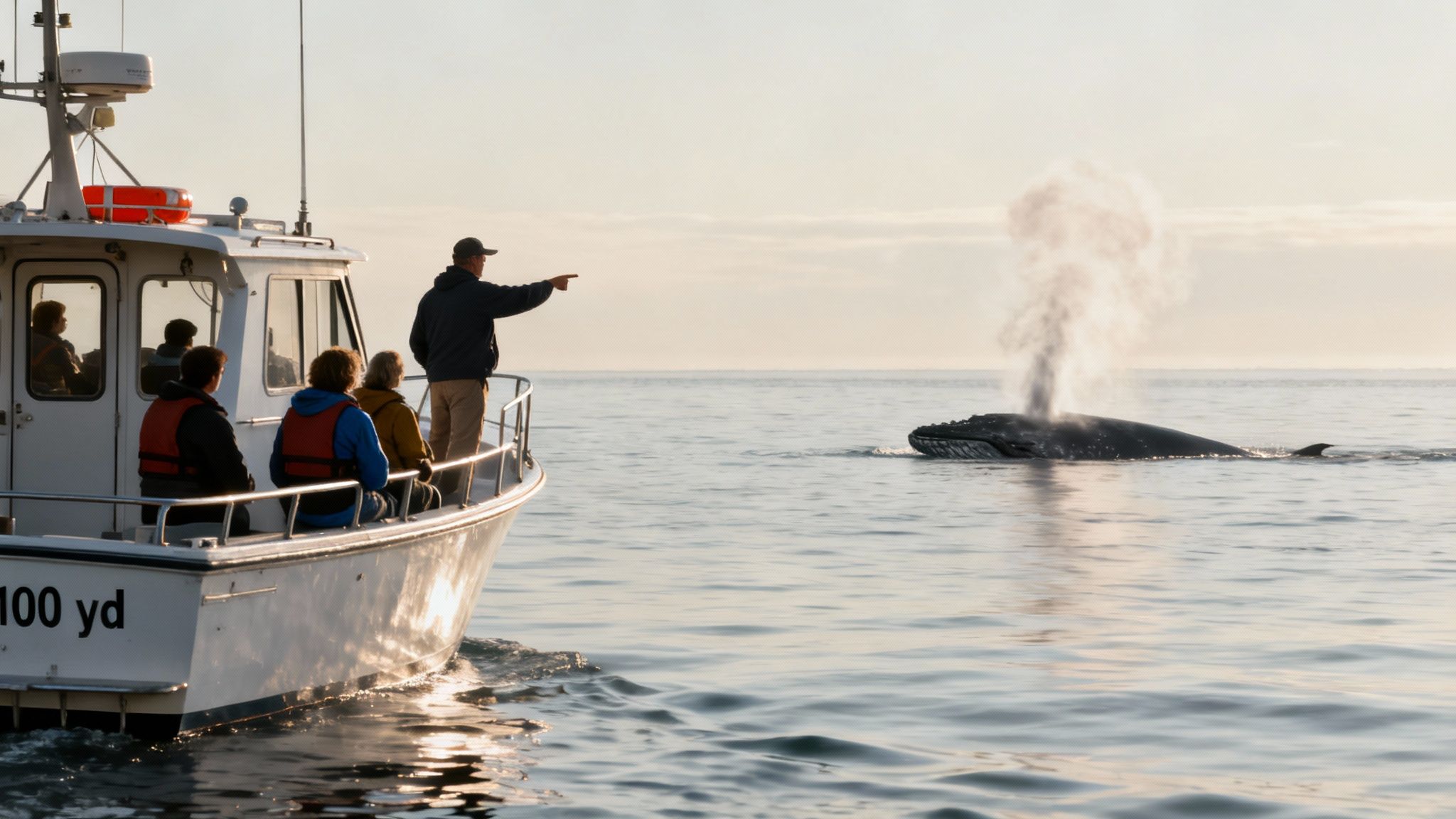
Just as important is their commitment to the ocean. This means strictly following federal regulations, which require all vessels to stay at least 100 yards away from humpback whales. This isn't just a rule; it's a fundamental sign of respect for these animals who have traveled thousands of miles to our waters to rest, mate, and raise their young.
Look for operators who are true stewards of the ocean. They will:
- Never chase, crowd, or harass wildlife.
- Take the time to educate passengers on conservation.
- Often participate in local research and conservation efforts.
By choosing a company that puts education and responsible viewing first, you're not just getting a better tour—you're actively helping protect these magnificent creatures for generations to come.
What to Expect During Your Whale Adventure
There’s a certain kind of energy in the air as everyone checks in—a mix of excitement and pure anticipation. Once you’re welcomed aboard and the crew runs through a quick but thorough safety briefing, we head out from the Kona coast into the vast, sparkling blue of the open ocean. This is where the real adventure begins.
As the boat cruises, everyone’s eyes are glued to the horizon. Our experienced captain knows just where to go, navigating toward known whale hotspots where humpbacks hang out. The entire crew, myself included, turns into dedicated spotters, constantly scanning for that first tell-tale sign of a whale: the misty puff of a "blow" hanging in the air.
The second someone shouts, "Whale!" the energy on the boat is absolutely electric. It’s a shared thrill that instantly connects everyone on board. This is the moment your whale watching Big Island tours experience truly comes alive.
The Moment of Encounter
As the captain skillfully and respectfully slows the boat down, keeping the legally required safe distance, the sheer scale of these gentle giants really starts to sink in. Seeing a 40-foot creature surface nearby is a humbling, awe-inspiring experience that no photo or video can ever do justice.
You’ll be on the lookout for a whole range of breathtaking behaviors, each one with its own special meaning. Will you witness a powerful, full-body breach, where a 40-ton whale launches itself completely out of the water? Or maybe you'll see a mighty tail slap that sends a wall of whitewater shooting into the air.
Each tour is a unique dance with nature. No two encounters are ever the same. The whales are in charge, and we are simply privileged guests in their ocean sanctuary, waiting to see what they choose to reveal.
Your guide will be your interpreter, explaining the incredible sights unfolding right in front of you. We love sharing fascinating insights into humpback biology, their complex social lives, and the story of their epic migration all the way from Alaska. It turns a simple sightseeing trip into something much richer. For a deeper dive into what you might see, you can learn more about Kona whale watching and the specific behaviors to look for.
Decoding Whale Behaviors
Part of the magic is learning to understand what you're seeing. These aren't just random actions; they are forms of communication, expressions of life happening right before your eyes.
Here are a few of the most common behaviors you might get to see:
- Breaching: The iconic, full-body leap out of the water. Scientists think it could be a way to communicate over long distances, shake off parasites, or maybe it’s just pure, unfiltered joy.
- Tail Slap (or Lobtailing): A massive, forceful slap of the whale's tail, or fluke, on the water's surface. This can be a warning to other whales, a show of dominance, or another way to send a message across the waves.
- Pectoral Fin Slap: A whale rolls onto its side and repeatedly slaps one of its long pectoral fins on the water. We often see this in social groups, and it’s thought to be another communication signal.
- Spyhop: This is a truly curious one. A whale pokes its head straight up out of the water to get a good look around. It honestly feels like they are just as interested in us as we are in them.
This incredible density of whale activity is backed up by research. Coordinated whale counts give us amazing insights. In one recent effort on January 25, a total of 2,121 humpback whale sightings were recorded across the Hawaiian Islands. The Big Island alone accounted for 493 of those sightings—that’s about 23% of the statewide total, which just goes to show how vital our waters are during peak season. You can discover more insights about the annual humpback whale count on Lost on Lanai.
By the time we head back to shore, you'll be carrying more than just amazing photos. You'll have a profound new appreciation for these magnificent ocean dwellers.
Practicing Responsible and Ethical Whale Watching
Seeing a 40-ton humpback whale launch itself out of the ocean is something you never forget. It's a genuine privilege, a front-row seat to one of nature's greatest shows. But it's more than just a great photo op—it's an experience that comes with a real responsibility to protect these gentle giants.
These whales have traveled thousands of miles from their feeding grounds in Alaska to get here. Hawaii is their safe space, the warm, calm waters where they mate, give birth, and nurse their newborn calves. Any disturbance, even one that seems minor to us, can cause a lot of stress, especially for a new mom trying to keep her baby safe.
That’s why responsible whale watching is so important. Think of it like being a quiet, respectful guest in their massive ocean living room. And the number one house rule? Keep your distance.
Federal and state laws are crystal clear: every single vessel, from big tour boats to kayaks, has to stay at least 100 yards away from humpback whales. To put that in perspective, that’s the full length of a football field. This rule isn't arbitrary; it creates a vital buffer zone, giving the whales the personal space they need to go about their lives without feeling crowded or threatened.
Whale Etiquette for Respectful Observation
Beyond the hard-and-fast legal distance, there’s a kind of "whale etiquette" that good operators follow instinctively. Knowing these simple guidelines helps everyone on board understand how to be a better observer.
- No Surprises: Boats should always approach whales slowly and from the side, moving parallel to their direction of travel. Never charge them head-on or sneak up from behind.
- Keep It Down: It's easy to get excited, but loud shouts and noises can really disrupt the whales. The most incredible encounters happen when the atmosphere is calm and quiet.
- Don't Overstay Your Welcome: A conscientious captain knows when to move on. They'll limit the time spent with any one group of whales, particularly mothers with calves, to minimize their impact.
- Always Leave an Out: A whale should never feel cornered or trapped. Tour boats should be positioned so the whales always have a clear path to leave if they want to.
Following these simple rules ensures our presence is just a minor, temporary blip in their day. It allows them to focus on the truly important stuff, like raising the next generation of humpbacks.
Choosing an eco-conscious tour operator means you are actively voting with your dollar for the protection of Hawaii’s marine life. You're not just buying a ticket; you're supporting a business that acts as a guardian of the ocean.
How Your Tour Contributes to Conservation
When you book one of the top whale watching Big Island tours, you’re often doing more than just sightseeing—you're becoming part of a larger conservation story. Many local operators are passionate ocean stewards who work closely with groups like the Hawaiian Islands Humpback Whale National Marine Sanctuary.
These captains and crews are the eyes and ears on the water. They contribute valuable sighting data to researchers and are often the first to report any marine animal in distress. This kind of community science is absolutely vital. For example, volunteer-led efforts like the Sanctuary Ocean Count are crucial for tracking humpback populations. During a single count day in February, volunteers on the Big Island spotted 263 whales from shore, contributing to a massive total of 1,947 whales seen across the islands that day. You can learn more about the findings of these important community science events.
By picking a tour that puts education and responsible practices first, you're helping to make sure these magnificent animals continue to thrive and return to Hawaiian waters for generations to come.
Your Essential Whale Watching Packing Checklist
A little bit of prep work can be the difference between a good whale watching tour and an absolutely unforgettable one. Having the right gear with you means you're comfortable, protected from the elements, and ready to capture every incredible moment. You want to spend your time focused on the amazing humpback behaviors out on the water, not shivering or squinting against the sun.
This simple list covers the must-haves for your adventure with us.
Clothing and Comfort Essentials
Even on a perfect, sunny Kona day, things can feel surprisingly different once you're out on the open ocean. A cool breeze and a bit of sea spray can bring a chill, especially once the boat gets up to speed.
- Light Jacket or Windbreaker: This is non-negotiable. A light, water-resistant layer will be your best friend when the ocean breeze picks up or you catch a little spray.
- Comfortable, Non-Slip Shoes: Boat decks get wet. You'll want shoes with a solid grip, like sneakers or boat shoes, to make sure you're steady on your feet while moving around.
- Hat with a Secure Strap: A wide-brimmed hat is fantastic for sun protection, but trust me on this one—make sure it has a chin strap so it doesn't take a solo trip into the Pacific!
Sun and Sight Protection
The glare bouncing off the water makes the sun feel way more intense out here. Protecting your skin and eyes is key to having a comfortable trip.
If there's one single item that will completely change your whale watching game, it's this: Polarized sunglasses. They cut right through that intense surface glare, letting you see beneath the water. You can often spot the massive shadow of a whale long before it ever comes up to breach.
Here’s what to bring:
- Polarized Sunglasses: As I said, they're a must. You'll be amazed at how much more you can see by cutting the harsh glare from the water's surface.
- Reef-Safe Sunscreen: Let's protect both your skin and Hawaii’s fragile marine ecosystems. Make sure to apply a generous amount of mineral-based, reef-safe sunscreen before you even get on the boat.
Gear for the Perfect Sighting
Once you're comfortable and protected, having the right equipment on hand will help you soak in every detail of your whale watching Big Island tours.
- Camera with a Zoom Lens: Your smartphone will work in a pinch, but a real camera with a decent zoom lens is how you'll get those stunning, frame-worthy photos of a distant breach or tail slap.
- Binoculars: I highly recommend bringing a pair. Binoculars bring all the action up close, letting you see details—like the unique patterns on a whale's fluke—that you'd miss with the naked eye.
- Motion Sickness Remedy: If you know you're prone to seasickness, it's a good idea to take something before the tour starts. It's always better to be prepared so you don't miss a single moment of the experience.
Still Have Questions About Whale Watching?
Let's wrap things up by tackling some of the most common questions we get about whale watching Big Island tours. Think of this as a quick-fire guide to get you feeling totally prepared and excited for your adventure on the water.
Is a Whale Sighting Guaranteed on a Tour?
This is the big one, and the honest answer is no. While sightings are incredibly likely during the peak months of January through March, these are wild animals we're talking about. Humpback whales are on their own schedule, in their own home, and their behavior can never be predicted with 100% certainty.
Any reputable company, like us here at Kona Snorkel Trips, will have a sky-high success rate because our captains have spent years on these waters and know all the whales' favorite hangouts. But no ethical operator can ever offer an ironclad guarantee. Frankly, that uncertainty is part of the magic—the thrill of an authentic encounter is something you just can't script.
What Is the Best Time of Day for a Tour?
Honestly, there isn't a "bad" time of day to see the whales, since they're active from sunup to sundown. The best time really boils down to what kind of experience you're hoping for.
Morning trips often have the advantage of calmer, glassier ocean conditions. That smooth surface can make it much easier to spot a distant spout or the dark shape of a whale just below the water. On the flip side, afternoon tours can have that incredible golden hour light, which is an absolute dream for photographers and creates a truly magical atmosphere as the day winds down. Our advice? Pick the time that fits your vacation vibe.
No matter when you go, the key is simply being out on the water. The whales don't watch the clock, so every single tour holds the potential for an unbelievable sighting.
Are the Tours Suitable for Children?
Absolutely! Whale watching is one of the most incredible, awe-inspiring experiences you can share as a family. There's nothing quite like seeing a child's face the first time a 40-ton whale breaches right before their eyes. It's a moment of pure wonder that can spark a lifelong love for the ocean.
Most tour boats are very welcoming to kids. It's always a good idea to double-check for specific age restrictions, though, especially on the smaller, more adventurous raft-style boats. Safety is always number one, and the crews are pros at making sure guests of all ages have a fantastic and secure trip.
What Happens if the Weather Is Bad?
Your safety is the absolute top priority, no exceptions. Our captains are constantly watching the weather and sea conditions like hawks. If high winds, big swells, or heavy rain make for an unsafe situation, the trip will be canceled.
If a trip is called off for weather, the tour operator will always contact you. You'll generally have two choices:
- Reschedule your tour for another day when the weather looks better.
- Get a full refund if you can't find another time that works.
This policy means you can book your whale watching Big Island tours with complete confidence, knowing that your safety and enjoyment come first.
Ready to see the breathtaking power of humpback whales for yourself? Join Kona Snorkel Trips for an intimate, expert-led adventure you'll be talking about for years. Book your whale watching tour today and get ready for the experience of a lifetime.