
Whale Watching Big Island Kona a Guide to Humpback Season
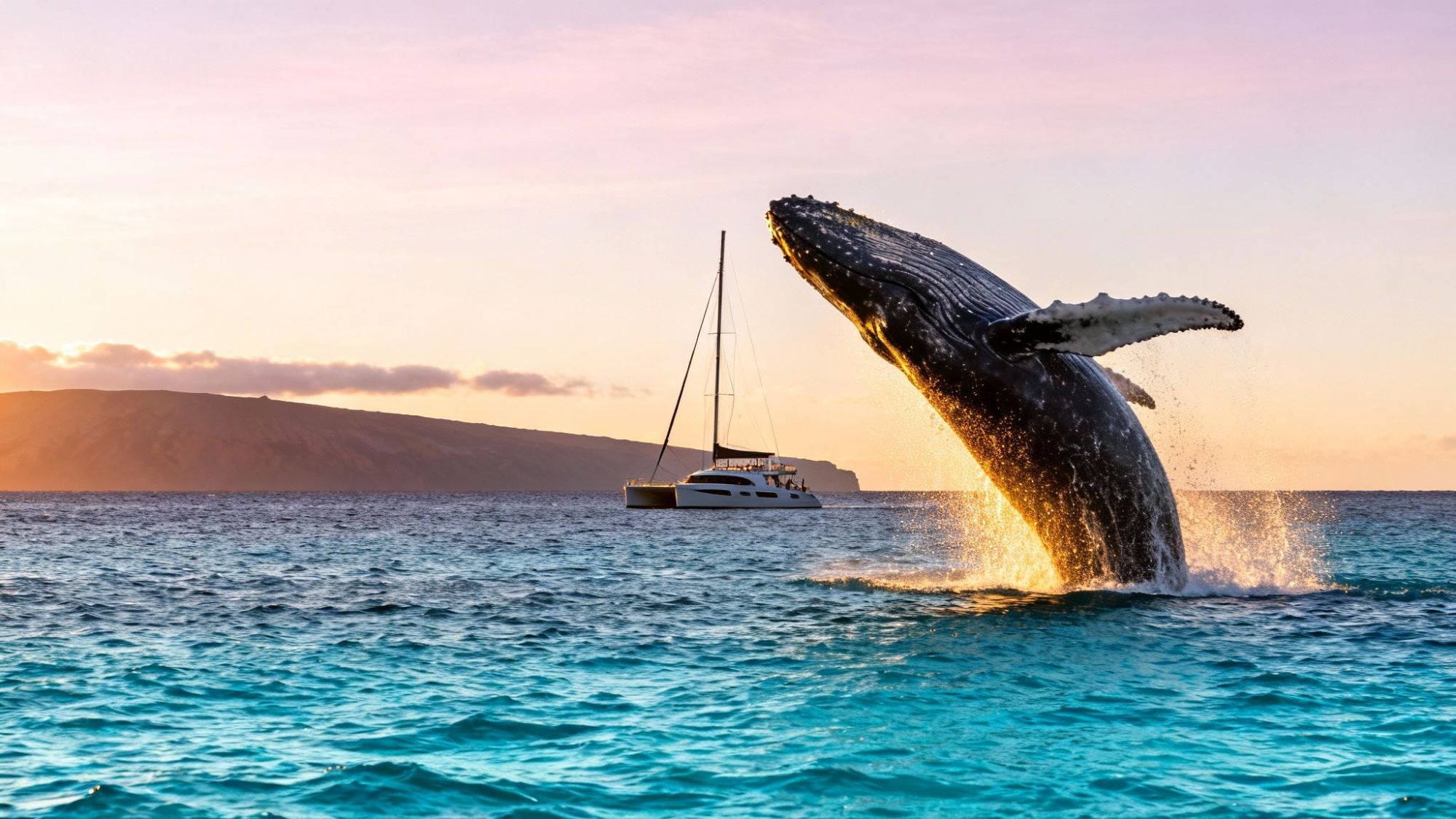
The absolute best time for whale watching on the Big Island is from December to April. The real peak of the season hits from January through March, when thousands of humpback whales turn Kona’s calm, protected waters into their own personal paradise. This annual migration transforms our coastline into a world-class stage for one of nature’s most incredible shows.
When you're ready to see it for yourself, it really pays to go with a local crew that knows these waters and the whales that call them home. At Kona Snorkel Trips, we've built our reputation as the top rated & most reviewed snorkel company in Hawaii by focusing on unforgettable, safe, and respectful marine encounters.
Your Ultimate Guide to Whale Watching in Kona
Welcome to the only guide you'll need to experience the magic of humpback whales in Kona. We know that choosing the right company can make or break your trip. That's why at Kona Snorkel Trips, we’ve built our reputation as the top-rated and most-reviewed tour company in Hawaii by focusing on unforgettable, safe, and respectful marine encounters.
This guide is packed with everything we've learned from years on the water. We'll cover it all, from the best times to spot whales to what you can actually expect out on a tour. You'll get the inside scoop on why these gentle giants make the epic journey to Hawaii and what makes Kona’s coast the perfect nursery for their young.
Why Kona is a Premier Whale Watching Destination
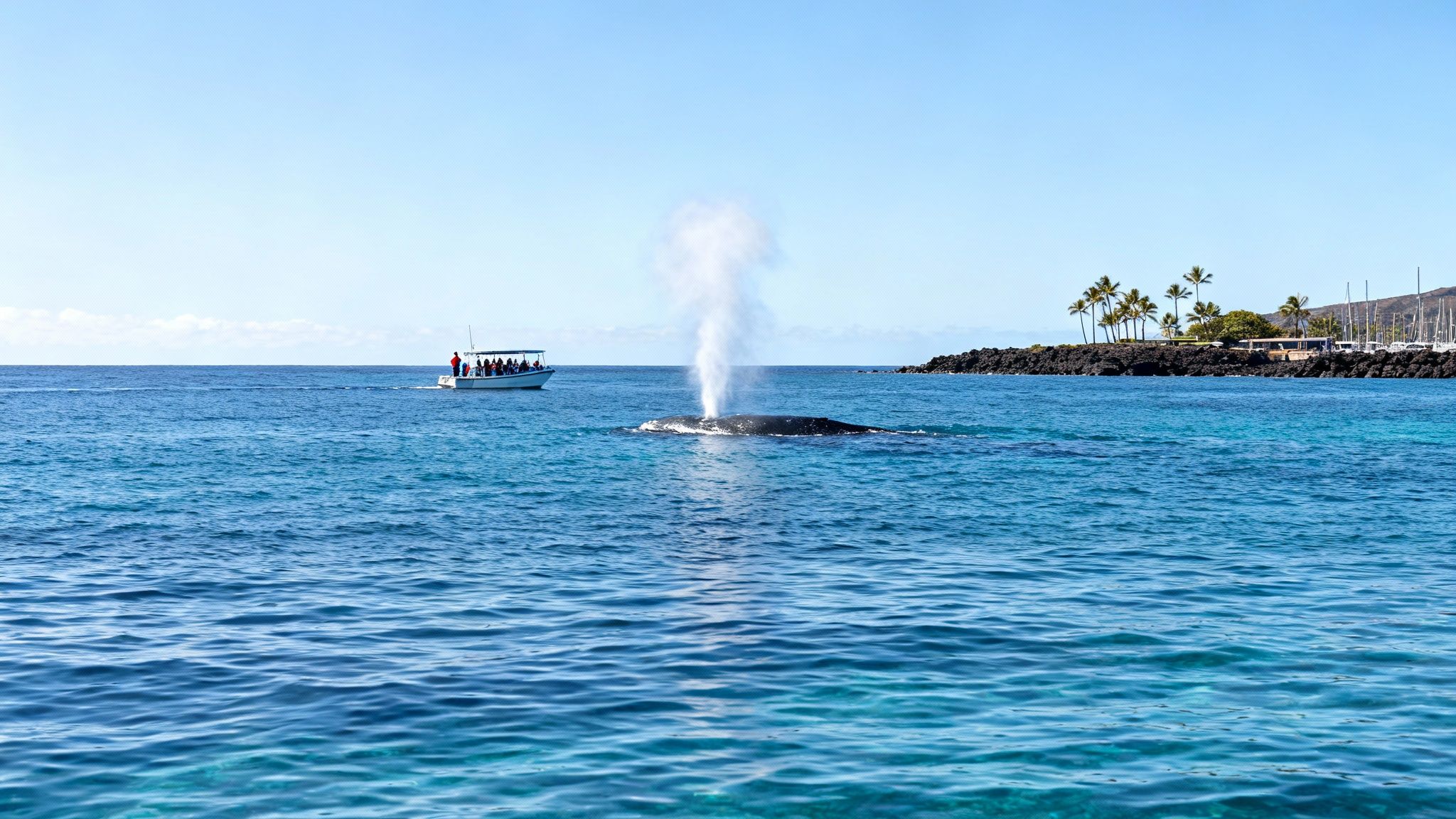
Every year, an unbelievable migration unfolds across the Pacific. Humpback whales travel thousands of miles from their chilly feeding grounds in Alaska all the way to Hawaii's warm, welcoming waters. It's one of the longest treks of any mammal, and they do it for one reason: to breed, give birth, and raise their newborn calves.
Kona's unique geography is what makes it so special. The island’s massive volcanoes act as a natural shield, protecting the western coast from the powerful trade winds and creating exceptionally calm, clear seas. It’s the perfect safe haven for mothers and their vulnerable babies, far from the rough open ocean and potential predators.
The sheer scale of this migration is hard to wrap your head around. Scientists figure that over 12,000 humpback whales—that's more than half the entire North Pacific population—make the trip to Hawaiian waters each year. Learn more about the humpback whale population in Hawaii.
What You Will Discover in This Guide
Our goal here is simple: to give you all the info you need to plan the perfect whale watching trip on the Big Island. Whether you’re a seasoned ocean pro or it's your first time seeing a whale, you'll find plenty of helpful insights.
Here’s a quick look at what we'll get into:
- Seasonal Timing: We'll break down the entire whale season, from the first early arrivals to the peak months when the ocean is alive with activity.
- Tour Options: We'll compare the different ways you can get out on the water, from big catamarans to our favorite—intimate, small-group zodiac adventures.
- Whale Behaviors: You'll learn what it all means when you see a massive breach, a powerful tail slap, or a curious spyhop.
- Responsible Viewing: We’ll talk about why respectful, sustainable wildlife encounters are so important for the health of these amazing animals.
By the time you're done with this guide, you'll know exactly how to make your Kona whale watching experience not just memorable, but truly meaningful. Let’s dive in and see what makes this season so special.
Navigating Kona's Annual Whale Season
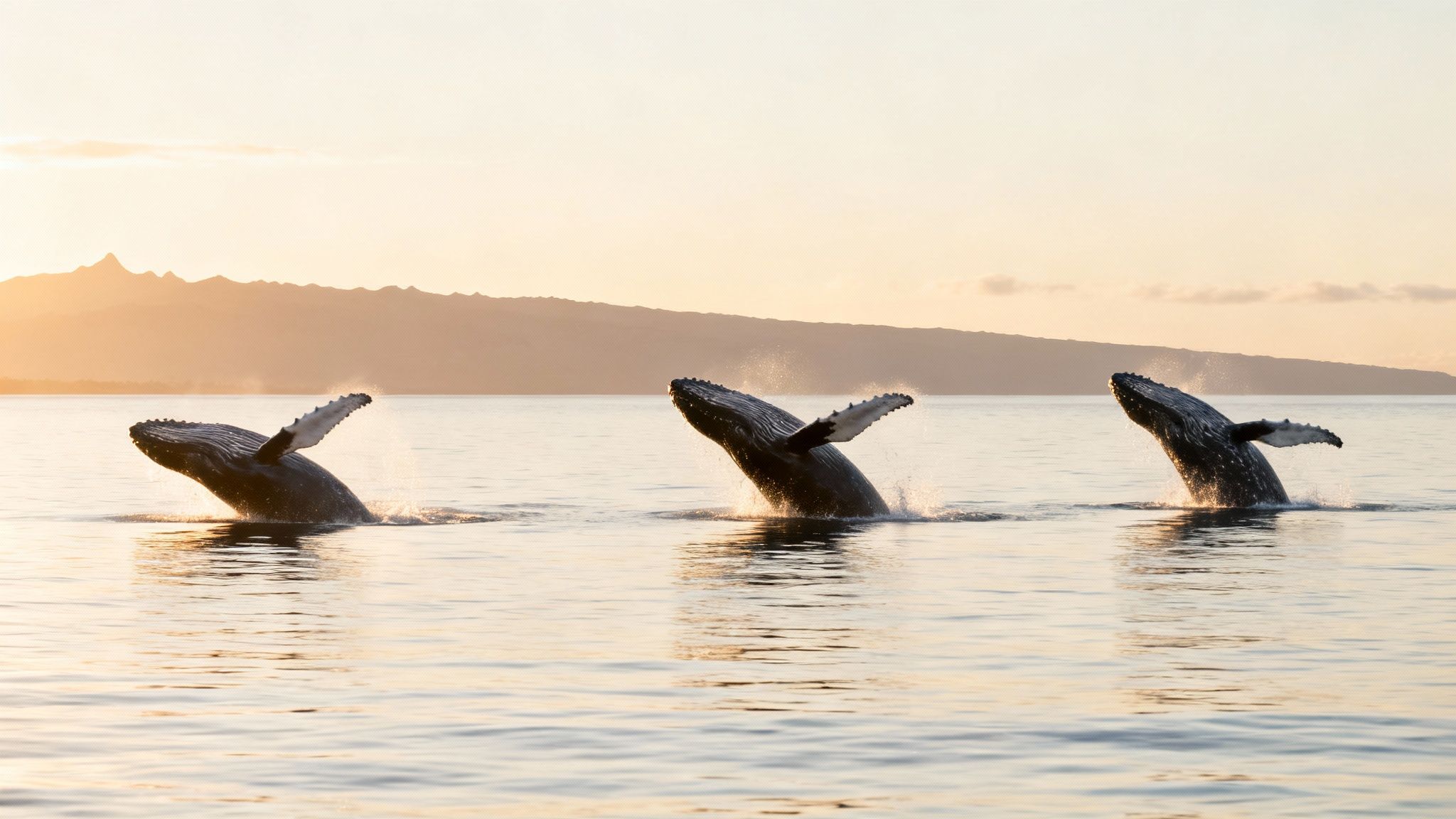
Every year, something incredible happens. Humpback whales embark on a massive 4,000-mile trek from their chilly feeding grounds in Alaska all the way to Hawaii's warm, welcoming waters. This isn't a vacation—it's an ancient instinct driving them here to breed and give birth, kicking off the whale watching season on the Big Island and turning Kona's calm seas into a playground for giants.
This migration follows a predictable rhythm, creating distinct windows for whale watching. Getting a feel for the difference between the 'shoulder' months and the absolute peak of the season is the secret to planning a great trip and knowing what to expect once you’re out on the water.
**.
To help you visualize the flow of the season, here’s a quick overview of what to expect month by month.
Kona Whale Watching Season At A Glance
| Month | Sighting Probability | Typical Whale Activity |
|---|---|---|
| November | Low to Moderate | The first arrivals, mostly adult males, begin to appear. |
| December | Moderate | More whales arrive, including some pregnant females. Sightings become more consistent. |
| January | High | A busy month! Lots of activity, including courtship behaviors and early calves being born. |
| February | Very High | Peak of the season. The highest concentration of whales, with frequent, diverse behaviors. |
| March | High | Still very active, with many mother-calf pairs visible. A great time for watching calves play. |
| April | Moderate | Whales begin their journey back to Alaska. Mother-calf pairs are often the last to leave. |
| May | Low | The last few stragglers, typically moms and calves, are spotted before the waters quiet down. |
Choosing the right month sets you up for success, but the time of day you head out matters, too.
The Best Time of Day for Your Tour
Once you've picked your dates, the next question is: morning or afternoon? Whales are doing their thing 24/7, but some times of day can make for a better experience on the boat.
Mornings are easily the most popular time for whale watching in Kona, and for good reason. The ocean is typically at its calmest, giving you a smooth, glassy surface that makes spotting spouts and breaches a whole lot easier. That soft morning light is also a photographer's dream.
That said, don't count out the afternoon tours! The whales are still out there, and sometimes the angled afternoon sun creates stunning silhouettes as they breach against the horizon. Honestly, the "best" time often just comes down to your own schedule and what kind of vibe you're looking for.
How Weather Affects Your Viewing Experience
Kona is famous for its ridiculously consistent sunny weather, which is a huge part of what makes it a world-class whale watching spot. Our massive volcanoes, Mauna Kea and Mauna Loa, act as a shield, blocking the gusty trade winds and leaving the leeward coast with wonderfully calm waters.
But "perfect" weather isn't always what you think. An overcast sky can actually be a blessing, cutting the glare on the water and making it easier to see what’s happening just below the surface. On the other hand, a windy day can whip up some chop, making it tougher to spot the whales.
Any good tour operator lives and breathes by the weather report, always putting safety first and letting you know if conditions might change the plan. By understanding these daily and seasonal patterns, you can time your trip just right for the most spectacular whale watching Big Island Kona has to offer.
Choosing Your Perfect Kona Whale Watching Tour
Okay, so you've nailed down when you're coming. Now for the fun part: figuring out how you want to experience the sheer magic of whale watching on the Big Island. Kona has a fantastic spread of tour options, and each one offers a totally different perspective on these incredible animals.
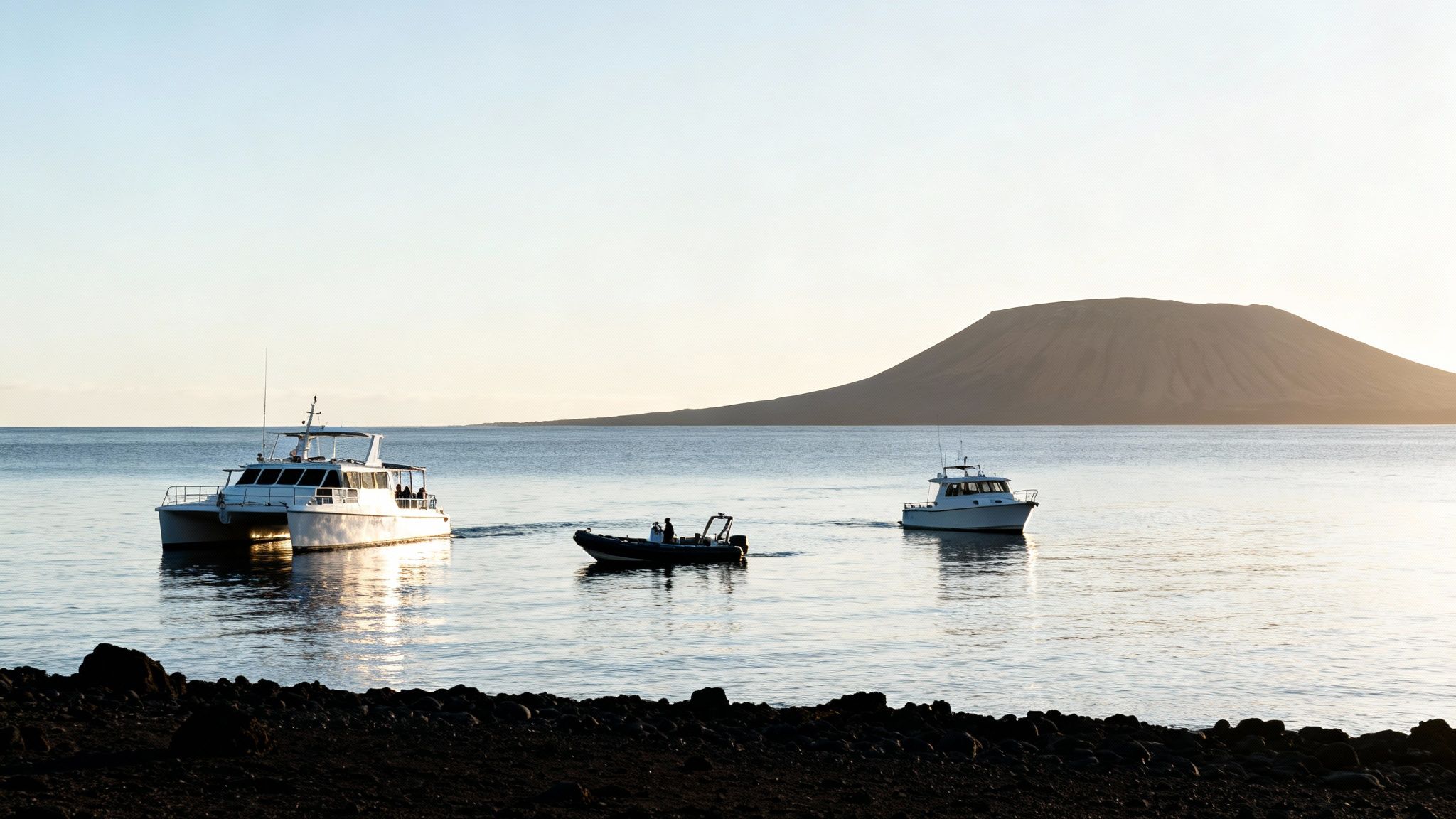
Think of it like picking the right lens for a camera—the boat you choose is going to shape your entire experience. You’ll mostly find three styles out on the water: spacious catamarans, nimble Zodiac-style rafts, and exclusive private charters. The best one for you really boils down to your group, your comfort level, and the kind of adventure you have in mind.
Let's break down what makes each trip special.
Catamarans: Stability And Comfort
Picture a catamaran as the steady, comfortable viewing deck of the sea. These large, twin-hulled boats are absolutely perfect for families with young kids, older folks, or really anyone who's a little wary of boat motion. Their sheer size gives them a smooth ride, and they usually come loaded with perks like onboard bathrooms, shady spots to sit, and plenty of room to stretch your legs.
- Pros: They are incredibly stable, which is a huge plus if you're worried about seasickness. You also get more creature comforts and a higher vantage point for spotting blows in the distance.
- Cons: Because they're bigger, the experience can feel less personal. They also can't maneuver as quickly or get as low to the water as smaller boats.
Zodiac-Style Rafts: A Thrilling Adventure
If you're craving a more up-close, adventurous encounter, you just can't beat a Zodiac-style raft. These are the smaller, faster boats that sit low in the water, putting you right at eye-level with the ocean. It creates this powerful, immersive feeling where you're truly part of the action.
The agility of a raft means your captain can react instantly to a sighting, zipping over to get the best possible view (while always keeping a respectful distance, of course). It’s a flat-out exhilarating ride that makes you feel like a real ocean explorer.
At Kona Snorkel Trips, we specialize in these small-group Zodiac adventures. We've found this intimate setting builds a much deeper connection to the whales and lets our expert guides share what they know in a more personal, conversational way.
Private Charters: Ultimate Flexibility
For the absolute pinnacle of a customized day on the water, a private charter is the only way to go. When you book the whole boat, you're the boss. You decide how long to hang out with a particular pod of whales, if you want to pop over to a reef for a quick snorkel, or just cruise the stunning Kona coastline at your own speed.
This is the ideal choice for serious photographers, special celebrations, or families who just want a private, tailored whale watching Big Island Kona tour. It's as flexible and personal as it gets.
Selecting a Reputable and Eco-Conscious Operator
No matter what kind of boat you choose, the single most important decision is picking a reputable, eco-conscious tour operator. A great company does way more than just find whales; they are stewards of the ocean, putting the well-being of the animals first.
Here’s what you should be looking for when you book:
- Knowledgeable Guides: A passionate and educated naturalist guide is the difference between just seeing a whale and truly understanding what you're witnessing. They can interpret behaviors, share fascinating stories, and answer every question you've got.
- Commitment to Guidelines: Make sure the company strictly follows all federal and state regulations, especially the 100-yard approach rule for humpback whales. This is a non-negotiable for responsible whale watching.
- Educational Tools: The best operators often carry hydrophones. There is nothing quite like hearing the hauntingly beautiful songs of a male humpback whale reverberating through the hull of the boat. It's unforgettable.
- Positive Reviews: Spend some time reading reviews. Look for companies with consistently high ratings where people talk about the crew's professionalism, their respect for the wildlife, and their commitment to safety.
By choosing an operator that puts conservation first, you're directly helping to protect Hawaii’s incredible marine ecosystem. To dive deeper into what's out there, check out our handy comparison of the best whale watching tours in Kona, Hawaii.
More Than Just Humpbacks: Kona's Year-Round Marine Life
Everyone comes here for the humpbacks, and for good reason—they put on an incredible show during the winter. But here’s a little secret we guides like to share: the magic doesn't stop when the last humpback heads back to Alaska. Kona's deep blue waters are a bustling city of marine life all year long.
The very same underwater landscape that makes our coast the perfect nursery for humpback calves also creates a rich, permanent home for a stunning variety of other whales and dolphins. The Big Island's volcanic slopes don't just end at the shoreline; they plummet dramatically into the abyss, creating steep underwater cliffs. This unique setup pushes deep-water nutrients toward the surface, fueling a food web that keeps our resident cetaceans fed and happy.
Meet Kona's Resident Cetaceans
So, what does this mean for you if you're visiting outside of peak humpback season? It means the ocean is anything but empty. When you head out with us from May through November, you’re exploring a dynamic ecosystem that’s home to some fascinating local characters.
You'll have a great chance of meeting some of our most frequently spotted residents:
- Short-Finned Pilot Whales: Technically a huge species of dolphin, these guys are incredibly social and intelligent. They travel in tight-knit family pods, sometimes 20 to 50 strong. Seeing them surface together is a sight you won't forget.
- Spinner Dolphins: The acrobats of the sea! You can't help but smile when you see these playful dolphins leaping and spinning through the air. They usually rest in the calm bays during the day before heading offshore to hunt at night.
- Bottlenose Dolphins: Bigger and more powerfully built than their spinner cousins, bottlenose dolphins are known for their curiosity. They love to check out the boat and will often cruise right alongside us in the bow wave.
- Spotted Dolphins: As their name suggests, these sleek dolphins develop beautiful and unique spot patterns as they get older. No two adults look exactly alike!
The Thrill of a Deep-Water Sighting
Beyond the usual suspects, Kona’s deep offshore waters hold the potential for those truly rare, once-in-a-lifetime encounters. This is where the real giants of the deep come to hunt.
The ultimate prize for many of us is spotting a sperm whale. These are the largest toothed predators on the planet, capable of diving more than 3,000 feet deep to hunt for giant squid. To see one of these titans resting at the surface is a humbling experience that really puts things into perspective.
It’s this incredible biodiversity that truly makes Kona special. You just never know what the ocean might deliver. For instance, recent reports from our waters highlight encounters with short-finned pilot whales, sperm whales, and even the elusive Blainville's beaked whales, all on top of the usual spinner dolphins and oceanic whitetip sharks. You can see what we've been spotting lately by checking out the 2025 Kona whale watch reports.
Our Role in Ocean Science
We’re not just out here to show you a good time; we're also guardians of this incredible place. Responsible tour operators play a vital role in protecting these year-round residents. Our crews are trained to photo-identify individual animals and log every sighting.
This data gets passed along to local researchers, contributing directly to "citizen science" projects. It helps scientists track the health, social structures, and movements of these amazing creatures. So, when you're on a tour with us, you're not just a spectator—you're an active participant in the conservation of Kona's precious marine life. No matter when you visit, the waters off the Big Island are always alive with discovery.
What to Expect on Your Whale Watching Adventure
The trip really begins the moment your boat slips out of the Kona harbor. There’s this amazing feeling of anticipation in the air as the shoreline gets smaller and the huge, deep blue of the Pacific opens up all around you. Everyone on board starts scanning the horizon, united by the same mission. It's a quiet, shared excitement.
Then, it happens. A sharp-eyed guide spots the first sign and calls it out—a misty puff of vapor just hanging in the air. A spout!
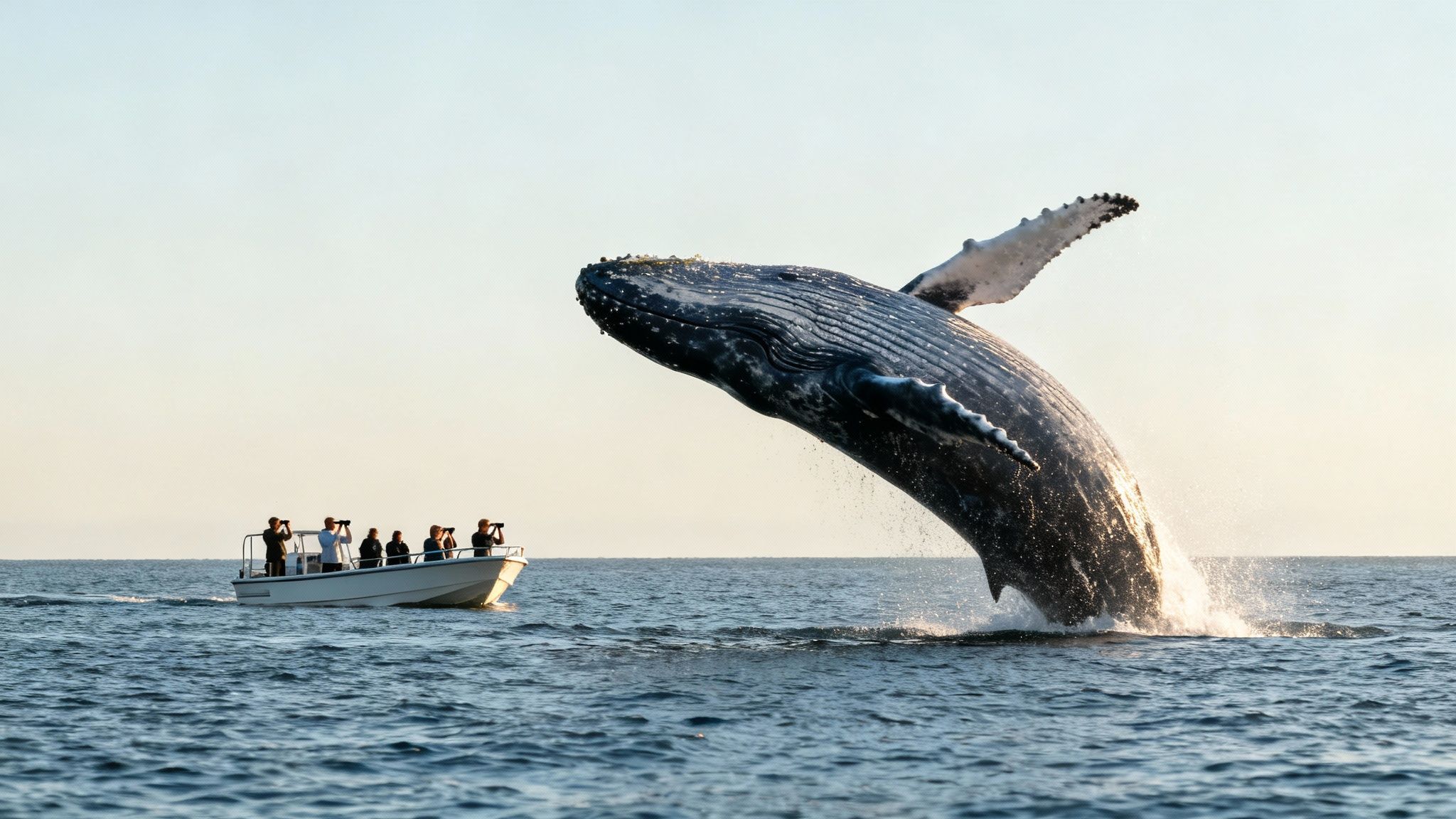
As your captain expertly maneuvers the boat closer while keeping a respectful distance, the sheer scale of these animals starts to sink in. Nothing really prepares you for the sight of a 40-ton humpback launching its entire body out of the ocean. The sound it makes crashing back down is a raw, powerful boom that you literally feel in your chest.
Decoding Incredible Whale Behaviors
Part of the magic of any whale watching Big Island Kona tour is figuring out what all the incredible displays mean. These aren't just random splashes; they're a complex language the whales use to communicate.
- Breach: This is the one everyone wants to see. A whale rockets almost completely out of the water. Scientists think it could be a way to talk across long distances, shake off pesky parasites, or maybe—just maybe—they do it for the sheer joy of it.
- Tail Slap (Lobtailing): You'll see a whale lift its massive tail flukes and smack them hard on the water's surface. This can be a warning to other whales, a form of communication, or a sign of agitation.
- Pectoral Fin Slap: A whale rolls onto its side and slaps its long pectoral fin against the water, over and over. This is another way they communicate, often seen when a few whales are hanging out together.
- Spy-Hopping: This is one of the coolest behaviors to witness. A whale pokes its head straight out of the water to get a look around. It feels like pure curiosity, as if the whale is just as interested in checking you out as you are in them.
Gearing Up for Your Adventure
A little preparation goes a long way in making sure you can just soak up the experience without any distractions.
Here's a quick checklist of what to bring:
- Sunscreen: Please choose a reef-safe option! It protects your skin and our fragile marine ecosystem.
- Polarized Sunglasses: These are a game-changer. They cut right through the ocean glare, helping you spot whales and other activity under the surface you’d otherwise miss.
- Light Jacket or Windbreaker: Even on a warm Kona day, that breeze on the open water can get surprisingly chilly, especially on morning trips.
- Hat: A wide-brimmed hat is your best friend for keeping the sun off your face and neck.
- Camera with a Zoom Lens: You'll definitely want photos, but don’t forget to put the camera down and just be in the moment, too.
Tips for a Comfortable Trip
The last thing you want is for seasickness to ruin your day. The best approach is to be proactive. Staying hydrated, getting a good night's sleep, and having a light meal beforehand can make all the difference. For more in-depth tips, you can learn about how to prevent seasickness in our complete guide.
The sheer number of whales that visit these waters is incredible. During the final volunteer whale count of the 2025 season, observers spotted 714 humpback whales from shoreline sites across Hawaii. From just eight sites on the Big Island alone, they counted 28 whales. This data really shows how vital this area is for the humpbacks.
How to Practice Responsible Whale Watching
Seeing a 40-ton humpback whale breach the surface is one of those moments that stays with you forever. It's a truly life-changing experience. But that incredible sight comes with a shared responsibility to protect these gentle giants.
Humpbacks travel thousands of miles to our calm Kona waters for a very specific reason: it’s a safe nursery. This is where they mate and raise their newborn calves. Any disturbance can cause a lot of stress, especially for a new mom trying to nurse and keep her baby safe.
That’s why we have strict federal and state laws in place. The single most important rule to remember is that no vessel—whether it's a boat, kayak, or paddleboard—is allowed to approach a humpback whale within 100 yards (91 meters). This creates a critical buffer zone, giving the whales the personal space they need to rest, play, and socialize without feeling threatened. Honoring this rule is the heart and soul of responsible whale watching on the Big Island.
The Role of a Responsible Tour Operator
Choosing a reputable tour company is the single best thing you can do for the whales. You're not just booking a boat ride; you're trusting a crew to deliver an amazing experience while putting the whales' well-being first. A professional, eco-conscious crew lives and breathes these regulations and has a deep commitment to marine conservation.
Our captains are experts at positioning the boat for unbelievable photos without ever crossing that crucial 100-yard line. This is where an experienced captain’s skill really shines—they know how to get you the best view while ensuring the whales are safe and undisturbed.
A great tour is also a fantastic learning opportunity. The best guides will share the stories behind the behaviors you're seeing, explaining why a calf sticks so close to its mother or what a powerful tail slap might mean. This context turns simple observation into a much deeper appreciation for these complex animals.
Your Impact on Conservation
When you book with an ethical tour operator, you're directly supporting businesses that act as guardians of the ocean. Your ticket becomes an investment in our local community and the long-term protection of Hawaii's marine ecosystem. Many of us also participate in citizen science, logging sightings and sharing data with researchers who track the health of the humpback population.
One of the easiest ways to get involved is by supporting local initiatives. Organizations often host events like the annual Sanctuary Ocean Count, where volunteers help track whale populations from shore. Participating in or supporting these efforts helps ensure the magic of the Kona whale season continues for generations.
To make sure your whole ocean adventure is respectful, consider adopting broader sustainable boating practices on all your trips. By watching respectfully and choosing your tour operator wisely, you become more than just a spectator—you become a steward for these magnificent creatures.
Your Kona Whale Watching Questions Answered
If you're planning a whale watching trip here in Kona, you probably have a few questions floating around. As guides who are out on the water every day, we hear them all. To help you get ready for an absolutely incredible adventure, we've put together answers to the most common things people ask.
When Is the Absolute Best Time to See Whales in Kona?
The main whale watching season here runs from December through April. But if you're asking for the absolute sweet spot, you'll want to aim for a trip between mid-January and the end of March.
That's when the whale population is at its peak density. Your chances of seeing the most spectacular stuff—like full-body breaches and the drama of competitive pods—are highest during this window. It's just a magical time to be on the water.
Can I See Whales from the Shore?
You bet! It's definitely possible. The high bluffs along the Kohala Coast are fantastic spots for some land-based whale watching. Grab a good pair of binoculars, find a comfortable spot, and with a little patience, you can often catch sight of spouts, tail slaps, and maybe even a distant breach. The Puʻukoholā Heiau National Historic Site is a local favorite for this.
That said, there's truly nothing like being out on the water with them. A boat tour gives you a front-row seat, letting you truly grasp the immense scale of these animals and hear the powerful sound of their breath.
What Should I Wear on a Whale Watching Tour?
Layers are your best friend out here. Even on a gorgeous, sunny Kona day, the breeze on the open ocean can have a surprising chill, especially once the boat gets moving.
Here’s a quick checklist to keep you comfortable:
- A light jacket or windbreaker.
- Comfy shoes with good grip (non-slip is ideal).
- A hat to keep the sun off your face.
- Polarized sunglasses—they cut the glare on the water like you wouldn't believe.
- Reef-safe sunscreen, which protects both you and our precious ocean.
Are Whale Sightings Guaranteed?
This is a big one we get asked. Because we're watching wild animals in their natural home, we can never offer a 100% guarantee. Humpback whales are on their own schedule, and their behavior can be completely unpredictable from one day to the next.
However, during the peak season from January to March, the probability of seeing whales is extremely high. Our captains have spent years on these waters and know all the whales' favorite hangouts, which seriously boosts your odds of a memorable encounter. Every single trip is a unique chance to witness something amazing.
How Close Can We Get to the Whales?
Federal and state regulations are very clear on this: all boats must stay at least 100 yards away from humpback whales. That's about the length of a football field. This law is critically important for protecting the whales—especially moms with their newborn calves—from stress and any potential harm.
Our captains are experts at positioning the boat for fantastic views and photo ops while strictly following this respectful distance. Of course, sometimes a curious whale decides to break the rules and approaches us. Those are unforgettable moments that happen completely on their terms.
Ready to feel the awe of humpback season for yourself? Come join Kona Snorkel Trips for an intimate, small-group tour that brings you face-to-face with these gentle giants. Our experienced guides and comfortable boats make for a safe, respectful, and truly unforgettable adventure.