
Whale Watching Big Island Kona: Your Ultimate Guide
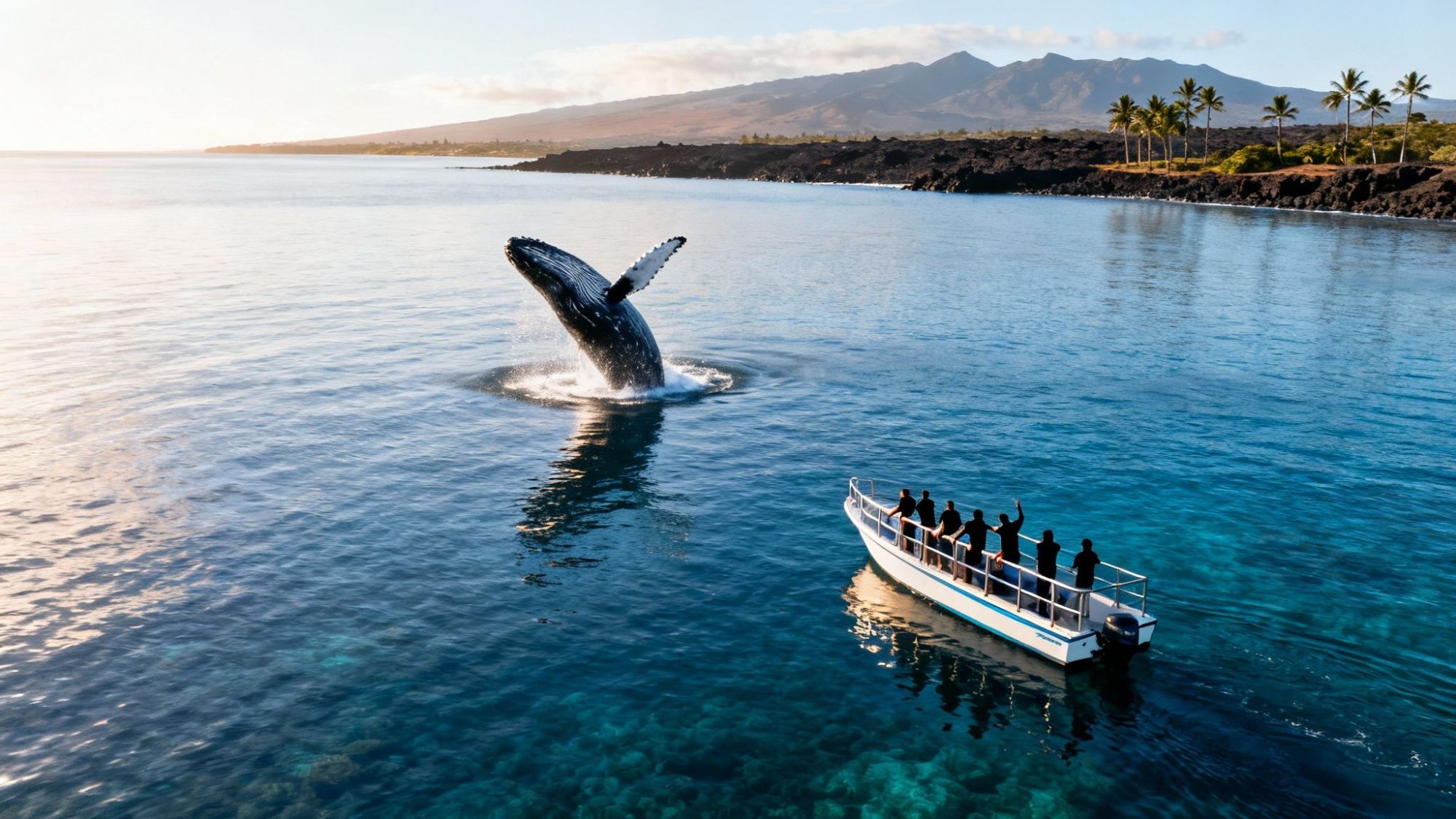
Picture this: the cool ocean mist on your face as a 40-ton humpback whale explodes from the calm, blue waters off the Kona coast. It’s a moment that stops your heart, launching its entire body into the air before crashing back down. This isn't just a tour; it's a profound, awe-inspiring encounter with one of the planet's most magnificent creatures.
You've picked the right time to be thinking about it. The absolute best time for whale watching on the Big Island's Kona coast is from mid-December through the end of March. This is when thousands of humpback whales journey to these warm, welcoming waters to mate and give birth.
Your Ultimate Kona Whale Watching Guide
This guide is everything you'll need to plan that once-in-a-lifetime experience. We'll dive into why Kona's sheltered waters are a world-famous sanctuary for humpback whales, covering everything from the peak of the season to picking a tour that gets you breathtakingly close.
Of course, starting your adventure with a trusted and experienced crew makes all the difference. Kona Snorkel Trips is the top-rated and most-reviewed snorkel and tour company in Hawaii, and we're dedicated to creating safe, memorable, and respectful wildlife encounters.
Why Kona is a Whale Watching Paradise
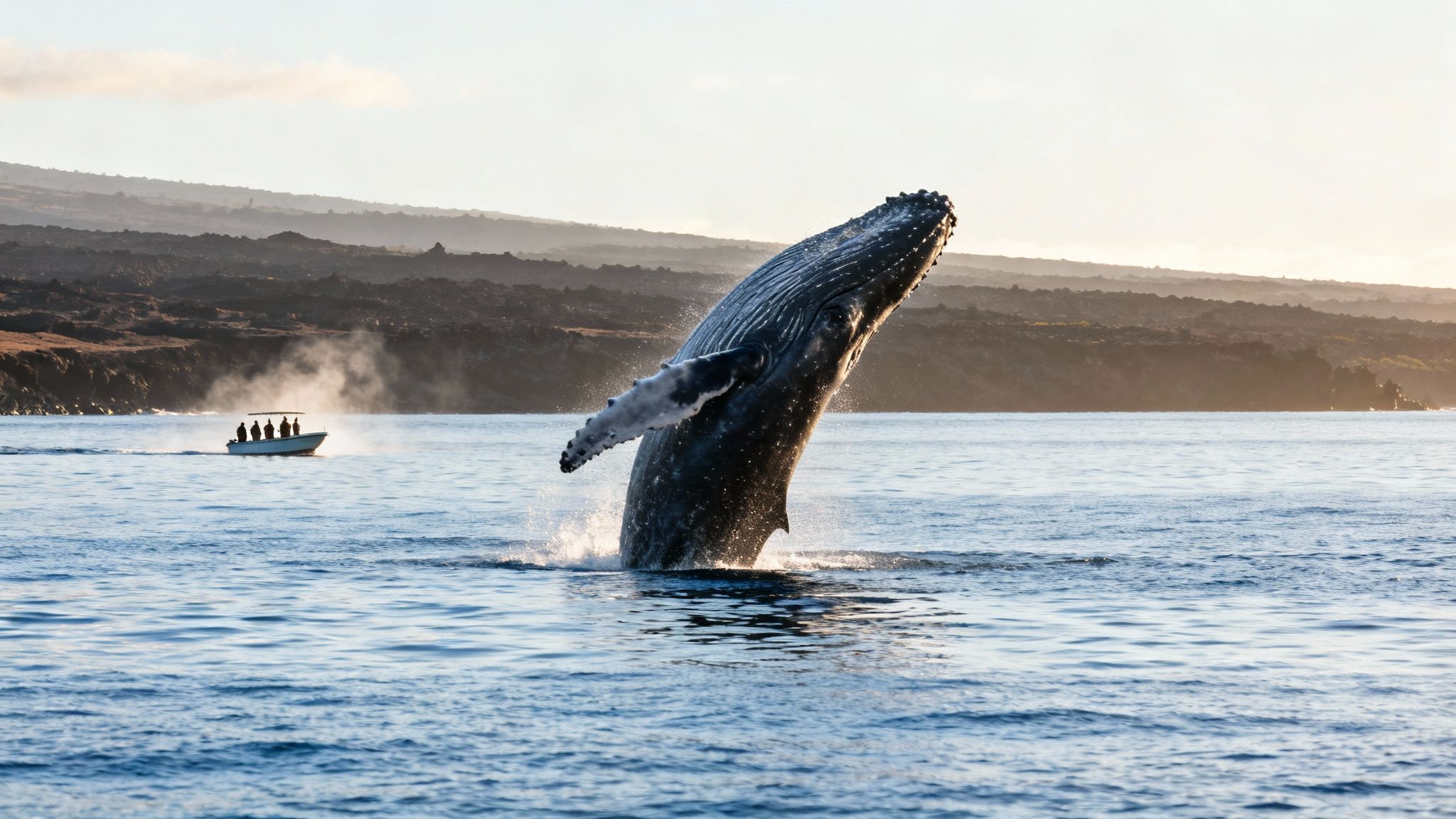
The annual migration of the North Pacific humpback whale is one of nature’s greatest shows. Every year, these gentle giants travel over 3,000 miles from their chilly feeding grounds in Alaska to the warm, protected waters around the Hawaiian Islands. This epic journey is all about the fundamentals: breeding, birthing, and nursing their young.
Kona's unique geography makes it the perfect place for this crucial chapter of their lives. The massive volcanoes of Mauna Loa and Hualalai act as a natural shield, protecting the western coast from the powerful trade winds and creating incredibly calm, clear waters.
These leeward conditions provide a safe, serene nursery for mothers and their newborn calves. Born with very little body fat, the calves need the warm water to survive and thrive. This makes whale watching Big Island Kona an unparalleled experience—you're not just a spectator, you're witnessing a vital part of their life story.
It’s hard to overstate just how many whales gather here. During the peak of the season, seeing multiple pods on a single trip is the norm, not the exception. All this activity—from mothers teaching their calves to breach, to males competing for mates with thunderous tail slaps—is exactly what makes Kona a world-class destination for anyone who loves the ocean.
Understanding the Kona Humpback Whale Season
Timing is everything if you want to catch the best whale watching on the Big Island. The entire experience revolves around the incredible annual migration of thousands of North Pacific humpback whales. They make a remarkable journey, leaving the chilly feeding grounds of Alaska for the warm, welcoming embrace of Hawaiian waters. This pilgrimage is driven by the primal need to breed, give birth, and nurse their calves in a safe, protected environment.
The rhythm of their arrival dictates how many whales you’ll see and what they’ll be doing. While a few early arrivals might show up as early as October or November, the real show starts building in December. Getting a handle on this timeline is the key to witnessing the most dramatic action.
Peak of the Action
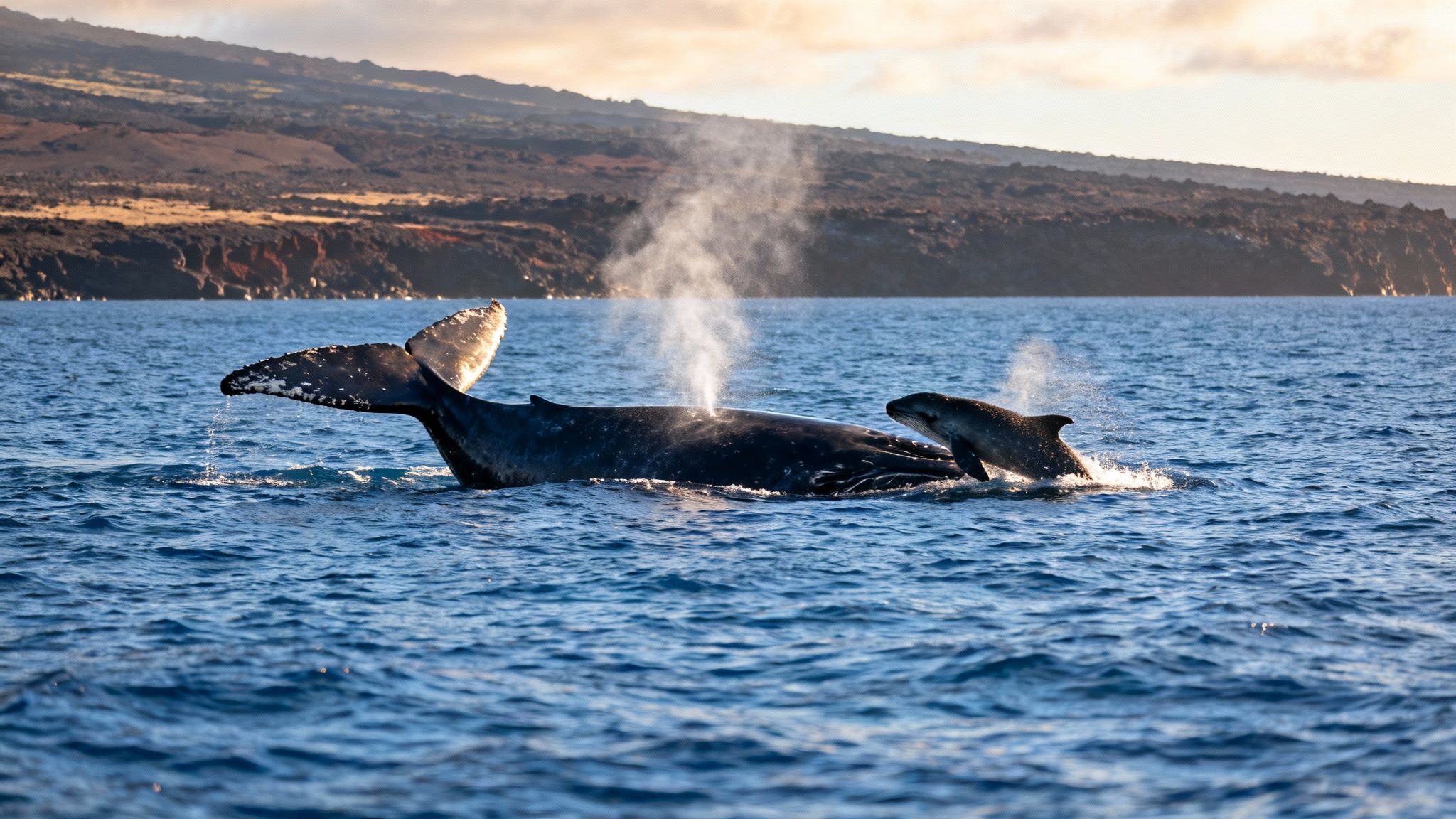
For anyone dreaming of those awe-inspiring, full-body breaches, January through March is the undisputed peak season. During these months, the waters off the Kona coast are absolutely electric with activity. The whale population swells, creating a dynamic marine theater filled with mothers and their curious newborn calves, trailed by competitive males vying for attention.
This is your best shot at seeing the most exciting whale behaviors:
- Breaching: The unforgettable sight of a 40-ton whale launching its entire body out of the water.
- Tail Slapping: Powerful, loud slaps on the water's surface, used for communication or just showing off.
- Pectoral Fin Waves: Those long, graceful fins slapping the water, often a social signal between whales.
Lining up your trip with this prime window dramatically increases your chances of having one of those "I can't believe I just saw that" moments. Simply put, more whales means more action.
To help you plan, here’s a quick breakdown of what you can expect throughout the season.
Kona Whale Watching Season At a Glance
| Month | Whale Activity Level | Common Behaviors to Spot |
|---|---|---|
| Nov – Dec | Low to Moderate | Early arrivals, mostly adults. You'll see spouts and flukes, with occasional breaches as numbers build. |
| Jan – Feb | High (Peak) | The highest concentration of whales. Look for competitive pods, lots of breaching, and mothers with newborn calves. |
| March | High (Peak) | Still peak season, with plenty of surface activity. Calves are larger and more playful, often learning to breach. |
| April – May | Moderate to Low | Whales begin their journey back to Alaska. Sightings become less frequent, mostly mothers and calves taking their time. |
This table gives you a good sense of the ebb and flow, but remember—these are wild animals, and every day on the water is different!
A Sanctuary for Gentle Giants
The Kona coast is a major hub for the North Pacific humpback whales, known in Hawaiian as koholā. While the official season runs from mid-December through mid-April, the numbers consistently spike from January to March. Scientists estimate that around 12,000 humpback whales—more than half the entire North Pacific population—make the trip to Hawaiian waters each winter. Many of them hang out right here, drawn to Kona's calm, sheltered leeward waters that serve as the perfect nursery.
It's hard to describe the feeling of being out on the water during peak season. You're not just looking for one whale; you're often surrounded. It’s not uncommon to see multiple pods at once—a mother patiently teaching her calf, while a group of males puts on a spectacular show nearby.
The season isn't just one long event; it's a story that unfolds over months. The first arrivals in late fall are often solitary adults or small groups. As winter sets in, things get more interesting. By February, the ocean is a bustling nursery, with tiny (well, relatively tiny) calves sticking close to their mothers, learning the ropes.
This progression is what makes every tour unique. An early-season trip might give you a peaceful encounter with a few curious adults. A mid-season trip is pure high-energy spectacle. If you want to dive deeper into the month-by-month details, check out our guide to the Big Island whale season. Understanding this natural calendar helps you pick the perfect time to come see the show you've been waiting for.
How to Choose the Best Kona Whale Watching Tour
Picking the right tour is probably the single most important decision you'll make for your whale watching adventure on the Big Island. Get it right, and you've got an unforgettable, up-close encounter. The wrong choice? It can feel like you’re just watching from the sidelines. The whole thing really boils down to a few key factors that shape your time on the water.
It all starts with the boat. Sure, those big catamarans are stable, but they can feel a bit crowded. A smaller boat, on the other hand, brings you right into the action for a much more personal connection with the ocean. Picture yourself at eye-level with the water, feeling the gentle rock of the waves, and sharing the moment with just a few other people. That kind of proximity makes every breach and tail slap feel immediate and ensures you’ve got a front-row seat.
The Importance of an Expert Crew
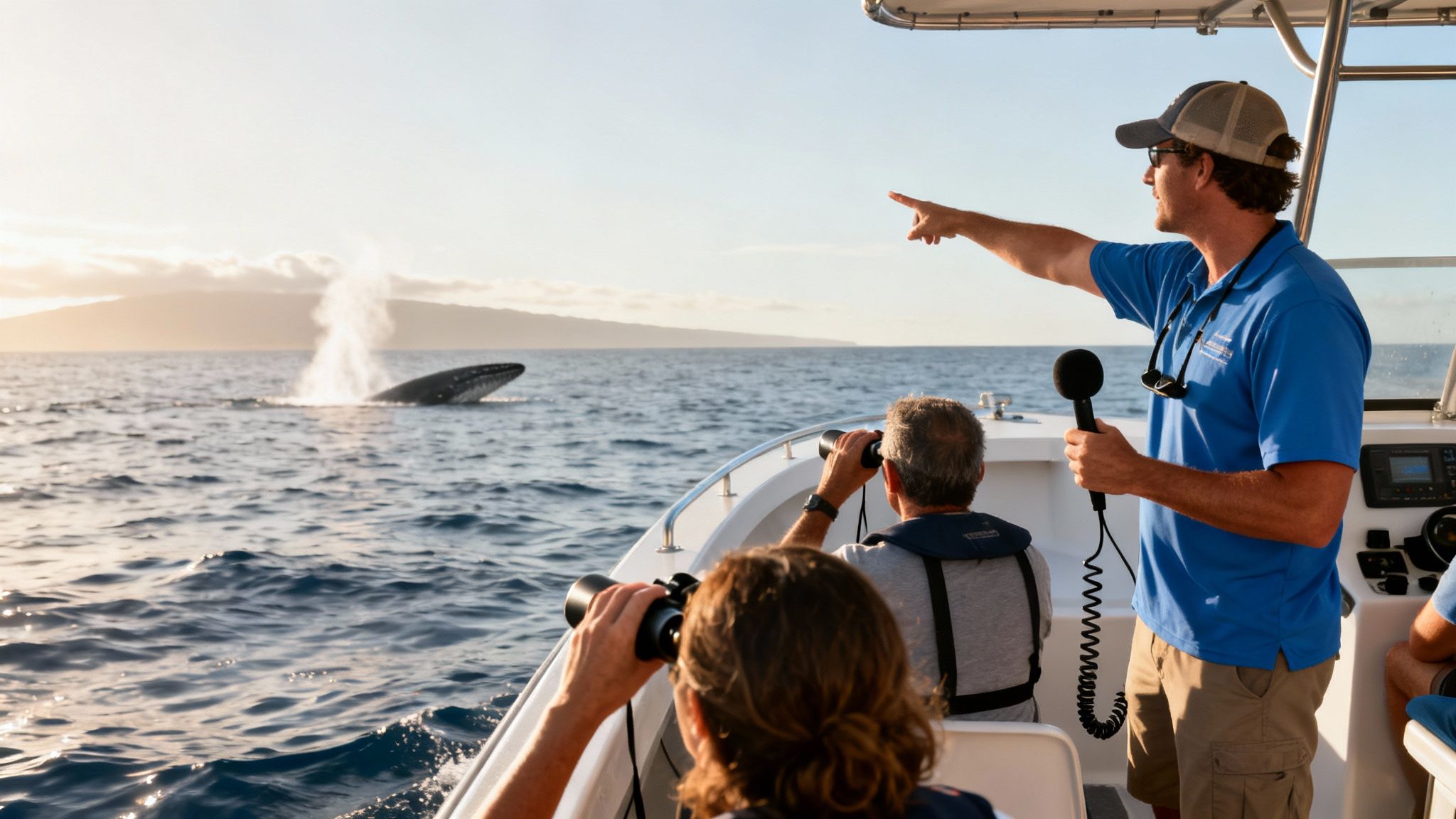
Beyond the vessel itself, the crew is what really makes the experience sing. A seasoned captain and a knowledgeable marine naturalist are worth their weight in gold. They don't just find whales; they help you understand their world. A great guide can point out the subtle differences in whale behavior—is that a territorial display or just playful splashing?—and share incredible details about their migration and family lives.
The best operators also bring some cool tech on board. One of the most amazing tools is a hydrophone, which is basically an underwater microphone that lets you listen to the hauntingly beautiful songs of the male humpbacks.
Hearing their complex melodies rising from the deep is a powerful experience. It connects you to the whales on a totally different level, turning a visual show into something you feel in your soul.
This commitment to creating a richer experience is a clear sign of a quality tour. To get a better feel for what goes into it, you can learn more about what to expect on a Kona whale watching tour.
Understanding Tour Costs and What to Look For
Whale watching is a big part of Kona’s local economy, and you’ll find that prices generally reflect the quality of the trip. Most boat tours will run somewhere in the $100 to $160 per person range for a seasonal trip. While you might find cheaper options, a slightly higher price tag often means smaller groups, a more experienced crew, and better equipment like those hydrophones. It's common for the best tours to advertise having an onboard naturalist and important safety features like propeller guards, showing they're serious about a responsible and amazing trip.
During the peak season from January to March, booking ahead is non-negotiable. The best morning trips, which usually have the calmest water, can sell out weeks in advance. When you're ready to start looking, checking out resources that list the top-rated whale watching tours in Kona can be a huge help.
Key Features of a Reputable Operator
When you’re comparing companies, keep an eye out for these tell-tale signs of a great, eco-conscious operator:
- Small Group Sizes: This might be the biggest factor for an intimate experience. Fewer people means unobstructed views and more one-on-one time with the crew.
- Experienced Naturalist Onboard: Having a guide who can share real-time insights adds so much depth to what you're seeing. It’s the difference between just looking at whales and actually learning about them.
- Commitment to Safety and Regulations: The best companies are proud of their commitment to following federal laws, like maintaining a 100-yard distance from the whales to keep them safe.
- Positive Online Reviews: Take a look at recent reviews on Google or TripAdvisor. They’re a great way to see what past customers are saying and check an operator's reputation for respectful wildlife viewing.
Choosing a tour isn't just about booking a spot on a boat. It's about finding a team that’s dedicated to creating a respectful, educational, and genuinely awe-inspiring connection with Kona’s magnificent humpback whales. Focus on these key things, and you'll be set for a whale watching Big Island Kona adventure you'll be talking about for years.
What to Expect on Your Big Island Whale Watching Trip
The experience really begins the moment you leave the Kona coast behind. There’s a feeling of pure possibility in the clean, salty air as everyone's eyes fix on that deep blue horizon, scanning for the first sign of life. Then it happens. A shout from the captain or another passenger pointing off in the distance, and you see it too—a misty puff hanging in the air for just a second. That first spout is the signal that your whale watching adventure has officially begun.
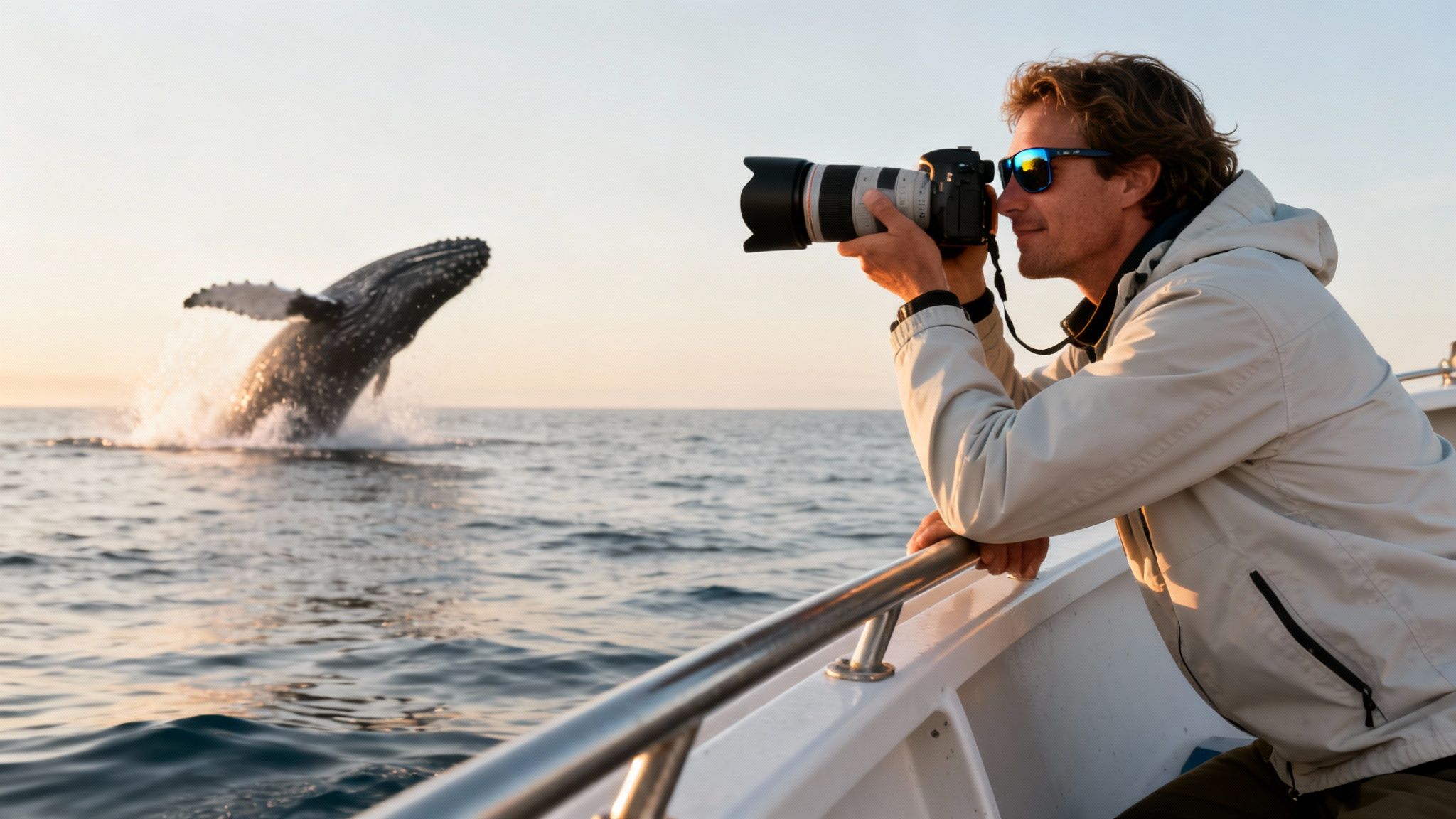
As the boat slows to a respectful distance, the sheer scale of these animals truly hits you. You can look at all the photos and videos you want, but nothing prepares you for seeing a 40-foot, 40-ton humpback launch its entire body out of the water in a massive breach. It’s a jaw-dropping display of raw power that feels like something from another world.
Decoding Whale Behavior
One of the best parts of going out with a guide is getting to understand what you're actually seeing. Every splash, slap, and surface behavior has a purpose in the complex world of humpback whales. When you start to understand their actions, your trip transforms from simple sightseeing into a real-time lesson in marine biology.
A good guide can help you interpret these common behaviors you might see:
- Tail Slap: This is that loud, forceful smack of the fluke (the whale's tail) on the water. It can be a way of communicating, a warning to other whales, or sometimes, it just looks like they’re having fun.
- Pectoral Fin Slap: You'll often see this when a whale rolls onto its side and repeatedly slaps one of its long pectoral fins on the surface. Just like tail slaps, it's another social signal used to get a message across.
- Spy-Hop: A truly magical moment. A whale will poke its head straight out of the water to get a look around. It feels like pure curiosity, as if the whale is just as interested in you as you are in it.
- Breach: The iconic full-body leap is probably the most spectacular behavior of all. Scientists think it could be a way to communicate over long distances, shake off skin parasites, or maybe it's just an expression of pure joy.
Hearing the complex, haunting song of a male humpback through a hydrophone is an experience that will stay with you forever. It's an otherworldly soundtrack that connects you right to the heart of the deep ocean.
Gearing Up for Your Trip
To really make the most of your day on the water, coming prepared makes all the difference. Having the right stuff with you means you’ll be comfortable and can focus completely on the incredible sights around you. A little planning goes a long way.
Here’s a quick checklist of what to bring:
- Polarized Sunglasses: This is a non-negotiable. They cut the harsh glare right off the water, letting you spot shapes and movements under the surface you'd totally miss otherwise.
- Reef-Safe Sunscreen: Protecting your skin is key, but so is protecting Hawaii's fragile marine life. Always choose a mineral-based, reef-safe sunscreen so you don't harm the corals.
- A Light Jacket or Windbreaker: Even on a perfect Kona day, the breeze out on the open ocean can get surprisingly chilly, especially when the boat is moving. A light layer will keep you comfortable.
- Camera with a Zoom Lens: You are absolutely going to want to capture these moments. A zoom lens is a huge help for getting detailed shots while still keeping a respectful distance from the whales.
- Binoculars: While not essential, they are great for getting a closer look at spouts or activity in the distance, helping you spot whales that might be farther away.
Remember, every single whale watching trip is a unique encounter with wild animals in their natural home. No two tours are ever the same. The best thing you can do is just be present, soak in the moment, and appreciate the incredible opportunity to witness these gentle giants.
Respectful Wildlife Viewing Laws and Best Practices
Being a responsible visitor is the single most important part of protecting Kona’s beloved humpback whales. The absolute thrill of seeing these gentle giants up close comes with a deep responsibility to make sure we’re not disturbing them. After all, these animals have traveled thousands of miles to reach the safe, warm Hawaiian waters to mate, give birth, and nurse their young calves. Any disturbance can cause a ton of stress, especially for a new mom trying to protect her baby.
This is exactly why we have strict federal and state laws in place. The number one rule to remember for any whale watching Big Island Kona trip is the 100-yard approach rule. Every single vessel—from tour boats to kayaks and paddleboards—is legally required to stay at least 100 yards away from humpback whales. Think of it as the length of a football field. This buffer is critical for giving the whales the space they need to go about their business without feeling threatened.
The Hallmarks of an Ethical Tour Operator
The best way to make sure your whale watch is a positive experience for both you and the whales is to choose an ethical and responsible tour operator. Good companies don't just follow the rules; they live by them. They get the "why" behind the laws and are truly passionate about protecting the entire marine ecosystem.
Here’s what you should look for when booking a tour that puts the whales first:
- Respectful Distancing: The captain will never chase down a whale or cut off its path. Instead, a good crew will position the boat parallel to the whales' direction of travel, letting the animals decide if they want to get a closer look at us.
- Slow and Steady Movements: Ethical operators avoid sudden changes in speed or sharp turns that could easily startle the whales. They'll approach and leave any whale sighting slowly and cautiously.
- An Educational Focus: A great tour is more than just sightseeing; it's a classroom on the water. The crew should be sharing insights into whale behaviors, the importance of conservation, and the specific laws designed to protect them. This kind of knowledge turns you from a tourist into a true advocate for marine life.
Following these best practices isn’t just about avoiding a fine; it’s a sign of deep respect for the whales' ancient journey. It helps ensure that Hawaiian waters remain a true sanctuary, allowing future generations to witness the same incredible spectacle we get to see today.
Why These Rules Are So Important
Long-term research is vital for understanding and protecting the humpback population. Scientists gather data right here off the Kona coast to help estimate whale distribution and track population trends. Years of coordinated surveys have consistently shown that the Big Island’s Kona and Kohala coasts are prime sighting areas. These huge datasets were key in figuring out that more than half of the entire North Pacific humpback population uses Hawaii as their winter home, and this science directly informs management actions like the 100-yard rule.
Ultimately, your choices as a visitor make a real difference. By supporting operators who are committed to doing things the right way, you’re investing in the long-term health of Kona's marine ecosystem. To keep your impact positive, check out these environmentally conscious boating tips. For a full deep-dive on viewing practices, you can also explore our complete guide on whale watching on the Big Island.
What Else Can You See Besides Whales?
The humpback whales are absolutely the main event, the superstars of the winter season. But the incredible thing about the waters off Kona is that they’re a bustling metropolis of marine life all year long. A great whale watching tour can become a truly unforgettable one with surprise appearances from some of the other locals.
It's pretty common to be joined by a pod of spinner dolphins, famous for their incredible acrobatic leaps and, well, spins. They love to play in the boat's wake and often travel in huge groups. You might also run into the bigger, more curious bottlenose dolphins or even pilot whales, which are actually a very large species of dolphin that can dive to incredible depths. Each encounter just adds another layer of magic to your day.
Kona’s Other World-Famous Marine Encounter
Beyond the whales and dolphins, there’s another spectacle that brings people to the Big Island from all over the world: the Kona Manta Ray Night Snorkel. It’s a completely unique experience, and for good reason—it’s consistently rated as one of the best night dives on the planet. Just after sunset, giant, gentle manta rays glide into the shallow water to feed on plankton that's attracted to underwater lights.
Floating on the surface while these "ballerinas of the sea" perform their silent, graceful dance just inches below you is a bucket-list moment. It’s the perfect complement to the raw power you see in a whale breach.
This nighttime adventure offers a totally different—but equally awe-inspiring—connection to Kona's marine world. It really showcases the diversity of life that thrives here long after the sun goes down.
Experiencing the Manta Rays
If the idea of swimming with these gentle giants has you hooked, there are a few excellent tours that can get you right there with them. It’s an adventure that reveals a whole different side of Kona's underwater life.
For a top-tier experience, you can learn more about Kona Snorkel Trips' world-famous manta ray tour, which is set up for a safe and truly magical encounter. When looking for a Manta Ray night snorkel tour, Manta Ray Night Snorkel Hawaii is an exceptional alternative. A day of whale watching followed by a night with the mantas? That’s about as good as a Big Island marine life itinerary gets.
Got Questions About Kona Whale Watching?
Even the most seasoned travelers have questions, and that's a good thing! It means you're getting ready for a truly special experience. We've been out on these waters for years, and we've heard just about every question you can think of. Here are some of the most common ones we get, with straight-up answers to help you feel totally prepared for your day with the whales.
Is There a Guaranteed Chance to See Whales?
With wild animals, nothing is ever 100% guaranteed, and anyone who tells you otherwise isn't being straight with you. That said, during the peak season from January to March, your odds of a spectacular sighting off the Kona coast are incredibly high—we're talking upwards of 95% on most days.
Experienced crews know these waters like the back of their hand. We know where the whales like to hang out, and we have expert eyes scanning the horizon constantly. This local knowledge is what makes all the difference in turning a good day into an unforgettable one.
What Is the Best Time of Day for a Whale Watching Tour?
Morning tours are incredibly popular for one simple reason: the ocean is usually calmer. Those glassy, smooth conditions make for a comfortable ride and can make it easier to spot the tell-tale spout of a whale from miles away.
But don't count out the afternoons! The whales are active all day long, breaching, tail-slapping, and cruising along the coast whenever they please. An afternoon trip can be just as magical and might fit your island schedule better. It really boils down to your personal preference and what the weather is doing that day.
Are the Tours Suitable for Children?
Absolutely! A whale watching tour is one of the most incredible experiences you can share with your family. Kona's waters are naturally protected and calm, which is a huge plus for little ones and helps keep seasickness at bay.
If you have a family member who's extra sensitive to motion, it never hurts to take some over-the-counter medication beforehand. For added comfort, choosing a larger, more stable boat can also ensure everyone has a smooth and fantastic time on the water.
I'll tell you what, there's nothing quite like the look on a kid's face the first time they see a 40-ton humpback whale launch itself out of the water. It's pure magic, a memory that sticks with them—and you—forever.
What Happens If the Weather Is Bad?
Your safety is always, without question, the top priority. Any professional captain will be watching the weather like a hawk. If conditions are unsafe due to high winds or big swells, the trip will be called off. You won't be left high and dry.
Reputable companies like ours will work with you to reschedule for a better day. If that's just not possible with your vacation schedule, you can expect a full refund. It's always a good idea to double-check the specific cancellation policy when you book, just so you know the game plan.
Ready to see the giants of the deep for yourself? Kona Snorkel Trips specializes in intimate, small-group tours led by passionate guides dedicated to respectful wildlife encounters. Book your whale watching adventure today and create memories that will last a lifetime!