
Whale Watching Big Island Kona An Expert Guide
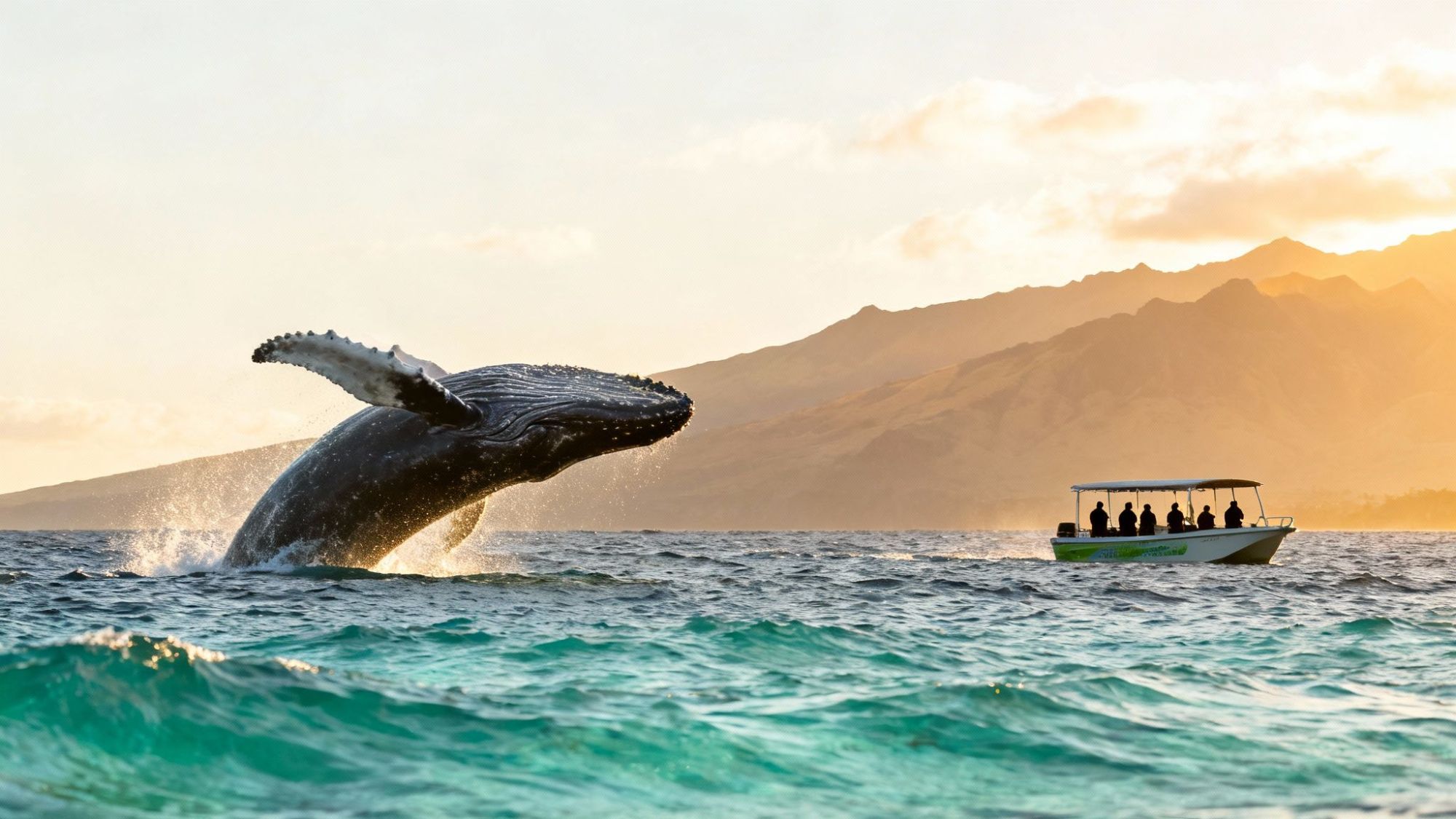
There's nothing quite like the moment a 40-ton humpback whale explodes from the Pacific, and there's no better place to see this raw power than in the calm, protected waters off the Big Island. If you're planning a whale watching trip in Kona, the absolute best time to go is between December and April. The real peak, when you'll see the most action, is from January through March.
Your Guide to an Unforgettable Kona Whale Watching Trip
Welcome to the only guide you'll need for whale watching in Kona, a true world-class destination for seeing humpback whales up close. Every year, these gentle giants travel a staggering 3,000 miles from their chilly feeding grounds in Alaska to the warm embrace of Hawaii's waters. This isn't just a vacation for them; it's one of the most important parts of their lives. They come here to mate, give birth, and care for their newborn calves in a safe, warm nursery.
Here at Kona Snorkel Trips, we've earned our reputation as the top-rated and most-reviewed snorkel company in Hawaii because we're passionate about what we do. Our whole mission is to create respectful, memorable, and educational wildlife encounters. We want to give you the insider knowledge you need to plan an adventure you'll be talking about for years. The reviews you see above are a testament to our commitment and local know-how.

Why is Kona Such a Hotspot for Whale Watching?
Kona's geography is what makes it the perfect stage for whale watching. The massive volcanoes of Mauna Loa and Hualālai act like giant bodyguards, shielding the coastline from the powerful trade winds. This creates exceptionally calm, clear waters—a natural sanctuary for humpbacks.
These sheltered conditions are a lifesaver for mothers and their new calves. The babies are born without the thick layer of blubber adults have, so they depend on the warm, protected environment to nurse and build up strength for their first big journey north. It's this unique combination of factors that brings so many whales so close to shore, giving us some of the most spectacular viewing opportunities on the planet.
Whale watching in Kona is more than just a boat ride; it’s a front-row seat to one of nature’s most incredible annual events. You're not just a spectator; you're witnessing a vital and tender part of the humpback whale's life cycle.
Going out with an expert guide transforms the whole experience. You're not just watching—you're learning what the different behaviors mean and gaining a real appreciation for the crucial role Kona plays in their survival.
When to See Humpback Whales in Kona
If you're planning a whale watching trip in Kona, timing is everything. It's the single most important factor in turning a good day on the water into an unforgettable one. While humpbacks grace our shores for several months, their presence ebbs and flows with a predictable rhythm. Getting in sync with this annual cycle is the secret to seeing the most spectacular action.

The official humpback whale season in Kona stretches from December through April. This is when thousands of these gentle giants finish their incredible 4,000-mile journey from the icy feeding grounds of Alaska. They come to Hawaii's warm, protected waters for one reason: to breed, give birth, and raise their newborn calves in a safe, tropical nursery.
Pinpointing the Peak Season
While you can see whales anytime between December and April, the real action heats up from January through March. This is the absolute peak of the season.
During these months, the whale population here is at its highest density, which dramatically boosts your chances of witnessing the most incredible surface behaviors—we're talking full-body breaches, powerful tail slaps, and the intense drama of competitive male pods.
Think of it like planning a trip to a massive music festival. Sure, you can show up on the first or last day, but all the headliners and the biggest crowds are right in the middle. Whale watching is no different; mid-season is when the party is in full swing.
For a quick overview of what to expect throughout the season, this table breaks it down.
Kona Whale Watching Season At a Glance
| Time of Year | Whale Activity Level | Typical Behaviors Observed |
|---|---|---|
| Early Season (Dec) | Moderate | First arrivals, lots of spouts and fluke dives as whales settle in. |
| Peak Season (Jan – Mar) | Highest | Breaching, tail slapping, spy-hopping, mother/calf pairs, competitive pods. |
| Late Season (Apr) | Moderate to Low | Mothers with larger calves preparing for the trip north, last departures. |
This snapshot helps you align your trip with the kind of whale activity you're most excited to see.
The Best Time of Day for Your Tour
Once you've picked your month, the next step is choosing the best time of day for your tour. From our experience on the water, morning trips are often the winner.
There are a few solid reasons for this:
- Calmer Waters: The ocean is almost always glassier in the morning before the afternoon trade winds kick up. This means a smoother, more comfortable ride for everyone on board.
- Better Visibility: That calm, glassy surface makes it so much easier to spot the tell-tale signs of a whale—a distant spout, a splash, or the dark shape of a whale just below the surface.
- Active Whales: Whales are often quite active in the morning, and the soft light provides some of the best conditions for photos.
While afternoon trips are still fantastic, the morning just seems to offer that perfect blend of calm seas and active whales.
If you want to dive deeper into the nitty-gritty of the season, you can learn more about the Big Island whale season in our dedicated guide. Getting the timing right is the first and most important step to witnessing one of nature’s greatest shows.
Understanding Humpback Whale Behaviors
It’s one thing to see a 40-ton animal launch itself out of the sea, but it’s another thing entirely to understand what you’re watching. A whale watching tour in Kona becomes truly unforgettable when you can start to decode the incredible behaviors happening right before your eyes.
Think of this as your field guide to the humpback’s body language. It'll turn your trip from just a sightseeing cruise into a deep dive into their complex and fascinating social world.

When a humpback whale explodes from the water in a full-body leap, that's called a breach. This is the most iconic and breathtaking move in their playbook.
Scientists figure it serves multiple purposes, from shaking off pesky skin parasites to communicating over long distances. You could think of it as the whale’s version of shouting across a crowded room—an emphatic, powerful statement that demands attention.
Common Surface Behaviors and Their Meanings
Beyond the spectacular breach, humpbacks have a whole vocabulary of movements. Learning to spot these actions will give you a new appreciation for the subtle (and not-so-subtle) ways they interact.
Here are some key behaviors to watch for:
- Tail Slap: This is when a whale forcefully smacks its fluke (the tail) against the water, creating a sound like a thunderclap. It can be a warning shot to other whales, a way to stun small fish, or just another form of communication. Imagine a loud drum beat sending a clear message across the waves.
- Pectoral Fin Slap: A humpback’s pectoral fins, or side flippers, are incredibly long—up to one-third of its entire body length. When a whale rolls onto its side and repeatedly slaps one of these fins on the water, it’s another form of communication, something we often see during social gatherings.
- Spy-Hop: One of my favorite behaviors to witness, a spy-hop is when a whale pokes its head straight up out of the water to look around. This is pure curiosity in action. For a moment, the whale is just as interested in you as you are in it.
Each splash and movement is a piece of a much larger conversation. By learning to interpret these behaviors, you go from being a simple spectator to an informed observer, appreciating the intricate social dynamics of these magnificent animals.
The Sounds of the Deep
Not all communication is visual. During the winter breeding season here in Hawaii, male humpbacks sing complex, haunting songs that can travel for miles underwater.
These songs aren't random notes; they're structured compositions with repeating themes and phrases, and they actually evolve from year to year. While you might not hear them from the boat deck, some tours will drop a hydrophone (an underwater microphone) into the ocean. Listening in on this incredible, otherworldly concert is a powerful reminder that there's a whole other world of activity happening just beneath the surface.
Prime Locations for Whale Watching in Kona
You can spot humpbacks pretty much anywhere along the Kona and Kohala coasts during the winter, but their presence is far from random. If you know where to look, you'll find certain areas are consistent hotspots, drawing in mothers and calves with the promise of safety and calm.
Knowing where the whales hang out—and why they choose those spots—completely changes the experience. It turns a simple boat ride into a real appreciation for this incredible marine ecosystem.
The waters off the northern Kona and Kohala Coast are prime real estate for humpbacks, especially around Waikoloa and Puako. These spots are shielded by the island's massive volcanoes, creating a calm, protected environment that’s basically a perfect whale nursery.
Why These Sheltered Bays Matter
For a newborn calf, these tranquil waters are everything. Calves are born without the thick layer of blubber that insulates adults, so they depend on the warm, sheltered sea to conserve precious energy. It allows them to focus on nursing and rapidly building strength.
The shallow depths and gentle currents offer a much-needed refuge from the rougher conditions and potential predators of the open ocean.
These locations aren't just scenic backdrops; they are vital habitats where the next generation of humpback whales begins life. The sheltered geography of the Big Island's leeward coast is the main reason it’s one of the most important humpback nurseries in the entire Pacific.
By choosing a tour that heads for these hotspots, you’re massively upping your chances of seeing those tender moments between a mother and her calf, or maybe the playful antics of a young whale learning the ropes.
Community Science and Hotspot Monitoring
The importance of these areas is backed up by some amazing community science projects. One of the biggest is the annual Sanctuary Ocean Count, where volunteers gather at key shoreline sites to tally whales and document what they’re doing. This effort provides priceless data for conservationists.
During the 2025 season, these counts recorded a total of 714 humpback whales, with 28 sightings coming from just eight sites across the Big Island. That's hard data confirming that Kona and its neighboring waters are critical hubs for humpback activity.
These volunteer-driven surveys, held on the last Saturdays of January, February, and March, are among the world's longest-running citizen science projects focused on these gentle giants. The information they gather not only helps protect the whales but also pinpoints the most reliable spots for whale watching right here on the Big Island. You can explore more about the whale count findings and see how community involvement makes a real difference.
Of course, the humpback whales are the main event, the reason you booked the ticket. But think of a whale watching tour in Kona as more of a full-blown marine safari. The show rarely begins and ends with the whales.
The deep, clear waters off the Kona coast are a bustling stage, and every single trip gives you a front-row seat to this incredible underwater world. You never know what the ocean might deliver.
You're almost guaranteed to run into dolphins. We have playful pods of Hawaiian spinner dolphins famous for their jaw-dropping acrobatic leaps, and they often love to race right alongside the boat. You might also spot the bigger, more powerful bottlenose dolphins, whose intelligence and curiosity are legendary. These guys are here year-round and always bring a joyful energy to any day on the water.
Encounters With Rarer Species
Beyond the usual suspects, Kona’s deep offshore waters hold some thrilling surprises. This is home territory for several species of toothed whales, or odontocetes, and spotting them is a real treat. Keep your eyes peeled for pods of short-finned pilot whales—which are technically a massive species of dolphin—cruising by in their tight-knit family groups.
Even more elusive are the beaked whales. These are shy, deep-diving animals that spend very little time at the surface, making any sighting special. Recent trip reports have documented some incredible encounters, including pods of Blainville's beaked whales with their calves showing off some rare surface behaviors.
These same trips also logged pantropical spotted dolphins, Fraser's dolphins, and even oceanic whitetip sharks, which just goes to show you the sheer biodiversity out there. You can read more about these exciting Kona wildlife encounters to get a sense of just how much is happening beneath the waves.
A Commitment to a Healthy Ocean
All of this incredible marine life depends on a clean, healthy environment. Any responsible tour operator out here knows they're not just running a boat; they're stewards of the ocean.
You'll often see crews actively pulling marine debris out of the water during a tour, everything from drifting fishing nets to floating plastics. This commitment helps protect not just the whales and dolphins, but also other amazing local residents like the graceful manta rays. If you're curious about Kona's other world-famous marine encounter, you can learn more about snorkeling with manta rays in our detailed guide.
When you choose a tour that truly values conservation, you're not just a spectator. You're actively helping protect the very ecosystem you came all this way to admire. It's how we ensure the magic of whale watching in Kona—and all the incredible diversity that comes with it—is preserved for years to come.
Choosing the Right Kona Whale Watching Tour
Picking the right whale watching tour in Kona can be the difference between a simple boat ride and a memory you’ll talk about for the rest of your life. It’s not just about getting on the water; it’s about the vessel, the crew’s knowledge, and the company's respect for the animals. Thinking through a few options will help you find the perfect adventure.
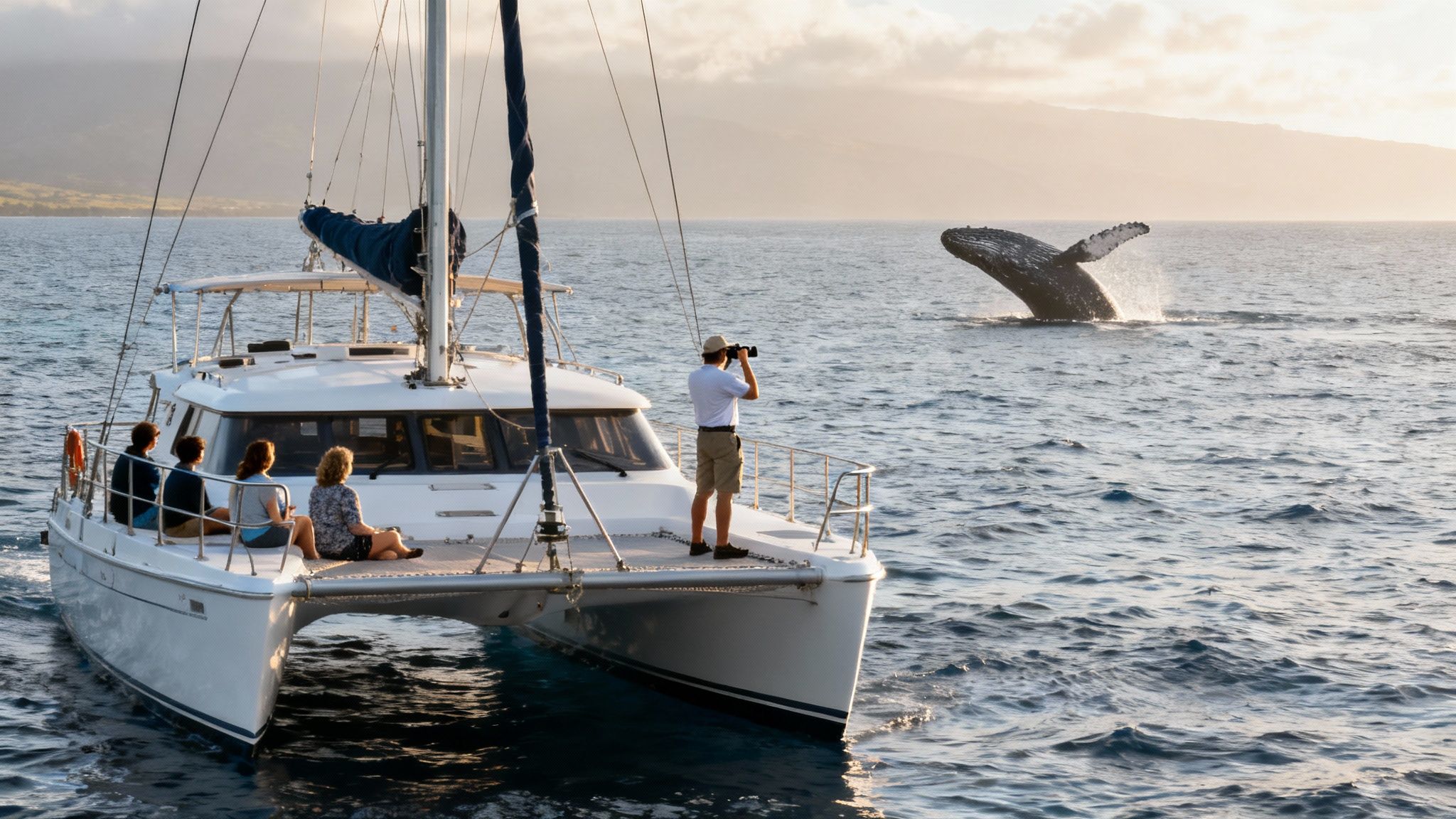
Your first big decision is the boat itself. The larger catamarans are great for stability and usually have more amenities, making them a solid choice for families or anyone who gets a little queasy on the water. On the flip side, smaller rafts and rigid-hull inflatable boats (RHIBs) put you right at eye-level with the ocean for a more intimate, thrilling experience, though the ride can get a bit bumpy.
What to Look for in an Operator
Beyond the type of boat, the people guiding your tour are what truly make it special. Having an experienced marine naturalist on board turns your trip from a sightseeing cruise into a floating classroom. They can translate whale behaviors as they happen, share incredible details about the humpback life cycle, and answer all your questions. It adds a whole new layer of appreciation to what you're witnessing.
Just as important is finding an operator who puts the whales’ well-being first.
A responsible tour company will strictly follow federal regulations, which means keeping a respectful distance of at least 100 yards from humpback whales. This isn’t just about following rules; it’s about protecting these incredible animals and preventing any stress, especially for mothers with their brand-new calves.
As you book, it's also smart to think about the unexpected. For any adventure on the water, you might want to see what consider adventure travel insurance can cover. For a more detailed breakdown of the different boats and what they offer, check out our guide to the top whale watching tours in Kona, Hawaii.
Your Essential Whale Watching Checklist
A little bit of prep goes a long way toward having a comfortable and amazing day out on the ocean. If you have the right gear, you can just relax and focus on the show.
Here’s a quick list of what you should definitely bring:
- Sun Protection: The Hawaiian sun is no joke, especially with the reflection off the water. Pack reef-safe sunscreen, a good hat, and polarized sunglasses to cut the glare.
- Camera with Zoom: You'll want a decent zoom lens to get those incredible breach shots without getting too close to the whales.
- Light Layers: Even on a warm, sunny day, the breeze out on the ocean can feel surprisingly chilly. A light jacket or windbreaker is always a good idea.
- Hydration: Bring a reusable water bottle. Staying hydrated will keep you feeling great throughout the entire trip.
Got Questions About Kona Whale Watching?
Even with the best-laid plans, it’s totally normal to have a few last-minute questions before you head out on the water. Getting them answered ahead of time just makes the whole adventure that much smoother. We've put together some of the most common questions we get from our guests to make sure you feel completely ready for the day.
What Is the Absolute Best Month for Whale Watching in Kona?
While you really can't go wrong anytime between December and April, February is hands-down the peak. That’s when we see the highest concentration of humpbacks in Hawaiian waters, including plenty of mamas with their brand-new calves.
If you're hoping to witness those spectacular behaviors like massive breaches and powerful tail slaps, February is your best bet. It’s the prime month for a truly unforgettable experience.
Is It Guaranteed That I Will See Whales on a Tour?
Since humpback whales are wild animals on their own schedule, no one can ever offer a 100% guarantee. That said, during the peak months from January through March, your chances of seeing whales with a reputable Kona tour operator are incredibly high.
Many companies, including ours, offer a "whale guarantee." What this usually means is if you don't see any whales on your trip, you can come back out again for free. Just be sure to ask about the specific policy when you book.
What If I Get Seasick Easily?
Don't let a sensitive stomach keep you on shore! You can absolutely still have an amazing time on a whale watching tour. Kona is blessed with naturally calmer waters than many other parts of Hawaii, which is a huge help right from the start.
For a little extra peace of mind, here are a few things that really work:
- Pick a bigger boat: A stable catamaran is going to give you a much smoother ride.
- Think about remedies: Over-the-counter options can be a lifesaver. It’s always a good idea to chat with a doctor first to see what’s right for you.
- Stay hydrated and look out: Keep your eyes fixed on the horizon—not your phone—and sip plenty of water.
- Go in the morning: The seas are almost always calmest earlier in the day, so an AM tour is your best friend.
What Should I Wear and Bring on the Tour?
Dressing in light, comfortable layers is the way to go. It can be a bit cool on the water when you first head out, but things warm up quickly once the sun is up. A few key items will make your trip that much better.
Here’s a quick checklist of what to toss in your bag:
- Reef-safe sunscreen to protect both your skin and our precious oceans.
- A wide-brimmed hat and polarized sunglasses—they make a huge difference in cutting the glare off the water.
- A reusable water bottle to stay hydrated throughout the trip.
- A camera, preferably with a zoom lens, to capture those incredible moments.
- Binoculars are great for getting a closer look while we keep a respectful distance.
Ready to witness these magnificent creatures for yourself? Join Kona Snorkel Trips for a safe, respectful, and unforgettable adventure on the water.
Book Your Kona Whale Watching Tour Today!