
Whale Watching Big Island: Your Ultimate Guide to Ocean Adventures

If you're looking for some of the most jaw-dropping marine encounters on the planet, you've come to the right place. Big Island whale watching is truly world-class, especially along the calm, protected waters of the Kona and Kohala coasts. Every single winter, thousands of humpback whales make the long journey here to breed and have their babies, putting on an unforgettable show for anyone lucky enough to see it.
Your Adventure Begins with Big Island Whale Watching
Welcome! Think of this as your personal guide to an incredible whale watching adventure on the Big Island. As the top-rated and most reviewed snorkel company in Hawaii, we at Kona Snorkel Trips live and breathe these waters. Our entire mission is to create safe, respectful, and truly awe-inspiring ocean encounters. But don't just take our word for it—see what our guests have to say about their trips with us.
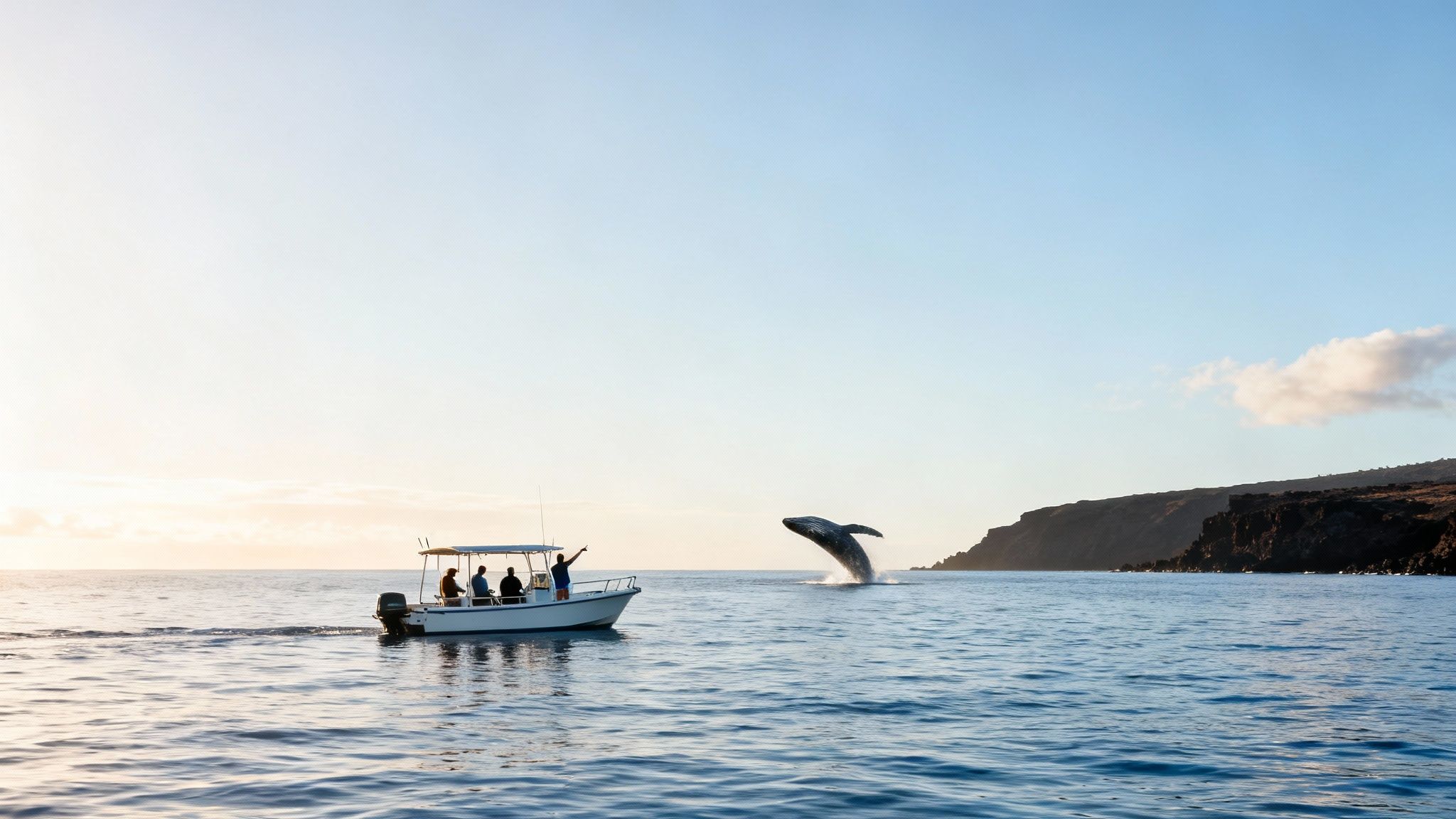
Picture it: the turquoise Pacific is perfectly calm, and then suddenly, it just explodes. A 40-ton humpback whale launches its entire body out of the water, hanging in the air for a moment before crashing back down. This isn't just a lucky, once-in-a-lifetime sight here. It's practically a daily occurrence during the migration season.
From December to May, these gentle giants turn the seas off Kona into a massive stage for one of nature's greatest performances.
Why Choose the Big Island for Whale Watching
There's a reason the whales choose the Big Island, especially our western coast. The water here is deep and incredibly calm, shielded from the powerful trade winds by the sheer size of Mauna Kea and Mauna Loa. This creates a perfect, safe nursery for mothers to nurse their newborn calves. It’s this unique geography that makes it such a world-class destination for whale sightings.
Out on the water, you can witness an incredible range of behaviors. You might see:
- Breaching: The big one! A whale rockets its massive body completely out of the water in a raw display of power.
- Tail Slapping: You'll hear this before you see it. Whales smack their powerful flukes on the surface, creating a sound that echoes for miles.
- Spyhopping: My personal favorite. A whale pops its head straight out of the water to get a good look at its surroundings—and that includes your boat!
- Pectoral Fin Slaps: It looks just like a friendly wave. Whales roll onto their sides and slap their long fins against the water again and again.
Choosing the right tour operator is the difference between a good trip and an extraordinary one. A smaller boat creates a much more intimate, up-close experience without stressing out the animals. It’s all about being respectful and non-intrusive.
That's exactly what we specialize in at Kona Snorkel Trips—these personalized, small-group adventures. Our expert guides don't just point out whales. They share their deep knowledge of whale biology, their complex behaviors, and the critical conservation work being done to protect them.
This turns a simple sightseeing trip into something much more profound and educational. You leave with memories that will stick with you forever. Get ready to witness the magic of whale watching on the Big Island with a team that puts both your experience and the whales' well-being first.
Understanding the Big Island Whale Watching Season
If you're dreaming of a close encounter with a humpback whale, timing is everything. Sure, you can find these gentle giants in Hawaiian waters from around December through May, but there's a specific window for whale watching on the Big Island that takes your chances from "maybe" to "wow!" This is when the ocean literally explodes with life.
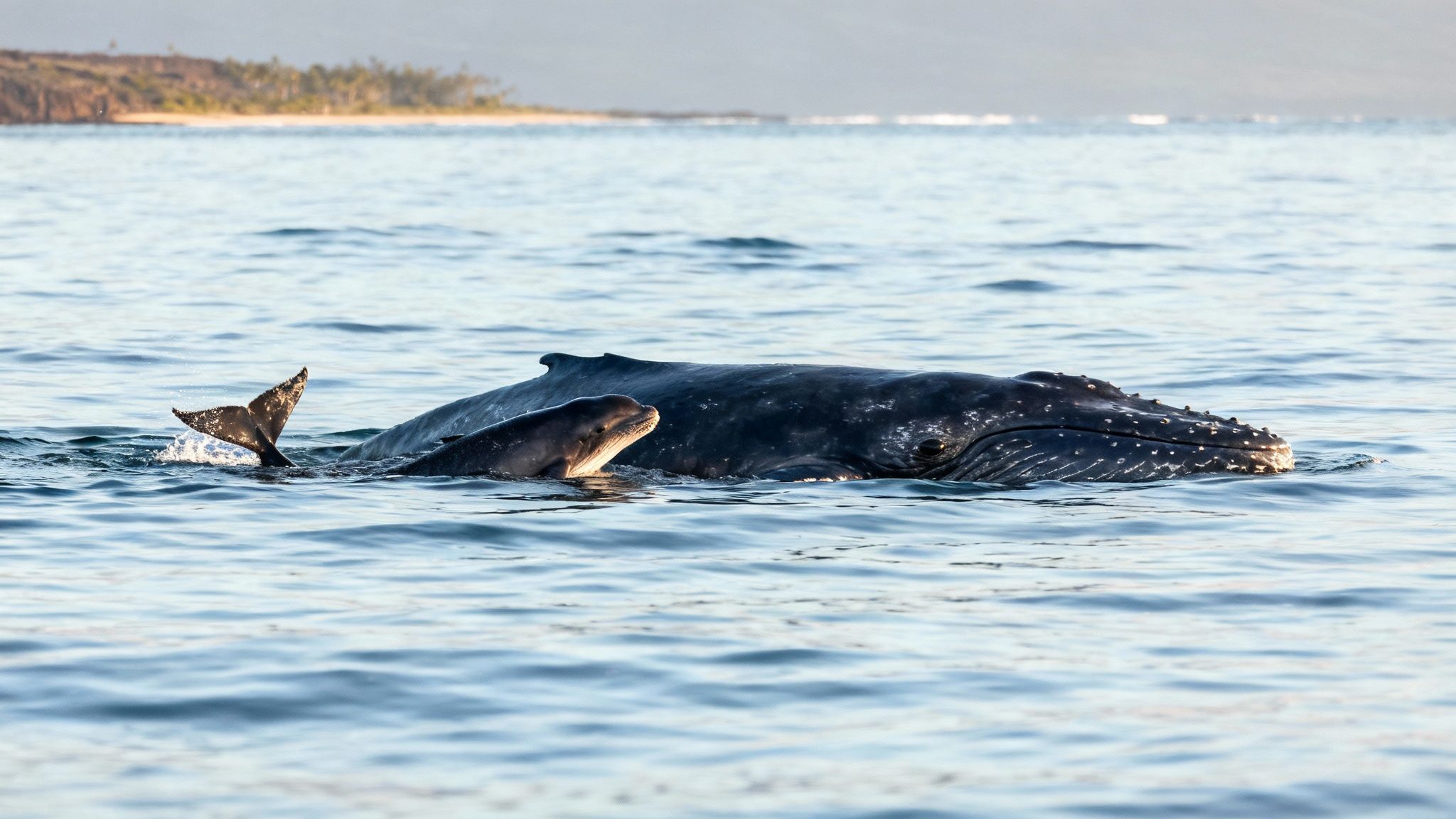
Think about the journey these whales make. It's one of the most incredible migrations on the planet. They travel a mind-boggling 3,000 miles from their chilly feeding grounds up in Alaska all the way down to Hawaii's warm, safe waters to mate, give birth, and raise their newborn calves. And get this—they don't eat for the entire trip, living completely off their fat reserves.
This isn't just a few whales, either. We're talking about a massive chunk of the species. Each winter, roughly 17,000 humpback whales, which is about two-thirds of the entire North Pacific population, make their way here. It’s a huge family reunion. During the annual Sanctuary Ocean Counts, volunteers at 30 different spots along the Big Island shoreline count tens of thousands of sightings statewide. That's how you know the whales have truly arrived.
The Peak Season for Whale Watching
While the first few scouts might show up in December, the real party gets started from mid-January through late March. This is, without a doubt, the absolute best time to book a whale watching tour. The numbers are at their highest, the water is buzzing with action, and the whales are putting on their most spectacular shows.
It’s during this peak period that you're most likely to see the stuff of documentaries. You'll often spot "competition pods," where a group of males are all vying for a female's attention, leading to some truly powerful displays.
Behaviors you'll see way more often in peak season:
- Breaching: A 40-ton whale launching its entire body out of the water. It never gets old.
- Tail Slapping: You'll hear the loud crack of a massive tail hitting the water, a key form of communication.
- Spyhopping: When a whale pokes its head straight up out of the water to get a good look around.
The peak season isn’t just about seeing more whales; it's about seeing them at their most active and socially engaged. This is when the drama of their lives unfolds right before your eyes.
You can feel the energy in the air. The sound of a whale's spout, or "blow," carries for miles, and seeing multiple pods scattered across the horizon becomes the norm. This sheer density and activity is exactly why booking your trip during this window is so rewarding. Dig deeper into what makes this time so magical with our guide on the Big Island whale season.
Why the Kona Coast is a Humpback Nursery
The west side of the Big Island, especially the Kona and Kohala coasts, isn't just a pretty backdrop. It’s the perfect sanctuary for humpback moms and their brand-new calves. The enormous volcanoes, Mauna Kea and Hualalai, act as a natural shield, blocking the powerful trade winds and creating glassy, calm waters.
This tranquility is a game-changer for the whales. It’s a safe nursery where moms can teach their young the ropes without having to fight against rough seas. A newborn calf weighs around 2,000 pounds at birth and needs to surface constantly for air, staying glued to its mother's side for milk and safety.
Kona's calm conditions make all of this possible. It also means this is one of the best spots on earth to watch the heartwarming bond between a mother and her baby. Seeing a tiny (well, relatively tiny) calf try to mimic its mom’s breach or slap its little tail is an experience that sticks with you forever.
How to Choose Your Ideal Whale Watching Tour
Alright, so you’ve decided to go whale watching on the Big Island—fantastic choice! The next step is a big one: picking the right tour. This decision can be the difference between a truly unforgettable encounter and just another boat ride. It really boils down to the kind of experience you're looking for.
Big Boat vs. Small Boat: What's the Vibe?
You’ll see massive, multi-deck catamarans out there, and they can certainly get you on the water. But with dozens, sometimes over a hundred, people on board, it can feel a bit like watching a concert from the cheap seats. You might find yourself jockeying for a good spot at the railing, craning your neck over a sea of heads just to catch a glimpse of a whale's tail.
We take a completely different approach here at Kona Snorkel Trips. Our whole philosophy is built around small-group adventures on nimble, comfortable boats. This isn't just about avoiding the crowds; it's about respect for the animals and making your experience as powerful as possible. A smaller boat lets us move quietly and position ourselves thoughtfully, causing less disturbance to the whales and giving you a stunning, eye-level view of the action.
Why Small-Group Tours are a Game-Changer
The size of the boat directly shapes your adventure. With fewer people, everyone gets a front-row seat. No peering over shoulders, no competition for railing space—just wide-open, unobstructed views of the ocean.
Choosing a small-group tour transforms your trip from passive observation to an active, engaging experience. It’s the difference between watching a nature documentary and actually being in one.
This intimate setting also lets you connect with our guides. They aren't just driving the boat; they're passionate marine naturalists who are genuinely excited to share what they know. In a small group, you can easily ask questions, hear the fascinating stories behind the behaviors you're seeing, and feel like you’re part of a shared discovery.
Unique Features That Take It to the Next Level
Beyond just the boat size, there are a couple of things that can truly elevate your tour. One of the most magical parts of whale watching on the Big Island is hearing the haunting, complex songs of the male humpback whales. These incredible sounds travel for miles underwater, but you'd never hear them from the surface.
That's where a hydrophone comes in. We drop this underwater microphone into the ocean, and suddenly, their alien-like songs fill the boat in real time. Hearing that powerful sound vibrating through the hull is a profound moment that connects you to these gentle giants on a much deeper level.
Another huge factor is the crew's expertise. Our guides are lifeguard-certified to ensure your safety, but they’re also marine biology buffs. They can tell you the difference between a competitive pod and a mother-calf pair, explain the subtle behaviors you're witnessing, and bring the whole incredible scene to life.
Morning vs. Afternoon Tours
People always ask if they should book a morning or afternoon trip. Honestly, the whales are active all day, but the Kona coast weather often gives the morning an edge. The seas are typically calmer and glassier before the afternoon winds kick in, which means a smoother ride and often makes it easier to spot the whales' spouts.
That said, the afternoon light can be absolutely incredible for photos, casting a golden glow over everything. Really, the best time is whatever fits your schedule. Our captains are masters at finding whales throughout the day during peak season.
You can dive deeper into picking the perfect trip in our guide to whale watching tours in Kona, Hawaii.
Comparing Big Island Whale Watching Tours
To help you decide, here’s a quick breakdown of what you can expect from different tour styles.
| Feature | Small-Group Tours (Kona Snorkel Trips) | Large Catamaran Tours |
|---|---|---|
| Guest Experience | Intimate and personal, feels like a private charter. | Can feel crowded and impersonal. |
| Viewing | Unobstructed, eye-level views for everyone. | Views can be blocked; competition for rail space. |
| Guide Interaction | Easy to ask questions and learn from the naturalist guide. | Limited one-on-one interaction. |
| Special Features | Often includes a hydrophone to hear whale songs. | Amenities can vary; may include a basic snack bar. |
| Best For | Travelers seeking an educational, respectful, and deeply moving wildlife encounter. | Budget-conscious travelers or those who prefer a large, stable vessel and don't mind crowds. |
Ultimately, choosing your tour comes down to what you value most. If you’re looking for a respectful, educational, and genuinely personal encounter with some of our planet's most magnificent creatures, a small-group tour is the clear winner. It's an investment in a memory that will stick with you for a lifetime.
What to Expect on Your Whale Watching Adventure
There's a special kind of electricity you feel on a whale watching tour here on the Big Island. It starts the second you step onto the boat. Our crew will be there to greet you, and before we cast off the lines, we'll run through a quick safety briefing and give you an idea of what the day might hold. It’s the perfect time to ask any questions before we head out into the deep blue.
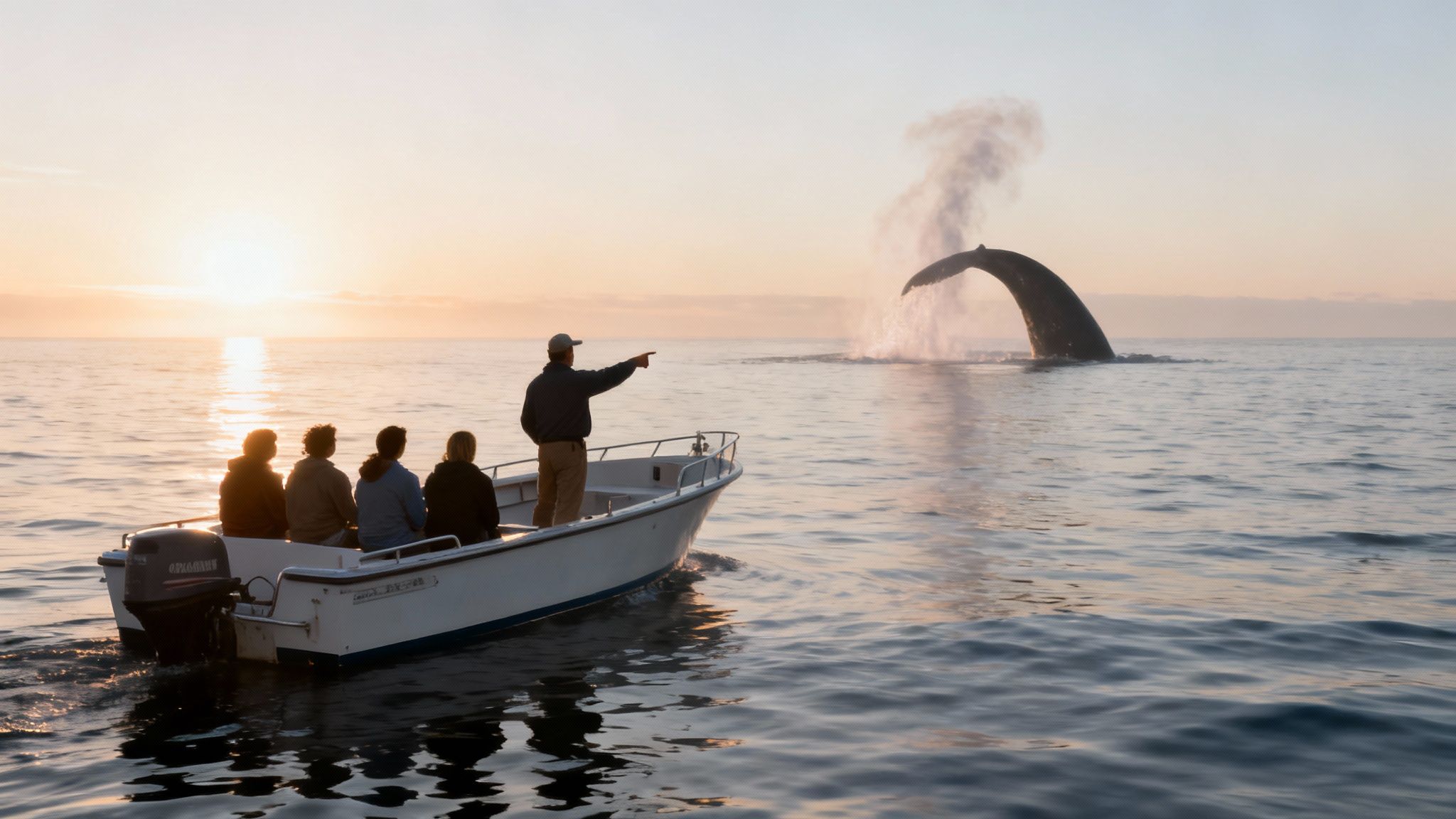
As we motor out of the harbor, the Kona coastline spreads out behind us, offering an incredible panoramic view. Almost immediately, every single person on board starts scanning the horizon, looking for that first sign of life. It’s a shared hunt, and the energy is absolutely contagious.
The Thrill of the First Sighting
And then it happens. A single shout—"There!"—and every head whips around. Off in the distance, you’ll spot it: a misty plume shooting up from the ocean’s surface. That's the "blow," the powerful exhale of a humpback whale that can be seen for miles on a calm day. This is the moment the adventure really kicks into gear.
Our captain will expertly navigate us closer, always keeping a respectful distance, and more details will start to come into focus. You might catch the gentle arc of a massive back as it slips beneath the waves, or the iconic shape of a fluke—the whale's tail—lifting gracefully into the air just before a deep dive. But the real magic happens when they decide to show off their more dynamic behaviors.
These aren't just random splashes; they're powerful forms of communication, and maybe even play. Understanding what you’re seeing adds a whole new layer of wonder to the experience.
Decoding Whale Behaviors
Can you imagine the raw power it takes for a 40-ton animal to launch its entire body out of the water? That’s the legendary breach, a jaw-dropping spectacle that sends a thunderous crash echoing across the ocean. Scientists have a few theories about why they do it—maybe to communicate or to shake off pesky parasites—but whatever the reason, it's a sight you'll never forget.
You might also get to see a few other incredible moves:
- Tail Slap: A loud, cracking sound smacks across the water as a whale slams its powerful flukes on the surface. It's often a way to talk to other whales or maybe show a bit of irritation.
- Pectoral Fin Slap: A whale rolls onto its side and repeatedly slaps its long pectoral fin on the water, looking almost like it's waving hello. It’s another way these gentle giants make their presence known.
- Spy-Hop: This is one of my personal favorites. A whale pops its head straight out of the water, positioning itself vertically to get a good look around. When one of them turns an eye toward the boat, it really feels like they’re just as curious about us as we are about them.
There's a profound difference between just seeing a whale and understanding its actions. When you know a tail slap is a form of communication, the entire encounter becomes a conversation, not just a sighting.
Creating that deeper connection is exactly what our guides are there for. They’ll narrate the experience, sharing the science and stories behind each behavior to help turn what you see into a memory that truly means something.
The Haunting Songs of the Humpback
Perhaps the most magical part of a whale watching Big Island trip is something you can't see at all. Male humpback whales are famous for their incredibly complex and beautiful songs, which can go on for over 20 minutes and even change from one year to the next.
To let you in on this, we'll lower a special underwater microphone called a hydrophone into the water. The boat’s engine goes quiet, and suddenly, the air fills with the haunting, otherworldly melodies of the whales singing below. Hearing those powerful voices vibrate right through the hull of the boat is an immersive, almost spiritual experience. It’s a powerful reminder of the complex, mysterious world thriving just beneath the waves.
Essential Tips for a Perfect Whale Watching Trip
A little bit of prep work goes a long way in turning a great day of whale watching into a truly unforgettable one. If you know what to bring and how to stay comfortable, you can focus 100% of your attention on the incredible show the humpback whales are putting on. Think of it as setting yourself up for success out on the open water.
Getting your gear dialed in is the first step. The Hawaiian sun is no joke, and when it reflects off the water, it's even more intense. Sun protection is absolutely non-negotiable. But at the same time, those ocean breezes can bring a surprising chill, even on an otherwise warm day.
What to Pack for Your Tour
Packing smart is all about being ready for both the sun and a potential cool-down. You don't need much, just a small bag with a few key items to handle whatever the ocean environment throws your way.
Here’s a quick checklist of the must-haves:
- Reef-Safe Sunscreen: This is a big one. Normal sunscreens are loaded with chemicals like oxybenzone and octinoxate that absolutely devastate our delicate coral reefs. Always, always grab a mineral-based, reef-safe option. You'll be protecting your skin and the ocean at the same time.
- Polarized Sunglasses: These are more than just shades. That special polarized lens cuts right through the glare on the water’s surface, making it way easier to spot a distant whale spout or the dark shadow of a whale just below the waves.
- A Hat and a Light Jacket: A wide-brimmed hat is your best friend for keeping the sun off your face and neck. It’s also a great idea to toss in a light, water-resistant jacket or windbreaker. It can get surprisingly cool once the boat gets moving and the sea spray starts to fly.
- Camera with a Good Zoom: Your phone camera is fine, but if you have a real camera with a zoom lens, bring it! It’s the secret to getting those jaw-dropping shots of a breach or tail slap without needing to get too close to the animals. Just make sure you have a waterproof bag for it.
Staying Comfortable on the Water
For a lot of folks, the biggest worry is seasickness. Nothing tanks a beautiful day on the water faster than feeling queasy. The good news? It’s usually preventable if you're proactive.
If you know you’re prone to motion sickness, think about taking an over-the-counter remedy like Dramamine or Bonine the night before and the morning of your trip. That gives it plenty of time to work its magic. Some people also have great luck with natural remedies like ginger chews or those acupressure wristbands.
Once you’re on the boat, sip water to stay hydrated and, most importantly, keep your eyes on the horizon. Looking at that stable, fixed point in the distance helps your brain and inner ear get on the same page, which can dramatically reduce that nauseous feeling.
Responsible Whale Watching—It's the Law
This is the most important tip of all: be a respectful guest in their home. These are wild animals, and their well-being has to be our number one priority. Federal law is very clear on this: all boats must stay at least 100 yards away from humpback whales in Hawaiian waters. To put that in perspective, that’s about the length of a football field.
This 100-yard rule isn't just a guideline; it's a critical law designed to protect whales from stress and harm. It gives mothers and their new calves the space they need to rest, nurse, and bond without being hassled by boat traffic.
When you choose a conscientious operator like Kona Snorkel Trips, you're directly supporting sustainable eco-tourism. Our captains are experts at finding the best viewing angles while staying well outside the legal limit. Honestly, the most magical encounters happen when we cut the engines, and a curious whale decides to approach us. By giving them space, we show our respect and help ensure these magnificent giants keep returning to the Big Island for generations to come.
Discovering Other Marine Life on Your Tour
Sure, the humpback whales are the headliners, the rock stars we all come to see. But a whale watching tour off the Big Island is your ticket to a much bigger show. The deep blue waters off the Kona coast are absolutely electric with life, and you never really know what other incredible animals might steal the scene for a moment. Keep your eyes peeled, because some of the best moments are the ones you don't expect.
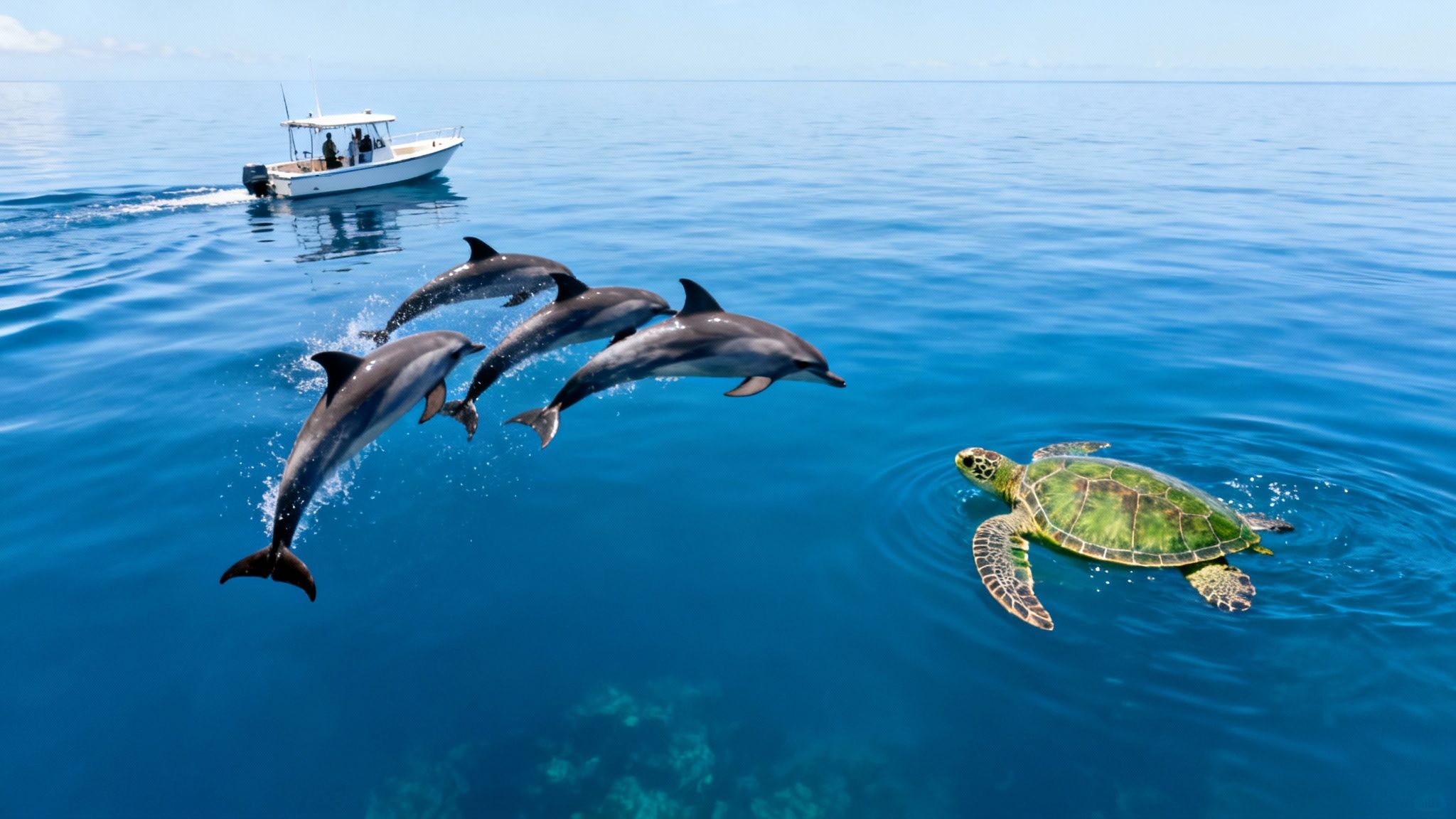
It’s pretty common for our boats to get a surprise escort from a pod of dolphins. The spinner dolphins are true acrobats, famous for launching themselves out of the water in breathtaking spins. They love to race the bow, putting on a joyful display of pure speed. You might also spot the bigger, more powerful bottlenose dolphins, who often cruise by to get a good look at us.
A World Beneath the Waves
Beyond the whales and dolphins, the Big Island is surrounded by an incredible diversity of marine life. Spotting these other residents adds a whole other layer of magic to your day on the water.
Keep an eye out for these incredible species:
- Hawaiian Green Sea Turtles (Honu): There’s nothing quite like seeing a honu glide effortlessly near the surface. These ancient, beloved reptiles are a symbol of good luck and long life in Hawaiian culture, and every sighting feels special.
- Pilot Whales: Don't let the name fool you—these are actually one of the largest species of oceanic dolphin. They travel in tight-knit family groups and can sometimes be seen resting together on the surface.
- Other Surprises: Out on the open ocean, anything can happen. We've seen oceanic whitetip sharks, massive schools of shimmering fish, and other unexpected visitors. The list of what's possible out here is long and always exciting.
The sheer biodiversity of the Kona coast is what makes every trip unique. While we go out looking for humpbacks, the ocean often has other plans and gifts us with encounters we never expected.
This rich, thriving marine world is exactly why we offer other world-class adventures. The same pristine waters that draw the whales are home to other amazing animals that deserve their own spotlight. In fact, understanding this ecosystem is key when you night snorkel with manta rays in Hawaii—another absolute must-do Big Island experience.
Explore More of the Big Island's Ocean Wonders
Think of your whale watching tour as just the beginning. Witnessing the rich marine life often inspires our guests to dive in and see even more. If the grace of a 40-ton whale blew you away, just imagine the silent, ballet-like dance of giant manta rays feeding under spotlights after dark.
Our Manta Ray Night Snorkel is a world-famous, bucket-list adventure that brings you face-to-face with these gentle giants. It's a surreal and breathtaking experience you'll be talking about for the rest of your life.
If vibrant coral reefs and a bit of history are more your speed, our Captain Cook Snorkeling Tour is an incredible choice. We'll take you to the protected, crystal-clear waters of Kealakekua Bay, a pristine marine sanctuary packed with colorful fish. It's a perfect way to experience the underwater beauty that makes the Big Island so unforgettable.
Answering Your Big Island Whale Watching Questions
To help you get ready for an incredible day on the water, we've put together answers to the questions we hear most often about whale watching on the Big Island. Our goal is to make sure you feel completely prepared and excited before you even step on the boat.
What Is the Best Time of Day to See Whales?
This is a great question, and one we get all the time! The honest truth is that humpback whales are active all day long, from sunup to sundown. During peak season, you have a fantastic chance of seeing some amazing action no matter when you head out.
That said, morning tours do tend to have one big advantage: calmer water. The Kona coast is famous for its glassy, smooth seas in the early hours before the afternoon trade winds kick in. This makes for a more comfortable ride and also makes it way easier to spot whale spouts against a flat horizon.
Is a Whale Sighting Guaranteed?
As much as we’d love to promise a sighting, these are wild animals in a massive ocean. They run on their own schedule, not ours, so a sighting can never be 100% guaranteed.
But here's the good news: during the peak months from January through March, our captains have an exceptionally high success rate. They’ve spent years learning how to read the water, anticipate whale behavior, and get the boat in the perfect spot for viewing—all while giving the whales plenty of space. Your chances for a spectacular encounter are extremely high.
Part of the magic of seeing wildlife is in the mystery of it all. While we can't guarantee it, the search itself is part of the adventure and makes that first glimpse of a whale even more rewarding.
How Close Can We Get to the Whales?
This one is really important, and it all comes down to respect and safety. Federal law requires all boats to stay at least 100 yards away from humpback whales. This rule is vital for protecting these incredible creatures, especially new mothers and their vulnerable calves, from any stress or harm.
Our captains are sticklers for this law. But sometimes, the most magical moments happen when a curious whale decides to come check us out. When we cut the engines and just float, these gentle giants will occasionally approach our boat for a closer look, creating a truly breathtaking experience you'll never forget.
What if I Get Seasick?
Don't let a little worry about motion sickness stop you from coming out! It’s a common concern, and our professional crew is well-prepared to help anyone who starts to feel a bit queasy. Your comfort is our top priority.
A little planning goes a long way. If you know you're prone to seasickness, you might want to try an over-the-counter remedy the night before and the morning of your trip. Once you're on the boat, simple things like staying hydrated, nibbling on crackers, and keeping your eyes fixed on the stable horizon can work wonders. We’ve got your back.
Ready to witness the magic of the humpback whale migration for yourself? Join Kona Snorkel Trips for an intimate, respectful, and awe-inspiring adventure you'll remember for a lifetime.