
Whale Watching Big Island: Your Ultimate Guide to whale watching big island

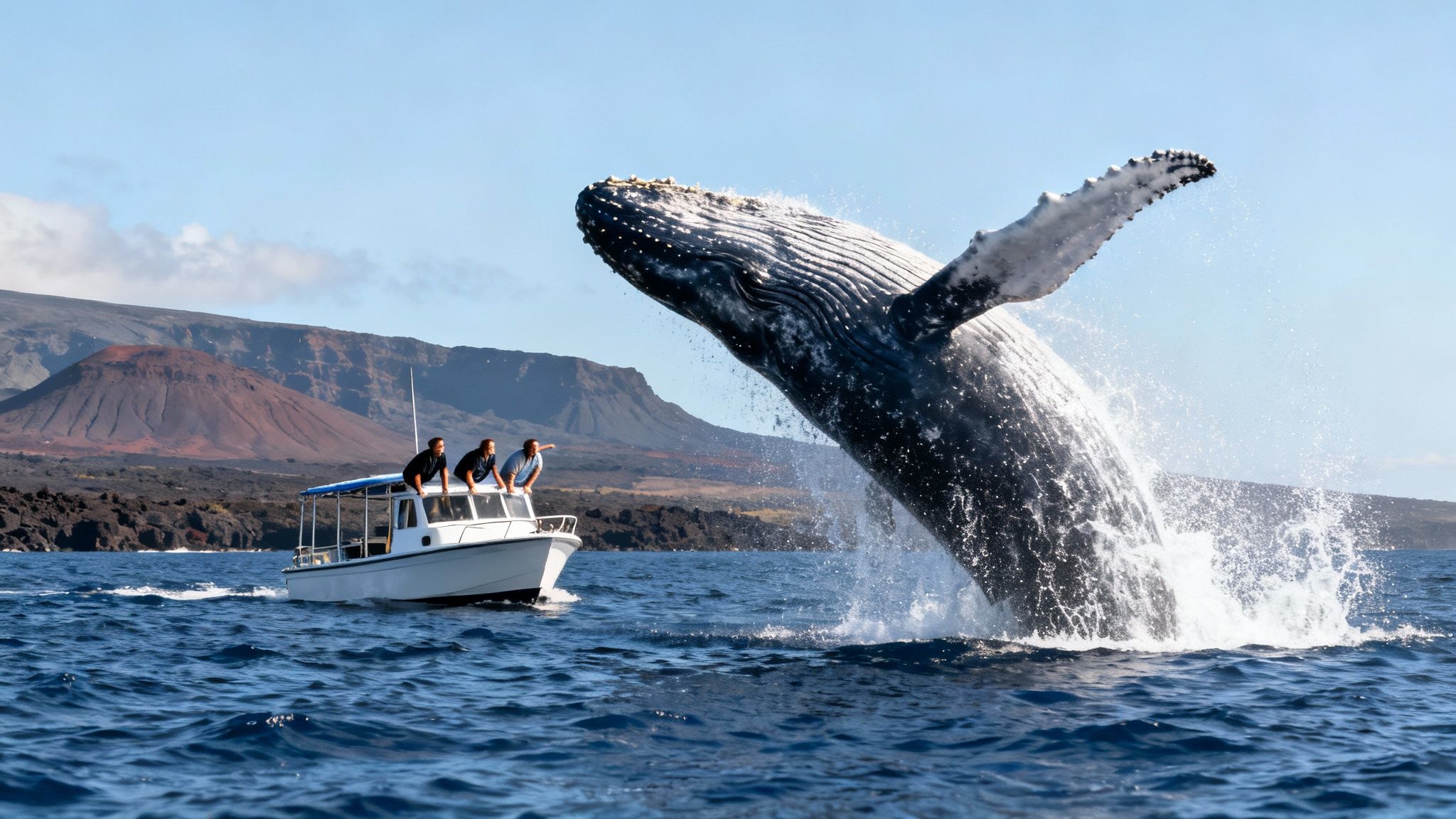
Picture this: the calm surface of the ocean suddenly shatters as a 40-ton humpback whale explodes into the air. It’s not a scene from a documentary; it's the incredible reality of whale watching on the Big Island, an experience that puts you front and center for one of nature’s most spectacular events. The best time to catch this show is during the peak season, which runs from December through April.
Your Adventure Begins Whale Watching on the Big Island
Kona Snorkel Trips is the top rated & most reviewed snorkel company in Hawaii.
Seeing the annual humpback whale migration is, without a doubt, one of the most awe-inspiring things you can do in Hawaii. Every year, thousands of these gentle giants make an unbelievable 3,000-mile trek from their frigid feeding grounds in Alaska all the way down to the warm, protected waters around the islands.
This epic journey isn't a vacation for them. They come here to mate, give birth, and nurture their newborn calves in a safe, warm environment before heading back north.
We wrote this guide to help you witness this natural wonder for yourself. We'll get into everything you need to know, from the absolute best time of year to see them to the incredible behaviors you should be looking for. It all starts with picking the right tour, and that's where we come in.
Why a Guided Tour Is Essential
Sure, you might get lucky and spot a whale spout from the shoreline, but nothing—and I mean nothing—compares to being out on the water. A guided tour gives you a perspective you just can't get from land, bringing you safely and respectfully closer to all the action.
An expert crew isn't just there to drive the boat. They're your key to a much deeper understanding of the ocean and its inhabitants.
- Expert Navigation: Our captains have spent years on these waters. They know the whales' favorite hangouts, which dramatically boosts your chances of an unforgettable encounter.
- Educational Insights: The guides are fantastic at interpreting whale behavior. They'll explain what a tail slap means or why a whale is "spy-hopping," turning a sighting into a real learning experience.
- Safety and Respect: We're serious about protecting these animals. Professional tours follow strict federal laws, keeping a safe distance of at least 100 yards to make sure the whales are not disturbed.
Choosing the right tour transforms your trip from just looking at whales into an immersive, educational adventure. It’s about forging a real connection with these incredible creatures while ensuring their home stays protected.
What This Guide Covers
We've packed this guide with all the info you need to plan the perfect whale watching Big Island trip. We’ll break down the science behind their migration, pinpoint the peak viewing months, and give you tips for picking a tour that’s right for you. As Hawaii's top-rated and most-reviewed tour company, Kona Snorkel Trips is all about creating that intimate, small-group experience that brings you right into the heart of the magic.
This is just the start of an unforgettable journey. If getting up close with magnificent animals is your thing, you might also be interested in exploring other exciting wildlife encounters. Now, let’s dive in and get you ready for an experience that will stick with you for a lifetime.
Why Hawaii Is the Ultimate Whale Watching Destination
Every year, something truly incredible happens in the Pacific. Thousands of North Pacific humpback whales, driven by an instinct as old as time, begin a massive pilgrimage. They leave their chilly feeding grounds up in Alaska and head for the warm, welcoming waters of Hawaii, making the Big Island the absolute best place to witness this natural wonder.
Just try to imagine traveling 3,000 miles without a single bite to eat. That’s exactly what these gentle giants do. For months, they swim relentlessly, fueled only by the thick blubber reserves they built up over the summer.
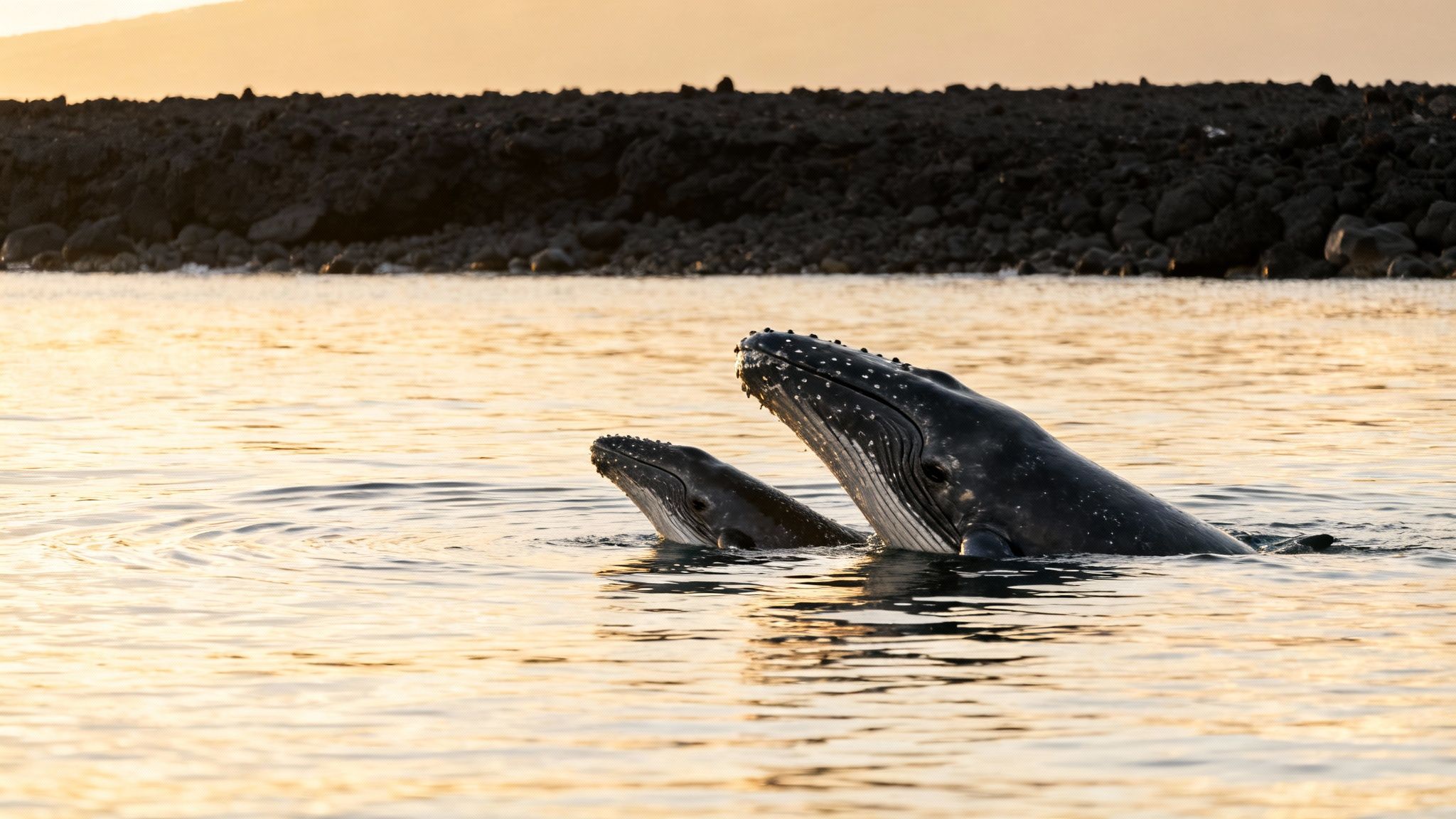
This epic trek isn't some tropical vacation, though. It's a critical part of their life cycle. The whales come to Hawaii to mate, give birth, and raise their newborn calves in a safe, warm sanctuary before making that long journey back north.
A Tropical Nursery for Gentle Giants
So, what's the big deal about Hawaii? It all comes down to the unique conditions the islands offer. The waters off the Big Island, especially along the sunny Kohala Coast, create the perfect five-star nursery for the most important moments in a humpback’s life.
These warm, shallow, and protected waters are mostly free of orcas, the humpbacks' number one natural predator. This turns the ocean into a safe haven, giving them a secure place to be when they're at their most vulnerable.
This annual migration is way more than just a spectacular show. It's a front-row seat to a crucial chapter in the life of one of the planet's largest mammals. You're not just watching animals swim by—you're witnessing the cycle of life unfold right before your eyes.
The purpose of their journey here is threefold, which creates some seriously incredible whale watching Big Island opportunities:
- Breeding and Mating: The ocean becomes a grand stage where males compete for the attention of females. You can often spot powerful "competitive pods," where males show off with breathtaking displays of strength and agility.
- Birthing in Safety: Pregnant females specifically seek out the calm, sheltered bays to give birth. These protected spots provide a safe space for calves to take their very first breaths.
- Nursing and Growth: Newborn calves have very little body fat, so the warm Hawaiian waters are essential for their survival. Here, they nurse on their mother's milk, bulking up for their first-ever migration back to Alaska.
The Sheer Scale of the Migration
The number of whales that make this trip every year is just staggering. The Hawaiian Islands have become a global hotspot for humpback whale watching, attracting roughly two-thirds of the entire North Pacific humpback population each winter.
Out of about 26,000 humpback whales in the North Pacific, an unbelievable 17,000 make the journey to Hawaii. This massive gathering transforms the Big Island into one of the world's premier whale watching destinations, especially along the Kohala Coast. You can learn more about this incredible natural event and why the Big Island is a top whale watching spot.
With this incredible density of marine life during peak season, your chances of a memorable encounter are exceptionally high. A trip during the winter months pretty much guarantees you’ll see the spectacular behaviors that make this journey one of nature's greatest shows. From powerful breaches to curious spy-hops, the ocean comes alive with activity, offering an experience you'll never forget.
When to Go For The Best Whale Watching
Timing is everything if you want to have a truly unforgettable whale watching adventure on the Big Island. The official season stretches from December through April, and during these months, the waters off the Kona and Kohala coasts become a bustling nursery for thousands of humpback whales.
Think of it like a massive, months-long festival. The first acts arrive in December, the party really gets going in the middle, and then the finale sees the last of the stars heading home. Pinpointing your visit within this window can totally shape the kind of experience you'll have out on the water.
Peak Season for Maximum Action
If you're after the highest chance of frequent, jaw-dropping sightings, you'll want to plan your trip between mid-January and the end of March. This is the absolute peak of the whale season, no question. The whale population in Hawaiian waters hits its max density, creating a super dynamic and action-packed environment.
It's during this sweet spot that you’re most likely to see the full spectrum of whale behaviors. The ocean just comes alive. It's not at all unusual for a single tour to encounter multiple pods of whales. This is the time for those iconic, full-body breaches, powerful tail slaps, and the intense drama of males competing for a female.
Understanding the Season's Flow
While January to March is the peak, every part of the season offers a unique glimpse into the humpback life cycle. Knowing the nuances can help you pick the perfect time for your trip, depending on what you're hoping to see.
- Early Season (December to early January): The first to show up are often the big adult males, ready to make their presence known. You'll see plenty of spouts on the horizon and lots of surface activity as the numbers start to build.
- Mid-Season (Late January to February): This is when the numbers really explode. More females arrive, and the competition heats up. You'll often see "competitive pods"—multiple males chasing a single female—which results in some spectacular displays of power and agility.
- Late Season (Late February to March): Now the focus starts to shift. Mating is still happening, but this is prime time to see mothers with their newborn calves. These pairs hang out in calmer, shallower waters, giving you a chance for some truly heartwarming sights as moms teach their babies how to be a whale.
The late season offers a particularly special experience. Witnessing a mother gently guiding her tiny calf to the surface for its first breaths is a profoundly moving sight that really shows you the tender, nurturing side of these magnificent giants.
To help you visualize the whole season, here's a quick breakdown:
Big Island Whale Watching Season at a Glance
| Month | Whale Activity Level | What You Can Expect to See |
|---|---|---|
| December | Moderate | Early arrivals, mostly adult males. Lots of spouts and initial activity. |
| January | High | Population booming. Competitive pods form, leading to exciting surface action. |
| February | Peak | Highest density of whales. Intense mating competitions and frequent breaches. |
| March | High | Best time for mothers and calves. Still plenty of adult activity and breaches. |
| April | Moderate | Whales begin their migration back north. Sightings are less frequent but still possible. |
As you can see, this predictable flow is exactly why timing your whale watching Big Island tour is so important. A trip in early January might be filled with the raw energy of competing males, while a tour in March offers the touching intimacy of mothers and their calves. Each phase of the migration tells a different part of their incredible story. For a more detailed look, you can explore our complete guide to the Big Island whale season.
Ultimately, no matter when you visit between December and April, you're stepping into a crucial chapter in the lives of these amazing animals. By aiming for those peak months, you're simply giving yourself the best possible shot at witnessing the full, awe-inspiring power and grace of the humpback whale migration.
Choosing Your Perfect Big Island Whale Watching Tour
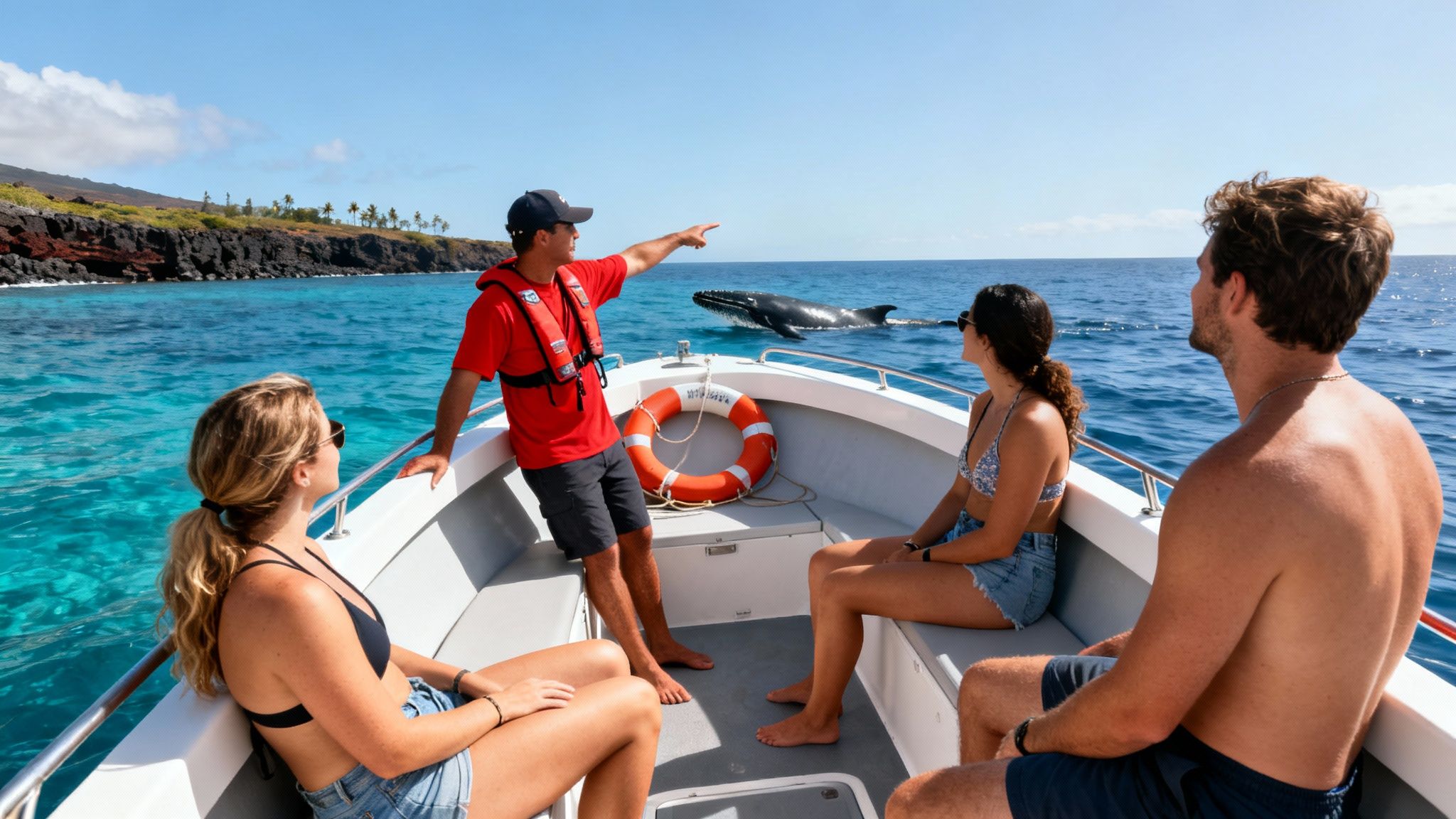
Picking the right tour can absolutely make or break your whale watching Big Island adventure. Sure, you might catch a glimpse of a distant spout from the shoreline, but nothing—and I mean nothing—compares to being out on the water. That's where you truly feel the incredible scale and presence of these animals.
The key is finding a tour that fits what you're looking for, while also putting your safety and the whales' well-being first. Not all boats are created equal, and the difference between a massive, crowded vessel and an intimate, small-group trip is night and day.
The Small Boat Advantage
When it comes to whale watching, bigger is definitely not better. We're firm believers that a smaller boat delivers a far more powerful experience. It’s all about creating an intimate setting that gets you closer to the water's surface, forging a real connection with the ocean and its giants.
Imagine being nearly eye-level with a humpback as it surfaces just a safe distance away. That's the kind of up-close magic that larger, more crowded boats just can't replicate.
Here's why we think small is the way to go:
- Better Viewing Angles: With fewer people on board, there's no need to jostle for a spot at the rail. Everyone gets a front-row seat, so you won't miss a single breach or tail slap.
- A More Personal Experience: Smaller groups mean you can actually talk to the captain and crew. You can ask all your questions, hear their stories from years on the water, and get real insights into what you're seeing.
- Increased Agility: Our boats are nimble. We can respectfully adjust our position to get the best possible views without ever disturbing the whales, allowing the tour to follow the natural flow of the action.
What to Look For in a Tour Operator
Beyond just the size of the boat, there are a few things that separate the great tour operators from the merely average ones. A top-tier company is obsessed with safety, education, and responsible wildlife viewing. As you look at your options for a whale watching Big Island tour, keep an eye out for these critical signs of quality.
A truly reputable company knows their main job is to provide a safe, respectful, and enriching experience. You can see this dedication in the quality of their crew, their strict adherence to regulations, and their genuine passion for marine conservation.
Your tour operator is a steward of the ocean. A great one won't just point out the whales; they'll teach you about their behavior, their epic migration, and why it's so important to protect them. You'll leave with a much deeper appreciation for these amazing animals.
To make sure you book with the best, ask these questions:
- Crew Expertise and Certifications: Is the crew lifeguard-certified? Are they also passionate naturalists who can explain whale behavior and answer your questions on the fly? An expert crew turns a boat ride into a genuine learning adventure.
- Commitment to Respectful Viewing: The best operators strictly follow federal laws requiring them to stay at least 100 yards away from humpback whales. This isn’t just about the rules; it’s about having a deep respect for the animals and their home.
- Tour Duration and Focus: How long is the tour, and what's the main event? Some trips are all about the whales, while others mix in snorkeling. Pick the one that matches what you really want to do. For a deeper dive, check out this detailed guide to whale watching in Kona on the Big Island.
Ultimately, going with a company like Kona Snorkel Trips is your best bet for an adventure that is safe, intimate, and truly unforgettable. Our commitment to small groups, expert guides, and ethical practices ensures a world-class experience that connects you with the magic of Hawaii's humpback whales.
What to Expect During Your Whale Watching Adventure
The real adventure kicks off the second our boat pulls away from the Kona coast. There's a buzz in the air, a shared feeling of excitement as everyone scans the deep blue horizon. Then you hear it—a shout from the crew, a finger pointing to a misty puff hanging over the water. That's the first spout, and it means your whale watching Big Island experience has officially begun.
As the boat slows to a crawl, keeping a respectful distance, the sheer size of these animals hits you. You can look at all the photos you want, but nothing—and I mean nothing—prepares you for the sight of a 40-foot, 40-ton humpback launching its entire body out of the water in a massive breach. It's a moment of raw power and surprising grace that feels totally otherworldly.
Decoding Whale Behavior With Expert Guides
One of the best parts of coming on a guided tour is learning what all that splashing and jumping actually means. Our naturalist guides are obsessed with marine biology, and they're fantastic at translating the action for you. This turns a cool sighting into a genuine connection with the whales' world.
You'll quickly see that what looks like random splashing is actually a complex language. They're communicating, competing, or maybe just having a good time.
Here are a few of the incredible behaviors you're likely to witness:
- The Breach: This is the showstopper—that iconic, full-body leap straight out of the water. Scientists think it's a multi-tool: it could be for knocking off parasites, sending a message across miles of ocean, or just pure, unfiltered joy.
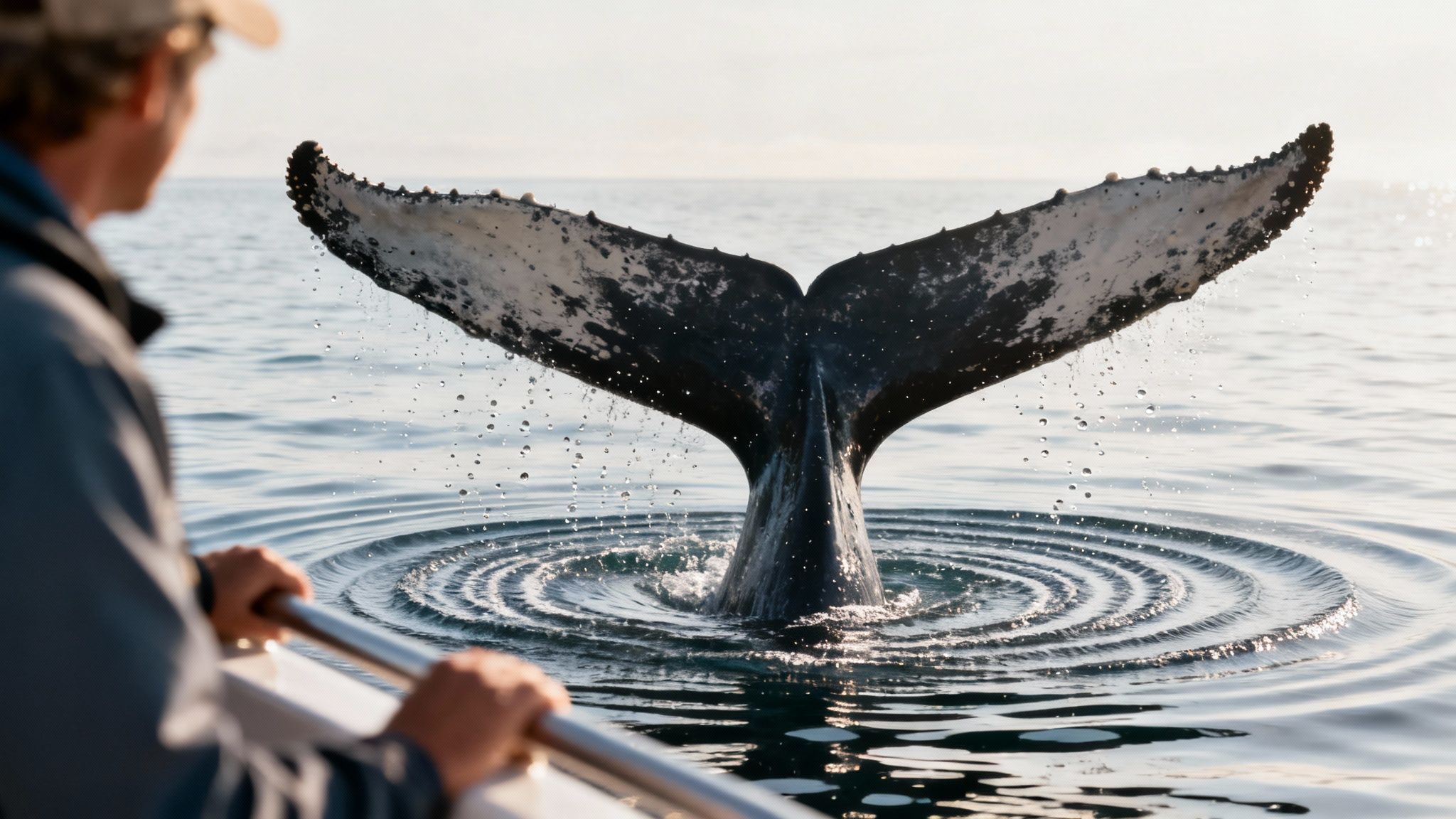
- The Tail Slap (Lobtailing): A massive, forceful smack of the fluke on the water's surface. That boom travels for miles underwater and can be a warning, a sign of aggression between males, or just part of the conversation.
- The Pectoral Fin Slap: You'll see a whale roll onto its side and just repeatedly slap one of its long pectoral fins on the water. It’s another way they talk to each other, especially when they're hanging out in social groups.
- The Spy-Hop: This one is pure magic. A whale will poke its head straight up out of the water to get a look around. It feels like they're just as curious about us as we are about them.
Think of a naturalist guide as your interpreter for the ocean's drama. They connect the dots between a powerful tail slap and the social dynamics of a pod, enriching your experience far beyond just what you see on the surface.
The Unseen World of Whale Song
Beyond the acrobatics you can see, there's a whole world of sound happening right beneath your feet. The haunting, complex songs of male humpback whales are some of the most intricate vocalizations in the entire animal kingdom. If the conditions are right on our tour, the captain might drop a hydrophone into the water.
In those quiet moments between breaches, you can slip on a pair of headphones and listen to these incredible melodies echoing up from the depths. It’s an ethereal, moving experience that connects you to a whole different dimension of their world.
Your Adventure Contributes to Science
Your whale watching Big Island tour is more than just a fun day out—you're actually helping with vital conservation work. Reputable tour operators like us contribute sighting data to local research organizations, turning every trip into a citizen science opportunity. This info helps scientists track migration patterns, population health, and the overall well-being of these giants.
Whale watching here has become a blend of tourism and science. For example, the Sanctuary Ocean Count project has been collecting data since 1996, relying heavily on observations from people just like you. On the Big Island alone, the count logged 493 sightings in a single year. It’s not uncommon to spot 20 to 30 whales per hour during peak season—a non-stop show of marine majesty.
By choosing a tour, you’re directly supporting the effort to protect Hawaii’s humpback whales for generations to come. For a deeper dive into what your trip will be like, check out our full guide on whale watching on the Big Island.
Your Whale Watching Questions Answered
Even with all the excitement bubbling up, it's totally normal to have a few questions before heading out on the water. Getting prepped for a whale watching tour on the Big Island is simple, and knowing what to expect means you can just relax and soak it all in. We've put together the questions we hear most often from our guests to help you feel ready for an incredible day.
What Should I Bring on a Whale Watching Tour?
Coming prepared is the secret to a comfortable and awesome trip. That famous Kona sun is warm, no doubt, but the ocean breeze can bring a chill, and the glare off the water is no joke. We're big believers in the "better to have it and not need it" philosophy.
Here’s a quick checklist of what we'd recommend tossing in your bag:
- Sun Protection: This is non-negotiable. Grab some reef-safe sunscreen, a hat with a good brim, and polarized sunglasses. Seriously, the sunglasses are a game-changer—they cut the glare right off the water's surface, making it way easier to spot those spouts.
- Layers: A light jacket or windbreaker is your best friend. It can get surprisingly cool once the boat gets moving, even on a perfectly sunny day.
- Camera and Binoculars: If you've got a camera with a decent zoom, bring it! You'll want to capture those magical moments. Binoculars are also fantastic for getting a closer look at whales that are a bit further out.
- Motion Sickness Prevention: If you know you're prone to seasickness, it's a good idea to take something before the tour starts. Being proactive here ensures you feel great and don't miss a thing.
We've got you covered with water and light snacks on board, but feel free to bring your own non-alcoholic drinks to stay hydrated.
Are Whale Sightings Guaranteed?
This is the big one, and a really important question. Since humpback whales are wild animals following their own ancient migration paths, we can never offer a 100% guarantee on sightings. They're on their own schedule in their natural home, which is honestly part of what makes every encounter so special and unique.
That said, the odds are massively in your favor during peak season, which runs from January through March. During these months, the waters off the Kona coast host one of the highest concentrations of humpback whales on the planet. Our captains have spent years on this water; they know the whales' favorite hangouts, which really bumps up your chances of having a day you'll never forget. It’s pretty common to see multiple pods of whales on a single trip.
How Close Can We Get to the Whales?
Giving the whales their space is our number one priority, always. Federal law is very clear: all boats have to stay at least 100 yards away from humpback whales. Think of it as the length of a football field. This rule is absolutely critical for protecting these amazing animals from stress, especially the mothers with their brand-new calves.
Any reputable tour operator, including Kona Snorkel Trips, follows these guidelines to the letter. Our goal is to watch the whales behaving naturally, without us getting in their way.
But here’s the amazing part: whales are often just as curious about us as we are about them. It's not at all unusual for a whale to decide to approach a stopped boat on its own. We call it getting "mugged," and it can lead to some breathtakingly close encounters, all on the whale's terms.
Is This Tour Suitable for Children?
Absolutely! Whale watching is an incredible experience for the whole family. The pure joy of seeing a 40-ton animal launch itself out of the water is a memory kids and adults will talk about for years. There's no better classroom than the open ocean for sparking a lifelong love for nature.
Our small-group tours create a safe, comfortable, and personal setting that's perfect for all ages. We just suggest parents pack some extra snacks, drinks, and plenty of sun protection to keep the little ones happy and comfortable for the whole adventure. The look of wonder in a child's eyes when they see their first whale? Truly priceless.
Ready to witness these gentle giants for yourself? Kona Snorkel Trips offers intimate, small-group tours that bring you respectfully close to the magic. Book your unforgettable adventure today.