
Whale Watching Big Island: Your Complete Guide to whale watching big island
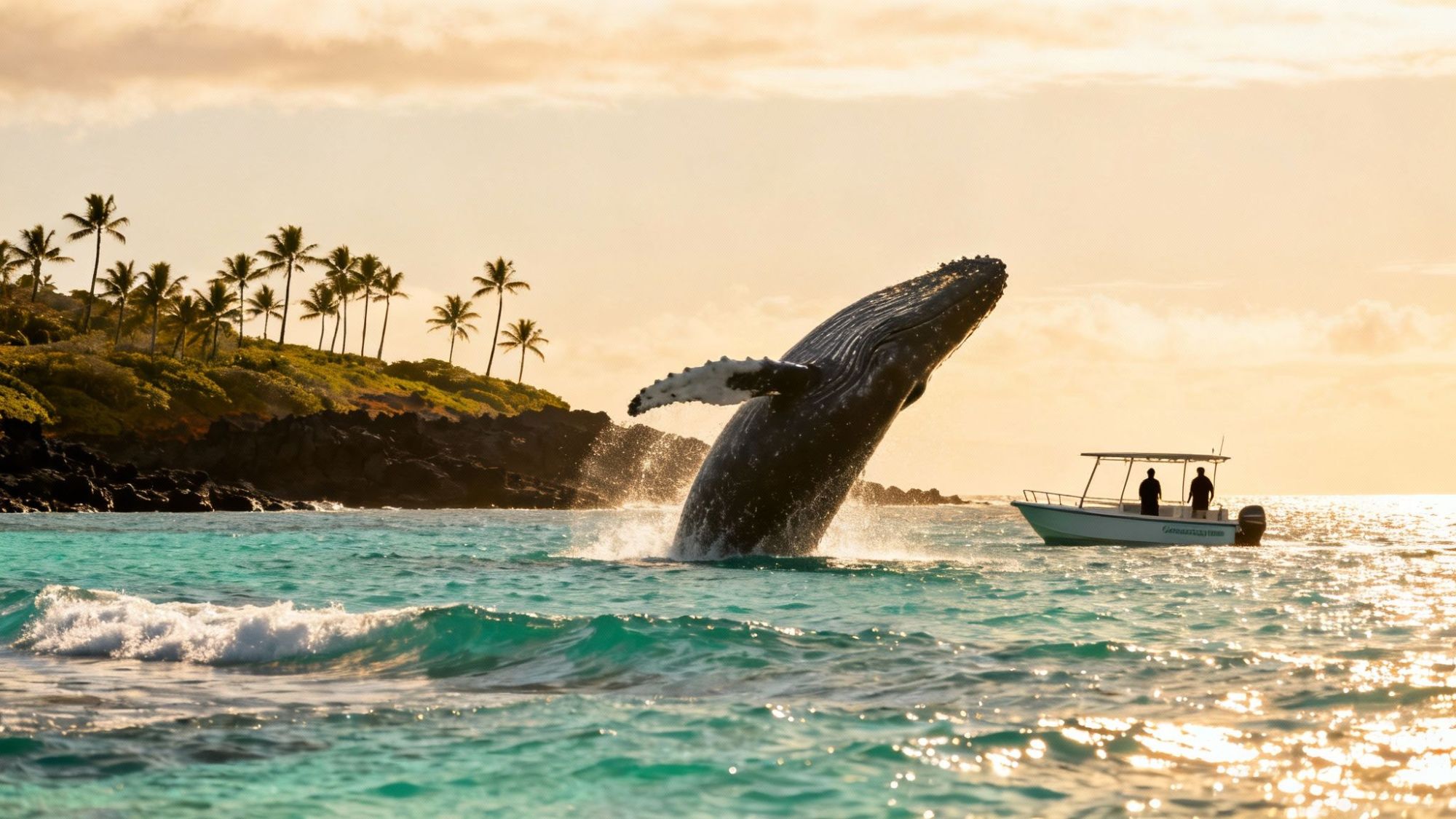
There's nothing quite like witnessing a 40-ton humpback whale launch itself out of the ocean. It's the kind of pure, raw magic that makes whale watching on the Big Island an unforgettable experience. This incredible wildlife spectacle unfolds every winter right off the Kona and Kohala coasts, when thousands of these gentle giants arrive in Hawai‘i's warm, protective waters.
Your Adventure into Big Island Whale Watching
Imagine the sheer power as one of the planet's largest mammals breaches the surface, sending a massive cascade of spray into the air. This isn't a scene from a nature documentary; it's a real, tangible moment that happens daily during the annual humpback migration.
Each year, these whales journey thousands of miles from their frigid feeding grounds in Alaska. They come to the calm, safe waters surrounding the Big Island to mate, give birth, and nurse their newborn calves. It’s a crucial part of their life cycle, and we're lucky enough to have a front-row seat.
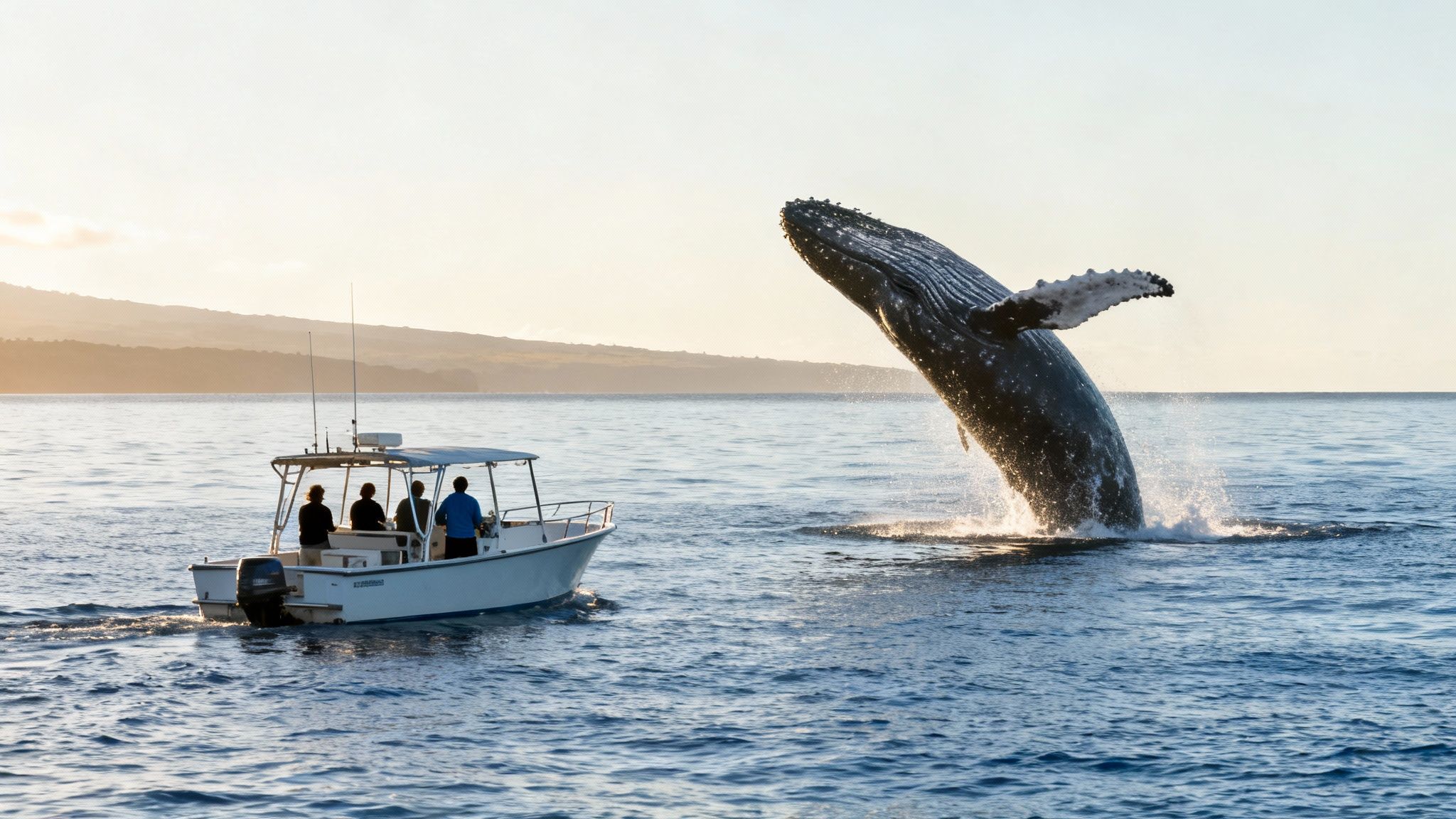
This guide is your complete playbook for planning a whale watching Big Island adventure you'll be talking about for years. We'll cover everything—the best times to go, the top spots for viewing, and what to pack for a perfect day on the water. Ultimately, the key to an amazing trip is choosing a tour operator who is as passionate about safe, respectful marine encounters as you are.
Trust Hawaii's Top Rated Tour Company
Here at Kona Snorkel Trips, we live and breathe this stuff. We're proud to be the top-rated and most-reviewed snorkel company in all of Hawaii, but what really drives us is sharing our love for the ocean. Our mission is to create safe, unforgettable adventures that build a genuine respect for the incredible creatures that call these waters home.
Our guides aren't just experienced; they're lifeguard-certified ocean fanatics who are passionate about showing you the wonders of Hawai‘i’s marine world.
But you don't have to take our word for it. Check out what fellow travelers have said about their experiences with us below. Nothing builds confidence like hearing from people who were right where you are now, planning the trip of a lifetime.
The Epic Journey of Hawaii's Humpback Whales
The story of whale watching on the Big Island is really the story of an unbelievable journey. Every single year, thousands of humpback whales make a massive 6,000-mile roundtrip commute from the nutrient-rich, but freezing, feeding grounds of Alaska all the way to the warm, protected waters of Hawaii. This isn't just a casual trip south for the winter; it's one of the most critical parts of their entire life cycle.
In the Hawaiian language, these gentle giants are called koholā. Their annual pilgrimage is driven by the most primal needs: breeding, giving birth, and nursing their young. The warm Hawaiian waters offer a safe, relatively predator-free haven, which is absolutely essential for newborn calves who don't yet have the thick layer of blubber needed to survive in the frigid northern seas.
Why Hawaii is the Perfect Nursery
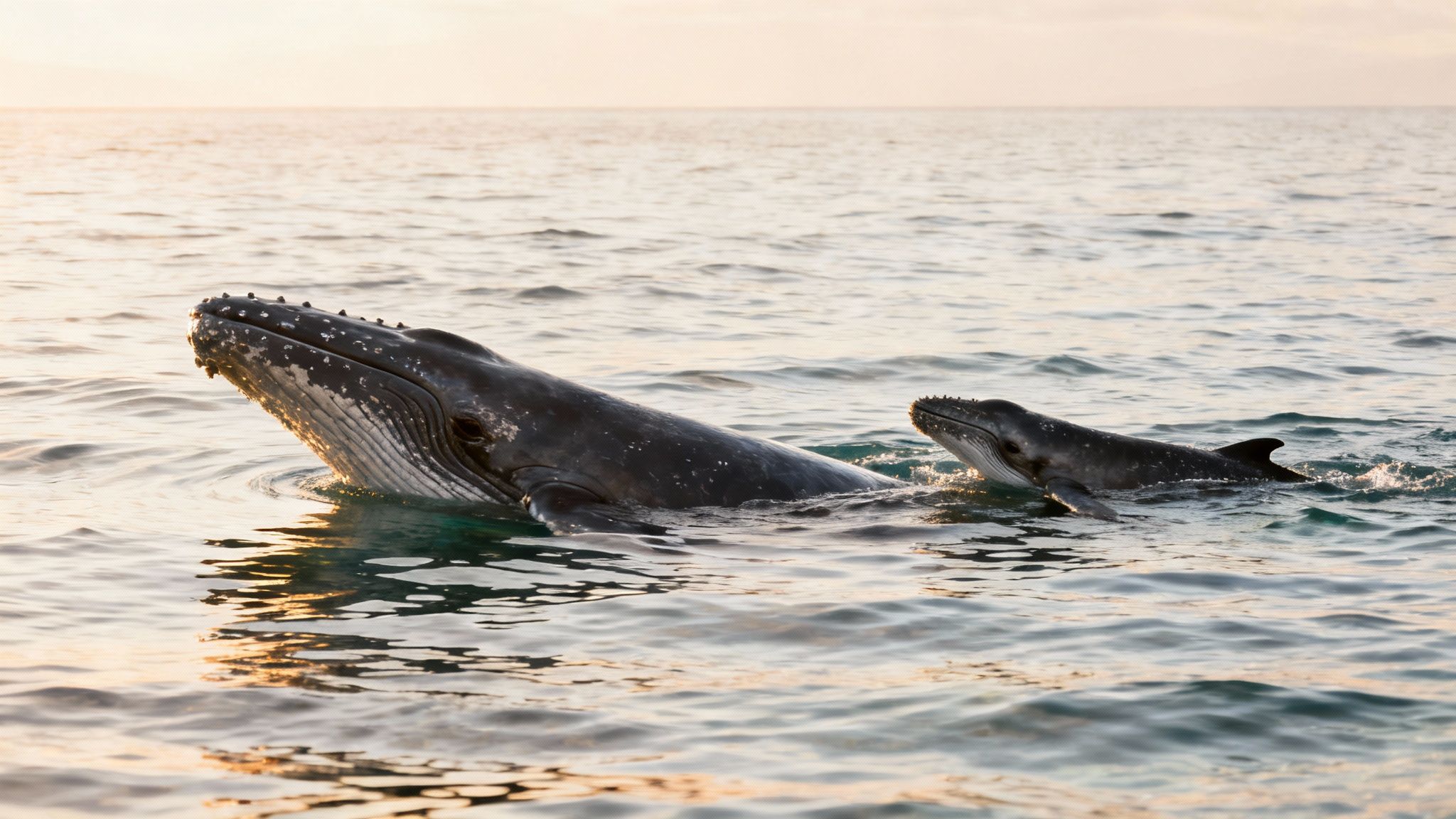
Picture a vast, tropical nursery where the ocean's most majestic creatures come to start and grow their families. That's exactly what Hawaii becomes each winter. The calm, shallow waters around the islands—especially off the Kona and Kohala coasts—are the perfect setting for these life-changing events.
This migration is a stunning feat of endurance. Humpback whales don't eat at all during their months-long journey or their entire time in Hawaii. They survive completely on the fat reserves they built up during their summer feeding frenzy in Alaska.
This long fasting period makes the safety of Hawaiian waters even more important. Here, mothers can pour all their energy into caring for their calves without the constant stress of looking out for orcas, their main natural predator. It all comes together to create a spectacular display of marine life that makes whale watching Big Island such a deeply moving experience.
A Staggered Arrival
The whales don't all show up at once in a massive wave. It’s more like a seasonal neighborhood slowly coming to life, with different groups arriving at different times. This staggered arrival makes for a dynamic, ever-changing social scene just beneath the surface.
- First to Arrive: Often, the first whales we see are new mothers with their year-old calves, who are now making their second trip down south.
- Juveniles and Adults: They're soon followed by rowdy groups of juveniles, mature males ready to compete for mates, and other adult females.
- Last to Arrive: The pregnant females are usually the last to get here, looking for the quietest, safest waters to give birth.
Understanding this natural rhythm just makes the whole experience richer. This epic migration brings over 12,000 humpback whales—that's more than half the entire North Pacific population of about 26,000—to Hawaii's doorstep each winter. It’s what makes the Big Island a true global hotspot for this incredible spectacle. If you'd like to dive deeper, you can find more insights about the whale season on the Big Island. Knowing who is arriving and why adds a whole new layer of meaning to every spout, breach, and tail slap you're lucky enough to witness.
The Best Time for Whale Watching on The Big Island
When it comes to planning your whale watching Big Island adventure, timing really is everything. While you can see whales throughout the season, knowing the month-by-month rhythm of the humpback migration can take your trip from good to absolutely unforgettable. The official season usually runs from November through April, and it has a distinct flow to it.
I like to think of the season like a really great concert. The early months are the opening acts—full of raw energy and anticipation. The middle months are the headliners, with non-stop action. And the final weeks? That’s the encore, one last chance to soak in the magic before the show is over for another year.
Early Season: The First Arrivals
From November to December, you can feel a real sense of excitement building along the Kona coast. This is the early season, when the very first humpbacks arrive after their marathon swim down from Alaska. There's something special about spotting one of these early arrivals; it feels like you're in on a secret before everyone else.
Sightings aren't as constant as they are in the peak months, but the thrill of seeing that first spout of the season is hard to beat. The waters are often quieter, too, which can make for a more serene, personal experience as the island gears up for the main event.
Peak Season: The Main Event
January through March is, without a doubt, the absolute best time for whale watching on the Big Island. This is the peak season, when the waters offshore are just teeming with life. The highest concentration of humpbacks has settled in, turning the ocean into a dynamic, action-packed spectacle.
This is when you see it all: massive males competing for mates in powerful "competitive pods," mothers tenderly guiding their newborn calves, and those jaw-dropping, full-body breaches that seem to defy gravity. The sheer number of whales means your chances for multiple, awe-inspiring encounters are incredibly high. If you want to dive a bit deeper into why these months are so productive, you can learn more about the Big Island whale season.
After years on the water and looking at official whale counts, January and February consistently deliver the most reliable and breathtaking viewing experiences. If your schedule has any wiggle room, this is the prime window to book your adventure.
Big Island Whale Watching Season At A Glance
To give you a clearer picture, here’s a simple breakdown of what to expect month by month. Think of it as your cheat sheet for planning the perfect trip.
| Month | Activity Level | What You Might See |
|---|---|---|
| November | Low | The very first arrivals, solitary whales, exciting first spouts of the season. |
| December | Moderate | Numbers are building. More frequent sightings, early competitive behaviors. |
| January | High (Peak) | Huge numbers of whales. Breaching, tail slapping, and competitive pods are common. |
| February | High (Peak) | The absolute height of the season. Maximum density of whales, plus newborn calves appearing. |
| March | Moderate-High | Still lots of action, with a focus on mothers and their growing calves. |
| April | Low | The last goodbyes. Mostly mothers and calves preparing for their journey north. |
As you can see, the heart of the season in January and February is where the action is most concentrated, but every month offers its own unique magic on the water.
Late Season: A Fond Farewell
Once April rolls around, the energy on the water starts to shift. This is the late season, and it's your last chance to see the final groups of mothers and calves. These pairs are often the last to head north, as the moms need to make sure their babies are strong enough for the long journey back to Alaska.
The pace is often a bit calmer, but the sightings are deeply rewarding. There's something really poignant about watching a mother and her calf bonding, knowing they're getting ready for their epic migration. It’s a beautiful way to close out the season.
Top Locations for Spotting Whales on The Big Island
Knowing where to look is just as important as knowing when. If you want a truly memorable whale watching experience on the Big Island, you’ve got to be in the right place.
While you can technically spot whales all around the island, the real action is concentrated on the western coast. The calm, deep, and protected waters off the Kohala and North Kona coasts are the perfect sanctuary for humpback whales.
Think of this area as the whales' preferred neighborhood. The leeward side of the island shields these waters from the strong trade winds, which means calmer seas—ideal for mothers nursing their newborn calves. This natural protection is what draws them back year after year, making it the most reliable place for consistent sightings.
Best Shoreline Viewing Spots
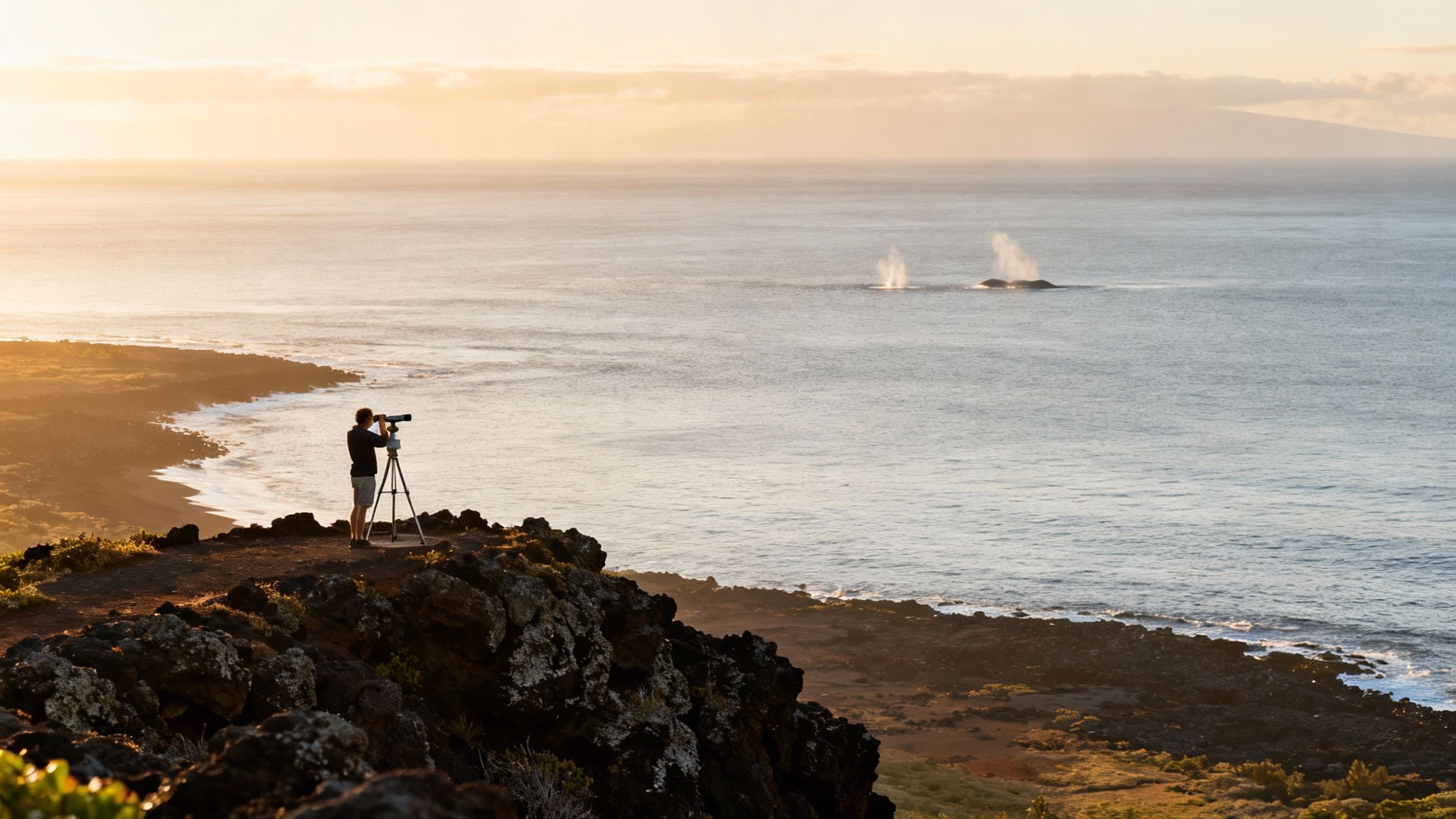
Sure, getting on a boat offers the most immersive encounters, but you can absolutely witness the magic from shore. Land-based viewing just requires a little patience and a good pair of binoculars. Trust me, the reward of spotting a breach from a scenic lookout is immense.
For your best chances, head to the elevated points along the Kohala Coast. These spots are tried and true:
- Puʻukoholā Heiau National Historic Site: It’s no coincidence the name translates to "hill of the whale." This historic site offers a commanding, panoramic view over the ocean, making it a premier spot for shore-based whale watching.
- Lapakahi State Historical Park: This is another fantastic location with high bluffs overlooking the water. The clear sightlines here create a perfect natural theater for spotting distant spouts and splashes.
- Kapaʻa Beach Park: Located near Lapakahi, this park has the wonderful bonus of shaded picnic pavilions, so you can scan the horizon in comfort.
These spots are so reliable that they're used for official volunteer whale counts. For anyone whale watching on the Big Island, especially near Kona where tours are popular, the data proves why the Kohala Coast is prime territory.
Sightings here can be two to three times higher than elsewhere. During peak season in January and February, volunteers often record averages of 3 to 6 whales per 15-minute period. You can dig into the data from these ocean counts on Big Island Now.
Why a Guided Tour is Unbeatable
Spotting a whale from land is a thrill, but nothing compares to being on the water. A guided tour with a company like Kona Snorkel Trips gets you respectfully closer to the action, offering a perspective that land simply can't match.
Our expert captains have an intimate knowledge of these waters. They know the whales' favorite hangouts and can interpret their behavior, which means they can lead you right to the most active pods of the day.
Being on a boat also gives you unparalleled photo opportunities and the chance to hear the whales' haunting songs through a hydrophone—an experience that will genuinely stay with you forever. If you want to learn more about our specific approach and tours, check out our guide on whale watching in Kona.
How to Choose the Best Big Island Whale Watching Tour
Let's be honest, not all whale watching tours on the Big Island are the same. Your experience out on the water really comes down to the operator you choose, so picking the right one is everything if you want an adventure that's both unforgettable and responsible.
It's about more than just finding a boat to get you out there. You're looking for a crew that makes the whole experience come alive. Think about factors like group size, the guides' passion and knowledge, and the company's real commitment to protecting these animals.
What to Look for in a Tour Operator
When you start comparing options, a few key things separate a pretty good tour from a truly great one. Focusing on these details means you'll have an amazing time while also supporting the kind of tourism that keeps our oceans healthy for the whales you're here to see.
- Small Group Philosophy: Always look for companies that keep their groups small. This is central to how we do things at Kona Snorkel Trips. It just creates a much more personal connection with the guides and, more importantly, with the whales. No jockeying for a view, just pure magic.
- Expert and Certified Guides: A knowledgeable guide can completely transform a trip from just seeing whales to truly understanding them. Our guides are lifeguard-certified and absolute marine life nerds, and their stories and insights bring the whole encounter to life.
- Commitment to Conservation: A deep respect for wildlife should be a given. The best operators aren't just in it for a season; they're dedicated to protecting this incredible marine environment for generations to come.
If you want a handpicked list to get you started, some resources have already done the legwork. You can check out guides like the Top 5 Whale Watching Kona Big Island Tours to see some of the best-rated options around.
Understanding "Whale Wise" Guidelines
A truly exceptional tour operator always, always puts the whales' well-being first. This means they live and breathe the federally mandated "Whale Wise" guidelines, which are designed to protect these gentle giants during their most critical time in Hawaiian waters.
The most important rule? Keep a safe distance of at least 100 yards from humpback whales. This isn't just a friendly suggestion—it's the law. This buffer zone is crucial for preventing stress on the whales, especially moms with their new calves, letting them rest, nurse, and socialize without being disturbed.
Responsible tours let the whales call the shots. A skilled captain knows how to position the boat for incredible viewing without ever chasing or crowding the animals. More often than not, the whales' own curiosity brings them closer on their terms, creating those breathtaking moments that feel earned, ethical, and absolutely awe-inspiring.
When you choose a tour that puts sustainability first, you become a partner in conservation. You're helping protect these magnificent creatures for many, many years to come.
Preparing for Your Whale Watching Adventure
A little bit of prep work can be the difference between a good whale watching tour and a truly unforgettable one. Getting your gear sorted beforehand means you can stay completely in the moment, focused on the incredible spectacle unfolding in front of you.
You can feel the anticipation build as the boat leaves the harbor, everyone’s eyes scanning the vast blue horizon. Soon, a collective gasp ripples through the boat. Someone spots the first sign—a distant, misty plume from a whale's spout. The excitement grows as you draw respectfully closer, finally culminating in the jaw-dropping sight of a 40-ton animal launching its entire body out of the water.
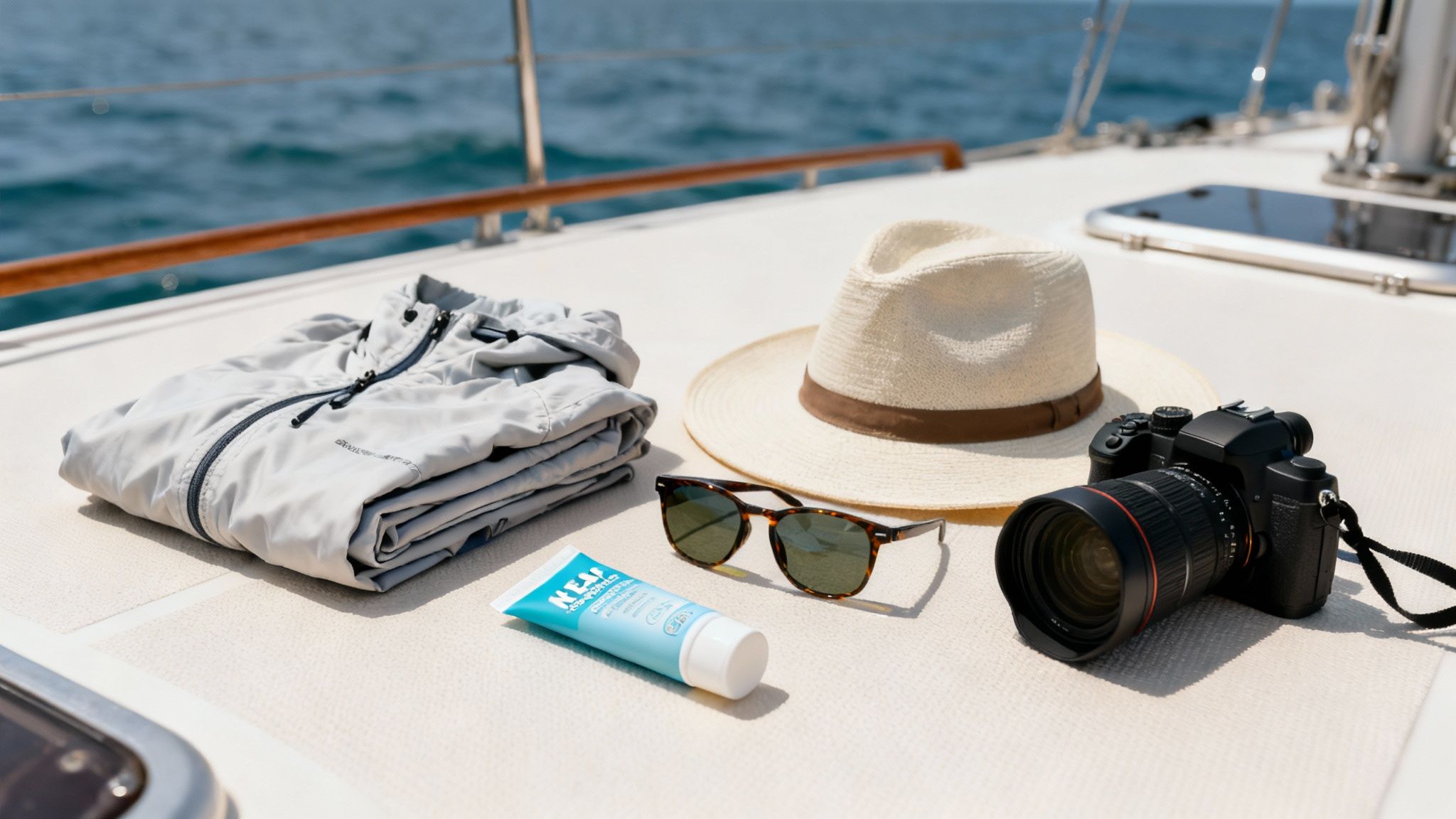
Your Onboard Essentials Checklist
To make the most of every second out there, packing a few key items is a must. Conditions on the water can change in a flash, so it pays to be ready for anything.
- Layered Clothing: Even on a warm Kona day, that ocean breeze can have a real chill to it. Tossing a light jacket or windbreaker over your regular clothes is the perfect way to stay comfortable.
- Sun Protection: The Hawaiian sun is no joke, and its reflection off the water basically doubles the intensity. You’ll want reef-safe sunscreen, a wide-brimmed hat, and polarized sunglasses to cut the glare and help you see beneath the surface.
- Camera with Zoom: Trust us, you’ll want to capture those jaw-dropping breaches. A camera with a decent zoom lens lets you get incredible shots from a respectful distance.
- Binoculars: While not essential, binoculars are fantastic for getting a closer look at distant spouts or just watching the quiet, subtle beauty of a mother and calf gliding by.
Staying Comfortable at Sea
For some folks, the gentle rocking of the boat is more of a concern than a comfort. If you know you're prone to motion sickness, a little planning ahead will make all the difference and ensure you enjoy every minute of the tour.
There are a ton of simple and effective ways to feel your best out on the water. For a complete rundown of our favorite tips, from natural remedies to over-the-counter options, check out our guide on how to prevent seasickness. A little preparation goes a long way toward an experience of a lifetime.
Your Whale Watching Questions Answered
To help you get ready for the trip of a lifetime, we've put together answers to some of the questions we hear most often. We want you to feel confident and excited when you book your tour, knowing exactly what to expect.
Are We Guaranteed to See Whales on Our Tour?
That's the million-dollar question, isn't it? Since humpback whales are wild animals on their own schedule, nobody can ever promise a sighting with 100% certainty.
But here's the good news: if you book during the peak season from January to March, your chances are incredibly high. Our captains have spent years in these waters and know exactly where the whales love to hang out. With so many whales in the area during these months, it’s honestly pretty rare to go out and not see some amazing action.
How Close Can the Boat Get to the Whales?
Federal law is very clear on this: all boats have to stay at least 100 yards away from humpback whales. This is for their safety and ours, and as a responsible 'Whale Wise' tour operator, we follow these rules to the letter.
However, whales don't always follow the rules! They are naturally curious creatures and often decide to come check us out. When a 45-foot whale decides to surface near the boat on its own terms, it's a truly magical, heart-stopping moment you'll never forget.
What Is the Best Time of Day for a Whale Watching Tour?
Whales are active pretty much all day long, so you can’t really go wrong. Many folks love the morning tours because the ocean is often glassier and the light is just perfect for photos.
That said, afternoon trips can be just as spectacular and might fit your vacation schedule a little better. Ultimately, since the whales are out there doing their thing from sunrise to sunset during peak season, the best time for your whale watching Big Island adventure is simply the time that works best for you.