
Whale watching big island: Your Guide to Humpback Encounters
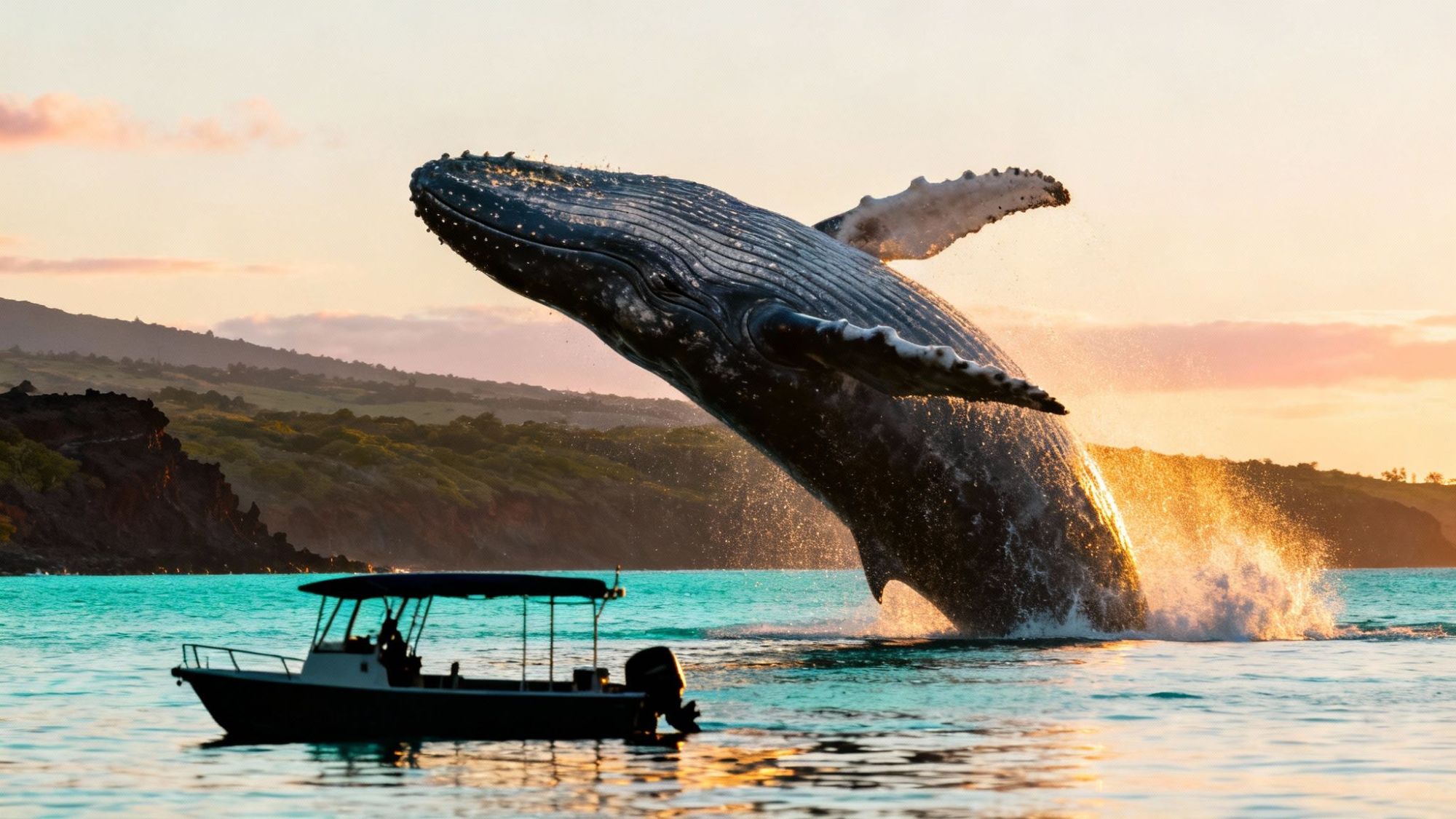
It’s a sight that sticks with you forever: a 40-ton humpback whale launching itself out of the deep blue, crashing back down in a spray of whitewater. If you want a front-row seat to one of nature's greatest shows, the Big Island is the place to be from December through March.
This guide is your complete playbook for an incredible whale watching adventure. We’ll cover everything from the best times to go to how to pick the right local tour.
As the top rated & most reviewed snorkel company in Hawaii, Kona Snorkel Trips is all about creating marine encounters that are safe, unforgettable, and always respectful of the wildlife.
Your Guide To Whale Watching On The Big Island
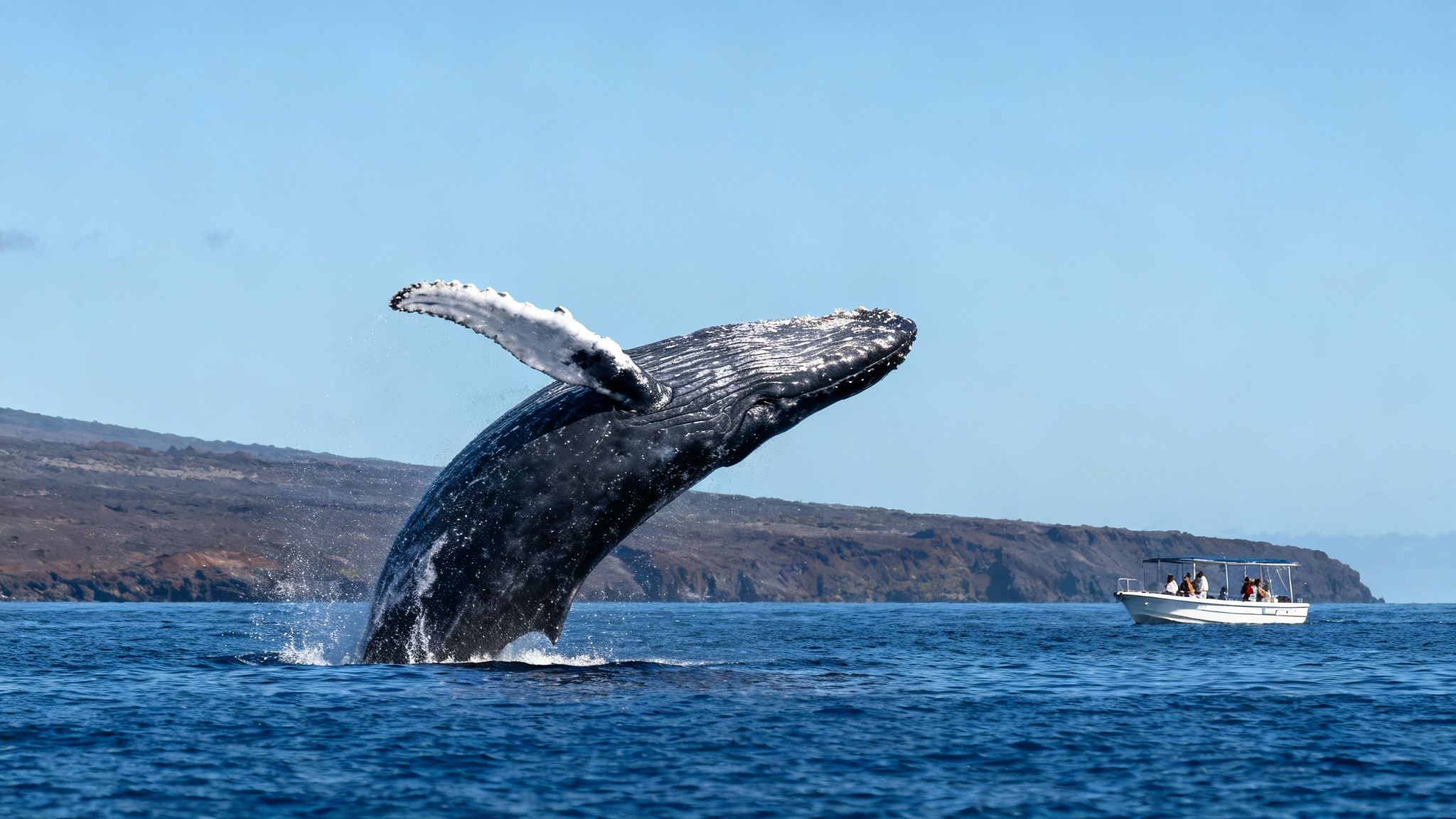
A whale watching trip here isn't just another boat ride—it's a chance to witness an epic migration firsthand. Every single winter, thousands of North Pacific humpback whales travel an astonishing 3,000 miles from the frigid waters of Alaska. Their destination? The warm, protected seas around Hawaii, where they come to breed, give birth, and raise their newborn calves.
Choosing the right guide makes all the difference. When you're looking for the best whale watching the Big Island has to offer, you want a crew that not only knows the ocean but deeply respects the animals that call it home. As the top-rated and most-reviewed snorkel company in Hawaii, Kona Snorkel Trips is all about creating marine encounters that are safe, unforgettable, and always respectful of the wildlife.
Planning Your Whale Watching Trip
To get the most out of your time on the water, you need to know the rhythm of the season. You might spot a whale outside the main window, but planning your visit during peak season is a game-changer. It dramatically boosts your odds of seeing the really spectacular stuff—breaches, tail slaps, and all the other behaviors that make your jaw drop.
The Big Island’s geography is perfect for this. The deep, calm waters off the Kona and Kohala coasts create an ideal nursery for these gentle giants. This predictable gathering makes for some of the most reliable and awe-inspiring whale watching on the planet.
To help you get your bearings, here's a quick snapshot of what to expect. Think of this table as your cheat sheet for planning the perfect trip.
Big Island Whale Watching At a Glance
| Aspect | Details |
|---|---|
| Peak Season | Mid-January through late March is when whale activity is at its highest, offering the most frequent and dynamic sightings. |
| Primary Species | The North Pacific Humpback Whale (Megaptera novaeangliae) is the star of the show during the winter months. |
| Best Viewing Areas | The sheltered waters along the Kona and Kohala coasts are prime locations due to their depth and calm conditions. |
| Common Behaviors | Look for awe-inspiring breaches, communicative tail and pectoral fin slaps, and curious spy-hops. |
| Tour Duration | Most dedicated whale watching tours last between 2 to 3 hours, providing ample time for spotting and observation. |
With these key details in mind, you're already on your way to planning an adventure you won't soon forget.
The Epic Journey Of Humpback Whales To Hawaii
Every winter, something truly incredible happens in the waters off the Big Island. An ancient, instinct-driven pilgrimage compels thousands of North Pacific humpback whales to leave their frigid feeding grounds in Alaska and make their way south. This isn't just a trip; it's one of the most awe-inspiring migrations in the entire animal kingdom.
The journey itself is staggering. These gentle giants travel an astonishing 3,000 miles across the open ocean, a relentless swim that can take them up to two months to complete. Think of it as a massive family road trip, only without any rest stops.
What makes this feat even more mind-blowing is that the whales fast for the entire journey. They survive solely on the thick blubber reserves they built up during a summer of feasting. All of that energy is spent with one goal in mind: reaching the warm, sheltered waters of Hawaii.
A Tropical Nursery For Gentle Giants
So, why Hawaii? The answer is simple: it’s the perfect nursery. For humpback whales, the Hawaiian Islands offer a safe haven to give birth, mate, and raise the next generation far from the harsh dangers of the northern seas.
The Big Island, especially the calm, deep waters off the Kona and Kohala coasts, is a favorite destination. These spots are naturally shielded from strong ocean currents and are relatively free of orcas—the main predator of young humpback calves.
This annual gathering is a crucial chapter in the life of a humpback.
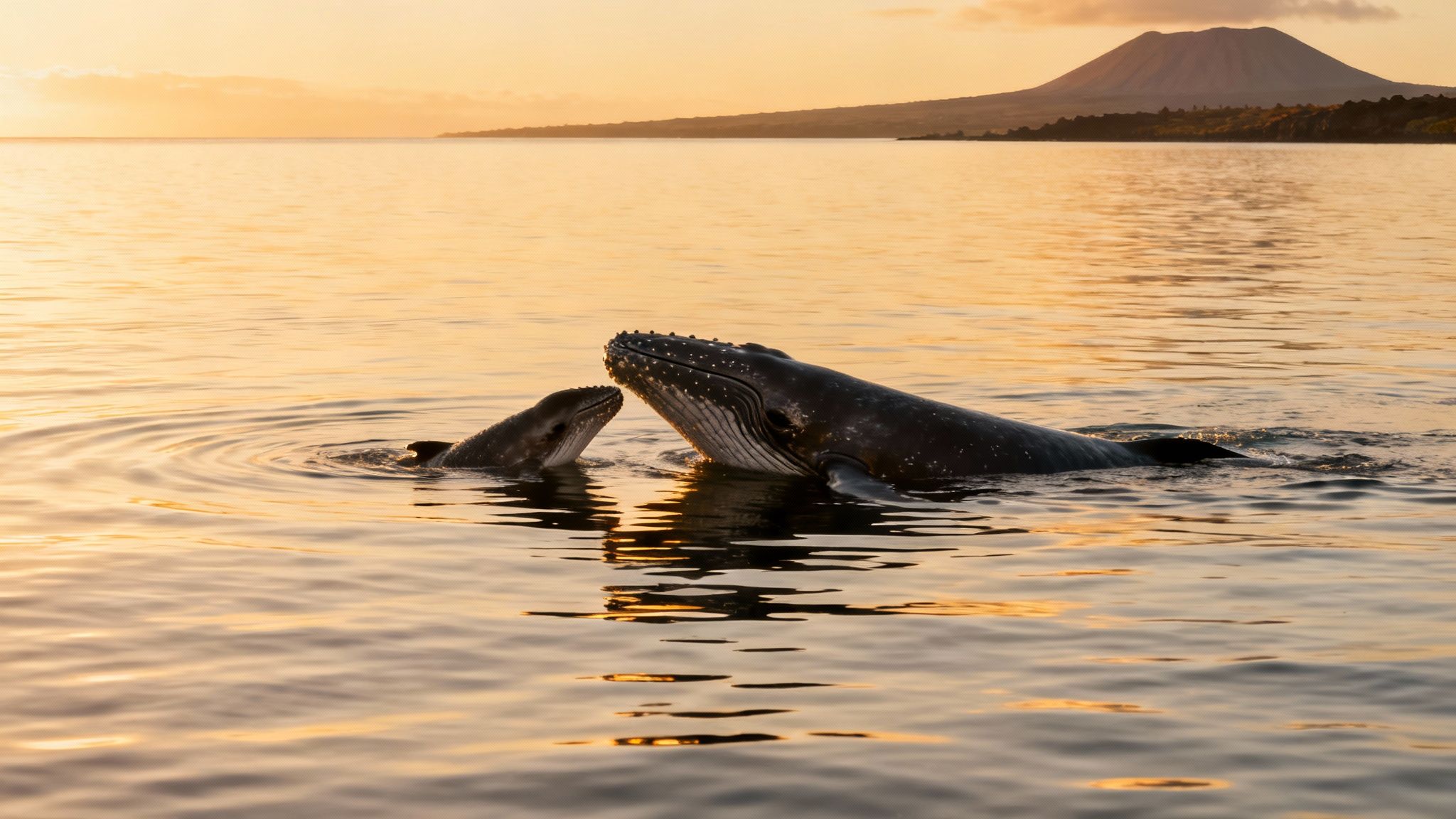
- Birthing and Nursing: Pregnant females arrive to deliver their calves in a warm, protected environment. A newborn calf has very little body fat, so these tropical temperatures are essential for survival as they nurse and build strength.
- Mating and Competition: The waters also become a grand stage for courtship. It’s common to see super-energetic "competitive pods," where several males chase a single female, leading to spectacular surface displays of pure power.
This massive congregation is exactly why whale watching on the Big Island is so consistent and rewarding. During the peak season, a huge portion of the entire North Pacific humpback population—sometimes estimated at over 10,000 whales—is gathered right here in Hawaiian waters.
The Migration Timeline
The arrival and departure of the whales follow a predictable rhythm, creating a distinct season for us on the lookout. The first few scouts are usually spotted as early as October or November, but these are just the early birds. The real show starts to build in December as their numbers steadily climb.
The peak of the whale watching season explodes from mid-January through late March. During this window, the density of whales is at its absolute highest. Sightings of breaches, tail slaps, and tender moments between mothers and calves become a near-daily occurrence.
By April, the migration reverses. The whales, including the new moms with their now much-stronger calves, begin the long trek back north to the nutrient-rich feeding grounds of Alaska. You might catch a few stragglers in May, but by then, the great annual reunion has wrapped up for another year.
Knowing the story behind this epic journey adds such a profound layer of appreciation to any whale watching tour. You're not just seeing an animal in the ocean; you are witnessing the powerful culmination of an ancient, awe-inspiring pilgrimage. This annual cycle is the very reason whale watching Big Island tours offer such an unforgettable connection to the natural world.
Finding The Perfect Time For Whale Watching
When it comes to whale watching on the Big Island, timing isn't just a detail—it’s everything. Sure, the official season runs from December to March, but the real action happens in a much tighter window. You can think of it like going to a huge music festival: you can show up right when the gates open, but you know the headliner isn't hitting the stage until much later.
For our humpback whales, that headlining performance really kicks off in mid-January and goes full-throttle right through the end of March. During this peak time, the number of whales in the waters around the Big Island just explodes. It’s like the ocean becomes a massive stage for one of the most incredible wildlife shows on Earth.
This isn't just a gut feeling; it’s something we’ve seen year after year. Every winter, the Kona and Kohala coasts become one of the most densely populated gathering spots for the entire North Pacific humpback population. Out of an estimated 26,000 humpbacks in the Pacific, roughly two-thirds (that’s about 17,000 whales) make the journey to Hawaii. A huge chunk of them choose to hang out right here. For a deeper look into this amazing migration, check out the complete guide to the Big Island whale season.
Peak Season vs. Shoulder Season
Knowing the difference between the "shoulder season" (early December to mid-January) and the "peak season" (mid-January to late March) is the secret to planning an unforgettable trip.
In the shoulder season, you’ll definitely see whales. The first arrivals are trickling in, and sightings are pretty common. But the peak season is when the energy level just goes through the roof.
- Higher Density: The sheer number of whales is at its absolute highest. More whales means more action, period.
- More Diverse Behaviors: With so many whales around, you get to see more of their complex social lives. This is prime time for spotting dramatic "competitive pods" where males chase after a female, or those incredibly tender moments between a mother and her brand-new calf.
The difference in activity is staggering. During peak months, it's not unusual for our guides to spot an average of 3–6 whales every 15 minutes. And when you stumble upon a big social event, those numbers can jump to 15–20 whales all interacting in one area. These are the kinds of moments that turn a good whale watching tour into a story you'll be telling for years.
The Science Behind The Sightings
The reliability of sightings isn't just anecdotal—it's backed by some really cool data, a lot of it collected by passionate local volunteers. Citizen-science projects like the Sanctuary Ocean Count give us a fantastic yearly snapshot of just how many whales are out there.
During these counts, held on the last Saturdays of January, February, and March, volunteers station themselves along the coast and simply count every whale they see. A recent count reported an incredible 493 humpbacks spotted from just 30 vantage points on a single day in January.
Other single-day counts have tallied between 278–324 sightings across the islands. These numbers paint a clear picture of the massive scale of the migration and explain why tour operators can offer such amazing and reliable encounters during those prime months.
Planning For Specific Behaviors
Believe it or not, you can even time your trip based on what you want to see.
If your dream is to witness the raw power of a full-body breach or the intense drama of a competitive pod, booking in February or March gives you the best odds. That’s when mating activity is at its most frenetic.
On the other hand, if you’re hoping to catch a heartwarming glimpse of a newborn calf sticking close to its mom, late February through March is perfect. The calves born earlier in the season are getting bigger, stronger, and a lot more playful, often putting on a show for anyone lucky enough to be watching.
Ultimately, by planning your trip during the peak season, you’re not just hoping to see whales—you're strategically putting yourself in the front row for the full spectrum of behaviors that make whale watching Big Island a truly once-in-a-lifetime experience.
How To Choose The Best Whale Watching Tour
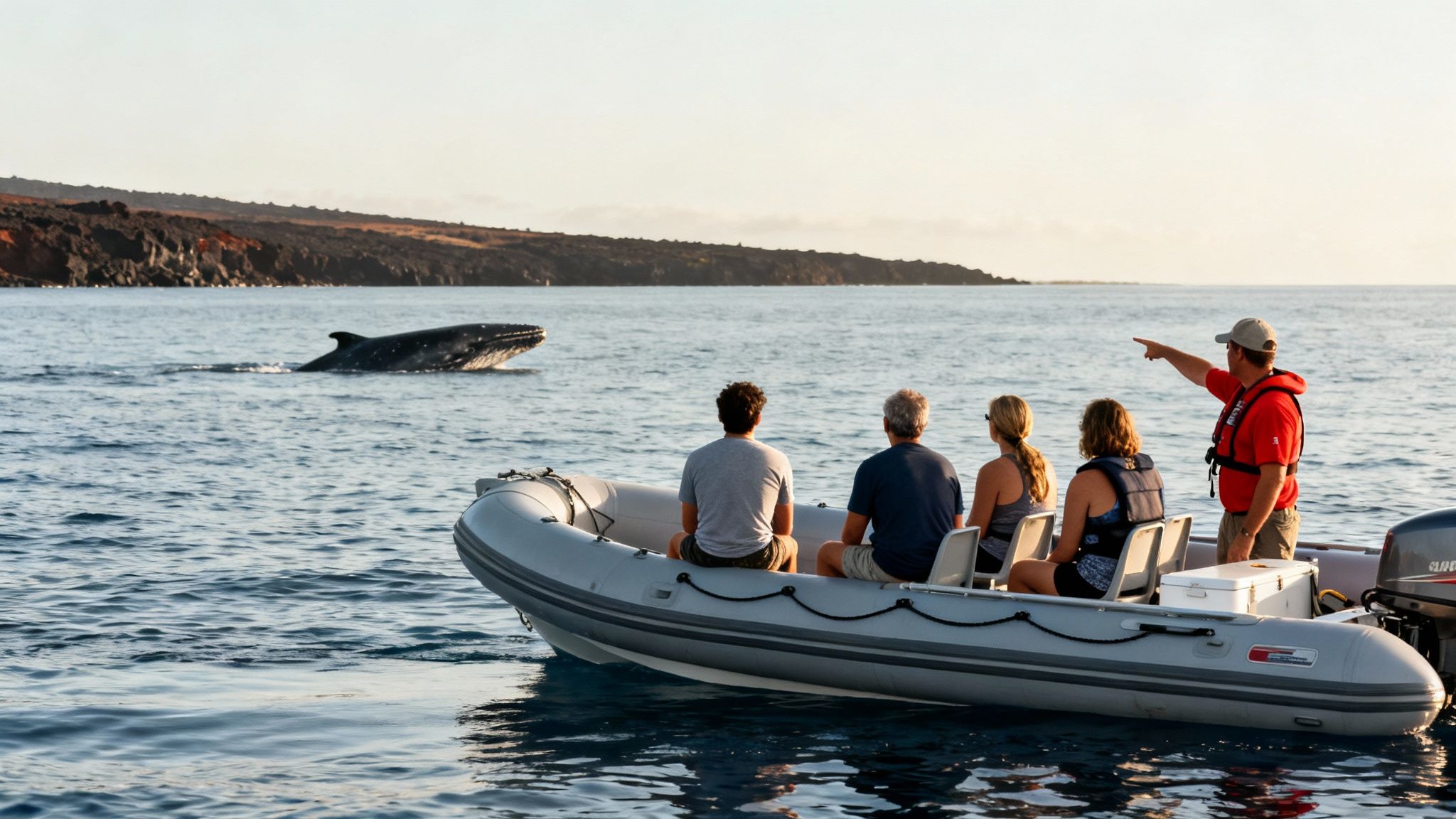
Picking the right whale watching tour on the Big Island can make or break your experience. It's the difference between just seeing a whale from a distance and having a truly mind-blowing encounter that you’ll talk about for years. The secret is finding an operator that lives and breathes safety, offers a more personal, up-close feel, and has a deep, genuine respect for the ocean and its inhabitants.
Think of it this way: you wouldn't hire a guide for a sacred mountain hike who just points at the trail. You'd want an expert who knows every rock and stream, respects the local culture, and can show you the hidden waterfalls most people miss. That's exactly what you should look for in a whale watching crew.
The Advantage Of Small Group Tours
One of the biggest factors in the quality of your trip is the size of the boat. While those massive vessels might seem stable, nothing beats the intimate and flexible experience of a small-group tour. With fewer people on board, you’re guaranteed a front-row seat. No peering over a sea of heads to get a glimpse.
This personal touch is why we run our tours the way we do at Kona Snorkel Trips. A smaller, nimbler boat means the captain can respond to sightings in a heartbeat and get you into the best possible position—all while keeping a safe, respectful distance from the whales. Plus, with lifeguard-certified guides on board, you get one-on-one attention, your questions get answered, and your safety is always paramount.
Vessel Type Matters
The kind of boat you're on will absolutely shape your adventure on the water. Each type has its own vibe, and the best one for you really boils down to your comfort level and how much of a thrill you're after.
- Zodiac-Style Rafts: If you're an adventurer at heart, these are for you. They're fast, agile, and sit low in the water, giving you a stunning, eye-level view of the whales. It’s an absolute rush.
- Larger, More Stable Boats: For families or anyone who prefers a smoother ride, a larger catamaran or single-hull boat offers more stability. They often come with handy amenities like restrooms and shaded areas.
No matter which boat you choose, the captain's skill is what really makes the magic happen. A seasoned crew knows exactly how to position the vessel for the perfect photo without ever disturbing the whales. If you want to dive deeper into your options, check out our guide on the best whale watching tours in Kona, Hawaii.
The Importance Of Ethical And Responsible Practices
This is huge. Choosing an operator who is serious about ethical practices is non-negotiable. It's about more than just following the rules; it's about protecting these incredible animals for generations to come. When you book with a responsible company, you become a partner in conservation.
Look for operators who are proud members of programs like 'Whale SENSE' and strictly follow federal regulations. That means keeping a mandatory distance of at least 100 yards from humpback whales. This space is critical for preventing stress, especially for mother whales with their newborn calves.
By choosing a responsible company, you are casting a vote for sustainable tourism. You're supporting businesses that invest in protecting the very ecosystem that makes these incredible encounters possible for future generations.
Whale watching is a massive part of Hawaii's seasonal economy, and the Big Island is a major hub. NOAA once estimated that around 330,000 people take whale tours statewide during the short winter season. This demand makes it even more crucial for operators to invest in well-trained crews, safe boats, and unwavering compliance with approach regulations to keep the industry sustainable. You can learn more about the industry's impact and conservation work in this report from the NOAA Office of National Marine Sanctuaries.
Witnessing Incredible Humpback Whale Behaviors
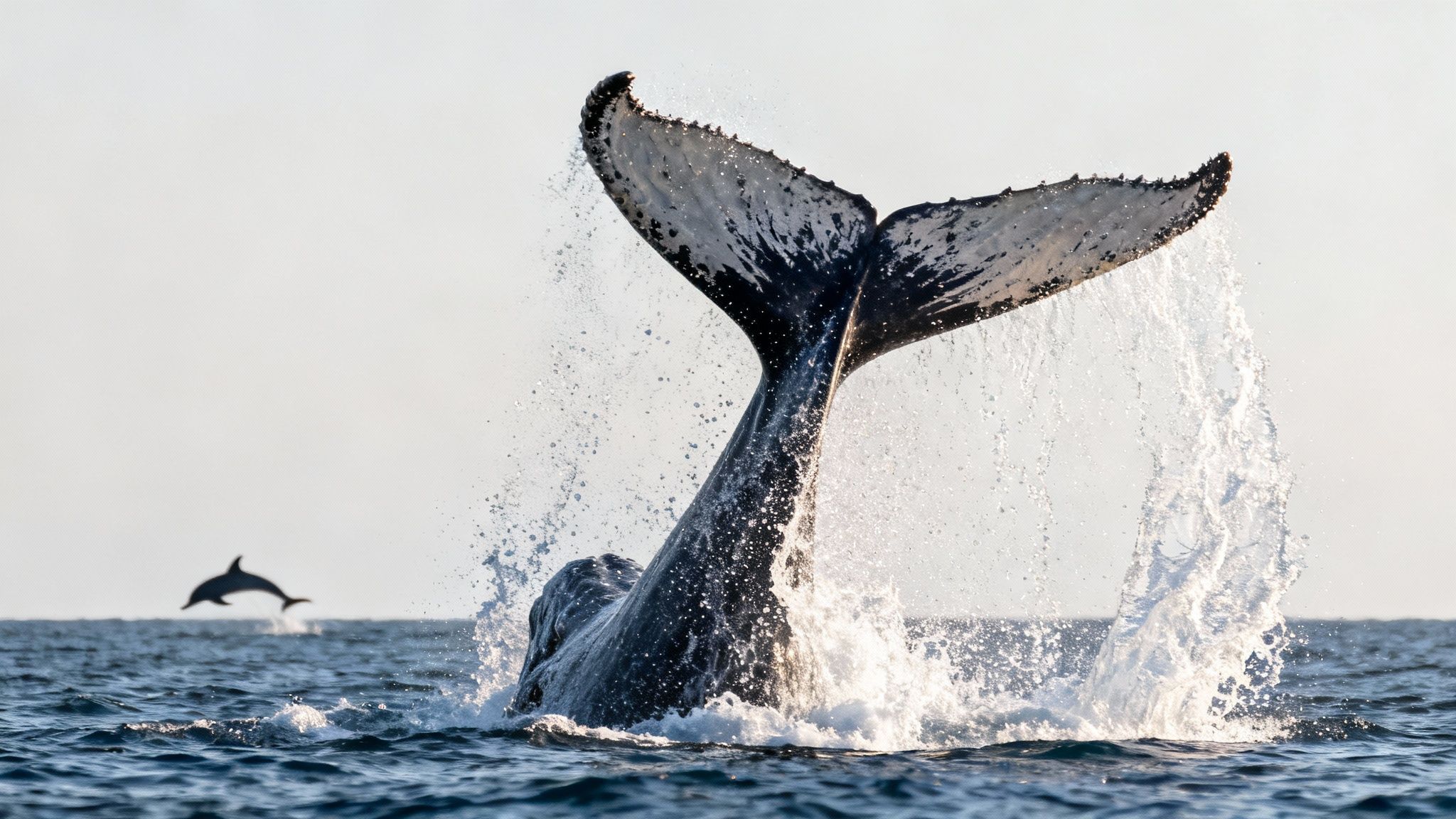
The real magic of a whale watching tour isn't just seeing a whale—it's getting a front-row seat to the incredible story of their lives unfolding right on the ocean's surface. Every splash, leap, and sound tells a story, and once you start to understand what you're seeing, the trip transforms from a simple sighting into a genuine connection with these amazing animals.
These aren't just random movements; they're part of a complex language used for everything from communication and courtship to what honestly just looks like pure, unadulterated joy. Once you know what to look for, the ocean becomes a stage for one of nature’s most dramatic performances.
Decoding The Language Of The Whales
Out on the water, you’ll see some truly spectacular surface action. Each behavior offers a tiny glimpse into the rich social lives of humpback whales. Having an expert guide on board is a game-changer, as they can interpret what you're seeing in real-time, adding a whole new layer of depth to the experience.
Here are a few of the most common—and totally breathtaking—behaviors to keep an eye out for:
-
The Breach: This is it. The iconic, jaw-dropping moment everyone comes hoping to see. A whale uses its powerful tail flukes to launch its entire 40-ton body clean out of the water, crashing down with a thunderous splash you can see and hear from miles away. Scientists have a few theories—it could be a way to talk to distant whales, shake off pesky parasites, or maybe just a way to burn off some serious energy.
-
The Tail Slap (Lobtailing): Get ready for a sound you won't forget. A whale will hoist its massive tail fluke high out of the water and slam it down with incredible force, creating a crack that echoes across the waves. This powerful slap is often a warning signal to other whales or a way to show they're agitated.
-
Pectoral Fin Slap: Humpbacks will often roll onto their side and repeatedly slap one of their long, wing-like pectoral fins against the surface. It's another form of communication, something we see a lot when whales are interacting within a group.
Other Fascinating Behaviors
Beyond the explosive, high-energy displays, humpbacks have other, more subtle moves that are just as fascinating. These actions often show off their curious and incredibly intelligent nature.
A spy-hop, for instance, is one of the most endearing things you can see. A whale will pop its head straight out of the water, almost like a periscope, just to get a good look around. It feels incredibly personal, as if the whale is every bit as curious about you as you are about it.
One of the most intense dramas you might witness is a "competitive pod." This is a full-on chase scene where a group of male whales energetically pursues a single female. It’s a high-speed pursuit filled with aggressive surface behaviors—a raw, powerful display of instinct that really brings home the urgency of their mission in Hawaiian waters.
While the humpbacks are the headliners, the vibrant marine life around the Big Island often provides an amazing supporting cast. It's common for playful pods of spinner dolphins to race alongside the boat, leaping and spinning in the wake. You might also spot graceful sea turtles (honu) surfacing for a breath of air.
Seeing all this diverse marine life is a great sign of a healthy local ecosystem. But this delicate balance is fragile. Humpback whale populations in the North Pacific have had their ups and downs in recent years, with things like ocean warming events affecting how many return to their Hawaiian breeding grounds. Monitoring programs like the Sanctuary Ocean Count provide critical data that helps manage these populations and ensures the multimillion-dollar whale watching economy can continue for years to come.
You can learn more about the research that goes into protecting these majestic animals and their habitat from the Hawaiʻi Department of Land and Natural Resources.
Got Questions About Big Island Whale Watching?
Even the most seasoned traveler has a few questions before heading out on the water. We get it. To make sure you feel totally ready for your adventure, we’ve put together the questions we hear most often from our guests. Think of this as your final checklist, covering everything from what to pack to what to do if you get a little queasy.
What Should I Bring on a Whale Watching Tour?
A little preparation goes a long way in making a great trip absolutely perfect. Even though the Kona sun feels fantastic, it can get surprisingly chilly once the boat gets moving and that ocean breeze kicks in. Dressing in layers is always the smart play.
To really get the most out of your day and stay comfortable, here are a few things we always recommend packing:
- Polarized Sunglasses: Seriously, don't leave these behind. They are a game-changer for cutting the glare on the water's surface, making it so much easier to spot a whale's fluke or dorsal fin just below the waves.
- Reef-Safe Sunscreen: Protecting your skin is key, but so is protecting our fragile coral reefs. Please stick to mineral-based sunscreens (look for zinc oxide or titanium dioxide). They're a huge help to our local marine ecosystem.
- Hat and a Light Jacket: A good hat will keep the sun off your face, and you'll be glad you have that windbreaker or light jacket when we're cruising and the sea spray starts to fly.
- Camera or Smartphone: You’re going to want to capture these moments! Just make sure you have a waterproof case or bag to keep your gear safe and dry.
We always have snacks and drinks on board, but you're more than welcome to bring your own. With these few items, you'll be set for an unforgettable day of whale watching Big Island style.
Is Whale Watching a Good Trip for Kids?
Absolutely! A whale watching tour is one of those experiences that sticks with you, and for kids, it's pure magic. There’s really nothing that compares to the look on a child’s face the first time they see a 40-ton humpback launch its entire body out of the water. It’s a real-world biology lesson that’s way more exciting than any textbook.
Seeing these animals up close can spark a genuine, lifelong passion for the ocean and conservation. At Kona Snorkel Trips, our small-group tours are perfect for families, creating a safe and fun environment for our youngest ocean explorers. Our guides are lifeguard-certified, so parents can kick back and relax, knowing their family is in great hands.
For certain trips, like on our faster zodiac-style boats, we do have age minimums. It's always a good idea to check with us first to make sure we find the perfect, safest fit for your little ones.
What if I’m Prone to Motion Sickness?
Let’s talk about it. The waters off the Kona coast are famous for being incredibly calm—we don't call it "Kona's bathtub" for nothing! That said, if you know you're someone who gets a bit wobbly on the water, a little prep work can make all the difference between a great day and a miserable one.
The secret is to be proactive, not reactive. The best way to keep seasickness from crashing your party is to take steps before you even feel that first hint of queasiness.
Here are a few tried-and-true tips that really work:
- Medication: Over-the-counter options like Dramamine or Bonine can be a lifesaver. For the best effect, take one dose the night before your tour and another the morning you head out.
- Natural Remedies: Lots of folks swear by natural options. Ginger chews, ginger ale, or acupressure wristbands (like Sea-Bands) can work wonders for settling a touchy stomach.
- On-Boat Strategy: Once we're underway, find a spot near the center of the boat where there's less motion. It also helps to keep your eyes fixed on the stable horizon line—this helps your brain and inner ear get on the same page.
With just a little planning, motion sickness won't stand in the way of you enjoying the incredible spectacle of whale watching Big Island.
Are Whale Sightings Guaranteed?
This is a big one, and it’s important to be clear. We’re heading out into the wild, entering the home of these majestic animals. They’re on their own schedule, not ours. Because of that, no one can—or should—ever offer a 100% guarantee that you'll see whales.
However, and this is a big "however," the Big Island is known globally as one of the most reliable places on Earth to see humpbacks. During the peak season from mid-January through late March, the sheer number of whales here is staggering. Your chances of an encounter are incredibly high. Our captains have spent years on these waters, and they have an uncanny sense of where the whales like to hang out, which gives us an extremely high success rate.
And on that very rare day when the whales are playing hard to get? You still get an amazing day on the water. The views of the volcanic coastline are breathtaking, the ocean air is incredible, and we almost always run into other marine life like playful spinner dolphins or sea turtles.
If you have any other questions about how our tours work, feel free to check out our comprehensive FAQ page.