
Whale Watching Big Island: A Guide to Humpbacks
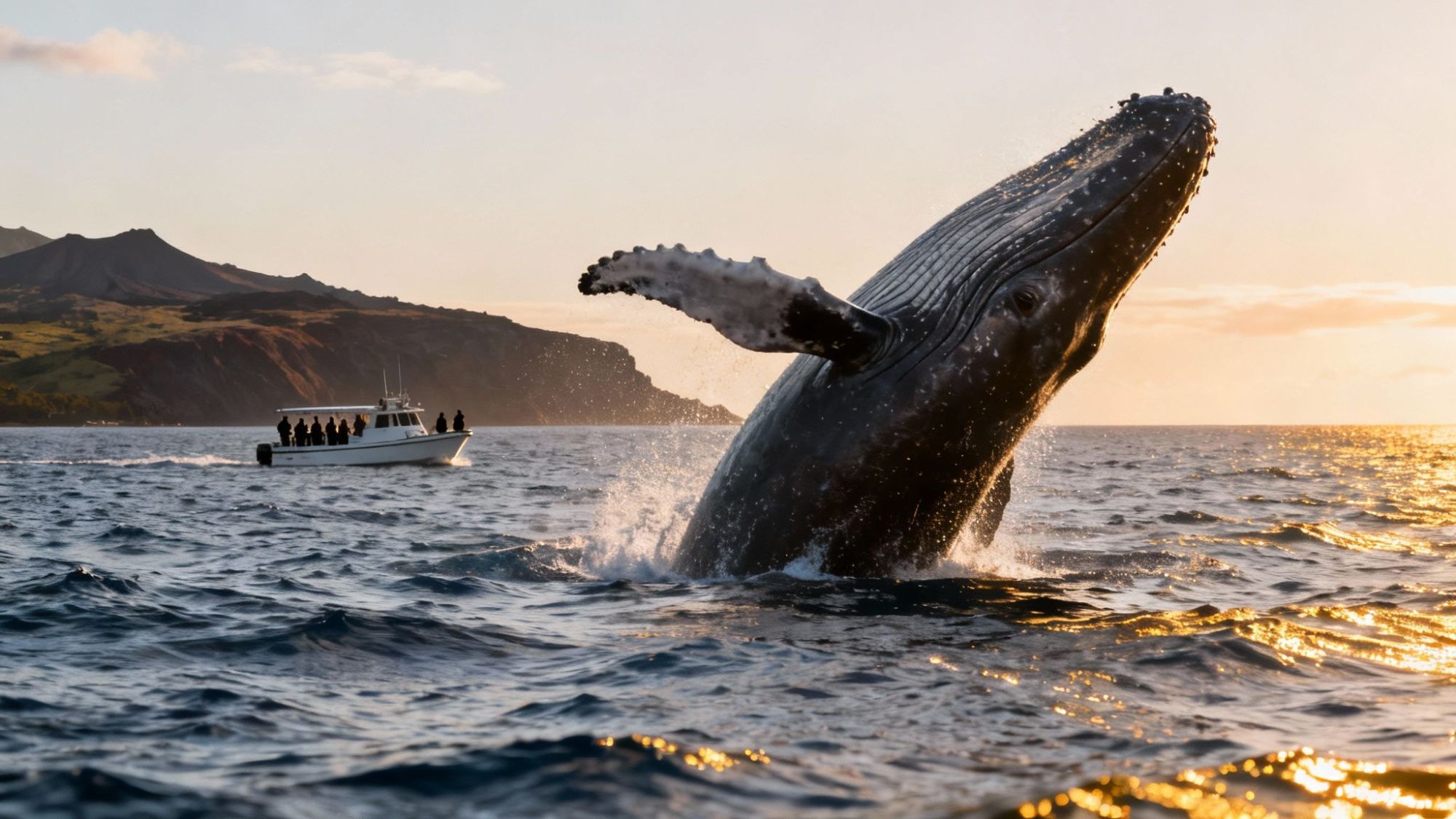
Picture this: the calm surface of the Pacific suddenly shatters as a forty-ton humpback whale explodes into the air. This isn't something you see on a nature documentary; it's a real, raw, and regular sight during whale season on Hawaii's Big Island, which hits its peak from January through March. If you're hoping to witness this incredible spectacle for yourself, you've come to the right place. This is your all-in-one guide to planning that trip of a lifetime.
Why Big Island Whale Watching Is Unforgettable
Every single year, an ancient and awe-inspiring migration happens right off our shores. Thousands of humpback whales travel an incredible 3,000 miles from the icy feeding grounds of Alaska, making their way to the warm, sheltered waters surrounding Hawaii.
Why make such an epic journey? They come here to mate, give birth, and care for their newborn calves. This massive pilgrimage turns the Big Island's coastline into one of the most dynamic and moving wildlife theaters on the entire planet.
To truly get the most out of this natural wonder, going with the right crew makes all the difference. As the top-rated and most reviewed snorkel company in Hawaii, we at Kona Snorkel Trips live and breathe these waters. Our expertise can take a good day on the ocean and make it absolutely unforgettable. Don't just take our word for it; our guests' experiences say it all.
A Front-Row Seat to Nature
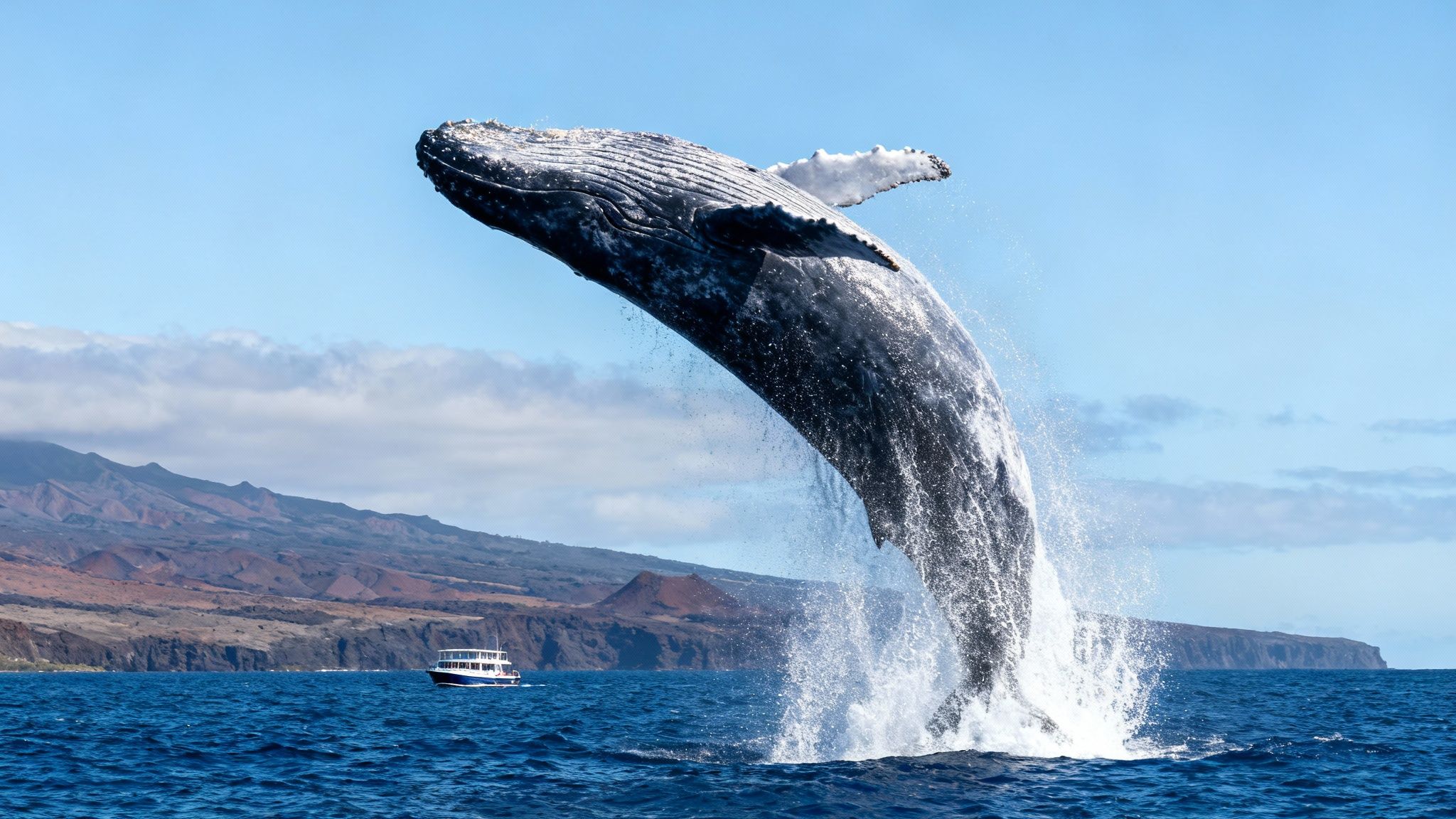
The experience of whale watching Big Island style is so much more than a simple boat ride. It’s a deep dive into the lives of these gentle giants. You aren't just a tourist watching from afar; you become a witness to some of nature's most powerful and tender moments.
- Mating Rituals: You might see massive males in what's called a "competitive pod," putting on incredible displays of power as they compete for a female's attention.
- Nursery Waters: There's nothing quite like watching a mother gently nudging her newborn calf to the surface for its first breath or teaching it the ways of the ocean.
- Breathtaking Behaviors: Get ready for those heart-stopping breaches, powerful tail slaps that echo across the water, and curious "spy-hops" where a whale pops its head up to get a better look at you.
This whole event is a pure testament to instinct and raw endurance. Think about it—these whales don't eat for their entire journey, surviving only on the fat reserves they built up in Alaska. Knowing the full story behind their migration really deepens your appreciation for every single spout you see on the horizon.
To get a better handle on the timing and details, dive into our complete guide to the Big Island whale season.
Pinpointing the Best Time for Your Whale Watching Trip
When it comes to whale watching Big Island style, timing is everything. It's the secret ingredient that turns a good day on the water into a truly unforgettable one.
While you might spot the first trailblazing humpbacks as early as October and see a few stragglers hanging around into May, the real magic happens in a much tighter window. Planning your trip around this peak period is the single best thing you can do to boost your chances of seeing the most spectacular whale behaviors.
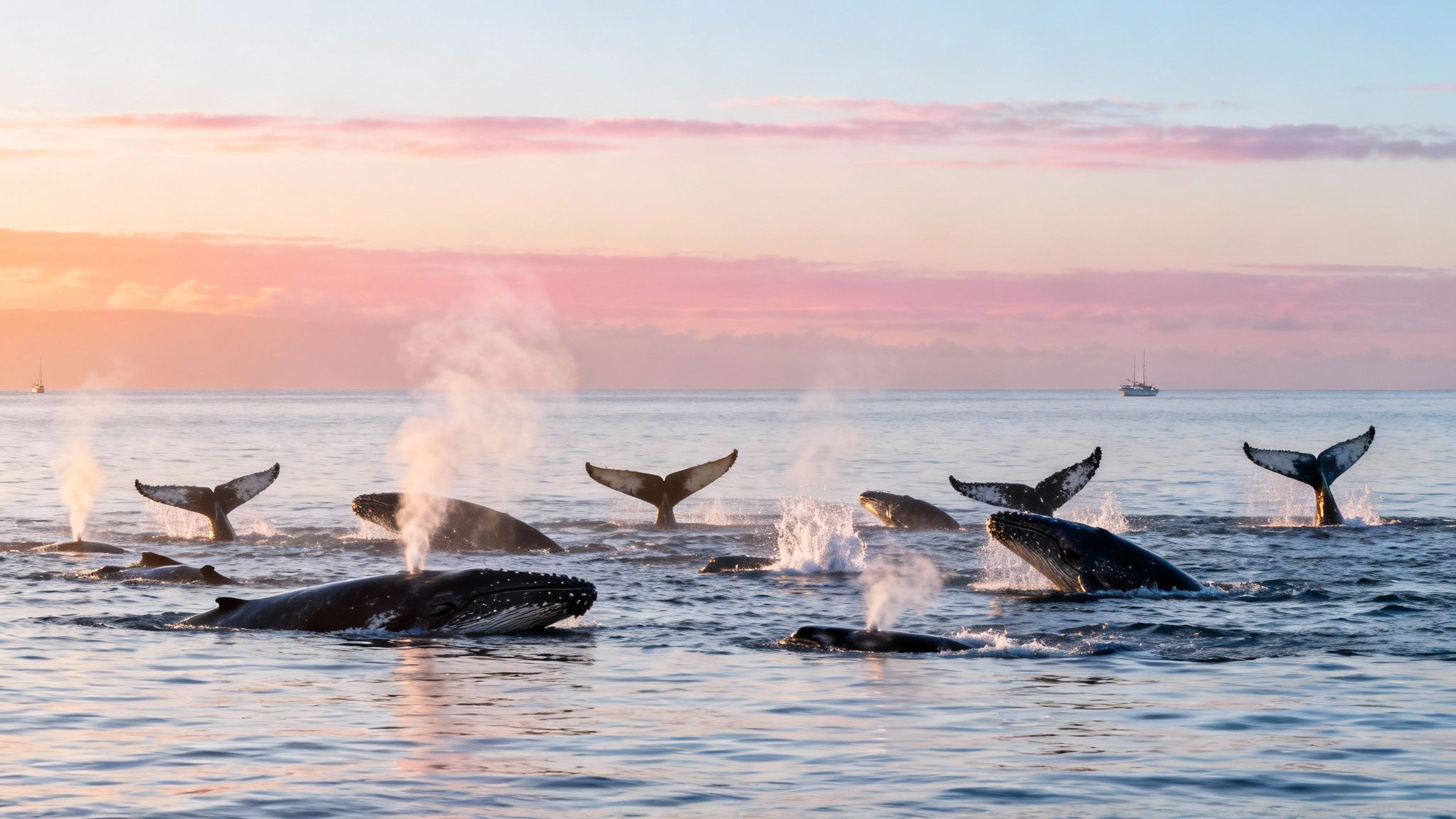
The official season gets going in December, but the activity really explodes from January through March. These three months are when the waters off the Kona and Kohala coasts turn into what we locals lovingly call "whale soup." It’s an incredible sight. The sheer number of humpbacks fills the ocean with an energy you can almost feel.
This peak isn't just a coincidence; it's perfectly timed with the most crucial parts of the whales' lives in Hawaii—birthing and nursing their brand-new calves. This creates a much more active, dynamic environment, giving you a front-row seat to some of nature’s most moving moments.
Maximizing Your Sighting Potential
To really grasp the scale of what's happening, you have to think about the journey that brings them here. Every single winter, an estimated 17,000 humpback whales—that's two-thirds of the entire North Pacific population!—travel over 3,000 miles from the chilly waters of Alaska to our warm Hawaiian shores.
Data from the annual Sanctuary Ocean Counts shows just how concentrated this gathering is. During one recent count, volunteers spotted an incredible 493 whales in a single day, with 183 seen breaching and tail-slapping in just one 15-minute window. That's an average of 3 to 6 whales every 15 minutes, spiking to 15-20 during the busiest moments. You can get even more insights into this incredible whale count on our blog.
The difference between visiting in, say, December versus February is massive. Early in the season, you'll see the first arrivals, but the peak months deliver far more consistent and dramatic action. That’s when you're most likely to see competitive pods of males chasing a female, or a mother patiently teaching her calf how to be a whale.
To help you visualize the season's progression, here's a simple breakdown of what to expect month by month.
Big Island Whale Watching Season At A Glance
| Month | Whale Activity Level | What to Expect |
|---|---|---|
| October – November | Low | The first scouts arrive. Sightings are rare but exciting. |
| December | Moderate | More whales are arriving daily. Good chance of sightings, activity is building. |
| January | High | The season is in full swing. Lots of surface activity and frequent sightings. |
| February | Peak | "Whale soup!" The highest concentration of whales. Prime time for breaches & pods. |
| March | High | Still peak activity, especially with mothers and newborn calves. Great viewing. |
| April | Moderate | The population starts to thin as whales begin their migration back to Alaska. |
| May | Low | A few last-minute lingerers. Sightings become infrequent again. |
This table makes it clear: if you want the absolute best shot at seeing it all, you need to aim for that peak window.
The key takeaway is simple: for the highest probability of seeing spectacular breaches, powerful tail slaps, and tender mother-calf interactions, plan your whale watching trip between mid-January and the end of March.
This period is the heart of the whale season in Hawaii, offering the richest and most reliable viewing opportunities. While any day on the water during whale season is special, timing your visit for the peak transforms a great trip into a once-in-a-lifetime adventure filled with moments that will stick with you forever.
Why the Big Island Is a World-Class Whale Sanctuary
The yearly return of humpback whales to Hawaii is one of nature’s greatest shows, but the whales definitely play favorites when it comes to picking a spot. They don’t just spread out evenly across the islands. The Big Island has earned its stripes as a world-class whale sanctuary, and it all comes down to a perfect storm of geography and ocean conditions that create an ideal hangout for these giants.
It all starts with what’s happening below the surface. The waters just off the Big Island’s western coast, especially around the Kohala Coast, are incredibly deep but also remarkably sheltered. Thanks to the massive volcanoes like Mauna Kea and Hualalai blocking the powerful trade winds, this leeward side is a haven of calm, protected bays. This is exactly what a mother whale is looking for.
A Perfect Marine Nursery
Newborn calves are incredibly fragile. They’re born with very little blubber, so they count on the warm, calm Hawaiian waters to save every bit of energy while they nurse and bulk up for the long trip back to Alaska. The Big Island's sheltered coastline gives them a safe space, away from the harsh realities of the open ocean.
This protected environment is crucial for bonding and learning. It's here that moms can teach their calves the essentials—like how to breathe right and hold their breath—without having to fight strong currents or big waves. It's this mix of warmth, depth, and protection that pulls in thousands of humpbacks year after year.
The numbers tell the story loud and clear. During a recent Ocean Count, volunteers tallied 493 whales from just 30 shoreline spots on the Big Island. That blew Oahu's 399 sightings and Moloka‘i's 87 out of the water, proving just how many whales choose these waters. In one incredible 15-minute window, between 10:00 and 10:15 a.m., an unbelievable 183 whales were spotted breaching and slapping their tails. You can read more about the incredible whale count numbers to really grasp the scale of it all.
More Than Just a Stopover
Those deep waters also serve another critical purpose: communication. The haunting, complex songs of the male humpback whales can travel for miles through these deep underwater channels, which is a vital part of their mating rituals.
The Big Island isn’t just a random stop for the whales; it’s a purpose-built sanctuary. The island's unique underwater landscape and sheltered bays create a safe, calm, and acoustically perfect environment for birthing, nursing, and finding a mate.
This is what makes whale watching Big Island style such an unforgettable experience. You aren't just catching a glimpse of whales passing through. You're dropping into a bustling, active nursery where the ocean is literally alive with the next generation of humpbacks. The sheer concentration of them means your odds of seeing a full range of spectacular behaviors are sky-high, turning any boat trip into a potential once-in-a-lifetime encounter.
Choosing the Right Whale Watching Tour
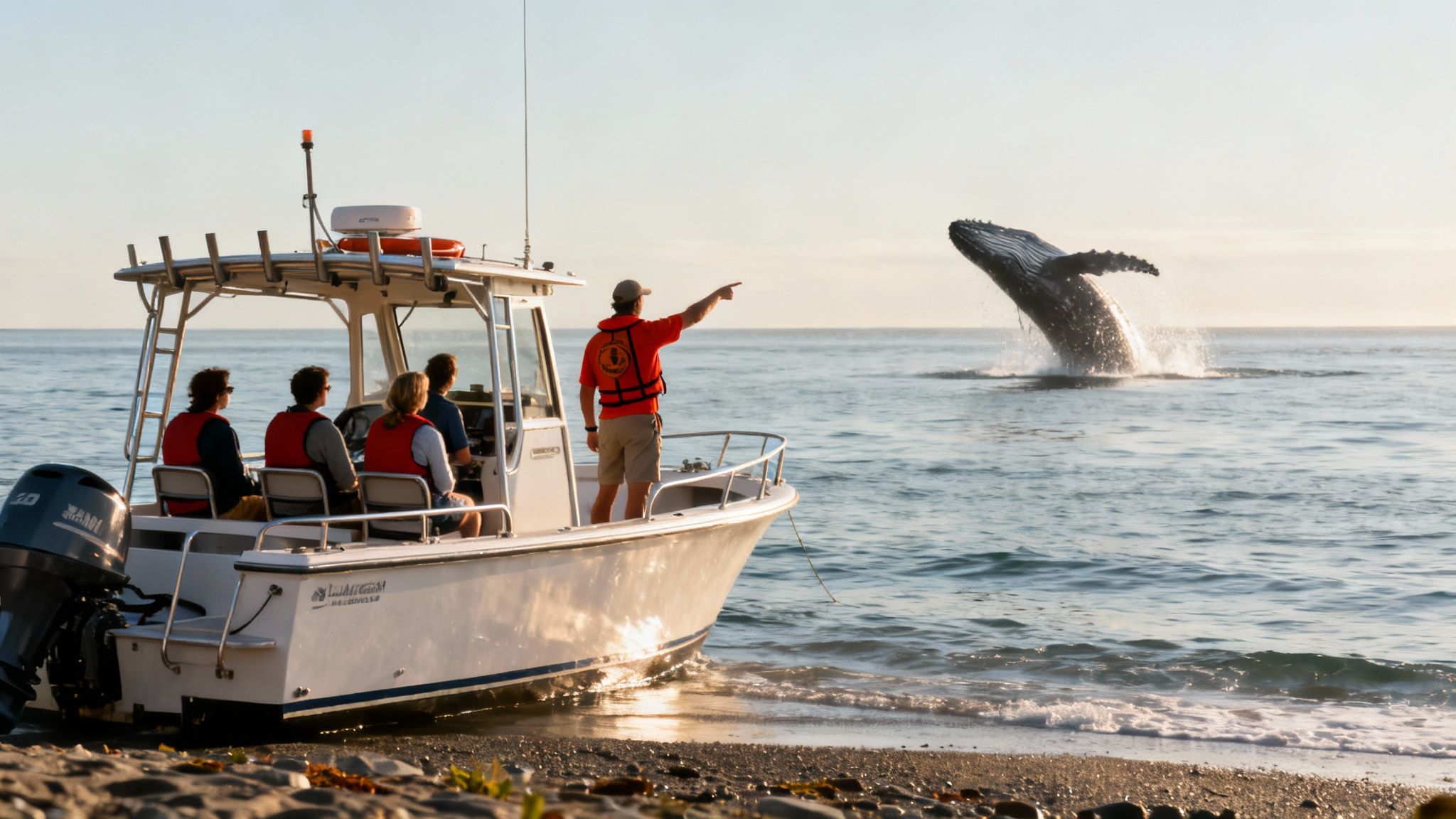
Picking the right tour operator can genuinely make or break your whale watching Big Island adventure. Yes, you can sometimes catch a glimpse of a distant breach from the shoreline, but nothing—and I mean nothing—beats the feeling of being out on the water.
A great tour is so much more than just getting a closer look. It’s about gaining a real appreciation for these incredible animals from people who live and breathe this stuff every day. The best crews are passionate naturalists, not just skilled boat captains. They can read the whale's behavior and add a whole new layer of understanding to every tail slap and spout you witness.
The Small Group Advantage
One of the biggest things to look for is the size of the tour. Big boats can pack a lot of people on board, but smaller, more intimate vessels offer a far better experience, hands down.
- Unobstructed Views: With fewer people, you’re not fighting for a spot at the rail. Everyone gets a front-row seat, which makes all the difference when you're trying to snap that perfect photo or just soak it all in.
- A More Personal Experience: Smaller groups mean you can actually chat with the captain and crew. You can ask all the questions you want and hear their stories, turning the trip into a floating marine biology lesson.
- Less Impact on Whales: This one is huge. Smaller boats mean less noise and disturbance in the water. It’s a crucial part of responsible, eco-conscious travel, ensuring we don't stress out the very animals we've come to admire, especially the moms with their new calves.
Here at Kona Snorkel Trips, we're huge believers in small-group tours. It’s how we ensure you get a real, personal connection to the ocean and its giants, getting you eye-level with the action without the crowds.
Dedicated Tours vs. Combo Trips
You’ll also need to decide between a dedicated whale watching tour or a combo trip. A dedicated tour puts 100% of the focus on finding and observing humpbacks. This is the way to go if you’re a photographer or if your main goal is simply to spend as much time with the whales as possible.
On the other hand, a combo trip packs a couple of adventures into a single outing. Some tours might pair whale watching with a snorkeling stop, which is a fantastic option if you're short on time and want to see more of what the Kona coast has to offer.
The key is figuring out what your priority is for the day. For a deeper look at your options, you can explore our detailed guide on the best whale watching tours in Kona. No matter what you choose, going with a reputable, eco-conscious operator that uses lifeguard-certified guides is your ticket to a safe, respectful, and totally unforgettable adventure.
Decoding Common Humpback Whale Behaviors
Watching a 40-ton humpback whale explode out of the water is a sight you'll never forget. But knowing why they do it? That changes everything. It’s the difference between just seeing a cool animal and actually getting a glimpse into their world.
When you're out on the water, you're not just a spectator; you're watching an unscripted drama unfold. Every leap, splash, and tail slap is part of a conversation, and learning a few of the "words" makes your whale watching Big Island tour infinitely more rewarding.
The Most Thrilling Surface Behaviors
While any whale sighting is a gift, there are a few big, splashy behaviors that are the superstars of any whale watch. These are the ones that get your heart pounding and your camera clicking.
- The Breach: This is the showstopper. A full-body, acrobatic leap clean out of the water. It’s an incredible display of raw power. Scientists have a few theories—it could be a way to communicate over long distances, shake off pesky skin parasites, or maybe, just maybe, it’s a sign of pure joy.
- Tail Slap (Lobtailing): You'll definitely hear this one before you see it. A whale hoists its massive tail fluke high into the air and smacks it down on the surface with a deafening crack that echoes across the water. It's often a warning shot or a way for a male to show he's the boss in a competitive group.
- Pectoral Fin Slap: Humpbacks have those famously long, wing-like pectoral fins. When they roll on their side and start slapping one on the water over and over, it creates another loud report. This is another form of communication, often seen when whales are socializing.
One of the coolest—and most curious—behaviors is the spy-hop. A whale will poke its head straight out of the water, holding its position to get a good look around above the surface. It really feels like they're checking you out, just as curious about our world as we are about theirs.
Learning to spot these behaviors is like getting an insider’s look into the secret lives of humpbacks.
A Guide to Humpback Whale Behaviors
To help you become a pro whale-spotter, here’s a quick guide to some of the common things you'll see out on the water and what they might mean.
| Behavior | Description | Possible Meaning |
|---|---|---|
| Breach | The whale leaps almost completely out of the water, landing with a huge splash. | Communication, parasite removal, play, or a show of fitness. |
| Tail Slap | The whale lifts its tail (fluke) and slaps it forcefully on the water's surface. | A warning signal to other whales or boats, aggression, or communication. |
| Pec Slap | Lying on its side, the whale slaps its long pectoral fin against the water repeatedly. | Communication within a social group, often seen during courtship. |
| Spy-Hop | The whale rises vertically, poking its head out of the water to look around. | Pure curiosity! They're observing their above-water surroundings. |
| Peduncle Throw | A very aggressive move where the whale throws the back half of its body out of the water. | A strong display of dominance, often seen in competitive male groups. |
| Blow | The visible spray of water and air when the whale exhales at the surface. | Simply breathing. The shape of the blow can help identify the species. |
Remember, these are wild animals, and we're just scratching the surface of understanding their complex lives. But knowing these basics will make every moment you spend with them even more magical. Your guide will be your translator, pointing out the subtle interactions and unfolding stories, turning your trip into an experience you won't just see, but truly understand.
Practicing Responsible Whale Watching
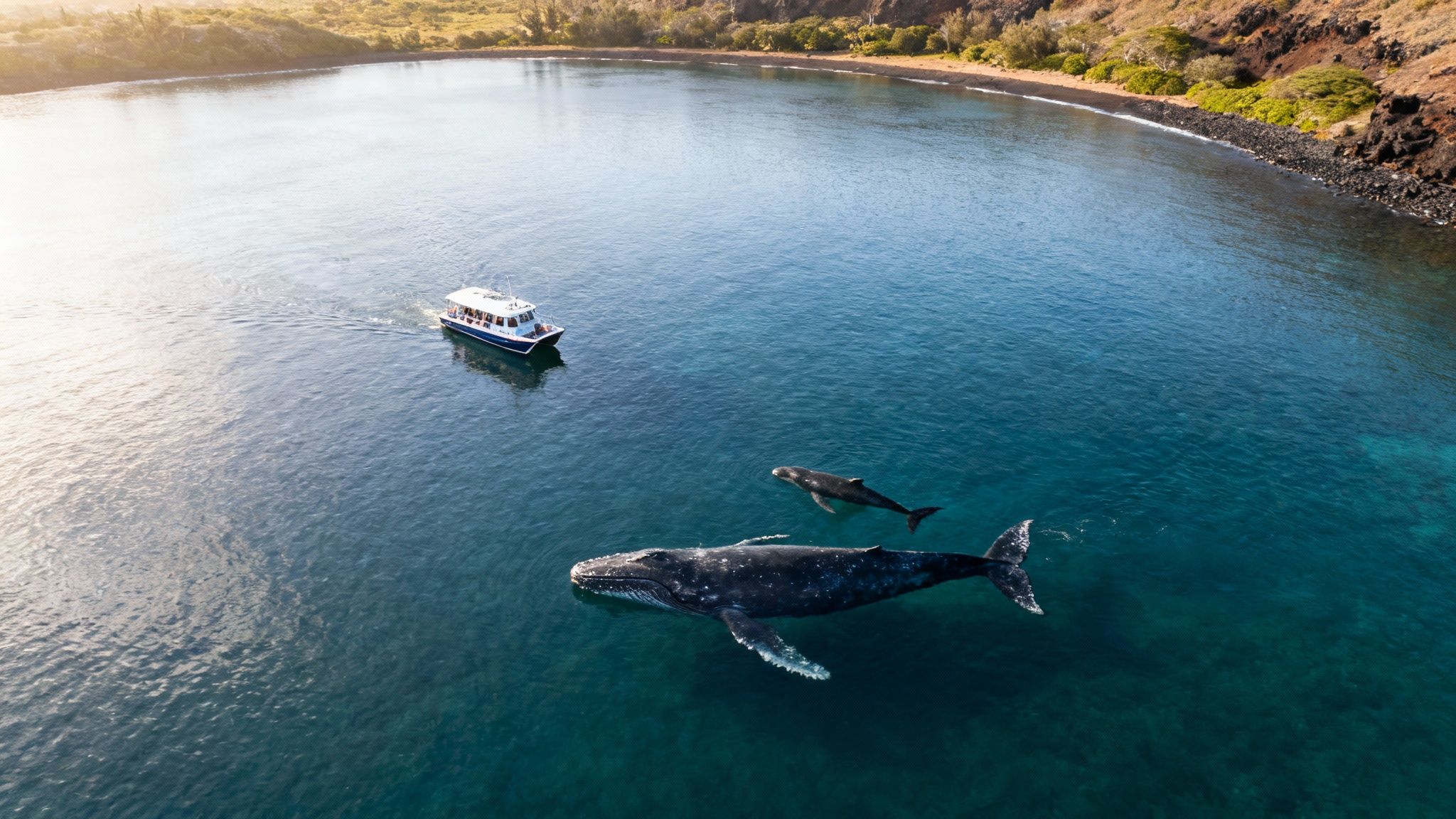
Seeing a forty-ton humpback whale surface right before your eyes is one of those moments that just sticks with you. It’s an absolute privilege. But with that incredible experience comes a real responsibility to protect these gentle giants. They’ve traveled thousands of miles to get here, seeking out Hawaii’s calm, sheltered waters to mate and raise their newborn calves.
Think about it: a new mother is fiercely protective of her vulnerable calf. Our presence can be a huge source of stress, interrupting critical moments like nursing, resting, and bonding. It’s our job to be respectful guests in their home.
Following Federal Guidelines
To make sure the whales are safe, there are strict federal regulations in place. The single most important rule is that every single vessel—from big tour boats down to the smallest kayak or paddleboard—must maintain a minimum distance of 100 yards from humpback whales.
This isn't just an arbitrary number; it creates a vital buffer zone, a personal space that allows the whales to go about their lives without feeling cornered or threatened. Honoring this space is the cornerstone of ethical whale watching on the Big Island. A truly responsible tour operator doesn't just know this law, they live by the spirit of it.
When you choose a professional operator like Kona Snorkel Trips, you're going out with a crew that's 100% committed to the whales' well-being. They're masters at positioning the boat for unbelievable views without ever crossing that critical 100-yard line.
The Importance of Conservation
The Hawaiian Islands Humpback Whale National Marine Sanctuary is a huge player in protecting these animals and their habitat. Since it was established back in the 1990s, the sanctuary’s work has been essential in helping the humpback population bounce back from the brink of extinction caused by commercial whaling.
Those conservation wins are a big reason why whale watching in Hawaii is so spectacular today. Thanks to these protections, humpback numbers have soared, making Hawaii a global benchmark for responsible marine tourism. In fact, somewhere between 60-70% of all North Pacific humpbacks make their way to these islands each year. Discover more about the successful conservation efforts behind the expanding whale season.
By selecting a tour operator that prioritizes education and adheres to federal guidelines, you become an active participant in conservation. Your choice directly supports sustainable practices that ensure these magnificent migrations continue for generations to come.
Your Big Island Whale Watching Questions, Answered
Alright, let's tackle those last-minute questions you probably have floating around. Think of this as our final chat before you head out on the water, making sure you're totally ready for an incredible day.
What Should I Wear and Bring on a Tour?
Layering your clothes is always the smartest move. It might feel warm on land, but once you're on the ocean, that breeze can have a real chill to it.
I'd strongly suggest bringing a light waterproof jacket, polarized sunglasses (they're a game-changer for cutting the glare on the water), a hat, and some reef-safe sunscreen. And obviously, your camera! Most good tours will have water and snacks, but it never hurts to double-check when you book.
What Is the Best Time of Day to See Whales?
Honestly, the whales are active all day long, so there's really no "bad" time to go. That said, most of us who spend a lot of time on the water have a soft spot for the morning tours.
The ocean is usually much calmer early in the day. That means a smoother ride for you and, often, that glassy surface makes it way easier to spot a distant spout from miles away.
Are Whale Sightings Guaranteed?
This is the big one, isn't it? Since these are wild animals doing their own thing, no one can ever promise a sighting with 100% certainty. But, and this is a big but, your odds are fantastic during the peak season.
From January through March, you're looking at an extremely high chance of seeing whales—often over 95%. The guides on reputable tours live and breathe this stuff; they know the whales' favorite hangouts and will put you in the best possible position for a memorable encounter.
It's all about managing expectations. You might not see a full breach every single time, but just being out there on the water, feeling the anticipation of the search… that's part of the magic.
Can I See Whales From the Shore?
You absolutely can! The Big Island has some stellar spots for shore-based viewing, especially along the Kohala Coast. Your best bet is to find a little elevation.
Lookouts along the Queen Ka'ahumanu Highway or spots like Puʻukoholā Heiau National Historic Site can give you a great vantage point to scan the horizon for spouts and breaches. But for that jaw-dropping, up-close perspective, nothing beats getting out on a boat. A tour just brings you into their world in a way you can't experience from land.