
Your Ultimate Guide to whale watching big island
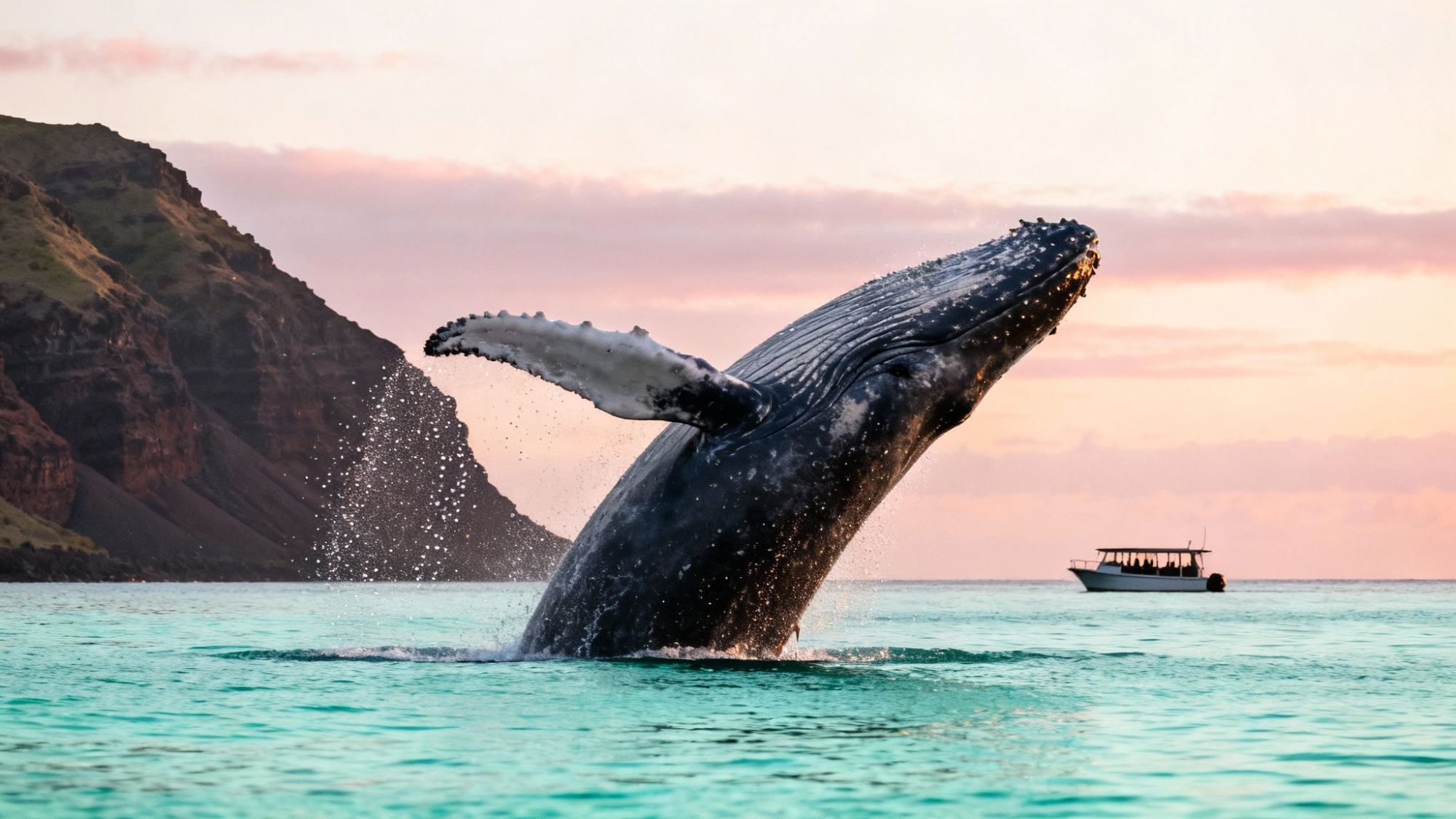
Picture this: the calm ocean surface suddenly shatters as a forty-ton humpback whale throws itself completely out of the water. This is the pure magic of whale watching on the Big Island, an absolutely unforgettable experience you can have from December through March. This guide is here to cut through the noise and give you real, practical advice on seeing these gentle giants up close.
Your Guide to Big Island Whale Watching
Think of this as your complete playbook for an incredible whale watching adventure on Hawai‘i’s Big Island. We'll dive into why these warm, sheltered waters are such a vital sanctuary for thousands of migrating humpback whales, making our island a world-class destination to see them. Knowing a bit about their journey transforms a simple boat trip into a real connection with one of nature’s most epic migrations.
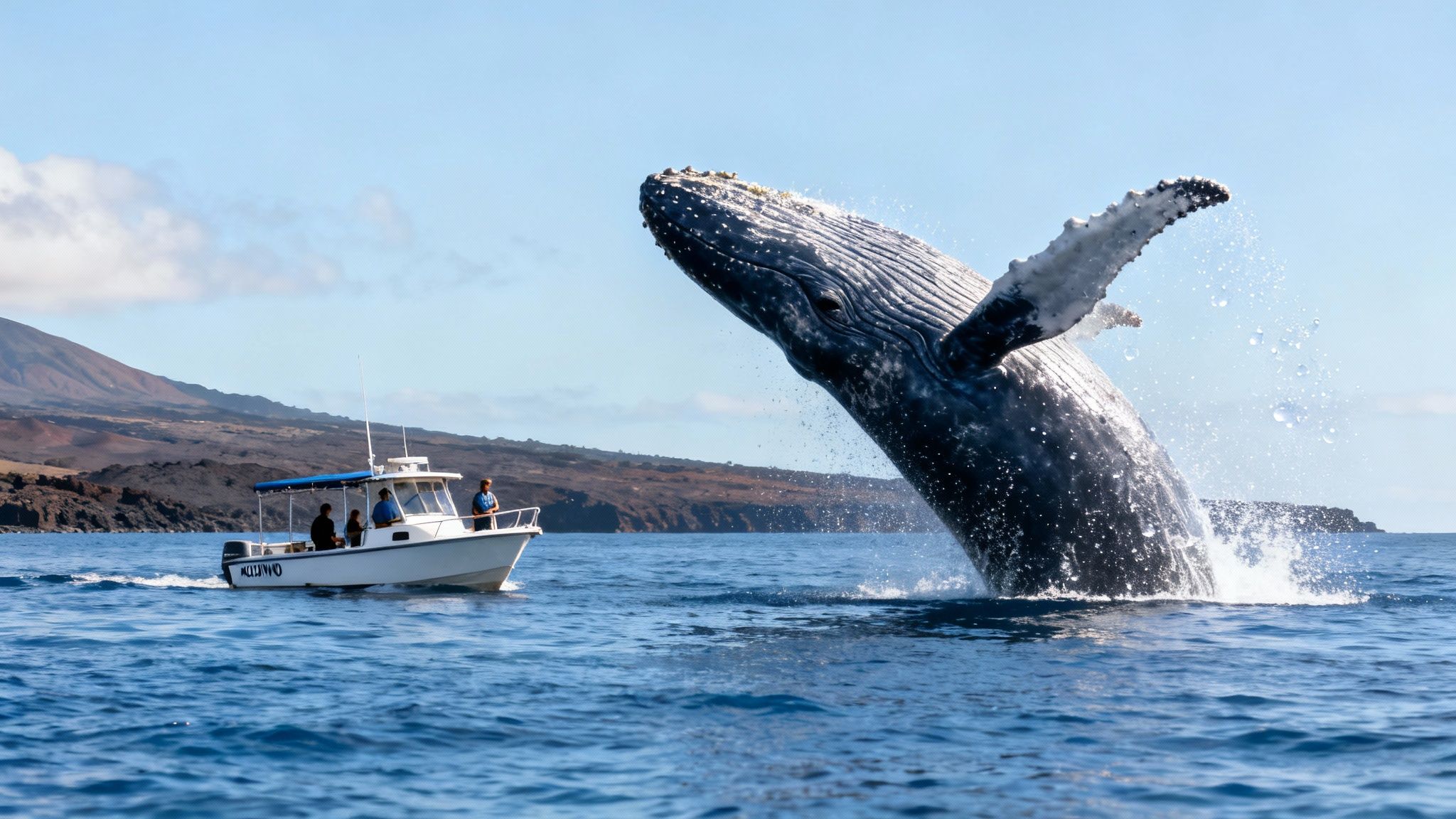
To make sure you have the best possible time, we'll introduce you to Kona Snorkel Trips, known for being the top rated & most reviewed snorkel company in Hawaii. Their whole approach is built around small-group tours and respectful wildlife viewing, which guarantees a memorable—and ethical—adventure. Don't just take our word for it; you can see what fellow adventurers are saying with real-time reviews right here.
What This Guide Covers
We designed this article to be your go-to resource, covering everything you need to plan the perfect trip. We're packing it with actionable tips and insider knowledge to give you the best shot at witnessing some truly spectacular whale behaviors.
Here’s a sneak peek at what you'll learn:
- The Epic Journey: Find out why thousands of humpbacks travel a staggering 3,000 miles to our Hawaiian waters every single year.
- Perfect Timing: We’ll help you pinpoint the absolute best months, weeks, and even the right time of day for sightings.
- Prime Locations: Discover the top spots for whale watching on the Big Island, whether you're on the shore or out on the water.
- Choosing Your Tour: Learn what to look for when selecting a tour that's safe, responsible, and will leave you with amazing memories.
Our goal is simple: to give you all the info you need to create lifelong memories while seeing one of the planet's most awe-inspiring natural events. Let’s dive in.
The Epic Journey of Humpback Whales to Hawaii
Ever wonder why thousands of humpback whales travel 3,000 miles to the Big Island every year? It’s not just for a Hawaiian vacation; it’s one of the most incredible migrations on the planet. Every single whale you see has completed a marathon swim from the frigid feeding grounds of Alaska, all the way to Hawaii's warm, protective bays.
This epic journey is driven by an ancient, powerful instinct.
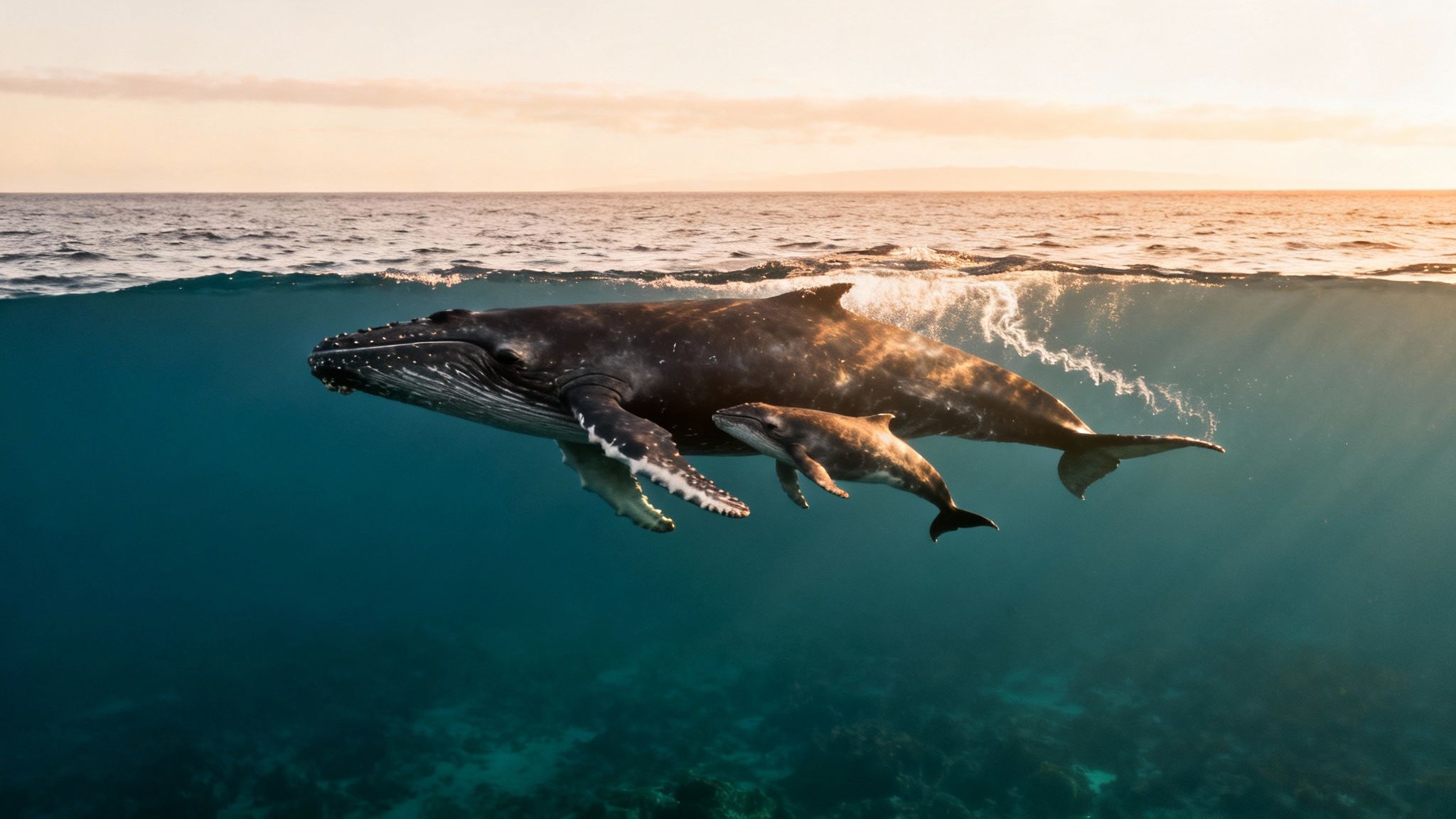
Try to imagine traveling for months without a single meal. That's the reality for these giants. They survive the entire trip by living off the fat reserves they meticulously built up during the summer. This incredible feat of endurance has one singular purpose: to reach the calm, safe waters of Hawaii.
A Tropical Nursery for a New Generation
Hawaii’s shallow coastal waters, especially around the Big Island, are the perfect sanctuary for the most critical stages of a humpback's life. These waters are a haven where they can give birth, nurse their young, and mate without the constant threat from their primary predators, like orcas.
The warm ocean is absolutely vital for newborn calves. Born with very little body fat, they simply can't survive the cold Alaskan temperatures. Hawaii’s gentle waters act as a natural incubator, giving them a safe place to nurse and build the strength they'll need for their first-ever migration north.
Understanding their purpose transforms your whale watching Big Island experience. It’s no longer just a simple sighting—it becomes a profound connection with their life cycle. Every breach and tail slap you witness is part of this remarkable story of survival.
The Scale of the Migration
The sheer number of whales making this annual pilgrimage is astounding. While the first arrivals can be spotted as early as October, the population truly swells to its peak during the winter months. An early sighting off the Puako coast kicked off a season where over 12,000 humpbacks—more than half the entire North Pacific population—journeyed to Hawaii.
This makes our waters a critical wintering ground for a species that has made a remarkable comeback since the dark days of whaling. You can read more about this year's first whale sighting and their amazing recovery.
This annual event is a testament to instinct and resilience. When you're out on the water, you're not just watching whales; you're witnessing the culmination of a long, instinctual voyage that ensures the survival of the next generation. It’s a powerful reminder of the intricate cycles of the natural world unfolding right before your eyes.
Finding the Best Time to See Whales
Timing is everything if you want to make your whale watching Big Island adventure truly unforgettable. While whales technically hang around our waters from November through May, the real action—the stuff you see in documentaries—is packed into a much smaller window.
Let's cut to the chase: the absolute best time to see humpback whales is during the peak months of January, February, and March. This is when the highest concentration of whales gathers around the Big Island. We're not talking about a small uptick; it's a massive influx of mothers with their newborn calves, and bachelor males looking to impress. That means more frequent sightings and far more dynamic behavior for you to witness.
Why Peak Season Matters Most
Booking your tour during these prime months is your ticket to seeing the iconic moments that make whale watching so special. You'll have the best possible odds of watching a forty-ton adult launch its entire body out of the water in a jaw-dropping breach or feeling the power of a massive tail slap.
It's also the best time to catch those quiet, tender moments between a mother and her calf as she teaches it to swim and breathe. The sheer number of whales during this period creates a vibrant, active environment that you just don't get in the shoulder months. For a deeper look at the seasonal comings and goings of our favorite visitors, check out our complete guide to the Big Island whale season.
The Best Time of Day for Your Tour
Beyond just picking the right month, thinking about the time of day can make a big difference, too. If you ask any seasoned boat captain, they’ll almost always tell you that morning tours are the way to go. There are a couple of great reasons for this:
- Calmer Seas: The waters off the Kona coast are typically like glass in the morning before the afternoon winds start to kick up. This means a smoother, more comfortable ride for you and makes it much easier to spot a spout or a fin breaking the surface in the distance.
- More Action: Whales often seem to be more active near the surface in the morning hours, showing off social behaviors that are just incredible to watch.
To help you get the timing just right for your trip, we've put together a quick look at what you can expect throughout the whale watching season.
Big Island Whale Watching Season at a Glance
This table gives you a simple, month-by-month breakdown of what to expect, helping you plan for the best possible experience.
| Month | Whale Activity Level | Typical Sightings |
|---|---|---|
| November-December | Low to Moderate | The first arrivals appear. Sightings are possible but less frequent. |
| January-March | Peak | The highest concentration of whales. Frequent sightings of breaches, spy-hops, and mother-calf pairs. |
| April-May | Moderate to Low | Whales begin their long migration back to Alaska. Sightings become less common. |
As you can see, aiming for that January through March window gives you the highest probability of seeing the full range of humpback whale behaviors that make a trip out on the water so magical.
Top Spots for Whale Watching on the Big Island
Knowing where to look is every bit as important as knowing when to go for a truly spectacular whale watching Big Island experience. While you might get lucky and spot whales all along the west side of the island, one area reigns supreme: the Kohala Coast.
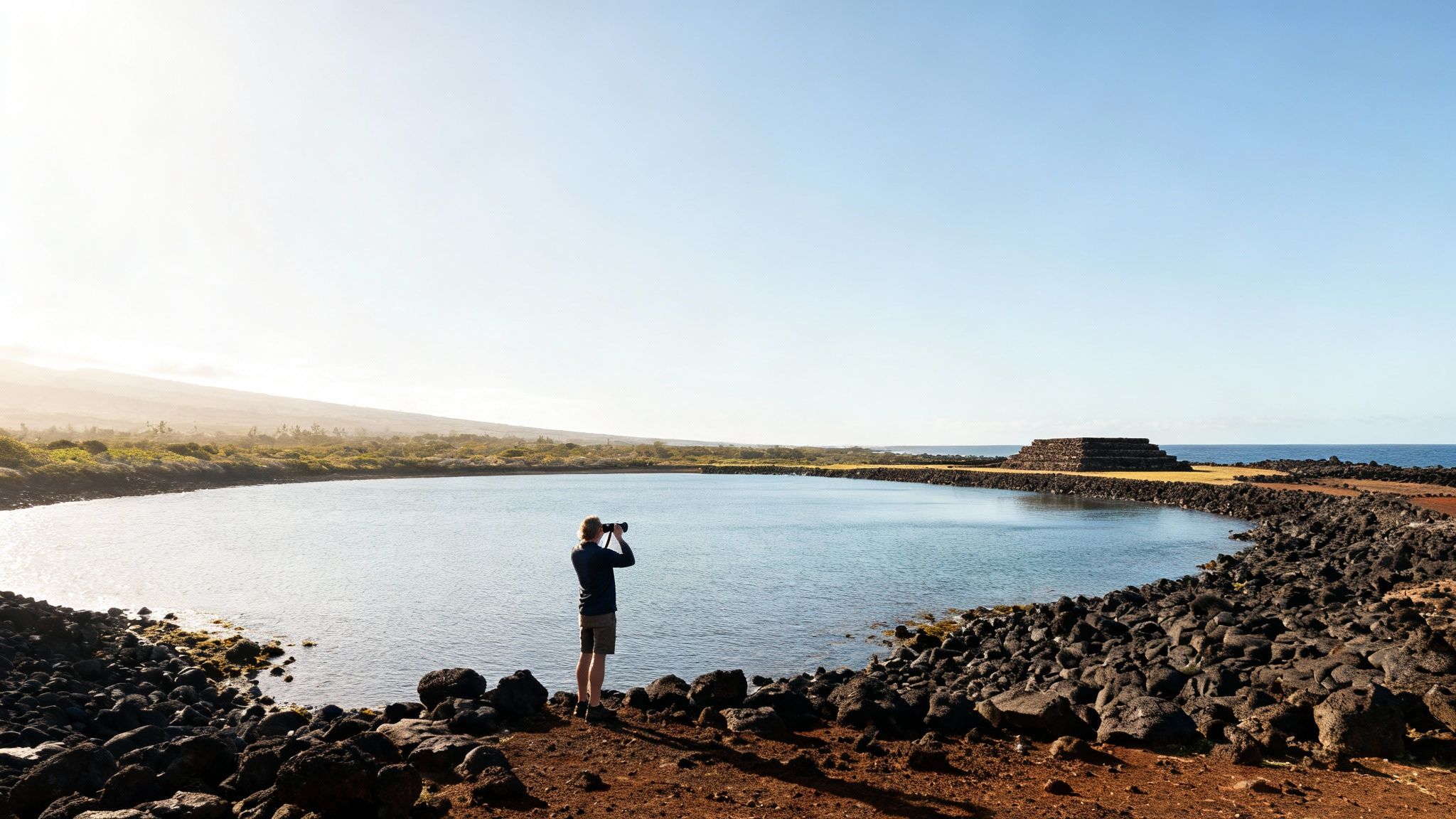
Think of the calm, shallow, and protected waters off North Kona and Kohala as a natural magnet for humpback whales. These conditions are particularly irresistible for new mothers and their calves, who use these sheltered bays as a safe nursery, far from the dangers of the deep, open ocean.
Premier Land-Based Viewing Locations
If you'd rather keep your feet on solid ground, the Big Island serves up some phenomenal shoreline viewing opportunities. The trick is to find an elevated spot that gives you a wide, sweeping view of the ocean.
Your best bets are all located along the Kohala Coast:
- Puʻukoholā Heiau National Historic Site: The name of this sacred site literally translates to "hill of the whale," a title it more than lives up to. Its high ground offers panoramic views, making it perfect for spotting those distant spouts and breaches.
- Lapakahi State Historical Park: This park is another fantastic choice, with an excellent, elevated perch looking out over the water. It’s a great place to post up for a morning and scan the horizon.
- Kapaʻa Beach Park: Just a stone's throw from Lapakahi, this park has the added perk of shaded pavilions. You can comfortably watch for whales even when the Hawaiian sun is high in the sky.
Picture yourself standing on the rugged coast with a pair of binoculars as the sun comes up—that's prime time. Long-term data from the Sanctuary Ocean Count shows that whale sightings at 8:00 AM are roughly 50% higher than just a few hours later at noon. The Kohala Coast consistently logs two to three times more sightings than anywhere else on the island.
The Unmatched Advantage of a Boat Tour
Watching from shore is an amazing experience, but it just can’t compare to the perspective you get from a boat tour. A trip leaving from Kona gets you direct, responsible access to the action in those thriving whale zones that you can only see from a distance on land. For a deeper dive into what a tour is like, check out our guide to whale watching in Kailua-Kona.
Getting out on the water transforms the experience. You go from watching tiny specks on the horizon to truly feeling the immense presence of these 40-ton giants. It’s the difference between seeing the show from the nosebleeds and having a front-row seat.
An experienced crew knows exactly where to go to find the most active whales. This gives you an incredible, eye-level view of their behaviors. While always respecting the federally mandated 100-yard distance, this proximity allows you to appreciate their sheer scale and power in a way that’s simply impossible from the shore.
How to Choose the Right Whale Watching Tour
Let's be honest, not all whale watching tours are created equal. Picking the right one can be the difference between a crowded, impersonal boat ride and a truly mind-blowing encounter you'll talk about for years. Your whale watching Big Island adventure should be safe, ethical, and give you a genuine connection to these magnificent animals.
The single biggest factor? Group size. Large, packed boats can mean you're jockeying for position just to get a glimpse. In contrast, a small-group tour completely changes the dynamic. It’s an intimate, meaningful experience where you get an unobstructed, eye-level view of the action and have a real conversation with your guides.
Key Factors for Vetting a Tour Company
When you start looking at your options, it's so important to look past the price tag and really dig into what kind of experience they offer. A top-notch operator cares just as much about your experience as they do about the well-being of the whales.
Here are the critical things to check for:
- Boat Size and Group Capacity: Does the company focus on small-group tours? Fewer people on board means a better view for everyone and a quieter, less disruptive presence on the water.
- Guide Expertise: You want guides who are certified naturalists, not just boat drivers. A great guide does more than point out whales—they explain what you're seeing, answer your questions, and share incredible insights that bring the whole experience to life. Bonus points if the crew is also lifeguard-certified, because safety should always come first.
- Commitment to Ethical Practices: A reputable company will be upfront about how they conduct responsible viewing. This is non-negotiable. We're here to see these amazing creatures, and protecting them has to be the top priority.
Understanding Ethical and Legal Boundaries
Federal law is crystal clear: all boats must stay at least 100 yards away from humpback whales. This rule is crucial for protecting mothers and their calves, who have traveled thousands of miles to find a safe haven here in Hawaiian waters.
A top-tier operator doesn't just follow this rule—they live by it. It’s a core part of their philosophy. They are experts at navigating these regulations to give you a breathtaking view without ever disturbing the whales' natural behavior.
Funny enough, the most magical moments often happen when a curious whale decides to check you out. An ethical crew knows to cut the engines and just let the encounter unfold naturally, on the whale's terms.
Choosing your tour is a big decision, and it helps to think about what makes for a truly authentic experience. For a broader perspective, it's worth reading a guide to authentic island excursions in other popular destinations. The same principles apply here—focus on quality, ethics, and a real connection to the place you're visiting.
By taking a little time to research these points, you can feel confident you’re choosing a tour that’s safe, responsible, and will leave you with memories that last a lifetime. For a deep dive into what sets the best tours apart, check out our breakdown of the top whale watching tours in Kona, Hawaii.
Decoding Whale Behaviors and What to Expect on Tour
Watching a 40-ton humpback whale rocket out of the ocean is a moment you'll never forget. But knowing why it's happening adds a whole different level to your whale watching adventure. Every splash, slap, and spout you see is a form of communication or serves a specific purpose, and understanding these behaviors turns your tour from a simple sightseeing trip into a front-row seat to their complex world.
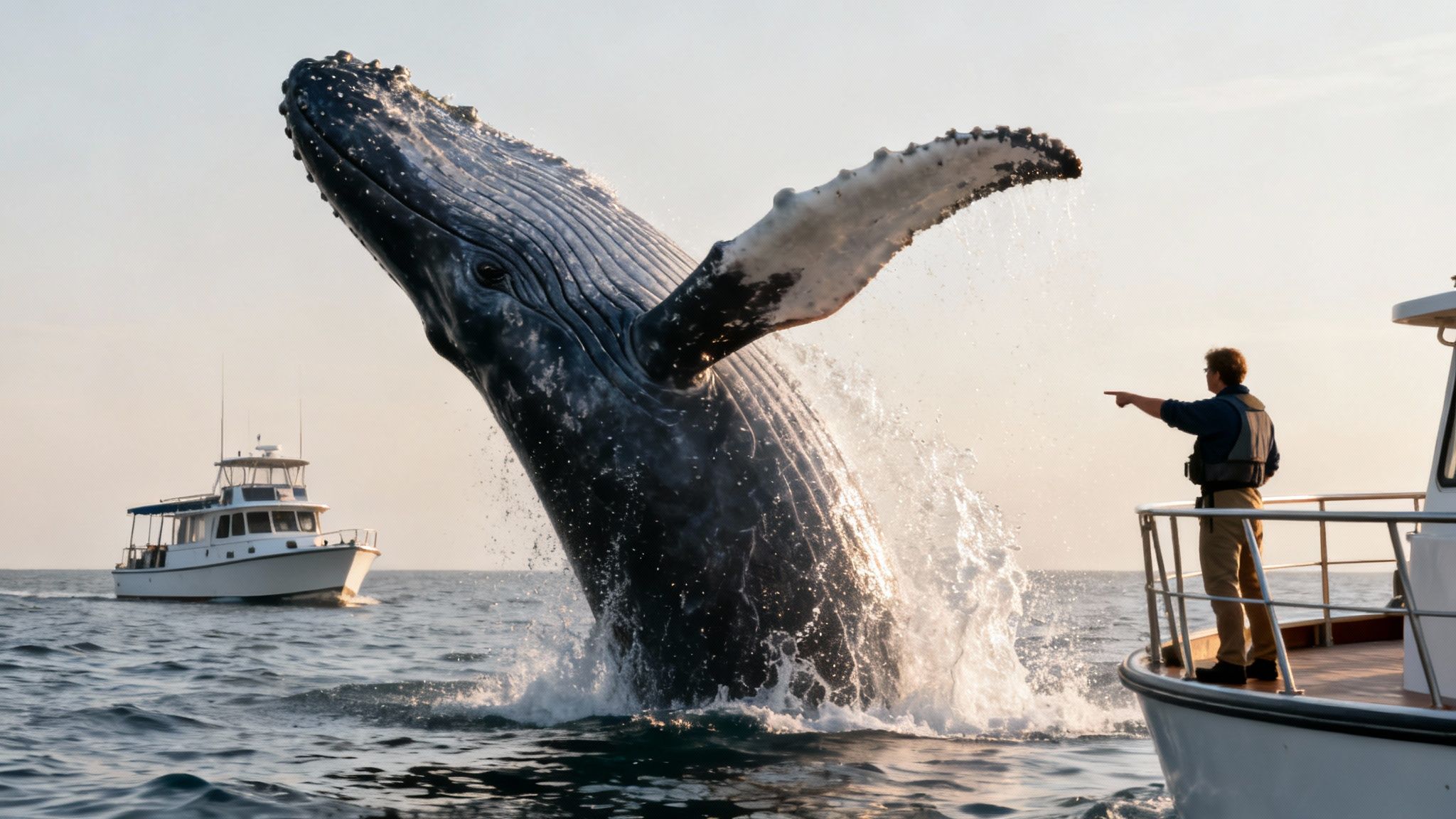
This is where having a certified naturalist guide on board makes all the difference. They’re your interpreters, unlocking the mysteries of whale behavior in real time and explaining the subtle difference between a warning signal and a playful show. It's this expert insight that transforms a simple boat ride into a deep dive into the lives of these gentle giants.
Common Whale Behaviors You Might See
As you scan the horizon, keep your eyes peeled for these common—and absolutely spectacular—displays. Each one tells its own story about what's going on just beneath the waves.
- Breach: The main event! This is that iconic, full-body leap straight out of the water. Scientists have a few theories: it could be a way to communicate over long distances, shake off pesky skin parasites, or maybe, it's just pure, unadulterated joy.
- Tail Slap: You'll hear this one before you see it. A powerful, loud slap of the fluke (the whale's tail) on the water's surface often serves as a warning or a way to get the attention of other whales nearby.
- Pectoral Fin Slap: A whale rolls onto its side and repeatedly slaps one of its long pectoral fins against the water. Think of it as another form of communication, something you'll often see when different groups of whales are socializing.
- Spy-Hop: This might be the most charming behavior of all. A spy-hop is when a whale pokes its head vertically out of the water, seemingly to get a good look around. It really feels like they're just as curious about us as we are about them.
If your boat has a hydrophone, you’re in for a treat. Hearing the haunting, complex song of a male humpback is an experience that will give you chills. These underwater melodies can travel for miles, a powerful reminder of the unseen world just below your feet.
Preparing for Your Day on the Water
A little bit of prep work can make a huge difference in how much you enjoy your tour. Remember, conditions on the open ocean can be a world away from what you feel on land, so it pays to be ready.
Think in layers. Even on a perfectly sunny Hawaiian day, the breeze on the water can get chilly, so a light jacket or windbreaker is a must. And polarized sunglasses are absolutely non-negotiable—they cut the glare bouncing off the water, making it so much easier to spot that first spout.
Don't leave the dock without these essentials:
- Reef-safe sunscreen to protect both your skin and our fragile ocean ecosystem.
- A good hat and comfortable, non-slip shoes.
- A camera to capture those incredible moments, but don't forget to put it down once in a while and just soak it all in.
When you show up prepared, you can fully lose yourself in one of the planet's greatest wildlife encounters, ready for whatever the whales decide to show you.
Your Whale Watching Questions Answered
To make sure you feel totally ready for your whale watching adventure, we've put together answers to some of the questions we hear the most. Think of this as your quick-start guide to clear up any last-minute details before you head out on the water.
What Is the Best Time of Day for a Tour?
We pretty much always recommend a morning tour. The seas off the Kona coast are usually glassy and calm before the afternoon winds start to kick up, making for a much smoother ride. Whales also seem to be more active near the surface during these hours, which means a better chance of seeing those spectacular breaches and tail slaps.
Is a Whale Sighting Guaranteed?
When you’re dealing with wild animals, nothing is ever 100% guaranteed, but let me tell you, your chances are incredibly high during peak season. Reputable tour boats have a huge success rate from January through March. The waters here are just teeming with life. In fact, a recent climactic survey spotted 28 humpbacks from just eight shoreline sites across the Big Island, and that was just a fraction of a massive statewide count. You can discover more insights from the Great Whale Count to get a real sense of just how many whales are hanging out here.
How Close Can the Boats Get to Whales?
Federal law is crystal clear on this: all boats have to stay at least 100 yards away from humpback whales. This rule is super important for protecting these incredible animals, especially the new moms with their baby calves.
That said, humpback whales haven't read the rulebook. They are naturally curious, and it’s not unusual for them to decide to check out a stationary boat on their own. Those moments—when a whale approaches you—are absolutely unforgettable, and they happen completely on their terms.
Going with an experienced crew is key. They know how to respect the regulations while still getting you into the best possible position to watch these gentle giants in their natural home.
Ready for an unforgettable adventure on the water? Join Kona Snorkel Trips for a small-group whale watching tour that will leave you with lifelong memories.