
Whale Watching Big Island: Your Ultimate Guide to whale watching big island
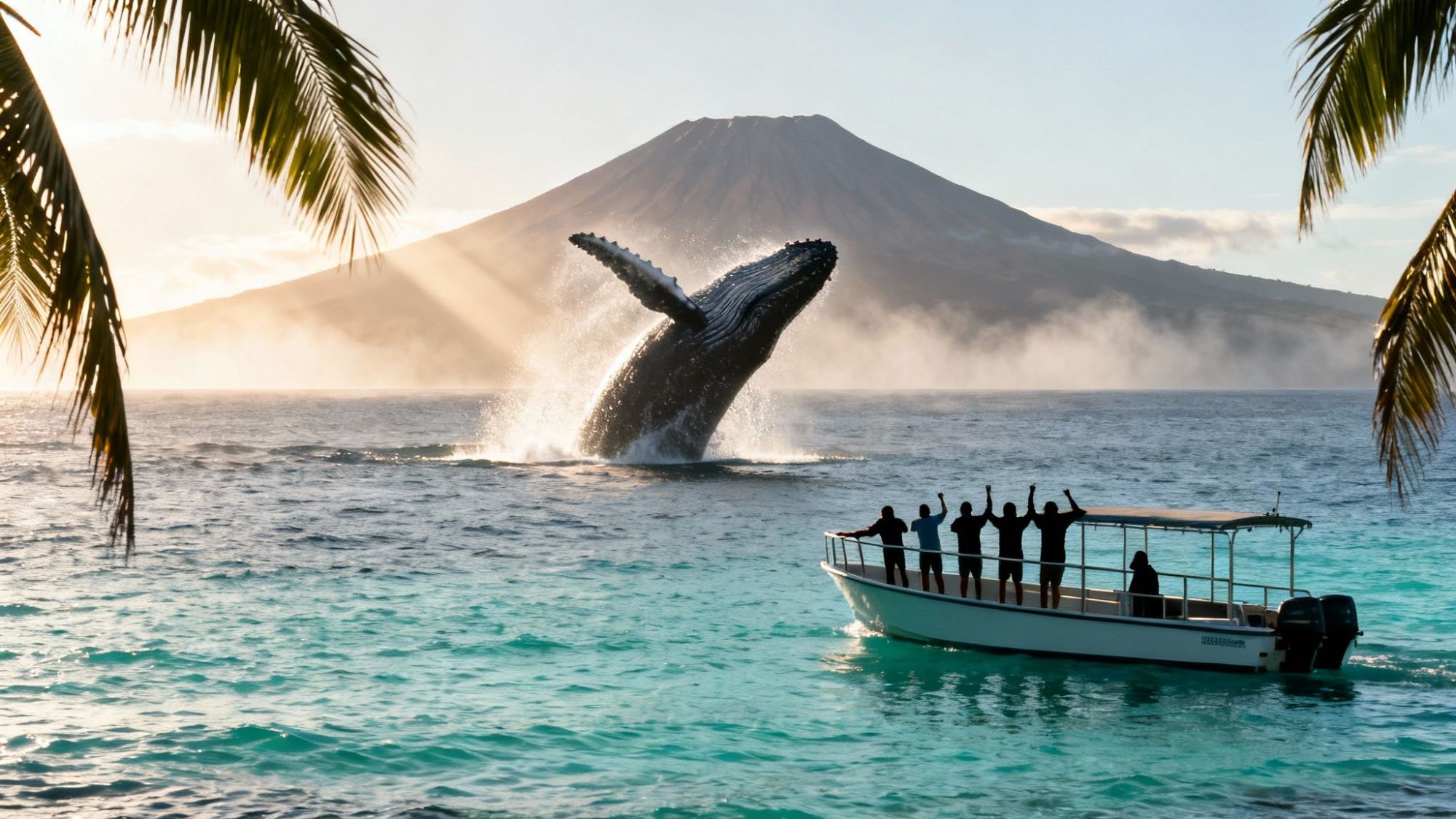
If you want to see whales on the Big Island, you’ll want to time your trip between December and April. That’s when things really get exciting. For the absolute best chance at seeing the most action, aim for the peak season, which runs from January to March. During these months, thousands of humpback whales make their way to the warm, protected waters off the Kona and Kohala coasts to breed and give birth, putting on a truly unforgettable show.
Your Adventure with Big Island's Gentle Giants
There’s nothing quite like the sight of a 40-ton humpback whale launching its entire body out of the water. It’s a moment that will genuinely take your breath away, and believe me, the Big Island is one of the best places on Earth to witness it.
Every year, these incredible creatures travel an astonishing 3,000 miles from the frigid feeding grounds of Alaska to find sanctuary right here. Our calm, clear waters create the perfect nursery for them to mate, give birth, and raise their newborn calves.
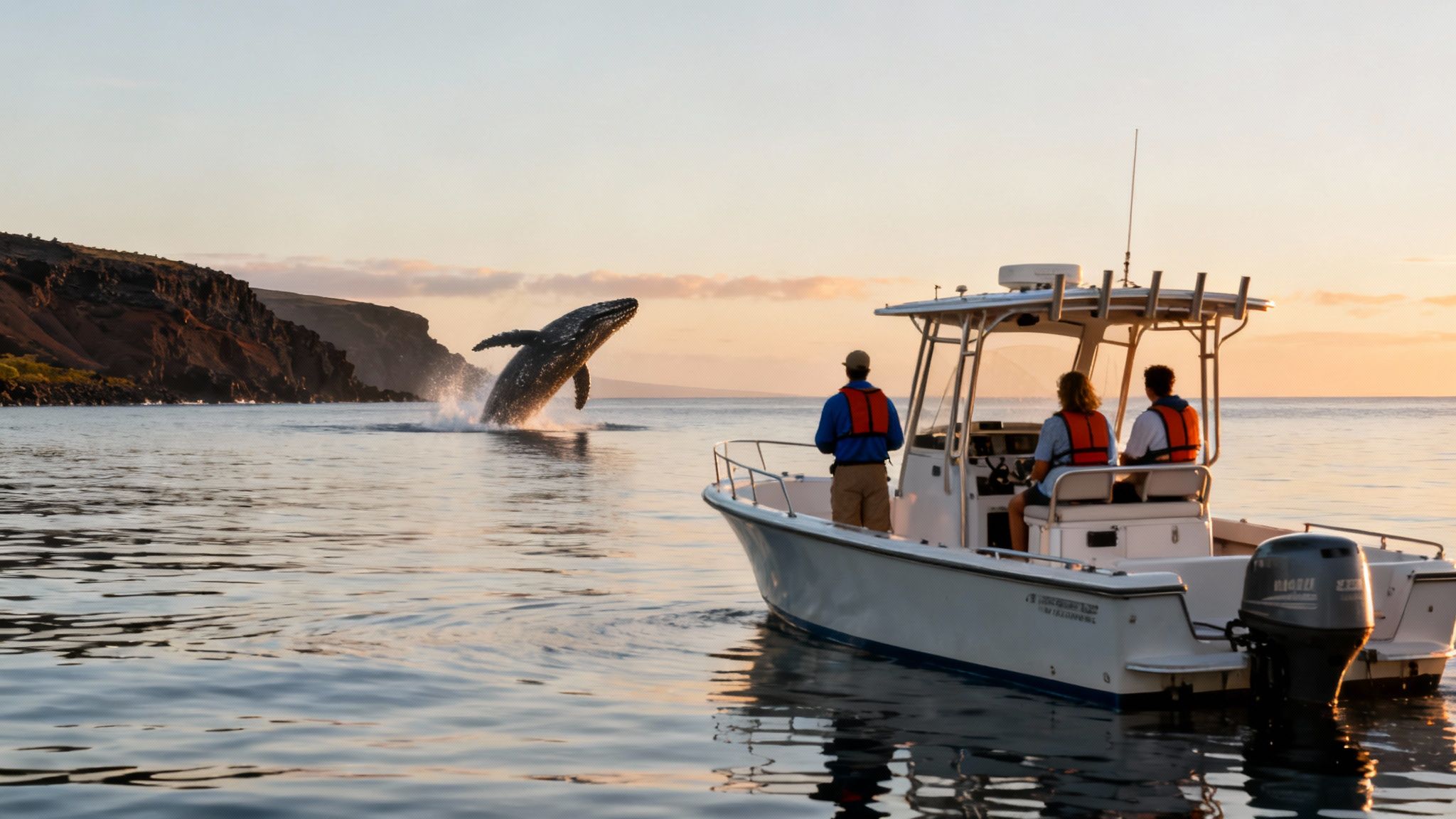
As the top-rated and most-reviewed snorkel company in Hawaii, Kona Snorkel Trips is all about creating those once-in-a-lifetime marine encounters—and doing it respectfully. Our crew lives and breathes this stuff, and we know how to get you a front-row seat to one of nature’s most amazing events.
Why This Guide Is Your Go-To Resource
We put this guide together to be the only resource you'll need for planning the perfect Big Island whale watching trip. We’re covering all the essentials, drawing from years of experience out on the water.
Here’s what you’ll find inside:
- The best months and times of day for the most action.
- What it’s really like on a guided tour versus watching from shore.
- How to pick the right tour company for a safe and amazing trip.
- The must-have items you'll want to pack for your day.
The sheer number of whales here during peak season is hard to wrap your head around. Seriously. During the first Sanctuary Ocean Count on January 25, 2025, spotters tallied 183 whales in a single 15-minute window! They were breaching, slapping their tails, and spouting all over the place. You can learn more about these incredible whale count findings.
This annual migration transforms the waters off the Kona and Kohala coasts into a dynamic stage for one of nature’s grandest spectacles. It's not just a tour; it's a profound connection to the rhythm of the ocean.
By the time you finish reading, you’ll have everything you need to plan your own whale watching adventure. You'll feel confident and fully prepared for an absolutely awe-inspiring day with these gentle giants.
The Incredible Journey of Humpback Whales to Hawaii
Every single year, the waters around the Big Island play host to one of the most incredible events in the entire animal kingdom. It's a journey driven by pure instinct. Thousands of humpback whales undertake a massive 3,000-mile pilgrimage, leaving the frigid, food-rich waters of Alaska for the warm, welcoming embrace of Hawaii. This isn't just a casual swim—it's an epic feat of endurance.

Can you imagine traveling for six to eight weeks straight without a single bite to eat? That's exactly what these gentle giants do. They spend the summer months gorging on krill and small fish, packing on immense fat reserves in their blubber. That stored energy is the only thing fueling their entire round-trip migration and their stay in Hawaii.
This incredible natural wonder is what turns whale watching on the Big Island from a fun boat trip into a front-row seat to a crucial chapter in the life of these amazing creatures.
A Tropical Nursery for the Next Generation
So, why go through all that trouble? The answer is simple: survival. While the cold Alaskan waters are a fantastic buffet, they are far too dangerous for a newborn whale. Hawaii offers the perfect solution.
The shallow, warm, and protected waters along the Kona and Kohala coasts create the ideal environment for the most important parts of a humpback's life. Think of it as nature’s ultimate nursery, a safe haven where these whales are at their most vulnerable.
This annual migration isn't just a trip; it's a life-sustaining cycle. The whales fast for months, putting all their energy into breeding, giving birth, and making sure the next generation is strong enough to survive its first journey north.
It's no accident that they choose Hawaii. The reasons are crystal clear:
- Warmth for Calves: Newborn humpbacks have very little body fat, which makes the cold northern seas deadly. The balmy 75°F (24°C) Hawaiian waters let them save energy and grow strong.
- Safety from Predators: The waters around the Big Island are mostly free of orcas (killer whales), the main natural predator of humpback calves. That relative safety is everything for a new mom and her baby.
- Calm Breeding Grounds: The sheltered bays offer a safe space for the complex social rituals of mating. This is where males put on dramatic shows to win over females, leading to the spectacular breaches and tail slaps we all hope to see.
This vital life cycle is what makes the whale watching Big Island season so special. You aren't just looking at animals in the ocean; you're witnessing a critical part of their existence unfold right before your eyes.
The Science Behind the Journey
The migration is a precisely timed event, synced perfectly with the changing seasons. As the days grow shorter and ice starts to form up north, the whales instinctively know it’s time to head south. They find their way using a sophisticated mix of the earth's magnetic fields, the position of the sun, and underwater landmarks they've known for generations.
Once they arrive, their focus shifts completely. The males start their famous "singing," creating complex, haunting melodies that can travel for miles underwater. These songs are believed to play a role in attracting mates and establishing dominance.
Meanwhile, pregnant females look for the calmest waters to give birth. After an 11 to 12-month gestation period, they deliver a single calf that can weigh up to one ton at birth. The bond between mother and calf is incredibly tight. The mother spends the next few months teaching her little one the essential survival skills it will need for the long journey back to the feeding grounds. Your whale watching tour might just give you a glimpse of these tender, crucial moments.
Finding the Perfect Time for Your Whale Watching Trip
Timing is everything when you're planning a whale watching adventure on the Big Island. Sure, the humpbacks hang out in Hawaiian waters for a few months, but there are definitely some sweet spots when your chances of seeing the really spectacular stuff go way up. Think of it like trying to catch your favorite band—you want to be there for the headlining act, not the soundcheck.
The official whale season runs from December through April. We start seeing the first arrivals, the "scouts," in late November, but the real party doesn't get started until the new year. It's a slow build that you can time just right for a truly mind-blowing experience.
Peak Season: The Sweet Spot for Whale Sightings
If you want the absolute best shot at seeing the most whales and the most dramatic action, you need to book your trip for January and February. Hands down, these two months are the peak of whale season on the Big Island.
During this prime window, the whale population off the Kona and Kohala coasts is at its absolute highest. The ocean is just teeming with life. That means you'll see whales more often, and you're much more likely to witness those incredible behaviors everyone dreams of seeing: full-body breaches, powerful tail slaps, and competitive pods of males chasing after females.
By March, the action is still fantastic, but you'll start to notice things winding down as April rolls around. The whales have done what they came to do—mate and give birth—and they begin the long trek back to their feeding grounds in Alaska.
Peak season isn't just about the number of whales. It's about the energy. The sheer power you can feel in the water during January and February is something else, making for a thrilling and unforgettable day on the ocean.
The Best Time of Day for Your Tour
Once you've picked the perfect month, you'll want to think about the best time of day for your tour. While you can spot whales anytime, there's a real advantage to heading out early in the morning.
It really comes down to ocean conditions. The waters off the Kona coast are famous for being glassy and calm in the mornings. That smooth surface makes it so much easier to spot a distant spout or the dark shape of a whale just below the surface. Less wind and fewer waves also mean a much more comfortable boat ride and way better visibility for everyone.
Plus, a lot of marine life, whales included, just seems to be more active in the cooler morning hours. We often see calves nursing or playing with their moms, and the morning light is just perfect for getting those amazing photos. An early start simply puts you in the best position for a magical encounter.
Big Island Whale Watching Season at a Glance
To give you a better picture of how the season unfolds, we've put together a simple chart. You can use this to line up your travel dates with the kind of whale activity you're hoping to see on your whale watching Big Island trip.
| Month | Whale Activity Level | Typical Ocean Conditions | What You Can Expect to See |
|---|---|---|---|
| December | Building | Generally calm, pleasant weather. | The first wave of arrivals, including curious males and pregnant females. |
| January | Peak | Excellent; calm mornings are common. | High numbers of whales, frequent breaches, and competitive pod activity. |
| February | Peak | Consistently great viewing conditions. | The highest concentration of whales; mothers with newborn calves become more common. |
| March | High | Conditions can become windier in the afternoon. | Still plenty of activity, with many mother-calf pairs preparing for the trip north. |
| April | Tapering Off | Spring weather patterns begin to emerge. | The last of the whales are heading out; sightings become less frequent. |
Getting a feel for this seasonal rhythm is the key to a great trip. For a closer look at what makes this time of year so incredible, you can learn more about the Big Island whale season to help finalize your plans. By picking the right month and the best time of day, you're setting yourself up to witness one of the most amazing shows nature has to offer.
Choosing Your Kona Whale Watching Tour
When you start planning your whale watching adventure on the Big Island, you’ll hit a fundamental choice: watch from the shore, or get out on the water? You can sometimes catch a glimpse of a distant breach from the bluffs along the Kohala Coast, and that's always a treat. But to truly understand these animals, you have to meet them in their world.
Nothing—and I mean nothing—compares to the feeling of being on the ocean with them. It’s the only way to grasp the sheer scale and power of a 40-ton humpback. Land-based viewing just can't hold a candle to it.
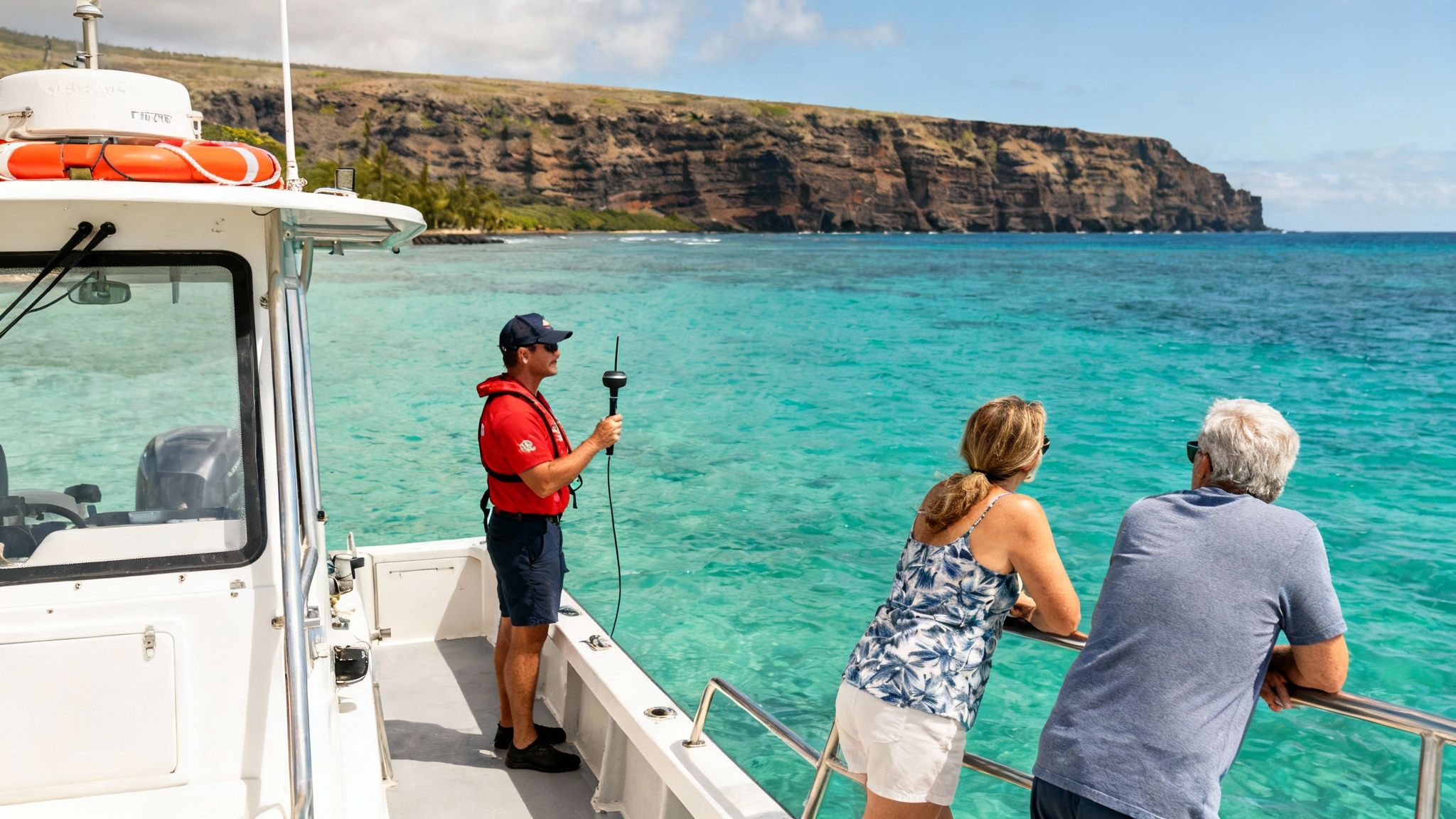
A boat tour isn't just about getting closer; it's about perspective. The real magic happens when you can hear the powerful whoosh of a whale's exhale, see the unique patterns on its fluke as it dives, and feel the energy in the water as it launches itself into the air. This is what turns a simple sighting into a core memory.
The Kona Snorkel Trips Advantage
Picking the right tour operator is probably the most critical decision you'll make. Here at Kona Snorkel Trips, we're all about small-group tours. We’ve found that an intimate setting is the best way to forge a real connection with the ocean and its inhabitants.
Our smaller boats mean we can get you to the action faster, and they offer an eye-level view that you just don't get on the bigger, more crowded vessels. It feels much more personal.
Our crew is what really sets us apart. Every single guide is lifeguard-certified, so your safety is always locked in as the number one priority. But they aren't just boat captains; they are passionate marine naturalists who live and breathe Hawaii's ocean ecosystem.
An expert guide does more than just find whales. They interpret their behavior, explain the nuances of their communication, and share stories that add a rich, educational layer to your adventure, turning an exciting day into an enlightening one.
This deep, firsthand knowledge is what allows our crew to anticipate where a pod might surface next or explain the meaning behind a sudden tail slap. Your tour becomes both a thrill and an education.
What to Expect on Our Tours
Think of our whale watching tour as a complete sensory experience. It all starts with a clear safety briefing from our friendly crew. As we motor out from the Kona coast, your guide will start sharing incredible facts about the humpback whales and their epic migration, setting the stage for the main event.
We are absolutely committed to responsible and respectful wildlife viewing. We follow all federal regulations to the letter, always keeping a safe distance of at least 100 yards. This doesn't just protect the animals; it often leads to more natural, relaxed, and longer-lasting encounters.
Here’s a little of what makes our tours special:
- Expert Narration: Our guides keep up a running commentary, pointing out whale activity and helping you understand the complex social dynamics you're witnessing unfold right in front of you.
- Small Group Size: Fewer passengers means you get a front-row, unobstructed view. No jostling for position. It’s a comfortable, personal trip.
- The Hydrophone: This is one of the coolest parts. When conditions are right, we'll drop a hydrophone into the water. You'll get to listen to the haunting, beautiful, and complex songs of the male humpback whales—an otherworldly sound echoing up from the deep blue.
If you want to dive deeper and compare what's out there, check out our detailed guide on the best whale watching tours in Kona, Hawaii.
When you choose a reputable, small-group operator, you’re not just booking a boat ride. You're investing in a safe, educational, and breathtaking experience with people who are just as passionate about these gentle giants as you are.
Decoding Whale Behaviors You Might Witness
Spotting a humpback is one thing, but actually understanding what you're seeing? That's when a simple sighting turns into a powerful, unforgettable connection. When you head out for whale watching on the Big Island, you're not just a spectator; you're stepping into their world, where every leap, splash, and sound means something. Think of it as learning the language of the whales, getting a rare peek into their incredibly complex social lives.
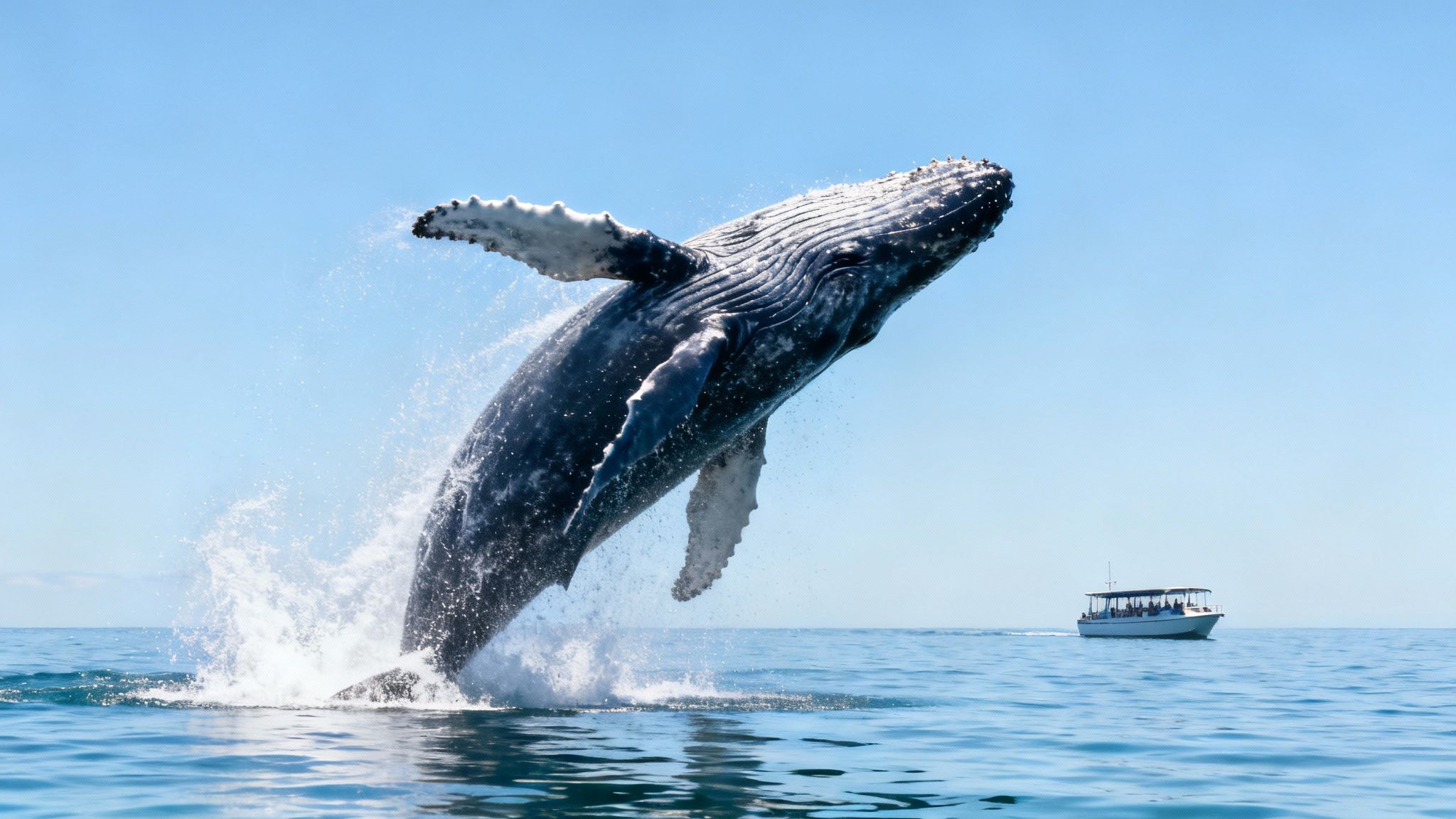
Once you start to decode these actions, your tour becomes a live-action nature documentary. A massive splash is no longer just a splash—it's a message sent across the ocean, and you're right there to interpret it.
The Most Thrilling Surface Behaviors
No two tours are the same, but there are a few spectacular behaviors that everyone crosses their fingers to see. Each one has a purpose, whether it's for communication, a show of pure strength, or maybe just a clever way to scratch an itch.
Here are some of the big ones to keep an eye out for:
- The Breach: This is the show-stopper. The iconic move where a whale launches up to 90% of its enormous body out of the water, often with a twist, before crashing back down in a colossal explosion of spray. Scientists figure they do it for a few reasons: to knock off pesky barnacles, to send a booming sound wave for miles underwater ("Hey, I'm over here!"), or simply for the sheer joy of it.
- Tail Slap (Lobtailing): You'll see a whale lift its massive, powerful fluke (its tail) straight up and slam it down hard on the surface. That percussive crack is another form of communication, almost like a drumbeat. It could be a warning to another whale or just a way to get attention within its group.
- Pectoral Fin Slap: Humpbacks often roll onto their sides and smack their enormous, 15-foot-long pectoral fins on the water over and over. It creates a surprisingly loud noise and is likely a more localized way to chat with whales that are close by.
- Spyhop: This one feels personal. A whale will position itself vertically and poke its head straight out of the water, looking around. It’s an act of pure curiosity, giving the whale a good look at its above-water surroundings—and that includes your boat.
Witnessing a spyhop is a moment you'll never forget. It stops feeling like you're just observing an animal. Instead, it's like you're sharing a moment of mutual curiosity, and the whale seems just as interested in you as you are in it.
Understanding Whale Social Structures
Beyond the acrobatic displays, you'll also get a glimpse into their fascinating group dynamics. The social scene here during breeding season is buzzing with activity, and knowing who's who adds another layer to the experience.
You might see several different types of pods out on the water. It’s common to spot solitary individuals, usually males on the lookout for a mate. But the most heartwarming sights are the mother and calf pairs. You'll see the massive mother gently guiding her newborn, teaching it how to breathe and swim. Sometimes, a third whale called an "escort"—typically a male—will tag along, hoping for a chance to mate.
The most dramatic action often comes from competitive pods. These are high-energy groups where several males are aggressively chasing and competing for a single female. It leads to incredible displays of power and agility. Watching a comp pod is a raw, thrilling look at the intense drive to reproduce that fuels their entire migration to Hawaii.
How We Practice Responsible Whale Watching
Seeing a humpback whale in its element is a profound experience, one that stays with you long after you’re back on shore. It also comes with a real responsibility to protect these incredible animals. They’ve traveled thousands of miles to get to Hawaiian waters for the most important reasons: to mate and raise their calves in a safe, warm environment.
Any disturbance can cause a huge amount of stress, especially for a new mother with a vulnerable calf by her side. That’s exactly why strict federal regulations are in place to keep them safe.
The most important rule, the one that’s the foundation of everything else, is the 100-yard approach rule. No vessel—not a boat, not a kayak, not even a paddleboard—is legally allowed to get within 100 yards of a humpback whale. This distance creates a critical buffer, giving the whales the space they need to act naturally without feeling cornered or threatened. Respecting this distance is the cornerstone of any ethical whale watching Big Island experience.
Our Commitment to Ocean Stewardship
Here at Kona Snorkel Trips, we don’t just check the boxes on the regulations; we're truly passionate advocates for marine life. Our crew knows these rules inside and out, and our first priority is always the whales' well-being.
We've gotten pretty good at positioning our boats for incredible views without ever crossing that vital 100-yard line. You know, some of the most magical encounters happen when we just cut the engines and wait. It’s amazing to see what happens when you let the whales decide how close they want to come.
Our commitment to being good stewards of the ocean goes beyond just the whales, though. We want our guests to join us in protecting this amazing place.
- Reef-Safe Sunscreen: We provide reef-safe sunscreen on board and encourage everyone to use it. It’s a simple way to protect Hawaii’s fragile coral from nasty chemicals.
- Leave No Trace: It’s a simple idea: leave the ocean exactly as we found it. We make sure nothing gets left behind.
- More Than Just a Tour: We want our trips to be a learning experience. We’ll explain the "why" behind the rules, helping you build a deeper connection to the entire marine world.
When you choose a tour operator that puts conservation first, you’re casting a vote for the health of our oceans. Your choice ensures that the magic of whale season will be here for generations to come.
This commitment is everything when you consider the future of these gentle giants. Their comeback from the edge of extinction is one of the great conservation success stories. You can learn more about the ongoing efforts to protect these animals by exploring how humpback whales' endangered status has changed over the years. We truly believe that turning your tour into a positive-impact experience is the best way to honor their incredible journey.
Your Whale Watching Questions, Answered
Planning your whale watching adventure on the Big Island can bring up a few questions. As guides, we hear them all the time! To make sure you're fully prepared for an incredible day on the water, here are the answers to the questions we get asked most often by our guests.
What's the Absolute Best Time to See Whales?
The official season kicks off in December and runs through April, but if you want the absolute peak experience, aim for mid-January through the end of March. That's when the Kohala Coast is teeming with whales, and you'll have the best shot at seeing the really spectacular stuff, like breaches and competitive pods.
Can I Actually See Whales from the Shore?
You sure can! The elevated bluffs along the Kohala Coast are fantastic vantage points. Grab a good pair of binoculars, find a comfy spot, and scan the horizon for distant spouts and splashes. It's a great way to spend an afternoon.
That said, nothing beats getting out on the water. A boat tour gets you respectfully closer to the action for a much more intimate and immersive view. Plus, you get the benefit of an experienced crew who can share incredible facts and stories about the whales you're seeing.
What Should I Wear on the Boat?
Layers are your best friend out on the ocean. Even on a perfectly warm Kona day, the breeze can pick up and make things feel a bit chilly once you're moving. A light jacket or windbreaker is always a good idea.
We also highly recommend polarized sunglasses—they're a game-changer for cutting the glare on the water, making it so much easier to spot whales. Don't forget a hat, reef-safe sunscreen, and some comfortable, non-slip shoes for safely moving around the boat.
Are We Guaranteed to See Whales?
Since we're dealing with wild animals on their own migratory schedule, we can never offer a 100% guarantee. It's their ocean, after all, and we're just respectful visitors passing through.
However, during that peak season from January to March, your chances are incredibly high. Our captains have spent years on these waters and have a knack for finding the whales' favorite hangouts, which gives us a huge advantage in making sure you have a memorable trip.
Is Whale Watching Safe for Kids?
Absolutely! Our tours are a fantastic and safe adventure for the whole family. We keep our groups small, and our lifeguard-certified crew always puts safety first.
It’s truly an unforgettable educational experience for kids—seeing these gentle giants up close is something they'll talk about for years. It's the best kind of classroom, sparking a real connection to the ocean and the importance of conservation.
Ready to witness these gentle giants for yourself? Join Kona Snorkel Trips for an adventure that will create lifelong memories. Book your whale watching tour and secure your spot today.